• Minnesota must immediately provide rental assistance to workers displaced by COVID-19

    On Monday, Governor Tim Walz announced Executive Order 20-14 suspending evictions. Eviction moratoriums are a great first step to preventing homelessness, but much more is needed. State leaders must provide rental assistance of at least $100 million through the Family Homeless Prevention Assistance Program (FHPAP) or another rental assistance program. 

    According to data analysis by Minnesota Housing Partnership, many of the workers who are out of work due to COVID-19 shutdowns will experience dire financial outcomes. Workers with unemployment insurance will receive half their typical earnings. For food service, that means an income of $1,032 a month against an average Minnesota rent of $969. On average, food service workers are left with $63 after paying rent. These workers won’t be able to pay for food, medicine, and other household needs. 

    Image

    For specific food service jobs such as bartenders, waiters, and food counter workers, unemployment insurance will not be enough to even cover the rent. This affects an estimated 81,620 Minnesotans. 

    Members of the media can download a full analysis of the housing impacts of these most affected workers here. 

    Rental assistance is critical for supporting low-wage workers unable to pay rent, and ensuring stability in the rental market. 

    That same rental assistance would provide critical operating income to affordable housing providers, and helps sustain the housing system.  Most housing providers have only a few months operating reserve, and even that has restrictions on spend-down.They cannot maintain basic housing operations without some type of revenue stream.

    The rental income will help housing providers cover continued safe operations and additional costs of maintaining affordable housing including with enhanced cleaning and emergency repairs during the COVID-19 pandemic.

    “A lack of rental assistance will have ripple effects throughout Minnesota,” said Anne Mavity, executive director of Minnesota Housing Partnership. “Even with an eviction moratorium, past-due rent will build for people out of work which just shifts this problem to a month or two from now. We need housing supports and we need them right now.”

    “We’re calling on the Legislature and Governor Walz to immediately pass and sign into law $100 million in rental assistance.”
  • MHP’s Response to COVID19

    MHP offices are physically closed effective Monday, March 16th through March 31st, to be extended if needed, following the advice of national, state, and local public health authorities in response to the COVID19 pandemic. MHP is working to reduce the burden on health care systems, along with our stakeholders and partners. We urge everyone to engage in social distancing and other preventative health behaviors as well. 

    MHP business functions are fully operational for this period. Our meetings will switch to email, phone, and video conferencing. Technical assistance for rural and tribal communities will continue and we will continue to advocate for affordable housing both locally and nationally, as the economic downturn makes affordable housing that much more essential. 

    Our work has never been more important. Housing is health care. We will continue to work toward our mission that everyone has safe, decent, affordable housing. Please continue to reach out to us on how we can help support you and your communities during this time.

    To keep up-to-date on how COVID19 is affecting affordable housing and what you can do to help advocate, sign up for our e-newsletters and follow us on Twitter and Facebook.

  • Leaders urge housing support for low-wage workers affected by COVID19

    Leaders of Minnesota’s affordable housing organizations sent a letter to Gov. Tim Walz on Sunday asking Minnesota officials to act quickly to support low-wage workers at risk for homelessness as COVID 19 shuts down much of Minnesota’s economy. 

    “To responsibly support Minnesotans at this time of crisis, the State must dedicate $100 million in emergency COVID-19 funds for housing supports through the Family Homeless Prevention and Assistance Program (FHPAP),” the letter states. “$100 million will provide one month of FHPAP, at an estimated rate of $400 per month per household, for 250,000 families.”

    “It’s impossible to stay home when you are sick if you have no home,” said Anne Mavity, executive director of Minnesota Housing Partnership, a signer of the letter to Gov. Walz. “Ensuring stable housing through this crisis is vital to public health.”

    The letter also notes that Minnesota’s elected leaders and housing organizations must prepare now to avoid a repeat of what happened during the foreclosure crisis of the late 2000s, which left the state with a lasting shortage of affordable housing and exacerbated racial disparities in housing. 

    Signatories to the letter were: 

    Anne Mavity, Executive Director, Minnesota Housing Partnership 
    Jenny Larson, Executive Director, Three Rivers Community Action 
    Deidre Schmidt, President and CEO, CommonBond Communities 
    Alan Arthur, President and CEO, Aeon 
    Paul Williams, President and CEO, Project for Pride in Living 
    Lee Blons, President, Beacon Interfaith Housing Collaborative 
    Chris Coleman, President and CEO, Twin Cities Habitat for Humanity
    Warren Hanson, President and CEO, Greater Minnesota Housing Fund 
    Ellen Sahli, President and CEO, Family Housing Fund 
    Buffy Beranek, Southeast MN Multi-county HRA 
    Cristin Incitti, Executive Director, Habitat for Humanity Minnesota 
    Barb Jeanetta, Executive Director, Alliance Housing
    Jim Roth, Executive Director, Metropolitan Consortium of Community Developers

    Read the full letter here.

    Endorse the letter here: 

  • Dozens of organizations statewide support the MN Tax Credit Contribution Fund!

    Momentum around the Minnesota Affordable Housing Tax Credit continues to build, as community leaders across the state recognize the potential of this innovative new tool that encourages local businesses and neighbors to invest in their community by creating housing opportunities. Learn more – Affordable Housing Tax Credit one-pager. Join the organizations below as a supporter – here. Supporting organizations will be added to the following letter:

    Dear [lawmaker],

    Minnesota needs new sources of predictable and sustainable funding for the development and preservation of affordable homes. Please support the Minnesota Affordable Housing Tax Credit, which will mobilize private investment in projects where the market is not working. A Minnesota Affordable Housing Tax Credit leverages participation from the private market, demonstrates local support by growing the number of stakeholders invested and engaged in affordable housing, and builds support for specific local developments as well as broader state housing needs. 

    For every $25 million in affordable housing tax credits, we can rehab more than 1,700 homes, build up to 700 new affordable homes, or deepen the affordability for 1,000 homes. The tax credit is a job generator: we can create 700 new jobs. The credit is a local community economic development tool: we can increase local property taxes by $350,000. 

    The Minnesota Affordable Housing Tax Credit is about neighbors helping neighbors to create housing opportunities that help businesses and communities thrive.  Please join us in supporting this innovative new tool.

    Sincerely,

    [Signing organizations]


    Organizations that support the Minnesota Tax Credit Contribution Fund for Affordable Housing

    Updated May 17, 2019

    Aeon
    Ain Dah Yung Center
    Alliance Bank
    Alliance Housing Inc.
    Artspace
    Aspire Care Corporation
    Association of Minnesota Counties
    BKV Group
    Baker Tilly
    Boisclair Corporation
    Builders Association of Minnesota
    Cermak Rhoades Architects
    Chisago County HRA-EDA
    Churches United in Ministry (CHUM)
    City of Kasson
    City of Rochester
    City of Saint Paul, Planning and Economic Development
    City of Thief River Falls
    City of Winona
    Clare Housing
    CommonBond Communities
    D. W. Jones, Inc.
    Digi-Key Corporation
    Dominium
    Dougherty Mortgage LLC
    Duluth Area Chamber of Commerce
    Duluth HRA
    Duluth LISC
    Eagle Building Company
    Frerichs Construction
    Greater Metropolitan Housing Corporation
    Greater Minnesota Housing Fund
    Growth & Justice
    Headwaters Regional Development Commission
    Hess, Roise and Company
    Homes for All MN
    Housing Justice Center
    HRA of Hibbing
    Laura Baker Services Association
    League of Minnesota Cities
    LISC – Twin Cities
    Metropolitan Consortium of Community Developers
    Midwest Minnesota Community Development Corporation
    Minneapolis Regional Chamber
    Minnesota Association of Small Cities
    Minnesota Building and Construction Trades Council 
    Minnesota Coalition for the Homeless
    Minnesota Homeownership Center
    Minnesota Multi Housing Association
    Minnesota NAHRO 
    MWF Properties, LLC
    Northwest Minnesota Foundation
    Olmsted County HRA
    One Roof Community Housing
    Peoples State Bank Plainview, MN
    PRG Inc.
    Project for Pride in Living
    Red Wing Housing and Redevelopment Authority
    Rochester Area Economic Development, Inc
    Rochester Area Foundation – First Homes
    Ron Clark Construction and Design
    Saint Paul Area Chamber of Commerce
    Sand Companies, Inc.
    Schafer Richardson, Inc. – Minneapolis
    Scott County CDA
    Southeast Minnesota Multi-County Housing and Redevelopment Authority
    Southeastern Minnesota League of Municipalities
    Shelter Corporation
    Solid Ground
    Southwest Minnesota Housing Partnership
    The Schuett Companies, Inc.
    Thief River Falls Chamber of Commerce
    Three Rivers Community Action
    Twin Cities Habitat for Humanity
    Twin Cities Housing Development Corporation
    Watson-Forsberg Co.
    Western Bank, a Division of American National Bank
  • MHP Investors Council Recap: Action for Homes Legislative Update

    “It’s so important that we remember that housing has historically been a bipartisan issue,” Minnesota Housing Commissioner Jennifer Ho told a crowd of more than 130 people at MHP’s February Investors Council breakfast. “Turns out that regardless of your politics, you need a home.”
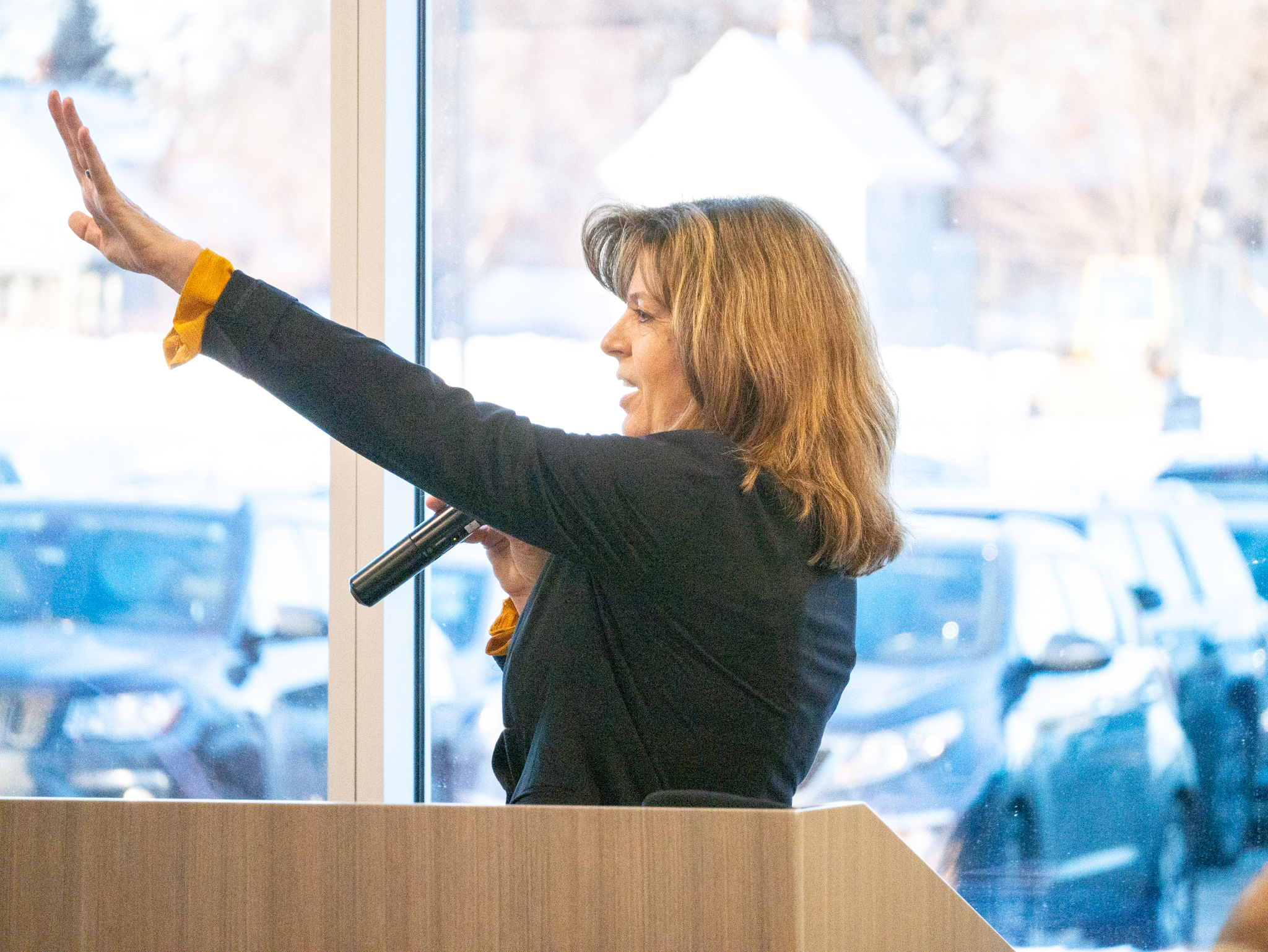
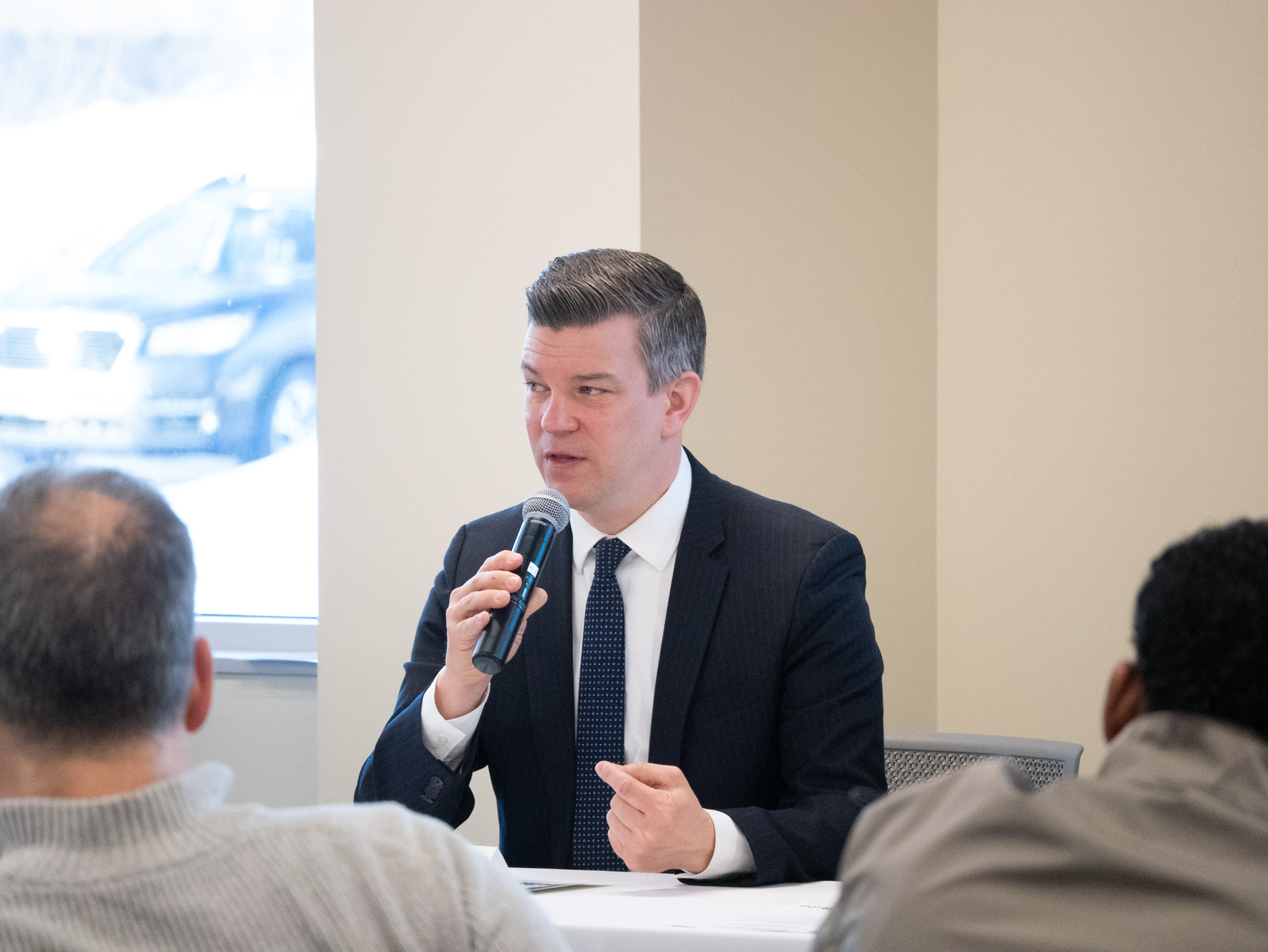
    Ho’s remarks came as part of the Investors Council’s Action for Homes on Feb. 13 where affordable housing advocates and professionals gathered to learn more about what’s ahead in the 2020 legislative session at the Minnesota Capitol.  

    “The housing shortage is threatening what’s happening with our economy,” Ho added. “We are losing our competitive advantage. I was up in Thief River Falls with Sen. Mark Johnson. Digi-key and Polaris need housing. They have the jobs. They want to expand but need housing. It’s become a top tier issue.”

    “Incremental investments aren’t going to get us there. We’ve got to go big.”

    Anne Mavity, MHP’s executive director, highlighted the opportunities and challenges ahead. 

    “We have an enormous opportunity facing us in affordable housing right now. Housing has hit the front pages and that’s good and bad,” she said. “It means that employers are feeling the pinch where they can’t attract employees because of the of lack of affordable housing. Students don’t always have a place to do their homework. It means the folks that are taking care of our kids — that are taking care of my mom today — they can be working full time and not afford an average apartment, frankly, anywhere in the state.”

    “We are in a moment of opportunity and we need to take advantage of that and think big and think transformationally.”

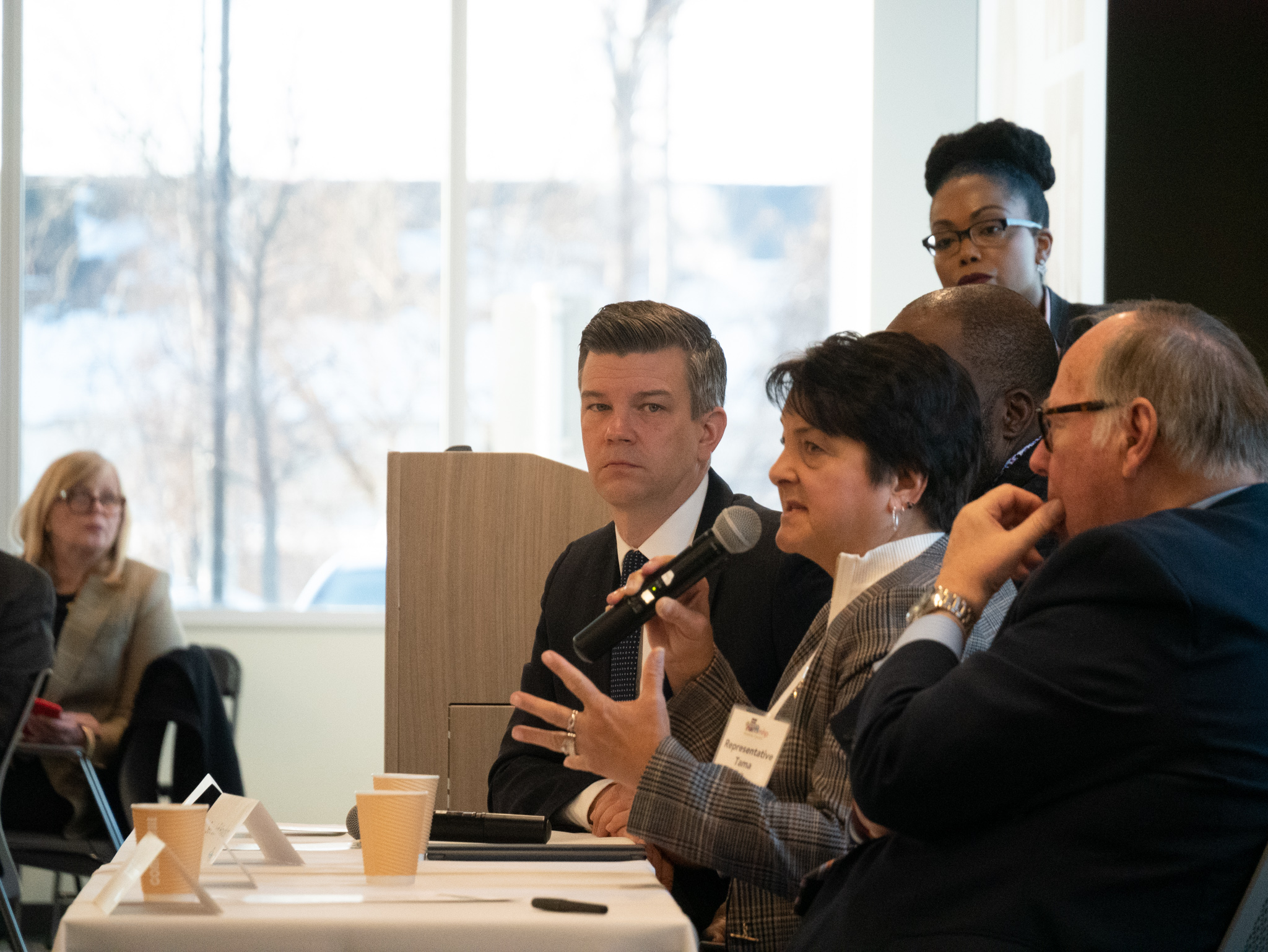
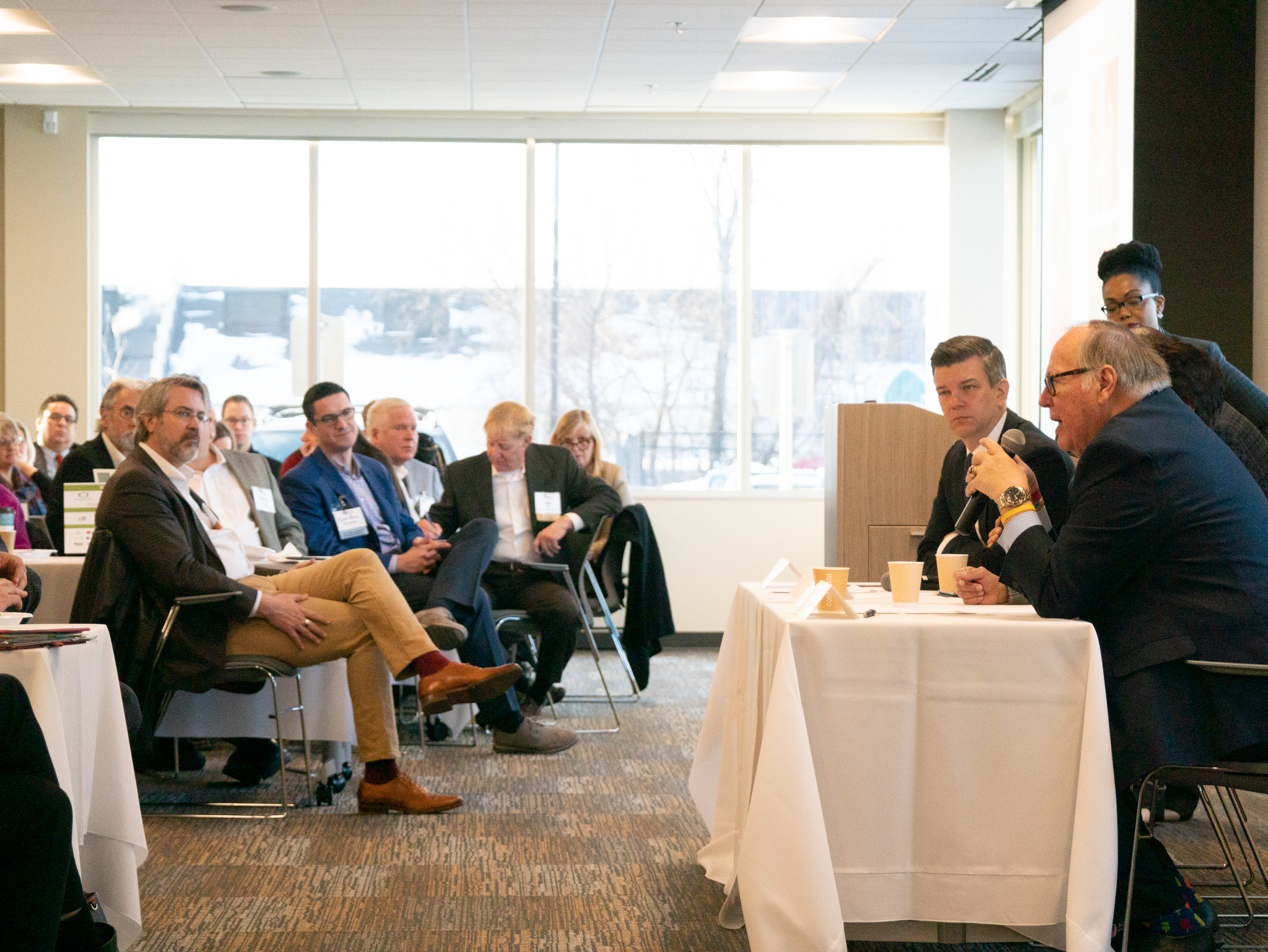
    Acooa Lee Ellis of the Greater Twin Cities United Way moderated a panel discussion between House Majority Leader Ryan Winkler, Assistant Minority Leader Sen. Jeff Hayden, Sen. David Senjem,, and Rep. Tama Theis. 


    Rep. Winkler gave the crowd his assessment of the potential success of housing initiatives at the Minnesota Capitol in 2020.

    “We have a long-term commitment to addressing the housing affordability crisis that is growing in Minnesota and growing at all levels and it’s not just homelessness, not just supportive housing, it’s not just starter housing, it is all the way up and down the scale, and having a lot more supply is essential to solving that problem. It’s a long term challenge. But it’s not going to be an easy year for making major progress.”

    Hayden talked about the propensity for lawmakers to set an artificial line in the sand when it comes to bonding, and that a bonding bill has to be enough to impact the housing crisis.

    “We really do need a bonding bill that is sufficient. And I know that Sen. Senjem and Rep. Mary Murphy are working on that. It’s important to bond at a level that makes sense, instead of saying it’s got to be a ‘number’ and nothing else.”

    Rep. Tama Theis laid out the reality in rural areas of Minnesota. 

    “In our community and in some of the other rural communities, workforce housing is huge for us. we don’t have enough houses…. We need to make this a priority and bring it more up front. We have these dialogues about why housing is so expensive in Minnesota.  We need to get to the point that we build more homes and that people can afford them. We have so many jobs to fill and no homes for people to go to. When housing doesn’t do well, the economy doesn’t do well.”


    Sen. David Senjem said that government must play a role in creating enough homes for Minnesota to be great. 

    “We work every year to build this state to be a little better, to have this great Minnesota that we want,” he said. “About 10 or 15 years ago we began to realize: This whole issue of housing is real. Somehow the cost of housing has outstripped the ability of people to pay for it.  Somehow the government has to intervene whether it’s Housing Infrastructure Bonds or rehab with apartments or tax credits whatever the case may be. There has to be a role for the government to help.”

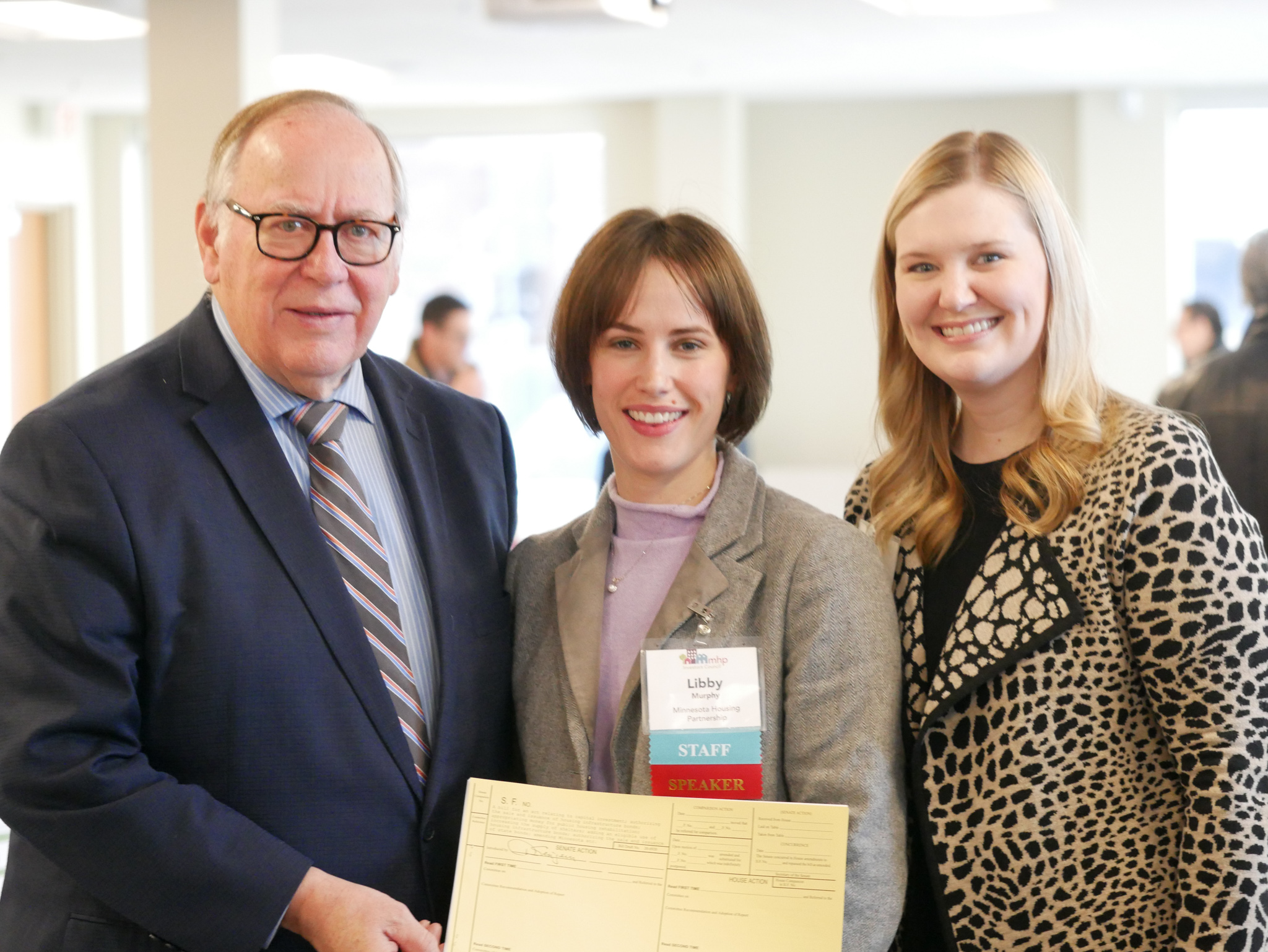
    At the close of the event, Sen. Senjem signed on to a bill for $500 million in housing bonds. This bill is a priority Homes for All coalition and MHP.  Thank you Sen. Senjem!


    To be part of these dynamic conversations, become a contributor or renew your contribution in the MHP Investors Council today!


  • Swift County wins FHLB grant to support low-income homeowners

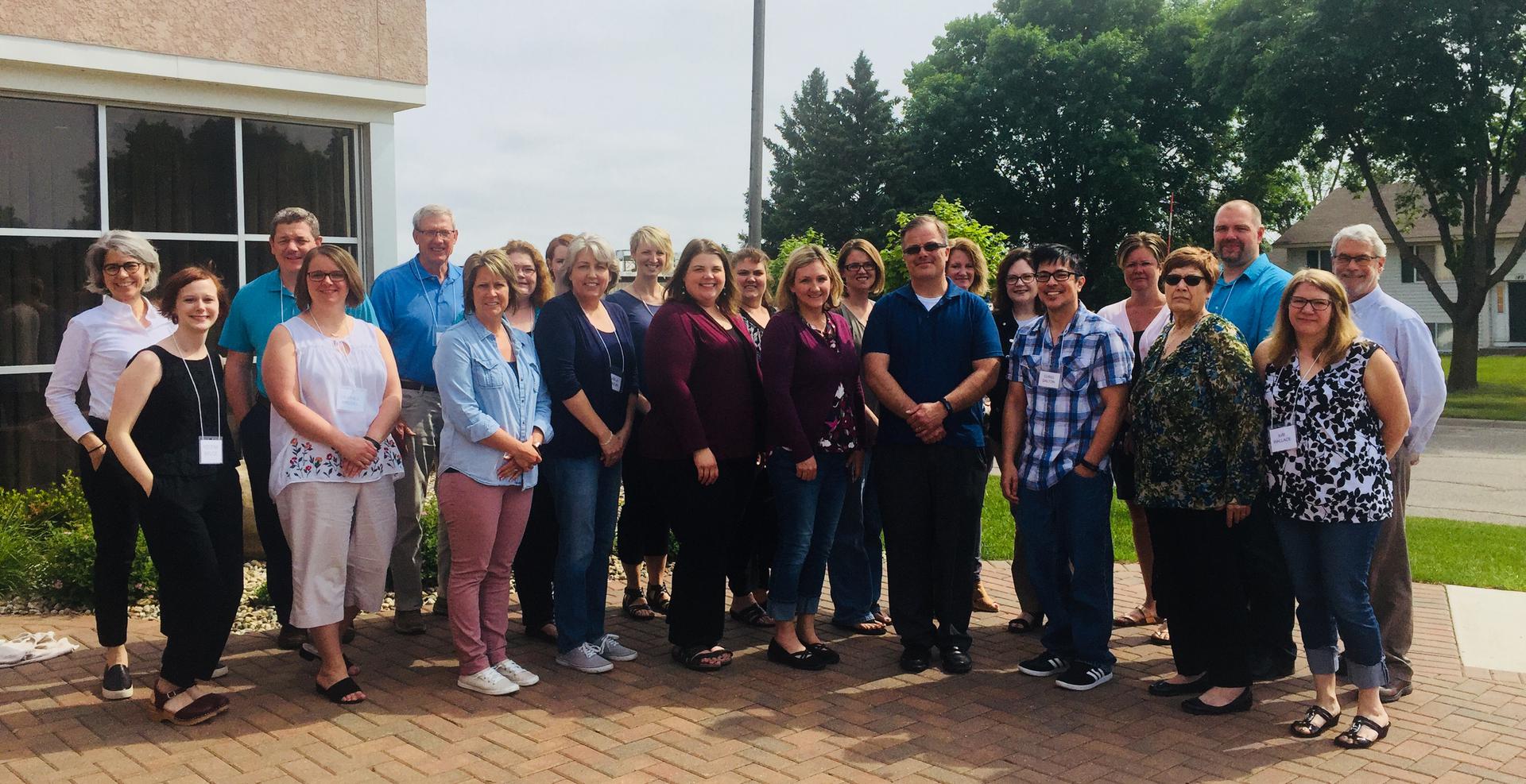
    Members of Housing Institute 6 including Todd, Meeker, Kandiyohi and Swift Counties. 

    Swift County Housing and Redevelopment Authority was awarded a Federal Home Loan Bank Grant to expand their housing rehabilitation  program. Swift County HRA participated in MHP’s Housing Institute in 2019.

    The grant, just shy of $500,000 will help Swift County expand its housing rehabilitation project. The fiunds will help low-income homeowners with much needed repairs and support county efforts to purchase and rehab a home in the county. 

    Many rural HRAs and EDAs in Minnesota face dwindling federal financial resources and have staff resources that are stretched to capacity. This makes competing for scarce resources in complex development environments extremely challenging resulting in lack of ability to maintain aging housing stock or create new affordable housing opportunities to meet local needs.  

    MHP’s Housing Institute uses a collaborative, team-based learning model supplemented with customized assistance including information and skills around the FHLB process. The Institutes also enhance community capacity by bringing together teams focused on creating and preserve affordable housing. The model builds local knowledge and capacity and provides opportunity to identify and leverage community resources.  

    “We learned about the FHLB program during our participation in the Minnesota Housing Partnership’s Housing Institute in 2017-2018, and we were lucky to find we had a FHLB member bank in Swift County,” said Jennifer Frost, Executive Director, Swift County RDA.

    “It’s been difficult to attract new housing development given the costs to build against our market rents and sales prices so we have really gone after rehab dollars to improve the homes we have. Increasing the quality of our housing stock provides more options for families looking to live in Swift County. More options can help businesses attract employees they need to our communities.”

    Learn more about Swift County’s efforts here. Learn more about MHP’s Housing Institutes here. 


  • MHP welcomes new policy intern: Stephanie Oliva

    MHP is excited to welcome Stephanie Oliva as the organization’s 2020 Capitol Pathways intern.

    Stephanie is currently a sophomore at the University of Northwestern where she is majoring in Intercultural Studies, Youth and Adult Studies and a concentration in Social Justice and Non-Profit. In addition, she was awarded the Act Six scholarship which is awarded to 45 of the Twin Cities’ most promising urban leaders each year.

    The Capitol Pathways internship is a program of the Citizens League, and places college students of color in paid internships with government offices, nonprofits, corporations, and law firms where they can gain experience and build relationships in and around Minnesota’s Capitol.

    Stephanie is looking forward to a hands on experience at MHP. “I want to see how MHP is helping those in our community, and to be able to learn from MHP’s Deputy Policy Director Libby Murphy and Policy Director Elizabeth Glidden,” she says. “As well as to gain knowledge on affordable housing and community development and take that back into my own community and help those who do not know how to navigate affordable housing.”

    MHP’s policy team will be working on passage of a historic bonding for affordable housing package, pressing for a state match for Local Housing Trust Funds, and passing funding for an affordable housing tax credit. 

    Stephanie will join MHP in early February and work closely with the team on-site at the Minnesota Capitol. 

    Stephanie’s inspiration comes from her parents. “They have taught me patience, love, perseverance, determination, and to advocate for myself,” she says. “From coming to the U.S. as immigrants and now being U.S. citizens, I have truly seen them push each other for themselves but also for their family.”

    Please welcome Stephanie Oliva, MHP’s Capitol Pathways intern for the 2020 Legislative Session! 

  • Gov. Walz proposes $276 million in affordable housing bonding

    Today, Gov. Walz released his administration’s housing bonding request which totals $276 million. 

     “Our state faces a significant shortfall of homes for those with the greatest need. This includes low-income renters who are caring for our elders, who prepare our food, and who teach our children,” said Anne Mavity, Minnesota Housing Partnership’s executive director. “This bonding request would get our state closer to a safe, affordable home for every Minnesotan.”

    Walz made the announcement at Minnehaha Commons in South Minneapolis. 

    “We’re working to make sure all Minnesotans can afford to live in the communities they call home,” Walz said. “Whether it’s proximity to work, school, or loved ones, too often Minnesotans can’t find affordable housing near the things that matter most.”

    Lt. Gov. Peggy Flanagan added, “We are here to talk about affordable housing. But really, we are here to talk about something very personal. Home. “

    “Every Minnesotan deserves a safe and affordable place to call home.”

    Recent events have highlighted the need for safe, affordable homes. Five people lost their lives and hundreds have been displaced from the tragic fires at the Drake Hotel on Christmas and the Minneapolis Public Housing Authority’s Cedar High apartments.  

    “These devastating events are stark reminders that, as a state, we have a lot of work to do to ensure that every Minnesotan benefits from the stability and safety of an affordable and healthy home,” Elizabeth Glidden, MHP’s Director of Policy and Strategic Initiatives. “The people displaced should be the foremost concern of every lawmaker as they consider this bonding proposal.”

    The need for affordable housing investment is evident across the state. According to MHP’s State of the State’s Housing, in the Northwest region, the percentage of cost-burdened renters grew from 33 percent in 2000 to 41 percent in 2017. Yet, in 2017, only 238 new multi-family units were permitted for construction. Seven of the 12 counties in the Northwest region saw no new development of multi-family units. 

    In the Twin Cities, affordable rental units are hard to come by, according to MHP’s Market Watch: Hennepin County. Since 2010, average rent rose 20 percent in Hennepin County. At the same time, the vacancy rate in the county fell from 6.2% to 4.4%. With rent rising and fewer units available, those at the lowest incomes have few options, and with just 2.8% of all affordable rental units produced for households earning under 30% of area median income, production is lagging seriously behind the need.

    “This bonding package is a historic, critical investment and represents a bold step toward securing direly needed funding for housing,” said Anne Mavity, executive director of Minnesota Housing Partnership. “It’s a recognition of the affordable housing shortfall Minnesota faces and gets us closer to ensuring every Minnesotan has a safe, affordable home. I appreciate the leadership of Gov. Walz in bringing this investment to housing affordability and making it a priority. This is a great start in tackling an issue that is impacting every Minnesotan.”


  • MHP releases 2020 policy agenda

    While the legislative session is still more than a month away, MHP has already been meeting with lawmakers, legislative staff, and other affordable housing advocates to garner support for our 2020 policy agenda. 


    That agenda includes: 

    • $500 million in bonds to create more deeply affordable housing
    • An Affordable Housing Tax Credit to harness available private capital to create more housing opportunities by filling affordability gaps
    • State support for local communities to establish and grow Local Housing Trust Funds through a state funding match program

    Because 2020 is a bonding year at the Capitol, MHP along with our coalition partners will be pushing for $500 million in bonds to create more affordable housing. $500 million is the largest bonding request for housing in state history, and we are partnering with the Homes for All Coalition to get it done in 2020.

    MHP also seeks $25 million annually for the Affordable Housing Tax Credit. More than 60 organizations in Minnesota have endorsed the tax credit (view the list of endorsers and find out how to endorse). This innovative new tool encourages local businesses and neighbors to invest in their community by creating housing opportunities. Because the private market is not supplying housing that is affordable to working people in Minnesota, a public private partnership is the best way to ensure an adequate supply of housing. The Affordable Housing Tax Credit incentivizes private investment and promotes community and economic development. 

    Local Housing Trust Funds (LHTF) are funds established by a local government by dedicating local public revenue for housing. They are a consistent, flexible resource for housing within a local jurisdiction. Trust funds help communities leverage public and private resources and jumpstart projects that draw investment and jobs. LHTFs enable communities to prioritize developments that maximize benefit to the local community.

    Across the country, state investments are proven to motivate communities to create and resource LHTFs. MHP is seeking a $10 million state investment in a match program to jump-start LHTFs across the state, and give communities the flexibility to respond to housing needs. 

    Please join MHP’s Policy Team as they provide an update on MHP’s legislative agenda and insight into the 2020 session. Click here to register. 

    Stay up-to-date all session long by joining our Capitol Connect email list and following us on Twitter.

  • Minnesota Homeless Fund Launches

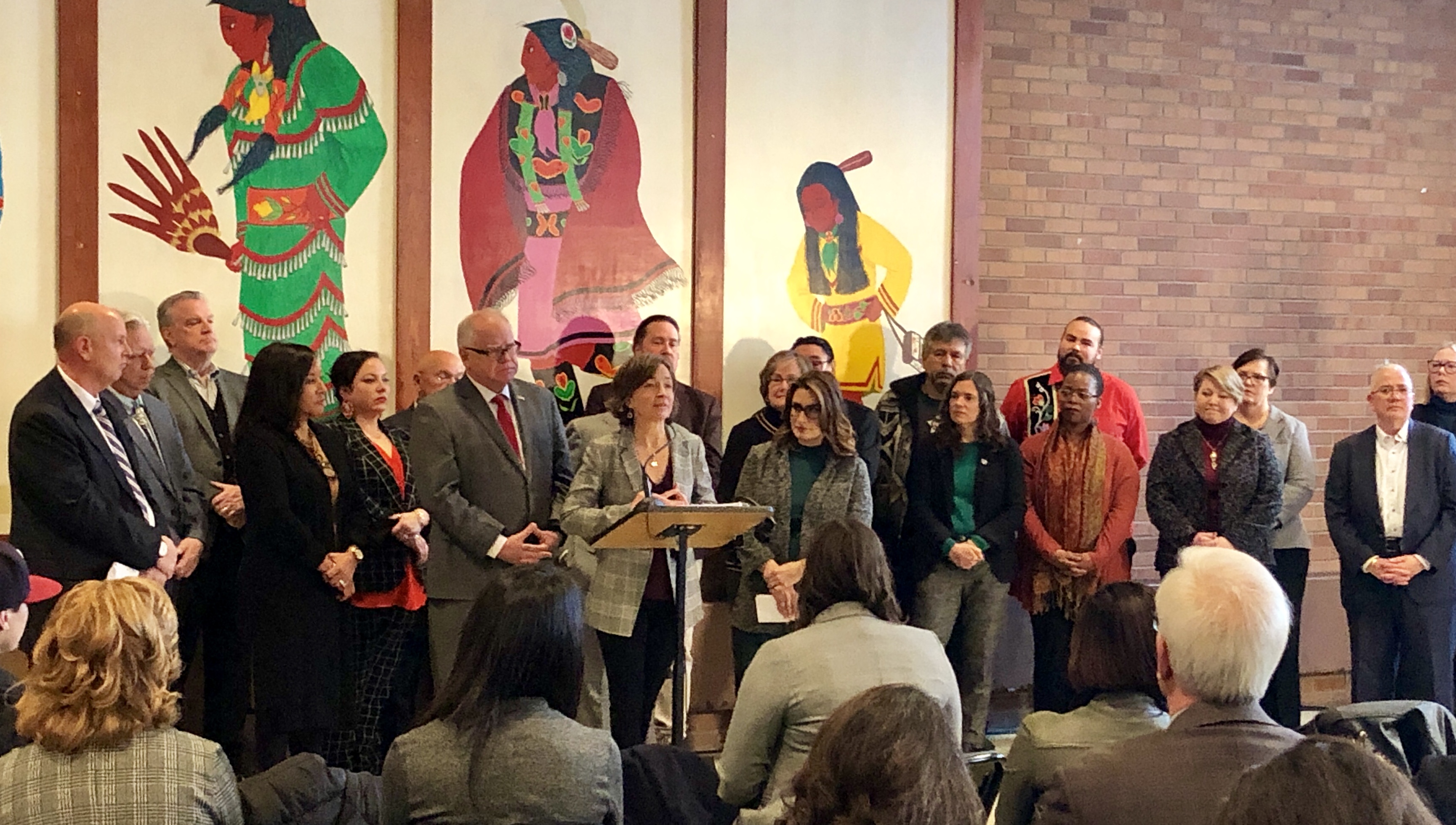
    On Dec. 19 at the Minnesota Indian Women’s Resource Center, Gov. Tim Walz, Lt. Gov. Peggy Flanagan, and community leaders announced the formation of the Minnesota Homeless Fund, a public-private partnership to provide immediate shelter for people experiencing homelessness. 

    “This is a call to action,” Flanagan told the crowd of reporters and advocates. “It is completely unacceptable to the governor and to me that anyone is sleeping outside, especially at this time of year.”

    Walz announced that nearly $5 million had been raised for emergency shelter across Minnesota by charitable foundations and private companies.

    “This is nothing new,” Walz said. “No one here thinks they’re reinventing the wheel. No one here believes that this is a one-off initiative and that we can ease our consciences and forget about it.”

    The Minnesota Homeless Fund will help create new opportunities to bring people indoors that are currently unsheltered and so far has raised $5 million which is being administered by the St. Paul & Minnesota Foundation. 

    The Fund seeks to get resources to the community immediately and is accepting applications for projects at www.spmcf.org/minnesota-homeless-fund through Jan. 7 for the first round. Review and distribution of resources will be on January 9.