
• MHP board elects six new members


    Six new members join MHP board: Chris Coleman, Alisha Gehlert, Dr. Brittany Lewis, Kayla Schuchman, Cecile Bedor, and Julia Nelmark

    At its December meeting, the Minnesota Housing Partnership’s Board of Directors honored five departing members and welcomed six newcomers. The new members of the board are Chris Coleman, Kayla Schuchman, Cecile Bedor, Dr. Brittany Lewis, Alisha Gehlert, and Julia Nelmark.

    “These are experts in affordable housing and bring perspective from many angles: research, policy, real estate, indigenous lands, and finance. MHP has a strong future ahead with these new board members,” MHP Executive Director Anne Mavity said.

    The new members join the board as MHP enters the second year of its strategic plan. 

    Leaving the board were Skip Duchesneau, Pam Wheelock, Deidre Schmidt, Jay Jensen, and Jamie Thelen. 
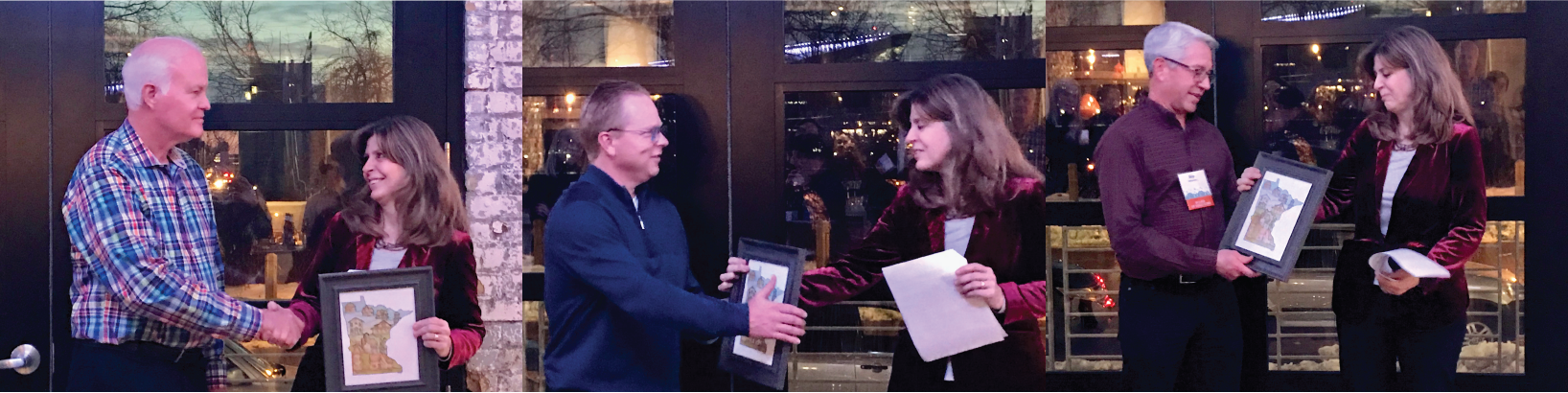
    Anne Mavity presents former board members Jay Jensen, Jamie Thelen, and Skip Duchesneau with housing art as appreciation for their service.

    “We’re grateful to Skip, Pam, Diedre, Jay, and Jamie for their many years of dedicated leadership on MHP’s board, and I feel privileged to have had the opportunity to learn from each of them,” Mavity said. “These leaders have committed their careers to advancing affordable housing and community development. We cannot thank them enough for the insights and expertise that have made MHP a stronger organization. They have helped us move toward a Minnesota where everyone has a safe, affordable home.”

    New Board Member Bios

    Kayla Schuchman, Director of Housing, Planning and Economic Development, City of St. Paul. Schuchman spent nine years implementing affordable housing policy through successive roles at Minnesota Housing, the state’s affordable housing agency. Previously, she was a project manager for the St. Paul-based affordable housing developer CommonBond Communities, where she structured deals and built community support to develop affordable multifamily projects. She also serves as co-chair of the Metropolitan Consortium of Community Developers Housing Committee, a regional association of community development organizations; and as a board member for Urban Homeworks, a nonprofit that transforms vacant properties into housing. Schuchman is a certified housing development finance professional through the National Development Council. She has a bachelor’s degree in economics from Macalester College, and a master’s degree in public policy with a concentration in economic and community development from the University of Minnesota’s Humphrey Institute of Public Affairs.

    Cecile Bedor joined the CommonBond team as Executive Vice President of Real Estate in April 2018. She is responsible for all aspects of the purchase and development of real estate; property asset management to ensure financial sustainability and reporting to project funders and investors.  Cecile previously served as the Executive Vice President of GREATER MSP, where she began in 2014. Prior to that, she served for eight years as the City of Saint Paul’s Director of Planning and Economic Development (PED). During that time, she was also the Executive Director of the City’s Housing & Redevelopment Authority. Prior to joining the City, she was the Director of Partnerships and Development for the Minneapolis Public Library, overseeing the system’s marketing and communications; community library capital projects; and community partnerships. She previously held positions with the National Equity Fund, the Metropolitan Council, and Aeon.  Through Board and volunteer service, she’s supported various organizations, including the Itasca Project, the American Red Cross – MN, Wilderness Inquiry, Hope Community, Lambda Alpha, Saint Paul College, and others. She has two adult children and lives in south Minneapolis.

    Chris Coleman joined Twin Cities Habitat for Humanity as President & CEO in June 2018 after serving as Mayor of St. Paul for twelve years. As Mayor, Chris was a champion for economic development, education, housing, and racial equity. From 2013 to 2014, Chris was the President of the National League of Cities, a bi-partisan coalition of leaders from across the country. Prior to his election as Mayor, Chris was an investment advisor for RBC and he served for six years on the St. Paul City Council. Chris was born and raised in St. Paul and earned bachelor’s and law degrees from the University of Minnesota. Chris lives on St. Paul’s West Side where he and his wife, Connie, raised their two children, Molly and Aidan.

    Alisha Gehlert is the Director of Economic Development and Planning for Red Lake Nation. She is a graduate of Bemidji State University and has an MBA in American Indian Entrepreneurship from Gonzaga University. Alisha is a proud member of the Red Lake Band of Chippewa Indians.  While in her Master’s program Alisha began her professional career with the Red Lake Band of Chippewa Indians’ Family and Children Services (FCS). While with FCS Alisha was exposed to issues surrounding family reunification, youth homelessness, and the importance of delivering social services that meet people where they are at.  After almost 2 years with FCS, Alisha was hired as the Director of Economic Development and Planning for the Red Lake Band of Chippewa Indians. In her current capacity she believes there is opportunity for economic development through housing, healthcare, and education; which are three core pieces to every individual’s wellbeing.  Alisha has had the opportunity to work with a group of core partners on the Minneapolis Navigation Center and an Urban Tribal Affordable Housing Development.

    Dr. Brittany Lewis is a well-respected community engaged qualitative scholar, thought leader, author, and professor known for bringing those most often locked out of local decision-making processes to the action research table for close to 10 years. Dr. Lewis is the Founder and CEO of Research in Action, an urban research consulting firm, and is currently a Senior Research Associate at the Center for Urban and Regional Affairs (CURA) at the University of Minnesota. Formerly, Dr. Lewis was a Minneapolis Federal Reserve Bank Scholar in Residence and Visiting Assistant Professor at Macalester College in Political Science and American Studies. Dr. Lewis is the Principal Investigator of the Illusion of Choice: Evictions and Profit in North Minneapolis report and the Co-Principal Investigator on the recently published report entitled: The Diversity of Gentrification: Multiple Forms of Gentrification in Minneapolis and St. Paul. Dr. Lewis’s research was used in a Minnesota Supreme Court to expand rights for tenants facing evictions, as direct testimony at the Minnesota State Legislature, and to inform the human services and public safety impact agenda within Hennepin County and the City of Minneapolis. Dr. Lewis has consulted with philanthropic partners such as the Pohlad and Graves Foundation who refer directly to Dr. Lewis’s research as they develop their own scope of work and strategic plans of action.

    Julia Nelmark was named MMCDC’s president in August 2018, after developing and leading the company’s New Markets Tax Credit Financing division since their first allocation. She led the deployment of $544 million of NMTC allocation across Minnesota and surrounding states, for dozens of projects ranging from $250,000 to $20 million. Originally from Illinois, Ms. Nelmark received her bachelor’s degree from Benedictine University, where she was Accounting Major of the Year. She received her CPA certification and went on to receive a masters of management degree from Kellogg Graduate School of Business at Northwestern University. She held a number of accounting, finance and analyst positions for Amoco Corp. and subsidiaries, and managed the budgeting – strategic planning area for Advance Transformer Company before joining MMCDC. She and her husband own an interest in the family dairy farm near Wolf Lake, Minnesota.
  • Investors Council Breakfast explores The Role of Homeownership

    Minnesota needs to add 300,000 new homes by 2030 in order to address existing gaps. Over 100 Investors Council attendees gathered on November 7 to hear about “The Role of Homeownership,” an important strategy toward a goal 300,000 new homes by 2030. 
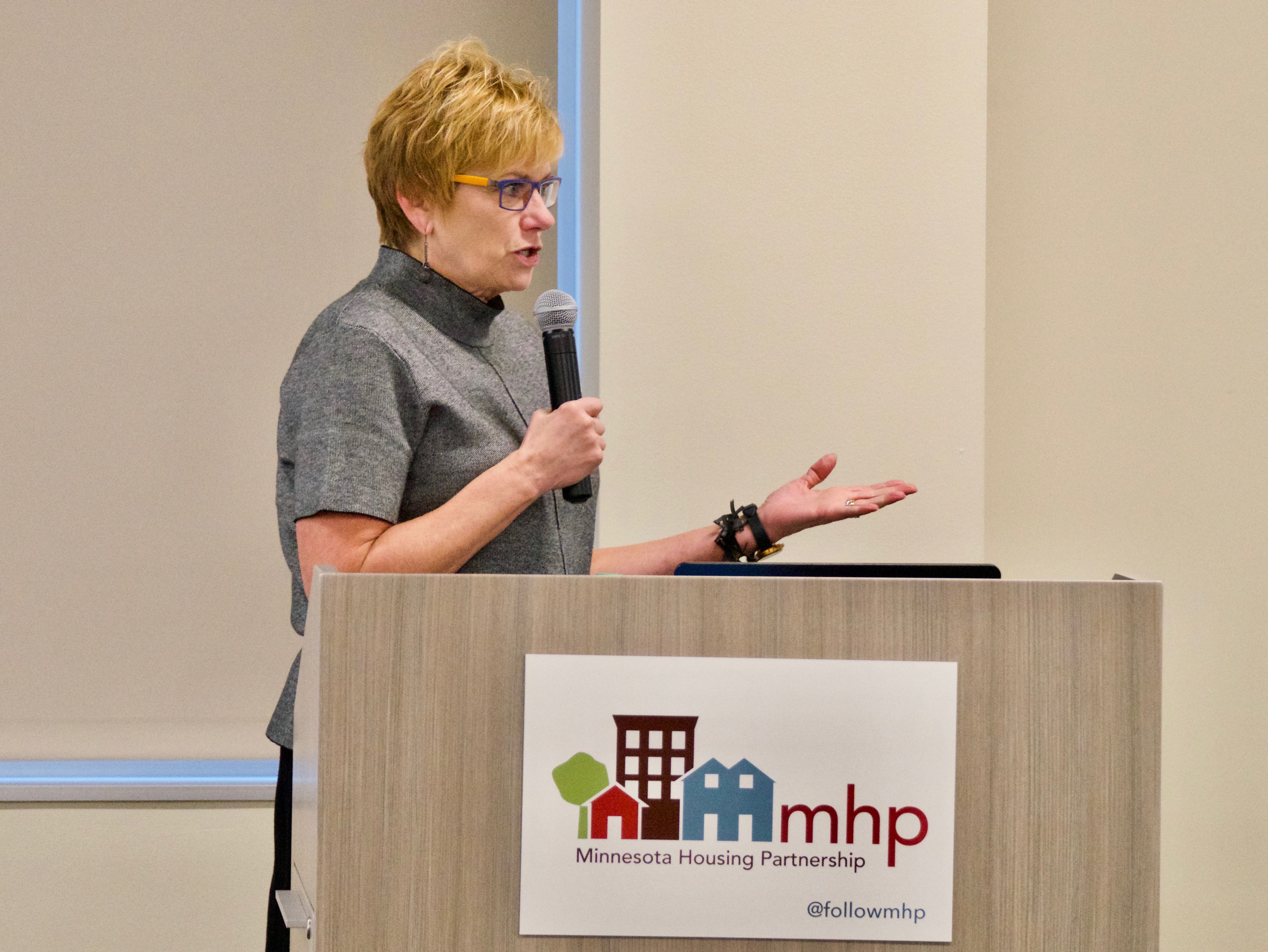
    The Investors Council Breakfast attendees heard from a broad range of speakers about increasing homeownership, particularly in communities that have traditionally been shut out of this important wealth-building asset. 

    Anne Mavity, MHP’s Executive Director laid out the landscape for Minnesota’s affordable housing crisis. 

    “A goal was laid out that said that we are going to create 300,000 new units by 2030 in order to address gaps in affordable housing,” Mavity said citing the efforts of the Minnesota Housing Task Force which met for about 7 months in 2018. That task force laid out three areas needed to address the growing lack of affordable housing: homeownership, rentals, and housing stability. 

    “We thought MHP would organize our three-part series around those three areas.” Hence the title for the Nov. 7 event, “300,000 by 2030: The Role of Homeownership.”

    Mavity added, “What does that mean in terms of the kind of housing we need to produce? We need 300,000 new units, but in what complement?”

    According to recent data from Minnesota Housing, Minnesota needs 153,000 units for home ownership and 93,000 of new rental units. 

    “That’s year-over-year addressing household growth, addressing job growth, and making sure we are sustaining our economy.” 

    Julie Gugin, the executive director of the Minnesota Homeownership Center, moderated a panel dedicated to the topic of homeownership. 

    Gugin spoke about her organization’s role in working to end the homeownership gap. 

    “In this country the median household wealth of white households is $171,000. For African-American households it’s $17,000. That difference is home ownership equity.”

    “Minnesota has the highest rate of home ownership among white households in this country and persistently one of the lowest rates of home ownership among households of color in this country.”

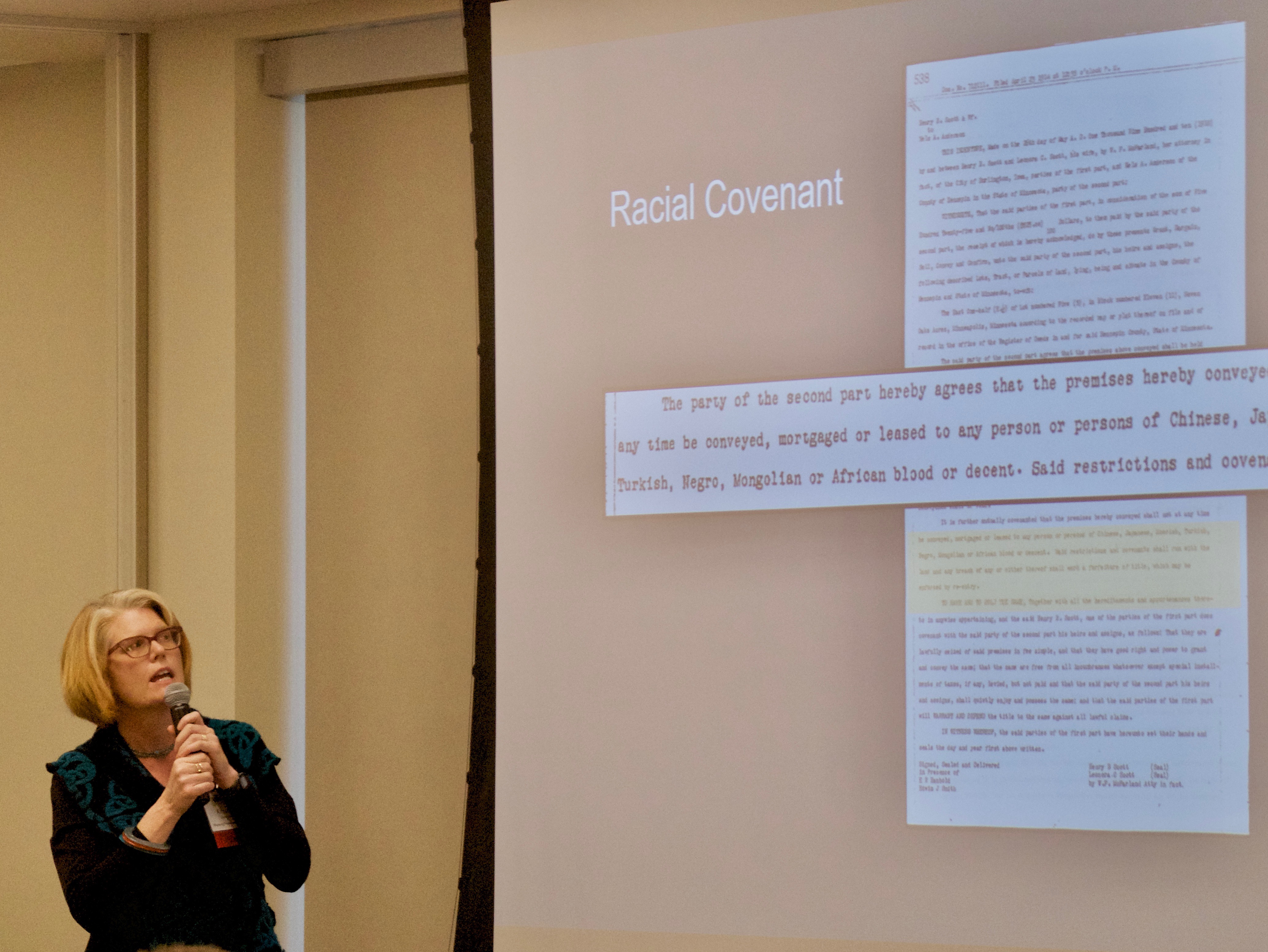
    Kirsten Delegard is one of the co-founders of Mapping Prejudice and gave an overview of that group’s work exposing the long-term effects of racial covenants in the Twin Cities. In particular, how these covenants facilitated the homeownership gap in the region. 

    Delegard noted a startling statistic: In the Twin Cities, 75 percent of white families own their home while only 23 percent of African Americans do.

    “Housing sits at the foundation of everything else. It determines whether you will be healthy or sick. It determines what kind of education you have access to. It determines whether your family is going to be able to amass any kind of wealth,” she said. “Homeownership has been seen as an essential feature of citizenship, something that has been recognized by the Supreme Court of the United States.”

    Delegard spoke about the widespread implementation of racial covenants starting in 1910. These covenants barred people of color from owning homes in many parts of the Twin Cities, especially wealthier areas. If a covenant was embedded in a deed, the only way to remove it was to appeal to the person who put it there. The punishment for violating a covenant? Complete loss of equity in the property. 

    “Racial covenants combined with redlining made it really hard for African American families to buy houses in the Twin Cities. Covenants pushed families into neighborhoods that were redlined,’ Delegard told the audience. 

    “This is why black and brown people are most vulnerable to housing precarity today.”

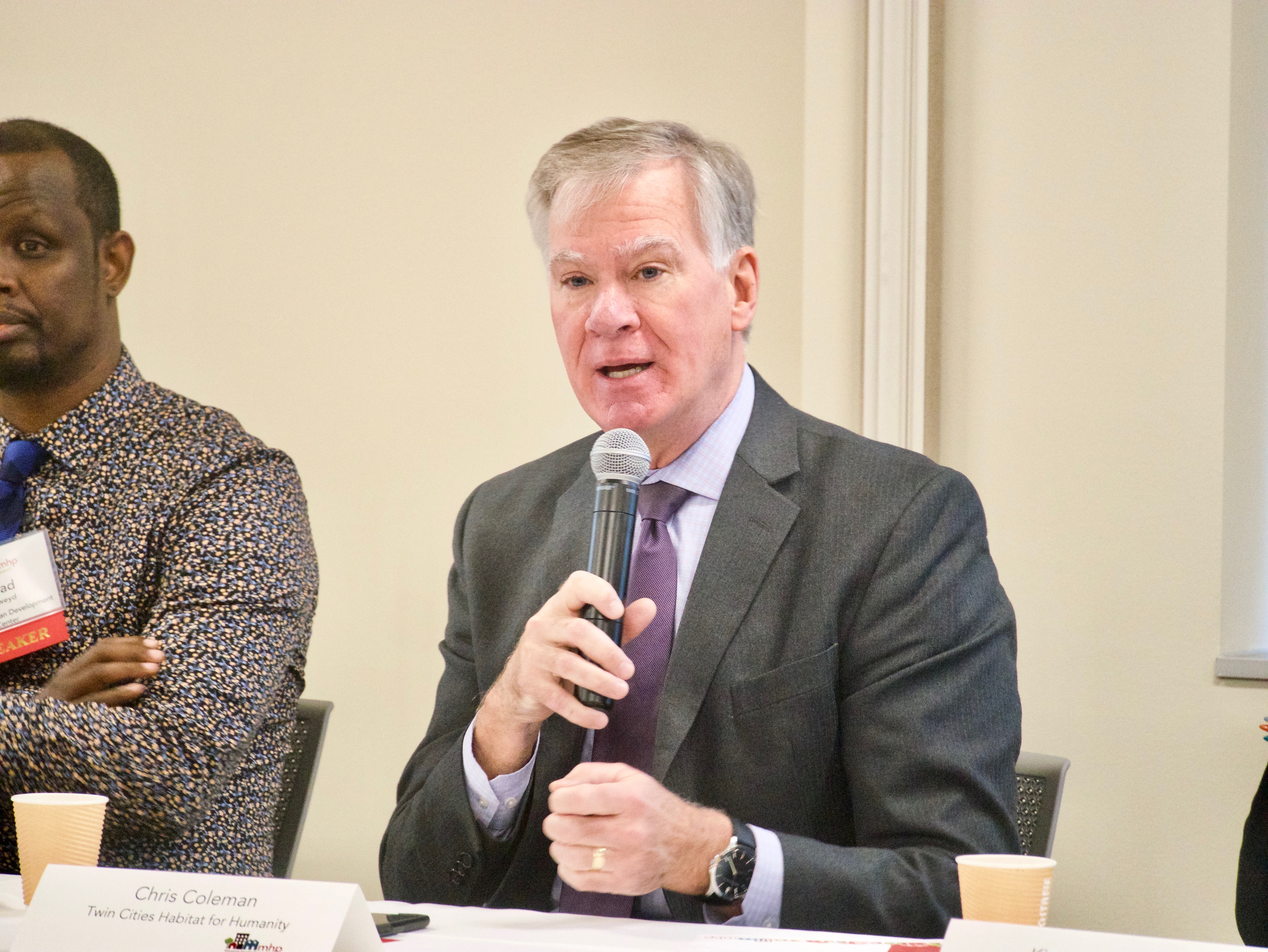
    Chris Coleman, President & CEO of Twin Cities Habitat for Humanity, noted another statistic behind the region’s homeownership gap. 

    “The most compelling statistic I have ever heard on any subject is that from 1934 to 1968, 98% of every FHA mortgage in this country was written for a white family. So if you want to know why there are disparities in our educational system, in our healthcare system, in our employment system, it is that simple fact.”

    Coleman said it was work like Mapping Prejudice that is an important step forward. 

    “When we think about all the strategies that need to be employed, if we don’t recognize this history and why we got to the situation, we will never really truly be able to understand and address it.”

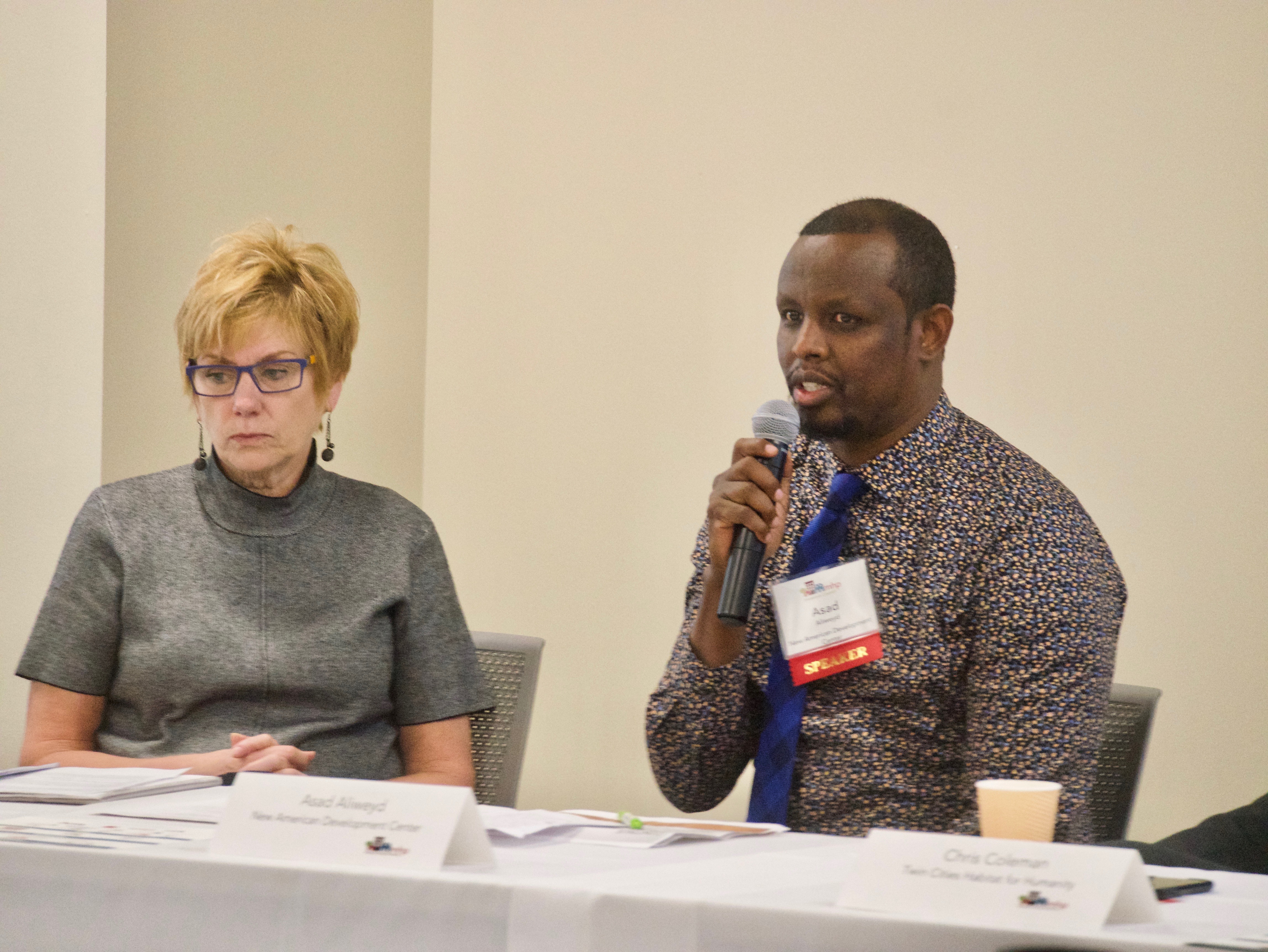
    Asad Aliweyd, founder & Executive Director, New American Development Center (NADC), spoke about the current risks to homeownership and wealth-building for the state’s Muslim communities. 

    Aliweyd said that homeownership barriers for Muslims are both cultural and systematic. With interest-free financing, risk is transferred solely to the borrower.
    “The way the financial system is set up is basically not including our community,” said Aliweyd.  

    “We have to have some kind of policy work on accommodations. We have to think in creative ways,” he told the audience. “There’s almost 250,000 muslims in the Minnesota. If we don’t lay down the foundation for building wealth now, this poverty and income inequality will grow. We all call Minnesota home, and we have to find systematic accommodation.”

    He added, “Interest free financing is not just for muslims. Some Jewish and Christian beliefs also prohibit interest.” He noted that lenders need to take on some of the risk in interest-free lending. 

    How do we move forward? 

    You have to agree that there’s a problem before you can seek a solution,” said Kristin Delegard, “So many places that I go, people are not convinced that there’s a problem. They are convinced — still — that the situation we are in is natural, inevitable, immutable. That there’s nothing we can do about it.”

    She said, “We all have to face truth before we can have reconciliation, before we can have progress. We can’t address to howeneship crisis without reckoning with history and with race.”

    Julie Gugin of the Minnesota Homeownership Center noted that her organization is working to build back trust in communities that have been left out of homeownership. 

    MHC convenes a group called the Homeownership Opportunity Alliance, a cross sector collaboration looking at addressing systemic issues that have created the homeownership situation we have today.

    “This includes Community outreach in very targeted communities to create aspiration around homeownership,” she said. “You can imagine in community that have been inordinately impacted by the racially-charged activities talked about today, who have been subjected to lending scams, and whose communities have failed to recover at the same pace as white communities after the great recession. Just getting people to a trust level and an aspiration level around homeownership is incredibly important.”

    Join or renew your membership in the Investors Council today to be part of these dynamic conversations.

    See more photos from the event on Facebook.

  • Minnesota Housing Partnership Receives $1.7 Million HUD Grant to Assist Rural and Native Community Development

    Minnesota Housing Partnership (MHP) has received a crucial grant to assist rural and Native leaders in solving housing and economic development issues in their communities. The U.S. Department of Housing and Urban Development’s Rural Capacity Building for Community Development and Affordable Housing Grant program (RCB) will provide $1.7 million to continue MHP’s important technical assistance and capacity-building work. 

    The award will fund MHP’s Strengthening Rural Communities (SRC) program, which gives leaders the tools and knowledge they need to identify and address regional development needs through strategic collaboration. 

    In rural and Native communities nationwide, there’s a significant gap between the supply of affordable housing and the number of people who need it, and a pressing need to address economic and community development challenges. Providing resources and guidance to local and Tribal governments and other rural housing development organizations has proven an effective model of helping local communities address these needs.

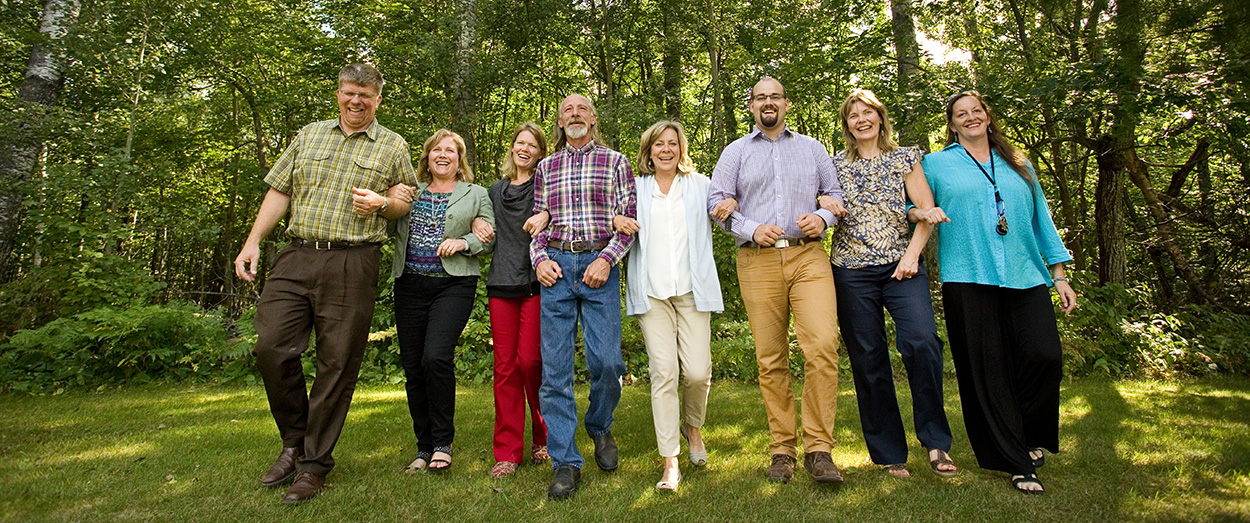
    Itasca County Housing Institute team gather for a photo. Pictured left to right: Victor Moen, Diane Larson, Amanda MacDonell, Dana Herschbach, Lorna Mix, Isaac Meyer, Audrey Moen, Sherry Shadley.

    “Without the RCB support and funding we would not have been able to move forward with two major initiatives for our agency, our community and the people we serve,” said Audrey Moen, Director of Housing for Northland Counseling Center (NCC). With MHP’s assistance and RCB funding, NCC was able to fund an Itasca County housing market study which led to the development of new affordable housing units and the conversion of existing housing units for low income occupancy.

    The impact of the technical assistance from MHP and funding from HUD “gave a strong message to our community leaders that MHP cares and is concerned about rural Minnesota’s needs,” Moen said. “Our commissioners, city officials, and community leaders were impressed by what MHP — under the RCB assistance — has been able to support.”

    She added, “MHP is an important stakeholder in what can and does happen for our area.  We are fortunate to have Minnesota Housing Partnership’s expertise and involvement.”

    “Minnesota Housing Partnership is ready to put this funding to work immediately in rural and tribal communities,” said Anne Mavity, MHP’s executive director. “We are thrilled that the Department of Housing and Urban Development has committed these funds to help our communities thrive.”

  • MHP applauds bipartisan Minnesota support for Affordable Housing Credit Improvement Act of 2019

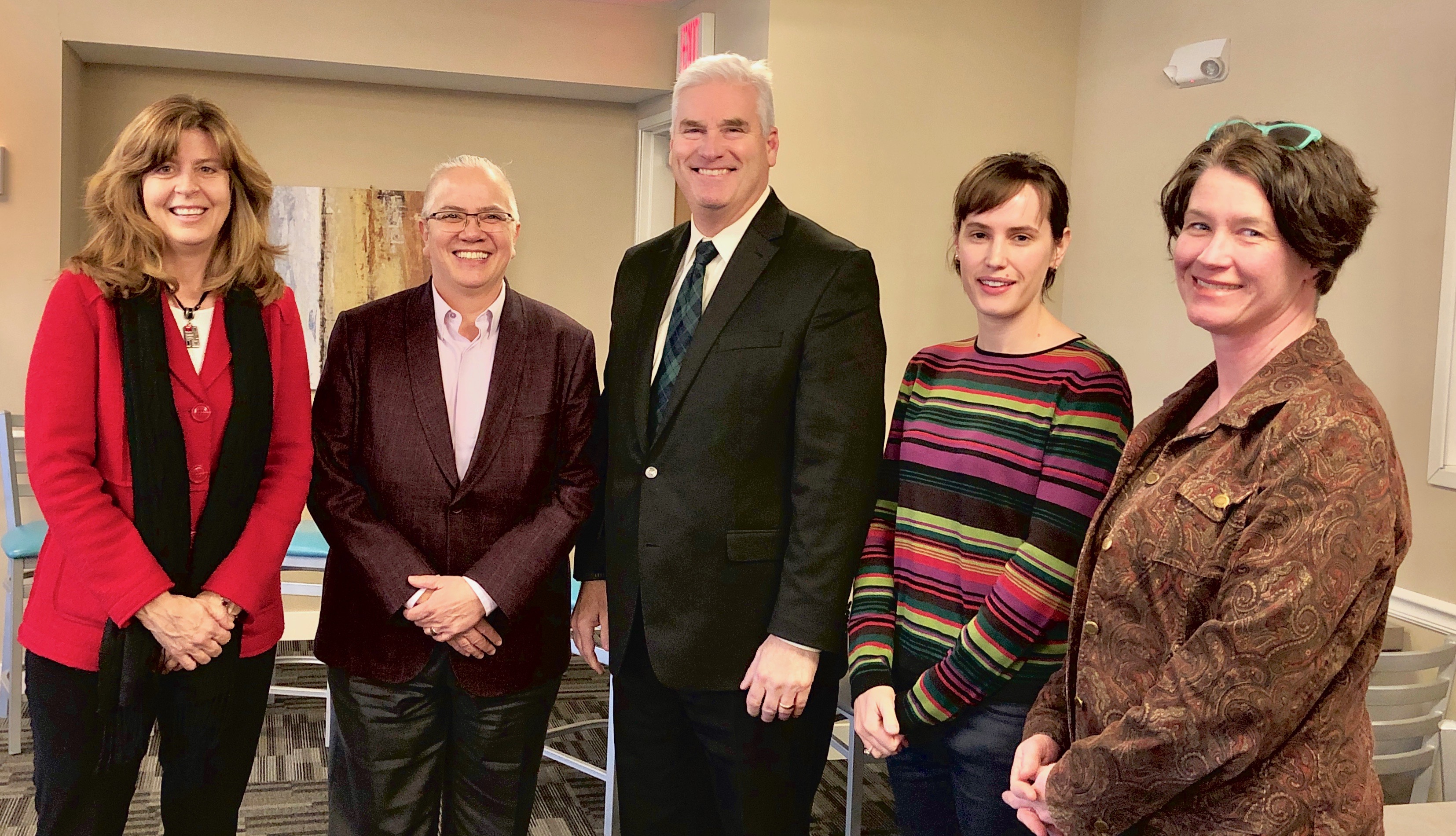
    MHP Executive Director Anne Mavity, MN Housing Commissioner Jennifer Ho, Rep. Tom Emmer, MHP Deputy Policy Director Libby Murphy, and MHP Director of Policy Elizabeth Glidden at Emmer’s announcement of support for AHCIA.

    Almost every member of Minnesota’s congressional delegation, a bipartisan group of lawmakers, has co-sponsored important legislation that would expand the low income housing tax credit. The Affordable Housing Tax Credit Improvement Act (S.1703, H.R. 3077) will significantly enhance affordable housing by increasing allocations to the tax credit by 50 percent and strengthening the credit, including reforms to increase the utility of the tax credit in rural areas.

    Already, Reps. Ilhan Omar, Angie Craig, Dean Phillips, and Betty McCollum in the House, and Sens. Tina Smith and Amy Klobuchar in the Senate have signed on as co-sponsors of the bill. On Nov. 5, Rep. Tom Emmer announced co-sponsorship while at Carver Crossing, a multifamily housing development, built by Ron Clark Construction, made possible with low income housing tax credits and affordable to those earning 60% of the area median income. This came after Rep. Pete Stauber added his name to the bill in mid-October. As of early November, Reps. Jim Hagedorn and Collin Peterson are the only members that have not yet co-sponsored the bill.

    Since 1986, the Low-Income Housing Tax Credit (LIHTC) has financed more than three million homes for low-income households across the United States, including veterans, senior citizens, individuals with disabilities, and families with children. LIHTC is an important component of the financing for most affordable housing developments. With a 50 increase in tax credit allocations, 5,971 additional affordable homes can be built in Minnesota over the next 10 years.

     “It is terrific to see this level of support from Minnesota’s congressional delegation on AHCIA,” said MHP Executive Director Anne Mavity. “Minnesota urgently needs more affordable housing, and this is one of our most important tools to get it done. MHP urges Reps. Hagedorn and Peterson to publicly back this bill, and we call on Congress to get the AHCIA passed as quickly as possible.”


  • MHP releases Local Housing Trust Fund Manual for Minnesota

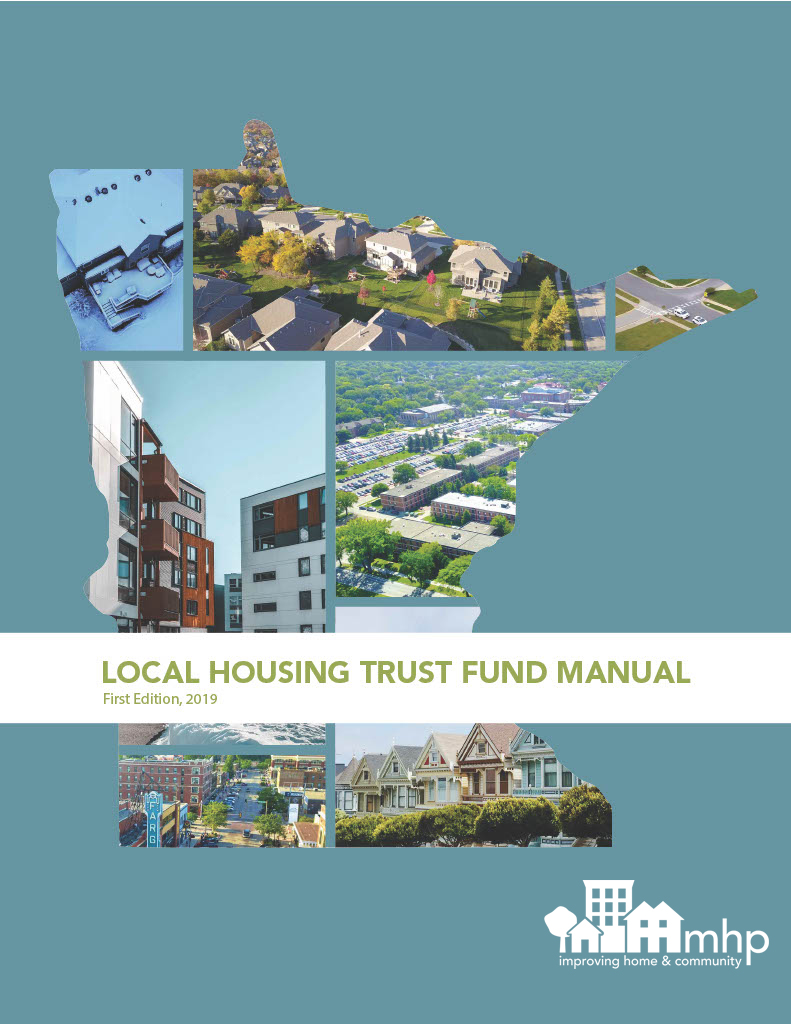
    St. Paul, MN (July 30, 2019) — Today, Minnesota Housing Partnership is announcing the release of its Local Housing Trust Fund Manual for Minnesota. Local Housing Trust Funds are established by a local government by dedicating local public revenue for housing. With 80 pages of references, case studies and explainers, the Local Housing Trust Fund Manual for Minnesota provides an in-depth discussion of key decisions local communities will make to establish a Local Housing Trust Fund (LHTF) — from creating priorities to choosing revenue sources.

    When it comes to housing, Goodhue County Commissioner Brad Anderson‘s view is, “Not doing anything is not an option.” That’s why he and other local leaders established a housing trust fund in Goodhue County as a resource to creatively address evolving local needs. Minnesota Housing Partnership released this manual to help other Minnesota communities do the same.

    “Local communities aren’t going to let Minnesota’s affordable housing shortage hold them back any longer,” said Anne Mavity, Executive Director. “They’re ready to innovate and take action. By creating a Local Housing Trust Fund, communities can implement programs that meet their unique needs and leverage the resources they need to thrive.”

    A consistent, flexible resource, housing trust funds can pool public and private investments. On average nationwide, city trust funds leverage an additional $6 in public and private funding for every dollar invested. Minneapolis’ trust fund, established in 2003, leverages $9 for every dollar invested. 

    Red Wing has already helped six families become homeowners by providing zero-interest homebuyer assistance loans through their trust fund — and they’re poised to help seven more. Established in 2015, Red Wing invests $100,000 annually into their fund. Through Tax Increment Financing, the city will soon invest up to an additional $100,000 annually for 25 years.

    St. Paul established a trust fund last year, with a one-time $10 million investment and annual $2 million investments totalling over $71 million. “We are committed to ensuring all of our residents can participate in our city’s prosperity,” said Saint Paul Mayor Melvin Carter.  “Our Affordable Housing Trust Fund advances this vision by supporting safe, secure, and affordable housing solutions in every neighborhood.”

    To Commissioner Anderson, Goodhue County’s housing trust fund signals that leaders and community members are taking action to help the county realize its potential to thrive. “Our investments say to businesses, individuals, and families, ‘This is the place you should be,’” Anderson said.

    MHP’s Local Housing Trust Fund Manual for Minnesota is a resource that communities of any size can use. It takes lessons learned by cities and counties and combines them with in-depth discussions of current best practices. For more information or to download the Local Housing Trust Fund Manual for Minnesota, visit https://mhp.sdho.dev/local-housing-trust-fund-manual-for-minnesota/.

  • Request for Proposals: Consultant to Strengthen Homes for All Coalition

    Homes for All, a statewide coalition that advances shared policy initiatives that lead to housing stability for all Minnesotans, is seeking a consultant(s) to assist in coalition building and governance for the coalition to achieve maximum impact. H4A is building on its success, and desires to grow its influence and power to leverage more state legislative investments and policy improvements in affordable housing and ending homelessness. H4A desires to strengthen its current coalition structure and governance, as well as increase participation of new housing stakeholders, and provide an “on-ramp” for all new stakeholders to participate, in order to position it for future growth and increased power, influence and success.

    Housing and homelessness have risen to the front pages of news and media and to the top of policy agendas for elected officials at local, state and national levels, including becoming a top issue of the 2020 Presidential campaign. The unprecedented attention on this issue provides both an opportunity and a responsibility to focus energy on building and strengthening our coalition to channel this attention in strategic ways and leverage legislative success for long-term impact.

    Download the request for proposals and submission instructions. Proposals will be accepted through Friday, July 19th at 10am.

    Questions? Contact Allison Streich at [email protected] or 952-556-2803 or Anne Mavity at [email protected] or 651-925-5547.

  • Spokane IHA to preserve 16 affordable homes with $500,000 HUD award

    The Spokane Indian Housing Authority (SIHA) in June received $500,000 in Indian Community Development Block Grant (ICDBG) funding from HUD. It is crucial funding that will allow SIHA to rehabilitate, weatherize, and extend the useful life of 16 affordable homes.

    Built in the 1970s, the homes are part of the 46-unit Martha Boardman subdivision on the Spokane Indian Reservation. It’s the oldest housing stock in SIHA’s portfolio, primarily home to families with children. “With these funds, we should be able to do work that is critically important for the wellbeing of people who live in these homes — now and in the future,” explains Tim Horan, Executive Director of SIHA.

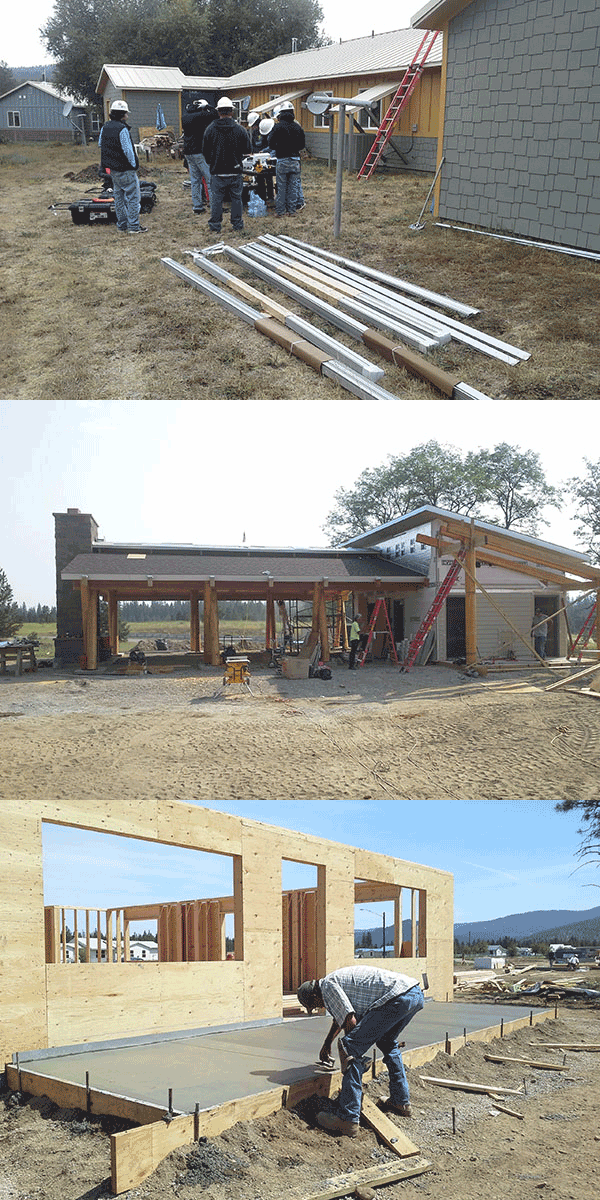
    Right: Previous SIHA projects include construction of a community center and a solar panel installation.

    While SIHA has completed some renovations to the subdivision over time, Horan says the ICDBG award will allow them to do more comprehensive updates. Like all other construction and rehabilitation work SIHA undertakes, the Housing Authorities own construction company, which is almost exclusively Spokane tribal members, will complete the updates.

    From homeownership opportunities and affordable rentals, to weatherization and home improvement loans, SIHA offers a variety of programs to support the success of tribal members, primarily households earning 80 percent of Area Median Income and below. But the community wants to do more. “There are not sufficient financial resources flowing into Indian Country to address all of the needs and the goals that we have to improve our individual communities,” Horan says.

    Housing and community development funding for tribal communities has been stagnant for decades. “Resources don’t go as far as they need to,” Horan explains. “For every funding application HUD’s Office of Native American Programs gets, other good projects go unfunded and individual community needs go unfunded. We can’t keep up with need and demand based on funding sources that we have. It’s incredibly challenging for housing authorities to build and develop new homes.” Instead, Horan says, they must focus on preserving existing homes.

    Applying for ICDBG funds was a bit of a roller coaster, with this winter’s federal government shutdown adding an unexpected twist to the application deadline. Despite that, SIHA secured the first ICDBG award in five years to the Spokane tribe or one of its entities. Horan says their success was due to the hard work of SIHA staff and the partnership of organizations like Rural Community Assistance Corporation and MHP.

    Sarah Bellefuil, Deputy Community Development Director at MHP, supported SIHA as they put their application together. “Hands down, no question Sarah was a superstar for us,” Horan says. “She’s a great detail person, so when she looks at a grant application, she questions everything. That thoroughness allowed us to provide the best responses we could, and it was what was allowed us to get 99 out of 102 available points on the application.”

    Horan says self-sufficiency and resilience are key goals for the community, exemplified by SIHA’s Children of the Sun Solar Initiative, now underway. The project will provide 650 kilowatts of solar energy on 23 tribal buildings and nine residential buildings, saving the community an estimated $2.8 million over the next 30 years. 

    “With this project, we save money and put less pollutants into the air,” Horan explains. “That’s a big priority of the tribe to be good to the environment and be a good steward of the land. It also promotes energy sovereignty, so the tribe can be self sufficient.”

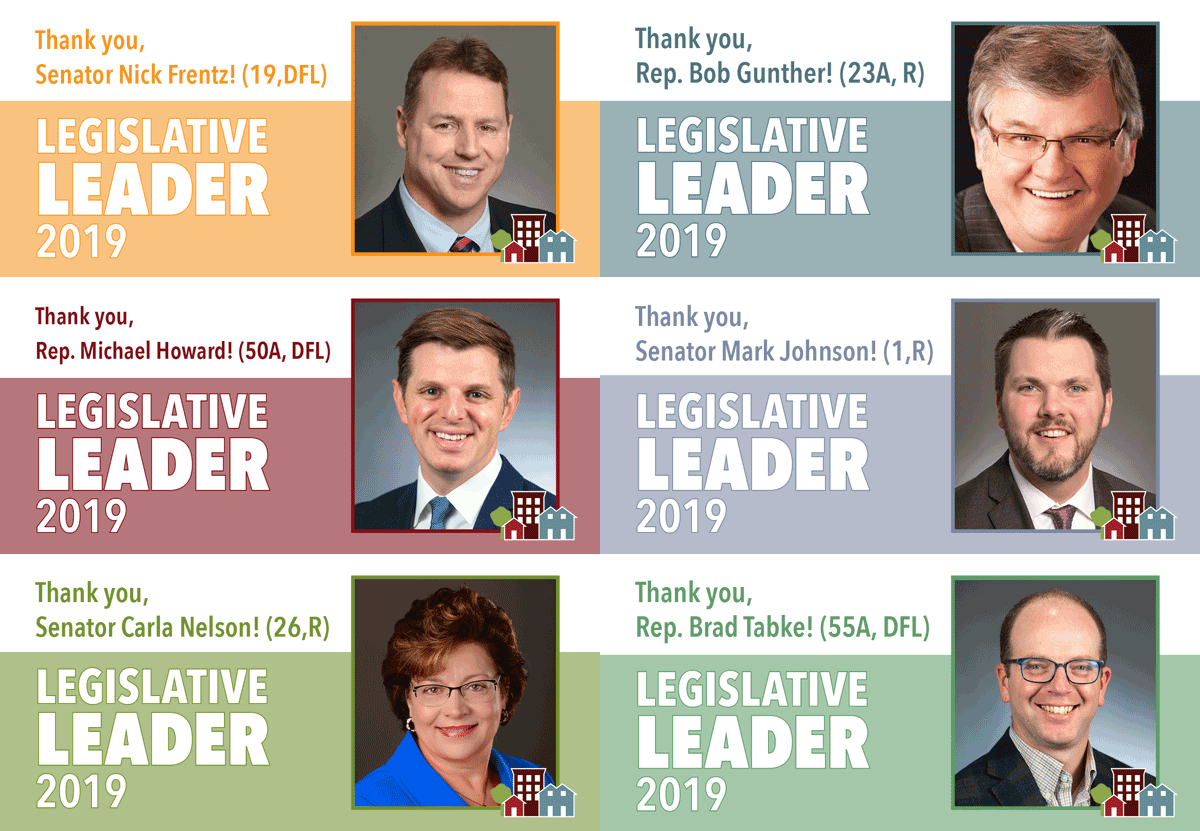
  • MHP announces 2019 Legislative Leaders!

    From $60 million in Housing Infrastructure Bonds, to a 12 percent increase in Minnesota Housing’s budget in 2020, the end of the 2019 legislative session saw several critical wins for affordable housing. While there’s still plenty of work to do, several legislators stood out this session as housing champions, demonstrating a deep resolve to make a difference for Minnesotans. MHP is proud to recognize these champions with the 2019 Legislative Leader Award. 

    The following Legislative Leaders advanced MHP’s policy initiatives and drew attention to affordable housing as an issue of public importance, delivering persuasive arguments and taking action for impactful policies and investments.

    MHP 2019 Legislative Leaders 

    Senator Nick Frentz (DFL-19, Mankato)

    Senator Frentz was one of two senators who participated in Governor Dayton’s Task Force on Housing in 2018. During the 2019 session, he demonstrated a clear drive to transform that experience into action, working persistently to ensure his caucus, the Governor, and legislative leadership prioritized affordable housing solutions. A co-author of the Affordable Housing Tax Credit bill, Senator Frentz provided key insight on strategy, introducing MHP to businesses in Mankato and lobbying his colleagues to support housing investments through the Tax Credit and Homes for All agenda. He kept the promise he made at the end of last session – to do everything he could to pass this bill and create more affordable homes for Minnesotans. 

    Representative Bob Gunther (R-23A, Fairmont)

    Representative Gunther has demonstrated long-term dedication to ensuring Minnesotans have an affordable place to call home. As chief author of the Challenge Fund, his work has helped create thousands of affordable homes across the state, Representative Gunther brings experience and passion to the need for affordable homes. This session, Representative Gunther proposed increased investments to bolster this successful program, continuing his track record as an affordable housing champion. He also lobbied his colleagues in the Senate to reverse proposed cuts to the Challenge Fund, working to bridge the political divide between the House and Senate and make positive change for Minnesotans. The result: increased investment for the Challenge Fund and affordable homes in Minnesota. 

    Representative Michael Howard (DFL-50A, Richfield)

    A relentless advocate for affordable housing, Representative Howard was a true partner during the 2019 session, championing MHP and Homes for All initiatives from day one. As chief author of the Local Housing Trust Fund State Match and co-author of the Affordable Housing Tax Credit, Representative Howard provided critical insight and advice, leveraging his communications skills to create and deliver compelling messages to build broad, bipartisan support for action on affordable housing. Time and time again, he demonstrated a deep conviction to ensure stable housing for low-income Minnesotans, successfully passing investments in the Homework Starts With Home program and a measure to protect and empower residents of manufactured home parks at risk of displacement. 

    Senator Mark Johnson (R-01, Thief River Falls)

    For yet another legislative session, Senator Johnson went above and beyond to bring attention to Minnesota’s growing need for affordable homes. On multiple occasions, Senator Johnson convened conversations to call for housing solutions – hosting MHP in his hometown of Thief River Falls and initiating meetings with the Governor’s office. He helped MHP secure key business and city endorsements for the Affordable Housing Tax Credit, which he co-authored. Senator Johnson even met with a tax credit lawyer to increase his understanding of affordable housing finance. Senator Johnson’s advocacy to Senate leadership for affordable homes, and his personal testimony to these needs in Greater Minnesota, helped ensure the Tax Credit’s momentum and inclusion in Senate omnibus tax bill. 

    Senator Carla Nelson (R-26, Rochester)  

    Senator Nelson is a stalwart champion for investments in affordable homes, using her platform to highlight the connections between stable homes, children succeeding in school, and sustaining a growing economy. This session, Senator Nelson called for action on housing at multiple press conferences and a rally, building momentum for the Homes for All agenda and the Affordable Housing Tax Credit, which Senator Nelson chief authored. Despite her demanding schedule as a committee chair, Senator Nelson ensured sustained attention and momentum around the Tax Credit. She recruited new endorsers and ensured the measure was – once again – included in the Senate’s omnibus tax bill.

    Representative Brad Tabke (DFL-55A, Shakopee)

    Throughout session, Representative Tabke was a clear voice calling for solutions on housing. He chief authored the Affordable Housing Tax Credit bill in the House, helping grow support for this bi-partisan solution to thirty co-authors! Representative Tabke worked tirelessly throughout session to lobby the Chair of the Tax Committee, legislative leadership, and fellow suburban lawmakers in his caucus to support the Tax Credit and investments in affordable housing. By raising the public profile of the Affordable Housing Tax Credit through press conferences and more, Representative Tabke provided significant momentum to this innovative solution championed by Homes for All and MHP. 


  • MHP comment on HUD proposed “mixed status” rule

    July 9 was the last day to submit comments to oppose a proposed HUD rule that would put 25,000 mixed-status families, including 55,000 children, at risk of homelessness. Read our comment letter below. Learn more about the proposed rule.

    ***

    Office of General Council, Rules Docket Clerk Department of Housing and Urban Development 451 7th Street SW, Room 10276, Washington, DC 20410-0500

    Re: HUD Docket No FR-6124-P-01, RIN 2501-AD89 Comments in Response to Proposed Rulemaking: Housing and Community Development Act of 1980: Verification of Eligible Status 

    To whom it may concern:

    On behalf of the Minnesota Housing Partnership, thank you for the opportunity to provide comments in response to the Department of Housing and Urban Development’s (HUD) proposed rule  regarding “verification of eligible status,” published in the Federal Register on May 10, 2019 (RIN 2501- D89: HUD Docket No FR-6124-P-01). We express our strong opposition to this proposed rule, urge that it be withdrawn in its entirety, and that HUD’s long-standing regulations remain in place.

    Minnesota Housing Partnership (MHP)

    MHP convenes, guides and mobilizes diverse partners working to improve conditions of home and community, from private developers and tribal leaders to elected officials. Crossing boundaries to forge broad coalitions, we amplify a common vision: Building strong, equitable communities that provide opportunity for everyone, especially those with lower incomes. We provide capacity building and technical assistance in rural areas and Native nations, produce original research, and advocate for policies that advance affordable housing and strengthen communities.

    MHP strongly opposes HUD’s proposed rule that could cause more than 100,000 people to be evicted from their homes, including more than 55,000 children who are U.S. citizens or have legal status. HUD’s own  analysis shows that the proposed rule will result in fewer families receiving federal housing benefits.

    In Minnesota, HUD’s proposed rule will not create solutions and savings, but will increase costs, disrupt and destabilize families and children through the violent process of eviction, and produce distrust and fear – especially in immigrant families – of accessing government benefits for which they are qualified.

    MHP prides itself on non-partisan, data driven solutions. It engages bipartisan lawmakers in developing smart policies and program design that increases supply of and access to affordable homes. This proposed rule is not a data driven solution to any articulable problem; rather, HUD’s own data indicates that the proposed rule will cost taxpayers a significant amount in fiscal and social outcome costs; it is clear there is no “problem” to be solved.

    Minnesota impacts include:

    • There are 3,290 Minnesotans receiving housing assistance today who are elderly (over age 62) immigrants; elders are less likely to have the documents needed to verify their status, putting almost 3,300 elderly Minnesotans at risk of losing their homes under this rule
    • Minnesota families that face eviction, particularly immigrant families, will face certainly face homelessness. Potentially thousands of households in Minnesota may not have the new” required documentation of eligible status under the proposed rule, and thus face eviction and homelessness. Minnesota families are already facing a crisis in homelessness due to lack of affordable homes. While at least 90 households are “mixed status” in Minnesota, forcing an impossible choice between family and housing safety, potentially thousands may be impacted due to a lack of access to documentary proof of citizenship of nationality. A Minnesota homelessness study by Wilder research, found at mnhomeless.org, shows a 10% increase in homelessness since 2015. These results are in violation ofthe Minnesota goal to end homelessness.
    • Minnesota public housing systems are already insufficient to meet needs of Minnesota families; HUD’s proposed rule, which HUD’s own analysis shows may lead to a decrease in assisted families, will reduce the number of Minnesota families with safe housing at a time we need it most. As one indication of need, over 45,000 families recently signed up for a chance to wait for federal housing assistance (Section 8) in the Twin Cities metro area, with only 7,500 available waiting spots to be awarded.

    We all share the concern that millions of U.S. households struggle to find affordable housing in the ongoing nationwide housing crisis, but blaming struggling immigrant families will not fix this problem. The real issue is the lack of funding to ensure that every family, including mixed-income immigrant families, has access to one of the most basic of human rights-a safe place to call home.

    The Trump Administration should immediately withdraw this cruel and counterproductive proposed rule.

    Sincerely,

    Elizabeth Glidden

    Director of Strategic Initiatives and Policy

  • MHP comments on OMB directive impacting number of families eligible for energy assistance

    In May, the Office of Management and Budget published a request for comments on the way in which the federal government measures inflation. This week, MHP submitted comments strongly opposing OMB Directive No. 14: “Consumer Inflation Measures Produced by Federal Statistical Agencies.” Directive No. 14 would reduce the number of families eligible for programs such as the Low-Income Home Energy Assistance Program (LIHEAP) and the Weatherization Assistance Program (WAP) — programs essential to helping families afford their homes. Read our full comment letter below.

    MHP Comments on OMB Directive No. 14: Consumer Inflation Measures Produced by Federal Statistical Agencies

    Submitted via email to Statistical Directives @omb.eop.gov and via www.requlations.gov

    Dear Ms. Potok:

    On behalf of the Minnesota Housing Partnership, thank you for the opportunity to provide comments on OMB Directive No. 14: “Consumer Inflation Measures Produced by Federal Statistical Agencies.”

    Minnesota Housing Partnership (MHP)

    MHP convenes, guides and mobilizes a diversity of partners working to improve conditions of home and community, from private developers and tribal leaders to elected officials. Crossing boundaries to forge broad coalitions, we amplify a common vision: Building strong, equitable communities that provide opportunity for everyone, especially those with lower incomes. We provide capacity building and technical assistance in rural areas and Native nations, produce original research, and advocate for policies that advance affordable housing and strengthen communities

    The Minnesota Housing Partnership strongly opposes OMB Directive No. 14, which would reduce the number of families eligible for programs such as the Low-Income Home Energy Assistance Program (LIHEAP) and the Weatherization Assistance Program (WAP). Our policy priorities include serving those residents with the greatest needs for housing, particularly those with the lowest incomes. Many rural communities, that we work with directly, rely on LIHEAP and weatherization resources to meet their needs. Our original research, through our Minnesota State of the State of Housing report of 2019, has identified that more than one in four Minnesotans have housing cost-burden, including renters and homeowners; in short, low-income Minnesota families desparately need these resources.

    Chained CPI Would Hurt Low-Income Americans

    OMB Directive No. 14 would change how the official poverty measure (OPM) for federal assistance programs is adjusted for inflation, by adopting the chained Consumer Price Index (C-CPI-U) rather than the CPI for Urban Consumers (CPI-U). The C-CPI-U assumes that as prices of goods rise, individuals substitute less expensive items, thereby reducing their overall expenses. There is evidence, however, that low-income people cannot as readily take advantage of such substitutions, since they are already forgoing expensive goods. Research suggests that costs may rise more rapidly for low-income households than for the population as a whole. They pay a greater percentage of their income for housing and utilities, for instance.

    Between 2004 and 2013, average inflation accumulated to  33 percent for households with incomes below $20,000, but just 25 percent for households with incomes above $100,000. Because low-income households experience  more inflation in the goods they purchase than households  with higher incomes and do not have as much opportunity to switch to less expensive items, the C-CPI-U is not an appropriate means of calculating the poverty line. It would inaccurately define low-income working or retiree individuals or households as out of poverty when they are struggling to pay for necessities. Denying these households eligibility for benefits, such as heating or cooling assistance, will increase hardship and threaten health, child development, and family stability, contrary to the intent of Congress in establishing these programs

    We understand that OMB it is not seeking comment on the impact of changing the poverty guidelines. However, OMB Directive No. 14 should not be undertaken without in-depth research and analysis. We urge OMB to solicit public comments regarding impacts such as the number of individuals losing assistance and a demographic profile of those individuals and families, how service providers would be affected, and how the impacts would change over time.

    Chained CPI would Harm LIHEAP Recipients

    LIHEAP is an essential program that helps reduce energy burdens for approximately 5.9 million households, assisting an estimated 15 million Americans. LIHEAP is the primary source of heating and cooling assistance for some of the poorest families in the United States. Households with young children, elderly individuals, those with disabilities or significant energy needs are prioritized, representing 92 percent of recipient households.

    By adopting the C-CPI-U rather than the CPI-U, 0MB Directive No. 14 would make families ineligible for LIHEAP, but it would not make them any less in need of this assistance. A 2017 Urban Institute survey found that over 60 percent of non-elderly adults with income between 100 and 200 percent ofthe poverty line reported one or more material hardships, including missed payments for utility bills. Even using the existing poverty measures, people in need of these programs do not have access to them. Moving to C­ CPI-U would only make the problem worse, ensuring that even fewer families can receive the assistance they need.

    Most states set eligibility for LIHEAP at 150 percent of the federal poverty guidelines. (Under the law, states can choose to set a lower eligibility level, but not less than 110  percent of the poverty guidelines.) A 2018 survey conducted by the National Energy Assistance Directors’ Association (NEADA) found that

    • 46 percent of LIHEAP households had a senior in the household aged 60 or older;
    • 52 percent had a disabled household member;
    • 36 percent had a child aged 18 or younger; and
    • 82 percent had an annual household income below $20,000.

    The NEADA survey found that one-third of low-income American households who received LIHEAP assistance last year to pay utility bills had previously received shut-off notices and 15 percent had their heat and light shut off before obtaining LIHEAP assistance. The poor are hit hard by energy bills, which take about 12 percent out of a low-income paycheck, compared to 2.7 percent from households with higher wages. In winter, the heating bill can cost a low-income family 25 percent of its income.

    Over time, shrinking the inflation adjustment for the poverty measure will mean more households will exceed the 150 percent cutoff so that they will be denied LIHEAP assistance.

    Impact on Weatherization Assistance Program (WAP)

    The Minnesota Housing Partnership also opposes the anticipated impact of 0MB Directive No. 14 on low­ income households currently eligible for WAP, which helps low-income Americans reduce their home energy bills by implementing energy efficiency measures like heating and cooling system upgrades and insulation. WAP supports 8,500 jobs and provides weatherization services to approximately  35,000 homes every year. Through weatherization improvements and upgrades, these households save on average $283 or more every year according to a national evaluation of the program. Since the program began in 1976, WAP has helped improve the lives of than 7 million families through weatherization services.

    While states vary in the eligibility levels they set for WAP to improve the energy efficiency of low-income households, the federal government sets the maximum income for eligibility at below 200 percent of the poverty guidelines. Weatherization assistance is cost-effective, in that it can reduce annual heating or cooling costs. Near-poor households, either working or with retirement income, struggle to pay high housing costs, including utilities. Weatherization will help fewer near-poor households over time if a shrinking inflation adjustment makes some of them ineligible. If fewer households can save on energy costs through weatherization, more of them may be forced to make unhealthful trade-offs, cutting back on medicine or food to pay heating bills. Such choices would threaten the health of vulnerable children, seniors, and people with disabilities.

    Thank you for your consideration of these comments.

    Sincerely,

    Elizabeth Glidden

    Director of Strategic Initiatives and Policy Minnesota Housing Partnership