• Donate to MHP

    A safe, affordable home is the foundation of strong, thriving communities. Yet too many people are struggling to afford a place to call home. For more than 30 years, Minnesota Housing Partnership (MHP) has advanced affordable housing through advocacy, research, and community development.

    Your support helps create stronger neighborhoods, where everyone has a safe place to call home. You can be part of the solution.

    –

    Is your company interested in supporting MHP? Investors Circle Contributors stay connected year-round through one-year commitments. Check out our Investors Circle options.

    Candid Silver Transparency 2026

    More Ways to Support Us

    Contribute to MHP through your Donor-Advised Fund (DAF)

    Donor-Advised Funds (DAF) allow donors to make a charitable contribution, receive an immediate tax deduction, and then recommend grants from the fund over time.

    MHP partners with some of the largest DAF sponsor organizations and their philanthropic services teams in the United States. Clients of Fidelity Charitable, Schwab Charitable, or BNY Mellon can make a donation through the DAF Direct window on this page.

    MHP’s Employer Identification Number (EIN) is 41-1649643.

    Prefer to donate via check? Checks can be made out to “Minnesota Housing Partnership” and mailed to:

    Minnesota Housing Partnership
    Attn: Angela McLaughlin
    2550 University Avenue West, Suite 200N
    St. Paul, MN 55114

    Questions about giving? Email Angela McLaughlin, Deputy Director of Fund Development, at [email protected] or call 651.925.5540.

    Minnesota Housing Partnership is a 501(c)(3) nonprofit organization, tax identification number 41-1649643. Donations are tax deductible to the fullest extent allowed by law. Gifts may be used to support any program unless otherwise restricted by donor.  

  • Join the Investors Council

    Rates

     Annual fee2022 annual fee (discounted*)
    Diamond$30,000N/A
    Platinum$15,000N/A
    Gold$7,500$3,750
    Silver$3,500$1,750
    Bronze$1,500$750

     *Discounted fees are available to public agencies and smaller nonprofit organizations.Contributions correspond with MHP’s fiscal year beginning October 1.Guidelines

    Organization type  Guideline Platinum 
    $15,000
    Gold* 
    $7,500
     Silver* 
    $3,500 
     Bronze*
    $1,500 
    Affordable housing ownerUnits in portfolio4,0002,0001,000500
    Ally (attorney, architect, accountant, etc.)Annual billings$2.5M$1.25M$625K$250K
    Contractor or subcontractorTotal construction $40M$20M$10M$5M
    Financial institution or syndicatorAnnual debt/equity$30M$15M$10M$5M
    Public agency*Population of service areaN/A100,000+50,00025,000
    Small nonprofit (not a developer or financier)*EmployeesN/A502510
    *Qualifies for discounted membership

    Fees are suggested based on your organization’s volume of affordable housing activities in Minnesota.

  • Housing Equity the focus of March Investors Council event

    At Minnesota Housing Partnership’s Investors Council virtual breakfast meeting on March 25, 2021, Anne Mavity, Executive Director of MHP, welcomed a dynamic presentation and panel to address the topic of “Prosperity for All: The Role of Housing.” Specifically, Mavity asked ”How do we move beyond business as usual towards more bold and equitable outcomes, to create a more equitable housing market?”

    “We are in a moment of enormous challenges, but also in a moment of enormous opportunity,” she said.

    Each speaker addressed the opportunity and the question posed by Mavity. Introductory remarks were provided by Minnesota Housing Commissioner, Jennifer Ho. A keynote address was provided by Gary Cunningham, President & CEO of Prosperity Now and he was then joined by panelists Vihar Sheth, Senior Vice President & Director of Business Development – Equity & Affordable Housing for U.S. Bank and Nawal Noor, Founder & CEO of Noor Companies.

    Minnesota Housing Commissioner Jennifer Ho started by sharing the bold and equitable solutions generated by State of Minnesota and the Federal Government. The Agency has worked on the Qualified Allocation Plan by shifting points and updating language, and they have seen it play out by giving more points to applications submitted by black, indigenous, and people of color, as well as women. Minnesota Housing has brought in equity experts for their Leadership team to help them think about how they do the work and ask important questions about equity as they design new stimulus programs.

    The Agency also has policy bills on the table around Tenants Rights, which Commissioner Ho described as, “kind of a new space for the Agency,” with the firm belief that there should not be discrimination based on source of income and that there should be a slightly longer process for evictions. Moreover, there should be time given to people to access the COVID-19 Emergency Rental Assistance Program.

    Finally, at the federal level, Commissioner Ho is optimistic about the position of Senator Tina Smith as the Chair of a key Senate Banking Subcommittee that oversees important aspects of the nation’s housing, transportation and community development policies.

    Next, Mavity introduced keynote speaker, Gary Cunningham, President & CEO of Prosperity Now, located in Washington, D.C. He provided the audience with grounding in the lens of racial homeownership disparities and cost-burden disparity statistics, as well as the importance of homeownership in an asset building framework. He also proposed some bold solutions and policy recommendations to expand affordable housing:

    • Reinstate the 2015 Affirmatively Furthering Fair Housing Rule
    • Expand Housing Choice Vouchers to Fully Meet the Need
    • Expand and Leverage Existing Public Resources to Further Encourage the Development of Affordable Housing
    • Reform Existing Upside-down Housing Tax Incentives

    Cunningham also highlighted that Prosperity Now has specific federal policy proposals that will shift the current housing policy that would make housing a right, not just a privilege. Prosperity Now’s Pathway to Housing for All includes a pathway from supporting renters to supporting homeownership.

    • Phase 1: Low-Income Renters’ Credit
    • Phase 2: Downpayment-Builder Matched Savings Program
    • Phase 3: First-Timer Homeowners’ Credit
    • Phase 4: Homeowners Post-Purchase Tax Credit

    Next, in response to Cunningham’s remarks, Vihar Sheth, Senior Vice President & Director of Business Development – Equity & Affordable Housing at U.S. Bank, provided an update on his work and the Bank’s bold solutions. Specifically, his team has been trying to re-orient business through an anti-racist lens based on a racial equity agenda they have recently developed.

    Nawal Noor, Founder & CEO of Noor Companies, then delivered robust commentary on her background in the corporate arena and the affordable housing space, as well as her bold equity solutions.

    Noor said that from her corporate background she learned the importance of action versus solely talking about the challenges of housing disparities.

    “It takes partnerships and transparency,” Noor said.

    She applauded Minnesota Housing for their work in revising their Qualified Allocation Plan. Noor also suggested that construction innovation needs to take place in terms of “partnerships between architects, funders, and builders in order to eliminate inefficiencies in the design, material selection, training, constructability of the project, and workforce development.”

    “Those partnerships are so crucial to be able to change the trajectory of where we are today.”

    The panel ended with a question distilled by Mavity from comments and questions posed by the Zoom audience of more 100 people.

    “What are the tools, legislation, and structural changes that would be most impactful in moving the ball forward?” one audience member asked.

    Vihar Sheth responded that the Low-Income Housing Tax Credit program has become the “core element” of trying to solve all of our issues. He continued by saying that instead of throwing more resources at the program, we need to design modern programs to address old and new issues. Cunningham answered the question by stating that we need to re-imagine and re-design the Community Reinvestment Act and to think bigger and bolder about the solutions.

    Cunningham closed by saying that, “Solutions that we had in the past won’t address the problems that we have today.”

    To be part of these dynamic conversations, become a contributor or renew your contribution in the MHP Investors Council today!

  • Nov. 2020 Investors Council Recap: Looking forward to 2021

    The second virtual Investors Council meeting of 2020 was held on Nov. 18 and featured a panel of journalists to answer the question: “What does the 2020 election mean for affordable housing?” 

    But first, MHP honored seven housing advocates that made a big difference in 2020. 

    “We succeed in our advocacy work because of the outstanding efforts of people like you,” said MHP’s executive director Anne Mavity. 

    Those honored on Wednesday include: D’Angelos Svenkenson, Founder & CEO, NEOO

    Partners Inc.; Jenny Larson of Three Rivers Community Action; Nelima Sitati Munene of ACER; Asad Aliweyd of New American Development Center; Chad Adams of Southwest Minnesota Housing Partnership; and the Swift County Collaborative. You can read more about these Outstanding Advocates at the MHP Connect blog. 

    In her remarks, Minnesota Housing Commissioner Jennifer Ho praised those advocates — and all advocates fighting for housing and shelter. 

    “Advocacy matters. And with legislative sessions during COVID, it matters even more because we can’t pack the capital or the offices.”

    She added, “If there’s one takeaway from my remarks today… I just want to say that advocacy really, really matters. So thank you again to the advocates and to MHP, and Minnesota Coalition for the Homeless, and Homes for All.”

    She noted that support and momentum are crucial in this moment when so many people need assistance — including the $100 million in housing assistance that Minnesota Housing is administering and counties are implementing.  

    “We need your help supporting the local grant administrators who have seen an overwhelming asks for assistance. The need has not gone away just because the federal support has gone away.”

    A panel discussion about the 2021 legislative session’s potential impacts on housing included C Terrance Anderson, Director of Community Programs at CURA; Peter Callaghan from Minnpost, and Briana Bierschbach from the Star Tribune. 

    “The needs around housing are great,” Anderson said. “We are seeing an intensified reality around housing. Gentrification, disinvestment in communities, and redlining really shaped what is happening today and these are vital to understanding what is happening in Twin Cities.”

    Anderson noted that Minnesota is in store for a huge surge in evictions. “We have this moratorium for folks not to be evicted but as soon as that ends, we are in for a tidal wave of evictions.” 

    He said policy solutions can help alleviate that including extending the evictions filing timeline and enacting financial assistance. “Renters need more time to reconcile with landlords and a lot more help from the feds and state.”

    On how lawmakers and decision-makers view racial disparities in housing, Anderson said, “I think everybody’s politics should have changed post-George Floyd,” he said. “The priorities are quite clear about BIPOC communities: Employment, education, and housing. The opportunities are there and the ideas are there but will they be prioritized?”

    Peter Callaghan of Minnpost noted that some bonding could happen. “Is there appetite for another bonding bill? They’ve always done a smaller bonding bill in the odd year — the first year of the legislative. And they would have last time if they were so tied up in partisan disputes.” 

    He added, “Housing has not been a controversial vote on bonding. If there’s a bonding bill I would anticipate there would be housing money in it.”

    But, he said, it could get complicated. “Republicans have pushed for the addition of housing regulatory reform to any additional bonding money. I think that will happen again.” 

    Briana Bierschbach from the Star Tribune noted that the upcoming session will be tough. 

    “These people find ways to disagree even on things they agree on.”

    She agreed that political realities changed after the George Floyd uprisings and that there’s a broader consensus among Republicans — especially Paul Gazelka who met with families who lost loved ones to police brutality. 

    In addition, she said, “The pandemic has hit people that are vulnerable the hardest and taken all these issues in our society and made them visible for everyone.”

    But, most issues will be a tough sell in 2021. “When things are really hard, legislators tend to get done only what they have to get done. There will be so many battles just to respond to the pandemic, just to get a budget passed. A lot of issues probably won’t get attention.” 

    The conversation was much deeper, insightful, and complex than can be captured in this blog so be sure to watch it here: 

    {source}
    <iframe width=”560″ height=”315″ src=”https://www.youtube.com/embed/fzW9QRbO-b4″ frameborder=”0″ allow=”accelerometer; autoplay; clipboard-write; encrypted-media; gyroscope; picture-in-picture” allowfullscreen></iframe>
    {/source}

    To be part of these dynamic conversations, become a contributor or renew your contribution in the MHP Investors Council today!

  • July Investors Council Recap: Legislative recap, COVID19, and race equity

    MHP’s Investor’s Council Breakfast returned on July 8 for a virtual meeting. This was the first meeting since February, and the first time since the COVID-19 pandemic has impacted health, housing, and the economy, and the murder of George Floyd has galvanized the largest civil rights movement in US history.

    “Since we last met, our world, our country, our communities – everything has been turned upside down and inside out,” MHP Executive Director Anne Mavity said. “Even before any of this happened, together we understood that access to affordable housing, was something so fundamental to support the health and success of families, of school children, of our elders and senior citizens, for workers, and for strong communities.”

    Mavity noted the challenges ahead: Housing is an economic stimulus that creates jobs that our state needs, and creates shelter so people can stay healthy (“you can’t stay safe at home if you have no home”) and disparities are a key part of the affordable housing crisis.  

    “We know more clearly today, than ever before, that we cannot successfully solve our affordable housing crisis, without also understanding, addressing and untangling the policies and programs that have resulted in poorer outcomes in housing for Black, indigenous, and People of Color.  We can do better. We must do better.”

    Commissioner Jennifer Ho echoed that in remarks to more than 100 attendees participating via Zoom. 

    “Many things are different, but some things are the same; We had a housing shortage before the pandemic, we have one today.”

    “At Minnesota Housing we are doing kind of a shift in our thinking from racial equity to housing justice,” said Ho. “We’re thinking a lot about who’s most impacted by COVID, particularly who is on the brink of losing their home.”

    Ho said MHFA is focused on getting housing bonds passed through a legislative session that has been like no other with social distancing and continuous special sessions complicating the picture. 

    “Our main focus is going to continue to be the housing bonds — both HIB and public housing preservation bonds. Unless there is state action, a lot of developments will not have the financing they need to move forward. Please continue to make the case as loudly as possible, as creatively as you can,” Ho told the attendees.  

    Lt. Gov. Peggy Flanagan, who received MHP’s Legislative Leader Award, also addressed attendees.

    “I’d like to thank the advocates, in particular, MHP and all of your partners, who have continued to keep the pressure on to ensure leaders on all sides know what a priority is housing is. Even in a pandemic, you are making your voices heard. Please keep the pressure on as the legislature convenes on Monday.”

    She noted that the housing crisis is worsening and noted the historic number of people at an encampment in Powderhorn Park in Minneapolis. 

    “This moment is showing the cost of decades of underfunding and neglect. We need more affordable housing. Housing is a foundation. It is incredibly important to every aspect of people’s lives.”

    She added that pressure needs to continue on lawmakers to pass $260 million in Housing Infrastructure Bonds.

    “I have received more calls and emails about housing in the last two weeks than ever before.  So many people are just waking up to the challenges that folks are facing. And while it is heartbreaking for a lot of people to wake up to that reality, it also means it is great news because our team of advocates and folks who share our passion is growing.”

    Five elected officials were announced to have won MHP’s Legislative Leader Award. Lt. Gov. Peggy Flanagan, Sen. Jeff Hayden, and Reps. Mike Howard, Aisha Gomez, and Dean Urdahl. 

    A panel discussion with D’Angelos Svenkeson, of NEOO Partners, Inc.; Shoua Lee, Vice President of Community Development at Wells Fargo; and Sarah Berke, Program Officer at Family Housing Fund, delved into topics being tackled by MHP’s Public Policy Advisory Group, which has developed criteria for housing finance policy evaluation. The criteria include: race equity, getting greatest impact from limited public dollars, securing predictable and dependable funding, and enhancing wealth and ownership options. 

    Watch the full PPAG discussion here:

    To be part of these dynamic conversations, become a contributor or renew your contribution in the MHP Investors Council today!

  • MHP Investors Council Recap: Action for Homes Legislative Update

    “It’s so important that we remember that housing has historically been a bipartisan issue,” Minnesota Housing Commissioner Jennifer Ho told a crowd of more than 130 people at MHP’s February Investors Council breakfast. “Turns out that regardless of your politics, you need a home.”

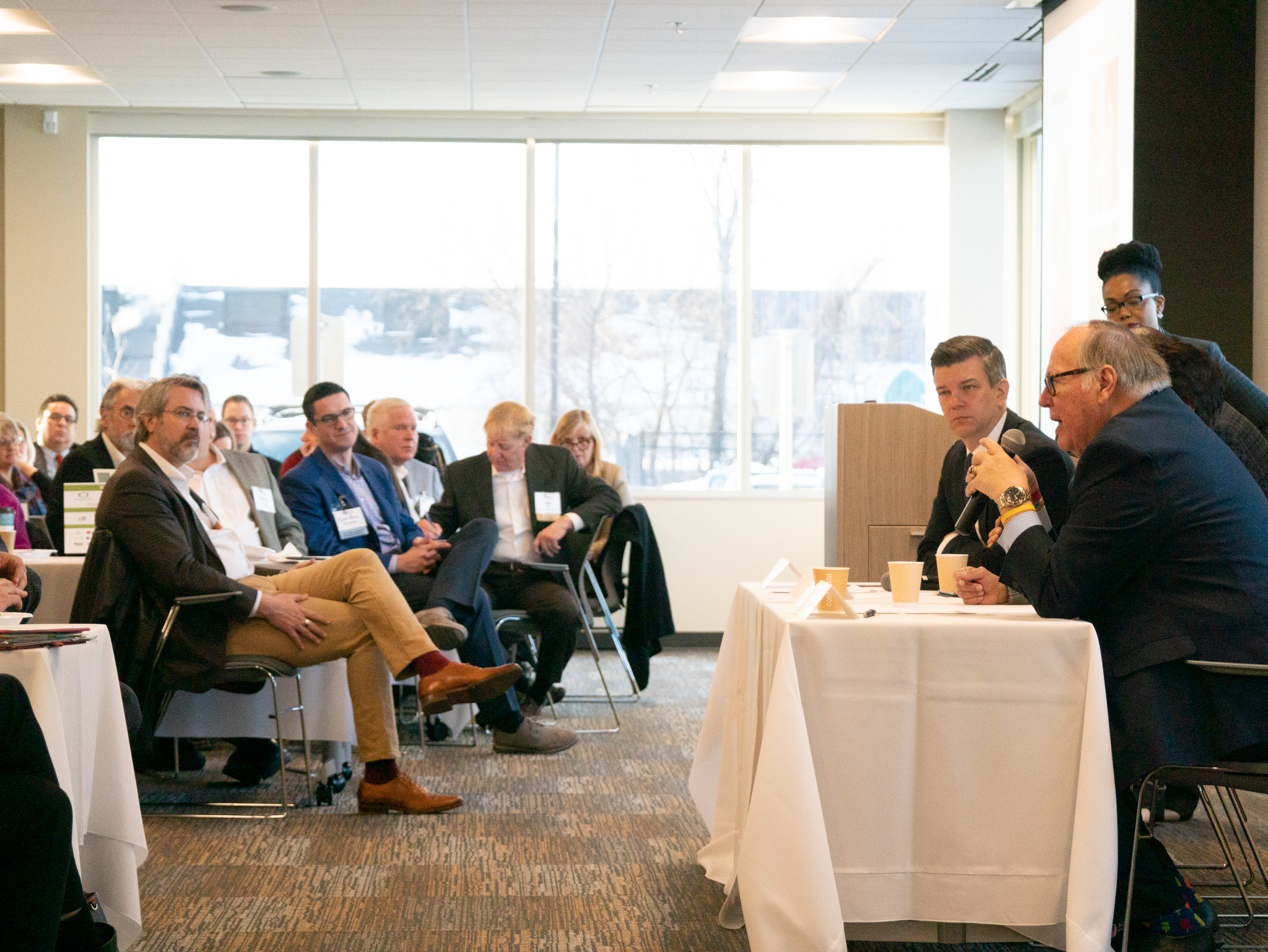
    Ho’s remarks came as part of the Investors Council’s Action for Homes on Feb. 13 where affordable housing advocates and professionals gathered to learn more about what’s ahead in the 2020 legislative session at the Minnesota Capitol.  

    “The housing shortage is threatening what’s happening with our economy,” Ho added. “We are losing our competitive advantage. I was up in Thief River Falls with Sen. Mark Johnson. Digi-key and Polaris need housing. They have the jobs. They want to expand but need housing. It’s become a top tier issue.”

    “Incremental investments aren’t going to get us there. We’ve got to go big.”

    Anne Mavity, MHP’s executive director, highlighted the opportunities and challenges ahead. 

    “We have an enormous opportunity facing us in affordable housing right now. Housing has hit the front pages and that’s good and bad,” she said. “It means that employers are feeling the pinch where they can’t attract employees because of the of lack of affordable housing. Students don’t always have a place to do their homework. It means the folks that are taking care of our kids — that are taking care of my mom today — they can be working full time and not afford an average apartment, frankly, anywhere in the state.”

    “We are in a moment of opportunity and we need to take advantage of that and think big and think transformationally.”

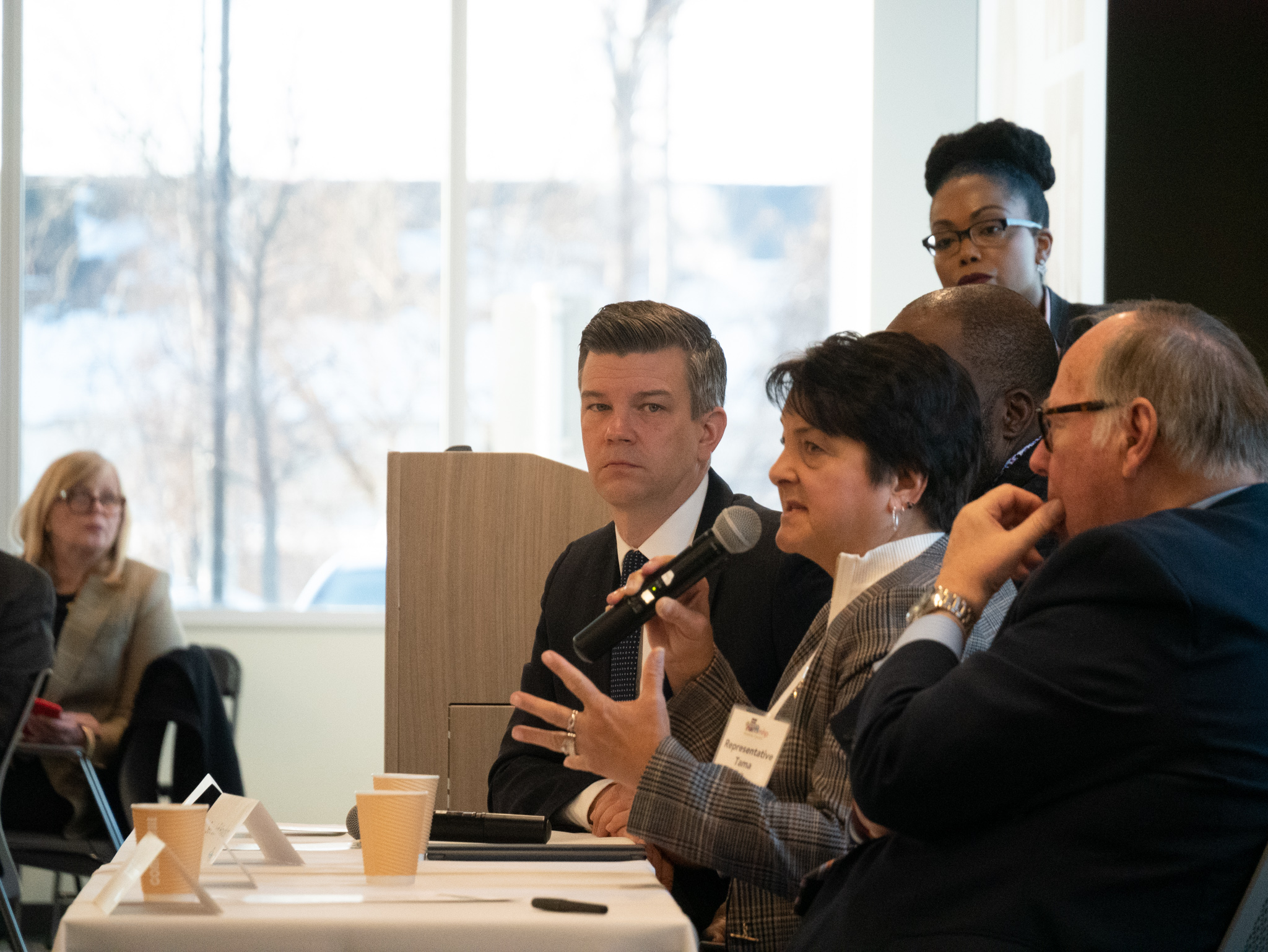
    Acooa Lee Ellis of the Greater Twin Cities United Way moderated a panel discussion between House Majority Leader Ryan Winkler, Assistant Minority Leader Sen. Jeff Hayden, Sen. David Senjem,, and Rep. Tama Theis. 


    Rep. Winkler gave the crowd his assessment of the potential success of housing initiatives at the Minnesota Capitol in 2020.

    “We have a long-term commitment to addressing the housing affordability crisis that is growing in Minnesota and growing at all levels and it’s not just homelessness, not just supportive housing, it’s not just starter housing, it is all the way up and down the scale, and having a lot more supply is essential to solving that problem. It’s a long term challenge. But it’s not going to be an easy year for making major progress.”

    Hayden talked about the propensity for lawmakers to set an artificial line in the sand when it comes to bonding, and that a bonding bill has to be enough to impact the housing crisis.

    “We really do need a bonding bill that is sufficient. And I know that Sen. Senjem and Rep. Mary Murphy are working on that. It’s important to bond at a level that makes sense, instead of saying it’s got to be a ‘number’ and nothing else.”

    Rep. Tama Theis laid out the reality in rural areas of Minnesota. 

    “In our community and in some of the other rural communities, workforce housing is huge for us. we don’t have enough houses…. We need to make this a priority and bring it more up front. We have these dialogues about why housing is so expensive in Minnesota.  We need to get to the point that we build more homes and that people can afford them. We have so many jobs to fill and no homes for people to go to. When housing doesn’t do well, the economy doesn’t do well.”


    Sen. David Senjem said that government must play a role in creating enough homes for Minnesota to be great. 

    “We work every year to build this state to be a little better, to have this great Minnesota that we want,” he said. “About 10 or 15 years ago we began to realize: This whole issue of housing is real. Somehow the cost of housing has outstripped the ability of people to pay for it.  Somehow the government has to intervene whether it’s Housing Infrastructure Bonds or rehab with apartments or tax credits whatever the case may be. There has to be a role for the government to help.”

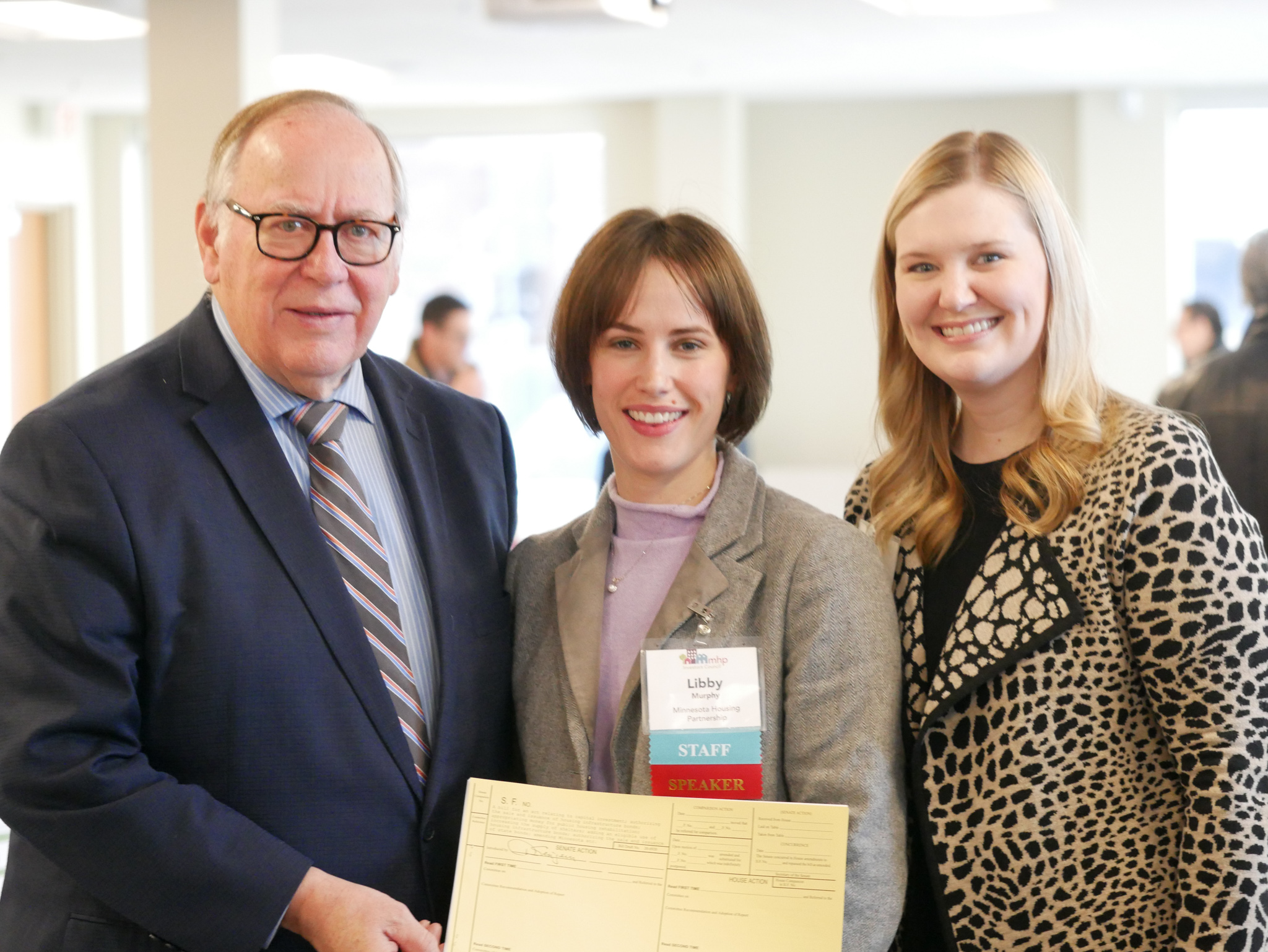
    At the close of the event, Sen. Senjem signed on to a bill for $500 million in housing bonds. This bill is a priority Homes for All coalition and MHP.  Thank you Sen. Senjem!


    To be part of these dynamic conversations, become a contributor or renew your contribution in the MHP Investors Council today!


  • Investors Council Breakfast explores The Role of Homeownership

    Minnesota needs to add 300,000 new homes by 2030 in order to address existing gaps. Over 100 Investors Council attendees gathered on November 7 to hear about “The Role of Homeownership,” an important strategy toward a goal 300,000 new homes by 2030. 

    The Investors Council Breakfast attendees heard from a broad range of speakers about increasing homeownership, particularly in communities that have traditionally been shut out of this important wealth-building asset. 

    Anne Mavity, MHP’s Executive Director laid out the landscape for Minnesota’s affordable housing crisis. 

    “A goal was laid out that said that we are going to create 300,000 new units by 2030 in order to address gaps in affordable housing,” Mavity said citing the efforts of the Minnesota Housing Task Force which met for about 7 months in 2018. That task force laid out three areas needed to address the growing lack of affordable housing: homeownership, rentals, and housing stability. 

    “We thought MHP would organize our three-part series around those three areas.” Hence the title for the Nov. 7 event, “300,000 by 2030: The Role of Homeownership.”

    Mavity added, “What does that mean in terms of the kind of housing we need to produce? We need 300,000 new units, but in what complement?”

    According to recent data from Minnesota Housing, Minnesota needs 153,000 units for home ownership and 93,000 of new rental units. 

    “That’s year-over-year addressing household growth, addressing job growth, and making sure we are sustaining our economy.” 

    Julie Gugin, the executive director of the Minnesota Homeownership Center, moderated a panel dedicated to the topic of homeownership. 

    Gugin spoke about her organization’s role in working to end the homeownership gap. 

    “In this country the median household wealth of white households is $171,000. For African-American households it’s $17,000. That difference is home ownership equity.”

    “Minnesota has the highest rate of home ownership among white households in this country and persistently one of the lowest rates of home ownership among households of color in this country.”
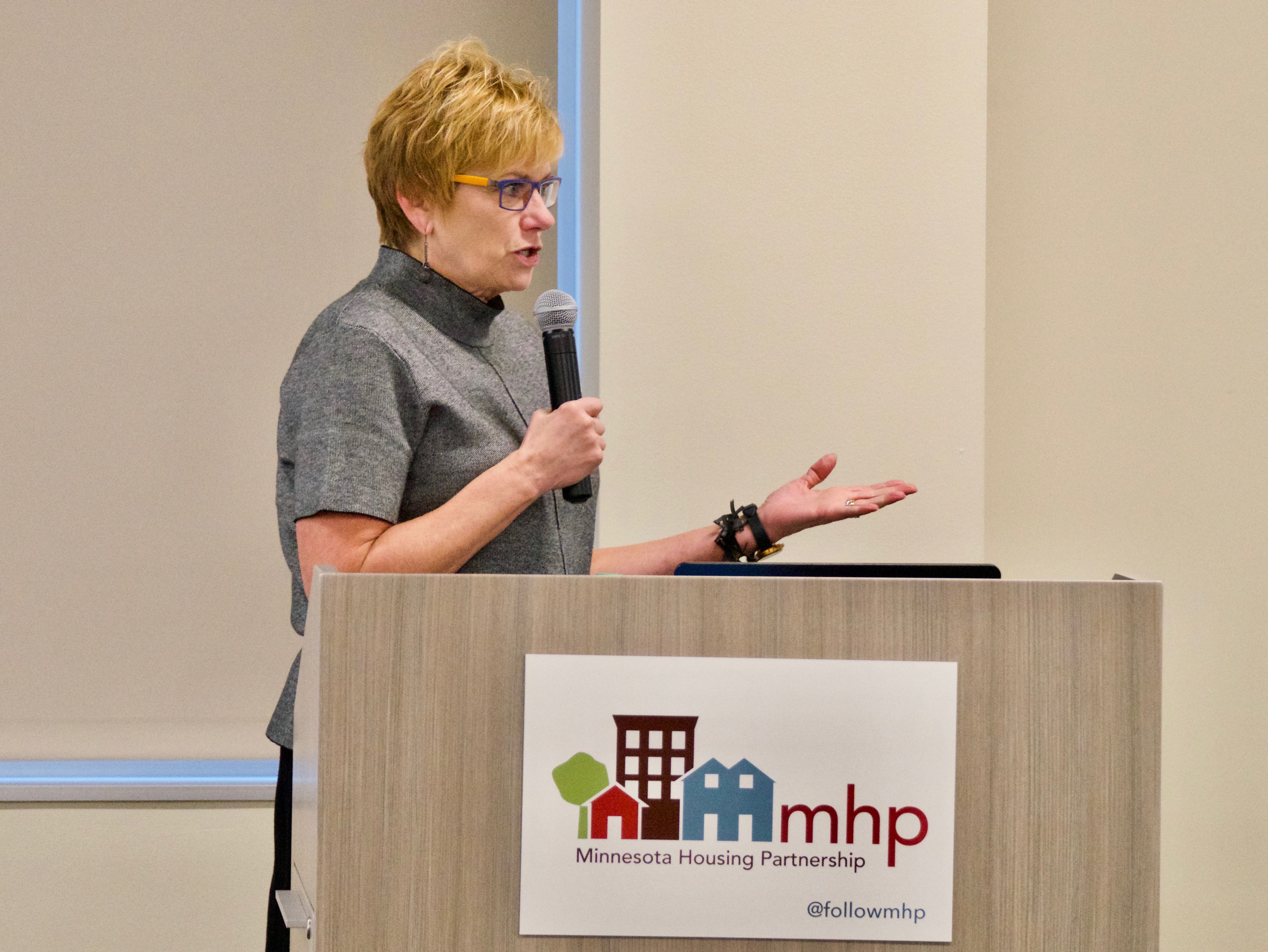
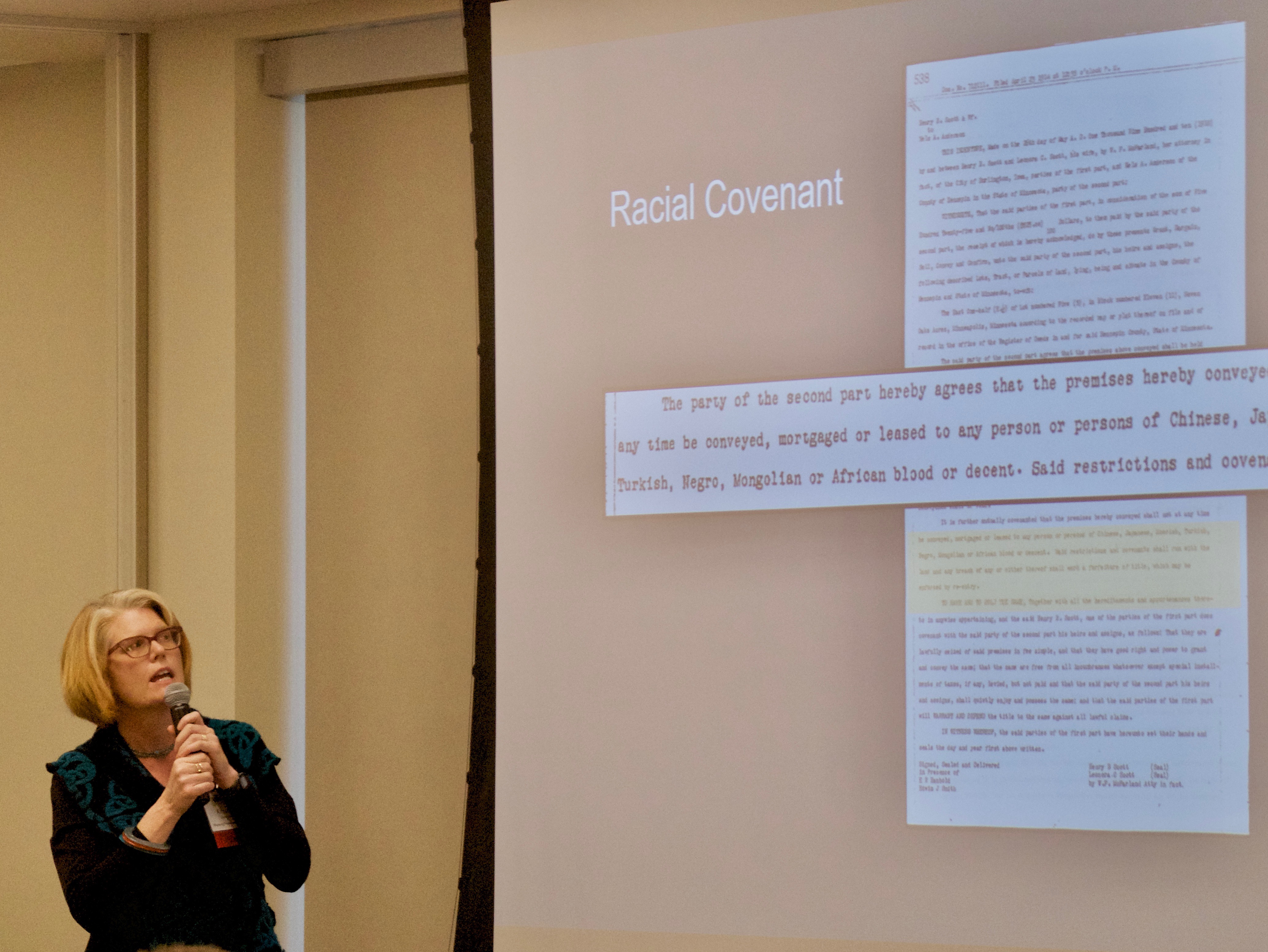
    Kirsten Delegard is one of the co-founders of Mapping Prejudice and gave an overview of that group’s work exposing the long-term effects of racial covenants in the Twin Cities. In particular, how these covenants facilitated the homeownership gap in the region. 

    Delegard noted a startling statistic: In the Twin Cities, 75 percent of white families own their home while only 23 percent of African Americans do.

    “Housing sits at the foundation of everything else. It determines whether you will be healthy or sick. It determines what kind of education you have access to. It determines whether your family is going to be able to amass any kind of wealth,” she said. “Homeownership has been seen as an essential feature of citizenship, something that has been recognized by the Supreme Court of the United States.”

    Delegard spoke about the widespread implementation of racial covenants starting in 1910. These covenants barred people of color from owning homes in many parts of the Twin Cities, especially wealthier areas. If a covenant was embedded in a deed, the only way to remove it was to appeal to the person who put it there. The punishment for violating a covenant? Complete loss of equity in the property. 

    “Racial covenants combined with redlining made it really hard for African American families to buy houses in the Twin Cities. Covenants pushed families into neighborhoods that were redlined,’ Delegard told the audience. 

    “This is why black and brown people are most vulnerable to housing precarity today.”
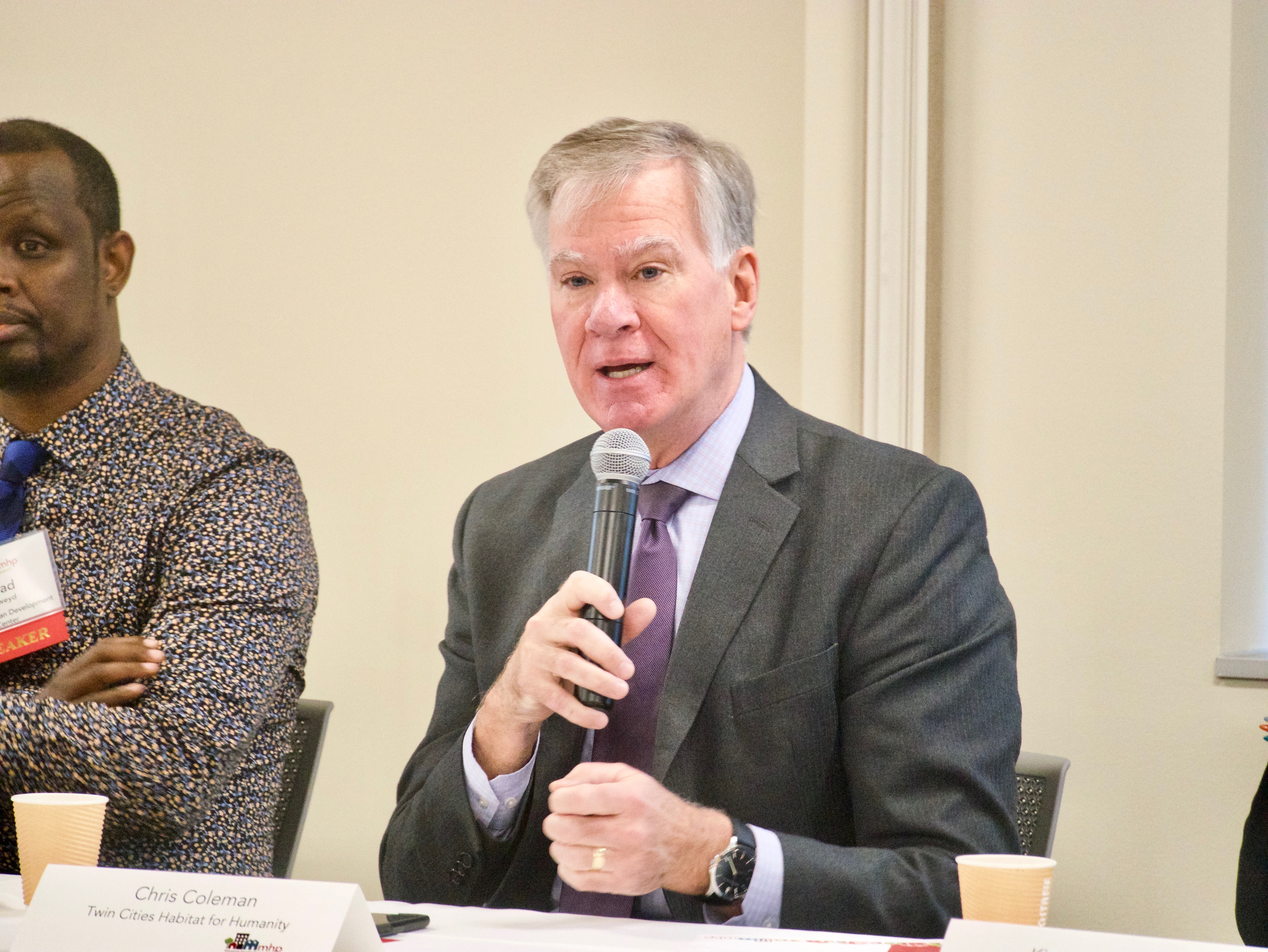
    Chris Coleman, President & CEO of Twin Cities Habitat for Humanity, noted another statistic behind the region’s homeownership gap. 

    “The most compelling statistic I have ever heard on any subject is that from 1934 to 1968, 98% of every FHA mortgage in this country was written for a white family. So if you want to know why there are disparities in our educational system, in our healthcare system, in our employment system, it is that simple fact.”

    Coleman said it was work like Mapping Prejudice that is an important step forward. 

    “When we think about all the strategies that need to be employed, if we don’t recognize this history and why we got to the situation, we will never really truly be able to understand and address it.”

    Asad Aliweyd, founder & Executive Director, New American Development Center (NADC), spoke about the current risks to homeownership and wealth-building for the state’s Muslim communities. 
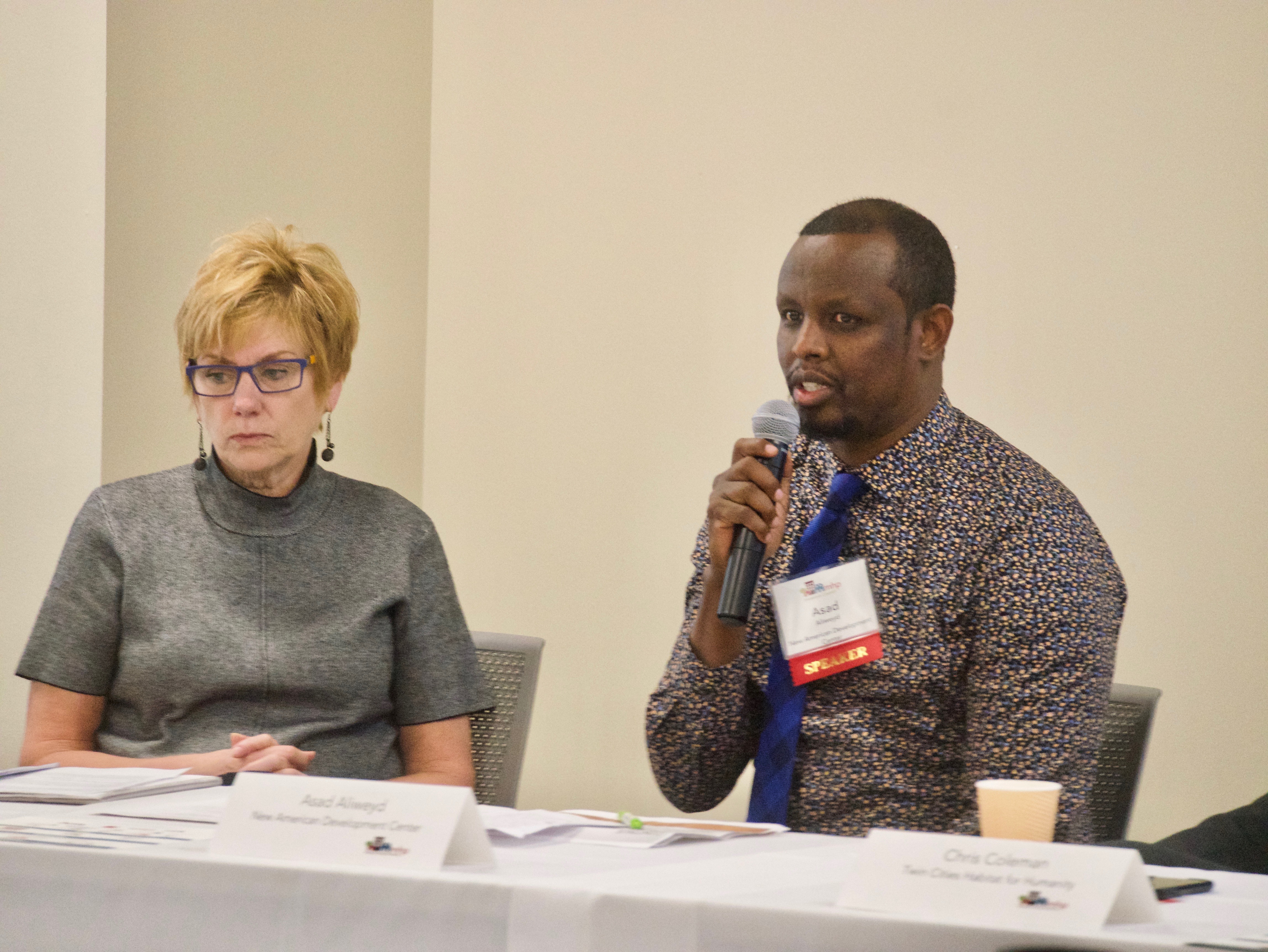
    Aliweyd said that homeownership barriers for Muslims are both cultural and systematic. With interest-free financing, risk is transferred solely to the borrower.

    “The way the financial system is set up is basically not including our community,” said Aliweyd.  

    “We have to have some kind of policy work on accommodations. We have to think in creative ways,” he told the audience. “There’s almost 250,000 muslims in the Minnesota. If we don’t lay down the foundation for building wealth now, this poverty and income inequality will grow. We all call Minnesota home, and we have to find systematic accommodation.”

    He added, “Interest free financing is not just for muslims. Some Jewish and Christian beliefs also prohibit interest.” He noted that lenders need to take on some of the risk in interest-free lending. 

    How do we move forward? 

    You have to agree that there’s a problem before you can seek a solution,” said Kristin Delegard, “So many places that I go, people are not convinced that there’s a problem. They are convinced — still — that the situation we are in is natural, inevitable, immutable. That there’s nothing we can do about it.”

    She said, “We all have to face truth before we can have reconciliation, before we can have progress. We can’t address to howeneship crisis without reckoning with history and with race.”

    Julie Gugin of the Minnesota Homeownership Center noted that her organization is working to build back trust in communities that have been left out of homeownership. 

    MHC convenes a group called the Homeownership Opportunity Alliance, a cross sector collaboration looking at addressing systemic issues that have created the homeownership situation we have today.

    “This includes Community outreach in very targeted communities to create aspiration around homeownership,” she said. “You can imagine in community that have been inordinately impacted by the racially-charged activities talked about today, who have been subjected to lending scams, and whose communities have failed to recover at the same pace as white communities after the great recession. Just getting people to a trust level and an aspiration level around homeownership is incredibly important.”

    Join or renew your membership in the Investors Council today to be part of these dynamic conversations.

    See more photos from the event on Facebook.
  • MHP Investors Council recap: Action for Affordable Homes

    “There’s a way that we can tap into this moment and do something big and extraordinary,” Minnesota Housing Commissioner Jennifer Ho said at last week’s MHP Investors Council breakfast, “Action for Affordable Homes,” attended by more than 100 affordable housing sector leaders.
    Commissioner Ho said that now more than ever, Minnesotans agree access to affordable housing is key to the success of our state – and that now is the time to implement solutions. “We need to do that because it’s who we are. It’s who we are as Minnesotans to lead, not follow,” Ho said. “But also, what’s happening with the housing market is for real. And it’s not going to fix itself.” 

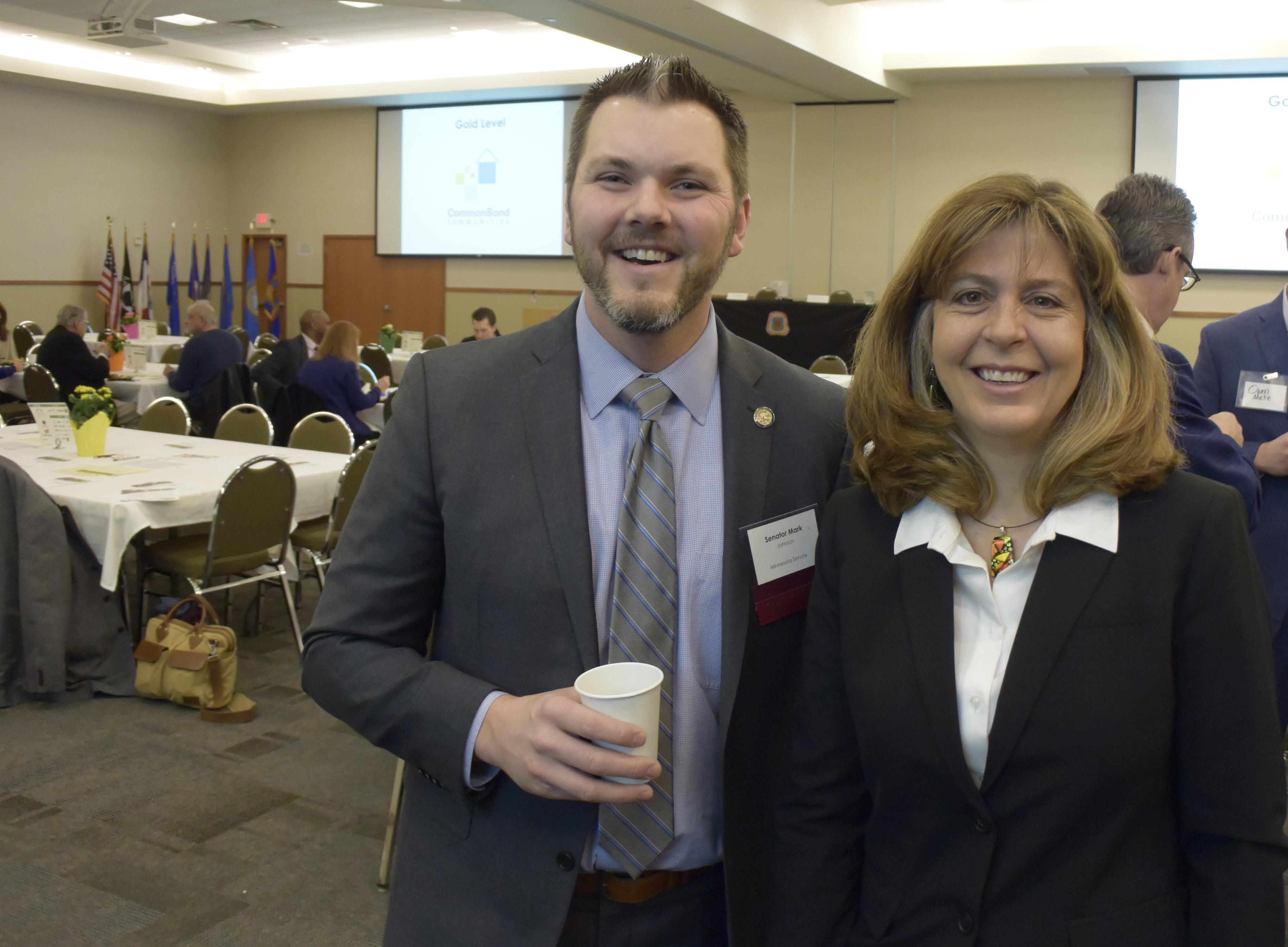
    From left: Sen. Mark Johnson (R-Thief River Falls) and MHP Executive Director Anne Mavity

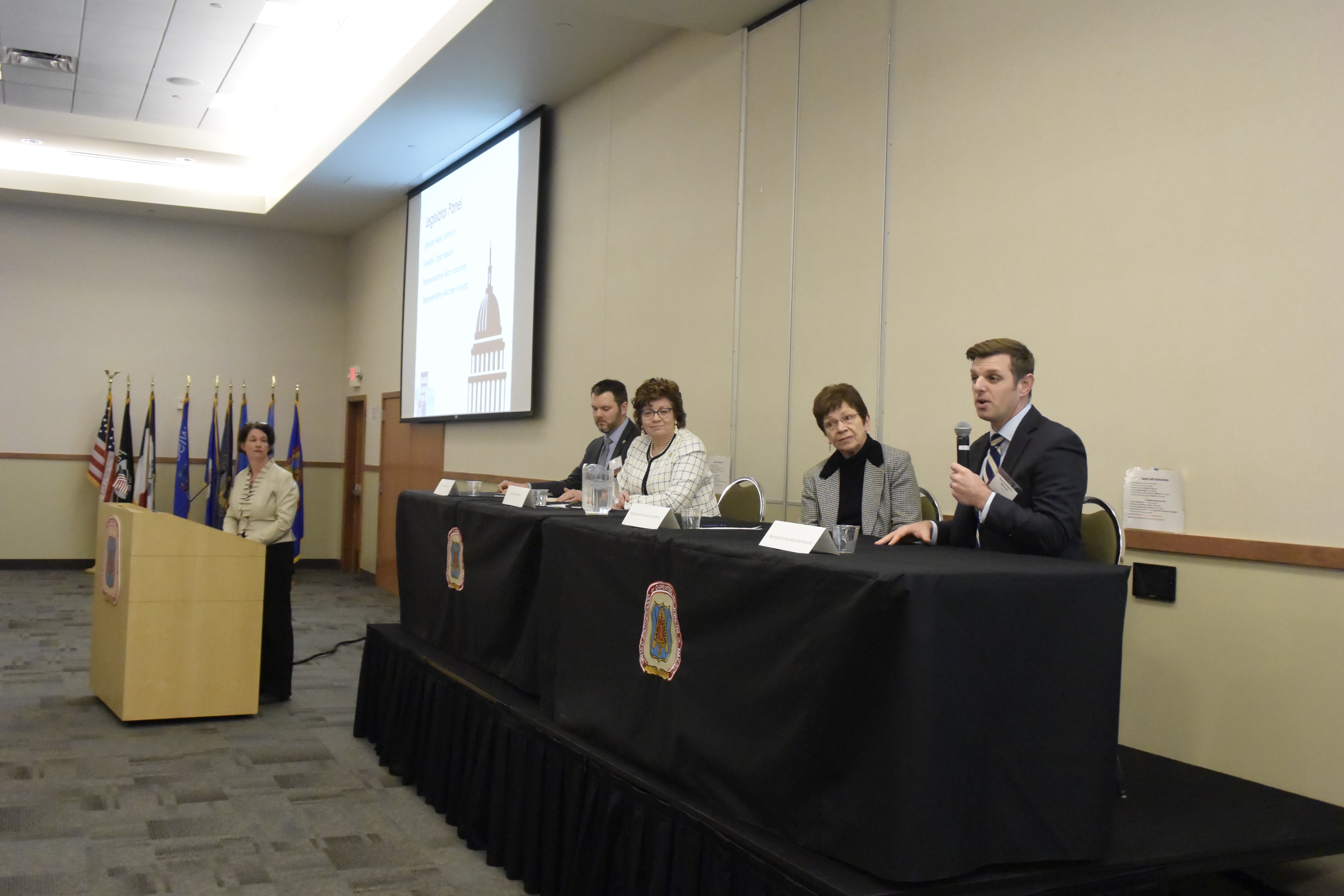
    Ho and a bipartisan panel of legislators emphasized that in the 2019 session, advocates must seize the moment for affordable housing. Panelists included Rep. Alice Hausman (DFL-St. Paul), Rep. Mike Howard (DFL-Richfield/Bloomington), Sen. Mark Johnson (R-East Grand Forks/Thief River Falls), and Sen. Carla Nelson (R-Rochester). Elizabeth Glidden, MHP Director of Strategic Initiatives & Policy moderated the discussion.

    Minnesota Housing Commissioner Jennifer Ho (left) speaks to MHP Investors Council members

    Sen. Mark Johnson and Sen. Carla Nelson pointed to one solution on the docket this session: the Minnesota Tax Credit Contribution Fund for Affordable Housing (TCCF) – a key item on MHP’s legislative agenda co-authored by Senators Johnson and Nelson.  

    Sen. Johnson emphasized that now is the time to engage with tax committee chairs to ensure they prioritize the TCCF. He encouraged attendees to take advantage of opportunities to directly advocate their legislators, including MHP’s Wednesdays at the Capitol. “We’ve seen something that’s been very effective,” Johnson said, referring to North Dakota’s Housing Incentive Fund, a similar program that leverages $5 for every $1 invested. “Let’s bring it up North.”

    From left: Panel moderator Elizabeth Glidden, MHP Director of Strategic Initiatives & Policy, and panelists Sen. Mark Johnson (R-Thief River Falls/East Grand Forks), Sen. Carla Nelson (R-Rochester), Rep. Alice Hausman (DFL-St. Paul), and Rep. Mike Howard (DFL-Richfield/Bloomington)

    Sen. Nelson said she sees the TCCF as a key tool to address Minnesota’s affordable housing shortage – a major barrier to economic growth – by incentivizing private investments and helping limited state resources go farther. “With the housing tax credit, every Minnesotan can be part of the solution,” Nelson said.  

    Rep. Howard said he’s excited about another potential tool to help communities meet their affordable housing needs: a state matching fund to incentivize the creation of Local Housing Trust Funds, another initiative supported by MHP. “We know Local Housing Trust Funds work,” Howard said. “They’re efficient and leverage private dollars, and it’s a solution that can be tailored to the diverse housing needs across the state.” 

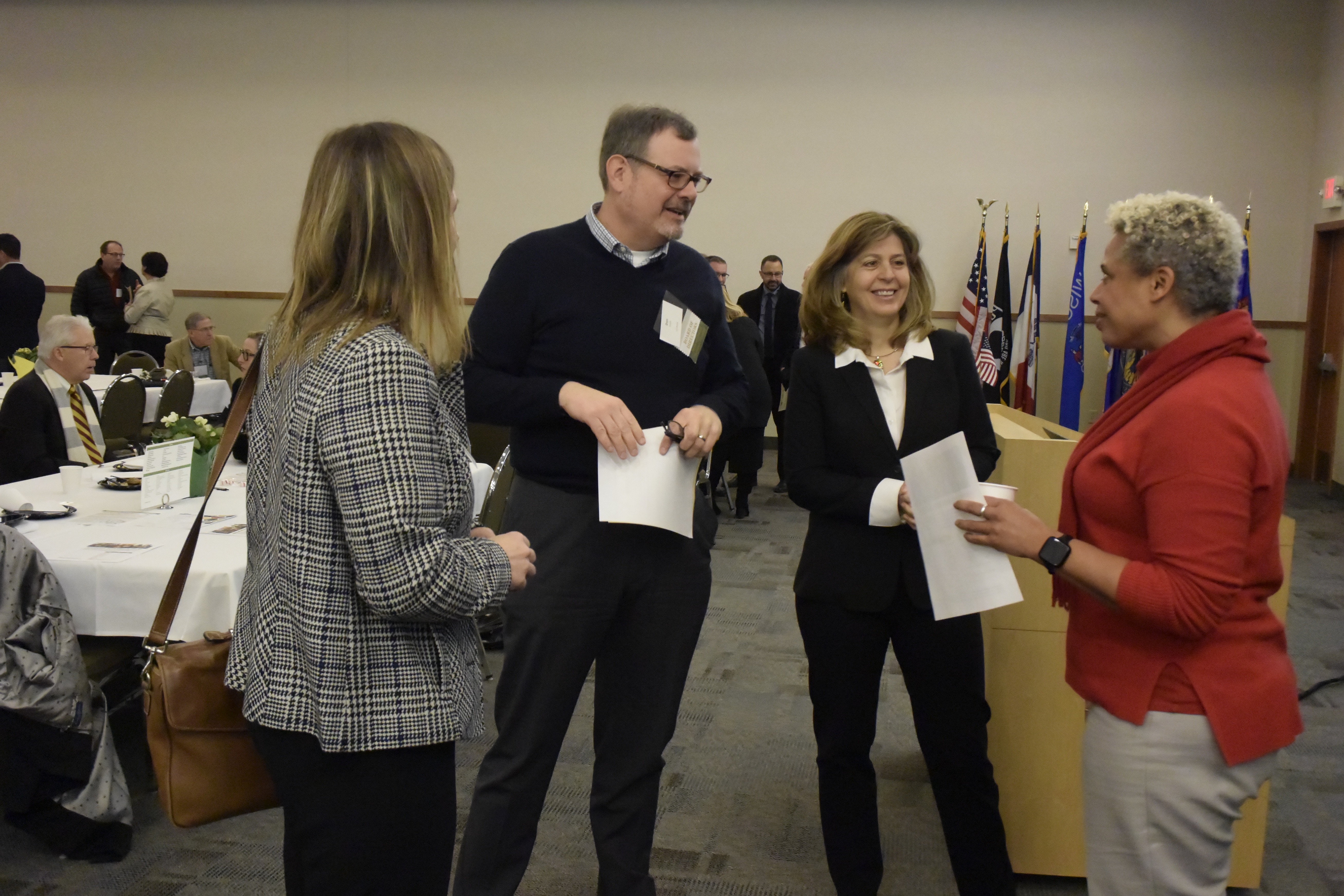
    MHP board members Buffy Beranek (Southeast MN Multi-County HRA) (left) and Dan Smith (U.S. Bank) and MHP Executive Director Anne Mavity speak with Lisa Tabor (Culture Brokers, LLC) (right) 

    Chief Author of House legislation to establish the state matching fund, Howard said that state investment will help communities get their trust funds off the ground. “My community in Richfield has had discussions about establishing a trust fund,” Howard said. “Having a state match would provide the will to move it forward.” 

    Rep. Hausman said the establishment of the House Committee on Housing Policy and Finance – the first housing-only committee in years – is positive sign. “The bipartisan nature of the issue gives me hope,” Hausman said. 

    However, Hausman underscored that advocates need to speak up as leadership sets budget targets for each committee. “That’s when you need to weigh in to make sure housing is on their radar,” Hausman said. 

    MHP board member and CommonBond Communities CEO, Deidre Schmidt

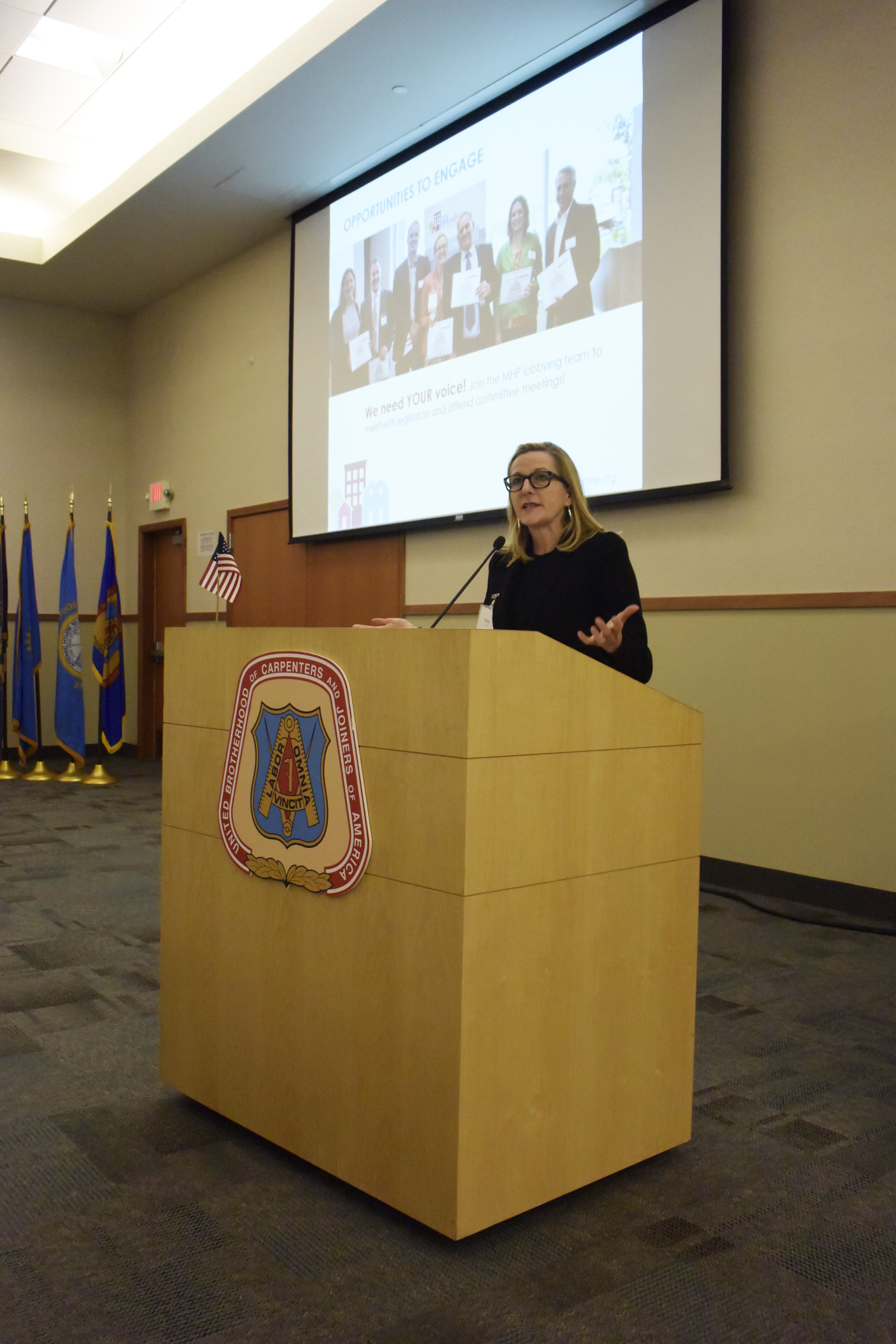
    MHP board member and CommonBond Communities CEO Deidre Schmidt closed the program, urging attendees to sign up for MHP’s Wednesdays at the Capitol and to join MHP’s Investors Council to help ensure lawmakers prioritize affordable housing the 2019 session and beyond.

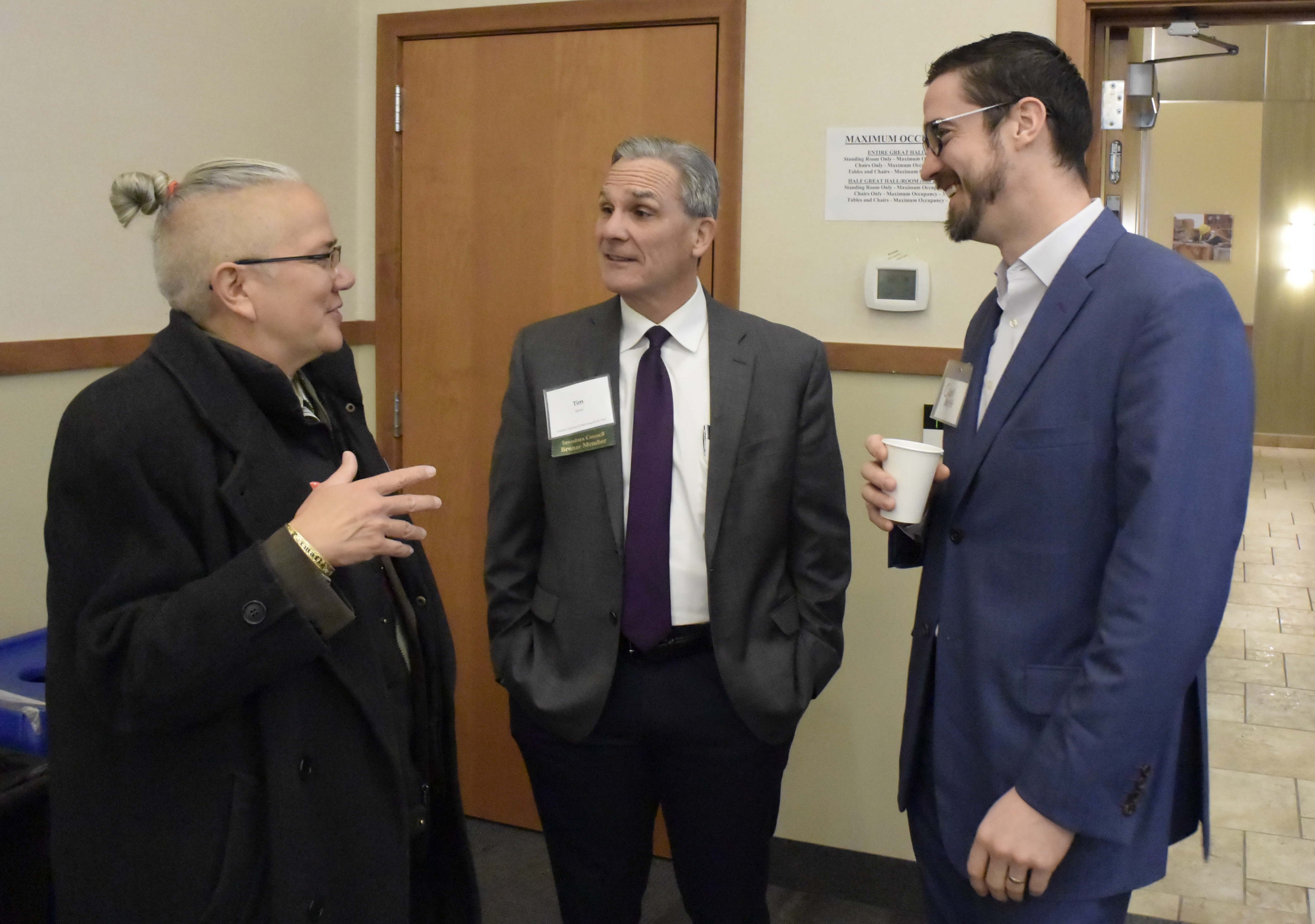
    Breakfast attendees converse after the program. See more photos from the event!

    To be part of these dynamic conversations, join or renew your membership in the MHP Investors Council today!