• The 2023 Legislative Session in Review!

    The 2023 Legislative Session in Review!

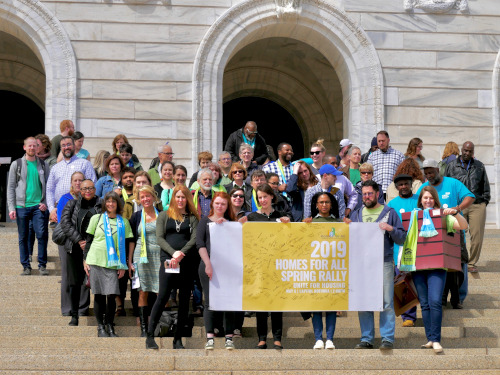
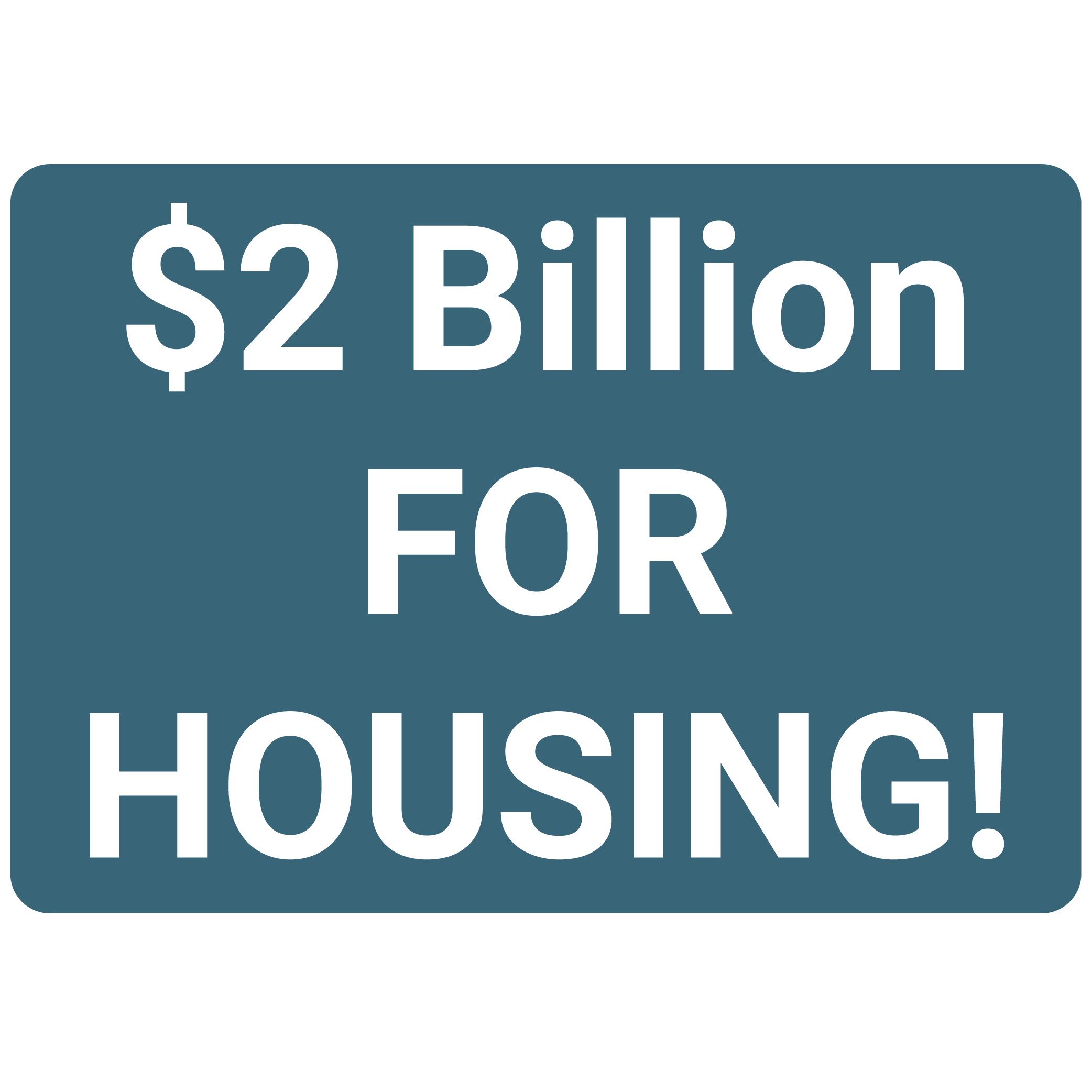
    In December of 2021, MHP convened partners and invited them to join us in asking the Minnesota Legislature to invest $2B in 2022. Gridlock had us come back in 2023, again asking for $2B. On Jan 11, 2023, MHP and our partners held a rally in the Capitol Rotunda. The crowd in the rotunda chanted “$2B in 2023!” Now that lawmakers have passed all the budget bills, it is clear that lawmakers heard that rallying call and delivered.


    Housing Omnibus Bill: $1B additional one-time, $50M additional on-going, and a nearly $400M/year in 7-county metro

    One of the biggest highlights of this session is the $1B in additional direct appropriations to Minnesota Housing. Minnesota Housing’s FY24-25 budget is 850% greater than its current base budget. The Housing Omnibus bill makes critical investments throughout the housing continuum. This biennium, Minnesota Housing will have over $600M in direct state appropriations to produce and preserve more single-family homes, manufactured home parks/cooperatives, and multifamily rental homes. Minnesota Housing will have more than $450M in resources to increase access and provide choice and opportunity for one’s housing through rental assistance, homebuyer counseling and financial assistance. 

    Additionally, the Housing Omnibus bill includes a seven-county metro wide sales tax. The tax will raise nearly $200M per year in coming years. These resources will be distributed among metro based public housing authorities and city and county governments. 25 percent of the funds will fund rental assistance, 25 percent of funds will go directly to cities, and 50 percent of the funds will go to counties. Cities and Counties can use these resources for emergency rental assistance, to support nonprofit housing developers, and build and preserve more affordable homes. Download the final spreadsheet for the Housing Omnibus Bill here.


    Taxes

    Housing was a top priority for the tax committees, as lawmakers provided property tax relief to homeowners and renters. Lawmakers significantly expanded the Renter’s Credit and made it easier for renters to claim their credit. As a result of the bill, an estimated 119,000 more Minnesotans will receive the credit.  The bill also increases the property tax refund for homeowners. Lawmakers provided a one-time boost to both the renter and homeowner property tax refunds.  Another significant change was to the 4d tax classification will result in over $60M in property tax savings for participating units. 

    Owners of multifamily rental homes will see their property taxes assessed at a single .25 rate. The tax bill also includes an additional $40M for the workforce and affordable homeownership program, establishes a local county housing aid program and funds it at $45M this biennium, and creates a credit to incentivize manufactured home park owners to sell to existing residents. In addition to housing-specific line items in the bill, the bill funds the Minnesota Child Tax Credit. It’s not clear yet how many families will receive the credit, but it will drastically reduce child poverty in Minnesota. And, Tribal nations will get aid, which can be used for housing.  


    Bonding: Nearly $76M in housing and $21M in shelter

    In the final hours of session, the Legislature passed two bonding bills. A cash bill invests $850.7M and the other invests $1.3B from the proceeds of general obligation bonds, $219.2M from the Transportation Fund, and $224.9 from the General Fund. The bills invest $30M in cash and $41.87M in general obligation bonds for public housing rehabilitation. The bill also includes $3M for a Greater MN Housing Program and $1M to the City of Minneapolis for Satori Village. There is over $21M in funding to five specific emergency shelters.  


    Health & Human Services: Nearly $200M

    The Health and Human Services bill includes $100M in one-time funding in shelter capital, a $30M increase in FY24-25 and $55M in FY26-27 in the Emergency Shelter Program, $6M this biennium and next for transitional housing, $30M FY24-25 and FY26027 in Homeless Youth Act, $4.25M in FY24-25 and $2.5M in FY26-27 in Safe Harbor, and $850K inFY24-25 and $1.55M inFY26-27 for the Homeless Management Information System. Hennepin and Ramsey Counties will each receive $11.4M in one-time funding to provide services to people experiencing homelessness. The bill includes modifications to the Housing Support Program to allow individuals with unearned income to keep more money.  

    Environment and Climate:

    The Environment and Climate Omnibus invests $39M for pre-weatherization and weatherization activities and  funds a number of programs to help homeowners afford things like heat pumps and electric panels. The bill establishes the Minnesota Climate Innovation Authority/Green Bank. The Green Bank can fund housing related activities that incorporate clean energy technologies.  The bill changes the building code process to help Minnesota achieve an eighty percent improvement in annual net energy consumption by 2036. Several of the state’s investments will help leverage new Federal funding from the Inflation Reduction Act (IRA) and the Infrastructure Investment and Jobs Act (IIJA) 
  • A Constitutional Amendment for Housing

    Visit OurHomesMN.org for information!

    Because we need to ensure the state is making the ongoing investments required to truly address our current housing crisis.

    Our campaign principles include race equity, sustainability and climate resilience, uplifting rural voices, accessibility, and ensuring frontline leaders and grassroots groups are decision-makers and campaign leaders.

    The constitutional amendment for housing will create a:

    • Homeownership Opportunity Fund
    • Rental Opportunity Fund (including a minimum investment of $100 million annually in universal rental assistance/Bring it Home, MN)
    • Household & Community Stability Fund.

    The funds are broad and flexible, able to accommodate innovative new concepts as well as existing programs, funds, and financing. A council of up to 24 people will be appointed for each fund to make budget and policy recommendations to the Governor and Legislature, with seats reserved for those with lived experience and frontline and grassroots organizations, among others.

    DRAFT ballot language: A constitutional amendment for housing:

    Shall the Minnesota Constitution be amended to remove barriers to homeownership, to make our rental housing safe and affordable, and to protect our vulnerable households and communities from displacement and homelessness by increasing the sales and use tax rate beginning July 1, 2025, by three-eighths of one percent on taxable sales until the year 2050?

    MHP is proud to join more than 60 organizations in endorsing a constitutional amendment for housing.

    Learn more at ourhomesmn.org

    Download the one-pager here.

    Download the FAQs here.

  • MHP’s 2021 Legislative Agenda

    This session, MHP will use its resources and network to advocate lawmakers to increase investments in housing stability by adequately funding emergency and ongoing housing assistance programs; investing in programs that preserve existing affordable homes and add new units; and strengthening laws to support renters access affordable housing.

    Housing Stability

    The COVID pandemic has exacerbated many households’ housings cost burden. Families who were already struggling to afford housing have found themselves’ in greater jeopardy of experiencing homelessness. Throughout the pandemic, we’ve seen the impact that interventions like emergency housing assistance have had in keeping people in their homes. MHP fought hard to secure $100 million in COVID Housing Assistance Program (CHAP) funds.  While the Federal government just invested $25 billion in rental assistance, we know the Minnesota Legislature has a role to play in helping households that will not qualify under the Federal program.

    The Solutions

    • Emergency Housing Assistance. MHP is working with State lawmakers to understand gaps in assistance provided by the latest round of Federal relief. We support additional investments to renters and homeowners to pay rents, mortgages, insurance payments, HOA fees, utilities and other housing related costs.
    • Eviction Moratorium. MHP believes safe, stable and affordable housing is critical to public health. Therefore, MHP continues to support efforts to ensure every Minnesotan has a home in which they can safely adhere to government restrictions and recommendations. Additionally, MHP recognizes that Minnesotans experiencing job or income loss did so due to no fault of their own.  The eviction moratorium, coupled with housing assistance has proven to keep households healthy and support students. In fact, research increasingly shows that areas with moratoriums have lower morbidity and mortality from COVID 19 than areas that do not. 
    • Bring it Home Campaign. The pandemic highlights the importance of comprehensive and permanent rental assistance program for all income qualifying Minnesotans. MHP supports this bold, visionary campaign.


    • Manufactured Home Park Opportunity to Purchase and NOAH Acquisition. MHP supports strategies to help affordable housing providers and residents acquire and preserve their homes. An Opportunity to Purchase law for manufactured home parks will help residents of parks purchase and convert their parks into cooperatively owned entities.  Displacement caused by the loss of Naturally Occurring Affordable Housing has devastating and long-term consequences for households. Acquisition funds to help purchase, preserve the affordability, and improve the quality of these homes is critical to ending alarming trends in displacement.

    Preserving the Homes We Have and Creating New Opportunities

    MHP continues to prioritize preservation and production. Annually, Minnesota continues to lose more affordable housing than it creates. Households below 50 percent of area median income are most impacted by displacement. And, the market produces the fewest new units for households at these incomes. Households struggling to find affordable housing often settle for poor quality housing and experience the highest rates of cost burden, overcrowding, evictions, and episodes of homelessness. Black, Indigenous, and People of Color households are disproportionately impacted by the inadequate stock of truly affordable homes.

    The Solutions

    • Local Housing Trust Funds. MHP continues to advocate for the one-time appropriation of state matching funds to incentivize local communities to establish and dedicate funds into affordable housing trust funds. These powerful local tools were endorsed in the 2018 Governor’s Housing Task Force report and Governor Walz’ FY20-21 budget.
    • 4d. MHP believes that by simplifying and reducing the classification rate for affordable housing properties, the State  can help housing providers reinvest in existing properties and better leverage private equity to produce more homes or better leverage state resources to create more deeply affordable units. This change will help preserve existing affordable housing stock by lessening the economic pressures that currently drive the conversion of many affordable units into market-rate status.
    • Bonding. Bonds are Minnesota’s single greatest tool to create the most deeply affordable units. MHP will continue to work in coalition with Homes for All to secure additional bonding resources.
    • Tax Credit Contribution Fund. MHP continues to advocate for a state affordable housing tax credit. The Minnesota Legislature must do more to incentivize the donation of cash, land and property to support preservation and new production. Adding land and property donations to our cash donation credit proposal will help preserve or repurpose distressed assets into affordable homes.

    Improving Access and Opportunity

    Low-income renters face a variety of challenges to securing safe, decent and affordable housing. Households with non-traditional incomes like Section 8 vouchers or other forms of housing assistance many times struggle to utilize their assistance because some landlords refuse to accept it. Often the denial of housing based on income serves as a pretext for discrimination, disproportionately affecting renters of color, women and persons with disabilities.

    The Solutions:

    • Prohibit Source of Income Discrimination. Minnesota needs to amend its Human Rights Act to clarify that housing discrimination based on a person’s source of income is illegal.
    • Eviction Expungement Reform. Reforming Minnesota’s eviction reporting and expungement laws would give tenants opportunities to remedy their situations before an eviction is recorded and more easily secure an expungement, especially in cases of dismal or in cases where an eviction is not a reasonable predictor of future tenant behavior.

    Download and view the 2021 Policy Agenda factsheet here.  


  • MHP releases 2020 policy agenda

    While the legislative session is still more than a month away, MHP has already been meeting with lawmakers, legislative staff, and other affordable housing advocates to garner support for our 2020 policy agenda. 


    That agenda includes: 

    • $500 million in bonds to create more deeply affordable housing
    • An Affordable Housing Tax Credit to harness available private capital to create more housing opportunities by filling affordability gaps
    • State support for local communities to establish and grow Local Housing Trust Funds through a state funding match program

    Because 2020 is a bonding year at the Capitol, MHP along with our coalition partners will be pushing for $500 million in bonds to create more affordable housing. $500 million is the largest bonding request for housing in state history, and we are partnering with the Homes for All Coalition to get it done in 2020.

    MHP also seeks $25 million annually for the Affordable Housing Tax Credit. More than 60 organizations in Minnesota have endorsed the tax credit (view the list of endorsers and find out how to endorse). This innovative new tool encourages local businesses and neighbors to invest in their community by creating housing opportunities. Because the private market is not supplying housing that is affordable to working people in Minnesota, a public private partnership is the best way to ensure an adequate supply of housing. The Affordable Housing Tax Credit incentivizes private investment and promotes community and economic development. 

    Local Housing Trust Funds (LHTF) are funds established by a local government by dedicating local public revenue for housing. They are a consistent, flexible resource for housing within a local jurisdiction. Trust funds help communities leverage public and private resources and jumpstart projects that draw investment and jobs. LHTFs enable communities to prioritize developments that maximize benefit to the local community.

    Across the country, state investments are proven to motivate communities to create and resource LHTFs. MHP is seeking a $10 million state investment in a match program to jump-start LHTFs across the state, and give communities the flexibility to respond to housing needs. 

    Please join MHP’s Policy Team as they provide an update on MHP’s legislative agenda and insight into the 2020 session. Click here to register. 

    Stay up-to-date all session long by joining our Capitol Connect email list and following us on Twitter.