• CDC Issues National Eviction Moratorium: Minnesotans Continue to Comply with Governor’s Executive Order on Evictions

    By Elizabeth Glidden, MHP’s Director of Strategic Initiatives and Policy

    On September 4, the Centers for Disease Control (CDC) issued a national moratorium on most evictions for nonpayment of rent, to protect the health and safety of all residents and help prevent the spread of COVID-19.  This action is unprecedented and essential; it will not expire until December 31, 2020. Unlike previous federal protections, this order covers all properties , not just those with federally backed mortgages or funding.

    In Minnesota, starting in mid-March, Governor Walz has protected health and safety with an evictions suspension that prohibits evictions and lease terminations. Effective August 4, the Governor’s Emergency Executive Order continues to suspend most evictions with some exceptions, such as for damage to property and safety as specified.  

    Because Governor Walz’s Emergency Executive Order suspending evictions has stronger protections for renters than the CDC evictions moratorium, the provisions of the CDC moratorium do NOT apply; Minnesotans must continue to comply with the Governor’s order suspending evictions. HOME Line has provided detailed updates and FAQ’s on the Governor’s suspension of evictions here.

    While the provisions of Governor Walz’s Emergency Order suspending evictions provide greater protection to renters than the CDC moratorium, the Governor’s EO must be extended in 30-day increments whereas the CDC moratorium is in place through December 31. As of September 10, Governor Walz has announced his intention to extend the peacetime emergency, which would include the suspension of evictions, for another 30 days. 

    An overview of the CDC Eviction Moratorium, developed by NLIHC and NHLP, can be found here.

    It is critical that Minnesota agencies and organizations continue to promote a consistent message of compliance with the Governor’s Order suspending evictions. The CDC moratorium has unique requirements for renters, and limits coverage primarily to non-payment of rent, which could cause confusion for renters, owners, and property managers: these unique provisions of the CDC moratorium do not apply in Minnesota.

    Neither the CDC moratorium, nor the Governor’s suspension of evictions, relieves renters of any obligation to pay rent. We are desperately in need of Congress to approve a COVID-19 relief bill with at least $100 billion in housing assistance. 

    In Minnesota, the COVID-19 Housing Assistance Program launched August 24, making $100 million available to help prevent eviction, prevent homelessness, and maintain housing stability for eligible renters and homeowners. The program is designed to cover expenses such as rent, mortgage, utilities or other housing-related expenses that were incurred after March 1, 2020 and are past due. 

    Minnesotans can apply for housing assistance and learn more at Greater Twin Cities United Way’s 211 Resource Helpline at 211unitedway.org. Call Greater Twin Cities United Way Toll Free: 1.800.543.7709; Local: 651.291.0211), visiting 211unitedway.org online, or texting “MNRENT” or “MNHOME” to 898-211.) The 211 helpline has dedicated multilingual staff available to answer questions about the COVID-19 Housing Assistance Program, 8 a.m. – 8 p.m. Monday through Friday. 
     

  • Federal Evictions Moratorium a huge step forward, families still need rent support

    Yesterday, the Centers for Disease Control took a crucial step toward ensuring Americans don’t lose their homes during the worst pandemic and economic downturn in a century by enacting a federal moratorium on evictions. A nationwide, uniform evictions moratorium for nonpayment of rent is crucial to avoiding massive housing instability. Minnesota Housing Partnership urges Congress and the White House to take the next step and pass rental assistance to ensure Minnesota families aren’t burdened by crushing debt when the moratorium expires on December 31.

    The following statement can be attributed to Anne Mavity, executive director of Minnesota Housing Partnership: 

    This eviction moratorium is essential to ensure that Minnesota and our country does not experience mass disruptions in housing due to the economic conditions sparked by COVID19.  But it’s only half of the solution to what is needed.  Rent still needs to be paid, and without ongoing rental assistance, families will have their rents accumulate and it will simply delay the eviction cliff, not solve it.  

    Minnesota has allocated $100 million toward paying the rent and helping low income homeowners with their housing costs to avoid housing displacement and homelessness. This ensures that housing providers continue to have rental revenue to pay their costs, and that low income families don’t have housing debts accruing. 

    We are facing unprecedented challenges ahead. Rental assistance and this eviction moratorium must go hand-in-hand to support housing stability as we weather these economic challenges in Minnesota.


  • July Investors Council Recap: Legislative recap, COVID19, and race equity

    MHP’s Investor’s Council Breakfast returned on July 8 for a virtual meeting. This was the first meeting since February, and the first time since the COVID-19 pandemic has impacted health, housing, and the economy, and the murder of George Floyd has galvanized the largest civil rights movement in US history.

    “Since we last met, our world, our country, our communities – everything has been turned upside down and inside out,” MHP Executive Director Anne Mavity said. “Even before any of this happened, together we understood that access to affordable housing, was something so fundamental to support the health and success of families, of school children, of our elders and senior citizens, for workers, and for strong communities.”

    Mavity noted the challenges ahead: Housing is an economic stimulus that creates jobs that our state needs, and creates shelter so people can stay healthy (“you can’t stay safe at home if you have no home”) and disparities are a key part of the affordable housing crisis.  

    “We know more clearly today, than ever before, that we cannot successfully solve our affordable housing crisis, without also understanding, addressing and untangling the policies and programs that have resulted in poorer outcomes in housing for Black, indigenous, and People of Color.  We can do better. We must do better.”

    Commissioner Jennifer Ho echoed that in remarks to more than 100 attendees participating via Zoom. 

    “Many things are different, but some things are the same; We had a housing shortage before the pandemic, we have one today.”

    “At Minnesota Housing we are doing kind of a shift in our thinking from racial equity to housing justice,” said Ho. “We’re thinking a lot about who’s most impacted by COVID, particularly who is on the brink of losing their home.”

    Ho said MHFA is focused on getting housing bonds passed through a legislative session that has been like no other with social distancing and continuous special sessions complicating the picture. 

    “Our main focus is going to continue to be the housing bonds — both HIB and public housing preservation bonds. Unless there is state action, a lot of developments will not have the financing they need to move forward. Please continue to make the case as loudly as possible, as creatively as you can,” Ho told the attendees.  

    Lt. Gov. Peggy Flanagan, who received MHP’s Legislative Leader Award, also addressed attendees.

    “I’d like to thank the advocates, in particular, MHP and all of your partners, who have continued to keep the pressure on to ensure leaders on all sides know what a priority is housing is. Even in a pandemic, you are making your voices heard. Please keep the pressure on as the legislature convenes on Monday.”

    She noted that the housing crisis is worsening and noted the historic number of people at an encampment in Powderhorn Park in Minneapolis. 

    “This moment is showing the cost of decades of underfunding and neglect. We need more affordable housing. Housing is a foundation. It is incredibly important to every aspect of people’s lives.”

    She added that pressure needs to continue on lawmakers to pass $260 million in Housing Infrastructure Bonds.

    “I have received more calls and emails about housing in the last two weeks than ever before.  So many people are just waking up to the challenges that folks are facing. And while it is heartbreaking for a lot of people to wake up to that reality, it also means it is great news because our team of advocates and folks who share our passion is growing.”

    Five elected officials were announced to have won MHP’s Legislative Leader Award. Lt. Gov. Peggy Flanagan, Sen. Jeff Hayden, and Reps. Mike Howard, Aisha Gomez, and Dean Urdahl. 

    A panel discussion with D’Angelos Svenkeson, of NEOO Partners, Inc.; Shoua Lee, Vice President of Community Development at Wells Fargo; and Sarah Berke, Program Officer at Family Housing Fund, delved into topics being tackled by MHP’s Public Policy Advisory Group, which has developed criteria for housing finance policy evaluation. The criteria include: race equity, getting greatest impact from limited public dollars, securing predictable and dependable funding, and enhancing wealth and ownership options. 

    Watch the full PPAG discussion here:

    To be part of these dynamic conversations, become a contributor or renew your contribution in the MHP Investors Council today!

  • Sandstone’s The Rock slated to become affordable housing

    Sandstone’s The Rock slated to become affordable housing

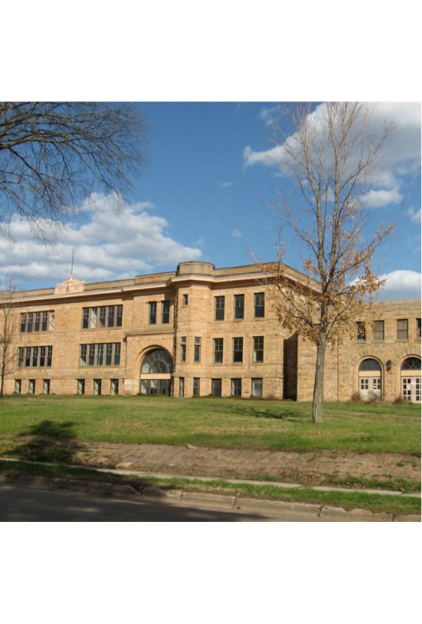
    An iconic former school made of sandstone — in the City of Sandstone — will soon become a place to call home. Once complete, The Rock, as it’s known locally, will be a shining example of the adaptive reuse of a historic local landmark.

    Sandstone and the surrounding Pine County area lack housing that schoolteachers, trash haulers, and workers at the nearby low-security federal prison can afford. People who want to move to the community for job opportunities often struggle to find a place to live.

    One of the primary reasons for this lack of affordable housing is that it costs too much to build new multi-family rental properties. Incomes in Pine County have stagnated as construction costs continue to rise, so developers tend to pass the region by in favor of more profitable areas. Over the past several years, this has led to a critical lack of affordable homes.

    Developers have tried and failed to transform The Rock in the past.. The iconic building was constructed in 1910 out of sandstone that was quarried from the Kettle River Sandstone Company Quarry, and it served as the City of Sandstone’s main school until a new facility was built in the early 2000s. Since then it has sat vacant, a shadow of its former self.

    Soon that will change, and The Rock will be revamped into affordable community housing. MHP connected the City of Sandstone with Community Housing Development Corporation (CHDC), a nonprofit developer with experience in complex rehabilitation and affordable housing projects. CHDC helped the City of Sandstone realize the community’s vision for the Rock’s renovation into rental housing using Historic and Low-Income Housing Tax Credits.

    Once complete, the building will provide 24 units of affordable workforce rental housing to Pine County residents. Ten units will be reserved for people with disabilities and those who have experienced homelessness. Lakes & Pines Community Action Council and Pine County Health and Human Services will provide supportive services including employment training, mental health assistance, and food support. The building will have on-site laundry, common space, and a management office.

    “This project is vital in order to provide quality, safe housing options for all residents in Sandstone,” said Kathy George, City Administrator for Sandstone. “This is an opportunity to preserve an iconic and historic building for future generations. It will also create an incentive for future generations to stay in Sandstone by providing housing that young people working in their first jobs can afford.”

    Several community and regional stakeholders have come together to help make this project a reality. Community Housing Development Corporation has worked closely with the City of Sandstone to design, finance, and soon begin construction on the rehabilitation of this important local landmark. Lakes & Pines Community Action and Pine County are coordinating supportive services, and Minnesota Housing Partnership is providing additional funding and technical assistance.

    An application for funding has been submitted to the Minnesota Housing Finance Agency.  Funding awards will be announced this fall.  Construction is anticipated in 2022.

  • MHP condemns Trump administration efforts to end fair housing 

    HUD eliminates crucial tool to dismantle systemic racism in housing

    On July 23, HUD announced it was eliminating the Affirmatively Furthering Fair Housing rule, a 2015 rule that requires communities that receive federal funding from HUD to examine and to work towards eliminating barriers to equal housing due to systemic racism. 

    MHP’s work to ensure that everyone has a home derives from the value that every human deserves dignity, respect, kindness and love. Racial disparities in housing are not accidental nor are they isolated. Redlining, racial covenants, and current manifestations of systemic oppression result in Minneota having the largest race based housing disparities in the nation. 

    And HUD has just eliminated an important tool for fixing those disparities. 

    In comments to HUD opposing rollbacks of the AFFH earlier this year, MHP noted: 

    “Minnesota has harmed communities of color with policies and practices that have not been adequately examined for discriminatory outcomes, the exact harms the AFFH rule is intended to prevent and end. Evictions policies and practices producing undue harm to Black women are one egregious example. An evictions study from the University of Minnesota Center for Urban and Regional Affairs, conducted by Dr. Brittany Lewis and published in 2019, found that from 2013-2015, approximately 50% of renter households in North Minneapolis, an area with predominantly residents of color, experienced at least one eviction filing, a disparity particularly relevant given that this area contains just 8% of all rental units in the city.”

    Before the COVID-19 pandemic, people of color in Minnesota were more likely to experience housing cost-burden — paying more than 30 percent of income on housing at the expense of food, medicine, and other essentials. At the same time, people of color are more likely to hold jobs that are at risk for closure or reduced hours, making that cost-burden that much more dire. See: https://mhp.sdho.dev/https://mhp.sdho.dev/images/COVID19/RaceJobsCovidDraft2.pdf

    “The decision by HUD Secretary Ben Carson is a slap in the face to everyone working to end disparities in housing and rectify the harms caused by deeply embedded discriminatory housing policy,” said Anne Mavity, MHP’s executive director. “Instead of partnering with cities and communities to remove barriers to housing for people of color, the Trump administration has instead decided to ignore that these barriers even exist.”

    “During a pandemic and recession when people are already struggling and the starkness of these disparities more and more apparent, there is only one word for this action: cruelty.”

     MHP calls on the Trump administration and HUD to reverse this decision and fully enforce the AFFH rule. 

  • Adaptive Reuse in International Falls could see first multifamily development in a generation

    Adaptive Reuse in International Falls could see first multifamily development in a generation

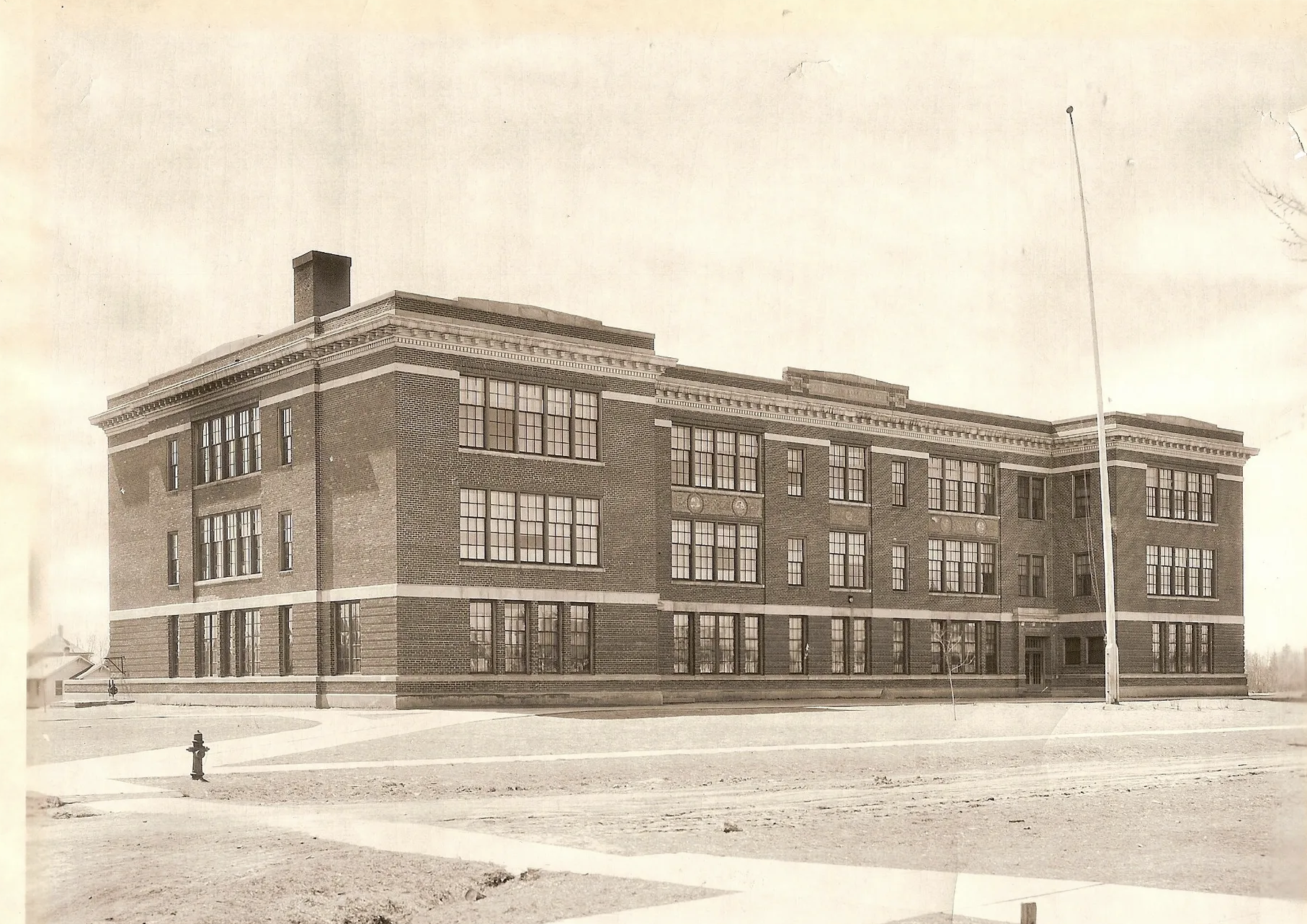
    Housing is hard to find right now in the Borderland, but the reuse of the Alexander-Baker building in International Falls will provide 30 units of affordable housing in the community, and preserve a building with rich history. 

    “The evidence was there — almost 40 years’ worth. Unless our community made it happen, we knew no one else would do it for us and we knew our community couldn’t suffer through another 6 years with a zero percent vacancy rate,” said Isaac Meyer of KOOTASCA Community Action referencing the Census Bureau’s American Community Survey. “Plain and simple: this project will provide housing for our community, our neighbors, and our families, and it will be here and be affordable for the long-term.”

    International Falls and the surrounding communities haven’t seen new rental housing development in a generation — almost 40 years. And that’s a huge problem for the area’s potential new workers. 

    People have been turning down jobs. In fact, the International Falls Journal has recounted several stories of workers considering a move to the area, but they couldn’t find a home. 

    Even if folks can find a place to live, they’re still feeling the pinch because few renting options mean higher rents. Currently, 51 percent of renters in Koochiching County, and 42 percent of renters in Itasca County are experiencing cost burden, according to Minnesota Housing Partnership’s State of the State’s Housing report. Cost burden means people sacrifice food, medicine, and education in order to make the rent.

    New housing will help bring rents down, and provide more options for housing. 

    The historic Alexander Baker building was a former school and has remained a landmark in International Falls for more than 100 years. The 30 affordable housing units will be created from the old classrooms.

    KOOTASCA Community Action and Community Housing Development Corporation, with assistance from Minnesota Housing Partnership, have submitted an application to the Minnesota Housing Finance Authority to secure funding to complete the project. The decision on that funding will be announced later this year. 

    “We’re hopeful that MHFA will approve the project,” said Ward Merrill, Executive Director of Citizens for Backus/AB. “Especially given the huge level of support we have received from the community.”

    For more information about the Alexander-Baker reuse project, visit backusab.org. Learn more about MHP’s Strengthening Rural Communities program here. 

  • Housing Institute to be launched online with record number of communities participating

    Established in 2010, the MHP’s Housing Institute brings together housing leaders and stakeholders in Greater Minnesota to share their experiences, learn best practices, and develop creative solutions to bring quality affordable housing to their communities. MHP is excited to launch the 2020-21 cohort on July 28 with 5 teams from southern Minnesota: Lanesboro, Preston, Dodge Center, Fairmont, and Lewiston.

    COVID-19 has created new circumstances but local housing needs remain. In fact, these needs have been amplified in many rural Minnesota communities. MHP is committed to provide the necessary support to help community teams develop the strategic focus to implement specific housing projects or programs to address challenges in their community. MHP staff provide technical assistance to Housing Institute participants to help build collaborative community-based teams, consider existing community assets, find financial resources and networking opportunities setting the stage for successful project/program implementation. 

    The success of the Housing Institute model can be seen in communities across Minnesota. Itasca County’s Beacon Hill project got a boost from the Institute in 2013 when regional collaboration and MHP resources helped secure what was needed for 48 units of affordable and supportive housing. Swift County’s participation in the 2019 Housing Institute helped pave the way for a $500,000 grant to rehab aging housing stock. Becker County was able to turn a homeownership dream into a reality thanks to participation in the 2018 Housing Institute. 

    “Over the past ten years, the Greater Minnesota Housing Institute has generated impact by helping teams realize their community housing goals through peer-to-peer learning and through deep collaboration with hundreds of local organizations and agencies,” said MHP Community Development Director Warren Kramer. “Funded through a HUD grant, this year our team has worked creatively and persistently to provide teams with a comparable experience entirely online. We look forward to serving this years’ participants.”

    Housing Institute Fast Facts:

    • To date the housing institute has served 136 members over six cohortsThe program is designed to build the capacity of local housing leaders and stakeholders by: working collaboratively to address needs, sharing team experiences, learning best practices, developing creative solutions to bring quality affordable housing to their communities and forming enduring relationships. 
    • Even though the bulk of activities will be completed through virtual and remote engagement, our program design remains as collaborative and locally engaged as ever.  
    • 5 teams participating in this 2020-21 cycle make this our biggest cohort yet. 
    • Successful online formatting could mean the potential to expand the institute outside of Minnesota for more peer-to-peer exchange opportunities for rural communities across the United States. 
  • Tell your lawmakers: Don’t leave St. Paul without a bonding bill that includes robust housing investments!

    {source}

    <!– Plugin BEGIN –>
    <script language=”javascript” src=”//www.congressweb.com/cweb/js/jquery.congressweb.iframe.js”></script>
    <script language=”javascript”>$cweb(function(){ $cweb(‘#congressweb-action-17’).congressweb({ url : ‘//www.congressweb.com/MHP/17’, responsive : true }); });</script>
    <div id=”congressweb-action-17″></div>
    <!– Plugin END –>

    {/source}

  • Action Alert: Call you lawmakers and demand they do their job and pass housing bills

    {source}

    <!– Plugin BEGIN –>
    <script language=”javascript” src=”//www.congressweb.com/cweb/js/jquery.congressweb.iframe.js”></script>
    <script language=”javascript”>$cweb(function(){ $cweb(‘#congressweb-action-16’).congressweb({ url : ‘//www.congressweb.com/MHP/16’, responsive : true }); });</script>
    <div id=”congressweb-action-16″></div>
    <!– Plugin END –>

    {/source}

  • Action Alert: Tell your lawmakers to do their job and pass housing bills

    {source}

    <!– Plugin BEGIN –>
    <script language=”javascript” src=”//www.congressweb.com/cweb/js/jquery.congressweb.iframe.js”></script>
    <script language=”javascript”>$cweb(function(){ $cweb(‘#congressweb-action-15’).congressweb({ url : ‘//www.congressweb.com/MHP/15’, responsive : true }); });</script>
    <div id=”congressweb-action-15″></div>
    <!– Plugin END –>

    {/source}