• January Policy Update

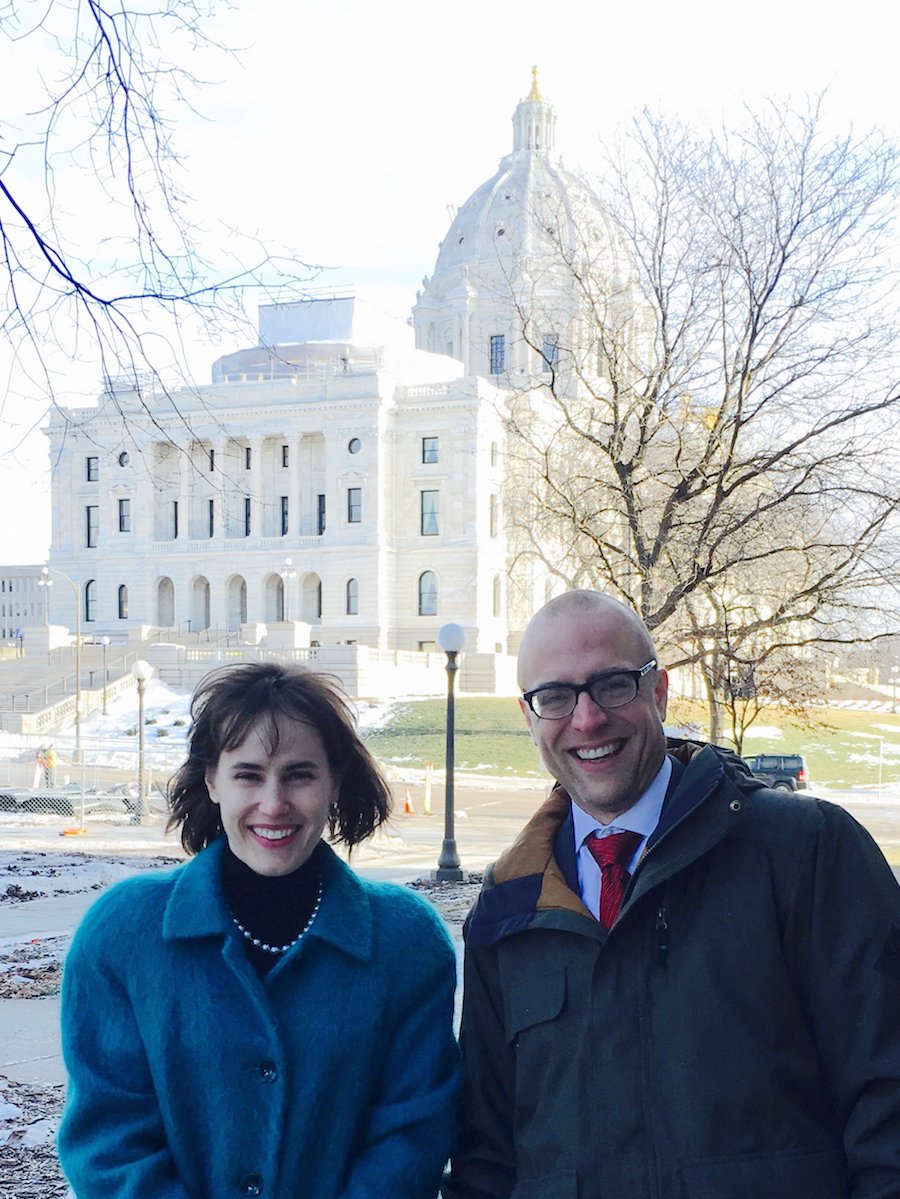
    Hello from the Capitol! We’re only a few weeks into the legislative session, but with the unseasonably warm weather and fast pace at the Capitol, it feels later in the year. Last year’s bonding bill is being heard in the Senate this week and we’re hustling from committees to meetings to make sure every elected official knows the importance of homes for all. 

    STATE 

    Building relationships: While few bills are moving yet, the Policy team has been hard at work setting up meetings and building the relationships we’ll need when things heat up. We’ve reached out to every new lawmaker and already had more than a dozen meetings. We’ve also sat down with some key leaders in the House and Senate. Over the next few weeks, we’ll shift our focus from education of freshman legislators to meeting with key committee members to advocate for the bonding bill.

    Bonding bill update: There’s still no consensus on whether a bonding bill will pass this year. But after encouraging meetings on both sides of the aisle, we have no reason to be pessimistic — though we’ll need to push hard to make sure housing is a priority. The Homes for All coalition has secured Sen. Senjem to be the chief author of its bonding bill for $100 million and is working to secure a House sponsor. Sen. Senjem also has introduced SB 210, a bonding bill that includes $45 million for housing and is very similar to the compromise bonding bill from the end of the 2016 legislative session. This bill is being heard in the Senate Capital Investment committee this week and has bipartisan support. We’re optimistic it will pass the Senate.

    Governor’s budget: The Governor’s budget proposal, released today, invests $10 million across Minnesota’s Housing Continuum. This is a good start at the beginning of session, but we know the need for affordable housing is critical throughout Minnesota. Homes for All’s budget request includes $30 million for programs to prevent and end homelessness, increase the supply of affordable housing and help first time homebuyers across the state.

    Local Housing Trust Funds: One of our priorities this session is clarifying and encouraging Local Housing Trust Funds, which provide a consistent, flexible resource for the development of affordable housing within a local jurisdiction. Thus far, the idea has been very well received. A number of Minnesota cities are currently looking at establishing housing trust funds and are very excited about the possibility of a state matching fund — and legislators have been supportive of the concept, too. Draft legislation coming soon.

    FEDERAL

    Trump executive order: A week before President Trump took office, the Obama administration issued an executive order that cut the cost of Federal Housing Administration mortgage insurance by almost a third. After being sworn in on Friday, President Trump signed an executive order that rescinded the cut. Estimates predict that, under the Obama cut, a homebuyer borrowing $200,000 would have saved roughly $500 per year. Many advocates have criticized the act as running contrary to the President Trump’s campaign vows to help average families.   

    Election and tax reform: Since the election of Donald Trump in November, there’s been plenty of speculation on the possible negative impacts on the affordable housing market. Chief among the concerns is that tax reform will lessen the incentive to invest in the Low Income Housing Tax Credit (LIHTC). Unfortunately, we’ve already started to see projects in Minnesota need additional gap financing. The other cause for concern is President Trump’s plan to cut non-defense discretionary spending by 1 percent each year for 10 years. This cut could have devastating impacts on those receiving — and those in need of — housing assistance. Trump’s appointee for HUD Secretary, Ben Carson, testified in his confirmation hearing that he would implement Trump’s plan.

    Speaking of Ben Carson… In his Senate hearing this month, Secretary Carson’s testimony focused on the link between housing and health, regulatory barriers to affordable housing, and the role of the federal government in promoting economic mobility. He acknowledged the critical role of federal housing programs but stressed the need to look for greater efficiencies and a more holistic approach to addressing poverty. If confirmed, he plans to organize a listening tour to hear from practitioners and advocates. Carson confirmed that the Fair Housing Act “was one of the best pieces of legislation” and he will enforce the “laws of the land.”

    United for Homes: The National Low Income Housing Coalition (NLIHC) hosted a webinar to kick off the 2017 restart of the United for Homes Campaign, an effort to fund housing programs benefiting extremely low-income renters through the restructuring of the federal mortgage interest deduction (MID). Currently, Rep. Keith Ellison (MN-5) is circulating a “Dear colleague” letter to be delivered to the leadership of the Ways and Means committee, asking committee leadership to direct any savings from reducing or eliminating housing tax benefits (such as MID) through federal tax reform to housing programs serving low-income people. Both NLIHC and Rep. Ellison see a new opportunity to fund housing programs since major tax reform is a priority for both Congress and the Trump administration.
     

  • Investors Council Recap: State Policy Breakfast

    On February 14, more than 100 housing industry leaders and advocates convened at MHP’s latest Investors Council breakfast to discuss prospects for housing policy at the state legislature during the 2017 legislative session.
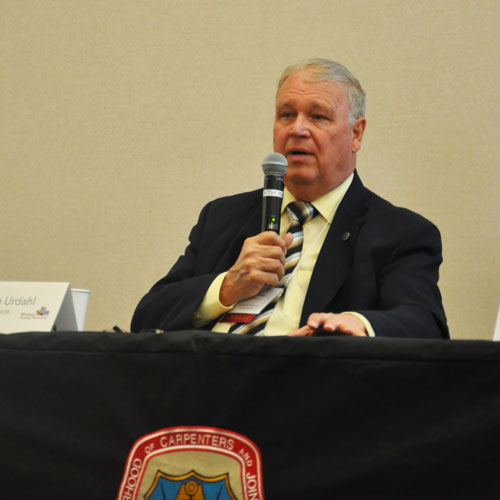
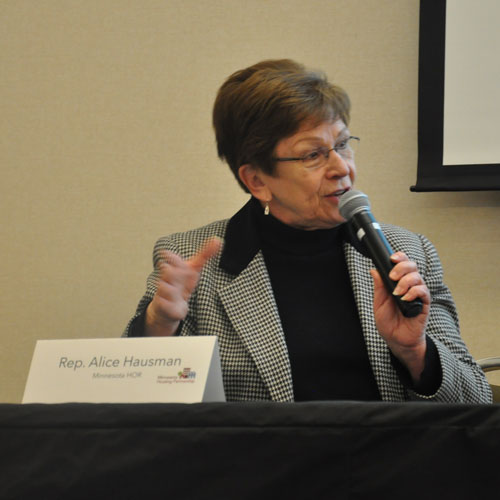
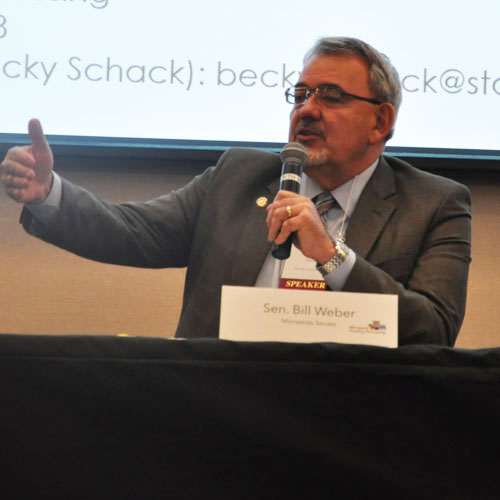
    MHP welcomed four panelists — Rep. Dean Urdahl (R), Rep. Alice Hausman (DFL — pictured right), Sen. Bill Weber (R), and Minnesota Housing Commissioner Mary Tingerthal — who shared their insight on the need for affordable housing and how we can get the resources required to provide safe, stable homes for more Minnesotans.

    Beacon Hill: A shining example

    Housing developer Skip Duchesneau of D.W. Jones kicked off the event with a presentation on the impact of affordable housing investments in Greater Minnesota. Duchesneau highlighted the Beacon Hill housing complex — 48 units of affordable workforce and supportive housing located in Grand Rapids, Minnesota.

    Duchesneau explained that the success of the Beacon Hill project was due, in large part, to the collaboration and vision of a variety of stakeholders from county and state corrections to housing and mental health services. The team responsible for the project convened to undergo training and receive guidance through MHP’s Housing Institute in 2013. With dedication and 41 team meetings, the group broke down silos between their respective organizations to successfully house more than 120 people.

    Beyond strong partnerships and perseverance, however, Duchesneau emphasized that bonding was fundamental to completing the project. “If it was not for Housing Infrastructure Bonds, Beacon Hill would not exist today,” Duchesneau said.

    Bonding: An urgent need

    Bonding was a major topic of conversation in the panel discussion following Duchesneau’s presentation. Although 2016 was a bonding year for Minnesota, legislators failed to pass a bill. Because bonds are a critical resource for housing and other infrastructure development around the state, the pressure is on for the 2017 legislature to make bonding happen. The Senate Capital Investment Committee has already heard a bonding bill (SF 210) that would provide $35 million in Housing Infrastructure Bonds and $10 million in General Obligation bonds. Committee Chair Sen. David Senjem (R) has made it clear that he’d like to pass a bill early in session.

    Bonding is proceeding more slowly in House of Representatives, however. Rep. Urdahl (pictured right) chairs the House Capital Investment Committee, which is the committee that will hear bonding requests. During the panel discussion, Rep. Urdahl said that passing a bonding bill is a priority for his committee, though he could not give a definitive timeline. “It is my intention that a bill will be done as soon as possible,” Rep. Urdahl said. “There are different definitions of possible. Therein lies the problem.”
    Rep. Alice Hausman, lead DFL member on the Capital Investment Committee, explained that bonding bills become harder to pass when individual entities seek funding from the legislature independently. She acknowledged that, in the 2017 session, many entities have a good argument for legislators. No bonding bill last session means that a number of projects are at risk of losing the 2017 construction season. However, the more entities that take this approach, the more difficult it is to pass a bonding bill. A legislator loses the incentive to vote for a bonding bill when critical infrastructure projects in their district have already secured funding.

    Rep. Hausman said that to pass a bonding bill in the 2017 session, legislators and advocates must work to keep projects packaged together and to ensure that all regions are treated fairly.

    Rep. Urdahl pointed out that, when it comes to passing a bonding bill, legislators must take a broad view. “You have to vote for what you think is good for the whole state,” Rep. Urdahl said.

    Rep. Hausman said that the House has a dangerous habit of using large bills — such as the bonding bill — as leverage. “[That’s] when we make mistakes and run out of time,” Hausman said. “If we pass [the bonding bill] early, we get the public’s vote.”

    Affordable housing: An issue across Minnesota

    Senator Weber (pictured right) and Commissioner Tingerthal both underscored the growing need for affordable housing across Minnesota. Senator Weber — who also works as a real estate appraiser and broker in Luverne, Minnesota — emphasized the shortage of housing in his district. In a town of 4,700, less than 20 homes are on the market and rental housing is also scarce. And Weber said he understands that the need for housing goes beyond Luverne.

    “We recognize that need in urban Minnesota, too,” Weber said. “It’s our goal to address all of the [housing] needs across Minnesota.”

    Tingerthal provided a rundown of the impact of Minnesota Housing programs, which help to house hundreds of families across the state each year. Tingerthal highlighted Minnesota Housing’s workforce housing and homeownership programs along with the Family Homelessness Prevention and Assistance Program (FHPAP), which supports efforts to end and prevent homelessness all 87 Minnesota counties. Despite all that Minnesota Housing does to house Minnesotans, Tingerthal explained that there is a large gap between resources for housing and the need for housing.

    “Both our appropriations dollars and our proposal for bonding are sorely needed,” Tingerthal said. “We have two times the number of solid [housing development] proposals than we can actually fund.”

    Advocating for housing at the legislature

    In the question and answer session following the panel, MHP Executive Director, Chip Halbach, pointed out that less than half of one percent of the state budget goes to Minnesota Housing for housing programs. Halbach asked the panelists how advocates can help legislators better understand housing programs and the need for additional affordable housing resources.

    Rep. Hausman responded that, to a legislator unfamiliar with housing, the $100 million bonding request might sound ambitious. For this reason, Hausman emphasized the need for affordable housing industry leaders and advocates to “tell the stories of housing dilemmas in your communities.”

    Rep. Urdahl emphasized the important role constituents play in educating their legislators. “Never assume that your legislator knows anything,” Urdahl said.

    By the conclusion of the event, 50 event attendees had agreed to take steps to educate legislators and advocate for housing by heading to the capitol with the MHP policy team, writing a letter to the editor, or providing support for advocacy in some other manner.

    MHP hosts three exclusive Investors Council breakfasts each year. The next breakfast will take place in May. Join the Investors Council today to be part of these timely discussions! Click here to see more photos of the event.


  • New staff and new titles at MHP!

    As we transition to the New Year, MHP is delighted to announce the hiring of new and the promotion of current staff members.
    Abriana Myles was hired as a part-time Office Associate and Helena Bruce was hired as a full-time Community Development Associate.

    Barbara Dolan, who has worked in MHP’s Community Development department since January 2015, was promoted from Housing Associate to Community Development Officer.

    Rosemary Fagrelius, who has successfully directed the Community Development department for the past 10 years, received the additional title of Deputy Executive Director.

    Kristina Gronquist, hired as Business Manager in 2014, received the new title of Director of Finance and Human Resources.

    Libby Murphy, Policy Associate since 2014, received the additional title of Deputy Policy Director.

    Gabriela Norton, hired in Fall 2015 as an Office Associate was promoted to Research & Communications Associate.

    Welcome to our new staff members and congratulations to all in their new roles!


  • MHP awarded $800,000 HUD grant to support rural communities

    For the fifth consecutive year, the Minnesota Housing Partnership is among a small, select groups of organizations nationwide awarded a grant through the federal Rural Capacity Building (RCB) program. The $816,455 grant for 2016 adds to millions of dollars invested in MHP to build the capacity of rural leaders to solve housing and community development issues in their communities.
    The RCB award will fund MHP’s Strengthening Rural Communities (SRC) program, which gives leaders the tools and knowledge they need to identify and address regional development needs through strategic collaboration.  According to MHP Community Development Director Rosemary Fagrelius, SRC is all about empowering rural communities to address development challenges head on. SRC positions key local entities as the go-to organizations for housing and development needs in their region.

    “What excites me most about the Strengthening Rural Communities program is the fact that I’ve seen how, for many rural communities, this funding provides the opportunity to build their own internal capacity,” Fagrelius said. “This program empowers communities to address the challenges they face by giving them the tools and skills they need to collaborate with developers and take a regional approach to community development.”

    Over the past five years, MHP has utilized RCB funding to provide capacity building assistance in rural and tribal communities in eight states — North Dakota, South Dakota, Kansas, Minnesota, Ohio, Oklahoma, Washington and Wisconsin. Through MHP’s SRC program, for which RCB funding provides support, MHP has provided technical assistance to 139 employees at 57 organizations and supported the placement of 140 housing units into the development process.

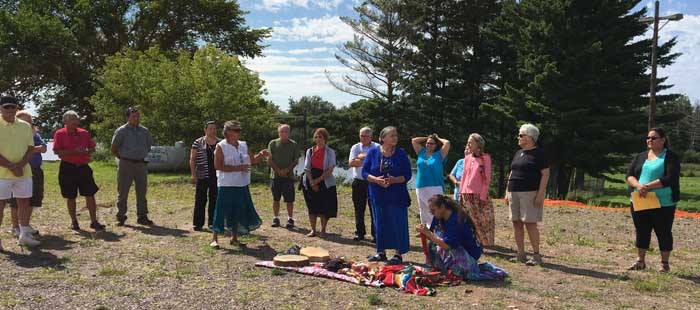
    The results are breaking new ground for rural communities. For instance, in August the Northwoods Niijii Tribal Communities in Wisconsin — an SRC participant supported by MHP’s 2012 RCB award — started construction on Waaswaaganing Indian Bowl Living Arts and Culture Center — a gathering place to share and sustain Ojibwe artistry and culture. Emerson Coy, Vice President and Treasurer of the Waaswaaganing Indian Bowl and Director of Planning for the Lac du Flambeau Tribe, says the new Indian Bowl will be “like a cornerstone” for the Lac du Flambeau community. Coy emphasizes that this project will benefit not only the local community, but everyone who visits it.

    Groundbreaking for the Waaswaaganing Indian Bowl Living Arts and Culture Center (via Facebook)

    “We all have something to learn from each other, and it’s not just entertainment,” Coy says. “It’s an interactive activity when you come to a powwow and when you participate in the arts. There is so much to learn. I think people can walk away being a little more grounded in their life and learn from the experience. They can learn about balance. They can learn about nature. They can learn about culture. And they can learn about themselves.”

    With the support of the 2016 RCB award, MHP will work with the Northern Maine Development Commission (NMDC) to build their capacity as a rural housing development organization in Aroostook and Washington Counties. These counties face significant challenges: a steadily declining population, aging housing stock and a median household income significantly lower than the national median. MHP will assist NMDC in addressing these challenges through partnership building, planning for economic development projects and by helping NMDC tap into funding that supports the development and rehabilitation of affordable housing in the region.
    In addition to supporting NMDC, MHP will utilize RCB resources to provide assistance to other eligible organizations that apply to participate in SRC. Ultimately, MHP will utilize the 2016 RCB award to continue to provide technical and financial assistance that:

    • Bolsters communities’ affordable housing development and rehab capacity to ensure housing access for communities’ lowest-income residents.
    • Expands communities’ capacity to access funding in the early stages of their development projects.
    • Grows communities’ capacity to deliver supportive services and develop supportive housing — especially for growing senior populations.
    • Develops and advances communities’ approach to sustainable economic and community development, emphasizing a comprehensive approach that includes transportation, land use, and job training.

    The philanthropic investments of MHP partners such as Wells Fargo, among others, were crucial to MHP’s meeting the leverage requirement for this year’s RCB award. “Wells Fargo has a long, proud history of investing in local communities and we are pleased to partner with MHP to revitalize homes in rural communities around the country,” said Wells Fargo Minnesota Community Development Manager David Wiese.

    MHP is one of just six entities receiving a portion of the $5 million pool made available by the U.S. Housing and Urban Development Department. Other recipients include Rural Community Assistance Corp., National Association for Latino Community Asset Builders, Housing Assistance Council, Collaborative Solutions, Inc. and Economic Consultants for Housing Opportunities, Inc.

  • MN Housing board update: Tax exempt bonding and marketing homeownership lending

    During its December meeting, the board of the Minnesota Housing Finance Agency (MHFA) dedicated most of its discussion to tax exempt financing, while also providing updates on the federal tax credit program, the state’s allocation from the National Housing Trust Fund, the Agency’s outreach and feedback regarding changes to the 4 percent tax credit and marketing of the Agency’s Homeownership Lending Program.
    National Housing Trust Fund

    Commissioner Mary Tingerthal opened the meeting reporting that HUD had given final approval for the Agency’s plan to use its allocation from the National Housing Trust Fund. In the first year of their availability, these funds are being awarded to the Southwest MHP Solace Apartments development in Saint Peter. (Read our blog about the Solace project here.)

    Four Percent Tax Credits

    Tingerthal also updated the board on outreach activities the Agency is undertaking in connection to its proposal to prioritize use of tax exempt bonds and the related 4 percent housing tax credits. She said that there were 89 participants in the Agency’s webinar on the topic. In addition, the Agency hosted several meetings with developers and will meet with local government officials in early January at a meeting sponsored by the Urban Land Institute Minnesota and Family Housing Fund. Tingerthal said that staff would summarize the input received and bring recommendations to the board at its meeting in January.

    Federal Tax Credit Program

    On a recent trip to Washington, D.C., Commissioner Tingerthal met with U.S. Rep. Erik Paulsen (MN-3) to advocate for the housing tax credit program, now threatened under various federal tax reform proposals. Subsequent to that meeting, the House Ways and Means committee, on which Paulsen sits, held a retreat and the majority of representatives voted to retain the housing tax credit in any new tax system that is created.

    Marketing Homeownership Lending Program

    Communications director Megan Ryan led a staff presentation on marketing efforts the Agency is employing in support of its homeownership lending program. Staff said that realtors were surprised and pleased to learn the breadth of people who can benefit from the Agency’s financing programs. Sixty-one percent of MLS listed properties fell within the $307,000 price limit for Agency funded loans in the Twin Cities, and household income can reach $120,000 for non- first time homebuyers who do not receive down payment assistance. Ryan said that the Agency’s new online lender search tool, launched in April, already had 21,000 visits. This summer the Agency will be implementing a new logo that is aligned with the new “Enterprise Brand” being adopted by state agencies. The Agency will focus some of its marketing efforts in Mankato, Rochester and the Twin Cities based on research for where prospective first time homebuyers are currently most active.

    Tax Exempt Bonds

    Staff and board participated in what was called the next chapter in its conversation regarding use of Private Activity (tax exempt) Bonds in Minnesota. Tingerthal said that because of the high demand for tax exempt bonds for rental housing and the resulting oversubscription for allocations of these bonds, developers had approached the Agency to see if the Agency would issue “conduit bonds” from the Agency’s entitlement allocation of bonding for their projects. These are bonds issued by the Agency to finance multifamily projects where the obligation of the Agency as an issuer to pay principal of and interest on the bonds is limited to the payments it receives from a private third-party borrower that owns the project. Minnesota Housing CFO, Kevin Carpenter, reviewed the Board’s debt management policy, which states that the Agency will only consider requests for the issuance of conduit bonds for preservation projects, and that such projects would also need to meet several other criteria outlined in the policy. Carpenter indicated that in 2017 the Agency will adopt a more specific process for handling requests for the Agency to issue conduit bonds.

    Tingerthal then discussed the possibility that, starting on January 3, applications to utilize bonding authority from the Housing Pool administered by Minnesota Office of Management and Budget (MMB) may exceed the bonding authority available. The Board discussed the possibility of issuing conduit bonds to finance a portion of the costs of certain general occupancy, non-preservation projects. These bonds would utilize some of Minnesota Housing’s annual entitlement authority for private activity bonding, and would help finance projects which could apply to MMB for a bonding allocation but do not receive sufficient allocation to qualify for 4% Low Income Housing Tax Credits. The Board indicated a willingness to hold a special board meeting in January if notified by Minnesota Housing staff that MMB received enough applications to exceed the amount available in the Housing Pool in the first round of applications.

    In the course of discussing this proposal a number of comments were made by Tingerthal and board members regarding the broader topic of the Agency’s use of tax exempt financing. Because of the scarcity of affordable rental housing Tingerthal said that in 2015 and 2016 the Agency used more than $100 million of its entitlement allocation of bonding authority for rental projects. She added that since spring, bond issues for homeownership maximized the use of taxable bonds thereby enabling the Agency to invest more of its tax exempt capacity in rental housing and thereby leveraging federal 4% housing tax credits.

    Board member Stephanie Klinzing asked what other states were doing to respond to the demand for tax exempt bonds and inquired if they are using their bonding authority to meet the growing senior housing need. Tingerthal responded that not many states are in Minnesota’s situation of having a shortage of bonding authority and those that have a shortage are trying to figure out how to deal with scarcity, too. Regarding senior housing, Tingerthal said some developers in Minnesota are replacing traditional senior project proposals with general occupancy projects that target 80 percent of the units for 55+ year-old households. Tingerthal said that attorneys believe that this type of development conforms to fair housing law (prohibiting discrimination against families) and avoids having to wait until May 15 to submit an application for bonding authority to MMB, which is when Minnesota statute allows exclusively senior housing projects to apply for bonding authority from the state housing pool.

    Other board members were concerned that the Agency would not be providing adequate notice of the proposed bond financing option or that there would be backlash if only preservation projects were funded. Tingerthal said that the development community would quickly be alerted to the possibility of accessing the Agency’s entitlement bond authority and would have this information as they consider making application to MMB in January, with the possibility of a special board meeting occurring in early to mid-January, after the first round of bonding allocations by MMB.

  • MHP welcomes three new board members

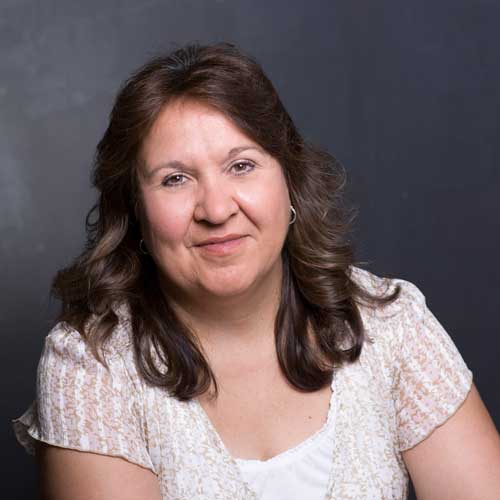
    MHP is excited to ring in the New Year with three new board members: Jacqueline Ann Dionne from the Minnesota Department of Health, Tony Schertler of the Dakota County Community Development Agency, and Jim Wabindato from the Indian Land Tenure Foundation. “MHP is fortunate to be led by many of the state’s top leaders in affordable housing and community development,” said Chip Halbach, MHP’s Executive Director. “Tony, Jim, and Jackie are very accomplished individuals and will bring a wealth of experience to the board.”

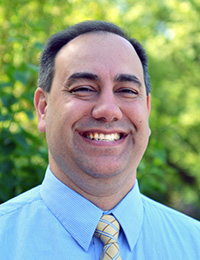
    As the organization continues to expand its work with Native communities in Minnesota and beyond, the perspectives and insights of Wabindato and Dionne will be critical.

    “MHP is working in more and more Native communities, and having board members who can help guide and support the work we do is essential,” said Rosemary Fagrelius, MHP’s Deputy Director and Community Development Director. “We will be looking to them for guidance as we deliver technical assistance to American Indian communities through programs like the Native Communities Development Institute. It is a huge asset to have Native voices on our board.”

    Jacqueline (Jackie) Dionne

    As Minnesota Department of Health’s (MDH) first ever Director of American Indian Health/Tribal Liaison, Jaqueline (Jackie) Dionne coordinates strategic collaboration between MDH and sovereign tribal governments to maximize resources and to support American Indian health initiatives.

    Previously, a specialist with the Minnesota Board on Aging, Dionne oversaw continuing care and elder services programs for American Indian Tribes including Wisdom Steps, a program that supports preventative healthcare for American Indian Elders. She has more than two decades of experience working with Minneapolis-based American Indian nonprofits, including American Indian Community Development, Little Earth of United Tribes, and Baby Space. An enrolled member of the Turtle Mountain Chippewa Tribe, Dionne grew up in Minneapolis and earned a bachelor’s degree in Early Childhood Education from the University of Minnesota.

    TJim Wabindatoony Schertler

    Tony Schertler is the Executive Director of the Dakota County Community Development Agency. Appointed in January 2016, Schertler oversees six departments and facilitates collaboration with local, state and federal agencies to increase access to affordable housing and opportunity in Dakota County Communities. Dakota County CDA administers more than 30 programs and manages 2,700 units of affordable housing including senior, youth, workforce and public housing.

    Schertler previously worked with Springsted Incorporated, a public sector advising firm, as Director of Housing and Economic Development Services, where he assisted in negotiating more than $1 billion in public-private developments. Prior to that, Schertler served for over 10 years in the City of St. Paul Department of Planning and Economic Development. He oversaw St. Paul’s Housing 5,000 project, which created more than 5,000 new housing units in a four year period, and he administered St. Paul’s land use planning, housing and economic development, small business lending, home rehab, foreclosure prevention, and neighborhood revitalization programs. Schertler has a Bachelor’s degree in History from St. John’s University and a Juris Doctor from William Mitchell College of Law.

    Jim Wabindato

    Jim Wabindato

    A citizen of the Little River Band of Ottawa Indians, Wabindato works with the Indian Land Tenure Foundation. In his capacity as Program/Development Officer, Wabindato educates American Indian landowners on federal regulations, manages programs and grants for land-based projects in Indian Country, and advocates for policies that expand opportunities for Indians to manage their own land.

    Wabindato served for four years as chair of the Little River Casino board, and he currently serves as treasurer of the Minnesota Food Association’s farmer training program board. Wabindato recently became treasurer of the Water Protectors Legal Cooperative board. He practiced realty in Arizona and Wisconsin and served as realty specialist and grant writer for the Bad River Band of Chippewa in Northern Wisconsin. Wabindato has a bachelor’s degree in Sociology from the University of Michigan.

    Please join us in welcoming our new board members!


  • Creating a Full Spectrum of Senior Housing in Mora

    Like so many communities, Mora has a long waiting list to secure one of the city’s affordable rental units. But, in the East Central Minnesota town, a particularly vulnerable population makes up the majority of the list. Of the 208 families, 161 are older adults over 55.
    “The waiting lists are so heavy with seniors that many of them aren’t living long enough to get to the top of the list,” says Rose Dunn.

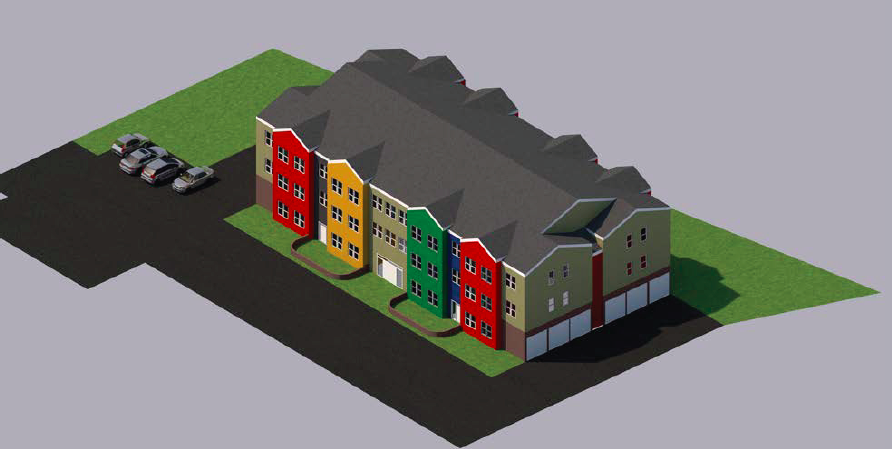
    As the Executive Director of the Mora Housing and Redevelopment Authority (HRA), Dunn has been elevating and addressing the need for more affordable senior housing for close to a decade. And last month Dunn, the HRA and the dozens of people on the waiting list got a significant victory: Funding for a project that will add 24 units to a burgeoning senior living campus in Mora (pictured right).

    It all started more than 10 years ago, when the Mora HRA purchased a 16-acre parcel on the east side of town. With a rising number of retirees in the farm community, there was a dramatic need for more affordable housing for Mora’s elder residents.

    So in 2007, the HRA built 24 units of senior independent living and in 2010 added assisted living, memory care and a senior center to the Eastwood campus. With community support and project successes the HRA was moving forward with more affordable apartment units when the great recession hit. The economic downturn put their plans on hold, but the dedication to the project remained strong.

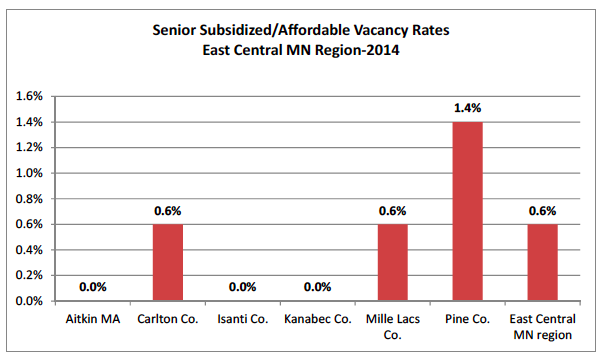
    And for good reason. A housing study for the City of Mora released in May 2014 noted that “demand was highest for affordable senior housing, showing a need for nearly 70 units” through 2025. A few months later in October 2014, a housing assessment for the wider East Central Regional Collaborative reported the area’s senior vacancy rate was barely 1 percent — and the region would need 2,761 more senior units through 2025.

    From the East Central Regional Collaborative housing study

    Having worked with MHP on the housing studies, Dunn joined the Housing Institute in 2015 — and it was just what the HRA needed to jumpstart a project that would start chipping away at that growing need.

    “The board remained committed to bringing in more affordable senior housing; they’ve never taken it off their agenda,” Dunn says. “The Housing Institute was really a great catalyst, not just in what I learned there and the resources I could bring back to the HRA, but also the way it helped to create a stronger community group focused on affordable housing in our area. Through that group the HRA has been able to engage the community and work on this as a project with others.”

    And that group has grown. While the Housing Institute Team started with representatives from Lakes & Pines CAC, Seven County Senior Federation, A Place For You (homeless shelter), East Central Regional Development Commission, and Central MN Housing Partnership and Mille Lacs Corporate Ventures, it didn’t stop there. “Our team’s commitment to meeting outside of the Housing Institute evolved into a group we call the ‘East Central Housing Organization’ (ECHO) and it now includes more than 20 members, including the Central Minnesota Council on Aging, Kanabec and Pine counties, Pine City Community College and others,” Dunn says. “This group meets monthly and has been very proactive in reaching out to the greater east central region to begin the work of developing regional housing goals.”

    Fostering that collaboration wasn’t the only goal for Cherre Palenius, the MHP Community Development Manager that worked closely with the team in Mora to turn their vision into a viable project. “We wanted them to look at the entire site and create something that was connected and complementary to the existing development, that the community and existing residents could support,” Palenius says. “We encouraged them to think about building a senior campus, versus one parcel at a time, and deliberately thinking about and planning how everything would connect.”

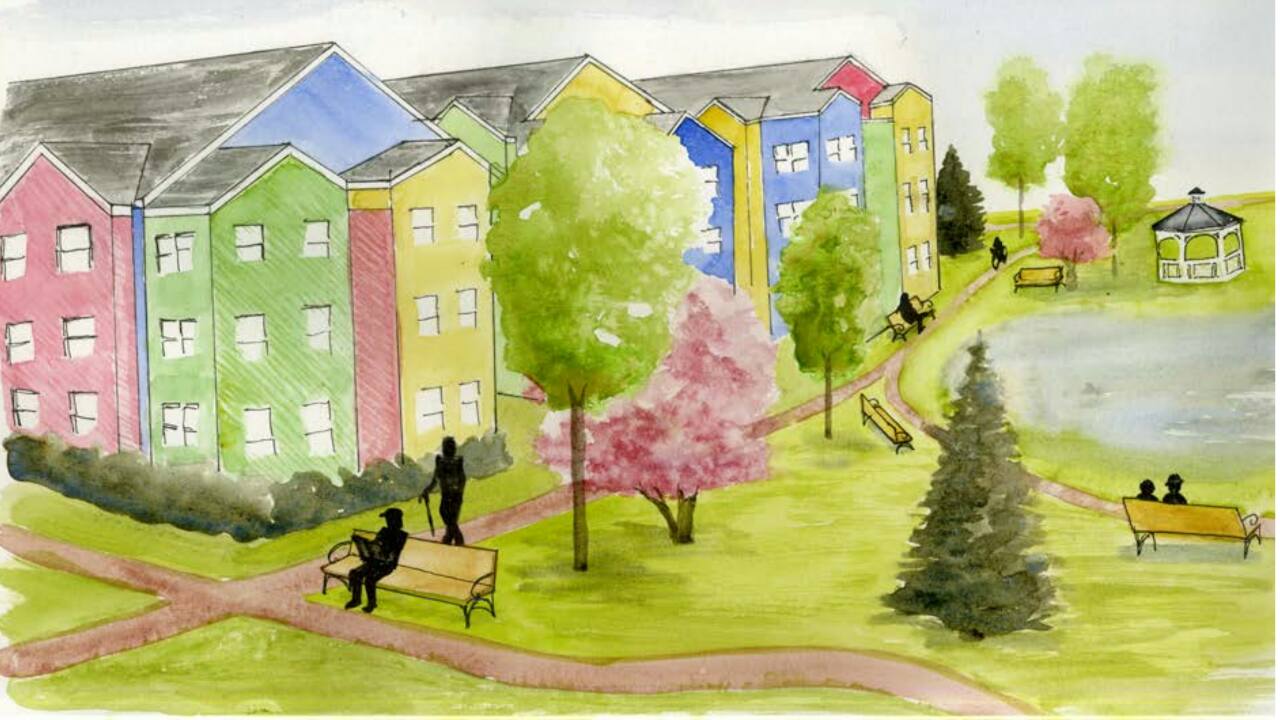
    Through the Institute, the Mora HRA decided the next piece of the puzzle was a 24-unit senior apartments project that would become Mysa House. On the advice of Palenius, the team applied to and were selected for the American Institute of Architects’ Search for Shelter program this spring. “That allowed us to work with a group of architects and students on some visionary plans and ideas,” Dunn says. “When we conveyed to them the Swedish theme of our town and campus, they found the word mysa. It’s not immediately translatable but it’s a feeling in Sweden of coming home and being comfortable and cozy after a long day. That’s kind of how we feel about this campus; we want seniors who have lived long, hard lives and put so much work into our community to come home to Eastwood and feel comfortable, cozy and relaxed.”

    From the AIA Search for Shelter renderings

    To make that happen they needed a developer — and dollars. Through the Housing Institute and assistance from Palenius, the Mora HRA contracted with D.W. Jones for the development and put in an application for funding — its first ever — to the Minnesota Housing Finance Agency. In October, they got good news: MHFA had selected the project as part of its Senior Housing Pilot, allocating $2.1 million in funding from the agency and an estimated $1.1 million in 4% tax credit equity.

    For Dunn, moving forward on Mysa House is another important step in creating a continuum of housing options for aging residents. “We have the independent and assisted living and memory care,” Dunn explains. “Mysa House will bring in services, so if residents come in being more independent they can get services they need later — in the home where they’re already living.” Beyond Mysa House, the HRA has a vision for more affordable apartments and even senior townhomes.

    While the project has been embraced in Mora, Dunn discovered the power of truly engaging with community partners. “When we did the independent and assisted living projects, the HRA did it very independently and it went well,” Dunn recalls. “But the more we go down this road, the more we realize there are many other parts of seniors lives aside from just housing. So it’s been important for the success of the project to partner with other community agencies that support seniors and can bring in those services.”

    With construction set for spring and an opening envisioned for 2018, Dunn is already getting inquiries from seniors interested in Mysa House. “The senior center here has really vibrant programming and a lot of our regular seniors coming in who live in their homes in the community have become aware and have been watching as we’ve worked toward this project. Last week when it was announced that we were getting the funding, three came and asked me if the waiting list is open.”

    Read more about the MFHA funding announcements and learn more about the Housing Institute.

  • Investors Council Recap: Vouchers in the New Housing Market

    On November 9th, nearly 100 housing developers and advocates convened at MHP’s latest Investors Council breakfast to discuss the challenges facing housing choice voucher (HCV) holders and to consider how housing industry leaders might work together to address those challenges.
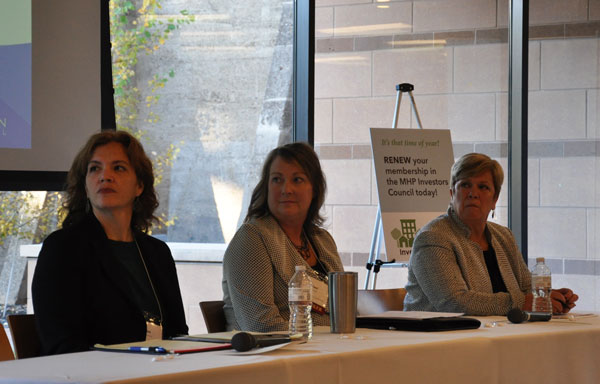
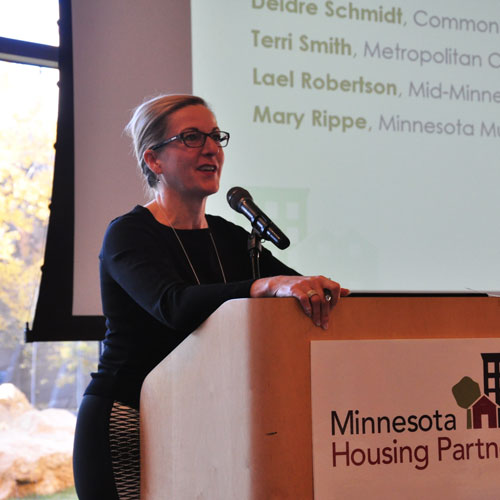
    MHP welcomed four panelists, Jessica Deegan of the Minnesota Housing Finance Agency, Lael Robertson of Minnesota Legal Aid’s Housing Discrimination Law Project, Terri Smith of Metropolitan Council HRA, and Mary Rippe of Minnesota Multi Housing Association. The panelists provided insight into a range of perspectives — from the voucher holders themselves, to their landlords, to the entities that administer vouchers. Deidre Schmidt of CommonBond Communities (pictured right) moderated the conversation.

    Who holds Housing Choice Vouchers and what do they offer?

    According to Lael Robertson of the Housing Discrimination Law Project, housing choice vouchers are intended, as the name implies, to expand housing choice for low income households. Unlike other publicly subsidized housing options for low-income families, which are confined to a fixed location, housing choice vouchers allow low-income individuals to rent any eligible privately owned unit in the region to which their voucher applies. This allows families to find a unit that best fits its needs.

    According to a survey conducted by the Housing Discrimination Law Project, voucher holders want a home that’s safe, close to family and natural spaces, and cared for by a respectful landlord. As Robertson (pictured right) pointed out, half of voucher households include children, one third have at least one member with a disability, and 17 percent include at least one elderly individual. Voucher holders typically contribute 30 to 40 percent of their income toward rent, while federal dollars cover the remaining cost.  

    Panelists from left: Lael Robertson, Terri Smith and Mary Rippe

    Robertson explained that for many of her clients, “vouchers are life changing.” Vouchers allow families to choose a place that feels like home — whether that means living closer to work, social networks, or in an area that provides better access to services. In addition, vouchers can provide families with access to high opportunity areas. Studies such as the 2016 Moving to Opportunity Experiment show that parents given the chance to move to a lower-poverty area with the help of an voucher, see improved futures for their children. Children who participated in the study and moved before turning 13 were more likely to attend college and to live in lower-poverty areas as adults. Their overall lifetime earnings increased by more than $300,000, demonstrating that vouchers can play an important role in breaking poverty cycles.

    A Shortage of Affordable Rental Units

    Because voucher offer such a significant opportunity Robertson and her colleagues call them “golden tickets.” But these “golden tickets” are hard to get and can be nearly as challenging to use.

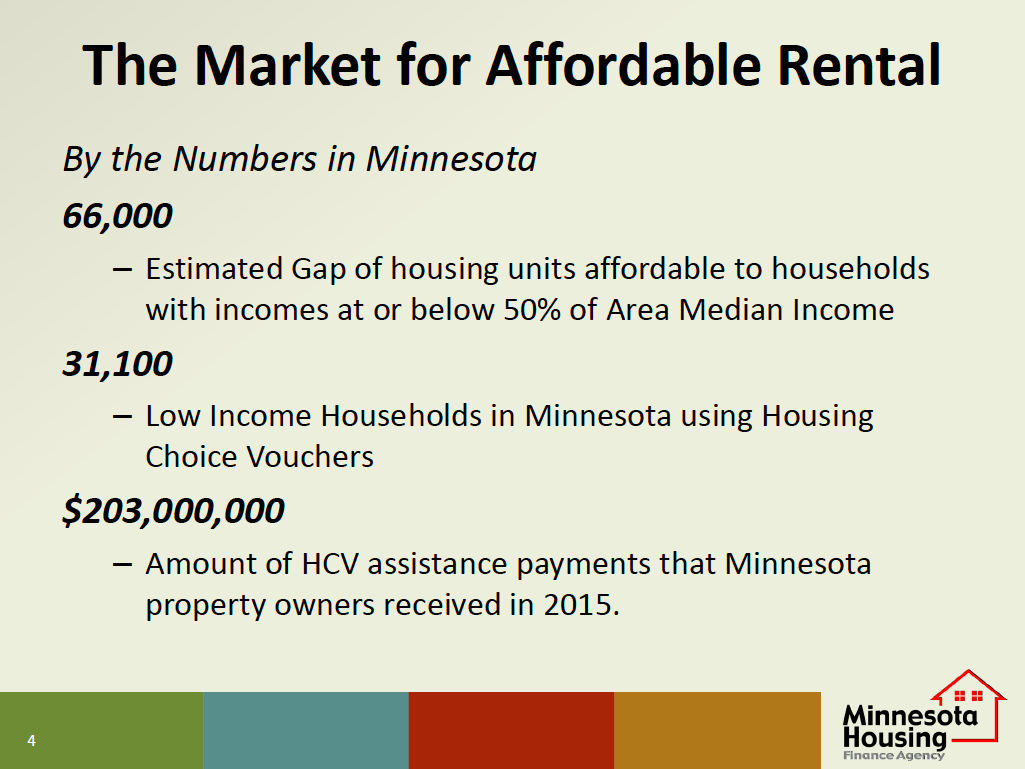
    Jessica Deegan of the Minnesota Housing Finance Agency provided an overview of the market for affordable rentals in the Twin Cities, noting that demand greatly exceeds supply. Declining renter incomes, a growing demand for luxury rentals, low vacancy rates, and a loss of unsubsidized affordable units have created an increasingly competitive rental market. That’s led to an estimated gap of 66,000 housing units affordable to households with incomes at or below 50 percent of area median income.

    From Jessica Deegan’s presentation — download slides here.

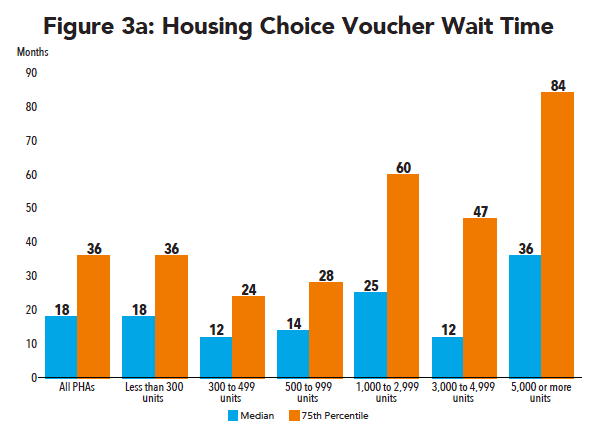
    Demand for the vouchers themselves also exceeds supply. Deegan referenced a report released last month by the National Low Income Housing Coalition based on a nationwide sample of 320 Public Housing Authorities. It found that the median time spent on voucher waiting lists is 1.5 years, and a quarter of those lists have wait times of three years or more.

    From National Low Income Housing Coalition report

    The high demand for vouchers and the shortage of affordable rentals are linked. Because low-income households in the current market are struggling to find affordable units, some seek assistance. Given so many households facing the same challenges, vouchers are in high demand. According to Terri Smith of the Metropolitan Council Housing and Redevelopment Authority (Metro HRA) — the largest administrator of housing choice vouchers in the Twin Cities area — all of its 6,500 vouchers are currently in use and 50 turn over each month.

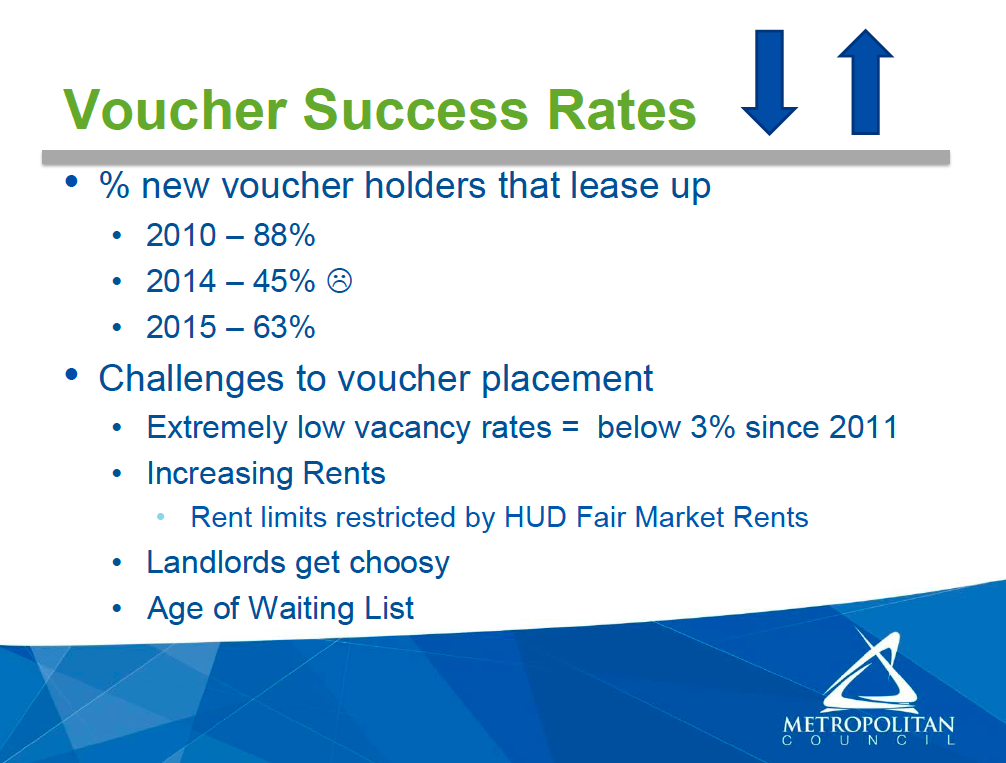
    If a household manages to secure a voucher, they must look to a limited pool of eligible rentals to find a property that accepts vouchers and that meets federal program requirements. If a voucher holder fails to find such a property in 60 days (unless granted an extension by the local housing authority), they lose out on the federal rental assistance guaranteed to them by their voucher. According to Smith, voucher holders served by Metro HRA have six months to find a suitable unit, a time limit recently extended from 120 days.

    From Terri Smith presentation — download slides here.

    Smith and her colleagues work hard to “put the ‘choice’ in Housing Choice Voucher,” she said. To be eligible for participation in the HCV program, HRAs require that rents charged by property owners fall within 90 to 110 percent of fair market rent (FMR) as determined by HUD. Smith explained that the HRA is setting higher limits to expand the pool of eligible properties — and therefore choice — for voucher holders. The Metro HRA also created the Community Choice program — a partnership between Metro HRA, voucher holders, and property owners — that ultimately assists families in gaining access to higher opportunity areas. The program provides guidance to families on how to be successful renters and support for landlords, including damage deposits upon signing and assurance of timely HRA rent payments.

    Challenges Faced by Property Owners

    Property owners participating or considering participation in the voucher program face challenges, as well. Deegan noted that participation requires additional knowledge and paperwork, such as collecting two rent payments, and ensuring that properties pass stringent housing quality inspections. In addition, some property owners are wary of the program due to concerns about renter accountability.

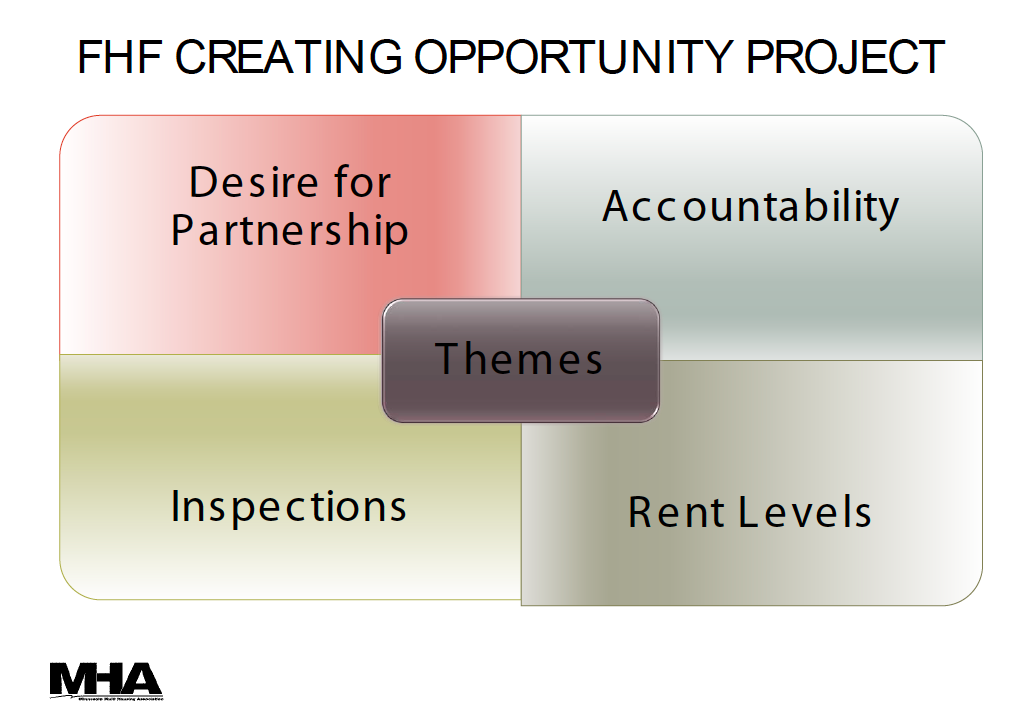
    Mary Rippe of the Multi Housing Association (MHA), which provides resources for multifamily housing owners, explained that organizations like MHA are working to understand how to make the program easier to use and how to incentivize property owner participation. To delve deeper into property owner perceptions, Rippe referenced a report released by the Family Housing Fund: the Owners/Managers Creating Opportunity Project.

    From Mary Rippe presentation — download slides here.

    Property owners who participated in the project were keen to see the voucher program succeed. They pointed to a need for effective partnerships between owners and the Public Housing Authorities (PHA) that administer voucher programs, and suggested programmatic changes that would make participation more attractive to owners. For example, PHAs could provide property owners with inspection requirements before inspections occur and cut down on the frequency of inspections of properties that consistently meet requirements. Property owners also discussed the possibility of “exception rents,” which would allow households to rent properties from owners willing to accept vouchers in areas where rent is slightly higher than the fair market rent determined by HUD.

    Federal Policy Changes

    Deegan concluded her presentation with a round-up of new federal legislation and administrative changes, including:

    • With bipartisan support, Congress passed the Housing Opportunity through Modernization Act of 2016, which helps make inspection requirements more flexible for property owners.
    • In 2016, Senators Cantwell (D-WA) and Hatch (R-UT) introduced the Affordable Housing Credit Improvement Act (S. 3237) to increase accessibility of financing for affordable housing development.
    • In 2015, Rep. Keith Ellison (D-MN) introduced the Common Sense Housing Investment Act (H.R. 1662), which would address the shortage of affordable rentals through reforms to the mortgage interest tax deduction.

    Deegan also pointed to several administrative changes such as the tenant protection voucher notice, fair housing activities such as criminal screening and the Violence Against Women Act, and a proposed rule relating to Small Area Fair Market Rents.

    Click here to see photos from the event, and join the Investors Councils to be part of these timely discussions in the future!  

  • Solace Apartments aim to create housing that reduces recidivism

    The impetus for the Solace Apartments came from an unlikely champion.
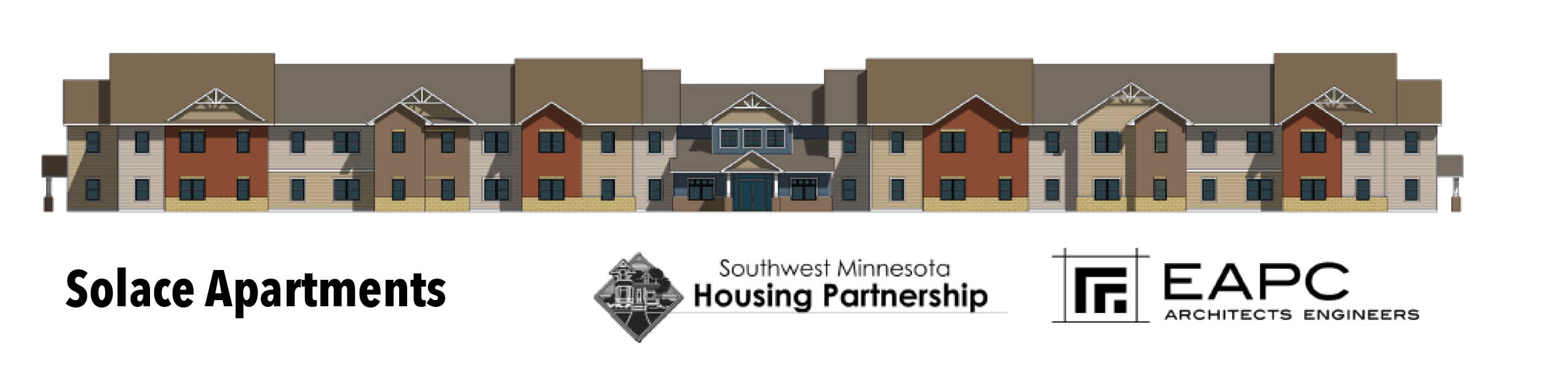
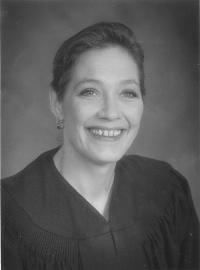
    Three years ago, the Honorable Allison Krehbiel raised the alarm. The Judge for the Fifth Judicial District Court in Nicollet County (pictured right) was watching rehabilitated residents exit the criminal justice system and enter a housing market that made it nearly impossible for them to find a home.

    With virtually no vacancy in the primary cities of St. Peter and Mankato, people with criminal backgrounds simply couldn’t compete. Instead, they ended up couch surfing or living in their vehicles, creating unstable lifestyles for their families and, all too often, paving a direct path to recidivism.

    Krehbiel knew something had to change — and fast. So she contacted Rick Goodemann, CEO of Southwest Minnesota Housing Partnership.

    “Judge Krehbiel asked me what I intended to do about this problem,” Goodemann recalls with a laugh. “That’s how it started.”

    Three years later, that call to action has resulted in Solace Apartments, 30 units of affordable housing with supportive services for people at high risk of homelessness who have mental health and/or substance abuse challenges. While the vision is far from complete, last month the ground-breaking project in St. Peter received $6.7 million in funding from the Minnesota Housing Finance Agency. Adding shine to its award, the project secured the state’s first allocation from the National Housing Trust Fund — and is being heralded as a national model already.

    Like so many successful projects, Solace grew from strong collaboration. Diverse stakeholders in Nicollet County recognized that people with criminal backgrounds and substance abuse issues are among the hardest populations to house. And they also understood that ignoring the challenge impacts the entire community.

    “These families are failing, because they don’t have stable housing,” Goodemann says. The school district suffers, because children bring their stress from the homefront into the classroom. When residents miss medical or counseling appointments, taxpayers often pick up the tab for high cost of emergency room visits. The community peace is compromised when personal crises lead to police calls and, ultimately, the criminal justice system is burdened when ex-offenders cycle back into the system.

    So Judge Krehbiel wasn’t the only one who saw an urgent need for affordable housing that would serve this population with both long-term shelter and supportive services. The group behind Solace Apartments has included important stakeholders from the county probation, prosecutor, and public defender offices; the public health department and school district; mental health services provider; and the City of St. Peter and Nicollet County commissioners.

    “It made eminent sense for everyone to deal with this as a long-term problem,” Goodemann says. “Housing people with criminal background is typically a red flag to bull. But because of the partners at the table, there was no opposition from anyone.”

    That didn’t mean Goodemann was without reservations. While his organization has partnership right in its title, this collaboration was different.

    “I was a bit apprehensive trying to design by committee,” he says. “But, in this case, where there were a lot of social services being provided, it was an amazingly fruitful process. It offered a voice to a lot of the agencies that don’t normally get into designing a space, which really brought in a new level of commitment.”


    Members of the group, with expertise in public health and child development, were able to work with the SWMHP Rose Fellow Architect to create interior spaces and exterior amenities that cater to the needs of families with kids and individuals with mental health and chemical dependency barriers. And, beyond the supportive physical space, Solace includes a wealth of on-site support for residents, including addiction recovery, medical, dental and behavioral health services.

    “The Councilmembers are so excited about this latest effort from a number of different perspectives,” says Todd Prafke, City Administrator for the City of St. Peter. “Solace helps people from our very own community and demonstrates a new way of thinking about how and where we provide supportive services and housing with wonderful potential to secure better, more efficient, outcomes. It does all of this while meeting our housing goals and providing opportunity to work with great community members.”

    To meet those housing goals, Solace also required that SWMHP reexamine its tenant requirements. “We brought in our property management team and with the supportive services provider worked through what a lease would look like and what kind of handbook we’d have to create, since our typical guidelines would prohibit many people from living in our communities,” Goodemann says.

    The effort has already garnered national attention, too. “A lot of people are grappling with this issue,” Goodemann says. “I’ve been talking to groups in San Diego and Boston who are trying to figure out how to deal with these very difficult people to house. This is a model that offers a huge chance of success.”

    That national attention has, in part, been made possible by a federal funding source. When the Minnesota legislature failed to pass a bonding bill during the 2016 session, Goodemann was concerned. “I was very fearful that we would not get funded without the bonding bill,” he said. But Solace Apartments did get the dollars it needed — from the National Housing Trust Fund. With it’s first allocation of NHTF funding, the state awarded its full amount to the St. Peter project.

    For years, MHP has been advocating for the NHTF through the United for Homes campaign, coordinated by the National Low Income Housing Coalition. “MHP worked on the campaign because there is no dedicated source of revenue for housing,” says Libby Murphy, MHP’s Deputy Director of Policy. “Year after year, HUD’s budget is subjected to the annual appropriations process and advocates work tirelessly just to defend funding for various housing programs. The National Housing Trust Fund is supposed to have a dedicated source of revenue — and it’s the only funding specifically dedicated to the construction and preservation of housing for extremely low-income housing.”

    For Judge Krehbiel, meeting those needs is possible when government stakeholders come together.

    “The success of this effort demonstrates what a community can achieve through collaboration,” she says. “If city, state and county government work together with community stakeholders, everyone benefits. The goal of this project is not to bring homeless people into our community, but instead to provide homes for the homeless already living here.”

    See the full list of projects funded by MHFA in the latest round of awards and learn more about the National Housing Trust Fund.