
• MN Housing board update: Proposed tax credit changes pushed to 2018

    During its November meeting, the board of the Minnesota Housing Finance Agency (MHFA) dedicated most of its discussion to proposed changes to the 2017 and 2018 Qualified Allocation Plan (QAP) and the public’s response to those changes. The board also considered the history, governance, and use of tax exempt bonding authority.

    Commissioner Mary Tingerthal opened the meeting by stating that many of the projects recently approved for funding through the Consolidated RFP are moving forward with their project launch (intake) meetings. Not going as well, she continued, is the reception to a set of proposed changes to 2017 and 2018 QAP, suggested by the Agency in October. QAPs establish the criteria for awarding federal Low Income Housing Tax Credits. Tingerthal acknowledged opposition to the proposed changes, as some saw the changes as the Agency stopping projects mid-track. Tingerthal said that Agency staff now recommends that it forgo the changes to the 2017 QAP, and take more time in listening to concerns regarding the proposed changes for the 2018 QAP.

    Tingerthal reminded the board of the proposed changes for projects seeking tax exempt bonding and 4 percent housing tax credits. The Agency proposed these changes because the state’s tax exempt bond authority, significant enough to meet all demand just a few years ago, is rapidly becoming a scarce resource due to a marked increase in development of rental housing that utilizes the 4 percent tax credits.

    Agency staff proposed that starting in 2018, to qualify for 4 percent credits, projects must:

    • Score a minimum of 50 points under the QAP criteria,
    • Be subject to limits set by the Agency’s predictive cost model,
    • Meet at least one of the Agency’s strategic policy priorities,
    • And the developer must waive right to opt out of program restrictions in year 15 to maintain affordability for a 30-year period.

    According to Tingerthal, several themes emerged during the comment period for proposed changes to the QAP. First, commenters argued that the notice period of the proposed changes was too brief because developers had already made commitments of time and money under the old rules. Second, commenters felt that the changes would erode local control by limiting communities’ capacity to pursue funding for a range of projects that are eligible under the current rules. Third, commenters felt that the proposed changes would require additional subsidy to meet the proposed criteria, and that those subsidy funds do not exist. Therefore, the commenters reasoned, the proposed changes would ultimately decrease the quantity of affordable housing developed.

    By and large, said Tingerthal, commenters felt that the Agency was being unfair. In response, Tingerthal requested that the board delay adopting the QAP amendments to allow more time for thoughtful dialogue. She added that the interplay of practices and guidelines between tax exempt bonds and the use of 4 percent tax credits is even more complicated than the dynamics surrounding 9 percent credits. Tingerthal said that the Agency welcomes dialogue regarding proposed changes to ensure that no unintended negative consequences occur.

    Agency staff recommended that the Agency extend the comment period on the initial 2018 QAP proposed amendments until the end of November, withdraw proposed amendments to the 2017 QAP, and continue engagement with stakeholders through early January. Staff will present its recommendations on the 2018 QAP at the January meeting, and another public comment period will follow. The board will not take final action on proposed changes to the QAP until its February meeting.

    Tingerthal said that she hoped that this extension will allow a more collaborative atmosphere to replace the adversarial one that emerged in response to the initial proposal. Staff will provide the board an update regarding their conversations with stakeholders at the December meeting.

    Board member Craig Klausing pointed out that, regardless of the conversations, the amount of available tax exempt bonds would not change. The Agency still needs to address the question of how to create criteria for allocating a scarce resource. Tingerthal agreed with that assessment, and stated that resources would still be targeted to areas of greatest need.

    Board member Rebecca Otto said that this was the first time in her experience as a board member that many of the comments submitted to the Agency appeared to be political in nature and not well-informed.

    The board voted to approve the Agency staff’s proposal to withdraw proposed amendments to the 2017 QAP and to delay action on the amendments proposed for the 2018 QAP. Tingerthal ended the board meeting discussion by saying that the Agency’s lead staff for the tax credit program, Kayla Schuchman, would be leaving the Agency for a project management position at CommonBond in December. Tingerthal added that Schuchman assured her that her departure was not related to the 4 percent tax credit.

    Tax Exempt Bonding Authority – History, Governance, and Use

    After the conclusion of the board meeting, members reconvened in committee to expand their understanding of governance and history of utilization of tax exempt bonding authority. [Download the slides from the presentation here.]

    As background, Tingerthal said that for many years, the Agency QAP de-emphasized the use of 9 percent credits for senior housing. According to Tingerthal, the reasoning for this is that affordable housing for families is far more acute than the need for affordable senior housing and it is often difficult to obtain local approval for affordable family projects. Therefore, she explained, the Agency QAP provides more points for family developments in geographic areas that provide access to opportunities such as jobs, access to transit and good schools. In the Agency’s recent RFP cycle, there was a special senior pilot program which resulted in the selection of two senior projects that target some units to lower income seniors. The Agency will continue to look at the relative need for family and senior housing.

    Points made in the bonding/tax credit overview, led by Agency Chief Financial Officer Kevin Carpenter:

    Private Activity Bonds (tax exempt bonds) are allocated by federal statute based on a state’s population. Four percent tax credits can only be obtained for projects funded by the tax exempt bonds.

    The National Council of State Housing Agencies wrote a best practices guide for the administration of 4 and 9 percent tax credit programs. Minnesota Housing essentially follows this guide, although the Agency has been out of step with the recommended practice for cost containment with respect to 4 percent credit projects. The Agency and several other state housing agencies are now looking at this issue in light of the recent significant increase in demand for tax exempt bonds and 4 percent credits.

    Under the federal allocation formula, Minnesota received $550 million in tax exempt bonding authority in 2016. Minnesota law governs the administration of this authority. Of the state’s bonding authority, four listed entitlement jurisdictions receive $238 million. Minnesota Housing, as an entitlement jurisdiction, receives $126 million and local government entitlement jurisdictions (Minneapolis, St. Paul, and Dakota County) get the remainder.

    Minnesota Management and Budget (MMB) administers the balance of bonding authority (the amount not for entitlement jurisdictions). In 2016, this balance amounted to $312 million divided by Minnesota statute among three pools ($182 million for housing, $111 million for small issue, and $19 million for public facilities). Senior housing projects may not access the housing pool until May of each year. If any amounts remain in these individual pools by August of each year, they are collapsed into a unified pool (available for any of the three uses). In December of each year, any unused amount in the unified pool goes to Minnesota Housing to be used for housing.

    Emphasizing the current scarcity of tax exempt bonds, in typical years the unified pool normally is in the hundreds of millions. Due to strong demand, this year’s unified pool will amount to only $20 million.

    In recent years, MMB has not allocated approximately $150 million of the housing pool because few applications for projects were submitted. At the end of each year, MMB transferred those funds to Minnesota Housing, where they were utilized for either single family or multifamily housing. In 2016, for the first time in 10 years, the amount unallocated is likely to be $0.

    Contrary to some of the comments received, approximately equal amounts of the state’s tax exempt bonding authority go to rental financing and to homeownership financing. From 2011 to 2016, $1.4 billion in tax exempt bond authority was used for rental developments and $1.7 billion for ownership. The Agency quickly pivots its use of tax exempt bonds between the two housing uses as it adjusts to changes in the financial markets and to ensure that all of the state’s private activity bonding authority gets used rather than allowing it to expire (expiration occurs if the authority is not used within three years of allocation).

    Commissioner Tingerthal said that the Agency will develop a strategy on the use of the state’s bonding authority based on predictions about where financial markets are heading. She added that she fully understood the strong value of utilizing bonding authority for multifamily projects that access 4 percent credits in Minnesota.

    Board member Rebecca Otto said that it would be important for the Agency to create a Frequently Asked Questions report and to address the inaccuracies included in some of the comments about proposed changes to the 2017 and 2018 QAP. Otto added that it bothered her that some commenters questioned the intentions of the Agency. The session ended with a discussion of new financial modelling created by the Agency to minimize the use of tax exempt bonding authority for single family financing.     
    Download the slides from the presentation here.

  • Micro-grants available for fair housing community engagement in the suburbs

    In May, a group of government officials and community leaders started a year-long process to more deeply investigate the barriers to fair housing faced by communities of color — and rewrite a key document that informs how federal dollars flow into the Twin Cities region. After months of meetings discussing that process, it’s time for the public to weigh in.

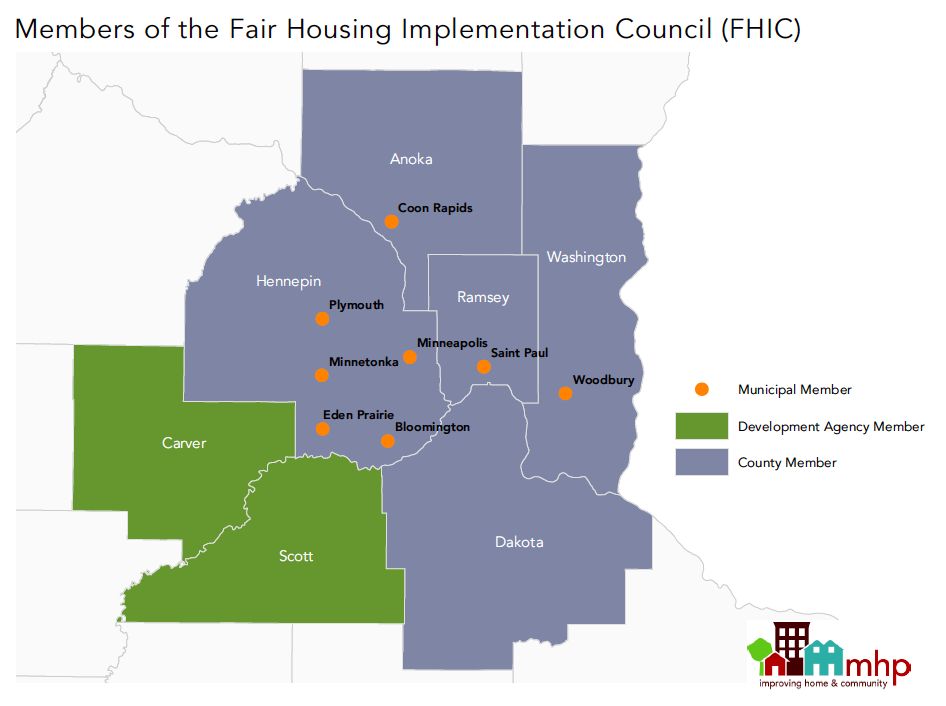
    To get that input, the Fair Housing Implementation Council (FHIC) is awarding micro-grants to community-based organizations that work in the suburban areas of the seven-county metro area — specifically the counties of Anoka, Carver, Dakota, Suburban Hennepin, Suburban Ramsey, Scott, and Washington — to convene their communities to discuss barriers to housing opportunity and fair housing within their respective cultural backgrounds.

    More specifically, the FHIC is seeking input to create an addendum to the region’s Analysis to Impediments to Fair Housing, a document required for area cities to get funding from the U.S. Department for Housing and Urban Development. In particular, this addendum specifically focuses on race and national origin — and the impact of segregation, housing discrimination, displacement, gentrification, and barriers to housing choice on communities of color.

    To understand those experiences, the FHIC is seeking organizations or individuals with existing relationships within their community to conduct a culturally appropriate community engagement process to reach 15 or more people about housing opportunity, barriers to fair housing, and solutions to these barriers. The applicant will not only collect this data, but write up a summary of what it heard, and relay the information back to the FHIC. Approximately three grants will be made available — to suburban-focused organizations — for up to $4,500 ($4,000 plus reimbursement for meeting costs up to $500) and interpretation/translation if applicable.

    In partnership with the FHIC, MHP will administer the grant application process. For questions, please contact Chip Halbach at [email protected].

    Applicants with connections to the following will receive highest priority:

    1. Communities of color
    2. Limited English Proficiency individuals
    3. Immigrants (any immigration status including refugees or undocumented persons (those with no immigration status)
    4. Low-income
    5. Displaced (from rentals and homeownership)
    6. Housing Choice Voucher holders (including those that received a voucher but unable to place it)
    7. Under-represented faith communities
    8. Communities that are underrepresented in government processes

    Applications are due December 7 with awards announced on December 14. For details on the application process, click here.

  • MN Housing board update: Proposed changes to 4 percent tax credit

    During its October meeting, the board of the Minnesota Housing Finance Agency (MHFA) covered several critical topics, including $80 million in funding awards from the 2016 Consolidated RFP and proposed changes to the allocation of 4 percent federal housing tax credits.
    In her opening remarks, Commissioner Mary Tingerthal informed the board that prior to its November meeting board members were encouraged to participate in a tour of the nearly completed Catholic Charities Higher Ground project. After the tour, Agency staff provided an overview of housing plus services programs related to Hunger and Homelessness Awareness week.

    Proposed changes to 4 percent tax credit allocation

    Join MHP’s discussion on these proposed changes on Thursday, Nov 10, at 3 p.m. by calling 800-220-9875, ID 72658579

    One of the weightier topics before the board in October was the board’s approval to open a public comment period for a set of proposed amendments to the Agency’s 2017 and 2018 Qualified Allocation Plans (QAPs), which establish the criteria for awarding federal Low Income Housing Tax Credits. The approval also included a temporary moratorium on accepting applications for 4 percent federal housing tax credits until the board can consider comments on the proposed amendments because the proposed amendments would revise the criteria for awarding such credits. Tingerthal told the board that a combination of market factors has recently made 4 percent credit projects a very viable development alternative. Tingerthal said she is concerned that, if the proposed changes are not made, federal tax exempt bond authority will not be available next year for projects that meet a higher level of state housing priorities. (To access federal 4 percent credits, which are not limited by the federal government, a project must have at least 50 percent of its development cost paid by tax exempt bond financing, which is limited in the amount allocated to the state by federal statute).

    Tingerthal continued with additional background on the proposed amendments. Until recently, she said, developers hoping to make projects pencil out with 4 percent credits and tax exempt bond financing typically needed to also access the housing subsidy programs of the Agency. Consequently, these projects were typically subject to the competitive selection criteria adopted by Minnesota Housing that reflect the state’s affordable housing priorities. Minnesota Management and Budget (MMB), the state agency that administers the process for allocating the state’s tax exempt bonding authority, applies only the priorities set forth in the statute governing tax-exempt bonds. Generally, projects may apply to MMB for allocations of tax exempt bonding authority on a first-come, first-served basis, with priorities applying only if there are more applications during an application period than there are bonds available. Preservation projects have priority over new construction projects, and projects which limit occupancy to senior citizens may not apply for bonding authority until May of each year.

    Moving to a description of the current environment, Tingerthal said that projects being financed with tax-exempt bonds and tax credits can be used for apartments renting for amounts affordable to a household whose income is no more than 60 percent of area median. Because, at least in the Twin Cities, median incomes have increased considerably in recent years, permitted tax credit rents have also increased considerably. The current rent for a Twin Cities two-bedroom apartment financed by tax credits could be as high as $1,300 a month, Tingerthal said.

    Now, because of these high rents that can be used with tax credit housing, and because tax credits are fetching very high prices thereby bringing in a lot of equity for these projects, and because the interest rates for permanent project financing are very low, developers can produce viable projects without seeking deferred financing from Minnesota Housing.

    The proposed changes to the state’s 2017 and 2018 Qualified Allocation Plans to ensure greater public purpose for projects using tax-exempt bonds, which have become a scarce resource, include:

    1) require developments seeking 4 percent credits to score at least 50 points (up from 30 points in the 2017 QAP and 40 points in the 2018 QAP);

    2) require 4 percent credit developments to meet one or more of the Agency’s seven strategic policy priorities (e.g. economic integration);

    3) require the developer to commit to a 30 year affordability period (up from 15 years); and

    4) require development costs to fall within a range not more than 25 percent above of the Agency’s predictive cost model unless the board approves an exception.

    Tingerthal said that Minnesota Housing’s oversight of 4 percent credits does not cover Minneapolis, St. Paul, nor Dakota or Washington counties. These jurisdictions are authorized by state statute to directly administer the federal tax credit program.

    The staff proposed a temporary moratorium on any application for 4 percent credits until a public comment period has concluded and the board has taken action on the proposed QAP amendments at its December 22 board meeting. This quick timeframe was needed, Tingerthal added, because the state’s 2017 allocation of federal tax exempt bonding authority will become available on January 2, 2017. In the past, developers would typically seek bond allocations and then apply to Minnesota Housing for an allocation of 4 percent tax credits. Now, should the tighter rules be adopted, developers will likely want to make sure that they can meet the minimum qualifications for the credits before seeking the bond funds. The Agency will make a new pre-application process available by November 1, 2016 to facilitate this process of earlier assessment and scoring of applications.

    In response to the proposed QAP amendments, Daniel Buchholtz was given permission to address the board. Buchholtz is the city administrator of Spring Lake Park, a city of 6,500 people. Buchholtz stated his concerns about the proposed policy and the risk it created for a planned senior housing development that the city had been working with a developer to fund through tax exempt bonds and 4 percent tax credits. He said that this project was very important to the vitality of his community, enabling seniors to move to apartments within the community, and to free up their homes for young families. He said that the proposed Agency action was short sighted; it would take away an important economic development tool for the city. This development that the city was supporting also would help Spring Lake Park to meet it housing goals as identified by the Metropolitan Council. Should the project be halted by imposition of the moratorium and QAP change, substantial time investments by both the developer and the city would be rendered moot, Buchholtz said. He added that the city had committed $4 million in tax increment funds and provided a density bonus for the project. Board members asked Buchholtz to submit his concerns in writing during the comment period and to identify which of the proposed changes was of most concern.

    Board members asked staff for more clarification on the impact of the temporary moratorium on accepting application for 4 percent credits, which had been made retroactive to October 1. Staff responded that no tax credit requests had been received by the agency between October 1 and the day of the board meeting and that the moratorium would conclude soon, when the board is expected to adopt any amendments to the QAPs at its December 22 meeting. Commissioner Tingerthal said that the board will likely need to have a special committee meeting in early December to consider QAP modifications in light of comments it would have received by the end of the comment period on November 16.  

    Funding awards

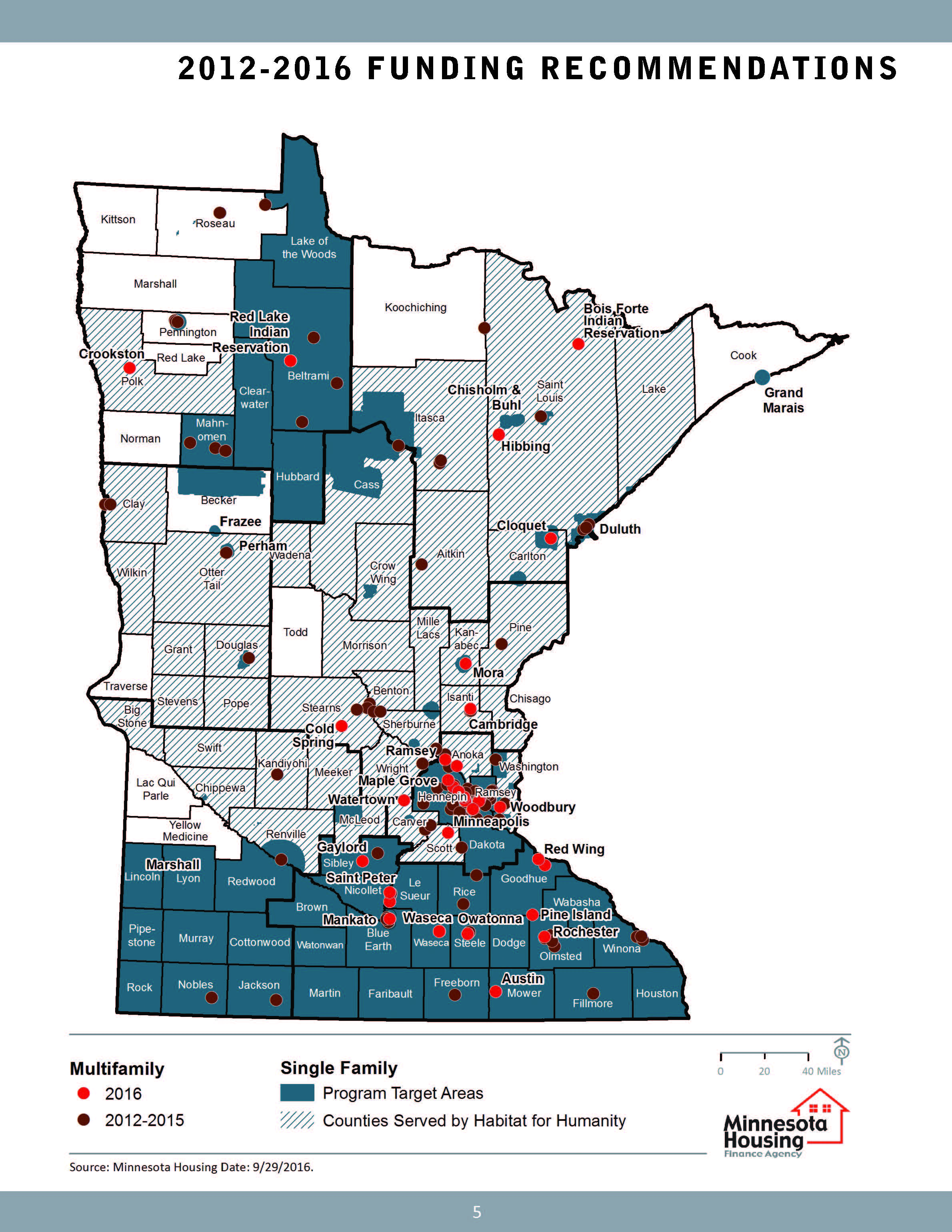
    Board and staff next turned to approval of projects under the 2016 Consolidated RFP, the Agency’s annual funding of home ownership and rental proposals. Proposals being funded had been submitted to the Agency in June. In addition to those of Minnesota Housing, the Consolidated RFP includes funds from Greater Minnesota Housing Fund, the Metropolitan Council and the state Department of Employment and Economic Development (DEED), whose awards are subject to approval by those organizations. This year’s RFP also included 30 project-based rental assistance vouchers from the Metro HRA

    Staff said that the awards would support production or renovation of 1,831 housing units, and leverage a total of $300 million in real estate development costs.

    For single family awards, the Agency was able to fund 32 of 42 proposals submitted, and $8.9 million of the $16 million requested. This year the Agency emphasized large family housing and investments to enable seniors to age in place. Workforce homeownership proposals were approved for Marshall and Perham, where in both cases local businesses were contributing down payment assistance funding.

    Staff also highlighted funding the replacement of manufactured homes in Mankato. Board member Stephanie Klinzing said that manufactured housing represented a pretty good temporary housing choice, that in some cases represented permanent housing. Tingerthal said that in the current year’s workplan the Agency will continue to investigate manufactured housing issues because concerns about these homes, and the people who reside in them, have increased recently. Klinzing said that she also appreciated the Agency’s funding support for multi-generational homes as well as aging in place.

    Turning to rental housing, staff said that funding requests to available funds was even more lopsided than it was for homeownership. Requests for tax credits outpaced funding availability by 4 to 1; and requests for deferred repayment funds exceeded availability by 3 to 1.

    Among the rental projects funded, Agency staff highlighted a USDA Rural Development (RD) preservation package of 11 properties located in eight communities. They said this packaging of RD properties as a single transaction was the first of its type in Minnesota; the consolidation will enable an economy of scale by spreading management and administrative costs over a number of smaller properties.

    Staff said that through this funding award the Agency was able to help the City of Austin, where the vacancy rate is 1 percent, to accommodate 120 new Hormel jobs. Staff said that the developer of this project, Three Rivers Community Action, will enable the immigrant population employed by Hormel and other areas businesses to move to Austin and end long commutes.

    Also included in this funding round are allocations to the communities of Woodbury and Mora to build apartments through the Agency’s new Senior Rental Housing Pilot. In another project, women leaving incarceration will be housed in a proposed Southwest Minnesota Housing Partnership development in Saint Peter, the first project in Minnesota proposed to be funded by the National Housing Trust Fund, subject to approval of the Agency’s Trust Fund plan by HUD.

    Board member Terry Thao asked how the 1,400 rental units compared to last year’s production. Commissioner Tingerthal responded that last year, the Agency funded 1,100 units. She added that these numbers cannot be simply compared because in the prior year the agency was able to use Housing Infrastructure Bond proceeds to fund more supportive housing, which generally requires much more subsidy on a per unit basis than other rental housing.  

  • The Little HRA that Could: MHFA Funds White Pine Apartments in Cloquet

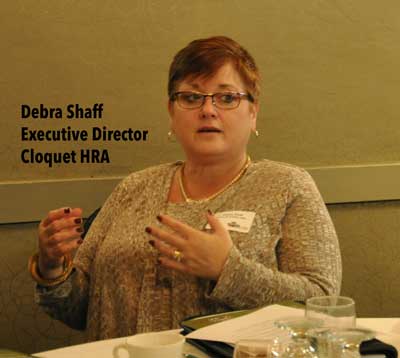
    “I wanted to pinch myself,” says Debra Shaff, Executive Director of Cloquet Housing and Redevelopment Authority.

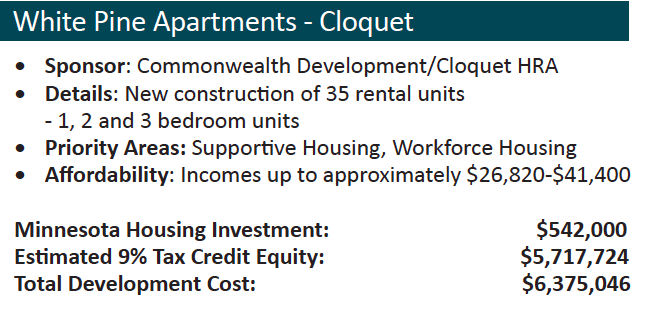
    Last month, Minnesota Housing Finance Agency (MHFA) announced that it would provide $542,000 in funding and an estimated $5,717,724 in 9 percent tax credit equity toward a project Shaff has been working to make happen since 2015.

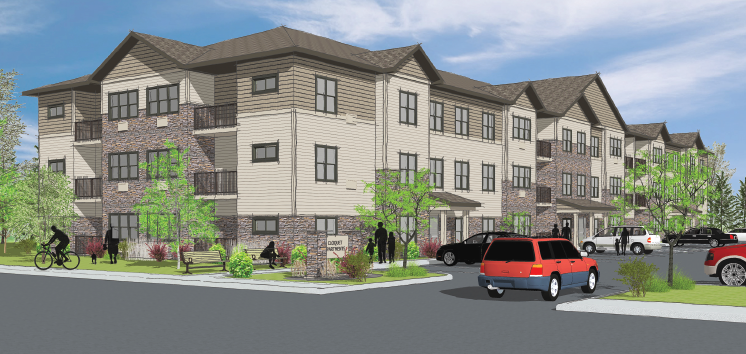
    The White Pine Apartments, a 35-unit affordable housing complex in Cloquet, Minnesota will provide both workforce and supportive housing in a community that hasn’t seen new construction in many years.

    “Finding affordable housing for our citizens has always been a challenge,” Shaff says. “Finding affordable housing that’s safe, sanitary, and decent has been an even bigger challenge.”

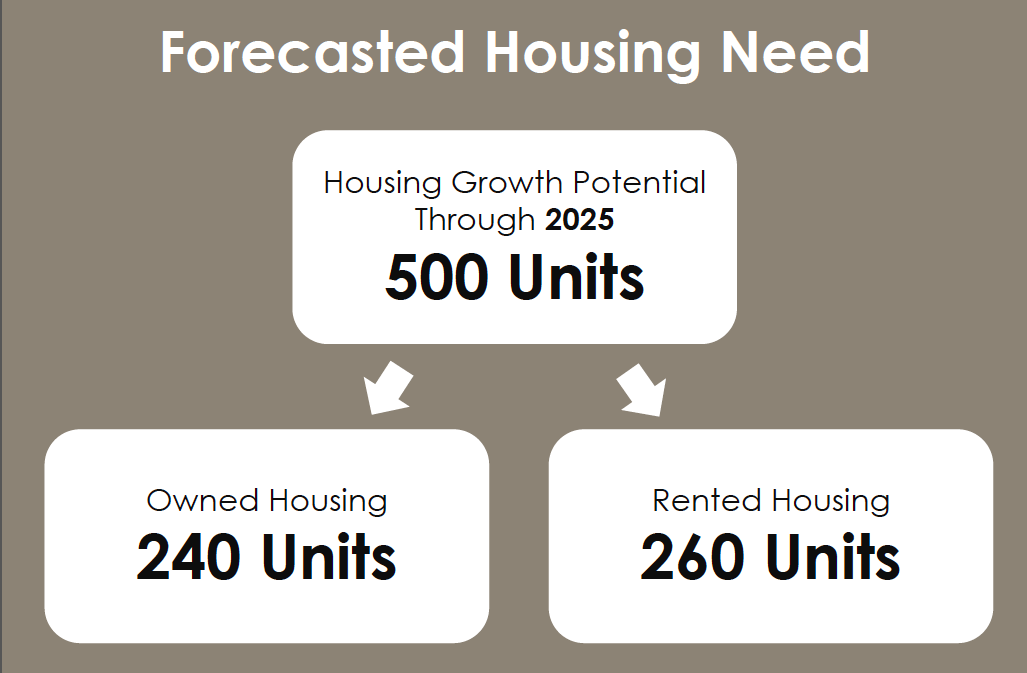
    Shaff and her colleagues at Cloquet HRA decided it was time to meet those challenges head on after a housing study released in February 2014 forecast the need for 260 new units of rental housing in Cloquet and nearby Scanlon by 2025. Minnesota Housing Partnership provided $10,000 toward the study — and Cloquet HRA leveraged it as a tool to take action. But, when Shaff presented the results of the study to her board, they seemed uncertain about Cloquet HRA’s capacity to address the problem.

    “Our board felt challenged,” Shaff recalls. “They were thinking, ‘What are we going to do? We don’t have tools, we don’t have the resources, we don’t have the expertise or the capacity.’ And yet, when people looked at the housing study, they asked, ‘If not you, then who?’”

    Shaff knew the small staff at the Cloquet HRA couldn’t make affordable housing happen on their own, so she sought the advice of Barb Sanderson, Itasca County HRA Commissioner and longtime affordable housing advocate. Sanderson suggested Shaff develop a team to join MHP’s Housing Institute, a yearlong program that builds the capacity of rural communities to meet their development needs through direct assistance, skill building, and guidance from MHP’s community development staff.

    Cloquet HRA initially invited 25 individuals to a meeting to learn about the Housing Institute. Attendees seemed intrigued but hesitant to commit. Shaff remained undeterred. “That was challenging and frustrating, but when I get an idea, I can be exuberant,” Shaff says. “It was only when I met one-on-one with the people who were key to the project that they agreed. They couldn’t turn me down.”

    Shaff assembled a team that represented the Cloquet community, including individuals from the faith community and the Salvation Army, the police chief, a former Cloquet mayor, the Carlton County Director of Human Services, and a nonprofit developer based in Duluth. As the team continued working on the project, they were joined by a retired director from United Way and a retired school superintendent. Shaff and her team completed the Housing Institute in October 2015 and, in January, they began the search for a qualified developer that could bring their vision for workforce and supportive housing to life. At that point, the team had less than six months to find a developer and secure all the necessary elements for a competitive application to MHFA.

    Shaff never expected the project to be easy. “I was anticipating lots of challenges, but we never had any real objection,” Shaff says. “Each time we made a presentation and people voted in favor of the project, I’d stamp my feet and twirl all around. There were a lot of happy dances in the hallway.” Even at the neighborhood meeting, no one objected.

    Still, the Cloquet team had some obstacles to overcome when assembling an MHFA application. First, neither Shaff nor most of her teammates had residential development experience, a challenge intensified by the aggressive timeline necessary to get the application completed by the deadline. The Cloquet team chose a developer — Commonwealth Development — that has never before worked in Minnesota. And applicants rarely receive funding from MHFA the first time they apply — and this was Cloquet HRA’s first application ever.

    But the Cloquet team was equipped with all they needed to succeed. The Housing Institute had provided the team with the fundamentals — an understanding of development best practices, access to a network of developers and peers working on similar projects, and guidance in formulating and tackling a project plan. The team also had the expertise, guidance, and support of MHP Community Development Managers Sarah Bellefuil and Cherre’ Palenius. During the Housing Institute, Bellefuil acted as team liaison and worked with the Cloquet team for over a year on the development process. Then, after the Institute ended, Palenius came on board to help with the search for a developer and to provide her expertise in housing development finance. During the Housing Institute and after, Bellefuil and Palenius met with the team in Cloquet to hammer out details and provide assistance to help ensure the project’s success.

    After more than a year of direct involvement with the project, Bellefuil and Palenius knew that the Cloquet team had a shot at securing MHFA funding.

    “It is such a great project and they had all the pieces in place by the time the application was made — a housing study that showed need, community input, available land, informed city officials and neighbors, supportive housing included in the project, and meetings with MHFA staff prior to the project,” Bellefuil says.

    MHFA seemed to agree when last month, the White Pine Apartment complex was funded.

    The way Shaff describes the project, it’s easy to see its appeal. She and her team envisioned “universal housing” designed to meet a variety of needs in the Cloquet community. The units will be configured to allow residents to “age in place,” with features like in-room laundry and wheelchair accessibility to ensure easy mobility. The design incorporates seven units of supportive housing and units with two- and three-bedrooms targeted to working families. The complex will be nestled in a walkable residential neighborhood near the new middle school and existing high school, churches  and several parks, and will utilize land that has been sitting vacant. When Shaff imagines White Pine apartments, she sees children playing in the yard and riding their bikes around the neighborhood.

    “It’s going to be a nice place to live,” Shaff says. “It’s going to be families, our brothers and sisters, or maybe somebody we work with who needs good housing for their family.”

    There’s still plenty to do before families can move in. The Cloquet team must complete a land survey, finalize the project design, take construction bids, and complete MHFA’s four-page project checklist. But Shaff and her teammates are confident they can get it done.

    “I have a lot of peers at other housing authorities in communities even smaller than Cloquet who have a lot of pressure to develop housing because the housing in their community is dated or needs replacement,” Shaff explains. “They don’t know where to begin. They don’t know how to do it. They have the same challenges that we  face here in Cloquet. My message to them is ‘You know what? If a little housing authority in Cloquet with a staff of three people can do it, you can do it too.’ It’s just learning the tools, believing in yourself and believing in your project. There are organizations and developers that are willing to work with you if you have the vision and volunteers willing to help carry the project along.”

    Read our recent report on the Housing Institute here and check out the 2016 MHFA funding announcement here.

  • $80 million for affordable housing far short of growing need

    In April 2015, Janet Troutman-Simmons got news she could only describe as “devastating.” Along with scores of other seniors, the 89-year-old St. Paul resident faced the prospect of having to find new housing when the owner of Como By The Lake decided to discontinue acceptance of Section 8 vouchers.

    Determined to save their homes, Troutman-Simmons and other tenants mobilized — and, with the help of advocates and private sector leaders, they brought in Aeon, a developer committed to keeping the building affordable.

    “We were not folks looking for a handout, but people who had worked all of our lives in jobs civic and social, teaching and service, manufacturing and farming, educating our children while providing homes and, yes, paying our taxes,” Troutman-Simmons said last week. “At the end of the day there is just not enough money for a fancy retirement. And the country is full of such folks who deserve to live in decent, affordable housing.”

    Recognizing the growing need for affordable housing in Minnesota, Governor Mark Dayton joined Housing Commissioner Mary Tingerthal at Como By The Lake — the community Troutman-Simmons and her fellow tenants fought to preserve — to announce the latest round of funding from the Minnesota Housing Finance Agency this week.

    The $80 million in new affordable housing investments will leverage more than $300 million in private and local funding, and support more than 2,800 jobs. Those dollars will create or preserve more than 1,830 affordable units throughout the state. And MHP was heartened to hear that several projects catalyzed by our Housing Institute received awards.

    “MHP has had the great pleasure of working with many leaders in Greater Minnesota who are striving to meet the growing need for affordable housing among new and longtime residents,” said Rosemary Fagrelius, MHP’s Community Development Director. “We’re disappointed that more of these critical projects could not be funded, but we’re delighted communities like Cloquet and Mora will be able to move forward on important projects for seniors and workforce housing.”

    But, as Governor Dayton pointed out, too many important projects didn’t make the cut.

    “This funding will stimulate jobs and economic development across our state, while providing housing for more Minnesotans in need,” Governor Dayton said (pictured right). “Unfortunately, without a bonding bill last session, the housing needs of 3,000 more Minnesota families will go unmet.”
    Because of the lack of a bonding bill, the $80 million in funding this year is down from $92 million in 2015 and $161 million in 2014. And the need is going in the opposite direction. From 2000 to 2015, the number of households spending more than 30% of their income on housing increased 63 percent to more than 570,000 households. And this year, MHFA got more than $233 million in requested funding for projects throughout the state. 

    “The housing built and preserved with these resources is a smart investment in Minnesota’s future and will be an important foundation for success for kids, families and workers across Minnesota,” Tingerthal said. “We are battling housing costs that are rising faster than incomes. We must continue our commitment to provide more Minnesotans with access to affordable homes in communities of their choice.”

    For MHP, that battle will continue at the statehouse during the upcoming legislative session, as we push for additional resources to close the gap between need and funding. “The reality is that because the Minnesota legislature was not able to pass a bonding bill last session, we are one year behind on addressing the housing needs of working families — and our workforce and economy will suffer because of it,” said Jeremy Schroeder, MHP’s Policy Director. “At the rate the state loses affordable housing every year, much more needs to be done if we are going to provide safe, affordable homes for Minnesota’s children, seniors and working families.”

    For Troutman-Simmons, the seniors at Como By The Lake have become a family themselves — and she hopes the $3 million in tax credits for her community will serve as an example for the rest of the state.

    “What you heard here today is the result of public and private entities and agencies working together to do the right thing,” she said. “As recipients of these efforts we hope a light shines on us to demonstrate what is possible when our citizens work hand in hand.”

    Stay tuned in coming weeks for stories on some of the successful and stand-out projects in this funding round!

  • Seeking Solutions: Eric Hauge, HOME Line

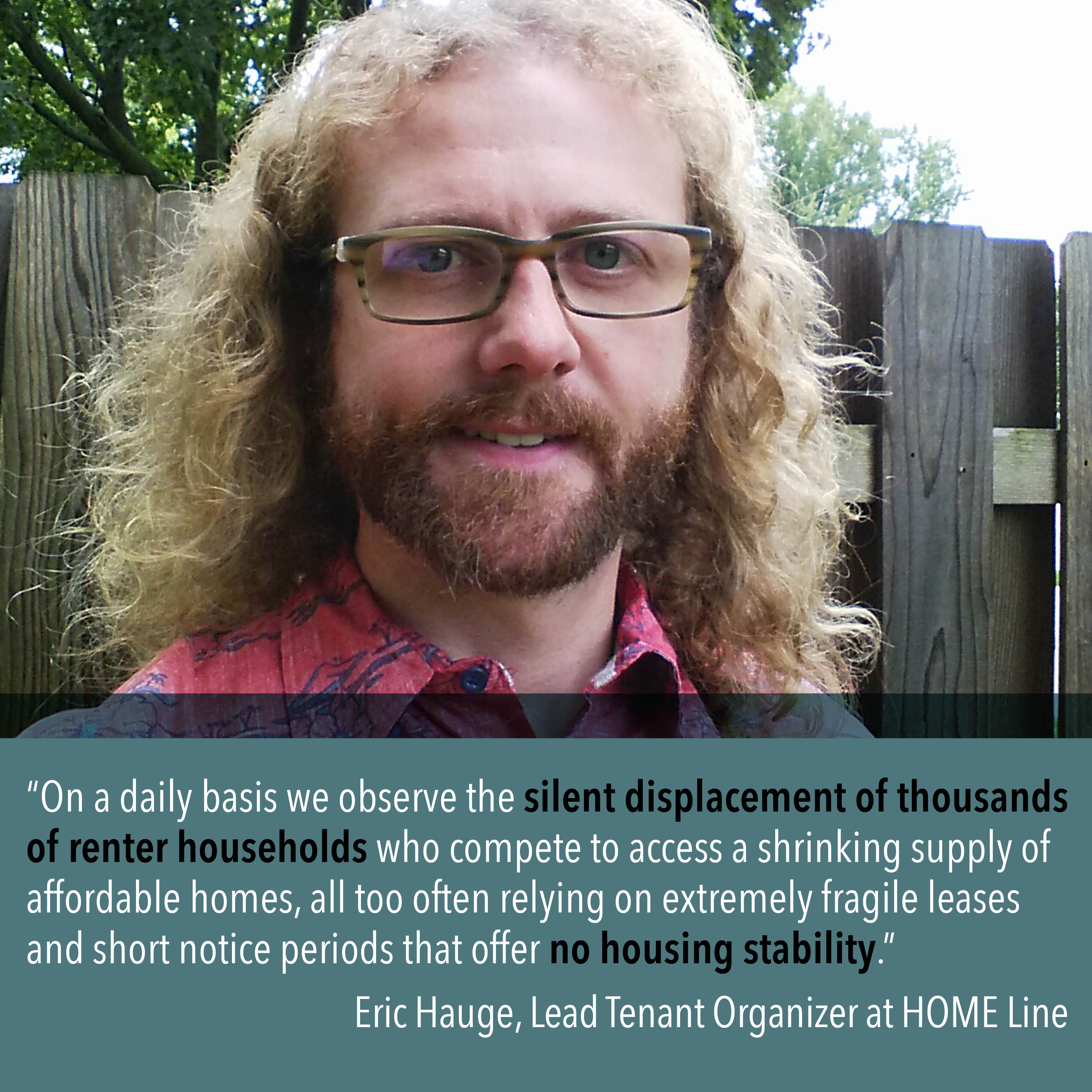
    This month, MHP released a new report that examines the pace, price and locations of more than 1,000 apartment property sales in the seven-county metro region. The findings are clear: Over the past decade, renters at low- to moderate- income levels have had an increasingly difficult time finding affordable housing. The report includes the experiences of both renters and leaders advocating for change. Karlee Weinmann spoke with Eric Hauge, lead tenant organizer at HOME Line. 

    Eric Hauge’s phone has been ringing a lot lately.

    But that’s to be expected for an organizer at HOME Line, a tenant advocacy group at the center of a burgeoning Twin Cities housing crisis. When property owners’ new plans force out existing tenants, many of them turn to HOME Line for support as they venture out into the increasingly challenging rental market.

    It’s tough to imagine a fair fight between property owners and under-resourced tenants. Still, Hauge and his group have worked consistently for months to shift the power balance toward renters. But that’s a tall order when hundreds of tenants — and counting — face displacement.

    Between two complexes that changed ownership within the past year, in Richfield and St. Louis Park, Hauge and HOME Line fielded calls from dozens and dozens of tenants facing an uncertain hunt for new housing. It’s happening faster than advocates can handle, he said, and more frequently than ever.

    In large part, HOME Line’s approach has focused on empowering renters to organize themselves and advocate for their individual homes. The organization was instrumental in mobilizing Crossroads residents around their Fair Housing Act lawsuit, and has been an active participant in housing resource fairs in communities hit by influxes of displaced renters.

    In addition to rent increases, tenant advocates have identified numerous management practices causing displacement during the current wave of rental property sales. These practices include refusing to accept tenants with Section 8 housing vouchers, increasing credit score minimums, reducing the allowed number of people per bedroom, raising rent/income ratio requirements, increasing rental history screening standards, and reapplication policies that require social security numbers.

    Thinking bigger, Hauge and HOME Line are looking for a stronger platform to galvanize community members around the issue. That grassroots-level push is central to his strategy for solving a problem that has so far struggled to capture widespread attention.

    A lasting fix remains elusive given the expansive nature of the issue. “The problem is that [the affected rental units] are all over the metro area,” Hauge said. “Cities have different policies and interests and a lot of them just don’t even recognize this as a problem.”

    Plus, he said, not every case sparks the kind of lightning-rod debate that has thrust some apartment sales — notably, the Crossroads at Penn complex [in Richfield] and Meadowbrook Manor [in St. Louis Park] — into news reports and community conversations. Many residents quietly leave when they can’t find the help they need to fight for their homes. That group, organizers say, is large but impossible to quantify.

    Click here to read the full report.

  • Sold Out: Vicki Olson

    Sold Out, a report released this month by MHP, analyzed more than 1,000 apartment property sales in the Twin Cities metro region over the past decade. One trend to emerge: higher income households are driving the rental market — putting many low- to moderate- income renters at risk of displacement. One such renter was Vicki Olson, who had to leave her apartment of 13 years when a new owner raised rents. Karlee Weinmann interviewed Olson for MHP’s report.

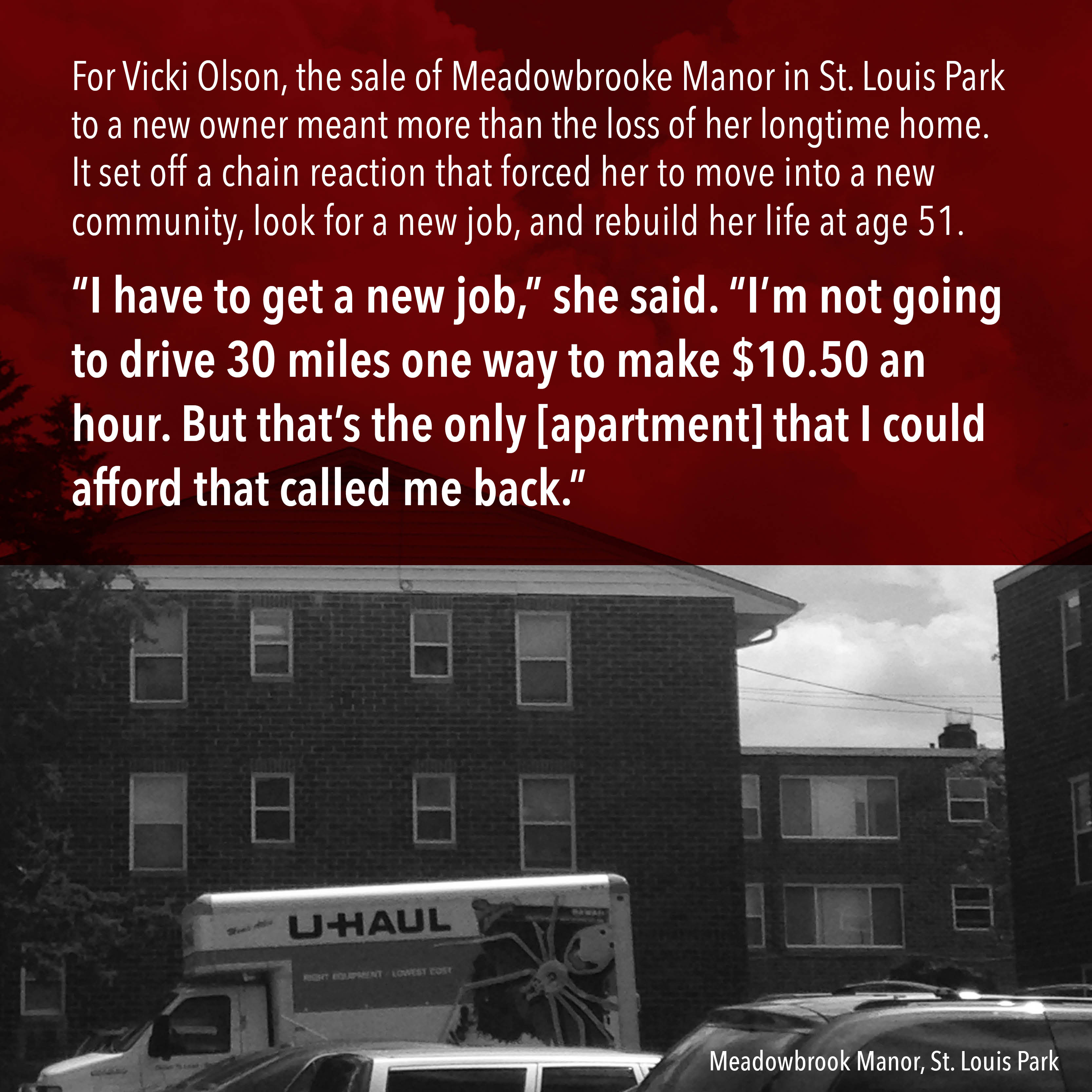
    For Vicki Olson, the sale of her apartment complex to a new owner meant more than the loss of her longtime home.

    After 13 years, she could no longer afford to live at Meadowbrook Manor in St. Louis Park, setting off a chain reaction that forced her to move into a new community, look for a new job, and rebuild her life at age 51.

    Olson left Meadowbrook at the end of May, splitting time between her mother’s one-bedroom apartment in Fridley and her father’s house in Brooklyn Park until she finally found an apartment in Mound for a July move-in.

    While the Mound apartment solved one problem, it opened another. It extended Olson’s commute to her call center job in Hopkins from three miles to 30 miles — too far, she said, to justify the trip for the long term.

    “I have to get a new job,” she said. “I’m not going to drive 30 miles one way to make $10.50 an hour. But that’s the only [apartment] that I could afford that called me back.”

    The Mound rental wasn’t her first choice — not by a long shot — but it was the first viable option to emerge after dozens of inquiries. A tight multifamily market across the Twin Cities meant few available units — and even fewer priced within Olson’s range.

    “Do I want to live in Mound? Am I going to enjoy going back and forth to Mound? No,” Olson said. “But at least I can pay my rent.”

    Most of her calls to area landlords, and even to a commercial apartment hunter recommended by the new Meadowbrook owner, went unanswered. A different broker offered her services, but couldn’t meet Olson’s rent limitation. She had paid $625 for her one-bedroom unit at Meadowbrook.

    “I told her what I could afford, and she said, ‘I don’t know what you’re going to do because I don’t have anything that low,’” Olson recalled.

    The uncertainty upended Olson’s life, and the scramble to find a new home took its toll. Olson hasn’t quite gotten over the shock of leaving her home of more than a decade.

    She didn’t move away from Meadowbrook on her own terms, and she didn’t choose to grapple with other major life changes as a result.

    “It really sucks that I lived there that long,” Olson said, “and it didn’t mean anything to those people at all.”

  • Sold Out: Bernard Campbell

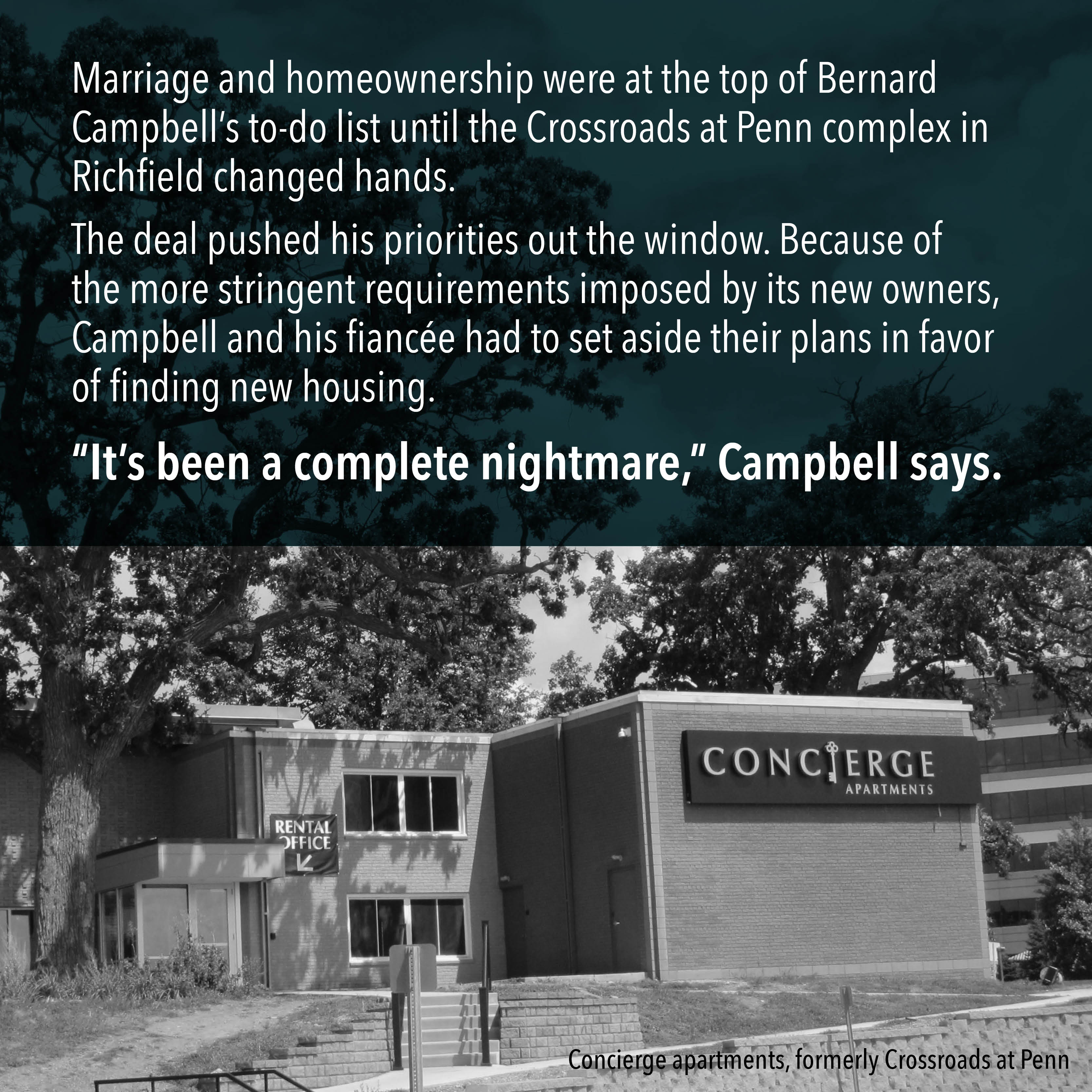
    Last week, MHP released a new report examining more than 1,000 apartment property sales in the Twin Cities region over the past decade. Sold Out reveals that a hot rental market is putting many metro renters at risk of displacement — and includes the experiences of renters like Bernard Campbell, a former tenant of the Crossroads at Penn (now Concierge Apartments) in Richfield.

    Bernard’s story was reported by Karlee Weinmann.

    Marriage and homeownership were at the top of Bernard Campbell’s to-do list until the Crossroads at Penn complex in Richfield changed hands.

    The deal, he said, pushed his priorities out the window. Tripped up by more stringent requirements for renters at the complex, imposed by its new owners, Campbell and his fiancée had to set aside their plans in favor of finding new housing. Now, they’re trying to be patient while they reconfigure their future together.

    “It’s been a complete nightmare,” Campbell said.

    Campbell works a registration job at a local health care provider and earns enough to cover higher rent, especially with his fiancee’s income lumped in. But his credit score falls short of the 625 mark imposed by the new landlord.

    Stiffer credit requirements aren’t uncommon when new landlords take over with plans for big changes. But for Campbell and his fiancee — and others like them — the measure means the difference between keeping their home and having to leave it.

    Bernard Campbell, pictured right, joined MHP for a conversation about the Sold Out report on MPR news. Click here to listen.

    Looser credit standards under the complex’s former ownership provided an important gateway for Campbell to rebuild his credit. The way he had it figured, he would be able to afford a wedding early in 2017, and shore up his finances enough to buy a home soon after that. “Now we have to worry about this,” he said. “It’s just really, really, really frustrating.”

    Credit problems complicated the search for another apartment. The high-demand Twin Cities rental market didn’t help — Campbell and his fiancée began looking in earnest for a new apartment in April, but they only received good news in mid-July. Their Crossroads lease ran through August, doubling their rent for the month.

    The new place is in the same general area, but it’s further from bus connections Campbell relies on. The rent, at about $900, is heftier. Plus, every rejected application from the hunt that included a credit check knocked down his score even more.

    For Campbell, the past several months have brought a seemingly never-ending series of hurdles. Even a year after the Crossroads upheaval started, he’s still straining to keep up.

    “I’m trying to make sure everything is where it’s supposed to be,” he said, “but something like that is like a blow to the stomach. It kind of makes you question, ‘What am I doing wrong? Am I a bad person?’”

    Read the full Sold Out report here.

  • Housing Institute model proves collaboration creates progress

    This month, MHP celebrated the six year anniversary of the Housing Institute with our partners at Greater Minnesota Housing Fund — and rural housing leaders from across the state. To mark the milestone, we examined the evolution, successes and impact of this transformative program in a new white paper: “Building Community Through Collaboration.” Click here to download the full paper; keep reading for an excerpt on the impetus and structure of the Institute. 

    In many regions of rural Minnesota, there’s a significant gap between the supply of affordable housing and the number of people who need it. In 2010, the Minnesota Housing Partnership, with key support from the Greater Minnesota Housing Fund (GMHF), created a new program to close that gap through collaboration and capacity building.

    In just six years, the Housing Institute has proven a team-driven model can make all the difference in turning aspiration into action, and visions for community development into reality.

    When the Housing Institute was launched in 2010, Minnesota was in the throes of the economic crisis. Like so many other states, it was hit with a wave of foreclosures and bankruptcies among developers. But that blow compounded challenges rural communities had faced for many years.

    Rural areas already struggled with limited funding for rehabilitation of existing housing or the construction of new housing. Applying for state and federal funding, which includes complicated processes and regulations, was difficult for the small number of public servants who juggled many responsibilities. And, adding urgency to equation, many units of affordable housing built in the 1980s using federal funds were quickly reaching the end of their mortgage terms, opening the door to convert affordable units to market rate.

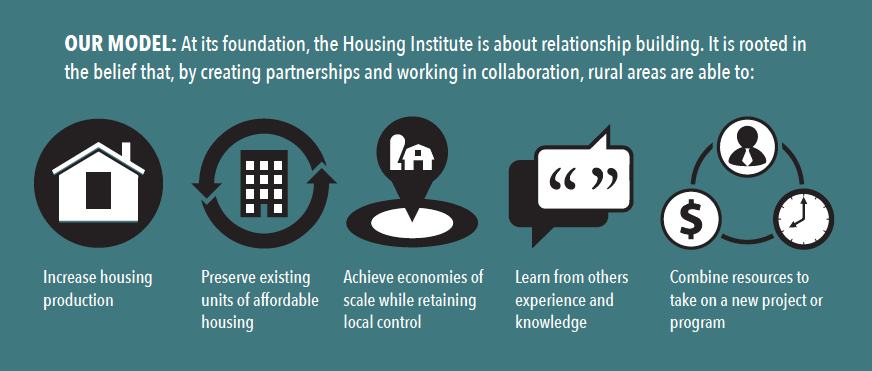
    In response to these pressing factors, the Housing Institute was created to bring together housing leaders and stakeholders to share their experiences, learn best practices, and develop creative solutions to bring quality affordable housing to their communities.

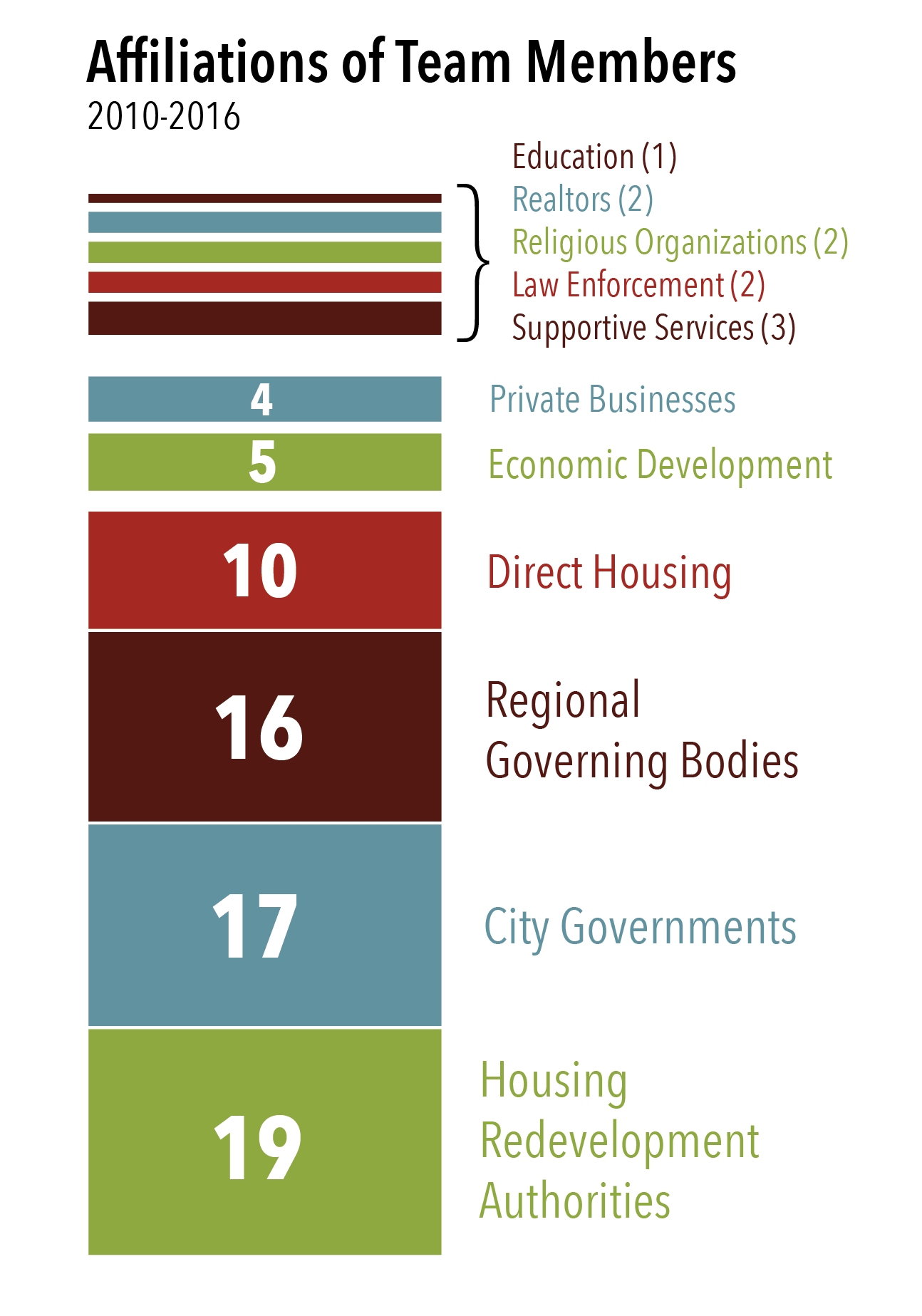
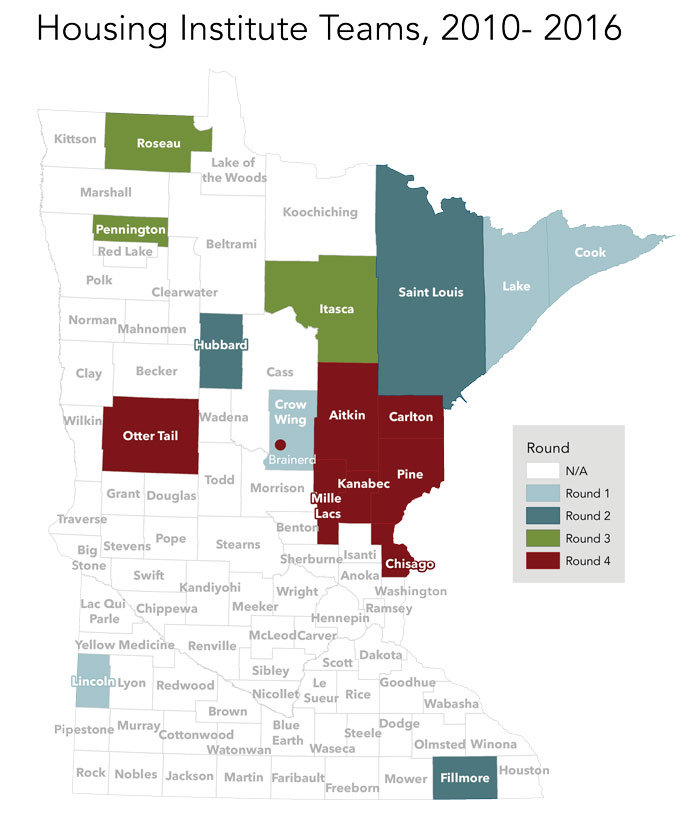
    Like the model itself, the Institute is a collaboration. MHP has taken on the lead role in convening, guiding and providing technical assistance to the Institute participants, while GMHF provides critical funding and planning support that is central to the Institute’s success. With additional funding support from the U.S. Department of Agriculture’s Rural Capacity Development Initiative, the Housing Institute has evolved as an in-depth 18-month program including training, peer-to-peer learning, and a focus on local housing-related needs. As of March 2016, the Institute had convened four rounds, with a total of 13 teams comprising 82 total team members representing 68 entities.

    A team-based approach

    Moving beyond individual leadership, the Institute relies on a group model that capitalizes on local expertise and resources. Participants form teams comprised of several entities in a region, often including city, county, Housing and Redevelopment Authority and Economic Development Authority staff. As the convener, MHP doesn’t prescribe the make-up of the team. Each Institute supports three or four teams with five to seven individual members each.

    Enhancing local and regional collaboration has been a clear need articulated by the vast majority of Housing Institute participants. “Never before has there been a collaborative effort by multiple agencies to address housing in Cloquet,” the Cloquet/Carlton team explained in their 2014 application. “Potential or strengthened collaboration and partnerships [are necessary to] increase affordable housing options for Cloquet and Carlton County residents.”

    Ultimately, the team included representatives from the HRA, Carlton County Public Health and Human Services, the City of Cloquet, the Cloquet Police Department, One Roof Housing and the Salvation Army.

    Working together toward a specific goal

    During the Institute application process, MHP prompted teams to start thinking about possible projects or programs to pursue. The application asks for three ideas, including a proposed goal or objective, the target population to be served, funding availability and how the program or project fulfills a community need.

    In the most recent Institutes, teams have worked together during the first in-person gathering to prioritize ideas and, by the second meeting, reach consensus on what project to pursue. Team goals have varied from the creation of a regional services website to the building of a permanent supportive housing development — and the Institute embraces that variety with customized curriculum. Based on the teams’ goals, MHP staff tailor the Institute content to the needs of participants, with common topics including:

    • Project financing
    • Preservation of rural rental housing
    • Community engagement
    • Updates on state and federal policy
    • Navigating HUD’s Section 3 and Fair Housing and Equity Assessment
    • Communications and messaging

    Sharing knowledge and building relationships

    Because of the focus on collaboration, the Institute includes in-person workshops that provide an opportunity for teams to learn from expert presenters on key topics, and meet with each other and other teams in the region. To facilitate that collaboration, initial homework emphasizes team building and roles, including exercises that build understanding of the members’ backgrounds and organizations’ priorities. 

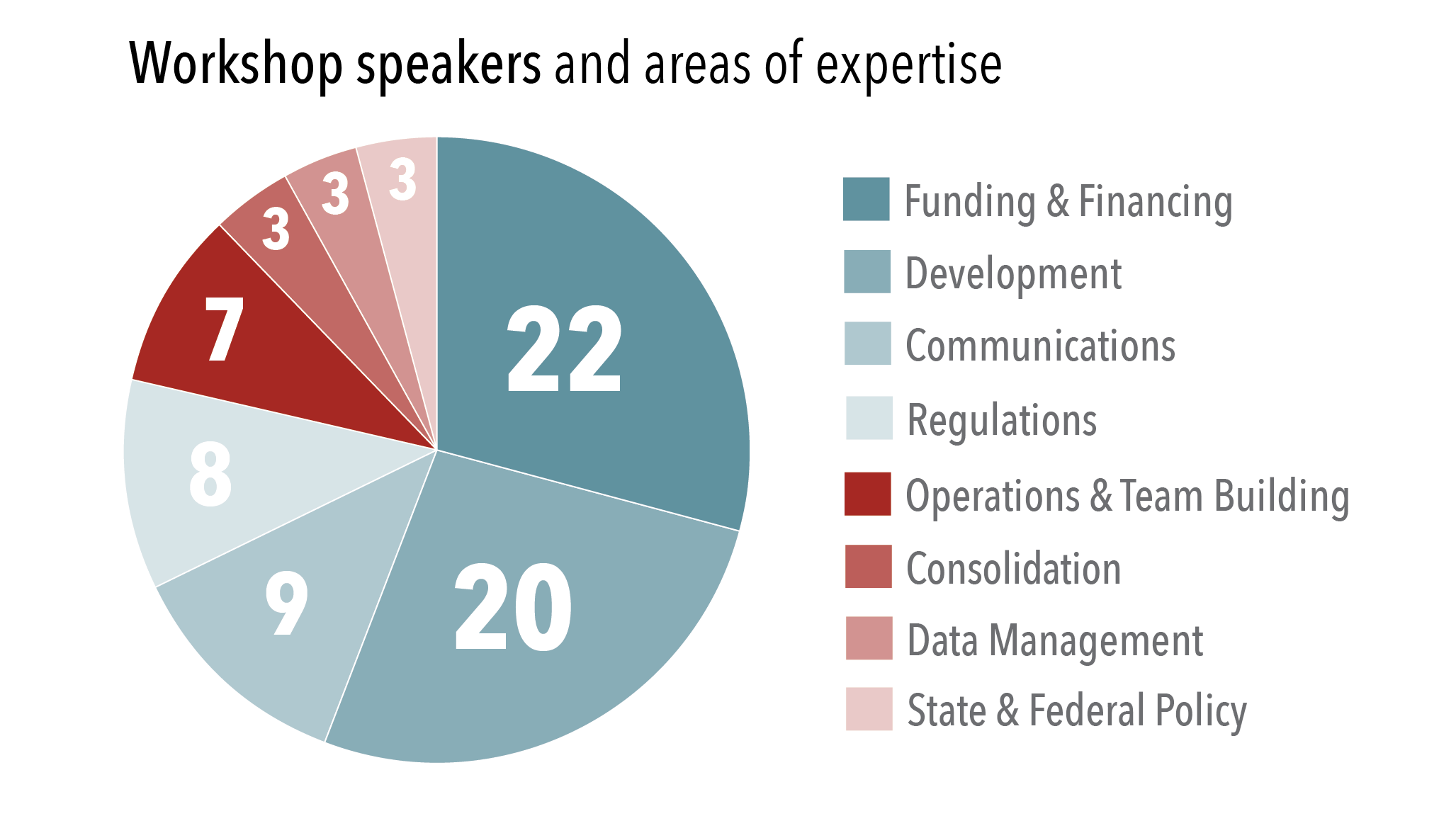
    Since 2010, the Institute has hosted more than 65 individual speakers with expertise in various aspects of housing and community development. Common themes across rounds have included data acquisition and application, communication strategies, and an array of conversations about funding. And it’s not just the Institute participants that benefit: The knowledge and relationships built positively impact other players in the housing field.

    “As a housing developer, Sand Companies has been able to connect with communities and regions in need of housing,” said Jamie Thelen, President and CEO of Sand Companies. “It gives us an opportunity to learn about challenges in many areas of our state and, at the same time, share some of our successes in housing. The Institute is a great collaboration that gives all attendees new ideas.”

    According to Minnesota Housing Commissioner, Mary Tingerthal, the Institute benefits funders, as well. “The Institute can bring people together in a community to solve their toughest housing issues — and then connect them to the resources they need to get the job done,” she said. “We see better, more competitive applications to Minnesota Housing for scarce resources from communities that participate.”

    Overcoming obstacles

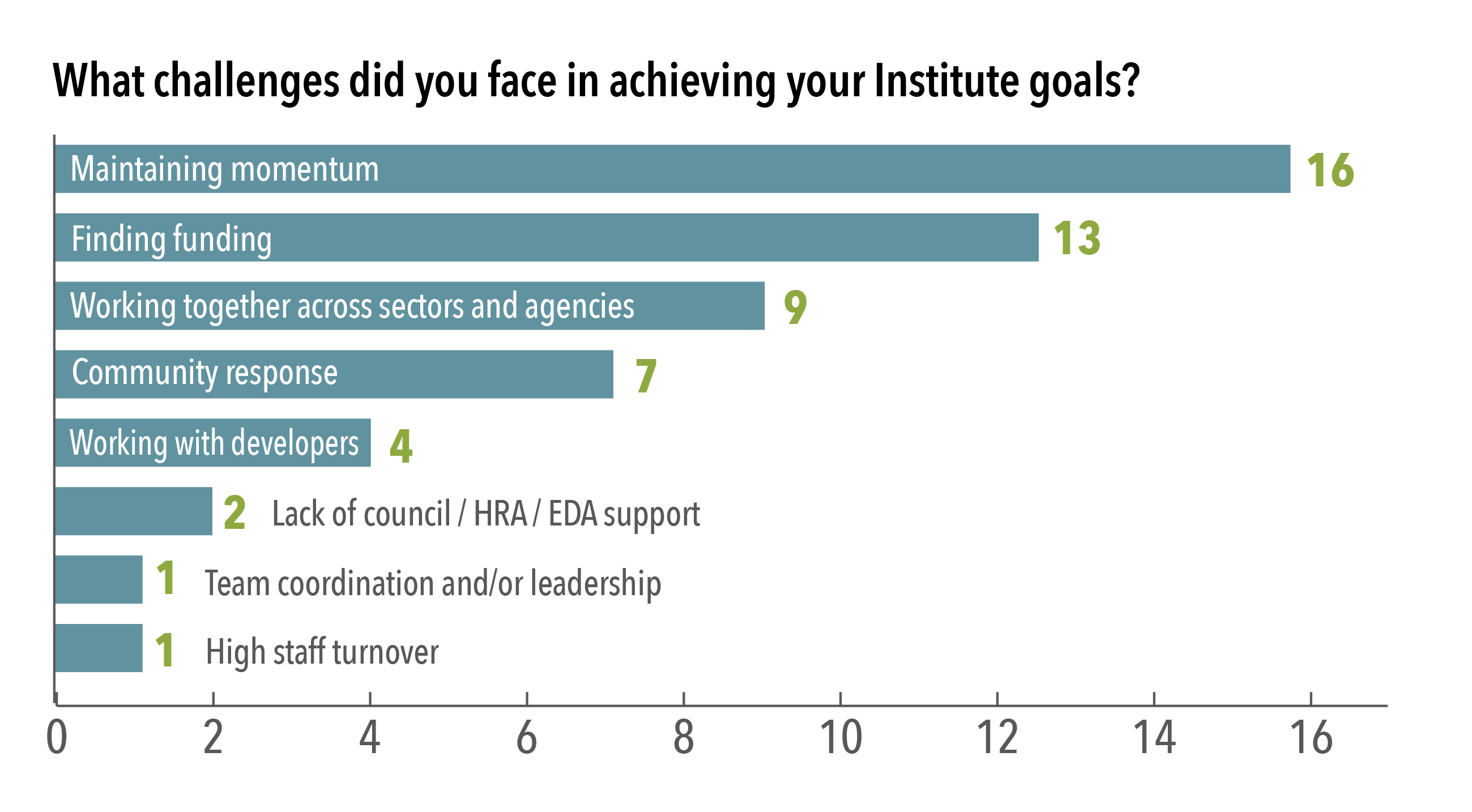
    Creating housing and community development is complex work. Even with the Institute’s targeted skill building, the teams still face significant obstacles. A 2016 survey of Housing Institute participants found that the most cited challenges were finding funding, maintaining momentum and working together across sectors and agencies. But survey respondents also noted that the Institute was crucial in helping them address those difficulties.


    “While applying for senior housing development funding has been an incredible amount of work, the resources and support network from the Institute have helped us to work through the process,” said Rose Dunn, the Executive Director of the Mora Housing and Redevelopment Authority.  “We’ve partnered with an excellent developer, have an incredible amount of community support, as well as support from the HRA board, city and county EDAs, city council and other Institute team members.”

    Team members often knew of other individuals in their region working in housing, but prior to the Institute, didn’t work together directly. The Institute changed that, uniting staff from different organizations to work on a shared project. Sometimes team members didn’t get along because of opposing agendas, were unwilling to work with someone else on a team, or didn’t put in the required time for a project. But, even when the partnerships faltered, the Institute compelled regional stakeholders to explore how they could work together.

    The Institute also provided teams with an opportunity to tackle a project that they may not have had the staff capacity or knowledge to achieve on their own — and dedicated time and space away from work to focus on that particular goal.

    A housing development project takes time, funding, planning and commitment from many groups. After their completion of the Institute, many teams continued to meet to see their project through. Even teams that disbanded still expressed the benefits of working with others in their region —and many members reported that the Institute resulted in additional housing development activities based on the knowledge and relationships gained through the Institute.

    Stay tuned for a summary of team successes — and click here to download the full paper!

  • Seeking Solutions: Tim Thompson, HJC

    For residents of Crossroads at Penn in Richfield, a new owner and the complex’s subsequent rebranding as “Concierge Apartments,” meant embarking on a challenging search to find a new housing. Over a year ago, Tim Thompson of the HJC decided to step in on behalf of those tenants. Thompson shared his story in MHP’s recently-released Sold Out report, which analyzes the pace, price, and location of apartment property sales in the Twin Cities metro region—and which reveals troubling trends for low- to moderate- income renters in a hot rental market. 

    Thompson’s story was reported by…

    Tim Thompson got the call more than a year ago, soon after a new owner took over the 698- unit Crossroads at Penn apartment complex in Richfield.

    For him, the policy changes and rent hikes mapped out by the landlord represented a call to action. Thompson, an attorney who heads the St. Paul-based HJC, spearheaded an effort to bring a new kind of attention to the problem by heading to court.

    On behalf of tenants facing displacement, and in some cases homelessness, Thompson filed a first-of-its kind lawsuit accusing the Crossroads purchaser of flouting the Fair Housing Act.

    The landlord’s overhaul, the suit says, is designed to unfairly push out existing tenants — a disproportionate number of which are people of color or those with disabilities, both protected from discrimination under the federal law.

    Typically, the Fair Housing Act comes into play in zoning disputes. But shifting market dynamics that increasingly threaten to displace low income renters add a new wrinkle. Thompson, a longtime affordable housing advocate in the Twin Cities, leveraged the law as part of a push to ease the purchaser’s dramatic changes.

    “It has been applied in situations involving private landlords in some cases, but a case where we are essentially arguing that there is a less discriminatory business model available to an owner to accomplish their goals without displacing everyone is pretty unique,” Thompson said.

    A federal judge refused to dismiss the suit this summer, a significant win for tenants at risk of losing their home at a time when they badly needed a boost. Over the past year in particular, Thompson said, out-of-state investors have dramatically changed the Twin Cities multifamily landscape.

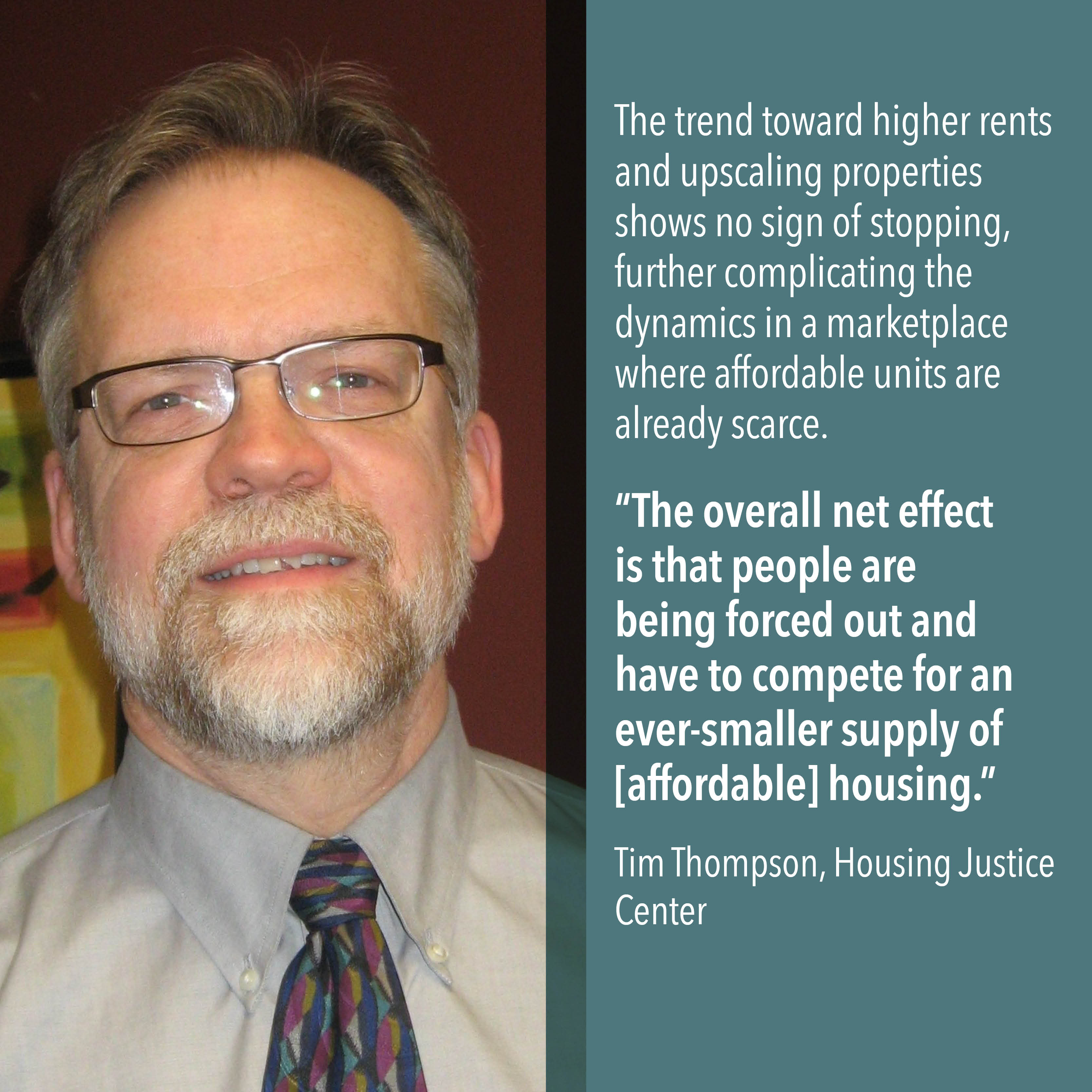
    The trend toward higher rents and upscale properties shows no sign of stopping, at least in the foreseeable future. That further complicates the dynamics in a marketplace where affordable units are already scarce.

    “So far, it seems to be continuing unabated,” Thompson said. “The overall net effect is that people are being forced out and have to end up competing for an ever-smaller supply of this kind of housing.”

    Several Crossroads residents have rallied around the fair housing case, showing up in court and sharing their stories with local policymakers. “When these things happen, rather than simply take a defeatist attitude, they are really interested in the things they can do to save their homes,” Thompson said.