• Seeking Solutions: Debbie Wells, Meadowbrook Collaborative

    Higher rents and tightened tenant requirements at Meadowbrook Apartments in St. Louis Park meant hundreds of residents had to search for a new home last winter. In the midst of it all was Debbie Wells of the Meadowbook Collaborative, a community organization working on behalf of the Meadowbrook neighborhood. Wells shared her story in MHP’s Sold Out report released last week. By examining over 1,000 apartment property sales in the Twin Cities metro region over the past decade, Sold Out reveals how a hot rental market impacts Twin Cities renters – especially low- to moderate- income renters – and puts many households at risk of displacement.  

    Wells’ story was reported by …

    Debbie Wells didn’t ask to get roped into one of the Twin Cities’ most contentious housing battles this year. But when St. Louis Park’s Meadowbrook Apartments sold to a new owner in January, there she was.

    When Wells stepped in to run a community organization nestled within the complex in early January, she figured she would put her experience as a school principal to work helping children and families. But then Meadowbrook’s new owner raised rents and tightened tenant standards.

    Hundreds of residents, including many longtime tenants, faced a 60-day window to find new housing after the landlord increased rent rates across the board by at least $100 per month and ruled out residents with a history of late payments — even when there was a reasonable explanation.

    “They were thorough-going,” Wells said. “They went through everybody’s files and they started noticing folks who were coming due for their lease. Either they would not be renewed, or they would be renewed but their rent would be going up.”

    The policy changes sparked upheaval for several dozen tenants, Wells says. She hasn’t found a way to tally exactly how many tenants have been pushed out to date, but a recent count revealed 51 of 162 townhome units — which account for just one part of the complex — sit empty.

    Now, several months after Wells started her crash course on the market dynamics reshaping Twin Cities housing, she’s exhausted and frustrated. She and other groups trying to help residents found a significant resource gap — there was no assistance available for displaced tenants, or ones who wanted to stay but needed to shoulder higher rent and other costs imposed by the new owner.

    Wells estimates she spent half her work weeks navigating housing issues until recently, when squeezed-out tenants began making their way out of the Meadowbrook community. She still speaks with city officials and members of the new Meadowbrook management team, but there’s little she can do for the residents who had been so desperate to stay in their homes.

    “There’s a big Swiss cheese hole in this whole thing,” Wells said. “There’s no way to bridge people through a systemic crisis like this.”

    As more leases approach the end of their set terms, Wells expects more Meadowbrook tenants will look elsewhere for housing. The short supply of affordable units in the region complicates the search, but the threat of more policy changes hangs ominously over the complex.

    “Anything can change in 60 days,” she said. “Your life as you know it is only secure for 60 days as long as you live here.

  • New Indian Bowl to share and sustain Ojibwe artistry and culture

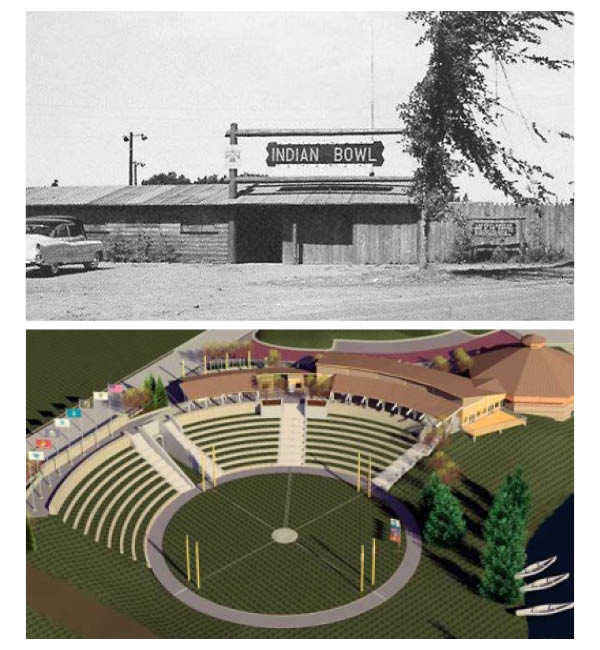
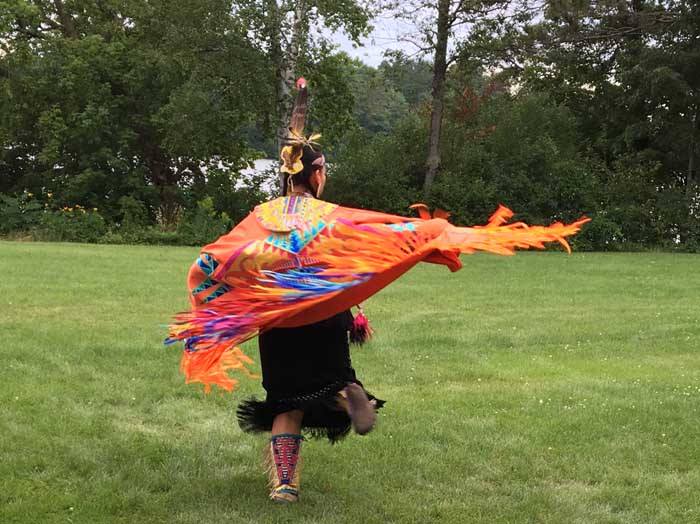
    For more than 50 years, people from across the Midwest visited what became known as the “Indian Bowl” to share in the culture and traditions of the Lac du Flambeau Ojibwe. On warm summer evenings, they gathered in the colosseum-like seats to marvel at the powwow dancers’ intricate footwork, watch their swirling dresses, and feel the beat of the drums.

    But after half a century of Wisconsin winters, the concrete seating of the Indian Bowl was crumbling, and the building was falling into disrepair. When a study showed only a $300,000 difference between renovating the facility and building a new one, the Lac du Flambeau community saw an opportunity to bolster its mission to share and sustain the Ojibwe culture. In September 2014, crews demolished the Indian Bowl to make way for the Waaswaaganing Indian Bowl Living Arts and Culture Center. “Waaswaaganing” means “Lake of Flames” in Ojibwe, describing the look of a lake as it is spearfished by torchlight.

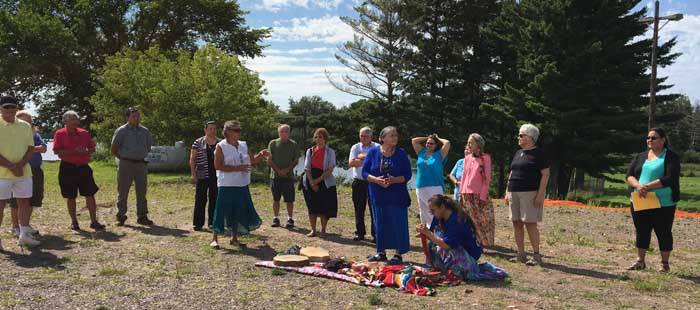
    On August 4, 2016, the Lac du Flambeau community finally broke ground at the site of the new Indian Bowl. Approximately 60 people attended, including community members, architects, donors, students from the Abinoojiiyag Youth Center, and a Korean cultural exchange group visiting from New York. The ceremony included a prayer, speeches by Indian Bowl friends and supporters, and a celebratory picnic at the Lake of the Torches Resort Casino.

    “The Indian Bowl has been the highlight of Lac du Flambeau for decades,” Georgine Brown, President of the Waaswaaganing Indian Bowl, explains. “Throughout the years, many families here have been a part of the Indian Bowl shows, making it a renown tourist attraction in the northwoods of Wisconsin. We shared our culture and heritage for all to learn what we as Anishinaabeg were all about. Today, many of these families still enjoy performing the storytelling dances taught to us by our grandfathers and grandmothers. The rebuilding of the Indian Bowl will once again revitalize the community economically as tourist and visitors come to learn and share all our cultural differences.”

    Emerson Coy, Vice President and Treasurer of the Waaswaaganing Indian Bowl and Director of Planning for the Lac du Flambeau Tribe, says the new Indian Bowl will be “like a cornerstone” for the Lac du Flambeau community. Coy emphasizes that this project will benefit not only the local community, but everyone who visits it.

    “We all have something to learn from each other, and it’s not just entertainment,” Coy says. “It’s an interactive activity when you come to a powwow and when you participate in the arts. There is so much to learn. I think people can walk away being a little more grounded in their life and learn from the experience. They can learn about balance. They can learn about nature. They can learn about culture. And they can learn about themselves.”

    Groundbreaking for the Waaswaaganing Indian Bowl Living Arts and Culture Center (via Facebook)

    The new Indian Bowl combines the George W. Brown, Jr. Ojibwe Museum, the Woodland Indian Arts Center, and the Waswagoning Ojibwe Indian Village. The completed facility will include classrooms, exhibit space, wigwams and a retail shop for Woodland Art along with a new performance arena, concessions stand, and changing area for performers. The design incorporates traditional Ojibwe patterns and elements that evoke wigwams, birch bark canoes, and black ash baskets. And, unlike the previous facility, it will be available year-round to community members, tourists, and school groups.

    The fourth largest Native American population in the U.S., the Ojibwe region largely borders Lake Superior, extending into Wisconsin, Minnesota and Canada. According to board member, volunteer, and long-time Indian Bowl supporter Betsy Behnke, the new Indian Bowl will be a unique cultural force in the region.

    “It will be the only center of its kind in this entire area,” Behnke says. “For two or three hundred miles there’s nothing that displays culture. There are a lot of tribes that have their powwow areas, but no one has the classroom space or the teaching space we hope to have — including Canada.” The educational aspect is important to Behnke, who feels that the new Indian Bowl will play a crucial role in sharing Ojibwe culture with future generations.

    According to Kim Swisher, public relations coordinator, the Living Arts and Culture Center provides a space for people of all ages and cultural and ethnic backgrounds to better understand the history of the Ojibwe and their important role in the community. “I think this is a great opportunity to educate this area and the region on how impactful the tribes have been to the good way of life that we experience here.”

    Groundbreaking for the Waaswaaganing Indian Bowl Living Arts and Culture Center (via Facebook)

    Translating the Lac du Flambeau community’s vision into reality took commitment and hard work. It took 12 years to move from the initial discussions in 2004 to the groundbreaking last month. During that period, board members had to get creative to mobilize community members and secure funding for the project, reaching out to local and regional organizations for help.

    Minnesota Housing Partnership was honored to be one of those organizations. In 2014, MHP began working with the Lac du Flambeau community, the Indian Bowl board, and a group of Northern Wisconsin tribes called Northwoods NiiJii. Funded by the U.S. Department of Housing and Urban Development’s Rural Capacity Building program, MHP provided more than $100,000 — the largest award in MHP’s history — to help move the project forward. In addition to technical assistance from MHP staff, those dollars helped to cover the cost of hiring the architect and engineer, who then provided the architectural drawings for the project’s capital campaign, as well as for construction costs. The project also benefited from HUD-funded assistance from the California Community and Economic Development Association (CCEDA), which helped Northwood Niijii secure additional funds for its organization and the Indian Bowl. 

    “MHP has been so proud to support Northwoods NiiJii realize the dream of having a gathering place for tribal members, artists and dancers to come together and celebrate their culture and community by providing the largest financial assistance to this project.” Rosemary Fagrelius, MHP Community Development Director

    “We would not have been able to do this without [MHP’s] help, and that goes for all our partners,” Coy says.

    Behnke says MHP’s technical assistance trainings have helped the Indian Bowl board work together more efficiently.

    “I think the majority of people on this board are new to this process, and I think the trainings helped them tremendously,” Behnke says. “One of the big things people have learned is Robert’s Rules [of Order], so we can run a meeting and have it flow smoothly and not take forever. Every piece of education makes a big difference.”

    Swisher says that after the trainings, the challenges of the project no longer seemed “insurmountable” to members of the board. “I think overall, it gave the board a sense of direction,” Swisher says. “The trainings broke things down into simple steps that people were able to say, ‘Yeah, I can do this.’ And that really made a difference.”

    Brown, Coy, Behnke, and Swisher are eager to see the community’s vision come to life. “I’m excited to see the smiles on the faces of the dancers, the drummers and all the artists when we open,” Coy says.

    Stay tuned to the MHP blog for future updates. Learn more and support the project here.

  • Beacon Hill illuminates the power of collaboration

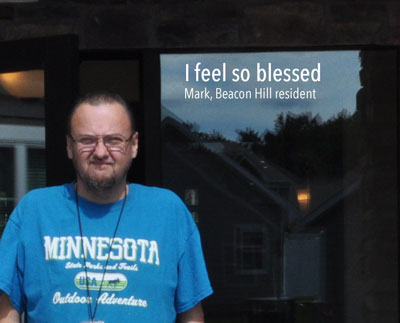
    Over the past decade, Mark had lived many places he didn’t call home. A state prison cell. A cockroach-infested motel room. An apartment complex populated with alcoholics and drug addicts — two substances he’d battled himself.

    He’d had setbacks with his sobriety that led to arrest and suffered a stroke that left him partially disabled.

    But, at the Grand Opening of the Beacon Hill housing development last month, Mark kept repeating one phrase: “I feel so blessed.”

    Mark was one of dozens of residents who moved into the new supportive housing development in Grand Rapids within days of its completion. A $9.4 million project, Beacon Hill promised to fulfill an urgent need for additional affordable and supportive housing in rural Itasca County, Minnesota. But, evidenced by the packed room of local residents and leaders from across the state, it was clear this housing project is special.

    Certainly, it’s notable in its design, bringing together families with children and individuals with supportive housing needs to create a diverse but connected community of more than 120 residents. Perhaps even more exceptional, though, these 48 units are the tangible result of a unique collaboration among local leaders representing a diversity of interests, from the county to state corrections, from housing to mental health services.

    In 2013, the concept for this housing community was born when seven Itasca County leaders came together for the Housing Institute — a joint initiative of Minnesota Housing Partnership and the Greater Minnesota Housing Fund. Over the course of 13 months, they didn’t just work diligently toward their goal to create Beacon Hill; they built the architecture of enduring partnerships that will benefit their region far beyond the completion of a single housing development.

    For Audrey Moen, Housing Manager at Northland Counseling Center, the impact of the Housing Institute could be summed up in six words. “Many hands make for light work,” she said at the Grand Opening. “That’s exactly what happened here. We had people from many different levels and many different areas making this dream come true.”

    For Mark, it was still hard to believe that Beacon Hill is his new home. He smiled and shook his head at how lucky he feels. “I told my wife, ‘One of us better go to bingo,” he said with a laugh.
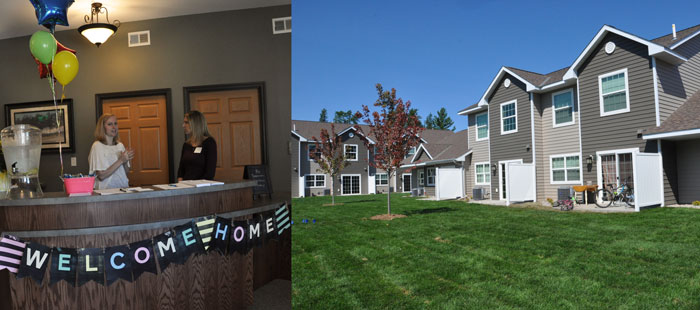
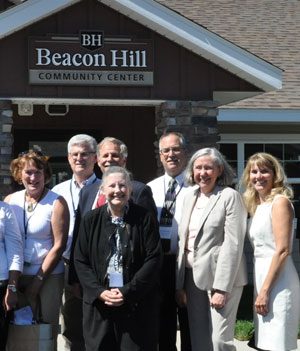
    From left: Grand opening of Beacon Hill, which includes 28 townhomes for families

    The need

    Long before the idea of Beacon Hill, Audrey Moen was confronting a crisis.

    “I was personally getting nine or 10 calls every single day from people who needed housing,” Moen said, “many of them in tears.”

    For years, Moen had watched the lack of affordable housing in Itasca County grow more and more pronounced. She knew people were living in the woods, under bridges along the Mississippi River and in tents behind Wal-Mart. She knew there were people who had been couch-hopping for up to two years. And a local study backed up her assumption: The Wilder Foundation found that homelessness has increased by 22% in Itasca County from 2003 to 2013. The housing study also showed 21% of children in Itasca County were living in poverty, up from 15% in 2003.

    The Housing Institute team’s hands were tied by a lack of resources.

    Even with a Section 8 voucher, she explained, many potential tenants were turned away because the rent was too expensive or the landlord barred residents with criminal histories. If the rent could be covered by the subsidy and the tenant was eligible, she added, the unit often wouldn’t pass inspection — in fact, a 2015 Maxfield Housing study found that, in Itasca County alone, more than 1,200 rental units were considered substandard. Not surprising, the local homeless shelter, Grace House, was constantly at capacity, forcing people to put their name on a wait list rather than secure a bed. A safe, modest 2-bedroom apartment costs $746 per month in Itasca County, while a family can affordably spend just $582 per month on rent at the median renter household income of $23,272. By definition, half of the county’s renters earn less than this median and need less expensive housing.

    Born and raised in Grand Rapids, Dale never thought he’d face homelessness. But when he returned home in 2015, he couldn’t find any place leasing for less than $700 per month. Living on a fixed income and undergoing dialysis, the only place he could afford was his sister’s couch. With six people living in a two-bedroom apartment, Dale struggled with depression and anxiety. The bills started stacking up and he fell further and further behind, but asking for help, he believed, was a sign of weakness.

    Finding that help for people like Dale became the central focus of the Itasca County Housing Institute team. The team consisted of representatives from Northland Counseling Center, Inc., Itasca County Housing and Redevelopment Authority, Itasca County Health and Human Services, KOOTASCA Community Action, GRACE House homeless shelter, Minnesota Department of Corrections and Itasca County Probation.
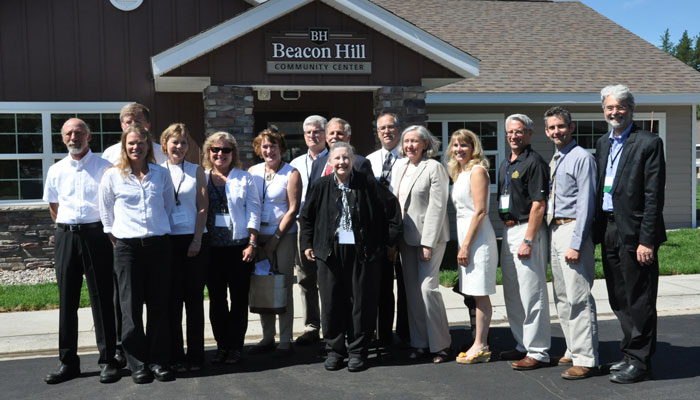
    Housing Institute team members and local / state leaders at the opening of Beacon Hill

    Coming together through the Housing Institute created a framework centered on collaboration that allowed them to quantify the region’s pressing housing need and rally the resources to do something about it. It took many, many meetings — 41 to be precise — but participation never waned. Each and every member attended nearly every meeting.

    Thanks to that dedication, Dale has a new apartment at Beacon Hill. Instead of spinning his wheels on his sister’s couch, now he can watch his 5-year-old son ride his bike on the fresh pavement outside his spacious one-bedroom apartment. “When they told me, ‘You got in to Beacon Hill,’ I was on cloud nine,” he said. “There was nothing I had my sights set on more than having a place to call my own.”

    Unique partnerships

    Itasca County leaders were the first to admit that, before the Housing Institute, they rarely worked together in meaningful ways. “We had long been accused of working in silos,” acknowledged Diane Larson, Executive Director of the Itasca County Housing and Redevelopment Authority. “One of the greatest assets of the Housing Institute was bringing partners together, many of whom were not actual ‘housers’ but were important to housing in our community. The education provided to these non-housers is what made our collaboration such a success.”

    That collaboration included the Institute’s in-person workshops, regular check-in meetings and even road trips. With the Department of Corrections at the table, the team toured a state prison to understand the challenges and needs of those with criminal records. They traveled to view supportive housing developments in other communities to hone their vision and learn best practices.

    Supported by MHP’s Community Development Director, Rosemary Fagrelius, the team came to understand the development process, and how to plan and implement a successful project. That included engaging a developer — and Skip Duchesneau of D.W. Jones Development, Inc. worked with the team to assemble an application for funding. It also included making the case for the project to potential funders and the community. To that end, the team contracted with Maxfield Research Group, Inc. to conduct two studies: an assessment of the market demand of Beacon Hill and a broader, more comprehensive housing market analysis for the City of Grand Rapids.
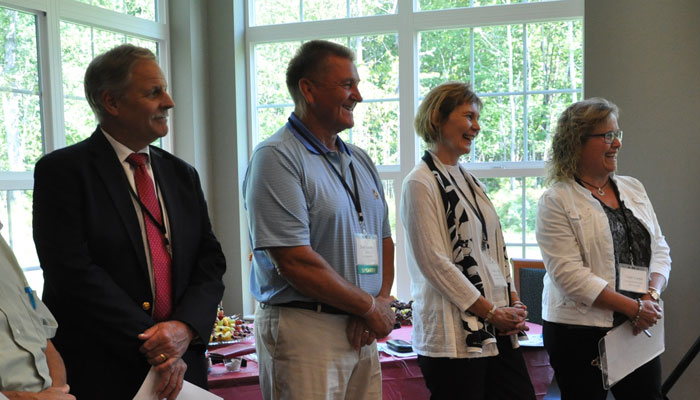
    From left: Ron Solheid, Deputy Commissioner, Minnesota Department of Corrections; Dale Adams, Mayor of Grand Rapids, MN; Audrey Moen, Housing Manager at Northland Counseling Center; and Diane Larson, Executive Director of the Itasca County Housing and Redevelopment Authority

    Both studies supported the development of the proposed project. At the Grand Opening, a representative from American Bank reflected on the impact of that analysis. “I remember reading the assessment when my door was closed and there were tears,” she said.

    With a united team dedicated to the development, the wider community rallied to support the project, too. City, county and even state officials worked together to ensure Beacon Hill had the land and dollars it needed.

    “We collaborated in a strong team approach, working on a clear vision and the mission of what we needed to accomplish,” Moen said. “This was one of the best collaborative efforts I have been involved in over the past 30 years in human services.”

    Having worked in the field for many years, even Duchesneau was impressed. “To get funded the first time on a complex project like this is really amazing,” he said at the Grand Opening. “It’s not a mistake that this happened.”

    A new model

    It’s not a typical affordable housing development, either.

    The 48 units at Beacon Hill are intended for different types of households: 28 units are for families with children, while the other 20 units are apartments embedded in a supportive structure that, in some cases, includes around-the-clock access to care. According to Warren Hanson, Executive Director of the Greater Minnesota Housing Fund — a partner in the Housing Institute — that spectrum of residents isn’t common.

    “I was marveling at the beautiful design of the project in terms of the building themselves,” he said. “But then I started to think about the fact that you have family housing, you have formerly homeless housing and housing for people with disabilities — that’s incredibly inclusive and it’s making connections that don’t happen in day-to-day life. But it’s built right into the design here.”

    That prospect has inspired Moen, too. During a tour at the Grand Opening, she stopped in the Community Center, a space with a kitchen, gathering area and conference room that can be accessed or reserved by tenants. “Can’t you just see people playing games and getting together to have socials here?” she said. The seeds of those social bonds have been planted early, with residents from the townhomes and apartments gathering at the playground. “We’ve already seen them starting to build that community,” Moen said.
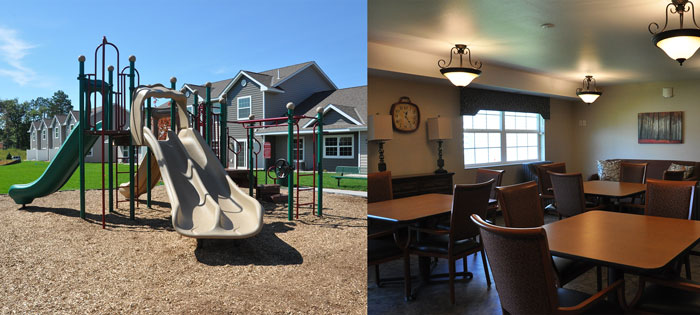
    Community gathering spaces at Beacon Hill

    With the variety of stakeholders at the table, the Housing Institute team understood that sustaining that community would take a village. At Beacon Hill, the two property managers live on-site, in additional to eight full-time staff and a cook who provide a variety of services, from three meals per day to Peer support, case management, housing support and Adult Rehabilitative Mental Health Services. That team approach to the tenants’ success was a critical factor in D.W. Jones Management opening Beacon Hill’s doors to residents who might not be welcome elsewhere.

    “When you combine rental assistance with supportive services, you see huge successes,” Duchesneau said.

    The lasting impact

    The team hopes to continue those successes beyond Beacon Hill, as well. Dana Herschbach, Director of Asset and Housing Development at KOOTASCA Community Action, is already thinking about what’s next.

    “One of the great things to come out of the collaborative effort is we know and trust each other now,” he explained. “The HRA and KOOTASCA were never partners but now we work well together. I have a dream for senior housing and I’m thinking of moving forward with that. As I do, I know I can turn to any of these team members.”
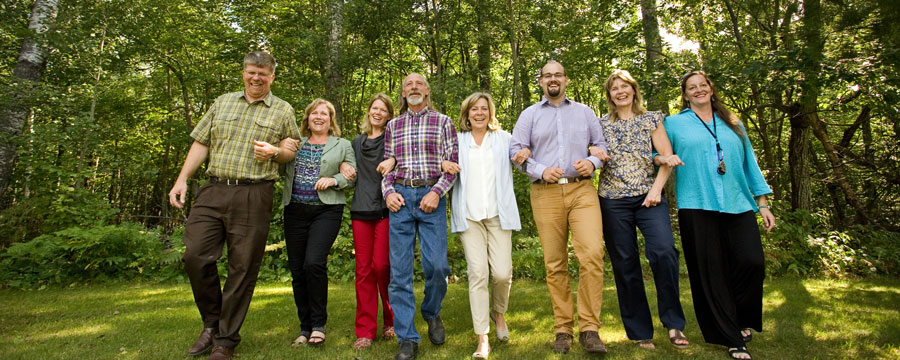
    Housing Institute team

    In the meantime, that team is already having a lasting impact on the lives of Beacon Hill residents. At the closing of the Grand Opening a staff member couldn’t help but share a short anecdote. On August 1, she picked up one of the Beacon Hill residents to bring him to his new home. He had suffered long-term homelessness — living out of his van when shelters were full. When they pulled up to Beacon Hill, he was in disbelief. Is this real? he asked. Is this really happening?

    The staff member paused. “He is now housed,” she said blinking back tears. “He is so happy. This is how this project has impacted people’s lives.”

    Learn more about the Beacon Hill project here.
  • No special session: The implications for affordable housing

    I was still somewhat bleary eyed when I wrote about the frantic, late-night close of the Minnesota legislative session back in May. Little did I know the back-and-forth behind closed doors would keep us holding our breath for another three months. Sadly, after more political smoke about a special session, the two sides weren’t able to strike a deal — snuffing a bonding bill that could have supported affordable housing development across the state.

    So what happened? When the impasse over light rail killed the bonding bill in the final moments of the session, both Republicans and Democrats asked the Governor to call a special session to pass the critical measure that, among many other aspects, included $45 million for affordable housing. The Governor heeded the call — but with a long list of must-have that he’d need to see in the bonding bill to bring legislators back to St. Paul. Top of his list? Funding for the Southwest light rail.

    As the summer heat sizzled, so did media speculation about the prospect of a special session. But, despite (or perhaps because of the) high political temperatures heading into the election year, the major barrier refused to thaw: Republicans said they wouldn’t agree to a deal with light rail funding in the bill and Democrats said they wouldn’t agree to a deal without it. To add to the intrigue, some speculated a deal rested on helping Speaker Daudt’s primary race.

    Then something seemingly amazing happened. The Governor brought together the combination of bacon, lettuce and tomato to persuade Speaker Daudt. As the weeks passed, the Governor compromised on many of his demands and still negotiations were stalled. It wasn’t until he had the Speaker over for sandwiches in late August that a deal reportedly was brokered. Still no agreement on funding for light rail, but it seemed the special session was moving forward.

    Then we waited.

    And waited.

    Policy people, like our team at MHP, watched for behind-the-scenes logistics as an indicator that the special session was a go, but those actions were minimal and didn’t point clearly toward the convening of the special session. Primary day came and went, with Speaker Daudt winning his race, and still nothing seemed to be moving.

    It took another two weeks before leaders finally announced that they couldn’t reach a deal on light rail and there would be no special session after all. A summer of smoke, but no fire.

    So what does that mean for affordable housing?

    As my colleague, Libby Murphy, explains, the fact that Minnesota’s legislature didn’t pass a bonding bill this year has many consequences for housing. Last year, for every project that was awarded funding, two applications were left unfunded. That ratio will surely increase without a special session bonding bill.

    Bonding is the primary resource to develop affordable housing with connected services critical to preventing and ending homelessness for Minnesota’s most vulnerable households. Without a bonding bill, resources to implement Minnesota’s primary strategy to end long-term homeless will be very limited.

    For context: In 2014, the Legislature appropriated $100 million in bonds, and $90 million was awarded. That funding went to construct and rehab 1,239 units of single and multi-family housing, and preserve or maintain 2,438 units of public housing. This year, with no bonding bill, the Agency will award $4.5 million of previously uncommitted bond funding, dedicating all the remaining to supportive housing activities. With that, the Agency estimates it will only fund one project of less than 36 units.

    While the Agency’s proposed 2017 budget is greater than its 2016 budget, production and rehabilitation of multifamily units will be stymied without bonds. Bond funding decreased by nearly $17 million, dropping from $22.5 million in 2015 to $5.9 million this year. Without the anticipated $90 million in bond funding, MHFA will draw from other program funds to help maintain multifamily rental construction and rehabilitation.

  • MN Housing board update: Agency discusses state planning, manufactured housing and model supportive housing development

    At its August meeting, the board of the Minnesota Housing Finance Agency discussed a range of topics, including the state’s 2017 Affordable Housing Plan, the model collaboration that led to the grand opening of a supportive housing development in Grand Rapids and the increasing threat to manufactured housing parks, which provide significant affordable housing supply.

    No special session

    In her opening remarks, Minnesota Housing Commissioner Mary Tingerthal expressed her disappointment that the Minnesota legislature will not hold a special session. This means that the resources available for the upcoming funding round will be less than originally expected, although there will be a small amount of bonding resources available as several previously awarded projects required fewer resources than were originally awarded.

    Model collaboration in Grand Rapids

    In her report on recently attended groundbreakings and ribbon cuttings, Tingerthal highlighted the community process associated with the Beacon Hill project in Grand Rapids (pictured above). She credited the Housing Institute, created and facilitated by MHP and GMHF, with organizing and facilitating a cross-disciplinary community leadership process. This led to a multi-faceted development addressing a number of community interests. Family housing was created side-by-side with supportive housing for people experiencing homelessness and with special needs, all sharing services through a new community center. Tingerthal said that the process and development spurred a sense of community pride, and fostered what the participants believe will be an enduring partnership.

    2017 Affordable Housing Plan

    Two major planning efforts were brought to the board. First, John Patterson, MHFA’s Director of Planning, Analysis, and Evaluation, provided a status report on the 2017 Affordable Housing Plan (AHP), the Agency’s annual business plan. The AHP planning process, initiated this past April, provides multiple opportunities for the Agency’s stakeholders to have input. Patterson noted that 130 people participated in the Agency’s AHP webinar held earlier that day. Board member Rebecca Otto asked if there were any proposed changes in the Agency’s strategic priorities. Staff responded that the priorities adopted in 2015 did not change. In response to a question about equity, Tingerthal responded that the Agency was looking at policies related to requirements for hiring minority contractors. She said that there were a number of local contracting requirements across the state and the Agency wanted to be careful to not add its own layer of expectations without carefully considering the existing requirements. She said that staff plans to have its contracting proposals ready for the 2017 funding round.

    HUD Consolidated Planning

    Jessica Deegan, MHFA’s Federal Policy Manager, updated the board on the HUD required 2017-2021 Consolidated Plan. This planning process identifies how various HUD resources (e.g., HOME, CDBG) will be used. For the consolidated planning, Minnesota Housing collaborates with DEED and DHS, the other state agencies administering HUD funds. These state agencies will be accepting comments through September 15, and will host a public hearing on September 1. Over the five-year planning period Minnesota Housing expects to allocate $30 million in HOME funds and $15 million from the new National Housing Trust Fund. In the stakeholder input received to date, Deegan said that low rental vacancies were the major concern, followed by the need for home rehab. Homeownership did not rank high, she said. NIMBY (“Not In My Back Yard”) opposition, rising costs for developers and rents for tenants were issues across the state. In response to a question regarding who was providing input, Deegan said it was mostly advocates, but that the Agency was seeking ways to get input from people who faced the need for various types of housing assistance, as well.

    Manufactured housing parks threatened

    Margaret Kaplan, Director of Community Development, updated the board on manufactured housing. Kaplan said that this was a very important source of unsubsidized affordable housing for the state, but one at risk. Kaplan reported to the board that Minnesota Housing, which administers the state fund to compensate those who lose their homes due to park closures, was now monitoring six active closure notifications. The affected parks ranged from three to 97 homes, she said. Kaplan speculated that the economic recovery was driving the park closures, as once remote parks were now enveloped in high-demand communities. Rising land values are increasing redevelopment pressure on many parks. Another problem facing the parks, said Kaplan, is aging infrastructure. Streets and water/waste water systems are privately owned and often not adequately maintained. The high cost of infrastructure repair or replacement has impeded efforts to buy and preserve the parks. Board member Stephanie Klinzing asked about lot rental prices. Kaplan noted that they range from $200 to $600 per a month. Klinzing then stated that there wouldn’t be a solution to the park situation until there is agreement among stakeholders that this is an important housing supply. Kaplan said that current efforts in support of parks may help create the needed traction for change, and people will pay attention because of the extraordinary tenant organizing that is occurring.

    Upcoming presentations in September

    Tingerthal said that the board will hear updates on several new investment opportunities at its September board meeting. The board will review and be asked to provide concept approval for Greater Minnesota Housing Fund’s NOAH Impact Fund (to preserve unsubsidized affordable housing). The board also will review progress with the Twin Cities Habitat multi-year funding plan. Tingerthal noted that both of these initiatives provide ways for Minnesota Housing to leverage its investments.

    Stay tuned to the MHP Connect blog for monthly updates from the Minnesota Housing board meetings.

  • Urban housing project aims to reestablish Native identity among American Indian youth

    “I couldn’t breathe,” Deb Foster recalls.
    It was June 2016 and the Executive Director of the Ain Dah Yung Center (ADYC) was on a conference call with half-a-dozen partners. For months, they had been working urgently to secure a site for an innovative urban American Indian youth permanent supportive housing project — a first-of-its-kind in the state, maybe even the nation. Just days before a critical funding application was due, they had found the perfect spot.

    Or so they thought.

    With 48 hours to go, the owners of the properties that would make way for the new development decided they didn’t want to sell. Foster remembers that moment vividly, because the breath-taking disappointment was immediately met with undaunted optimism from Chris Wilson, Director of Real Estate Development for Project for Pride in Living (PPL).

    “You know what,” he said, “it’s only halftime as far as I’m concerned. We’ll make this happen.”

    That level of commitment and determination has been the hallmark of ADYC’s vision to create an urban supportive housing project specifically designed to address the distinctive needs of American Indian young people aged 18 to 24.

    For more than 30 years, ADYC has served American Indian children and their families through emergency shelter, street outreach, culturally responsive mental health services and interventions, transitional housing, life skills training, parenting education, family preservation services, and Indian Child Welfare Act court and legal advocacy. The idea for the permanent supportive housing project for young adults grew out of a clear need.

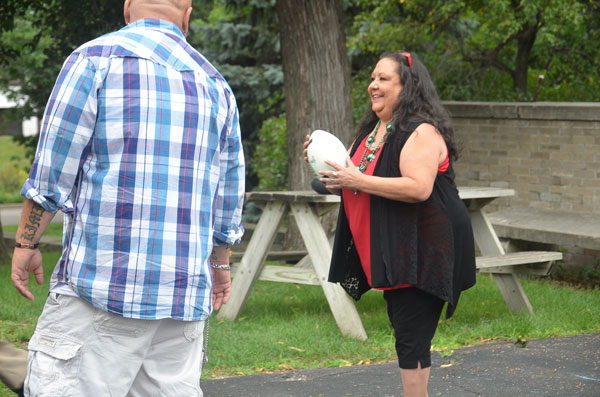
    ADYC’s Executive Director, Deb Foster, at a Halftime Party last month

    “In the state of Minnesota, where only 2% of the entire population is American Indian, 22% of all homeless youth are American Indian,” Foster explains. “ADYC has the only 24/7-emergency shelter facility for any youth in Ramsey County and the East Metro, and is the only American Indian youth emergency shelter available to American Indian youth in the Twin Cities metro area. We also have one of the only transitional housing programs (TLP) designed specifically for Native youth in the urban areas. There’s simply little to no resources for American Indian youth that are homeless in the metro areas.”

    And that gap in services is even more pronounced for youth in their later teenage years and early 20’s. “What we’re finding is that a huge number of youth in general are falling through the cracks when they turn 18, because they either age out of foster care or are now treated like adults,” Foster said. “Often times that doesn’t work for youth; they’re still teenagers. We realized that while ADYC has a Native specific shelter and transitional living program, we didn’t have a means to address young people who are having significant hardships when they turn 18, 19, or 20 and can no longer stay in a TLP.”

    But addressing that need — and building an ambitious, multi-unit housing development — was beyond ADYC’s current expertise and experience. “We had done some minor capital campaigns but nothing as significant as this,” Foster says. ADYC knew they needed a partner and, according to Foster, the Minnesota Housing Partnership — and particularly Bill Vanderwall, Community Development Manager — was the linchpin in providing the technical expertise and facilitation to turn aspiration into action.

    “In the state of Minnesota, where only 2% of the entire population is American Indian, 22% of all homeless youth are American Indian,” Foster explains. “There’s simply little to no resources for American Indian youth that are homeless in the metro areas.”

    “We started off with an advisory council that included board members, folks from the community and most importantly Native youth, and began brainstorming what this would look like, where it would be, and what was important to the kids,” Foster says. “We had numerous meetings visualizing what this project would need to have to be truly successful.”

    The youth played a key role in identifying critical aspects of the project. At first, project leaders considered locating the development in Minneapolis, for instance closer to Native communities like Little Earth and along Franklin Avenue. The youth strongly disagreed. “The youth on the advisory council stood up and said ‘Absolutely not,’ Foster recalls. ‘That’s exactly where we’re trying to get away from. That’s where the drug dealers and gangs are.’ They made it very clear they wanted it to be in St. Paul near all the rest of ADYC.” They also made it very clear that they needed easy access to services like schools, grocery stores, health care facilities and public transportation.

    Working with Mike Laverdure, an architect with DSGW Architects and a Turtle Mountain Chippewa, that vision came to life on the page, promising a beautiful structure with distinctive Native features. “We’re so incredibly grateful for the work that Mike Laverdure and his partners have provided designing this project,” Foster says. “Their time and efforts have been priceless.” Also recognizing they needed a development partner, ADYC engaged with PPL to envision a co-ownership model that would ensure Native ownership of the project rather than simply providing the services. And, with all the needs of the youth in mind, the team found a perfect spot a block off the corner of Dale Street and University Avenue in St. Paul.

    And that’s when the collaboration and passion of the team made the difference — pulling a come-from-behind victory despite the “halftime” set back.

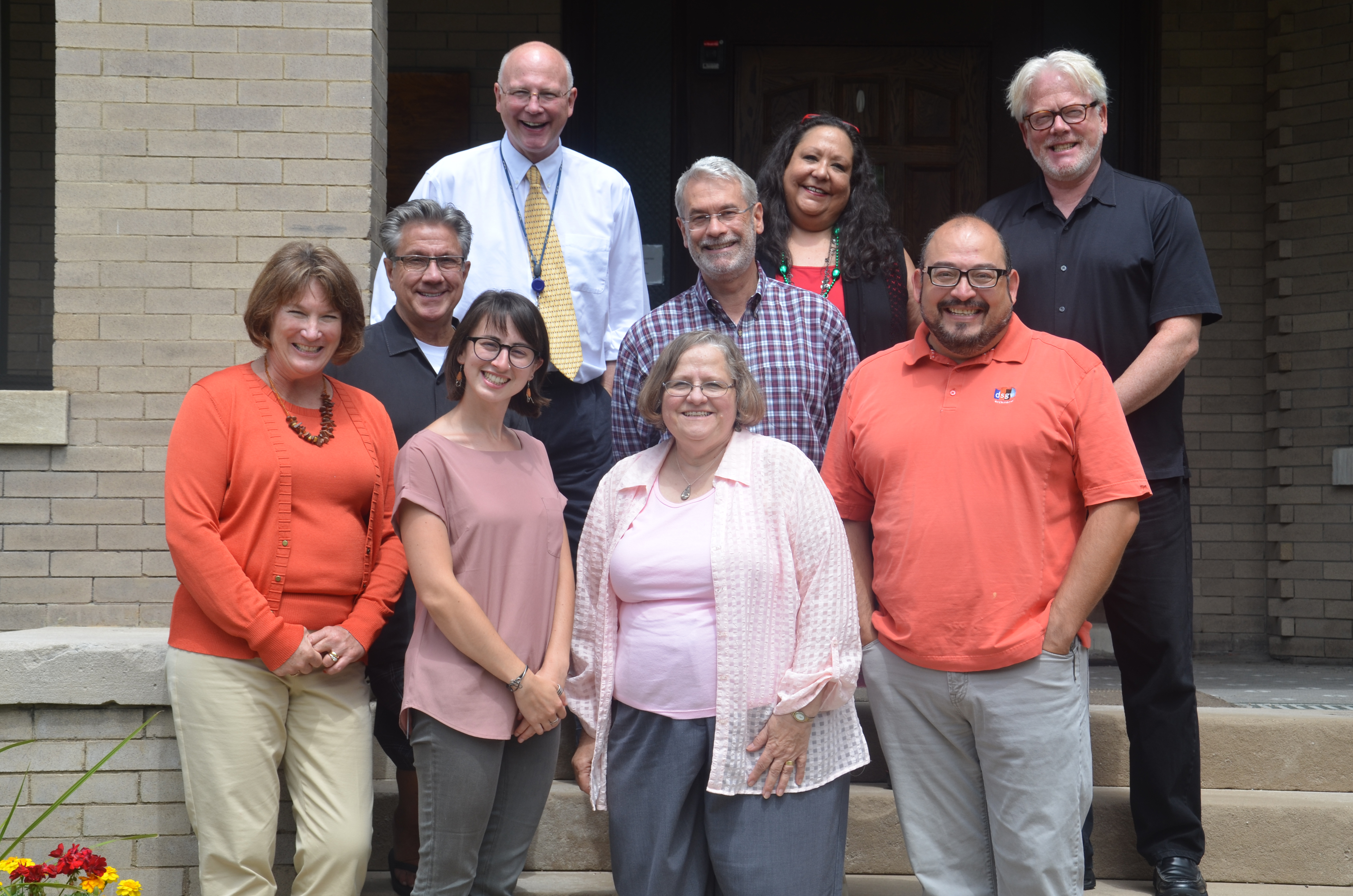
    Members of the project team — (Front row from the left) Rosemary Fagrelius from MHP, Bo Scarim and Barbara McCormick from PPL, Mike Laverdure from DSGW Architects (Second row from the left) David Glass from the ADYC Board, Bill Vanderwall from MHP (Top row from the left) Chris Wilson from PPL, Deb Foster from ADYC and consultant Curt Peterson

    David Glass — a board member for ADYC — was on that transforming conference call as well. When he heard the property owners weren’t interested in selling, he asked if he could set up a meeting with their son. “The next day, David proceeded to showed him the pictures of what we wanted on the land, the vision and mission of ADYC, and the son fell in love with it,” Foster says. With just a few hours to spare the following morning, a purchase agreement was completed and the funding application was submitted to the state. “This purchase agreement also would not have happened without the commitment and assistance from Barbara McCormick and Chris Wilson from PPL,” Foster adds. “We’re so blessed to have them as our partner.”

    The passion behind the project is tied to ADYC’s culturally responsive approach. It’s not surprising to Foster that mainstream services fail Native youth. And, without addressing their unique needs, the extreme disparities within Native youth homelessness will persist.

    “American Indian youth are confined by the aftermath of long-term historical trauma, because it’s still very present,” Foster says. “What people don’t understand is that there were hundreds of thousands of Native children who were still being taken from their families at the age of 5 and placed in board school for up to 13 years through the mid-1970’s. So today’s children have parents or grandparents who were raised in boarding schools and came out of those institutions traumatized; their culture stripped from them. They were emotionally, physically, sexually abused and let go into society to try to survive.”

    “The reason we have so many Native homeless youth is, in part, because of this historical trauma,” Foster says. “The only way for healing and growth to happen for our youth is to reestablish their sense of Native identity.”

    Foster knows that inter-generational impact firsthand. “My grandparents were in boarding schools and then did the best they could to raise a family which included my mom – it was a challenging childhood for her,” she says. “And then being raised by her, I ended up living in two separate worlds. On the one hand, it was okay and wonderful to acknowledge that we were American Indian at home on the reservation with family, but somewhere on the trip back to Madison, all of a sudden it became taboo again. You didn’t admit you were Indian because it was potentially dangerous. People don’t realize why we’re still trying to get beyond all the recent trauma faced by our people.”

    “The reason we have so many Native homeless youth is, in part, because of this historical trauma,” she continues. “The only way for healing and growth to happen for our youth is to reestablish their sense of Native identity. Right now our homeless youth are often walking around in a world that is filled with devastation, poverty, alcoholism and abuse — things that are a result of this boarding school era that was not that long ago. The only way to heal from this is for them to be engaged in — or reengaged within — Native traditions and culture in a good way, to know what it truly means to be American Indian and reestablish that sense of pride and self identity. It’s time to recognize that without this crucial foundation, our Native youth will continue to struggle to successfully pursue personal, educational and employment goals — and we’ll continue to see these high disparities.”

    That emphasis on building that identity is embedded in the design of the project, as well.

    A rendering of the exterior of the supportive housing project from Mike Laverdure and DSGW

    “The design of the building is very Native; you’ll be able to tell right when you walk up,” Foster explains. “Gathering as young people, as families, as elders is a huge part of our culture. We do a lot of the traditional teachings, learning, drumming and singing in gathering circles. So every floor has a circular gathering room. The main floor has a beautiful culture center, as well. To the mainstream eye it might look like any big meeting room, but it’s being designed to go pitch black. When we do ceremonies in a room it needs to be entirely blacked out — and there’s no room like that in the Twin Cities, maybe even the state. This sacred space is so critical to facilitating the ceremonies that help heal of our communities, and particularly our young people.”

    The living spaces were created with intention, too. “We’re designing small studios with really small kitchens, because we don’t want to encourage kids to stay in their rooms,” she says. “In addition to the circular gathering spaces on each floor, there will be huge main kitchens that open into dining areas. The idea is to encourage kids to come out and create new healthy networks. What we’ve done for years is take kids off the street, put them in a one-bedroom apartment, hand them the keys and walk away thinking we’ve done a great thing for our kids. But within a few months, they’re on the streets again because of the isolation. They end up going back to what they know, even if it’s not advantageous. So we’re designing the entire building to eliminate that sense of isolation and, through our Native ways, encourage opportunities to gather and build on their strengths with others.”

    “We’re designing the entire building to eliminate that sense of isolation and, through our Native ways, encourage opportunities to gather and build on their strengths with others.,” Foster says.

    For Bill Vanderwall, an MHP Community Development Manager, working with ADYC has been a great opportunity. “It’s been a privilege to help ADYC achieve this incredible vision for Native young people in growing strong and with support,” he says. “The organization is now prepared to take on this project and connect with PPL as project partners. Together, and with many supporters, they will make sure the vision becomes a reality.”

    The ADYC board and staff are so incredibly grateful to Bill Vanderwall for his technical assistance and everything else that MHP has provided for us thus far,” Foster adds. “We would not be where we are today without them.”

    Click here to learn more about the incredible work of ADYC — and contact Deb Foster for ways to support this project.

    Photos by Felicia Pruitt Brown

  • MN Housing board update: Agency discusses tax credits, Trust Fund and more

    During its July meeting, the board of the Minnesota Housing Finance Agency discussed the review of comments on its Affordable Housing Plan, increased demand for housing tax credits, the outcomes of the Agency’s Homeowner Capacity Initiative, and the use of Housing Trust Fund proceeds.
    Affordable Housing Plan

    In her introductory remarks, commissioner Mary Tingerthal asked that board members be prepared for a possible Program committee meeting in September to review comments on the Agency’s Affordable Housing Plan (AHP). The AHP is the Agency’s annual program spending plan. Tingerthal said that a draft of the plan will be available in mid-August. The public comment period on the draft plan will continue until August 26 and the board will be asked to adopt the final plan at its September 22 meeting.

    Housing Tax Credits

    A second topic in Tingerthal’s opening remarks concerned tax exempt bonding. On August 1, local governments will gain access to a portion of the tax exempt bonding available to the state through Minnesota Management and Budget (MMB). Tingerthal said that she believed that for the first time in many years the entire amount of the available bonding will be spoken for. This increased demand on the amount of tax exempt bonding allowed by the federal government requires that the Agency review its policies for awarding 4-percent housing tax credits; these credits are only available to multifamily development projects that also are financed with tax exempt bonds. Tingerthal said that over the next several months the Agency will continue discussions about potential new policies on awarding the 4-percent credits.

    Homeowner Capacity Initiative

    The board agreed to the staff’s recommendation on three uses of funding for the third year of the Agency’s homeowner capacity initiative. This pilot program is intended to help underserved households understand whether homeownership is right for them and what they can do to prepare themselves for successful home ownership. Staff said that, to date, 890 households have participated in the pilot, with 218 exiting. Of those who exited the program, about half have purchased homes. The majority of new funds ($600,630) will go to the programs of 13 counseling agencies. An incentive program available to counseling agencies will include $88,545 to help them meet their goals. The remaining $60,825 will be used to bring a NeighborWorks home counseling training program to Minnesota. Board member Craig Klausing asked whether the rate of those exiting the program and buying homes was any different than what is seen in a similar population not receiving the training. Staff responded that is one area that will be explored in the program analysis. Tingerthal said that the research will be extensive and help the Agency understand why participants did or did not purchase homes.

    National Housing Trust Fund proceeds

    Staff also gained board approval on the distribution plan for the Agency’s first use of National Housing Trust Fund (NHTF) proceeds. The Agency expects to receive its first $3 million installment from HUD in time to award them under the current RFP, with awards being made this October. Staff’s presentation responded to comments on the allocation plan submitted by the Institute on Metropolitan Opportunity (IMO). IMO suggested trust fund dollars be committed to projects in areas that are not impoverished. Staff, responding to the comment, stated that economic opportunity is an important consideration, but the Agency has additional priorities in awarding funding, and the Agency’s trust fund allocation plan reflects the variety of Agency funding priorities.

    Responding to an additional IMO comment regarding integrating fair housing measures, staff said that the consolidated RFP application already includes language incorporating affirmative fair housing marketing regulations, and staff has made an explicit change to the allocation plan to include the requirement that housing providers receiving NHTF resources carry out an affirmative marketing program. The Agency has also recently released tenant selection plan guidance to the owners and developers of Agency funded properties that stresses fair housing concerns and includes a focus on recent HUD guidance on criminal background screening.

    Board member Klinzing said that, while the Trust Fund’s $3 million is not a lot of funding, it was still important for the board to have this conversation concerning where projects should be located. She added that the Agency is doing a good job of balancing resources among its many priorities and ensuring consistency with its mission.

    Learn more about Minnesota Housing and its programs here.

  • Legislators’ inaction could cost MN $125 million in affordable housing development

    The slow simmer of political intrigue around a special legislative session continued this week with a packed committee hearing at the Capitol in St Paul.
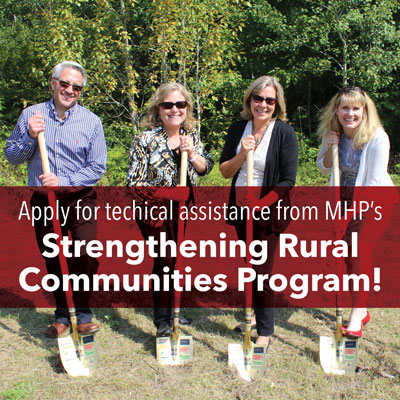
    Along with our partners in the Homes for All coalition, MHP was  on hand as the Capital Investment conference committee heard testimony on the bonding bill Minnesota legislators failed to pass in the chaotic close of the session last month. While the Governor has made certain investments a prerequisite for the special session, we were heartened to be able to share the urgency around bond funding for affordable housing during the hearing.

    Dan Kitzberger, Policy Director at the Minnesota Coalition for the Homeless, shared with committee members the potential cost of inaction: $125 million in affordable housing development costs across the state.

    Here’s Dan’s testimony…

    “Thank you, Mr. Chair, and members of the committee. I’m Dan Kitzberger with the Minnesota Coalition for the Homeless and a proud former student of Mayor Beussman from New Ulm. Today I’m here on behalf of Homes for All, a statewide campaign of more than 180 organizations.

    As you’re aware, this session Homes for All advocated for $130 million in bonds for affordable housing. HF622 included $45 million and we thank you for that commitment. As negotiations continue, and if it’s determined the bill needs to change, we ask that you consider including the Governor’s recommendation and the Senate position of $90 million: $70 million in Housing Infrastructure Bonds and $20 million in General Obligation Bonds. 

    As we speak, developers throughout the state are finalizing applications for Minnesota Housing’s Multifamily RFP [Request for Proposals], for which the deadline is this Thursday and will include Housing Infrastructure Bond proceeds. We’re anticipating the demand will again far-exceed available resources, as it did in 2014, when applications were three times the amount of available funding.

    What would the $90 million [in bonding] buy? This amount would impact 3,500 units of housing statewide. The $70 million in Housing Infrastructure Bonds would leverage an additional $55 million in private and federal sources, resulting in $125 million of total development costs. We’re proud of Minnesota Housing’s ability to leverage available funding, as well as continuing to make sound investments in both preservation and development in the state’s affordable housing stock. For example, the Agency’s underwriters require applicants to demonstrate adequate capitalization to maintain and repair developments decades into the future. What’s more: The skilled ranks of developers throughout the state are routinely able to meet this requirement.

    We hope by now you’ve heard about the growing need for housing that’s affordable — maybe even from your district. In fact, 600,000 households statewide are considered cost-burdened by their housing. It’s up to you to decide how far you want to go in meeting these needs.

    Now is not the time to scale back on our investment in affordable housing throughout the state. We recently learned there’s been a 9% decrease in homelessness since 2012; the first drop in a decade. We’re on pace to end veteran homelessness by the end of this year. This challenge is solvable and we’re making progress. We hope you’ll choose to continue it.“

    Stay tuned for updates.


  • MN Housing board update: Agency considers action on low-end market-rate rental housing

    At Minnesota Housing’s June board meeting, Commissioner Mary Tingerthal and agency staff discussed the tax exempt bonding authority, trends in the housing market, and updated the board on Agency news.

    The meeting began with a discussion on local jurisdictions requesting a portion of the Agency’s tax exempt bond authority. For the first time in 10 years, there is not enough authority in the state-wide pool which opens an opportunity for the agency to review its unit cost containment policy. The meeting’s discussion then moved to recent trends concerning the loss of lower-rent affordable housing and the status of a special legislative session. Lastly, Commissioner Tingerthal updated the board on Moody’s recent ranking of the agency, summer research projects, changes to the down payment loan assistance program, and a brief report on the agency’s administrative budget.

    Tax Exempt Bond Authority Requests

    Commissioner Tingerthal opened the meeting with a discussion of tax exempt bond authority, stating that a number of jurisdictions are requesting a portion of the Agency’s federal tax exempt bond authority. For the first time in 10 years, there’s not enough authority in the statewide pool – the resource under state statute that is set aside for local jurisdictions. Tingerthal went on to say that tax exempt bonding is linked under federal law to availability of 4% tax credits. The Agency is generally asked to provide these credits to developers in conjunction with tax exempt bonding.

    This possibility of awarding bonding connected to tax credits has brought the Agency to consider extending its cost control policies to 4% tax credit developments. Currently, the cost containment policy and predictive cost model is applied only to projects that receive 9% credits, deferred funding or bonding authority directly from the Agency. This need is underscored by the current controversy sparked by a recent report from the Institute on Metropolitan Opportunity related to artist housing. Metropolitan Opportunity’s report chiefly questions Schmidt Artist Lofts and A Mill Lofts, which were financed by tax exempt bonds and 4% credits respectively authorized by the cities of St. Paul and Minneapolis. Part of the controversy stems from the very high per-unit costs for these historic rehab developments. Tingerthal said it was because of the high costs that the Agency did not provide any deferred loan funding for these developments when it was requested several years ago.

    Use of National Trust Fund Resources

    Tingerthal indicated that staff was pulling the agenda item to approve proposed Agency use of the first $3 million in National Housing Trust Fund resources. On the day prior to the board meeting, the Institute on Metropolitan Opportunity had submitted comments on the Agency’s proposal, and Tingerthal said that staff needed time to consider these comments prior to board discussion.

    Loss of Low-Rent Affordable Housing

    In continuing her opening remarks, Tingerthal noted that another emerging critical housing issue facing the state is the loss of what many are calling “naturally occurring affordable housing,” or housing that is affordable to low and moderate income households without government subsidy. Investors are acquiring and upgrading numerous rental developments across the metro that would otherwise be market-rate housing with very affordable rents. Rent increases associated with these investments, as well as decisions to end participation in the Section 8 voucher program, are causing displacement of lower income tenants. Tingerthal noted that most of these developments were built in the 1970s and 1980s when there were federal tax incentives for this type of rental development.

    In further discussion about recent investments in low-end market-rate rental housing, Tingerthal said that the Agency had recently received a letter from the Housing Justice Center asking that Minnesota Housing consider certain efforts to respond to this significant loss of affordability in the rental marketplace. On a related note, Tingerthal added that Greater Minnesota Housing Fund (GMHF) is requesting that the Agency invest in GMHF’s investment pool which is oriented to developer-owners of similar properties who pledge to keep rents affordable. Tingerthal said that the Agency would consider its options for engaging more on this issue. Agency staff is currently reviewing the request for its fit with investment guidelines and might bring a request for concept approval to the July board meeting.

    Special Session Update

    Tingerthal reported that she had no news for the board with respect to a special session of the legislature and bond funding for the Agency. If the Agency does not receive new bonding resources, it will be sitting on development proposals with funding requests running five times available resources, a significant increase from the more typical 3 to 1 ratio. She said that this resource constraint is particularly disappointing as communities are submitting stronger applications.

    Moody’s Ranking of Minnesota Housing

    Tingerthal concluded her remarks on a more positive note by stating that Moody’s, the national investment rating agency, had just issued a very positive report on Minnesota Housing. Moody’s gave the Agency its highest investment ranking and called the Agency’s single family loan performance “remarkable,” and its management “sophisticated and seasoned.” The report stated that the Agency’s single family bond program’s five-year profit margin averaged 17%, a percentage point higher than the median for the sector. This loan volume, double that of peer agencies, was in large part attributed to the Agency’s down-payment assistance program — 90% of Minnesota Housing’s borrowers in 2016 received downpayment assistance. The profit margin on the smaller pool of multifamily loans was even higher at 78% in 2015, more than twice the profitability of peer agencies, according to Moody’s.

    Summer Research Projects

    John Patterson, Director of Planning, Research and Evaluation for Minnesota Housing, announced that summer research projects this year are being undertaken by two University of Minnesota Humphrey School graduate students. One project will be a national review of best practices in landlord risk mitigation — a topic connected to this year’s $250,000 appropriation from the legislature for creating rental loss reserve accounts. The other project will be an investigation of trends and motivations behind borrower refinancing of Agency multifamily loans.

    Changes to Down payment Assistance Loans

    The board approved program simplifications and an increase in loan maximums for Agency down payment assistance (DPA) loans. For regular loans, the cap increased from $5,500 to $7,500. For the “plus” loans, targeted to single heads of households with minor dependents, the amount increased from $7,500 to $8,500. These modifications were in response to conditions in the marketplace driving down mortgage production, staff said. A low inventory of homes affordable to the Agency’s target market, higher home prices, and decreased seller willingness to pay closing costs, suggested that the Agency should increase down payment amounts to keep its loan volume in line with its forecast. These increased DPA loans also were needed because of higher dollar amounts borrowers were required to bring to closing. A staff example showed that to purchase a $160,000 home, if the seller no longer pays closing costs, the amount required from the buyer for closing costs is $7200, compared to $2,450 if the seller pays 3% of the closing costs.

    Twin Cities Community Land Bank

    The board also approved a $10 million, five-year revolving line of credit for Twin Cities Community Land Bank. The $3 million is for a neighborhood recovery program and the remaining $7 million is for strategic acquisition of land in areas facing significant growth in property values.

    Agency Budget Report

    The final report to the board was the Agency’s 2017 administrative budget totaling $34.8 million, an increase of 4% over the 2016 budget, and 15% over 2016 projected actual expenditures. According to Kevin Carpenter, the Agency’s Chief Financial Officer, this includes funding for a staff increase of seven full-time employees (to 250 total. Carpenter added that all of the growth in full-time employees could be attributed to temporary or contract positions being made permanent, or positions that come with funding through interagency agreements or grants. Commissioner Tingerthal pointed out that the Agency’s administrative cost, as a percentage of program assistance provided, has been in the 3-5% range over the past decade.

    Stay tuned to the MHP Connect blog for next month’s minutes.

  • State of Housing 2016 highlights challenges in rural and tribal communities

    The national report provided further proof of what we at MHP know so well: rural and tribal communities face particular challenges when it comes to affordable housing.

    Last week, the Harvard Joint Center on Housing released its annual “State of the Nation’s Housing” report and, as many in the housing world opined, there was good news and bad news. While the housing market has recovered by some metrics, affordability has plummeted by many other standards with a historic number of cost-burdened renters.

    While urban centers often dominate the conversation, the report specifically calls out the challenges of rural and tribal areas. As the Housing Assistance Council, a national nonprofit that helps build homes and communities across rural America, noted: “The report details ongoing challenges facing non-metro and tribal areas, where poverty rates are higher than the national rate. Substandard housing is a particular problem in these areas — housing in non-metro areas is twice as likely to have incomplete plumbing, and housing in tribal areas is five times as likely to have incomplete plumbing. Meanwhile, federal housing assistance targeted at rural and tribal areas is limited and has seen a decrease in funding.”

    Since 2009, our Community Development team has been working extensively in rural and tribal communities, not just in Minnesota but across the country. What have they learned? When it comes to closing gaps in housing there are many common challenges.

    First and foremost, it’s a matter of capacity. In a small town, with limited staff, people wear multiple hats. The Sheriff may also be the Mayor. The Housing Coordinator might need to fill in as the liquor store manager (true story). Having human resources dedicated to understanding the intricacies of affordable housing development is simply out of reach for many small towns or tribes.

    Then, when it comes to funding, rural and tribal communities have it tough. While big cities get dollars directly from the federal government for housing projects, smaller communities have to compete with each other for funds from the state. That means, a senior housing project in one small community could be pitted against a supportive housing project just 20 miles down the rural road. Because staff time is constrained, it’s not uncommon for the towns to be unaware of the others application, rather than collaborating to get the best result for their area residents.

    Even when a project gets rolling, changing leadership can trip up the momentum. Whether the appointment of a new tribal council or a long-time city manager retiring, sometimes one person’s priority isn’t on the agenda of an incoming leader.

    And there’s a host of issues even once a community breaks ground. Community leaders are often uncertain what role they should play in the complex project — and residents are understandably anxious about an outside company coming into their community. And construction costs? In rural and tribal communities the fluctuations can be off the charts.

    That’s why MHP has prioritized working in rural and tribal communities. With offerings like our Housing Institute and Strengthening Rural Communities Program, we bring the knowledge and know-how local leaders need to extend their ability to get housing and community development projects done. We also bring together regional stakeholders, so, instead of competing, communities are collaborating to get the best result for their area residents.

    If your rural or tribal community is challenged by the state of housing, consider applying for technical assistance from MHP’s Strengthening Rural Communities Program. The application is short and the deadline is July 15. Learn more here!