• Investors Council Recap: Dynamic trends shaping the nation’s housing markets

    What are the dynamic trends shaping the nation’s housing markets, and how do the Twin Cities stack up?

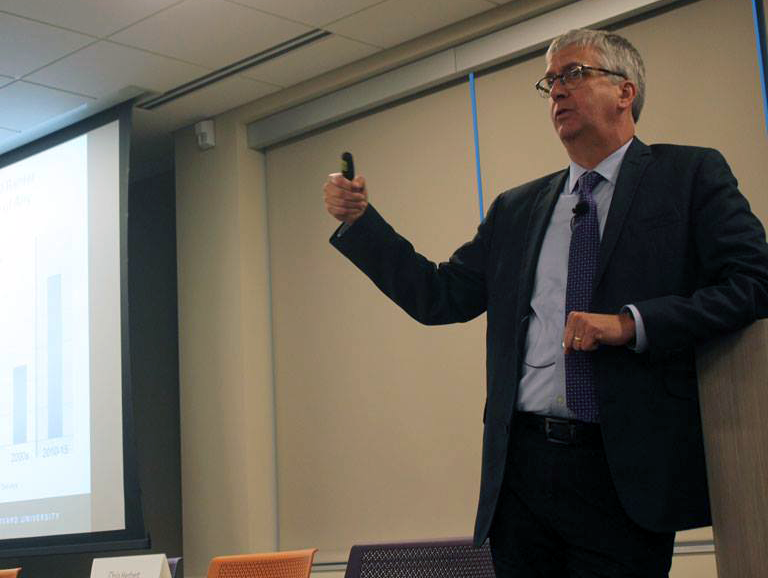
    On November 1, nearly 100 Investors Council members convened to hear a special presentation on these questions by Chris Herbert, Managing Director of the Harvard Joint Center for Housing Studies. Herbert highlighted key trends from the annual “State of the Nation’s Housing” report, released in June. Here are six takeaways from Herbert’s presentation:

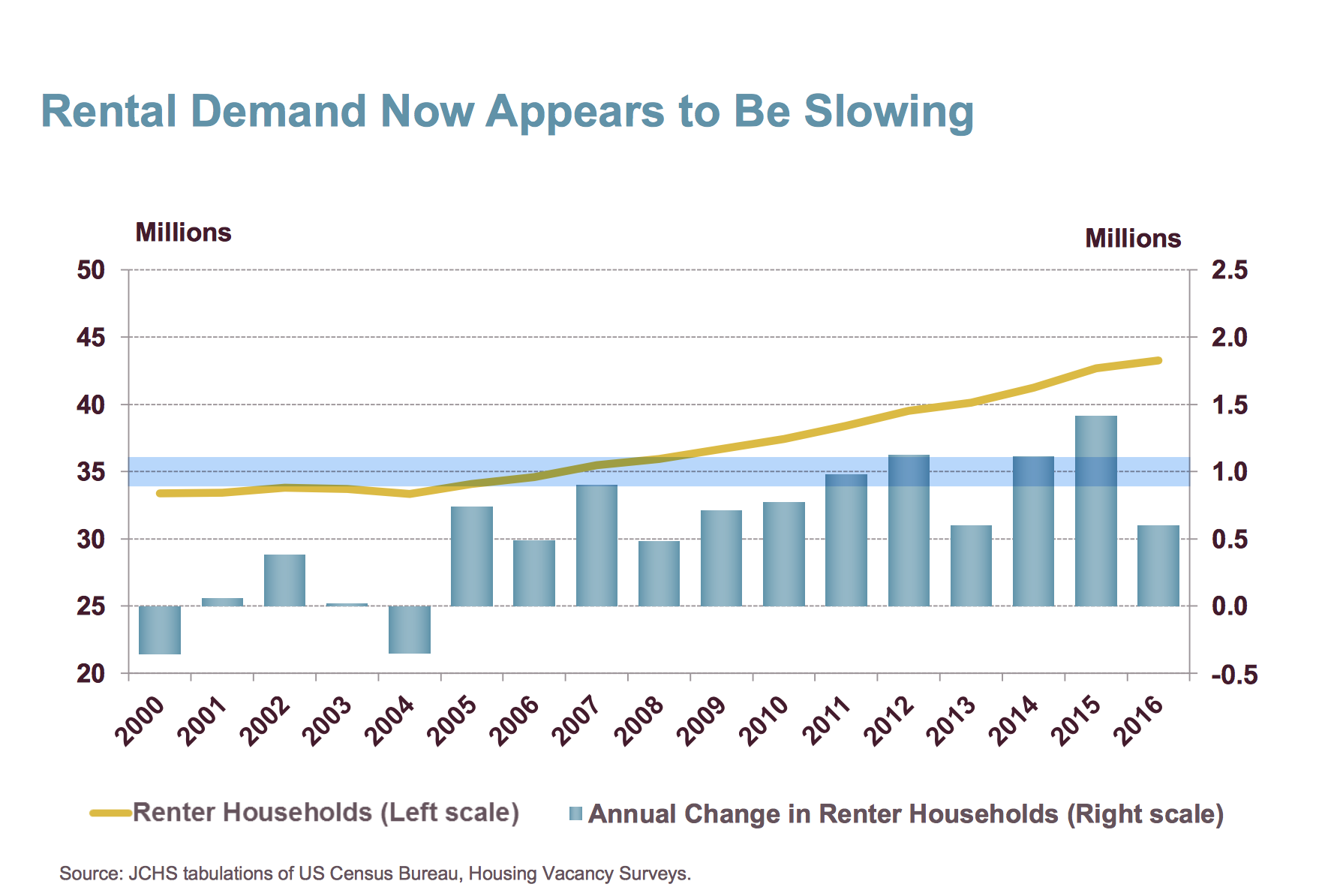
    1) While there’s been significant growth in renter households over the past 10 years, that growth is now slowing.

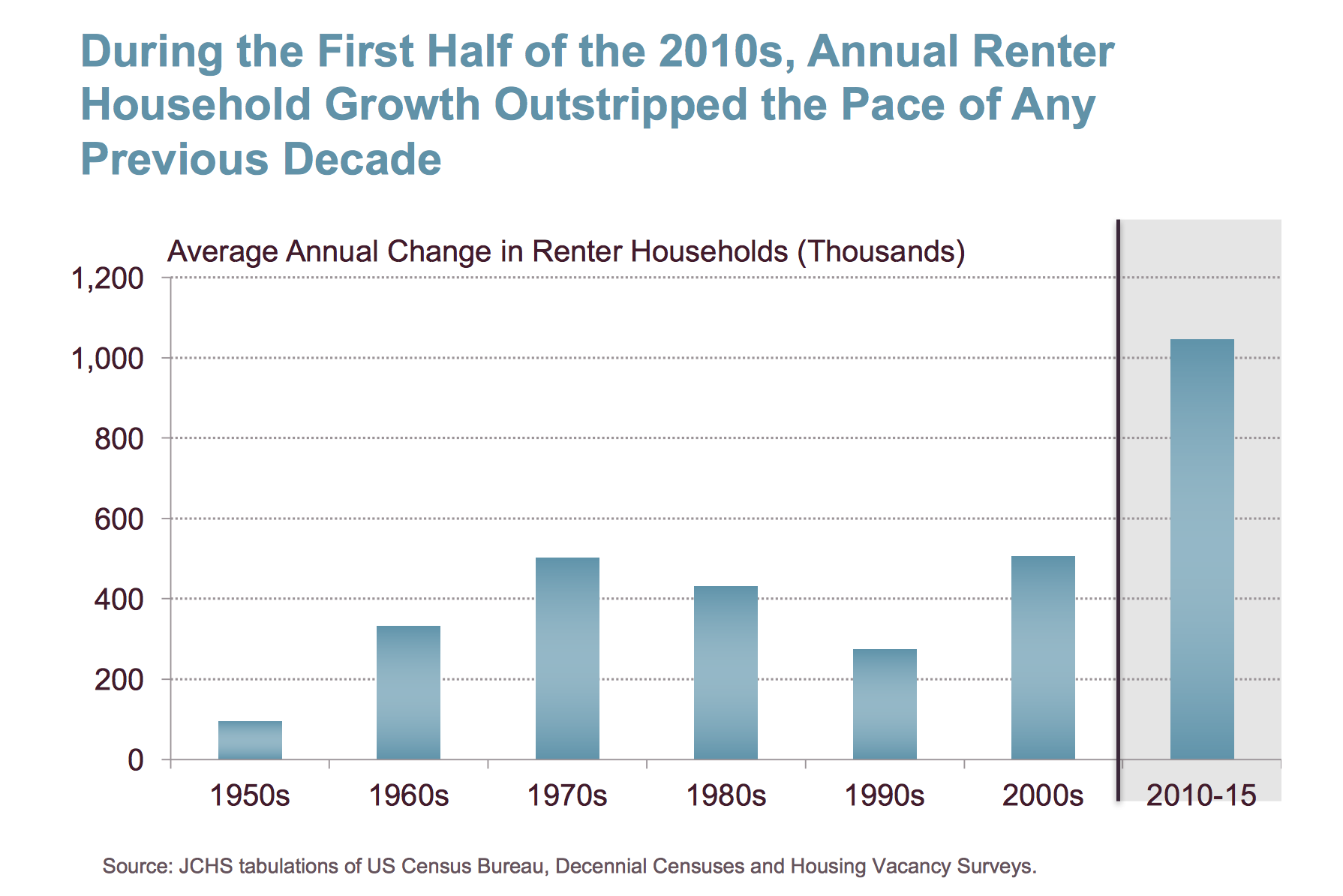
    From 2010 to 2015, the annual growth in renter households outpaced all previous decades. Though households comprised of a single person are the most common renters — and millennials have played a significant role in driving this trend — the growth in renter households has been diverse across age, family type, and income level. However, this growth appears to be decelerating. From 2015 to 2016, annual growth fell by 1 million renter households.
     

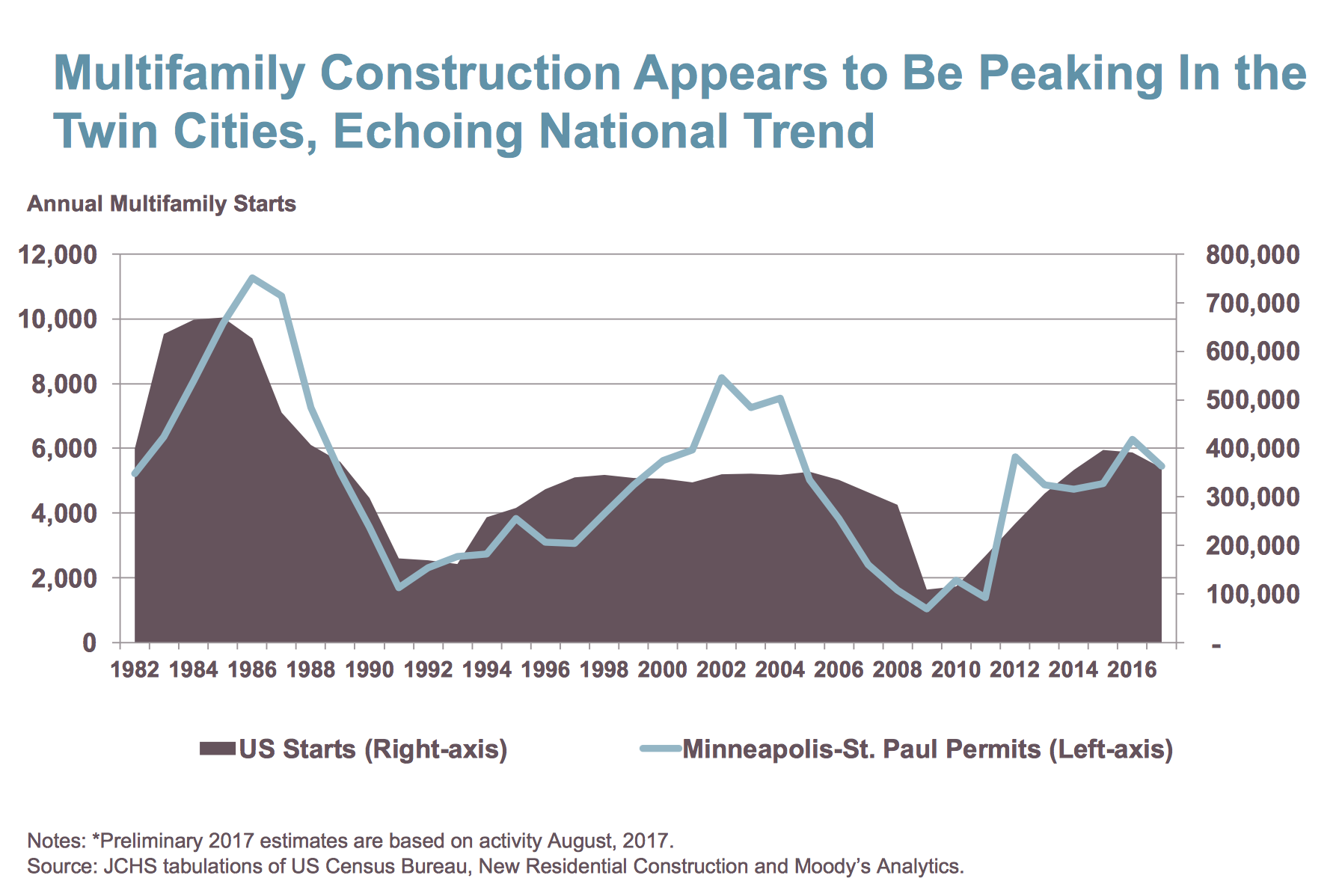
    2) Consistent with the national trend, multifamily construction appears to have peaked— specifically at the high end of the market — since recovering from historic lows during the recession.

    Post-recession, the multifamily construction market saw a more robust recovery than the single family market. In the past five years, though, the majority of new multifamily units were renting for $1,500 or more. That’s much higher than 2005, when the majority of units rented in the $850 to $1,099 range. While demand is slowing at the high end of the market, demand for older, more affordable rentals continues to rise.
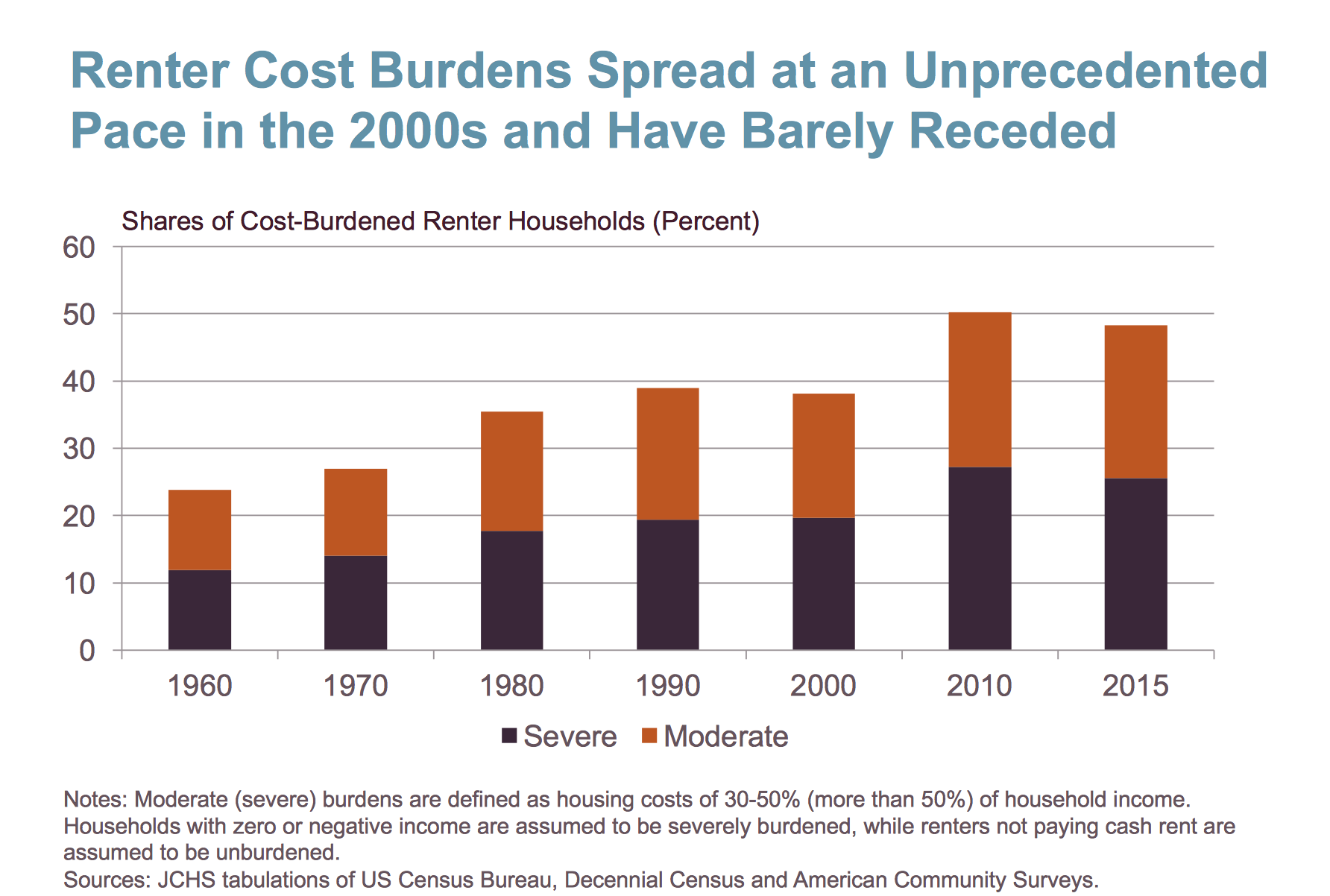
    3) Though rental affordability is improving slightly nationwide, the number of renters paying more than a 30% of their income for rent remains near record highs.

    In the 2000s, the percentage of cost-burdened renters rose at a record pace — to record high levels. Why? According to Herbert, housing costs have increased sharply while incomes have declined. Middle-income renters have been hit hardest, seeing the biggest increase in households paying more than 30% of their income for rent. Minneapolis reflects national cost-burden trends, and while the city has more subsidized rentals than similar cities across the country, there’s a significant shortage of affordable unsubsidized units.

    Herbert emphasized that the housing sector must create “a long vision of how we’re going to maintain affordability over time” and take steps now to address the gap between wages and rent.
     

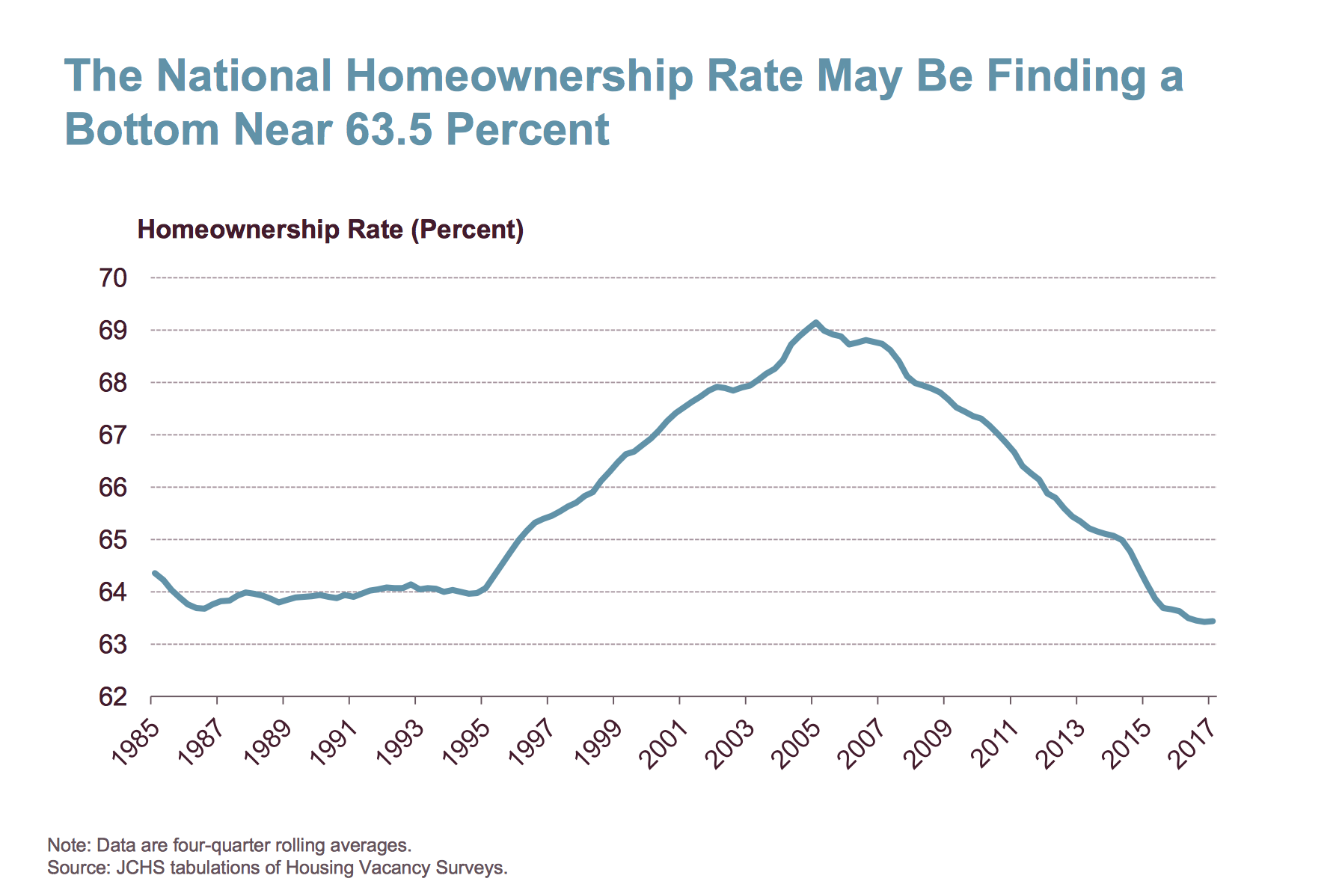
    4) Because renter growth is slowing, the falling national homeownership rate may have reached its lowest point.

    The recession and foreclosure crisis have driven a steep decline in homeownership. Since 2015, the homeownership rate nationwide has hovered around 63.5 percent compared to more than 69 percent in 2005. From 1990s levels, homeownership among households under 55 has plummeted as much as eight percentage points. However, according to Herbert, it appears that the rate of decline is slowing. At the end of October, one source reported a homeownership rate of 63.9 percent.
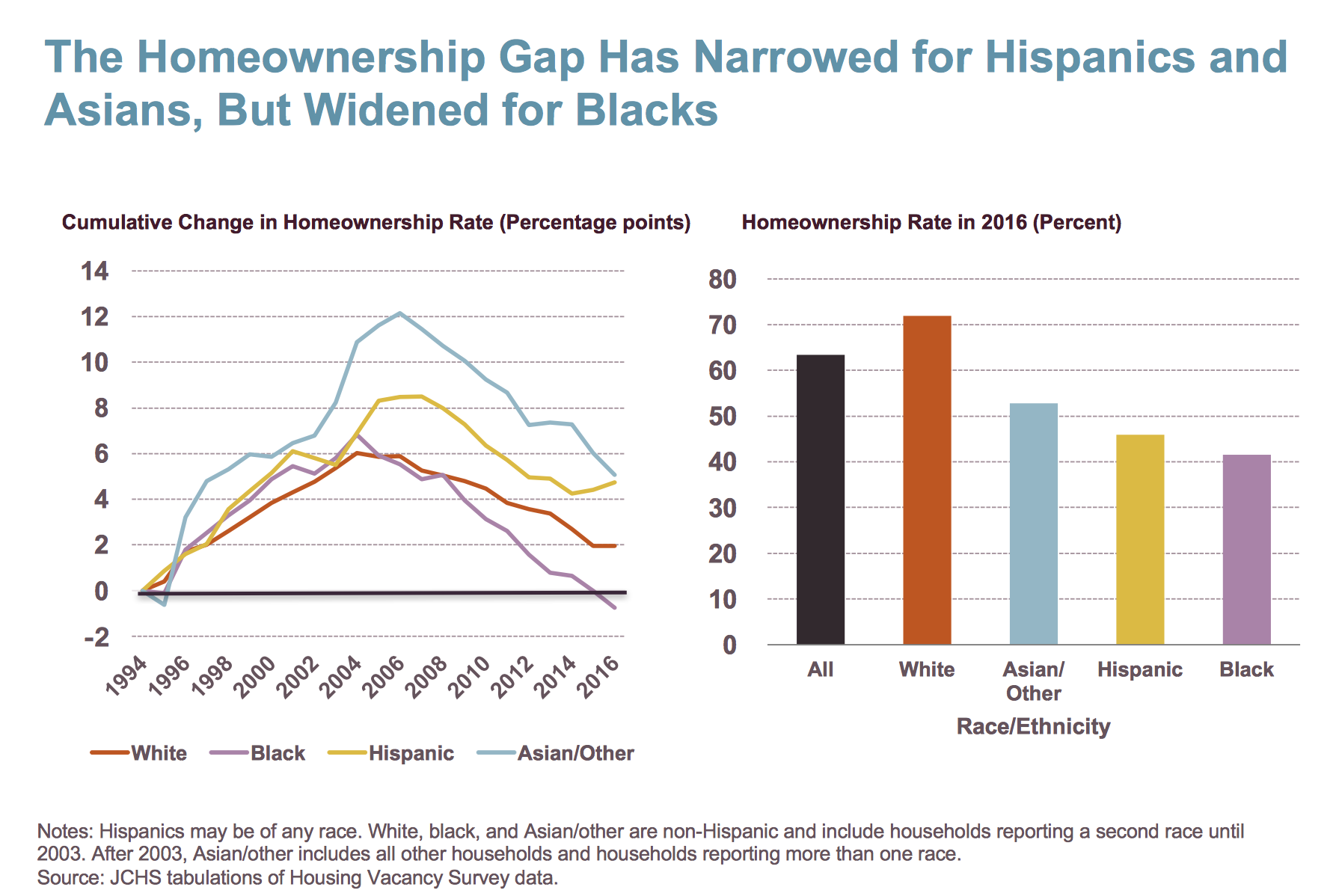
    5) Despite a rebound in the homeownership rate, racial disparities between White and people-of-color led households persist, and some groups face major barriers to owning a home.

    Major homeownership disparities remain — or have worsened — between White and people-of-color led households over the past two decades. The homeownership rate for Black households is lower than it was in 1968, the year the Fair Housing Act went into effect.

    Herbert pointed out that because housing is still the primary vehicle for wealth accumulation among low-income and people-of-color households, this is a major problem. “This is an amazing loss of progress on an important social indicator over two generations,” Herbert said. “As we approach becoming a majority minority country, we can’t lose sight of the importance of homeownership as a vehicle for residential stability, as well as financial stability.”
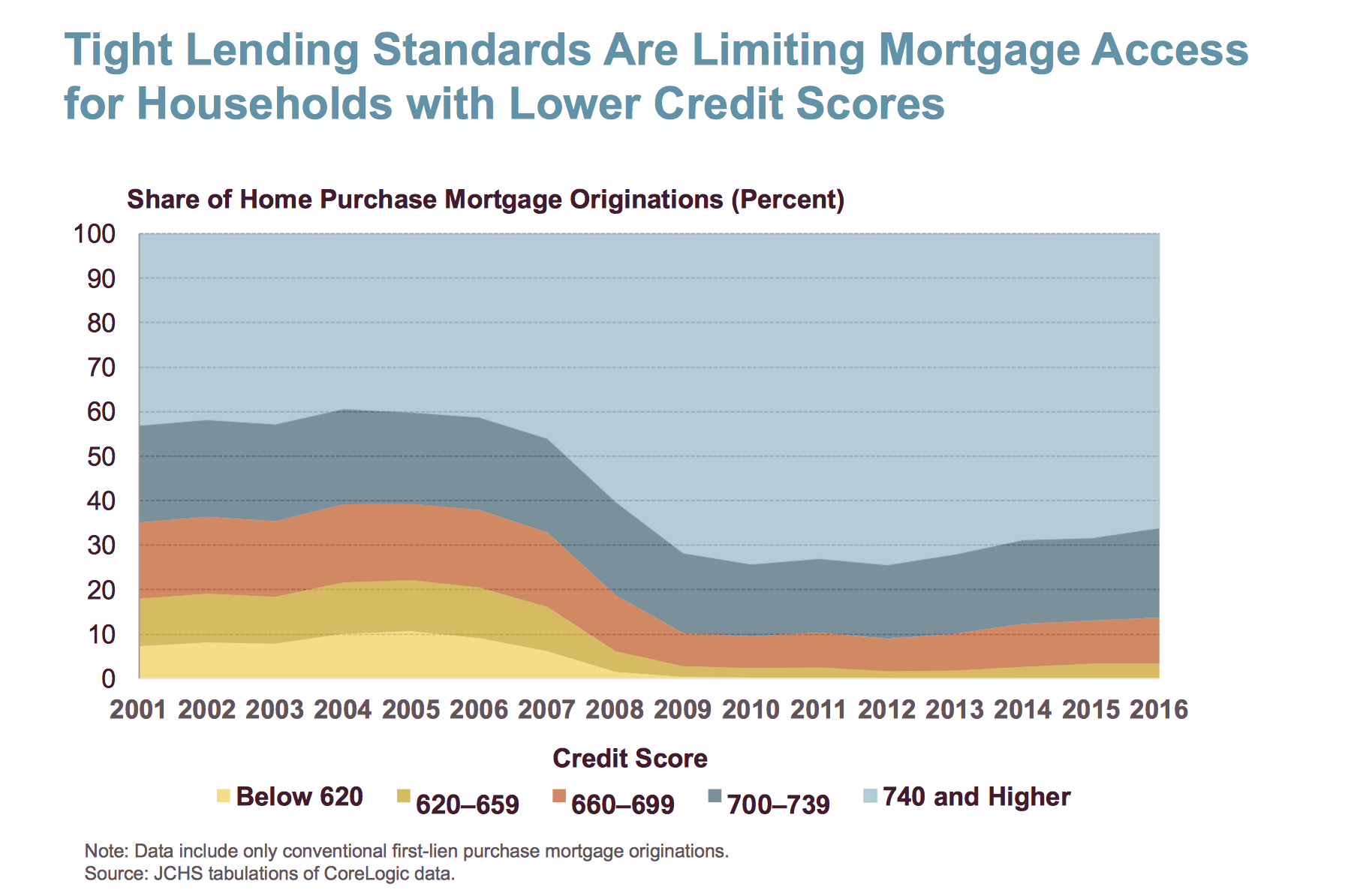
    Other groups face significant barriers to homeownership, as well. Many recent college graduates must dedicate a significant portion of their income to paying off student debt, making it tough to pay a mortgage. And for people with lower credit scores, it’s become harder and harder to get access to credit since the recession. For first time homebuyers, less expensive homes under 1,800 square feet are increasingly difficult to find.
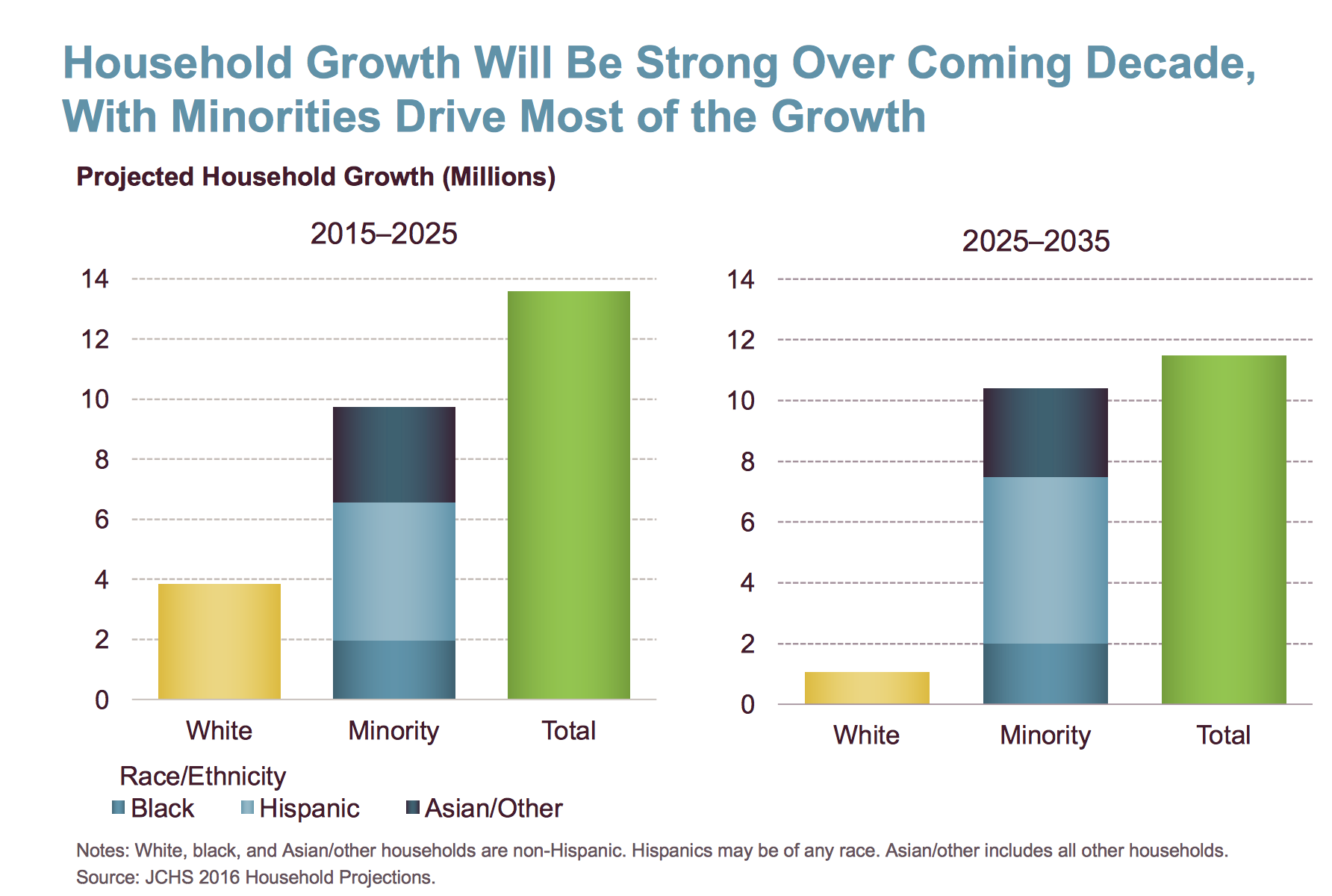
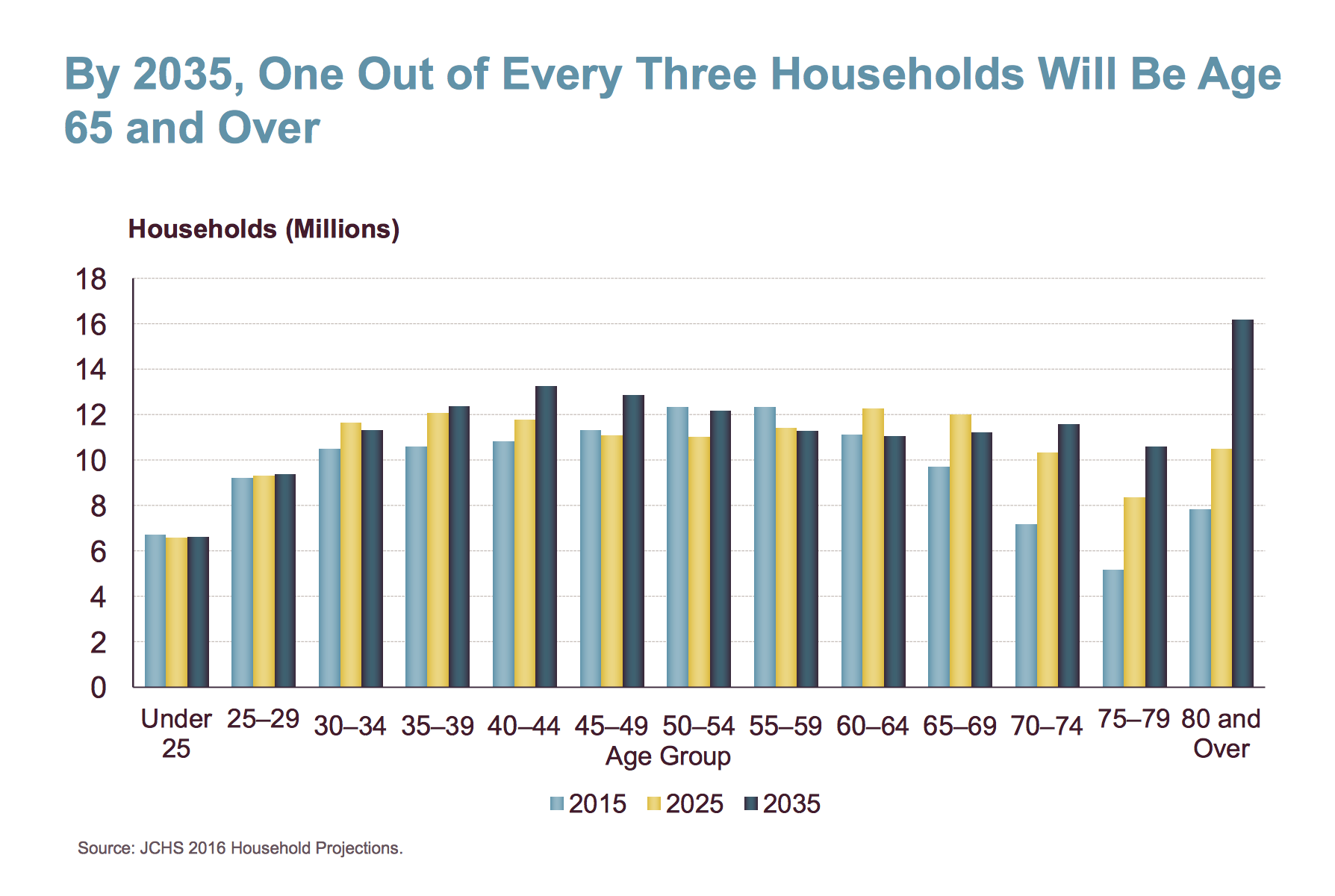
    6) In the coming decades, household growth will be strong, and people of color and seniors will play a major role in shaping the housing market.

    People of color will comprise the bulk of household growth from 2015 to 2035 — and one-third of households will be age 65 and over by 2035. In the face of these demographic changes, Herbert said the housing sector must consider whether the housing market works for people of color, and how we can provide housing with services for seniors.
    A panel discussion including Nick Place of Bridgewater Bank, Chris Zuspann of Frerich’s Construction, and Deidre Schmidt of CommonBond Communities followed Herbert’s presentation. Zuspann asserted that to respond successfully to the trends highlighted by Herbert, construction firms, developers, bankers, and other players in the affordable housing sector must take a collaborative approach. “We’re all yoked together in one way or another,” Zuspann said.
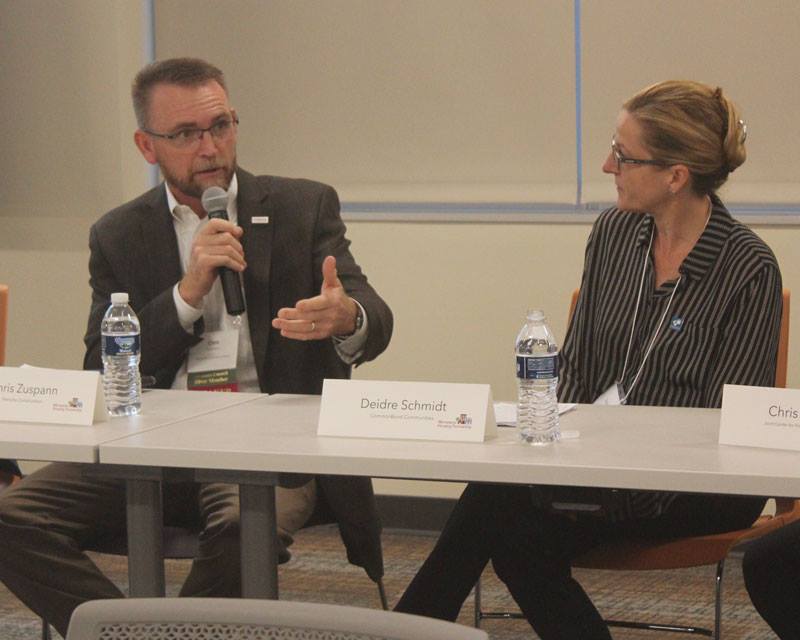
    Panelists Chris Zuspann (left) and Deidre Schmidt (right)

    Herbert added that because housing market problems have developed over time as a result of complex factors, solutions must be numerous and varied.“This is a problem that has many roots and took many years to get to this point,” Herbert said. “There’s no silver bullet solution.”

    Herbert said that communities must consider closing the gap between housing costs and income by

    • subsidizing housing,
    • bolstering local and state contributions to housing as federal investments decrease,
    • increasing efficiency in the development and construction process by revising building and zoning codes and by utilizing creative design,
    • shifting the development focus from luxury rentals and expensive homes to more simple-yet-decent dwellings,
    • preserving existing affordable housing.

    Anne Mavity, Executive Director of Minnesota Housing Partnership, reminded attendees that the trends Herbert elucidated have an immediate, tangible impact on people and entire communities. She called upon Investors Council members and community leaders to translate information from researchers like Herbert into to effective action.

    “The external world is looking to us in this room to help figure this out,” said Mavity. “There’s an urgency to this work — it’s not just academic.”

    See slides from Herbert’s presentation here and photos from the event here.

    Make sure you’re part of these engaging conversations. Join the Investors Council today!
  • Act now: House plans to vote tomorrow on #taxreform

    Federal tax reform is moving ahead at full steam. Here’s a rundown of how the House and Senate bills impact affordable housing and community development — and what happens next.

    This Thursday, the U.S. House of Representatives plans to vote on H.R. 1, the Tax Cuts and Jobs Act.

    This bill would deal a major blow to affordable housing development — and therefore the health, wealth, and stability of communities across the country — if passed in its current form. Over the next 10 years alone, H.R. 1 would eliminate nearly 1 million affordable rental homes, over 1 million jobs, and nearly $100 billion in business income nationwide, according to analysis by Novogradac & Co.

    The House bill undermines affordable housing and community development by:

    1. Eliminating tax exempt private activity bonds, which have been essential to the creation of more than 15,000 units of affordable housing in Minnesota over the past decade. If the bill passes Thursday, the 779 units in Minnesota awarded funding this October are at risk of not being constructed or rehabilitated — obliterating $140 million in development activity.
    2. Directing savings from sensible changes to the mortgage interest deduction to billionaires and corporations rather than investing in affordable homes for low and moderate income Americans.
    3. Scrapping the Historic Tax Credit, which has renovated more than 40,000 structures and leveraged $117 billion in private investment over the past 25 years.
    4. Reducing the corporate tax rate without modifications to the Housing Tax Credit, which will negatively impact the value of the 9% Low Income Housing Tax Credit (LIHTC). Novogradac & Co. estimates the net result will be $1.2 billion fewer dollars in equity annually.
    5. Instituting an alternative inflation measure that will decrease inflation adjustments in LIHTC allocations and, over 10 years, result in the loss of 8,200 affordable rental homes, according to Novogradac & Co. analysis.

    There’s still time to speak up and tell your Representative that you won’t accept a tax reform bill that deepens the affordable housing crisis. Your voice is important. Rep. Erik Paulsen (R-MN) voted yes for the bill in the Ways and Means committee — and no Minnesota Congressperson is a no vote on any roll call list.

    Please call:

    • Rep. Erik Paulsen | DC: (202) 225-2871 | MN office: (952) 405-8510
    • Rep. Tom Emmer | DC: (202) 225-2331 | MN office: (763) 241-6848
    • Rep. Jason Lewis | DC: (202) 225-2271 | MN office: (651) 846-2120

    The U.S. Senate is working to finish markup of their version of the Tax Cuts and Jobs Act by the end of the week. According to Majority Leader Mitch McConnell, the Senate will vote on the bill after Thanksgiving.

    Because the Senate bill preserves private activity bonds, it’s less detrimental than the House bill overall. However, it still severely exacerbates the affordable housing shortage and undermines the affordable housing sector. According to Novogradac & Co. analysis, the bill would reduce affordable rental housing production by nearly 300,000 homes over the next 10 years, and therefore, result in the loss of more than 330,000 jobs and nearly $30 billion in business income. Minnesota alone would lose 4,550 affordable rental homes, more than 5,000 jobs, and more than $400 million in business income.

    The Senate bill undermines affordable housing and community development by:

    1. Reducing the corporate tax rate by 15% without modifications to the 9% Low Income Housing Tax Credit (LIHTC), which could result in a loss of $1.8 million in equity annually — and therefore, the loss of approximately 200,000 affordable rentals nationwide over the next 10 years, according to Novogradac & Co. In addition, some affordable homes developed using LIHTC post-tax reform would likely serve higher incomes to compensate for the loss in equity.
    2. Modifying the deductions LIHTC properties can take related to interest and depreciation — a move that would eliminate more than 50,000 affordable rental homes over 10 years.
    3. Instituting — like the House bill — an alternative inflation measure that will decrease inflation adjustments in LIHTC allocations and, over 10 years, result in the loss of 18,700 to 19,900 affordable rental homes.

    Call these Senators to speak up for tax reform that invests in affordable housing and strong communities. They’ve expressed reservations regarding the proposed reforms and need to hear from you now.

    • Sen. Susan Collins (ME) | DC: (202) 224-2523
    • Sen. Bob Corker (TN) | DC: (202) 224-3344
    • Sen. Jeff Flake (AZ) | DC: (202) 224-4521
    • Sen. James Lankford (OK) | DC: (202) 224-5754
    • Sen. Lisa Murkowski (AK) | DC: (202) 224-6665
    • Sen. John McCain (AZ) | DC: (202) 224-2235
    • Sen. Klobuchar (MN) | DC: (202) 224-3244
    • Sen. Franken (MN) | DC: (202) 224-5641

    Stay updated by following us on Twitter and by subscribing to MHP publications.

  • Pulitzer Prize winner to highlight impact of evictions in the Twin Cities

    In 2016 alone, nearly 9,000 evictions were filed in Hennepin and Ramsey counties — propelling thousands of families into crisis. This week, Pulitzer Prize winner Dr. Matthew Desmond, author of Evicted: Poverty and Profit in the American City, will join local advocates and leaders to shine a spotlight on this often overlooked housing crisis — and what we can do about it in the Twin Cities.
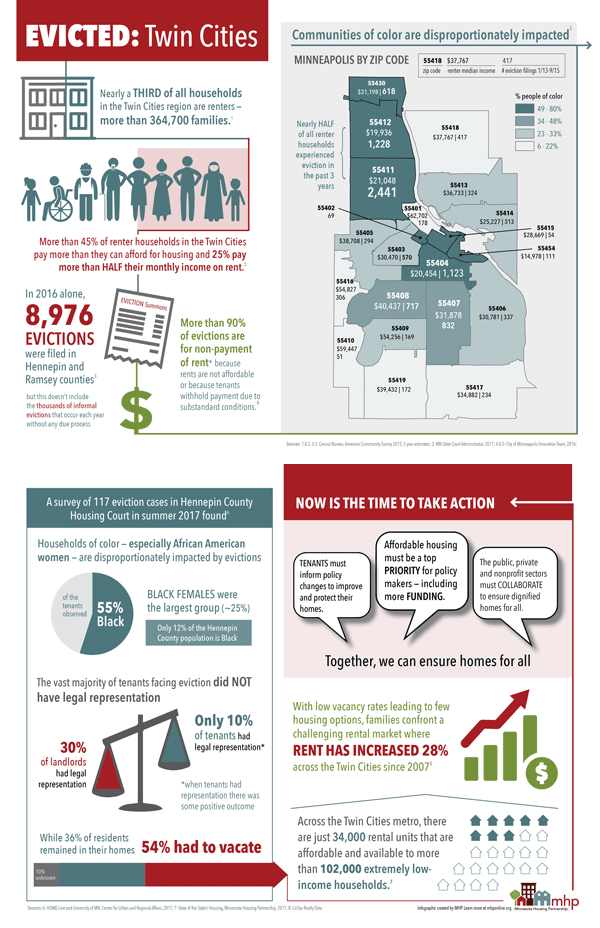
    As the Princeton professor emphasizes in his nationally recognized research on evictions, poverty, and homelessness: “Without a home, everything else falls apart.” In the Twin Cities, more than 85,000 families pay more than half of their monthly income on rent, making it virtually impossible to pay the rent and meet daily needs, like food, medicine and transportation. Perhaps more than any other issue, that widespread instability in housing undermines the current and future vitality of the Twin Cities region.

    “The heartbreaking stories captured in Dr. Desmond’s book are nearly identical to the families we serve here in Minneapolis,” said Barbara Jeanetta, Executive Director of Alliance Housing, a nonprofit housing developer and manager in Minneapolis. “We know the tremendous barriers low-income families face in finding housing in the Twin Cities, often because they have a past eviction filing on their record. But we also know those same families are responsible tenants and key contributors to the community when they have the stability of safe, dignified housing.”

    New research released this week from the University of Minnesota’s Center for Urban and Regional Affairs (CURA) and HOME Line reveals the disproportionate impact evictions have on communities of color. A 2016 study from the City of Minneapolis found that nearly half of renter households in North Minneapolis had experienced an eviction in the past three years — and more than 90% of those evictions were due to non-payment of rent. A survey conducted by CURA and HOME Line this summer found that Black tenants — especially Black women — were the largest group facing evictions, only 10% of tenants had legal representation in court and the majority were forced to vacate their homes.

    Click here to download the infographic as a PDF

    “National data suggests that Black women lead all other women in labor force participation rates, are most likely to work for poverty-level wages, and retire with an average of $100 of wealth,” said Dr. Brittany Lewis, Research Associate at the Center for Urban and Regional Affairs. “These lived realities are compounded by the fact that Black women are most likely to be the sole household earners raising small children. Stagnant incomes and welfare stipends, combined with higher housing costs are disproportionately impacting low-income Black women’s ability to maintain stable and affordable housing.”

    And the epidemic of evictions isn’t simply a housing issue; there’s growing recognition among leaders in the business, education and health sectors that these challenges compromise the vitality of the region. “As health professionals, we see and experience everyday how people’s health is impacted by their home and community environment,” said Connie White Delaney dean of the University of Minnesota School of Nursing. “Dr. Desmond’s scholarly work, and accessible writing shines a bright light on how unstable housing affects an individual’s ability to thrive.”  

    Inspired by momentum nationwide and with a broad and growing local coalition, now is the time to take action. “Together, we have the power to make change,” said Anne Mavity, Executive Director of the Minnesota Housing Partnership. “Our hope is that Dr. Desmond’s expertise and passion will be just the first chapter of an active effort to increase the supply of affordable housing in the Twin Cities; work toward policy changes informed by tenants and landlords; and create accountable dialogue among ALL stakeholders — from government agencies to advocacy organizations to private landlords — to ensure homes for all here in the Twin Cities.”

    Tickets are still available for “A Conversation with Matt Desmond” on Friday, October 20, at 1 p.m. at the Northrop at the University of Minnesota. Tickets are sold out but media is invited to attend a presentation from Matthew Desmond and a response panel of local experts at Augsburg University’s Foss Center on Saturday, October 21, at 7 p.m.

    Learn more and read stories from local residents impacted by evictions and advocates working to address the issue in the Evicted book club, created by Aeon, a local housing nonprofit and sponsor of Desmond’s visit.

    Desmond’s visit is co-hosted by Alliance Housing, Minnesota Housing Partnership and the University of Minnesota’s School of Nursing and sponsored by Aeon, CommonBond Communities, Minnesota Coalition for the Homeless and Twin Cities Habitat for Humanity.

  • Nine Critical Steps to Authentic Community Engagement

    This piece was written, in consultation with community leaders, for How Housing Matters, a project of the Urban Land Institute with support from the John D. and Catherine T. MacArthur Foundation.
    We all know the drill.

    There’s a notice in the back of the newspaper and tucked away on a government website, maybe some flyers posted at a community center or two. A bureaucrat stands at the front of a gymnasium, displaying a color-coded map and some indecipherable schematics to explain a project or plan in so much jargon it’s virtually a different language. Maybe the handful of residents who show up get to put a pin on the map. Maybe they just get a chance to share their “input.” Then, after an hour or two, the show is over, and only the persistent (and probably paid) advocates hear from that bureaucrat again.

    In too many cases, that’s what passes as community engagement.

    In 2016, 13 government agencies and nearly 20 community-based organizations in the Twin Cities threw out that model to try something different.

    It all started because of a fair housing complaint against the cities of Minneapolis and St. Paul that alleged governmental bodies administering federal resources in the Twin Cities were perpetuating racial segregation. The fair housing advocates charged that the critical document those jurisdictions had to complete (an “Analysis of Impediments”) to get their US Department of Housing and Urban Development (HUD) dollars didn’t address segregation and integration. To settle the complaint, the cities agreed to update that document with a focus on those absent areas and to do it with robust and meaningful input from community-based leaders and affected residents.

    Over a year, more than 30 stakeholders—including local city and county governments, the organizations that filed the complaint, and community-based groups representing the Equity in Place table—came together every month to create an addendum to the Analysis of Impediments and chart a new course for community engagement.

    While facing challenges and tripping along the way, the process resulted in hundreds of affected residents from different cultural communities contributing their insight and community-based organizations, with trust in their respective communities, being used for their efforts to convene those conversations. As the HUD-funded facilitator, Minnesota Housing Partnership had a unique perspective on the process, outlining the steps and sharing our recommendations in our recent report: “A New Approach to Fair Housing Community Engagement.”

    Here are nine key lessons we learned.

    Whose priorities? In this case, many communities of color and grassroots leaders felt the process was instigated by outsiders and focused on an issue that was not a key concern in their communities—namely, segregation and integration. Many community organizations were wary of being part of the process, and many acknowledged that they joined the table to share that alternative narrative and push for a better understanding among other leaders that priorities need to be set by community, not by academics, government officials, or external groups. As one leader at the table put it, “I participated because, for me, the goal was not really to deal with the complaint but to bring a counter narrative.” You’re not going to find a solution, that community leader emphasized, if you don’t correctly identify the problem.

    Create equal power, including use of language. One community leader noted, “It felt as though the government officials thought they were doing us a favor by allowing us space at the table.” Another community leader noted that “many of the community-representing organizations were brought to sit at a table that was not their turf, and there wasn’t an expression of equal power.” Some of that was mitigated by intentional steps to level the playing field, including a presentation from HUD on the history of the Fair Housing Act. But one pervasive wedge was language. Although housing advocacy is laden with jargon that isn’t accessible to the general public, the impact of language goes beyond simple comprehension. Throughout the process, community leaders consistently highlighted that common terms like “concentrated areas of poverty” or “high- and low-opportunity areas” created a deficit-oriented frame for communities of color that, one participant noted, was “offensive” and made it difficult to engage fully. Another member noted, “There needs to be a paradigm shift in how such processes are run so it’s not so exhausting for people they claim to want to hear from.”

    Acknowledging history and racism is fundamental. Along with the use of language, the group needed to address a gap in knowledge or shared understanding around historic harms to community and ongoing manifestations of systemic and institutional racism. At the outset, one member shared, “Conversations about institutional racism were side notes or ignored at the table,” which was problematic in having the right kind of informed discussion. To address that, a small working group was created to find a facilitator and funding for an Undoing Racism training. That training couldn’t take place until the latter part of the Fair Housing Advisory Committee (FHAC) process, but, to a person, it was seen as useful, something that should not only be incorporated earlier but potentially required for all participants. In addition to sharing knowledge about concepts and systems, it also allowed members from government and community to connect on a personal level.

    Sustained conversation and engagement is central to trust and progress. Participants from all sides emphasized the significant benefit of having a sustained conversation over a yearlong process. Rather than seeking one-time feedback or insight, the FHAC created space for more nuanced conversations and relationship building, such that many felt the opportunity to engage in deeper discussion and connect with decisionmakers made the process worthwhile. An outcome of the process beyond the required Analysis of Impediments addendum has been conversation within the Fair Housing Implementation Council to better and more intentionally incorporate community members and leaders in a meaningful and sustainable way so engagement isn’t on a project-by-project basis but built on consistent conversation. As one participant reflected, “If they feel or think differently as a result of working with communities, that’s a win.”

    Community leaders are not a substitute for community members. Although there was an intentional balance between community organizations and government actors, community leaders emphasized that they could help represent but couldn’t speak for directly affected people. One community leader pointed out, “People who are directly impacted constantly remind us that the decisions and choices we’re making have an impact, and they can add that little zinger, ‘Actually, that’s not how it works.’” Because of the timing and content of the FHAC meetings, the process, while technically open, was not accessible to the community in a meaningful way. That distinction led to discussion around reaching beyond the organizational leaders to community members.

    Providing resources to community rather than to outside consultants. One of the hallmarks of the process was providing microgrants to community organizations that had trusted relationships with affected populations. With awards of up to $4,500, these organizations were tasked with convening conversations in whatever format they deemed appropriate for their community around barriers to fair housing. Funding from the government actors and area foundations ensured the community received equal financial resources as the outside consultant charged with executing data and policy analysis and ensured that the outside consultant integrate the insight from more than 800 community members, representing communities of color across the metropolitan region. Although most found the timeline and funding inadequate, the process was universally recognized as a fundamental shift in community engagement, bringing more affected voices into the conversation than in the past.

    One interview doesn’t represent a whole community. The microgrants were essential in integrating community input, and most groups said they saw their input represented in the final report. But many struggled with how to make the process applicable to their communities’ interests and not seem like a top-down imposition of another government process. For some, a toolkit from Mosaic was helpful in navigating that, but others were frustrated by the constraints and framing inherent in the tools provided. They also cautioned that their engagement represented small portions of the overall cultural communities, communities that are composed of diversity in and of themselves. One leader, who works with the Somali community, emphasized, “One group interview isn’t reflective of an entire community; it’s reflective of a single high-rise building in South Minneapolis.”

    Create clear accountability and shared understanding around outcomes. One community leader stated during one of the FHAC meetings, it’s not that officials don’t know the needs of community. Some areas of the city, she emphasized, have been “surveyed to death.” What’s missing is accountability around actions that result from that input. In the first draft of the Analysis of Impediments addendum, many community members pointed to the vague recommendations that used vague wording and sought to track or monitor issues rather than take clear action to solve them. For many, it wasn’t clear how or if the jurisdictions included in the Analysis of Impediments would be bound by the recommendations. One participant asked at the conclusion of the process, “You do this whole in-depth report and you hear that people are being displaced and people aren’t able to get housing because of criminal backgrounds and UDs [unlawful detainers]. How are you, City of Minneapolis, now responsible to do something about that? How do you make sure that the impediments of 2017 aren’t still the same in 2020? How do we gauge movement, especially with such a big issue?” That process was neither clear nor consistent across jurisdictions, which made accountability to community even more difficult.

    The process isn’t over. Although the HUD-mandated process is over, the work has not concluded. One participant mused, “It was a constant struggle to remind myself and review why the process was important, and whether it was worth the time or just taking away from immediate community needs.” To make such processes worth the time and resources, there must be clear tracking of progress and implementation of the recommendations. Although many community organizations said they are committed to holding their jurisdictions accountable, each said it need additional financial resources to do so. Although funding community engagement for the Analysis of Impediments addendum was helpful, the next challenge is finding ways to provide resources to those communities to ensure there is community power to turn the inclusive visions of those documents into reality.

    Read the full report here.

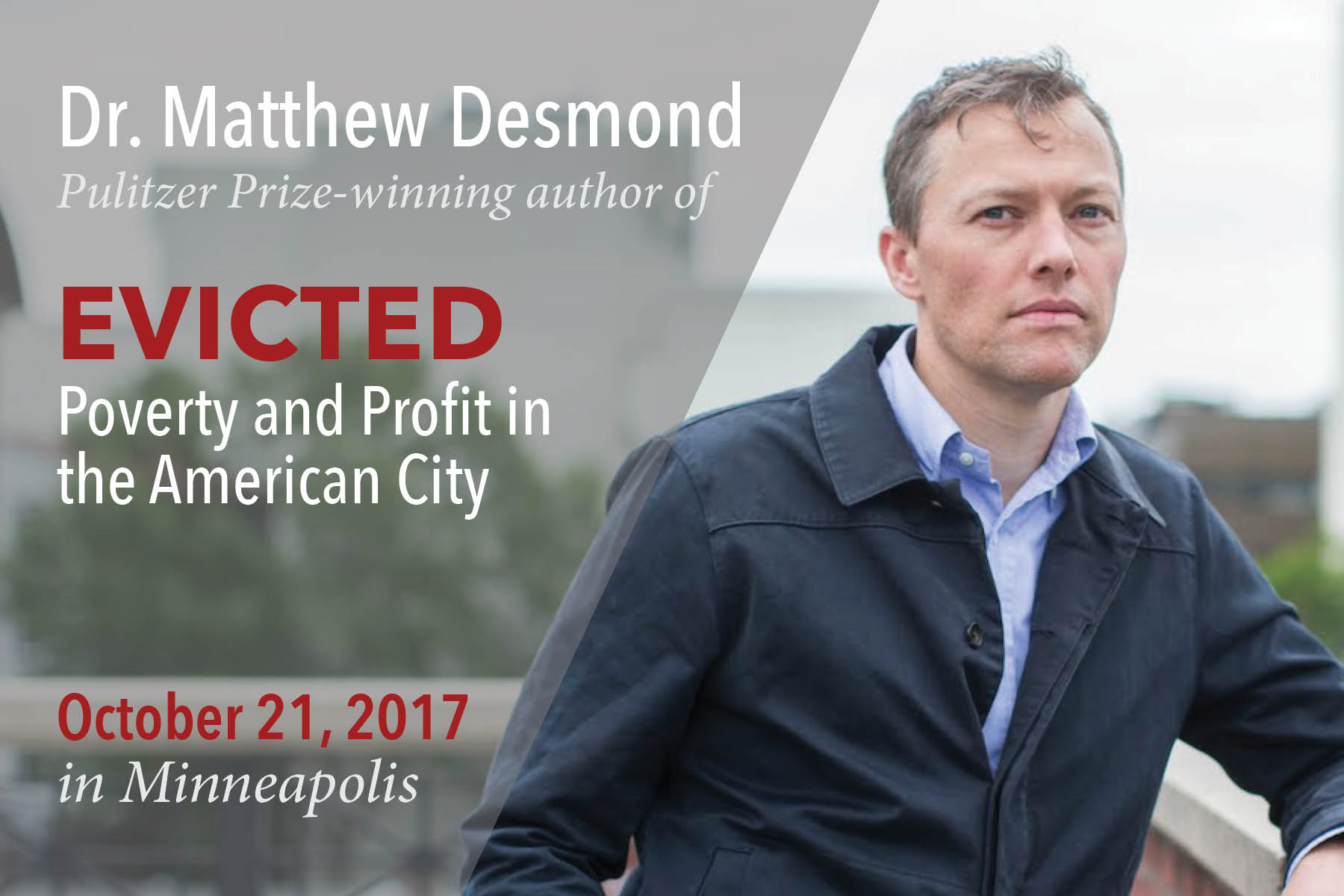
  • MHP Welcomes New Executive Director, Anne Mavity

    Minnesota Housing Partnership (MHP), one of the nation’s leading affordable housing support organizations, announced today that it has hired Anne Mavity as new executive director.

    Mavity brings 30 years of experience in affordable housing, capacity building and development. Among her varied experience, she has worked on a Congressional Subcommittee on housing and provided technical assistance and underwriting at the Corporation for Supportive Housing (CSH). Most recently she was director of new projects at Beacon Interfaith Housing Collaborative where she led development of several affordable housing projects in the Twin Cities as well as local and state advocacy efforts. While at Beacon Interfaith Housing Collaborative, Mavity also organized hundreds of congregational and civic leaders to attend public hearings and help secure unanimous support from the Edina City Council for the city’s first supportive housing development.

    In her new role, Mavity will guide MHP as it continues its leadership role in housing and community development in Minnesota and nationally. She will lead MHP focusing on three core areas of work: policy/advocacy, research/communications, and capacity building. She will continue the work to develop services that build on the business core and increase the organization’s impact and financial sustainability.

    “As the new executive director of MHP, I will work to sustain and build upon the great work this organization has been doing for the last 30 years,” Mavity said. “Our state is facing enormous housing affordability gaps that are impacting business growth, community stability and families. We must think and act boldly to address this need. I plan to build on this foundation to expand the reach and engagement of diverse organizations, stakeholders and systems, to create a strategic and collaborative response to the current housing needs across Minnesota.”

    Mavity replaces MHP founder and executive director Chip Halbach, who is retiring after leading MHP for 30 years. Halbach started MHP in 1987 to create a statewide voice and support organization for affordable housing development.

    “While it is hard to leave an organization that has been such a significant part of my life, I feel a foundation has been laid that will enable MHP to advance equitable communities with homes for all through the years ahead,” Halbach said. “Anne’s leadership and relationships in the affordable housing sector will complement the seasoned and accomplished board and staff and the many terrific partnerships we have in Minnesota and nationally.”
    Under Halbach’s leadership, MHP became a respected advocacy, community development, and housing communications leader. Halbach and his staff’s advocacy efforts established a property tax break for affordable rentals and helped secure funds for a national housing trust.

    “Chip’s leadership was evident in both his detailed understanding of a highly technical, complex field — and his capacity to convey that expertise in a way that fosters consensus and inspires people to coalesce around an issue,” Paul Sween, managing partner at Dominium and chair of the MHP board said. “These strengths have proven to be a powerful combination throughout Chip’s career — and have positioned MHP for a bright future. Thanks to his leadership and vision, MHP is more relevant than ever and I am excited to welcome Anne, who will bring new energy to our critical work while also building on Chip’s incredible legacy.”

    Halbach’s last day was September 27, 2017. Mavity starts her new role on September 28, 2017.

  • Tickets on sale for Matt Desmond, author of Evicted

    In Minneapolis alone, more than 3,000 evictions are filed each year — with devastating and long-lasting impacts on displaced families.

    In his Pulitzer Prize-winning book Evicted: Poverty and Profit in the American City, Dr. Matthew Desmond captured the human toll of this housing crisis, telling the story of eight families swept up in the nation’s eviction epidemic and laying out fresh ideas for solving this devastating problem.

    On October 21, Desmond will visit Minneapolis to share insight from his deep research around evictions, poverty and homelessness and join local advocates and leaders to highlight efforts and solutions to provide decent, stable housing for all in the Twin Cities.

    Across the nation, Dr. Desmond’s deeply affecting storytelling has ignited an urgent conversation about the growing lack of safe, adequate housing for those with the lowest incomes in our communities.

    Minneapolis is not immune to this epidemic. According to a 2016 report: “In Minneapolis, over 3,000 evictions are filed in the 4th District Housing Court each year. These cases are disproportionately concentrated in just a few zip codes. Evictions are a major issue facing renters in low income and minority neighborhoods, affecting nearly half of renter households in North Minneapolis.”

    With a presentation and panel discussion with key stakeholders, Dr. Desmond’s presence in the Twin Cities will help to shine a light on these pressing issues and lift up policy and funding ideas – at the federal, state and local level – that can lead to sustainable solutions to the affordable housing crisis.

    About Evicted:

    Even in the most desolate areas of American cities, evictions used to be rare. But today, most poor renting families are spending more than half of their income on housing, and eviction has become ordinary, especially for single mothers. In vivid, intimate prose, Desmond provides a ground-level view of one of the most urgent issues facing America today. As we see families forced into shelters, squalid apartments, or more dangerous neighborhoods, we bear witness to the human cost of America’s vast inequality—and to people’s determination and intelligence in the face of hardship.

    About Matt Desmond:

    In addition to winning a Pulitzer Prize for Evicted in 2017, Matthew Desmond is a professor at Princeton University, and co-director of the Justice and Poverty Project. A former member of the Harvard Society of Fellows, he is the author of the award-winning book, On the Fireline, coauthor of two books on race, and editor of a collection of studies on severe deprivation in America. His work has been supported by the Ford, Russell Sage, and National Science Foundations, and his writing has appeared in the New York Times, The New Yorker and Chicago Tribune. In 2015, Desmond was awarded a MacArthur “Genius” grant.

    Read — and discuss! — the book

    Across the nation, Dr. Desmond’s deeply affecting storytelling has ignited an urgent conversation about the growing lack of safe, adequate housing for those with the lowest incomes in our communities.

    Join the Twin Cities virtual book club, hosted by Aeon!

    HOSTED BY

    SPONSORED BY

    Tickets on sale now!

  • MN Housing board update: Board takes action on Fort Snelling project, hears rundown of 2018 draft Affordable Housing Plan

    At its August meeting, the Minnesota Housing Finance Agency board took action on a proposal to convert historic Fort Snelling buildings into affordable housing, heard highlights of the 2018 draft Affordable Housing Plan, and considered modifications to the Public Housing Grants Request for Proposals. The board also approved $23 million in grants to administrators to provide rental assistance through the state housing trust fund program and $632,000 in Enhanced Financial Capacity Homeownership Initiative grants.


     

    MHFA operations news

    Commissioner Mary Tingerthal opened the meeting by thanking Northwest Area Foundation for the temporary use of their meeting space as the Agency moves to an office space across downtown St. Paul. Tingerthal added that the Agency should be set up in its new space by September 8.

    Fort Snelling Upper Post

    First, the board took action on Dominium’s request for several policy waivers for the Upper Post development at Fort Snelling to access tax exempt bonds from the Agency’s entitlement allocation. Building on his presentation to the board in July, Paul Sween, Principal at Dominium, described the benefits of the proposed conversion of historic Fort Snelling buildings into 176 family units of tax credit housing. Sween said that these homes would provide accessible transit to the approximately 30,000 jobs related to the airport and Mall of America. He said that Dominium’s request is less than 7 percent of the state’s federal tax exempt bond allocation and that the fees his company would pay offset any financial loss to Minnesota Housing should they forgo the use of tax exempt bonds for other purposes. Sween referred to a letter of support signed by seven members of Minnesota’s Congressional delegation and pointed to a list of projects in other states also being financed through a combination of housing and historic tax credits.

    Minnesota Housing staff member Ryan Baumtrog countered the Dominium proposal by pointing out to board members that the waivers requested run counter to not just Agency policy but also state statutes establishing priority for use of tax exempt bonds for preservation of housing with federal rent subsidies. Baumtrog added that if the amount of tax exempt bonds requested for Upper Post were spread across rental projects in other areas of the state, 500 units of affordable housing could be created, in contrast to the 176 units proposed by Dominium. He added that the Agency was currently reviewing proposals submitted through the consolidated RFP that would use $120 million in tax exempt bonds to create 1,400 units of housing.

    Minnesota Housing Chief Finance Officer Kevin Carpenter referred to his own memo, in which the Agency’s financial advisor asserted that using bonds for homeownership, instead of rental, provides more financial benefit to the Agency than Dominium suggests. Because of the Agency’s ability to recycle bonds, the financial benefit to Minnesota Housing is actually $4.8 million — substantially more than Dominium’s estimated $1.2 million benefit to the Agency.

    Board Chair John DeCramer reminded his fellow board members that they comprised an independent decision-making body. Board member Rebecca Otto said that she found the Dominium presentation offensive because it implied that the board members did not understand the financial ramifications of Dominium’s proposal. Member Craig Klausing said that, to justify taking action that’s inconsistent with Agency policy, he would want to see how that action would move the needle in advancing the Agency’s mission. He hadn’t seen that in Dominium’s proposal. Klausing said that letters from the Governor and members of Congress were not relevant to his analysis. Chair DeCramer said it appeared to be a good project but not something with which MHFA can get involved. The board voted to deny Dominium’s request for a waiver of the preservation requirement in the Agency’s debt management policy. Because of the board’s denial of that waiver request, the board did not need to address the other requested waivers.

    Enhanced Financial Capacity Homeownership Initiative

    In other business, the board approved $632,000 in grants to support 13 agencies through the Enhanced Financial Capacity Homeownership Initiative. Through this program, the Agency supports an integrated approach to successful homeownership, combining asset building, credit report education and repair, consumer protection training, and tax filing. The Agency expects the grants to assist 637 households. The Agency set aside additional funding for program administrator training and for incentive funds. Under the Agency’s program design, awardees are eligible to receive an incentive bonus of up to 25% of their grant amount should an awardee exceed its original program goal. Staff said that in the past year, five of the thirteen grantees qualified for the bonus.

    Draft 2018 Affordable Housing Plan

    John Patterson, Director of Planning, Research and Evaluation at the Agency, introduced the Agency’s draft 2018 Affordable Housing Plan (AHP) to the board. Patterson said that the process to create the Agency’s annual program funding plan started nearly five months ago with an intensive outreach effort undertaken by Agency staff. Patterson highlighted several sections of the plan. In the “need” section, the AHP states that a major housing concern is falling incomes in the face of rising housing costs. Patterson said that he expects this trend to continue. Patterson also pointed out the extremely short supply of homes priced below $250,000 – the market for first-time homebuyers. Only 1.6% of homes in this price range are on the market in the Twin Cities.

    Concerning the loss of low-end market apartments, Patterson said that the Agency needs to work with its partners to consider next steps. In the AHP, Patterson also highlighted the statewide report on impediments to fair housing to be released in the coming year and the Agency’s interest in using its Capacity Program to focus on the problem of evictions.

    Regarding funding, the Agency expects to allocate $1.1 billion in 2018, up $46 million from the current year. In response to Patterson’s presentation, board member Terri Thao asked about the impact of Airbnb on the supply of housing. She said that this loss of housing to the temporary marketplace was an increasing concern.

    Board member Stephanie Klinzing appreciated the Agency’s focus in the AHP on preserving manufactured home parks. She asked how frequently that topic had come up in the public comments. Patterson responded that during the initial outreach, there had been a lot of interest in the Agency’s role in park preservation. Commissioner Tingerthal added that the Agency was uncertain about the most effective strategies for park preservation. The Agency is considering several preservation approaches: one that supports resident buy-outs of parks and another that supports a secondary market for manufactured home loans. A third strategy calls for infrastructure investment. The state needs more data on successful strategies, Tingerthal said. The allocation of resources in the AHP will provide an opportunity for the Agency to support a couple of pilots and generate data on park preservation.

    Staff stated that comments on the AHP were due September 5 and that the board would have a program committee meeting September 11 to consider the comments before taking final action at its September 28 regular meeting.

    Modifying Public Housing Grants RFP

    Next, the board heard initial recommendations on modifications to the RFP for public housing grants. These grants will be funded by the general obligation bonds recently authorized by the legislature. The Agency reached out to a number of stakeholders, including many housing authorities, in its effort to improve program functionality. In response to concerns about smaller agencies having the capacity to submit the substantial applications currently required, staff is proposing to change the Agency’s process to require simple initial applications that require applicants to identify the scope of work and the consequences of not doing the work and provide information about any other funds used in the project. If an applicant receives preliminary approval for funding, Agency staff will assist the applicant with architectural and design work and in preparing the final project budget. The new application process is intended to minimize the cost and time needed for applications. Board members complimented staff on their responsiveness to partner concerns.

    Rental Assistance Grants

    Under its consent agenda, the board approved $23 million in grants to administrators to provide rental assistance through the state housing trust fund program. The two-year grants will assist nearly 1,500 households, most with incomes below 30% of area median, said Agency staff in its report. According to staff, administrators will take different approaches in providing assistance. For instance, some will follow a Section 8 model of subsidizing rents down to 30% of tenant incomes. Others will provide flat amounts of assistance per apartment. Staff said that in the current tight rental market, most program administrators have difficulty accessing eligible households. Owners are less willing to accept households with rental subsidies or to maintain apartments to acceptable standards. Staff stated that in the coming biennium they would explore ways to increase utilization of the Agency’s rental subsidies.

    Learn more about MHFA here.

  • MN Housing board update: Discussion around Fort Snelling project continues, 2019 QAP approved

    At its July meeting, the board of Minnesota Housing Finance Agency discussed the conversion of historic Fort Snelling buildings into affordable housing, grant awards to the new Landlord Risk Mitigation program, and the allocation of bonding resources for Catholic Charities’ Dorothy Day center. The board also gave final approval of the 2019 tax credit Qualified Allocation Plan (QAP).

    MHFA operations news

    In her opening remarks, Commissioner Mary Tingerthal announced that this would be the last board meeting in the Agency’s current building. The next board meeting will be held August 31 at the offices of Northwest Area Foundation, and then meetings will resume permanently in the former Macy’s store in September. Prior to the move, Tingerthal added, staff will be consumed with its review of the 55 multifamily and 30+ single family proposals submitted through the consolidated RFP (which will come before the board at its October meeting).

    John Patterson, Director of Planning, Research and Evaluation, introduced the Agency’s summer interns and stated that this year’s two research projects concern the homebuying patterns of millennials and households of color, and the developer fee schedules comparing Minnesota to other states.

    Fort Snelling Upper Post

    For the second time, the board heard comments about the proposed development of the historic Fort Snelling Upper Post property into affordable housing. For this development, developer Dominium requested that Minnesota Housing allocate $58 million in tax exempt bonds in order to leverage federal 4% tax credits. In March, the Agency board heard presentations on this proposal and at a special board meeting in April, discussed with staff the conduit bond requirements under the Agency’s debt management policy.

    The Upper Post discussion commenced with statements by several supporters of the proposal. Myron Frans, Commissioner of Minnesota Office of Management and Budget (MMB), said that he was there on behalf of Governor Dayton, who had earlier provided a letter of endorsement of the bond allocation.

    Representing Dominium, Mark Moorhouse and Owen Metz covered several details of the proposal. Through the project, 26 historic buildings would be preserved and converted into transit-accessible, affordable housing for families, with a preference for veterans. They acknowledged that the cost would be high, but said, on a per square foot basis, they would be very similar to CommonBond’s Fort Snelling permanent supportive housing project for veterans, for which the Agency provided Housing Infrastructure Bonds. They encouraged board members to visit the historic site.

    Other speakers included Erin Hanafin Berg, policy director for Preservation Alliance of Minnesota, who said that she had been on the task force to save the Fort Snelling properties, and, looking at similar properties elsewhere across the country, she concluded that the adaptive reuse proposal from Dominium was the only opportunity for preservation. Next, the DNR regional director said that the Dominium proposal was the best seen in more than 20 years, and that the state, through his department, was committing $250,000 per year to stabilize the property. This expenditure was required because the state committed to preserving the Upper Post buildings when it received them, as surplus property, from the federal government.

    Board members were not convinced that Minnesota Housing should fulfill the request. Chair John DeCramer said that he struggled with the issue. Noting that the project came in at three times the cost predicted under the Agency’s predictive cost model, he asked whether all the buildings really needed to be preserved.

    Board member Rebecca Otto said that she and her husband ran a business preserving older properties, and acknowledged that many people feel strongly about the project. She said, however, that because so much of the Agency’s bonding authority would be used with this single development, the question of geographic equity needed to be addressed. She added that state government was asked to take a heavy lift, and that she wanted evidence that project proponents had done everything they could to secure federal resources.

    Board member Damaris Hollingsworth, added that she, too, struggled with this proposal and speculated about how many hundreds of families would not receive mortgages should the bonding be allocated as requested. Board member Stephanie Klinzing, noting her background as a historian, said that she could not fault the Agency just for looking at whether this proposal made sense exclusively on its housing merits. She said that the Agency’s role is to take resources from various sources and use them to serve the housing needs of the people of the state. Board member Craig Klausing agreed; he said that as a board member he wears his housing hat, and the project must make sense as housing. Director Joe Johnson said that he would be disappointed should the historic buildings be lost, yet it was hard to commit that level of resources for the project.

    Dominium principal Paul Sween made a closing comment, stating that, in fact, the bulk of public resources preserving these properties was coming from the federal government. He added that the loss of resources to the Agency was not $58 million, but only $1 million. He suggested that this was the amount of interest revenue the Agency would lose if it were to replace the $58 million of tax-exempt debt with taxable debt for use in the Agency’s single-family mortgage program. In the current market, taxable debt would bear an interest rate only 0.3% higher than tax-exempt, said Sween. Commissioner Tingerthal ended the discussion saying that the Upper Post proposal would come back to the board for a decision at the board’s August 31 meeting.

    Landlord Risk Mitigation program

    After the lengthy Fort Snelling discussion, the board turned to several business items before it. The board accepted the staff recommendation to fund three of six proposals for the new Landlord Risk Mitigation program. A total of $400,000 was awarded to St. Louis and Carver counties, and to Lutheran Social Services to serve the Brainerd area. The program provides funds for outreach staff to establish relationships with landlords and encourage participation in the program, and for a loss guarantee fund should the tenant cause property damage or not pay rent. In their evaluation of this demonstration program, staff would determine whether landlords take on tenants with risk factors (like criminal history) and the number of people with such risk factors that are getting housing.

    Dorothy Day project

    The board accepted a staff recommendation that $13 million in Housing Infrastructure Bonds go to the St. Paul Dorothy Day project under the early award initiative that the board approved in May of this year. This was an advance allocation of funds that otherwise would be available through the Consolidated RFP and awarded in October. The board agreed to this type of award for projects that needed an early construction start in order to avoid losing other committed financial resources. Board members were assured that this proposal would have scored highly had the proposal awaited the competitive award; that is, no other project would lose funds because of the early award. In answer to a board member question, Commissioner Tingerthal said that very durable, and more expensive materials would be used with Dorothy Day, however the per-unit cost was still within the range allowed under the predictive cost policy.

    2019 tax credit Qualified Allocation Plan

    In its final action, the board gave final approval to the 2019 tax credit Qualified Allocation Plan (QAP). Staff reviewed modifications to the existing QAP being proposed for 2019, and identified what was being changed in the current recommendation compared to earlier drafts. Staff said, in response to comments, that the final draft would not reduce the large family points for 4% credit proposals. Further, the increase in points for extra-long affordability commitments (i.e., for 35 or 40 years) would be consistent between the 4% and 9% tax credit criteria. Also in response to comments, the 2019 QAP would not have the 7-year time limit on local plans for the award of points, as some commenters deemed the time limit to be arbitrary. Rather, staff will focus on whether a local plan is actively being implemented (not dormant on a shelf). Another area of comments concerned points for rent assistance. Here, staff agreed to providing points for properties with only 5% of units with rent assistance; and to address issues raised by investors, added a relief clause should rental assistance no longer be available for a given property.

    Staff said that several other QAP comments showed merit but that there was not time to bring them into the 2019 plan. These will be worked on over the coming year. For instance, staff will investigate the recommendation that the Agency provide incentives for reducing the amount of tax credits requested for a property. They also will consider whether older appraisals should be accepted in markets showing little change. Recognizing the tension between cost containment and sustainability requirements, Commissioner Tingerthal said that the Agency would continue to “work arduously” to strike the right balance between the two.

    Learn more about MHFA here.


  • Report: A New Approach to Fair Housing Community Engagement

    What leads to effective participation in fair housing planning by people most impacted by that planning, particularly communities of color?

    A new report from MHP outlines how a recent Twin Cities engagement process could serve as a model for other jurisdictions as they plan their community participation required under the new federal fair housing rule.

    In February 2016, the Department of Housing and Urban Development requested that Minnesota Housing Partnership (MHP) facilitate the creation and work of a fair housing advisory committee — a step called for under an agreement to settle a fair housing complaint against the cities of Minneapolis and St. Paul. Under the multi-party agreement, the cities were to revise their fair housing Analysis of Impediments (AI) through an addendum assessing the existence of segregation within the Twin Cities, and identifying recommendations for supporting racial integration.

    To HUD, the addendum was important to achieve a resolution to the complaint, and to improve on past AIs submitted by the HUD grantees in the Twin Cities metropolitan area. It also viewed the work of the committee as an important demonstration of a new approach to community engagement in fair housing planning. This was important as HUD had concerns that populations most directly impacted and intended as the beneficiaries of the Department’s funding were not engaged in the planning process.

    The drafting of an addendum to the Twin Cities’ regional AI came at an important juncture in the evolution of fair housing work across the county. In 2015, HUD finalized its rule clarifying what is required of its grantees to meet their obligation of “affirmatively furthering fair housing” (AFFH). By law, the fair housing affirmation is required of jurisdictions that access community development funding from HUD.

    With the new fair housing rule HUD prescribed a planning process, the Assessment of Fair Housing (AFH), their grantees must follow before they can affirm that they are furthering fair housing. In their assessments, HUD grantees must report on their types of outreach activities and dates of public hearings or meetings. Local knowledge must also be included in the AFH. This includes information gathered through the community participation process.

    To inform this shift to the Assessment of Fair Housing, HUD looked for lessons learned in the Twin Cities preparation of the addendum to the region’s Analysis of Impediments to help other jurisdictions expand community participation as they prepare their fair housing plans. 

    The Twin Cities model had two major components: A staff/consultant-supported committee of stakeholders; and funded, community-led outreach and interviews. While this engagement process  was expensive and time consuming, we believe that it resulted in a significant increase in participation by communities of color.
    Some of the key observations learned, highlighted in the report, include:

    – To the extent possible, the engagement process should not be a top-down imposition. The process should build on dialogue, language and perspectives already existing within the communities the jurisdictions hope to reach.

    – These communities need to know what they are getting in return for their participation. The outcomes from the engagement and government accountability need to be stated as clearly as possible, while recognizing the political context of a given jurisdiction’s fair housing planning.

    – The community engagement micro-grant program provided resources to organizations closely connected to low-income populations and communities of color to gain those communities’ expertise on issues related to fair housing, including discrimination, housing choice, displacement and segregation. Those community views — obtained through 17 micro-grants — informed the drafting of the AI addendum.

    – The Twin Cities local governments responsible for preparing the AI addendum found the community engagement process to be groundbreaking in its depth and breadth of participation. The fair housing advisory committee enabled an exchange of viewpoints of stakeholder groups whose views varied on the importance of mobility versus place-based strategies in advancing racial equity and fair housing. Through the micro-grants the government agencies heard from low-income individuals and people of color, perspectives underrepresented in previous AIs because outreach strategies such as public hearings and citizen surveys were ineffective at reaching these communities.

    The Twin Cities experience provides a model for governments who hope to facilitate a deeper conversation about discrimination and racial disparities, and bring new community voices to the development of a fair housing plan.

    Read the full report here.

    Download supplemental materials here.

    Download the Addendum to the Analysis of Impediments.

  • New report: Nearly $19/hour needed to afford a 2-bedroom apartment in MN

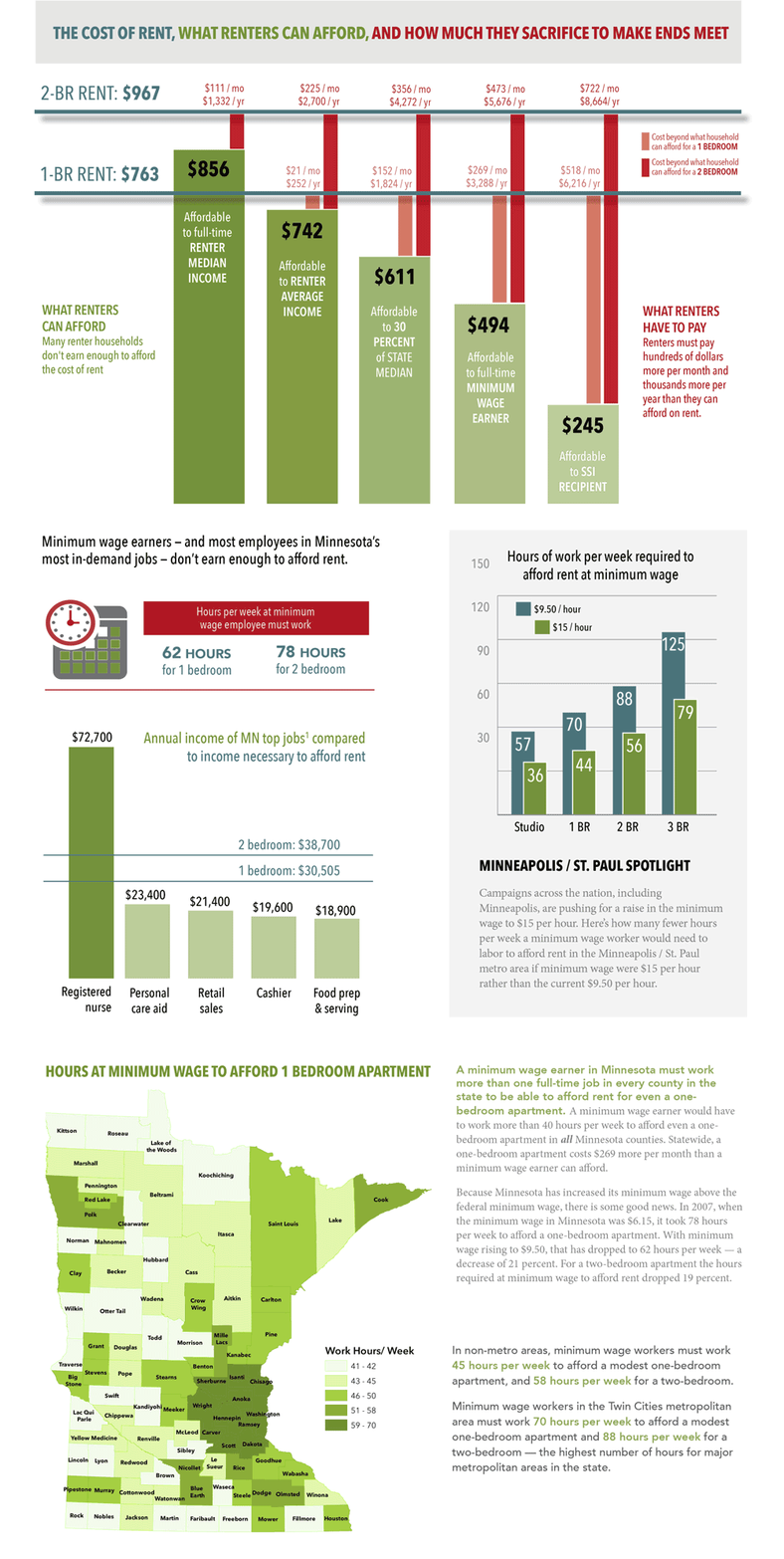
    There isn’t a single county in the state of Minnesota where a full-time minimum wage worker can afford even a modest one-bedroom apartment. In the Twin Cities, it takes 70 hours per week at minimum wage to afford rent for a single-bedroom home.

    When families pay too much for rent, they’re forced to sacrifice to make ends meet — cutting back at the grocery store or delaying a trip to the doctor.

    Yet Out of Reach Minnesota 2017 reveals that households in every corner of the state are spending thousands of dollars more than they can afford each year just to pay the rent for a modest apartment.

    “This year’s Out of Reach report illustrates the continuing challenge in covering housing costs facing retirees and people with lower paying jobs,” said Chip Halbach, MHP’s Executive Director. “For years now, increases in the cost of housing have outpaced renter income in Minnesota, meaning that even more seniors and families are forced to make difficult decisions between paying rent or purchasing food and medicine.”

    Building on an annual report released by the National Low Income Housing Coalition this month, MHP’s new analysis points to an urgent need to increase affordable housing in communities across the state, in urban centers and Greater Minnesota.

    Among the key findings of MHP’s 2017 report: 

    Minnesota has climbed to #21 on the list of most expensive states in the nation, up from #24 just five years ago, rising above states like Texas and Arizona.

    From 2016 to 2017, the state housing wage — what a household must earn to spend less than 30 percent of their income on housing — increased by more than 5 percent.​

    To afford a two-bedroom apartment, the median-income renter in Minnesota would need a 13 percent raise.

    A full-time minimum wage earner can’t afford even a one-bedroom apartment in any of Minnesota’s 87 counties.

    The lowest income households — those earning 30 percent or less of area median income — can afford a modest one-bedroom apartment in only four of Minnesota’s 87 counties. Even efficiencies are not affordable in 35 counties.

    New analysis focused on the Minneapolis / St Paul metro are:

    How many hours less would a minimum wage earner have to work to afford an apartment in Minneapolis / St. Paul if the minimum wage were $15 instead of $9.50?

    How much do you need to earn to afford rent in each zip code of Minneapolis and St. Paul?

    How does the income — and the ability to afford rent — of households of color compare to white households in places like Hennepin and Ramsey County?

    See the full Out of Reach Minnesota 2017 report here.

    See national data, analysis, and maps from NLIHC at http://www.nlihc.org/oor