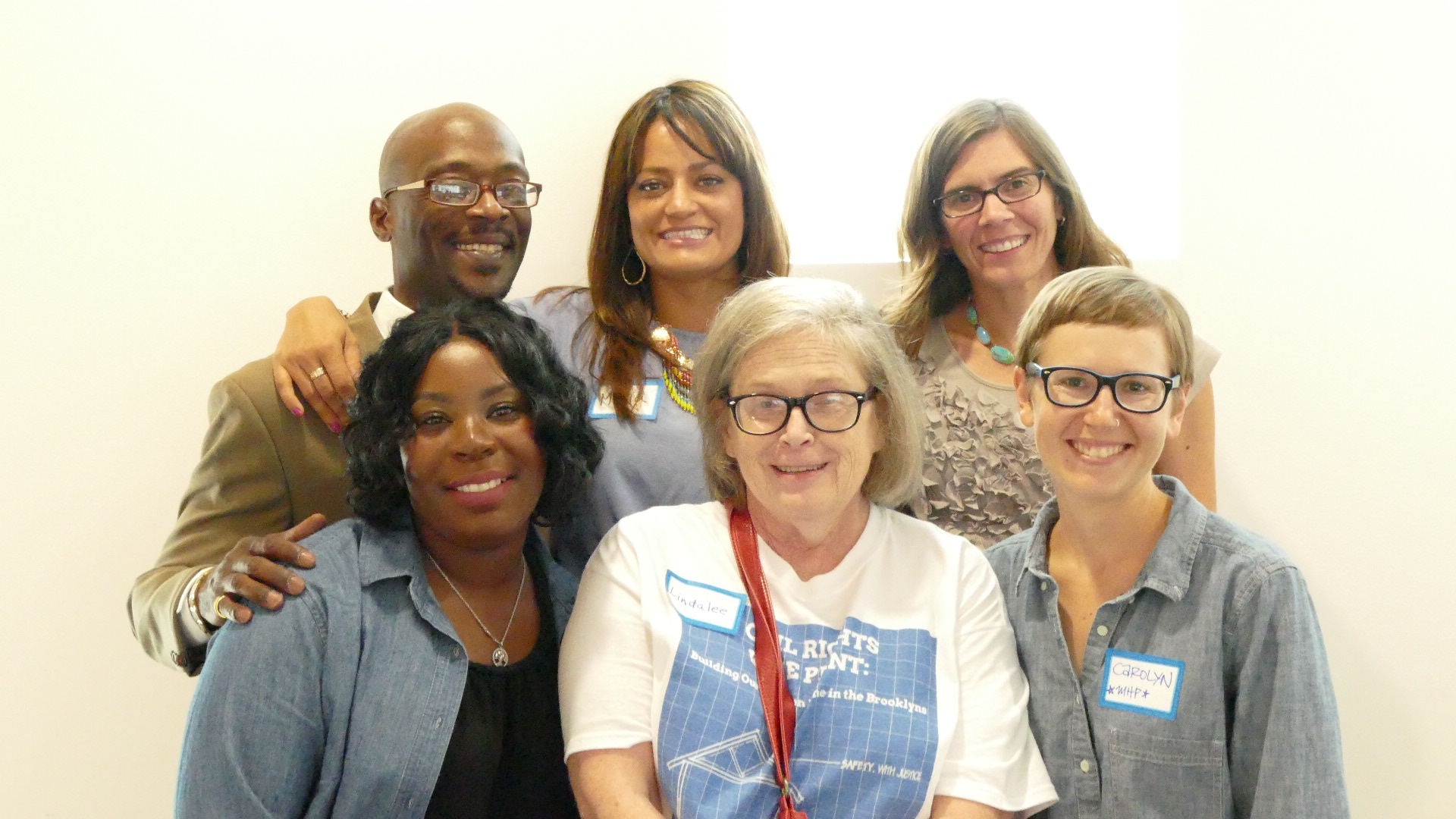
• Speakers Bureau for directly impacted communities launched in the Twin Cities

    Have you been impacted by the shortage of affordable housing in the Twin Cities? We need your voice.

    Too often the story about affordable housing is told by professionals in government, nonprofit, or the private sector. But we know the experts about housing challenges — and real solutions — need to come from those who are directly impacted. That’s why the New Vanguard Speakers Bureau is seeking Tenant Experts to share their insights as speakers and leaders in regional housing events and conversations.

    The New Vanguard Speakers Bureau will provide training to participants and compensate speakers for their time and efforts through funding, support, childcare, and transportation.

    JOIN US for an informational meeting on Thursday, March 1, 4 – 6 p.m. at Tapestry Church (7045 Lyndale Ave S, Richfield). Learn more about the Speakers Bureau, and co-create its core principles and structure. Regular meetings to follow the 3rd Thursday of March, May, and July. If you’re interested, but can’t make it, fill out our interest form — and share it with your networks: bit.ly/TCHSB-interest-form

    Questions? Contact Laura Proescholdt at 651-925-5552 or laura.proescholdt@mhponline.org. Download the New Vanguard Speakers Bureau flyer: bit.ly/NVSB-flyer-ESP

  • #Homes4AllMN housing story: “I watched this place be built. It was my last hope.”

    The blog below is cross-posted from Homes for All MN. Homes for All MN collects and shares housing stories to to show lawmakers the challenges Minnesotans are facing when it comes to having a safe, stable and affordable home. By sharing your story, you play a key part in gaining the support and understanding of elected officials and furthering Homes for All’s mission to advance housing stability for all Minnesotans. Katie’s story is part of that effort. Join Katie in sharing your story, and thanks for supporting Homes for All!

    For Katie and her three young kids, homelessness became a routine after nine months of moving from shelter to shelter. Once a week, they moved to a different church in the Rochester, hauling all that they had, sticking to a strict schedule of meals and bedtimes, and spending every moment together.

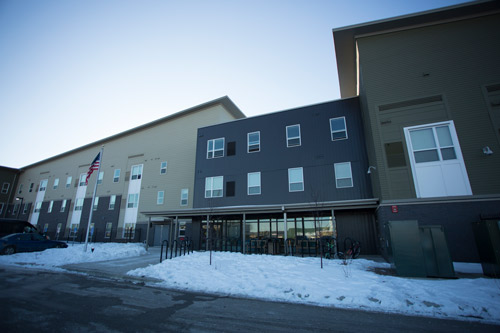
    Photo: Katie and her 4-year-old son in one of the Gage East community rooms

    “Everyday, we had to be at the church a certain time, we had to eat dinner at a certain time, and in the morning we had to leave at a certain time,” Katie explains. “If we wanted to eat we had to be up at a certain time. Some weeks we’d stay out of Rochester, so we’d be in Eyota or Pine Island. I did not travel lightly because I didn’t want my kids to feel like they didn’t have what they needed. It was really overwhelming for me a lot of the time.”

    Even while relying on shelters, Katie was working a job and doing her best to care for her children. But, there were other times when Katie and her kids were even more mobile, lacking even the modest stability of local shelters.

    “It was probably worse though, when we were really homeless,” Katie recalled. “We had to live in hotels. There were a few times where we had nowhere to go. We had to go outside. There was nothing I could do.”

    Katie and her children were caught in a difficult spot. Not having a home made it difficult for Katie to maintain a job. Not having a job made it difficult for her and her kids to find a home. Katie focused on doing all she could for her children.

    “Being completely homeless, there was no way I could have maintained a job,” Katie said. “It would have taken me hours just to take my kid to daycare. And I used to do that when I had to, when I knew it was good for my child. I’d spend four hours just to pick them up and drop them off.”

    When Katie found out she and her kids could move into Gage East, a permanent supportive housing complex in Rochester, she was ecstatic. She signed a lease without seeing her apartment, and moved in the same day.

    “I watched this place be built and I remember praying and praying to get in,” Katie says. “This was my last hope. I’ve lived in Rochester my whole life, and I wasn’t ready to leave. This place is helping me get ready to leave and maybe find something bigger out there that I can provide for my kids.”

    Gage East, located in Rochester, is home to more than 50 homeless families and youth. 

    Made possible by Housing Infrastructure Bonds, Gage East provides housing for more than 50 homeless families and youth. The stability and services Gage East provides — including case management and counseling — have made a huge difference in the lives of Katie and her kids.

    “I feel safe here,” Katie says. “I don’t want to live here forever but it feels like my home. I’ve never had anything this new before — ever. And they provided furniture and everything you needed. If you didn’t have anything when you moved in, all you had to bring was your clothes.”

    Katie has faced domestic abuse and drug addiction. She sees Gage East as an opportunity to work through the trauma she and her family have experienced.

    “Right now, I’m not working because I’ve decided to deal with the issues I haven’t dealt with, so I can do what I need to do for my kids,” Katie said. “It’s hard for me not to work, but I know that I need to take care of my issues. I am a recovering drug addict, and I’ve been through abuse, and I’ve been through a lot, but I know that in the world, if you want to do something you can.”

    Katie wants others to access the same opportunities she’s found at Gage East.

    “I want people to know that we need more places like this because there’s a lot more need,” Katie said. “And if people want things to change and people to change, they have to help us because some of us weren’t given what our parents needed to give us, or whatever we went through has stopped us. We don’t want to be in this situations that we’re in. We want to do better. Some of us just can’t. So we need places like this. It’s really important. Otherwise, they’re not going to see a change, and they’re just going to hurt people. So, I’m grateful for this place.”

  • Sicangu Lakota secure $69,000 grant to further community-driven development plan focused on sustainability and self-sufficiency

    For generations, the Sicangu Lakota were persecuted and prohibited from practicing their religion and traditional ways. But the spirit of the South Dakota tribe was never broken. “We have a history of standing up and fighting for our rights,” says Wizipan Little Elk “and we continue to fight for our freedom to live how we want.” 

    That freedom and focus on traditional ways is the foundation of the new Keya Wakpala Waicageyapi Development. The Executive Director and CEO of Rosebud Economic Development Corporation (REDCO), Little Elk has played a key role in the process of creating a master plan to transform an 600-acre swath of land west of the City of Mission, South Dakota, in a way that centers community and environmental sustainability.

    “One thing that separates us and helps define who we are is that we don’t approach the work that we do from a deficit base,” Little Elk explains. “I think that we come at it from an asset base instead. We’re not looking at everything that’s wrong and throwing our hands up in the air and asking for handouts. Rather, we have challenges that we’re actively addressing, and we want partners and allies to help us address those challenges.”

    The Keya Wakpala plan addresses several pressing community challenges including a major shortage of affordable housing; lack of suitable energy, water, and transportation infrastructure; and high rates of poverty. According to Little Elk, the community isn’t focused on those hurdles. Instead, they see potential in partnerships, collaboration, and innovative planning.

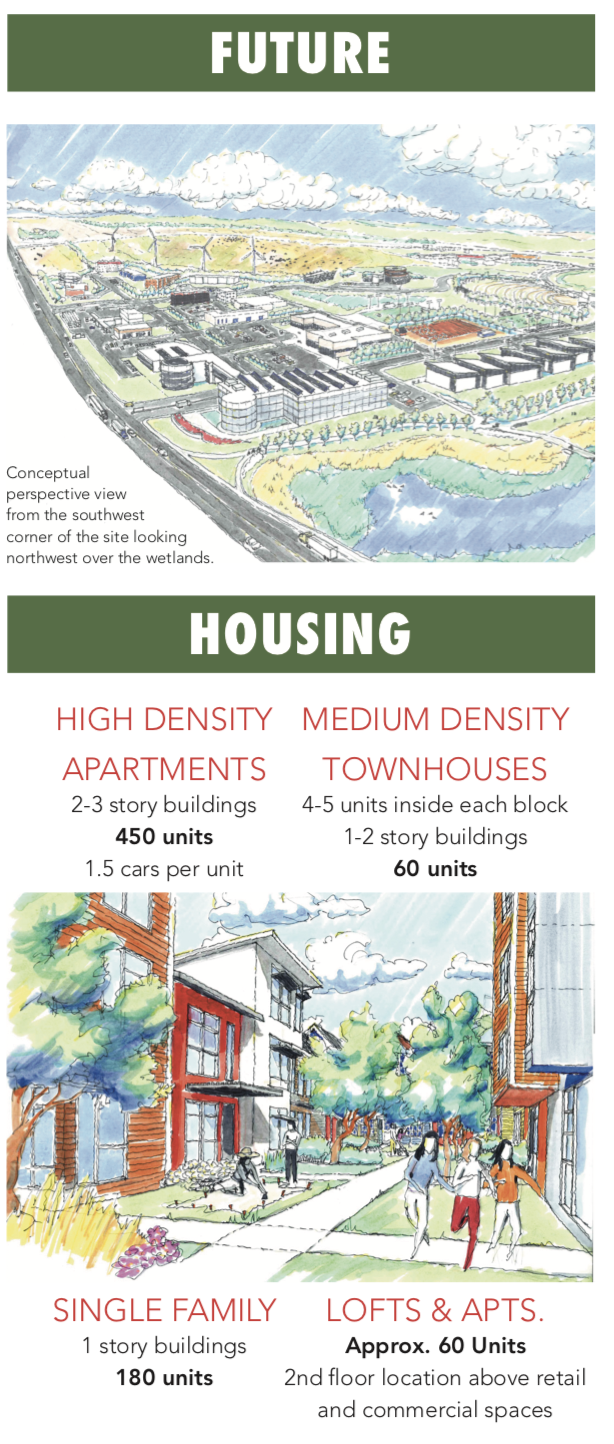
    Spearheaded by REDCO, the economic development arm of the Sicangu Lakota, the master plan includes single family, multifamily, and commercial development, along with community spaces, agricultural lands, and open spaces protected from development.

    According to Little Elk, the plan is firmly rooted in the key goals and values of the Sicangu Lakota community.

    “We went through an extensive community engagement process with tribal citizens to specifically ask — What do you want? What do you want to see? — and that’s how we developed the Keya Wakpala master plan,” explained Little Elk.

    Photos (top and above): Community members work in the community garden, a centerpiece of the Keya Wakpala Development

    Above: The symbol for the Keya Wakpala Waicageyapi Development

    Keya Wakpala Waicageyapi is a Lakota phrase that translates, in English, to Turtle Creek Green Development. Each aspect of the master plan centers the cultural, economic, and environmental sustainability and independence of the Sincagu Lakota people.

    “Its purpose is to be a safe place for Lakota people and their relatives to live, work, play, and grow,” Little Elk said. “In developing a modern community faithful to Lakota traditions, we have certain core principles that we stick to, including sustainability. Part of sustainability is being self-sufficient, so we want to maximize onsite food production and energy production. Sustainability also means that the homes, the buildings — everything we produce — has to be environmentally friendly, and we have to provide as many services locally as possible. From a business standpoint, it means we create a commercial center on the reservation for people to get food and other goods and services so that we can continue to grow our local economy and continue toward our goal of being self sufficient.”

    REDCO is now taking major strides forward in developing that commercial center, which will meet a local need for goods and services as well as support the economy of the Sicangu Lakota.

    This October, Red Dawn Foster, Keya Wakpala Coordinator and Business Coordinator at REDCO worked with Luis Pereira, Economic Development Manager at Minnesota Housing Partnership (MHP) to secure a $69,000 Native American Business Development Institute (NABDI) grant from the U.S. Department of the Interior – Indian Affairs to conduct an economic development feasibility study. REDCO is currently in the process of hiring a consultant to conduct the study.

    According to Pereira, the study is an important next step in making the project successful.

    “It’s going to be a great tool to focus the project and to determine what’s realistic in terms of economic development and what can be supported in the market,” Pereira said. “The goal is to start with businesses and uses in this development that will be able to cash flow on day one and be successful.”  
    Pereira said he’s impressed by the Keya Wakpala plan.

    “It’s a bold plan, and I’m a planner by background, so I love projects like this that stem from community input,” Pereira said. “Keya Wakpala represents a great opportunity for the community because it comes from the cultural values of the Rosebud Sioux Tribe, and it’s a living plan and a launching point for the community to meet pressing local needs.”

    Pereira coordinated with Foster to create a Request for Proposals (RFP) for consultants and to develop scoring criteria to determine which consultant fits best with the project.

    “Having the technical assistance from MHP was really great because they bring a lot of experience with these types of processes,” Foster said. “It was a lot of work, but it went really smoothly.”

    Foster was elated when she discovered REDCO had secured the award.

    “Knowing that we were successful was rewarding not just because we were recognized for the time we spent and the effort we put in,” Foster explained. “It means so much to the community to have something like this. Otherwise, we probably wouldn’t have been able to do this type of analysis on our own.”

    Foster said that she’s inspired by community members’ collaboration and determination to make life better for one another.  

    “You have youth working with elders and everyone in between working together, treating each other well, and wanting to make a better community and improve quality of life,” Foster said. “It’s really great to be a part of that.”

    Pictured right: Sketches from the Keya Wakpala master plan

  • Homes for All MN kicks off advocacy around 2018 legislative agenda

    The 2018 state legislative session — beginning February 20 — is fast approaching, and Minnesota Housing Partnership (MHP) and our Homes for All MN partners are gearing up to advocate for investments, programs, and policies that promote safe, stable, affordable homes for all Minnesotans. Read MHP’s 2018 agenda, which includes an innovative tax credit program to promote affordable housing development and an incentive for local communities to create local housing trust funds. 

    Next week, Homes for All MN will host three kickoff events across the state to energize advocates and jumpstart advocacy around the 2018 Homes for All legislative agenda. Minnesota Housing Partnership is proud to be part of Homes for All MN, a coalition of more than 170 endorsing organizations across the state representing nonprofits, service providers, affordable housing developers, faith groups, government agencies and more. Each year, Homes for All creates an agenda to mobilize advocates around key affordable housing goals at the State Capitol. Building upon the successes of previous legislative sessions — including securing $100 million in bonds for affordable housing in 2014 — Homes for All will advocate in 2018 for $140 million in bonds for housing and $10 million in appropriations. These investments will develop and preserve affordable housing, prepare workers for homeownership, enable local communities to address pressing housing needs, and more.

    Each Homes for All kickoff event will feature insight from individuals impacted by the lack of affordable housing in Minnesota, decision makers, and local leaders.

    Follow the links below to learn more and register.

    Rochester | Monday, February 5

    Rochester Registration

    Rochester Facebook 

    Twin Cities | Wednesday, February 7

    Twin Cities Registration

    Twin Cities Facebook  

    Hibbing | Thursday, February 8

    Hibbing Registration

    Hibbing Facebook

  • Tax-exempt bond committee concludes with significant agreements

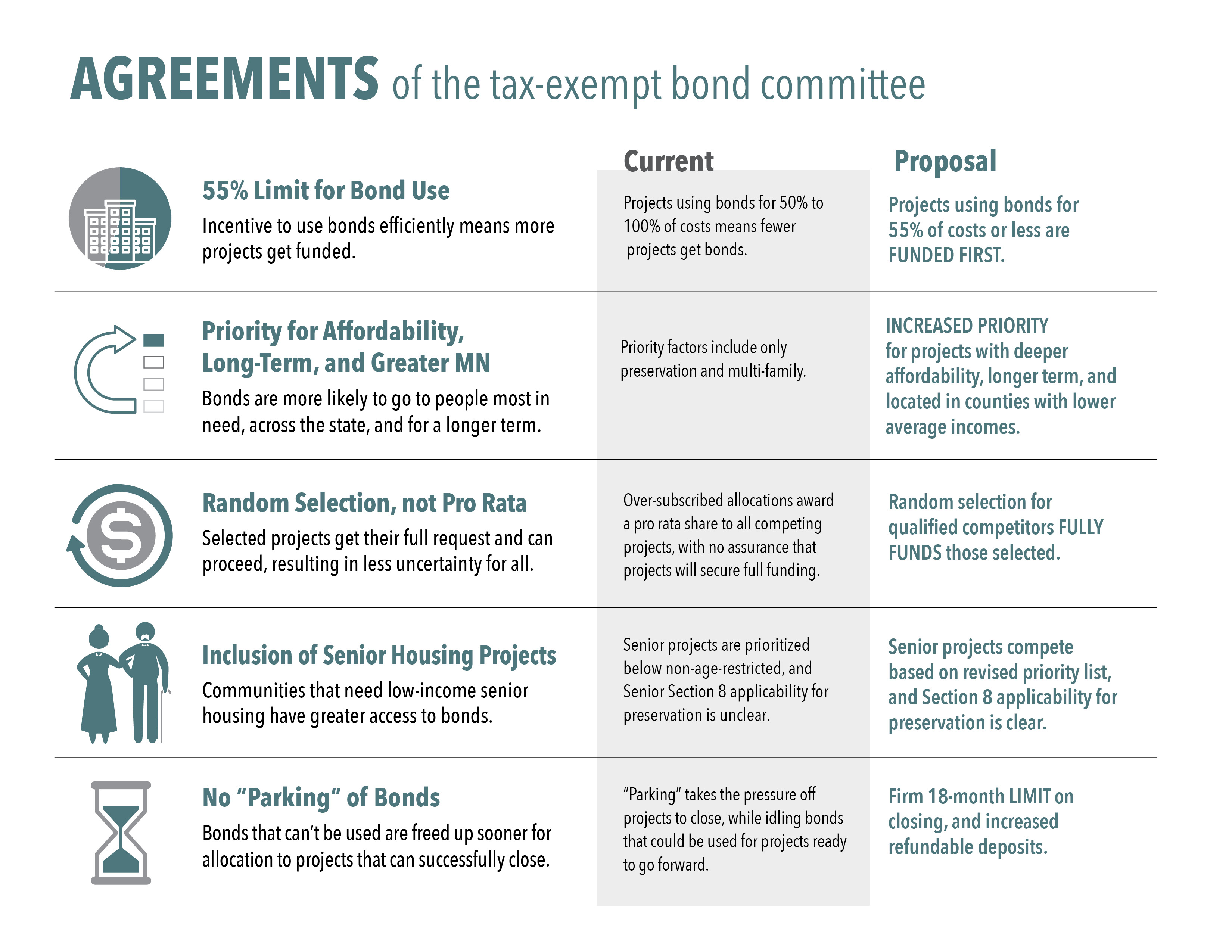
    {modal url=”https://mhp.sdho.dev/images/TEB-final.jpg”}{/modal}How should the state allocate its bonding resources for housing to have the biggest impact — and take full advantage of federal funds? Last year, a new proposal came forward (supported by MHP) that sought to amend Minnesota bond statute to develop more rental housing. After much discussion among organizations across the affordable housing sector, MHP, along with the Family Housing Fund and Greater Minnesota Housing Fund, convened a facilitated process to gather stakeholder input and work toward common ground on the allocation of tax-exempt bonds.

    Last month, that process concluded with a number of positive outcomes, most notably five significant agreements that will be advanced in the upcoming state legislative session. In addition, MHP will be continuing a conversation around an area that the stakeholder steering committee did not reach agreement: aligning those agreements with the state’s Qualified Allocation Plan moving forward.

    “With such significant need and so many Minnesota families paying more than they can afford for housing, we need ensure that the resources we have are used in a way that provides the most impact, especially for those with the lowest incomes,” said Anne Mavity, Executive Director of MHP. “This process not only paved the way for more effective use of tax-exempt bonds, but convened the type of robust conversation and diverse input we need to come up with solutions that truly move the needle.”

    PROCESS

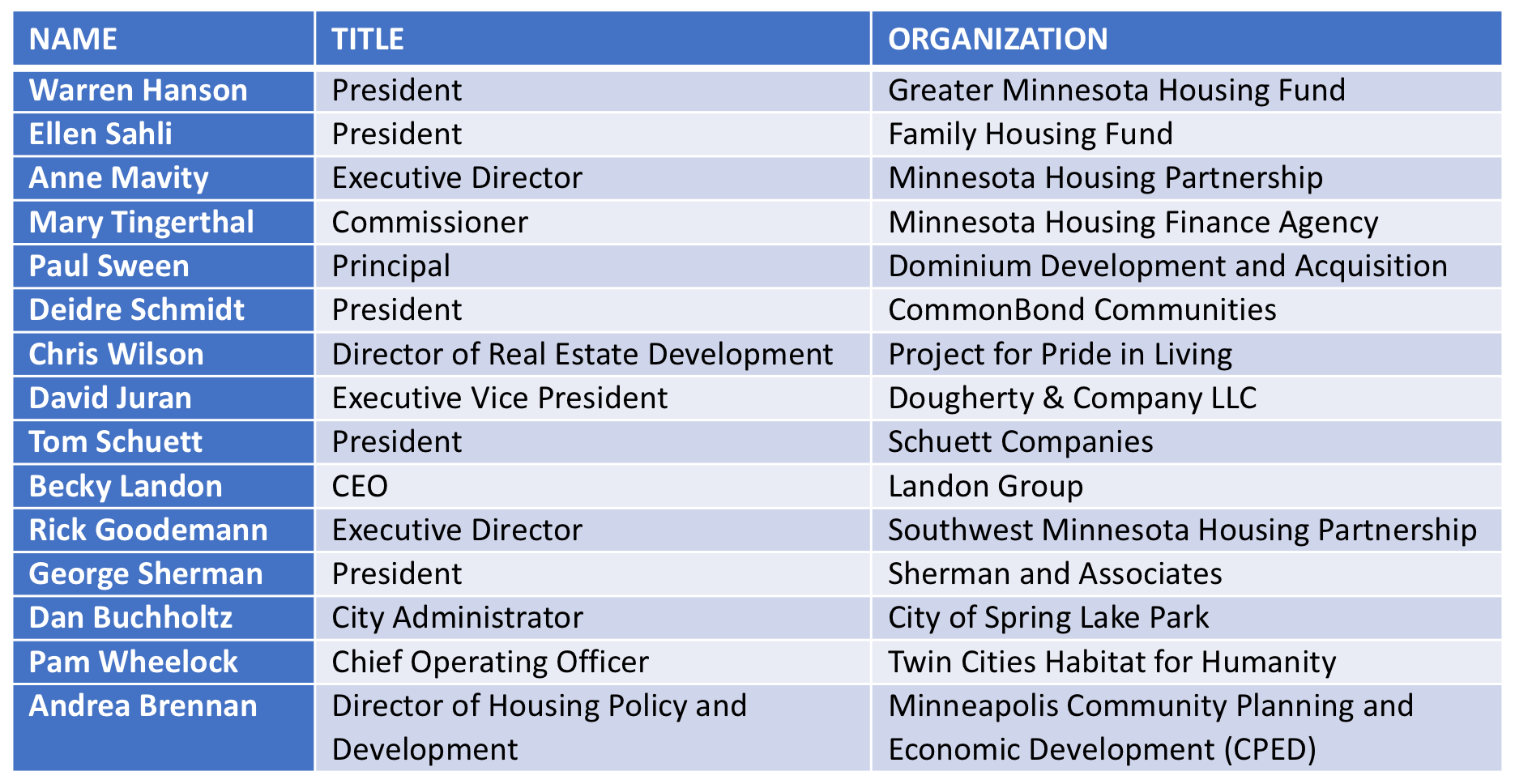
    Facilitated by WJS Consulting, a steering committee of 15 leaders representing government, non-profit and for-profit housing organizations held nine meetings over three months to discuss improvements to the tax-exempt bond process. Beyond that group, input was solicited from many stakeholders statewide through several meetings and an online survey. While this process didn’t resolve all the issues brought to the table, it did result in five important agreements supported by all committee members.

    {modal url=”https://mhp.sdho.dev/images/TEB-steering-committee-members.png”}{/modal}

    Moving forward, MHP will be working with the Family Housing Fund and Greater Minnesota Housing Fund to draft these agreements into legislation for the 2018 session. If you’re interested in participating in further conversations on the QAP for 4% credits and how they are allocated to projects that receive bond funding, please sign up here for notifications on upcoming stakeholder calls.

    FIVE AGREEMENTS

    The agreements focused on five key areas:

    • 55% limit for bond use
    • Priority for affordability, long-term, and Greater MN
    • Random selection, not pro rata
    • Inclusion of senior housing projects
    • No “parking” of bonds

    Click here to download the overview PDF.


    55% Limit for Bond Use: Incentive to use bonds efficiently means more projects get funded.

    Current: Projects using bonds for 50% to 100% of costs means fewer projects get bonds.

    Agreement: Projects using bonds for 55% of costs or less are FUNDED FIRST.

    Details:

    1. All projects in Housing Pool must issue at 55% or less of basis.
    2. All projects in the Unified Pool must issue at 55% or less of basis, up to Sept 1. From then over-55% projects would be allowed, but at a lower priority than projects at or below 55% of basis.


    Priority for Affordability, Long-Term, and Greater MN: Bonds are more likely to go to people most in need, across the state, and for a longer term.

    Current: Priority factors include only preservation and multi-family.

    Agreement: Increased priority for projects with deeper affordability, longer term, and located in counties with lower average incomes.

    Details:

    1. Any Preservation of Project-Based Section 8 (including Seniors as defined) at 30-year affordability
    2. Multi-Family Projects (including Seniors as defined) that utilize LIHTC on 100% of the units where:  
      1. 100% of the units are under 30%  AMI on average (e.g. a project  could have 50% of units at 40% AMI and 50% of units at 20% AMI), OR
      2. Projects located in a county or metropolitan area that has a household Area Median Income below the median income for the state as defined by HUD
      3. For projects covered by either a) or b) above, the term of affordability is at 30 years 
    3. Multi-Family Projects (including Seniors as defined) that utilize LIHTC on 100% of the units where:  
      1. 100% of the units are affordable at or below 50% AMI on average (e.g. a project could have 50% of units at 60% AMI and 50% of units at 40% AMI), and
      2. Term of affordability is at 30 years 
    4. All  Multi-Family (including Seniors as defined) that falls below criteria above that utilizes LIHTC on 100% of the units
    5. All other Multi-Family rental that is using LIHTC on at least 20% of the units
    6. All other remaining multifamily rental housing

    Note: Projects requesting bonds that exceed 55% of eligible basis will not be considered within this priority scheme until after the date of the Unified Pool, and then only within their own priority and behind projects that use 55% or less.


    Random Selection, not Pro Rata: Selected projects get their full request and can proceed, resulting in less uncertainty for all.

    Current: Over-subscribed allocations award a pro rata share to all competing projects, with no assurance that projects will secure full funding.

    Agreement: Random selection for qualified competitors fully funds those selected.

    Details:

    1. When there are funds remaining, but not enough for the last project selected, that project will then be the first project funded when and as bonds next become available within the same Priority in which the project originally competed (whether in the Unified Pool, or the next year’s Housing Pool.)
    2. The partial allocation amount that was available for the last project selected in any random selection will be reserved for that project within its Priority, whether in the current year’s Unified Pool, or as a carry forward in the next year’s Housing Pool.  
      1. Note: In the case that allocation is not available for a project within its Priority in the next round it will be reserved for that project in its Priority in future round(s). However, in no case will this allocation be reserved for more than 24 months from the original random selection.
    3. MHFA will be deemed the “carry forward issuer” for any carry forward into subsequent years. 
    4. Any carry forward from this provision will not be subject to MHFA’s “Debt Management Policy.” Instead, MHFA will have the fiduciary duty to treat that project as the original issuer intended, as related to bond issuance. 


    Inclusion of Senior Housing Projects: Communities that need low-income senior housing have greater access to bonds.

    Current: Senior projects are prioritized below non-age-restricted, and Senior Section 8 applicability for preservation is unclear.

    Agreement: Senior projects compete based on revised priority list, and Section 8 applicability for preservation is clear. 

    Details:

    1. Clarify statute to ensure that Section 8 “Preservation” priority applications clearly include age-restricted / senior projects.


    No “Parking” of Bonds: Bonds that can’t be used are freed up sooner for allocation to projects that can successfully close.

    Current: “Parking” takes the pressure off projects to close, while idling bonds that could be used for projects ready to go forward.

    Agreement: Firm 18-month limit on closing, and increased refundable deposits.

    Details

    1. The required deposit for the initial time period (180 days)  will be increased to 2% of the bond allocation.  A one year (365 day) extension will require an additional deposit of 1% of the bond allocation.
    2. 50% of any deposit(s) above will be refunded when the bonds are issued, and the other 50% will be refunded at completion, when the 8609 letter is filed.
    3. The Unified Pool creation date will be moved to July 1, so that any project would have at least 180 days to complete within the calendar year. 
    4. MHFA will be the single “carry forward issuer” for any carry forward at year’s end from potentially forfeited bonds.
    5. Any carry forward from this provision will not be subject to MHFA’s debt management program. Instead, MHFA will have the fiduciary duty to treat that project as the original issuer intended, as related to bond issuance.
    6. Mechanisms will be created to ensure that the oldest bonds are used first, in order to preserve maximum bonding capacity. 


    Click here to download the Powerpoint and view the video from the December 13 stakeholder presentation.

  • Native communities to utilize FHLB awards for rehab, homeownership

    In 2017, the MHP capacity team supported the submission of seven applications to the Federal Home Loan Bank of Des Moines (FHLB) Affordable Housing Program (AHP) — the highest number of applications ever supported by MHP — to assist community organizations and housing developers in securing critical funds to construct, rehabilitate, or acquire affordable housing. In 2017, FHLB Des Moines awarded more than $45 million in grants through AHP, facilitating the creation or preservation of more than 2,000 units of affordable housing.

    Barbara Dolan, Community Development Manager, said she was proud to be part of the process. “It was a very collaborative effort,” Dolan explained. “I felt my role was more of the facilitator, getting information from applicant, transferring it into Federal Home Loan Bank-speak. Kind of a translator.”

    Of the seven MHP-supported applications, the projects described below — which serve Native communities in Washington and North Dakota — received funding. “That’s 37 units of affordable housing that’s been preserved or rehabbed,” Dolan said. “And while 37 units may seem to be a drop in the bucket, for these entities, it’s huge.”

    Spokane Indian Housing Authority Owner-Occupied Rehab

    Navigating the switchbacks on Little Falls Road, the main thoroughfare into the Spokane Indian Reservation in Washington, it’s easy to be overwhelmed by beauty. Drivers behold mountains, forest, and the occasional herd of elk, 50 strong. Located near the confluence of the Spokane and Columbia Rivers, the Spokane Indian Reservation is home to several wolf packs, deer, bear, seahawks, and eagles.

    According to Tim Horan, Executive Director of the Spokane Indian Housing Authority (SIHA), abundant wildlife and impressive vistas are emblematic of just one aspect of what makes the Spokane Reservation community special. Tribal members are resilient, progressive, and forward-looking, Horan said, and the SIHA is constantly searching for ways to strengthen the community.

    This fall, Horan and his colleague, Clyde Abrahamson, Development Manager at SIHA, seized an opportunity to make critical home repairs left unaddressed for two decades due to tight resources. Working with Minnesota Housing Partnership (MHP) staff, SIHA applied for Federal Home Loan Bank (FHLB) Affordable Housing Program (AHP) funds to rehab 12 owner-occupied homes located within the reservation. In late December, SIHA received news that they’d been awarded $480,000.

    “In a community that has a significant number of elders and a high percentage of people in poverty, who are low-income, or unemployed, being able to do this kind of work is really critical,” Horan explained. “So we’re pleased that we found a way to address it, and I hope that we can do more.”

    The funds will impact at least three homeowners earning 60% of the area median income or less, and up to nine households at or below 80% median income, with priority given to households with special needs. Rehab efforts will primarily target health and safety improvements, including radon mitigation and weatherization.

    According to Abrahamson, SIHA’s rehab efforts will have ripple effects that extend beyond the 12 households that participate in the program.

    “[Construction work, including rehab] is a significant driver of employment on the reservation,” Abrahamson said. “This is work that will be done by our own construction crew comprised of tribal members that live on the reservation.”

    Going forward, Abrahamson and Horan hope to continue to leverage FHLB AHP funding, along with other funding streams, to strengthen housing infrastructure on the Spokane Indian Reservation.

    MHP Community Development Manager, Sarah Bellefuil, and Economic Development Manager, Luis Pereira, guided SIHA through the FHLB application process.

    “MHP did not play a small part,” Horan said. “What Sarah and Luis did for us was really great, and they helped us get through the entire application process. […] An AHP [application] is not a walk in the park.”

    “There was one evening I remember, Sarah and I worked late,” Abrahamson added. “It was actually close to 11 o’clock at night her time before we got all finished up with the grant applications. She was willing to put in the hours even at that time.”

    When Abrahamson and Horan found out they’d received $480,000 in FHLB funding, they were elated.

    “Clyde and I climbed up on the rooftop and we were both dancing around,” Horan joked. “It’s metaphorical, but that’s what was happening in our hearts.”

    Banner Bank, an FHLB member, sponsored SIHA’s application.

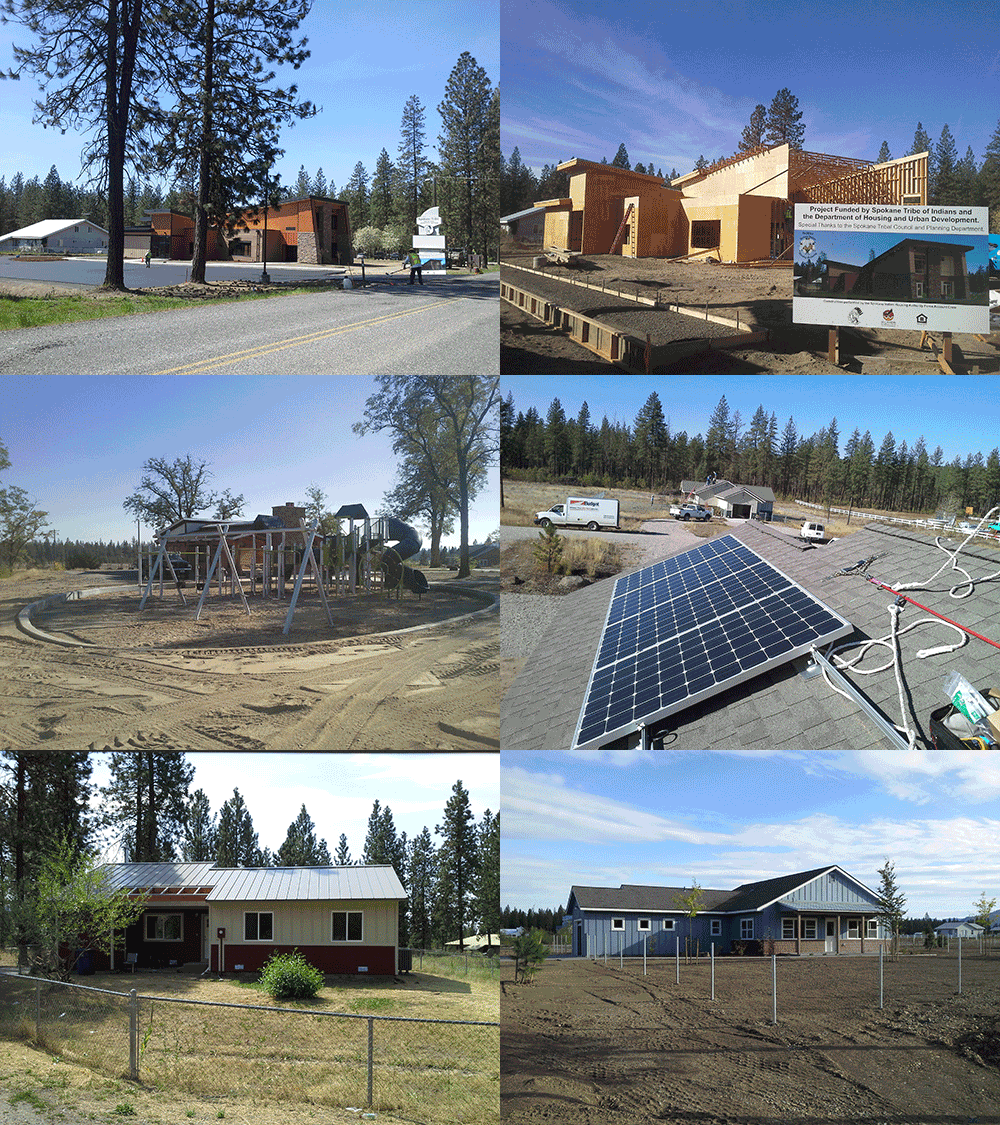
    Photos above depict accomplishments of the Spokane Indian Reservation including the Tschimakian Pavilion and playground, a solar installation training, and rehabilitation and construction projects. 

    Homeownership at Eagle Nest

    In the late nineties, the Lakota Funds, a Native CDFI chartered by the Oglala Lakota Nation, blazed new ground by constructing the first Native American, tax credit financed development serving low-income households in the United States. Thirty homes comprise Eagle Nest Housing, located on the Pine Ridge Reservation near Wanblee, South Dakota. Though the development was ultimately intended for homeownership, for nearly two decades, the units have been available for rental only.

    But that’s about to change.

    This December, Lakota Funds was awarded $375,000 through Federal Home Loan Bank’s (FHLB) Affordable Housing Program (AHP) to provide down payment and rehabilitation assistance for 25 of the 30 Eagle Nest homes.

    Barbara Dolan, Community Development Manager at MHP, guided Lakota Funds through the application process, and said this homeownership option will provide new avenues of opportunity for tribal members.

    “Owning a home is a means of asset building,” Dolan explained. “It’s more than just the asset of the home itself. You can leverage it for education, for starting a business, and more. Communities that don’t have access to homeownership often struggle to get ahead.”

    She said that Lakota Funds will ensure that current renters have the first opportunity to own.

    “Lakota Funds’ goal is to meet current renters where they are, and offer them an opportunity to own the home at about what they’re paying for rental,” Dolan explained.

    According to a 2014 report by the Kirwan Institute, an additional 875 three-bedroom homes are needed to house families and workers on the Pine Ridge community.

    The homes available are often unsafe and in need of major repairs. According to the same 2014 report, the median home value on the reservation is $25,900 — barely one-fifth of the U.S. average of $119,000, and mold has been found in 75% of tribal housing units. 
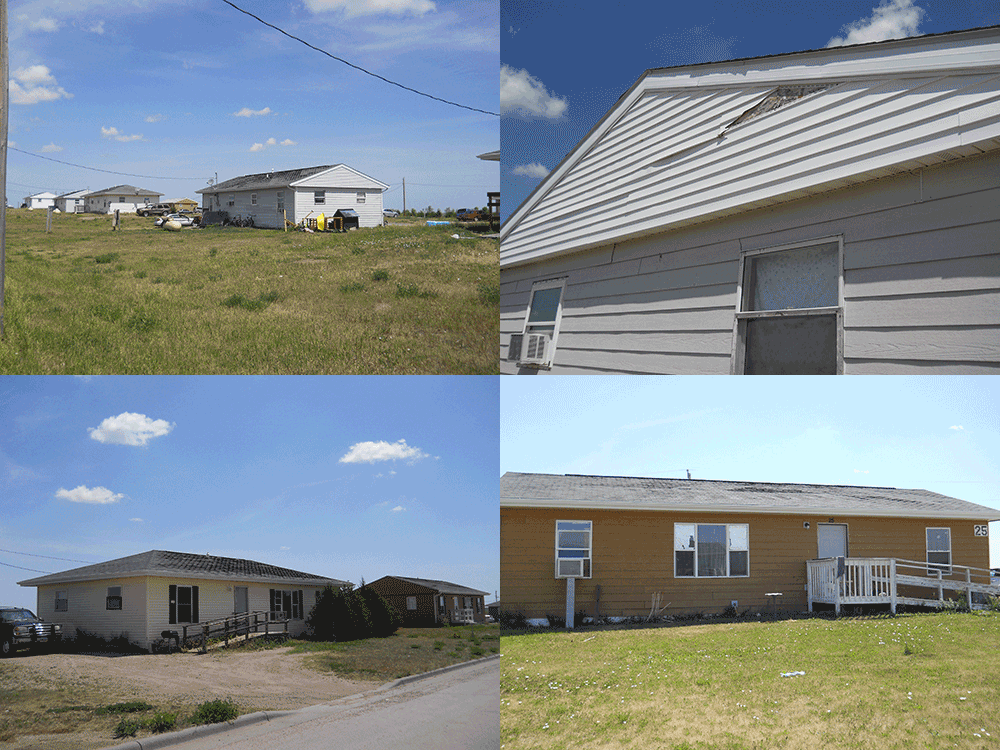
     

    Homes in the Pine Ridge community in need of rehabilitation.

    There’s also a major mismatch between the place of residence and the place of employment — due, in part, to the lack of suitable housing. According to the same report, 51% of those who work on the reservation live somewhere else.

    Dolan says that Lakota Funds’ project takes innovative steps to directly address these challenges.

    “Through this project, housing is preserved and provided,” Dolan said. “One individual that’s already purchasing one of the Eagle Nest homes works in the local school district. It’s huge if you can have people housed in your community that actually serve your community — like teachers or emergency medical workers or healthcare providers.”

    Lakota Funds will work with Mazaska Owecaso Otipi Financial to provide homebuyer education and financial literacy to support and empower homeowners.

    First National Bank, an FHLB member, sponsored Lakota Funds’ application.
  • Former MHP Executive Director Chip Halbach commemorated in Congressional Record

    On Thursday, November 16, Congressman Keith Ellison (D-MN) publicly acknowledged former Minnesota Housing Partnership (MHP) Executive Director Chip Halbach’s retirement, highlighting Chip’s leadership and his lasting contributions to affordable housing in Minnesota and across the nation. Ellison’s remarks have now been published in the Congressional Record, with an excerpt below. Read Ellison’s full remarks here.
    “Mr. Speaker, I rise today to commemorate Chip Halbach’s retirement in September of 2017 after 30 years of service with the Minnesota Housing Partnership. Chip has long been an advocate for affordable housing for Minnesota residents. In 1987, Chip founded Minneapolis Housing Partnership (MHP). MHP convenes, guides, and supports a diversity of partners working to improve conditions of home and community. […]

    Chip is widely known for his encyclopedic knowledge of federal and state housing programs, sophisticated housing finance tools and their history. Policymakers and elected officials have often drawn on Chip’s wealth of knowledge and expertise in the affordable housing field. Many have cheekily quipped, “before `Google’ there was Chip Halbach.”

    Chip Halbach’s leadership has helped shape legislation, provided education, and secured money to create safe, decent, affordable places for families and individuals to live. His steady leadership leaves the Minnesota Housing Partnership poised to move forward in tackling our affordable housing crisis. I want to thank Mr. Halbach for all his years of service. His presence will be missed, but his contributions will not be forgotten.

    Read Ellison’s full remarks.


  • Why I’m Co-Chairing Mayor Frey’s Affordable Housing Task Force

    {modal url=”https://mhp.sdho.dev/images/CB-Households-updated-01.png”}{/modal}In politics and public opinion, affordable housing is at a tipping point. For years, MHP has been at the forefront of advancing smart policies and innovative ideas to create housing stability for all Minnesotans and, right now, significant and lasting advances are within reach.

    Like many other municipalities across the Twin Cities, affordable housing was a top issue in the Minneapolis city elections. Perhaps most notably, Mayor-elect Jacob Frey brought front-and-center the need for a new, dedicated, permanent revenue source to meet the city’s growing housing needs — especially our lowest-income families.

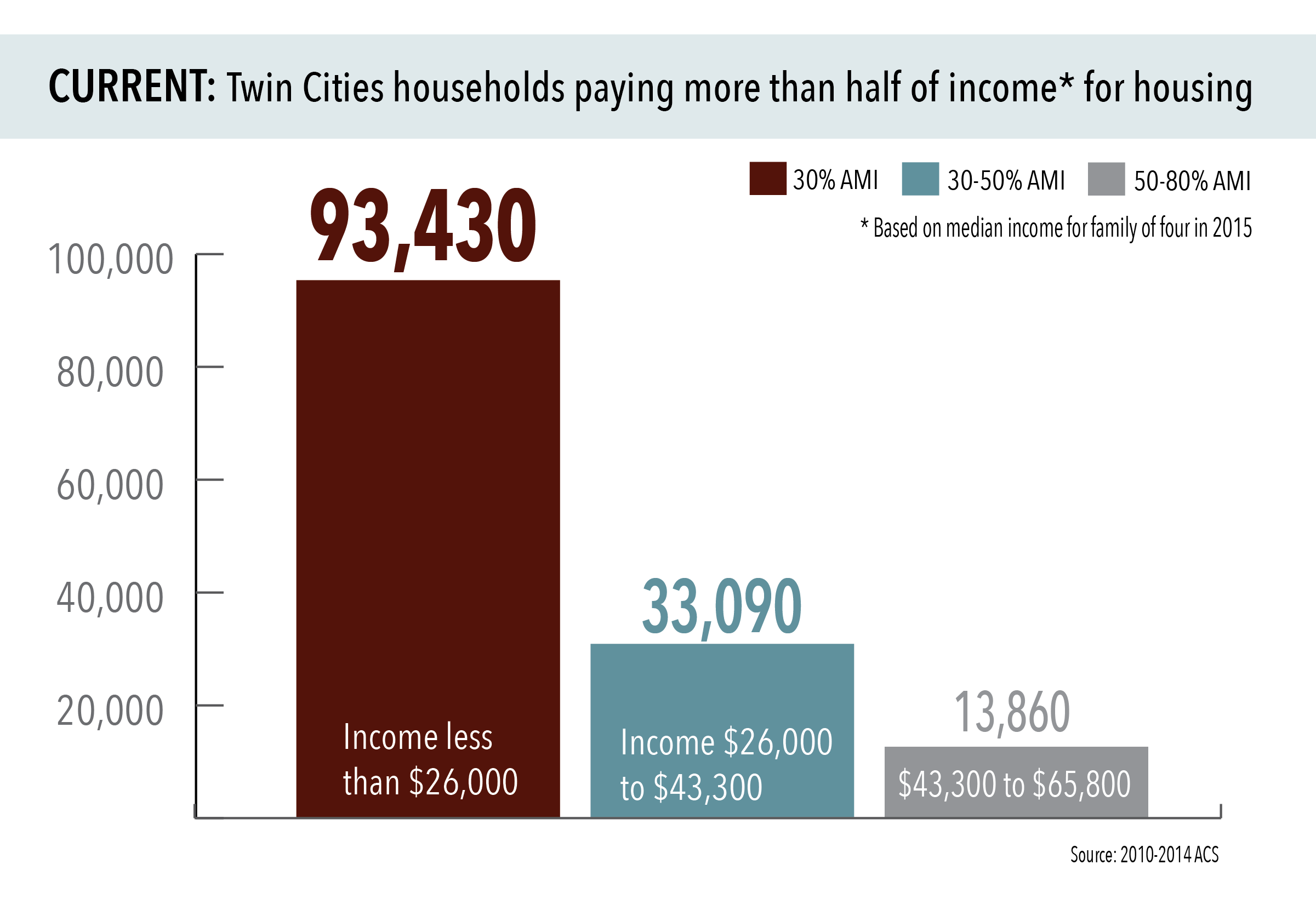
    For several years, MHP has been working in collaboration with researchers, policymakers and community leaders to seed the discussion about a Home Grown revenue source that could help meet the housing needs of our lowest-income families. Right now, more than 93,000 low-income families in the Twin Cities region pay more than half of their income on rent (image right) — and the population of cost-burdened families continues to grow as rents rise and affordable housing options become more and more scarce.

    With Minneapolis as a key regional leader, we’re committed to seizing this important moment to help shape a bold, equitable and truly transformative housing agenda for the incoming administration. That’s why I’m delighted to serve as co-chair of Mayor-elect Frey’s Housing Advisory Task Force along with Hennepin County Commissioner Peter McLaughlin and Tom Streitz, President of Twin Cities R!se. We share a belief that creating and retaining a sufficient affordable housing throughout the region is essential to meeting the regional economic needs of employers and supporting workers and their families, allowing for socio-economically diverse and vibrant neighborhoods, and achieving racial equity.

    Together, over the next several months, our task force will engage a broad coalition of stakeholders and regional partners to create a set of policy recommendations based on current City Policy and initiatives to guide the Mayor Elect in promoting and implementing strategies to increase the city’s supply in all neighborhoods and regional distribution of affordable housing. 

    Clearly, we can’t do this alone. We need strong engagement and input from local organizations and directly impacted communities to lift up solutions that will have a real impact on the lives of households that contribute so much to our community despite deep housing challenges. So, in coming weeks, we’ll be convening several Community Roundtables addressing housing stability, housing creation and housing as a driver of economic vitality. Stay tuned to the MHP blog and social media to engage in these critical discussions, so your voice can be heard.

    Inspired and informed by the passion of community members and policy makers, I’m hopeful 2018 will be the catalyst for a Home Grown initiative that creates long-term resources to tips the scales toward ending housing instability in Minneapolis — and across the region.

    Tune in tomorrow — Wednesday, January 3 — at 2 p.m. for a Facebook Live discussion with the Mayor Elect and the task force co-chairs. 

  • MN Housing board update: Homework Starts With Home pilot

    At first, the teacher thought it was just a creative excuse when her sixth-grade student said she couldn’t do her homework because her hands were too cold at night. But when the Elk River educator found out the student’s sister was also missing assignments for the same reason, she called Stephanie Klinzing.
    Now a board member of the Minnesota Housing Finance Agency, Klinzing, a former Mayor and County Commissioner, connected with community organizations to find the family to offer help.

    It didn’t take Klinzing long to locate the students; their family was living in an old hotel that lacked basic amenities, like heat. With the assistance from a local nonprofit, the family was moved into emergency housing and it wasn’t long until Klinzing got another call from the teacher telling her the student’s “turnaround was immediate.” No longer living in an unsafe situation, the student completed her homework and began to excel in school.

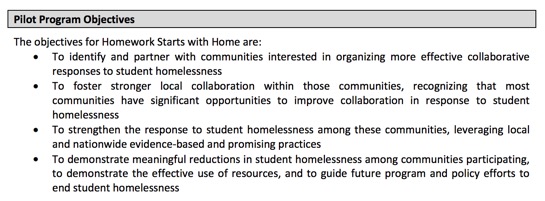
    Klinzing shared the story at the December board meeting of the Minnesota Housing Finance Agency, which, among other items, included discussion and approval of the Homework Starts With Home (program photo right) pilot program to assist the families of homeless or highly mobile students.

    Commissioner’s update

    In her opening remarks, Commissioner Mary Tingerthal shared her relief that, after a showing a strong public support, the federal tax reform bill retained private activity bonds, making moot a resolution at a special board meeting on December 14 to allow staff to move forward with convertible option bonds. Still, she noted, PABs could come under threat again in a federal infrastructure bill next year.

    Tingerthal also announced the formation of a Governor’s Task Force on Affordable Housing, to which Terri Thao will be the Minnesota Housing representative. With three working groups — housing stability, rental and homeownership — the task force will have five open task force meetings and six regional forums in preparation of a report to be submitted by the end of July with specific legislative recommendations.

    Watch a video of the press conference on MHP’s Facebook feed

    Finally, Tingerthal shared that the Governor reappointed Damaris Hollingsworth to another term on the MHFA board, so there will be no anticipated vacancies in 2018.

    Homework Starts With Home

    Last year, public and charter schools across Minnesota identified more than 9,500 students at 1,200 schools statewide who were experiencing homelessness on October 1, 2016, a troubling number that has increased an average of 15 percent per year. To address homeless and highly mobile students, Minnesota Housing, in partnership with the Office to Prevent and End Homelessness, the Minnesota Department of Education (MDE), the Minnesota Department of Human Services (DHS) and the Heading Home Minnesota Funders Collaborative (Funders Collaborative), is launching the Homework Starts With Home pilot program.

    Joel Salzer, MHFA’s Director of Housing Stability, explained to the board that the new pilot program builds on lessons learned during the homeless and highly mobile student pilot funded in 2013 and 2015. While that work showcased the efficacy of providing stable housing and its impact on student attendance and performance, it also revealed that the level of support can be better tailored to make resources go further. With a “progressive engagement” approach, Salzer explained, households entering the new Homework Starts With Home pilot will go through a complete assessment and receive time-limited housing subsidies rather than securing a two- to five-year commitment. Families will be eligible for additional assistance, as needed, but a more targeted approach will allow more families to be served.

    Salzer shared that the agency is now moving forward with partners to issue a Request for Letters of Interest (LOI) to fund local partners interested in developing their capacity to end student homelessness. Eligible respondents would be invited to participate in program design activities that would promote enhanced local responses to student homelessness in their community. Then, Minnesota Housing will issue a Request for Proposals (RFP) for which LOI respondents that meet the threshold criteria would be eligible to apply. Through the RFP, respondents would request specific funding from the nearly $2.5 million in funding from the Housing Trust Fund, Family Homeless Prevention and Assistance Program and philanthropic resources.

    Board members expressed their enthusiasm for the pilot, including Stephanie Klinzing who emphasized that such programs are highlighting the connection between housing and school performance and creating systems that make it easier for educators — who don’t “do housing” — to more quickly address these critical issues for their students. The board approved the motion and resolution to move forward with the pilot program.

    Tingerthal also shared with the board that Minnesota Housing has received the $2 million grant from Margaret A. Cargill Philanthropies for the Building Systems to Prevent and End Youth Homelessness project concept discussed at the November board meeting. (More below.)

    Selection of firms to serve on the Investment Banking/Underwriting Team

    Every four years the Agency selects a group of firms to serve as its investment banking / underwriting team. Of the firms selected for the team, traditionally the Agency also has designated a single firm to serve as the senior manager for its financings. Because these selections are appointments, the Agency has the right at any time during the duration of the appointments to make any changes it desires in the composition of the investment banking team. As a result of a robust RFP and interview process, the members of the interview panel recommended that the board select RBC as senior manager of the investment banking / underwriting team, and appoint JP Morgan, Piper Jaffray and Wells Fargo as co-managers on the team.

    Members of the board, including Craig Klausing and Ramona Advani who served on the interview team representing the board, praised the agency for a thorough and effective process and the motion was approved.

    Financial reporting

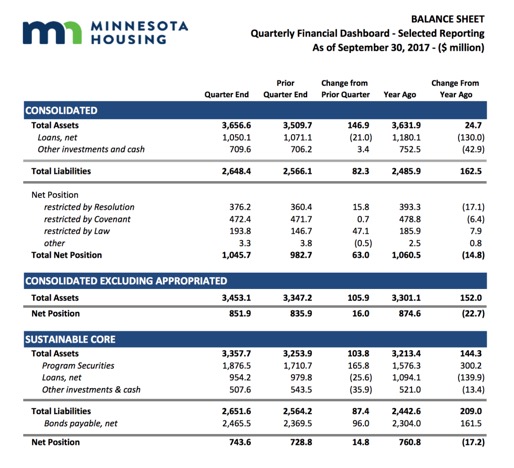
    MHFA staff Kevin Carpenter walked the board through a new financial reporting package and dashboard aimed at providing a level of transparency and enhancing the Board’s understanding and knowledge of the Agency’s financial picture. He noted that the format will be evolutionary and refined over time. The package can be found on pages 56-61 of the board packet, with noteworthy items outlined on page 62.

    November meeting highlights

    At the November board meeting, several significant items were discussed.

    Building Systems to Prevent and End Youth Homelessness Project Concept:

    Joel Salzer shared with the board the Margaret A. Cargill Philanthropies (MACP) Building Systems to Prevent and End Youth Homelessness Project Concept, which, if awarded, would provide $2 million over a three-year grant period to help to end youth homelessness in northwest Minnesota and to develop a school-based host home pilot for unaccompanied homeless youth in up to three rural communities. Commissioner Tingerthal shared with the board that this is the first time we have been in a situation that the Agency itself may be a recipient of a major financial grant from a philanthropic organization. (As noted above, Tingerthal shared at the December board meeting that MHFA received the $2 million grant.)

    HUD RFP for Performance Based Contract Administration of Section 8 Project Based Rental Contracts:

    MHFA staff Tom O’Hern and Anne Smetak shared with the board that it is anticipated that HUD will release a new RFP to select a Performance Based Contract Administrator (PBCA) for project-based Section 8 properties in the state of Minnesota and nationwide. The Agency is currently the PBCA for the state of Minnesota, has a corresponding Annual Contributions Contract with HUD (the “PBCA contract”), and expects to respond to the RFP when it is issued. While specifics will not be available until the RFP is actually issued, HUD has indicated that, unlike in the past, it may require regional responses to the RFP. If HUD requires regional responses, respondents would need to submit proposals to cover the PBCA work for multiple states, rather than just one state. The Agency has been working with other state housing finance agencies in HUD’s Midwest Region (comprised of Minnesota, Wisconsin, Indiana, Illinois, Ohio and Michigan) to determine how best to respond to the RFP if a regional response is required.

    2017 Affordable Housing Plan:

    John Patterson reported that home mortgage lending was near record levels in 2017, with an increase in budget from $600 million to $650 million. He noted that this level of production is particularly impressive given the diminishing supply of homes for sale that are affordable to our borrowers. Since 2014, the supply of homes in the Twin Cities metropolitan area selling for less than $250,000 declined by 54 percent, while the agency’s lending across the State increased by 56 percent.

    Download materials from Minnesota Housing board meetings here. 

  • Federal tax reform update: How will affordable housing fare?

    Now that the Tax Cuts and Jobs Act is headed to President Trump’s desk, here’s an update on how tax reform will impact affordable housing development.

    First, thanks to the persistent advocacy of leaders in the affordable housing sector — including MHP Investors Council members — the final bill preserves Multifamily Housing Bonds (Housing Bonds), a key resource for affordable housing development nationwide. Each year, these bonds help develop 3,400 affordable rental homes in Minnesota.

    The final bill also retains, with no changes, the Low-Income Housing Tax Credit (LIHTC), and, with the modifications outlined in the Senate bill, the Historic Tax Credit (HTC).

    However, despite these significant victories, the Tax Cuts and Jobs Act will still negatively impact affordable housing development. According to analysis by Novogradac & Company, over the next 10 years, tax reform will reduce the supply of affordable rental homes by nearly 235,000 and lead to the loss of more than 262,000 jobs. Why? The bill lowers the corporate tax rate from 35 percent to 21 percent, which will likely reduce the value of LIHTC and lead to a loss of $1.7 billion or more in equity annually, according to Novogradac. The bill also modifies the way inflation is calculated for LIHTC and private activity bond allocations, a change that will negatively impact the number of units LIHTC can produce.

    Organizations like the Affordable Housing Rental ACTION Campaign and the National Low Income Housing Coalition (NLIHC) have pledged to continue to advocate against the negative aspects of tax reform. Read an update from the ACTION campaign and NLIHC’s statement on the impact of tax reform.

    Also, join Novogradac & Co’s webinar on December 21 to learn more about how the Tax Cuts and Jobs Act will impact the tax credit community. And, read Novogradac’s more detailed analysis of the bill.

    Our sincere thanks to all those who made their voices heard on tax reform. Your engagement helped to preserve critical affordable housing development tools, and therefore, the potential to provide affordable rental homes to thousands of Americans.

    Stay tuned for more in the coming weeks as MHP continues to unpack the impact of the tax reform bill by subscribing to MHP’s blog and by following us on Twitter. 

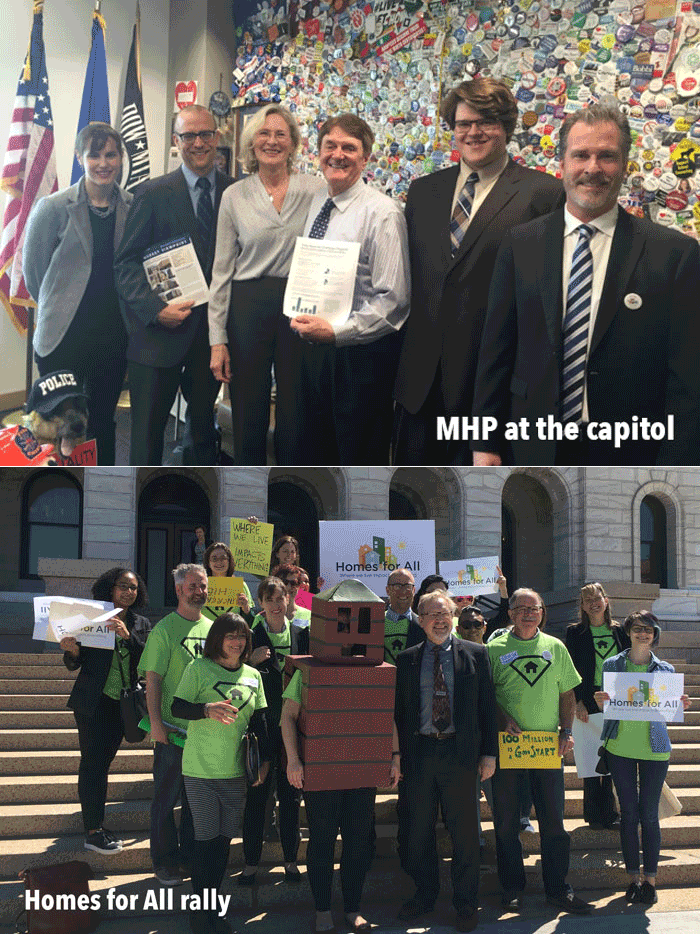
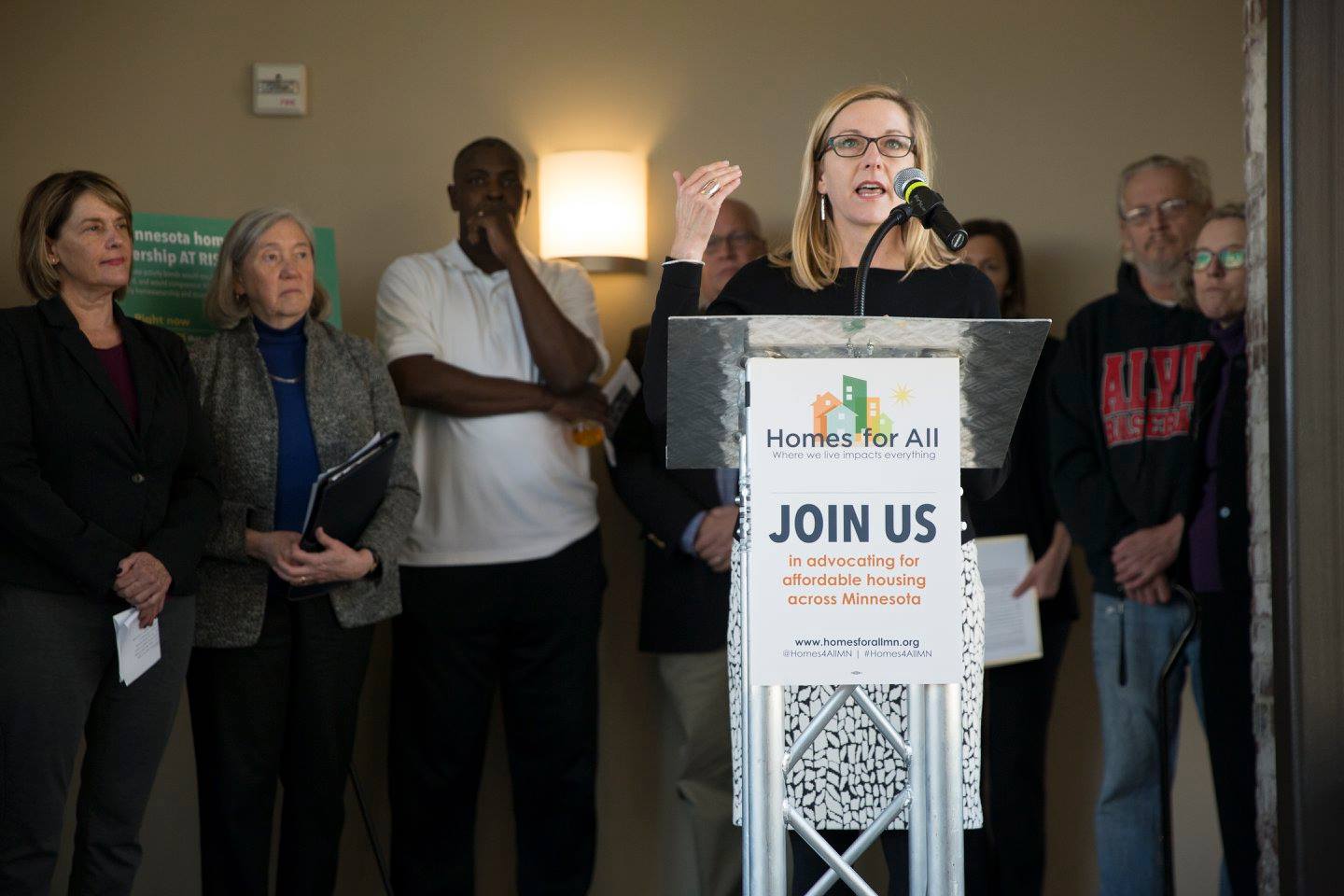
    Photo: Deidre Schmidt, CEO of CommonBond Communities and Gold-level MHP Investors Council member, advocates at a Homes for All press conference in November.