• Minnesota Housing Partnership Receives $2 Million Federal Grant to Assist Rural and Native Communities

    One of just four organizations nationwide to receive funding, Minnesota Housing Partnership has received a $2 million federal grant to help rural and Native leaders solve housing and economic development issues in their communities.

    The award from the U.S. Department of Housing and Urban Development will fund MHP’s Strengthening Rural Communities (SRC) program, which gives leaders the tools and knowledge they need to identify and address regional development needs through strategic collaboration. While this represents the sixth consecutive year MHP has received this funding, it is the largest award yet, more than doubling the grant award from 2016.

    Photo: MHP will provide technical assistance to Thunder Valley CDC, which serves the Oglala Lakota in South Dakota. 

    “HUD is committed to delivering housing solutions to underserved rural populations throughout the country, from producing more affordable housing to boosting job growth,” said HUD Secretary Ben Carson. “This funding will help these communities obtain sustainable housing and resources for their residents.”

    “The Strengthening Rural Communities program is all about equipping local organizations to implement projects or access new resources,” said Anne Mavity, MHP’s Executive Director. “Our Community Development Team has worked with communities across the nation — in all 10 HUD regions — to provide communities with the needed tools to address challenges and open doors to new opportunities long after their engagement with MHP.”

    In rural and Native communities nationwide, there’s a significant gap between the supply of affordable housing and the number of people who need it, and a pressing need to address economic and community development challenges. Providing resources and guidance to local  and Tribal governments, and other rural housing development organizations has proven an effective model of helping local communities address these needs.

    The award will enable MHP to work with as many as 25 organizations in rural and tribal areas nationwide to improve access to or expand funding resources, build capacity to develop or preserve housing, and increase economic opportunities. For instance, MHP will assist South Dakota-based Thunder Valley Community Development Corporation with the development of 14 units of single-family housing — as part of the innovative Regenerative Community project serving the Oglala Lakota people.

    MHP will also provide technical assistance training through its groundbreaking Housing Institute and Native Community Development Institute models, which fosters collaboration among teams of regional leaders to address pressing community development issues. Teams participate in peer-to-peer learning retreats and receive customized assistance from an MHP Community Development staffer to accomplish a team-identified project.

    “Through the Institute model, we bring together people who have never met to work collaboratively to address housing or community development issues in their region,” said Barbara Dolan, MHP’s interim Community Development Director. “It’s highly rewarding work for all involved. With this HUD funding, we’ll be able to do so much more to support rural and Native communities nationwide.”

    MHP is accepting applications for technical assistance through the Strengthening Rural Communities Program.

    Stay tuned for a video explaining the assistance MHP provides through Strengthening Rural Communities! 

  • Minneapolis Task Force recommends $50 million in dedicated annual funds for affordable housing

    In January, MHP was proud to announce that Executive Director Anne Mavity would co-chair the Affordable Housing Task Force for then incoming Minneapolis Mayor Jacob Frey, with the goal of engaging a broad coalition of stakeholders and regional partners to create a set of policy recommendations to increase the city and regional supply of affordable housing. Yesterday, the Task Force released its recommendations, including a proposal for a historic increase in funding for affordable housing.  

    As the co-chairs noted in their letter to the Mayor: “The City of Minneapolis, and Twin Cities Region as a whole, is at a unique and critical moment to address affordable housing challenges. Without significant leadership from the City, Minneapolis will become as unaffordable as major coastal cities… Across [community] meetings and roundtables, stakeholders reinforced the belief that every Minneapolis neighborhood needs affordable housing. For the City to be healthy and resilient, each neighborhood must have a continuum of housing opportunities. Through housing, Minneapolis’ continued growth will strengthen all neighborhoods.”

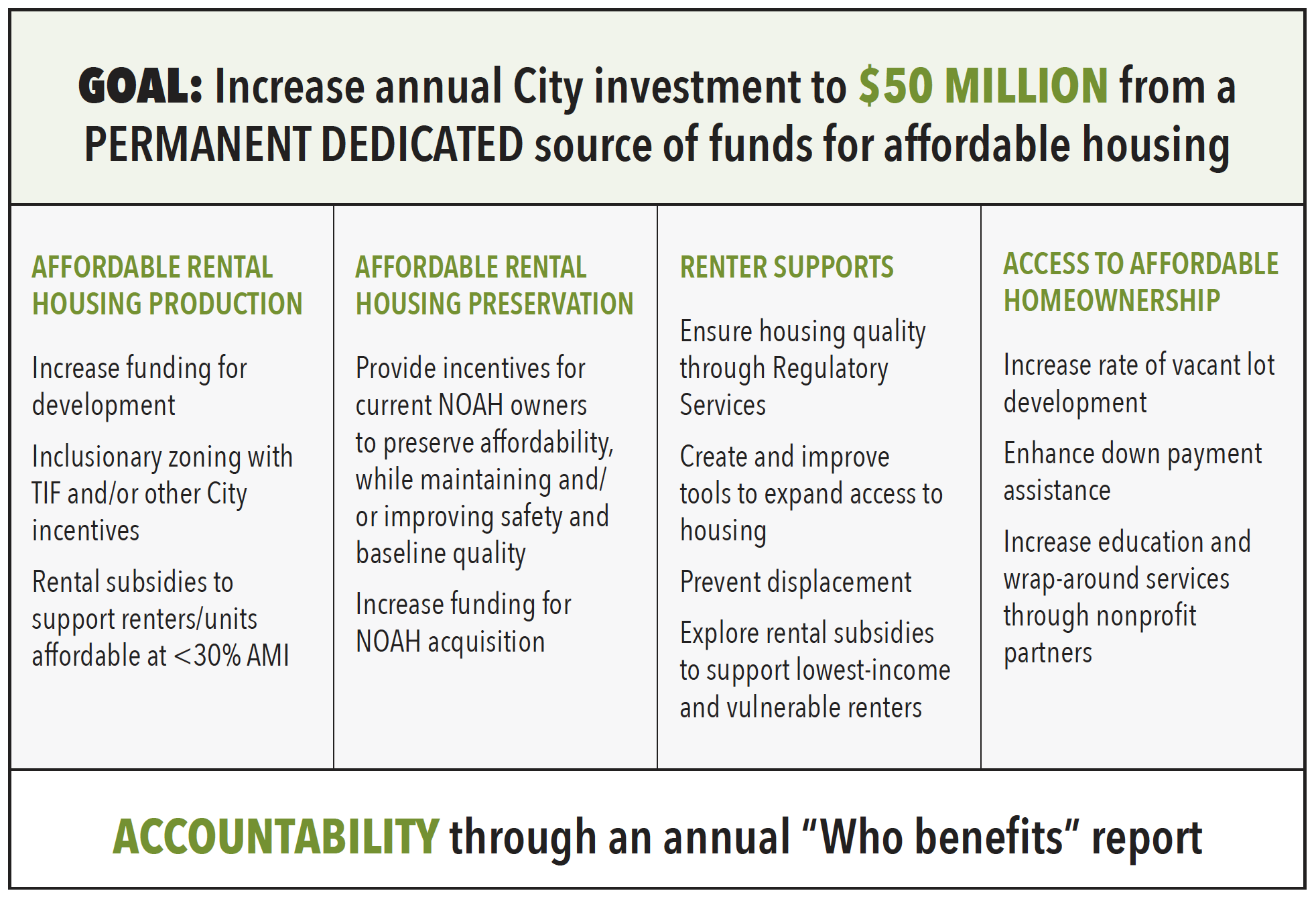
    To make that happen, the recommendations included a bold funding goal, and four areas of focus. 

    Most notably, the Mayor embraced the call for $50 million in annual funding for affordable housing from a permanent, dedicated source — a nearly $40 million increase over current funding levels. As outlined in the task force report, the Twin Cities needs $1.1 billion for housing each year to address current regional needs and meet the demands of projected growth, requiring creative financing mechanisms and leveraging private and federal investments. “Now is the time to take significant and sustainable steps to alleviate the growing housing crisis that threatens the vitality of our region,” said Anne Mavity. “A permanent and dedicated source of revenue to meet this critical challenge must be part of the solution.” 

    The Task Force also emphasized that “housing is an opportunity to meaningfully support low-wealth communities and communities of color, repairing past harm. As the City targets resources explicitly, though not exclusively, to benefit low wealth communities and communities of color, we encourage an annual report out on who is benefiting from City investment in housing.” Beyond funding, the Task Force prioritized specific recommendations in four areas: Affordable Rental Housing Production, Affordable Rental Housing Preservation, Renter Protections and Access to Affordable Homeownership. Read the full report from the task force, including notes from stakeholder meetings, here.

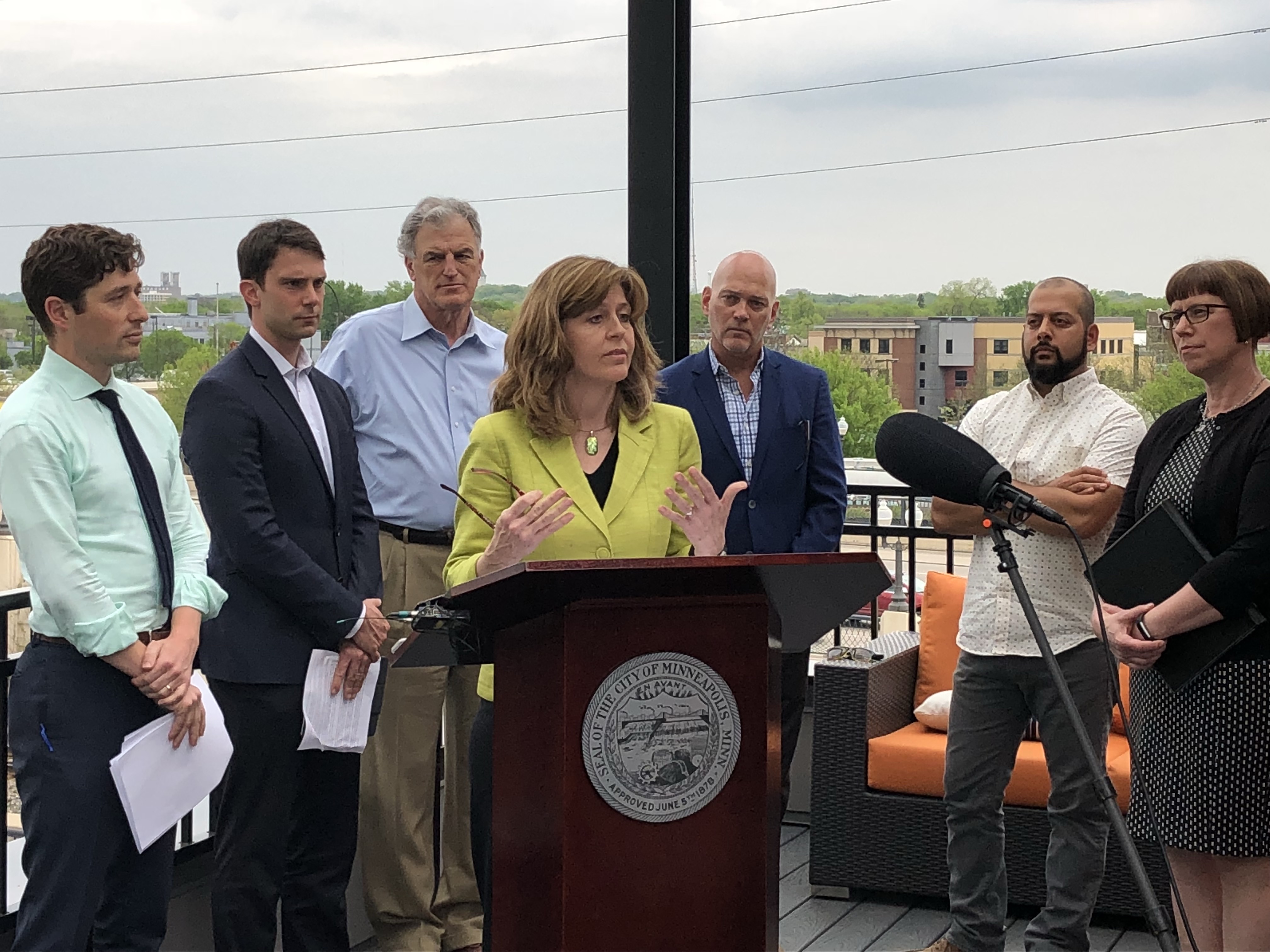
    Photo by Emily Seddon: Anne Mavity (podium) speaking at the release of the Task Force recommendations, with Mayor Jacob Frey (far left) and other stakeholders. 

  • ACT NOW to advance #HousingTaxCredit

    The conference committee on the tax omnibus bill will meet TOMORROW (Friday, 5/11) and Saturday (5/12) to negotiate a final tax bill. We must ACT NOW to ensure legislators include the MN Tax Credits for Contribution Fund (H.F. 4072 | S.F. 3301). 

    Supported by 50 organizations and recently highlighted by MinnPost, the MN Tax Credits Contribution Fund still has momentum in the final hours of session –  but we need your voice. 

    Right now, the Tax Credit Contribution Fund is in the Senate Omnibus bill as a study. The conference committee has the ability to change the language from a study to authorizing the creation of the Tax Credit Contribution Fund.

    Please help us by reaching out to the Senate and House conferees (listed below with contact information) to advocate for the Tax Credit Contribution Fund. Ask that the committee create the Tax Credit Contribution Fund with authorizing language and a $1 million authorization.

    Please call YOUR legislator (find your legislator here) and Conferees Senator Chamberlain, Senator Johnson, Representative Davids, and Representative Marquart.

    Here’s a potential script:

    My name is [insert name], and I live in [your city]. Please include and fund the Housing Tax Credits for Contribution Fund (H.F. 4072 | S.F. 3301) in the final omnibus tax bill. The Housing Tax Credits for Contribution Fund is an innovative new tool to incentivize private investment and promote community and economic development. Thank you.

    TOP PRIORITIES: 

    1. Your legislator
    2. Roger C. Chamberlain (38, R) | 651-296-1253
    3. Mark Johnson (01, R) | 651-296-5782
    4. Greg Davids (28B, R) | 651-296-9278
    5. Paul Marquart (04B, DFL) | 651-296-6829

    FULL CONFEREES LIST:

    Senate conferees:

    Roger C. Chamberlain (38, R) | 651-296-1253

    Mark Johnson (01, R) | 651-296-5782

    Assistant Majority Leader Gary H. Dahms (16, R) | 651-296-8138

    Assistant Majority Leader Eric R. Pratt (55, R) | 651-296-4123

    Paul T. Anderson (44, R) | 651-296-9261 

    House conferees:

    Greg Davids (28B, R) | 651-296-9278

    Paul Marquart (04B, DFL) | 651-296-6829

    Jerry Hertaus (33A, R) | 651-296-9188

    Sondra Erickson (15A, R) | 651-296-6746

    Joe McDonald (29A, R) | 651-296-4336

  • Federal Home Loan Bank Speaking Points for National Non-profit Organizations

    The Federal Housing Finance Agency (FHFA) recently released a proposed rule in connection with the Affordable Housing Program (AHP) that has major implications for affordable housing developers. Below are talking points on the FHLB AHP shared by Jennifer Ernst, Sr VP/Director, Western Office and Community Investment Officer, FHLB-Des Moines. To learn more about the proposed rule, join MHP for a stakeholder call on Wednesday, May 23 at 9:00 AM. Ernst will walk listeners through proposed changes and answer questions. Make sure AHP, an important gap financing tool, remains a feasible financing source by providing comment to the FHFA by June 12.

    Stakeholder call: Wednesday, May 23, 9:00 AM

    To participate: 800-220-9875, ID 72658579

    *****

    Overview

    Although the Affordable Housing Program (“AHP”) Proposed Rule offers modest improvements for program flexibility, taken as a whole, it increases the program’s complexity and moves it in the direction of a national, bureaucratic and prescriptive program. Particularly troubling is the proposed outcome framework because it conflicts with the Federal Housing Finance Agency’s (“FHFA’s”) stated objective of providing more flexibility for the FHLBanks to respond to local and regional affordable housing needs.

    Comment Period

    The Proposed Rule introduces new and complex requirements that would result in significant changes to the AHP.

    1) The Proposed Rule was published in the Federal Register on March 14, 2018, with a 60-day comment period. As the FHFA noted in the Proposed Rule’s preamble, during the FHFA’s comprehensive four year review of the AHP, “…Banks and stakeholders uniformly expressed support for the AHP, viewing the program’s affordable housing mission favorably and acknowledging its longstanding reputation as a well-managed program and the critical role it plays in affordable housing initiatives throughout the country.” Given the importance of the AHP to the nation’s affordable housing system, the broad range of stakeholders affected, and the breadth and complexity of the contemplated changes, additional time is needed to assess and respond to the Proposed Rule adequately. Additionally, an extended comment period is consistent with similar requests made by the 11 FHLBanks and their Affordable Housing Advisory Councils (“Advisory Councils”) at a joint meeting with the FHFA in October 2017, in anticipation of this proposal. For these reasons, the FHLBanks respectfully request that the comment period be extended at least an additional 30 days to June 14, 2018.

    Regulatory and Statutory Priorities

    The proposed statutory and regulatory priorities significantly complicate how AHP funds are allocated and limit how responsive AHP may be to local, and changing, housing needs.

    1) The proposed outcome framework controls at least 65% of the entire year’s AHP contribution. This is a significant step backward from the current methodology for AHP, which incentivizes certain types of projects, but does not impose hard requirements for them. Since certain outcomes would be required under the FHFA’s proposal, the FHLBanks would be compelled to develop AHP scoring criteria that will achieve them. This has the result of:

    a. Undermining the FHFA’s stated objectives of allowing the FHLBanks more flexibility to meet local needs because it will be FHFA outcomes, not district needs, that the AHP is engineered to respond to. This dynamic also undermines the FHFA’s stated objectives for requiring FHLBanks to develop Targeted Community Lending Plans. Specifically, FHFA required outcomes, not the results of market research required by the proposed Targeted Community Lending Plans, will be the primary driver for the FHLBanks’ AHP scoring criteria. Thus, the Targeted Community Lending Plans become an administrative burden without a meaningful purpose.

    b. Compromising the value of the input the FHLBanks receive from their Advisory Councils, a group that consists of leading local affordable housing and community development practitioners. The FHLBanks currently rely on Advisory Councils for information about local housing needs and how AHP can be most impactful in local communities, and are opposed to any proposal that compromises their contribution.

    c. Creating a static list of nationally prescribed requirements that are not adaptable to future and changing affordable housing needs. Additionally, as described further below, the proposed threshold requirements for some of the proposed FHFA outcome requirements incorrectly assume that there are capital and operating sources of financing avaible to develop the types of projects required.

    d. Introducing the likelihood for unintended consequences, such as concentrating AHP awards in geographies where capital and operating sources of funds are available to support development of the types of projects favored by the proposed outcomes.

    2) The proposed regulatory priorities’ required minimum threshold percentage is excessive and the FHFA has been unclear as to how the FHLBanks would satisfy that requirement. The Proposed Rule states that to satisfy the regulatory requirement, “Each year, each Bank shall ensure that at least 55 percent of the Bank’s required annual AHP contribution is awarded under the Bank’s General Fund and any Bank Targeted Funds to projects that, in the aggregate, meet at least two of the three regulatory priorities…[§1291.48(d)]”. However, during the FHFA’s public webinar presented on March 27, 2018, the FHFA noted that the required minimum allocation to satisfy the regulatory requirement would be 55 percent of the funds allocated to an FHLBank’s General and Targeted Funds. The latter interpretation equals the required annual AHP contribution less any Homeownership Set-Aside subsidies and, therefore, is a lower threshold. The FHFA’s contradiction serves to illustrate the complexity of portions of this proposal, particularly as it relates to the outcome requirements.

    3) The proposed re-ranking of otherwise competitive projects is a necessary tool for complying with the requirements of an outcome-based model, however, it is a problematic disrupter to AHP’s predictability and transparency. This proposal has the result of:

    a. Creating an illogical circumstance in which high scoring and competitive projects are denied an AHP award. In practice, there may be several cycles of re-ranking projects needed to comply with FHFA outcomes because simply substituting one project for another may satisfy compliance with one or more FHFA outcome requirements, but not all of those requirements. Thus, it is possible to imagine a scenario in which one or more high-scoring and otherwise competitive projects are replaced by one or more low-scoring and otherwise not competitive projects for the sole purpose of meeting FHFA outcome requirements.

    b. Negating the value of the FHLBanks offering technical assistance to project sponsors for how they could improve the competitiveness of a proposed, or denied, AHP application.

    4) The proposed minimum threshold requirements for special needs and homeless projects may not be achievable in some markets. Additionally, projects that serve lower income households are dependent upon capital and operating subsidies, the availability of which are scarce nationally and may be more prevalent in certain markets. Thus, this proposal may have the unintended consequence of concentrating AHP funds in certain geographies.

    Proposed Solution: Retain the current AHP scoring based model.


    Evaluating the Need for AHP Subsidy

    The Proposed Rule expands the “Need for Subsidy” test therefore increasing the barrier to accessing AHP subsidy.

    1) Although the “Need for AHP Subsidy” language in the Proposed Rule is reasonable, the language used in the preamble suggests a continuation and potential escalation of current practices that have been obstacles to AHP effectively and efficiently coordinating with other funders. This proposal, as explained in the preamble, has the result of:

    a. Imposing an administrative burden on sponsors to extensively document that projects that exceed AHP: (i) cash flow benchmarks were unable to secure debt financing as a substitute to the AHP; and (ii) capital and operating reserve benchmarks have justifiable circumstances for doing so.

    b. Preventing AHP from being awarded to projects that rely on cash flow to finance supportive services (except in circumstances in which that cash flow is generated by federal rental assistance that includes funds for supportive services that cannot be bifurcated). This is in potential conflict with the proposed outcome framework’s minimum threshold requirements for homeless and special needs units to increase to up to 50% of units (from 20% of units) because projects with a greater proportion of units reserved for these populations are more likely to require supportive services to be operationally feasible.

    c. Creating circumstances in which previously awarded and potentially disbursed AHP funds are repaid by the sponsor to the FHLBank, which could occur if the project’s financial circumstances change.

    Proposed Solution: Allow FHLBanks to rely on the underwriting of HFAs and other funders with comparable standards in terms of cost reasonableness, viability of operations, development team capacity and need for subsidy.

    Administrative Burden for Sponsors

    The Proposed Rule introduces unnecessary administrative burdens for sponsors by adding new provisions to require:

    1) Projects to pursue a cure for noncompliance before a project modification may be considered. There are some circumstances in which this may be an appropriate approach but there are other circumstances in which it is unnecessary. For example, if a project were in its first years of retention and its income and rent commitments changed significantly, a FHLBank would likely require the project to adhere to its original commitments. However, if a project was in its final years of retention, had otherwise been in compliance, and had one or a few units that were not complying with income or rent commitments, a FHLBank may determine that a modification would be an efficient tool for resolving the noncompliance.

    2) Sponsors to demonstrate that all members of the project development team, including all affiliates and team members such as the general contractor, satisfy FHLBank sponsor capacity requirements.

    3) Sponsors to subject their organizations assets and other financial resources to review by the FHLBank, including loan performance, tax status, etc., when evaluating if the repayment of AHP is needed to cure noncompliance of a project.

    Proposed Solution: Allow the FHLBanks to evaluate the facts and circumstances of each project and sponsor’s track record of performance.

    Changes to How AHP Provides Financing for Owner-occupied Housing

    The Proposed Rule increases the FHLBanks’ discretion to allocate funds to its Homeownership Set-Aside programs. However, the proposed statutory and regulatory priorities will have the unintended consequence of limiting the competitiveness of homeownership projects under the FHLBanks Competitive Affordable Housing Programs.

    1) The Proposed Rule theoretically increases the amount of funds that may be allocated to down payment products but, in actuality, to comply with the FHFA’s outcome requirements, the percentage of AHP funds available for down payment products may be the same or less.

    The proposal allows up to 40% of the annual AHP contribution to be allocated for down payment “set aside” program(s). Currently, up to 35% of the required annual AHP contribution may be allocated for this purpose.

    The proposal also would require that at least 10% of the required annual AHP contribution be for home purchase, which could be satisfied through an FHLBank’s Homeownership Set Aside program.

    However, the FHFA outcome requirements further require that at least 55% of the required annual AHP contribution meet at least two of three regulatory priorities that are applicable to the competitive program. Since a FHLBank would be required to meet this outcome, it will take cautionary measures to ensure compliance. For illustrative purposes, assume that a FHLBank targets an additional 10% for each FHFA outcome requirement. For example, if a FHLBank is required to allocate 55% of its annual AHP contribution to FHFA outcomes, the FHLBank is likely to set a target of 65% (or more).

    It is also important to understand that if a FHLBank wishes to adopt a third regulatory priority for its competitive program, then the FHFA outcome threshold increases to at least 65% of the required annual AHP contribution. Add to this an illustrative 10% cautionary measure for setting a target greater than the minimum required for compliance, and 75% of the required annual AHP contribution is awarded to FHFA outcome requirements.

    In both scenarios, 35% and 25%, respectively, of the annual AHP contribution is available for the down payment set aside program – not up to 40% as the Proposed Rule suggests.

    Proposed Solution: Retain the current AHP scoring based model and allow up to 40% of the annual AHP contribution to be allocated to the Homeownership Set Aside program.

    2) The Proposed Rule would increase the maximum subsidy for the down payment set aside program to $22,000 per household, an increase from $15,000 per household.

    3) The Proposed Rule would eliminate retention for owner-occupied housing, thereby streamlining program administrative requirements.

    Conclusion

    The Proposed Rule represents the culmination of four years of unprecedented collaboration between the FHLBanks and the FHFA, yet it still falls short of its original intent to modernize the AHP. The original intent of the FHLBanks and their Advisory Councils was to make the AHP more responsive to local and regional housing needs, more compatible with other funding sources (federal, state and local) and less burdensome on affordable housing practitioners.

    Instead, the Proposed Rule is overly prescriptive, discounts the FHLBanks’ 28-years of experience administering the AHP, and diminishes the expertise of the Advisory Councils. It replaces a transparent, objective scoring-based framework with an arbitrary, FHFA defined, outcome-based framework that reduces the FHLBanks’ ability to address the various affordable housing needs across the country.

    The Proposed Rule represents a missed opportunity to simplify the AHP, optimize its impact, and engage FHLBank member financial institutions and affordable housing partners in strategically deploying AHP in their communities. Therefore, the FHLBanks encourage all interested parties to submit comments, specific to your use of, and experience with the AHP, before the June 12, 2018 deadline.

    For additional guidance, please contact your local Federal Home Loan Bank.
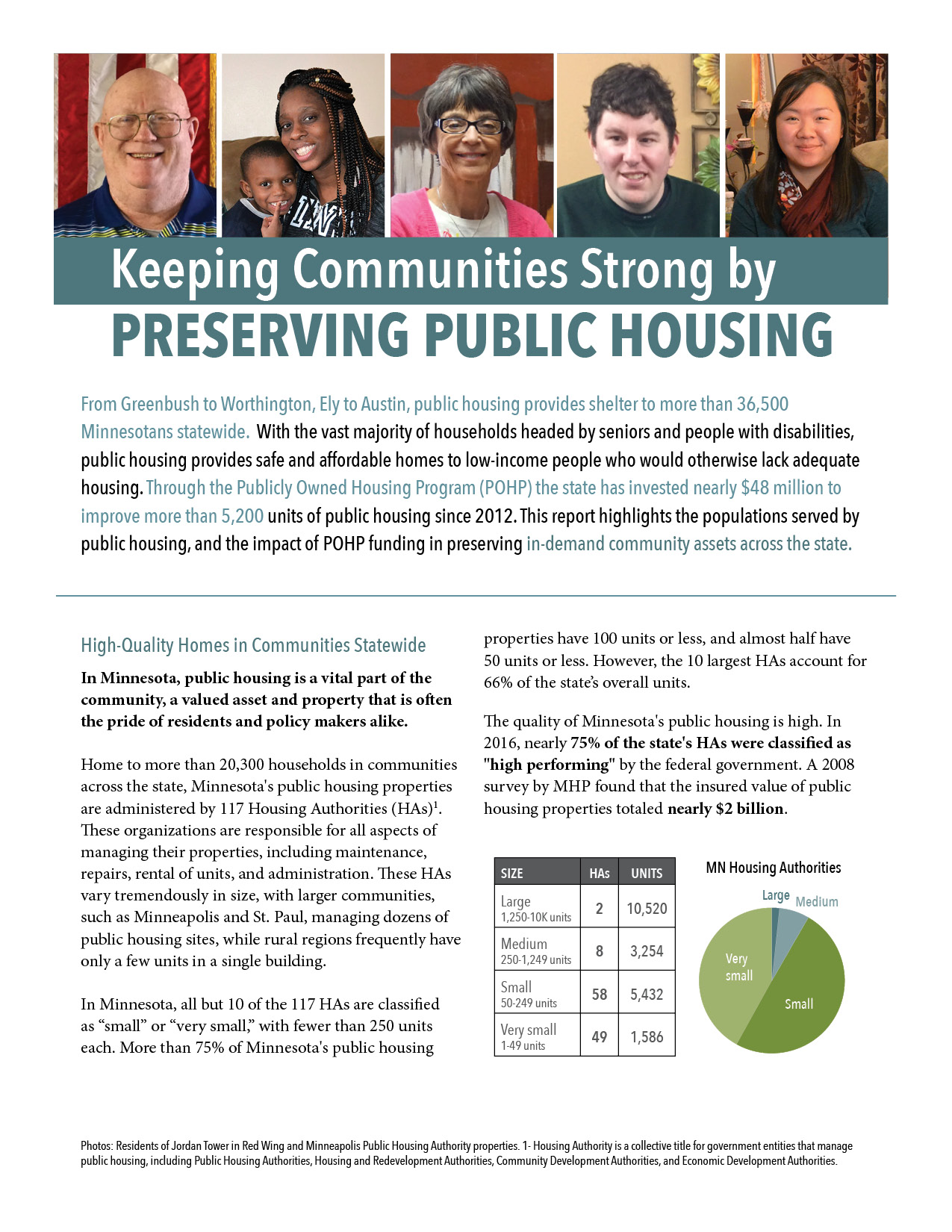
  • New report: Keeping Communities Strong by Preserving Public Housing

    From Greenbush to Worthington, Ely to Austin, public housing provides shelter to more than 36,500 Minnesotans statewide. With the vast majority of households headed by seniors and people with disabilities, public housing provides safe and affordable homes to low-income people who would otherwise lack adequate housing. A new MHP report highlights the populations served by public housing, and the impact of the Publicly Owned Housing Program (PHOP) in preserving in-demand community assets across the state. 
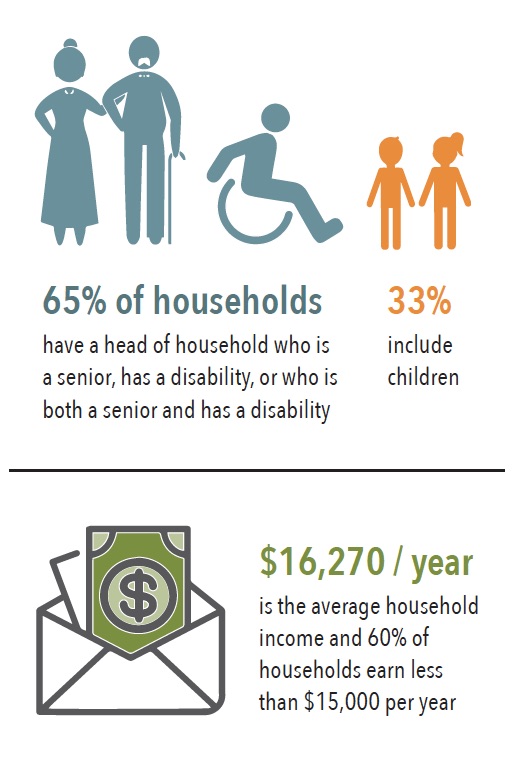
    Home to more than 20,000 households in communities across the state, public housing predominantly provides homes to our most vulnerable community members: seniors, children, veterans, and people with mental or physical illness or disabilities. Excluding Minneapolis*, 65% of public housing households across the state have a head of household who is a senior, has a disability, or who is both a senior and has a disability. Thirty-three percent of households include children, and 60 percent of households earn less than $15,000 per year. By providing stable shelter for those who often face the biggest barriers, public housing reduces costs in other areas, like shelters and services for the homeless and disabled. 

    However, funding declines threaten the health and safety of Minnesota’s public housing. For a disabled senior or a veteran in a wheelchair, a broken elevator is more than an inconvenience. Public housing has been hit hard by federal funding cuts, with funding falling by $1.6 billion from 2010 to 2016. Nationally, funding for repairs has fallen 53 percent since 2000. In 2016, public housing agencies received only 84% of the actual costs of operating their units. 
    In Minnesota, where 95% of the public housing stock is more than 35 years old, housing authorities too often don’t have the resources to address critical issues like repairing roofs, upgrading major heating systems and implementing security measures — putting this key community asset at risk. That’s why state investment plays a vital role in preserving homes for the more than 36,500 Minnesotans who live in our public housing. 

    The Minnesota Legislature established the Publicly Owned Housing Program (POHP) to rehabilitate and preserve public housing units. Since 2012, the POHP program has awarded $47.6 million in funding to 76 projects across the state, impacting 5,232 units. There’s a high demand for these dollars. In 2017 alone, the program received a total of 38 applications representing 2,368 public housing units in need of rehabilitation. These applications requested a total of $19.3 million in funds with only $12 million to award.


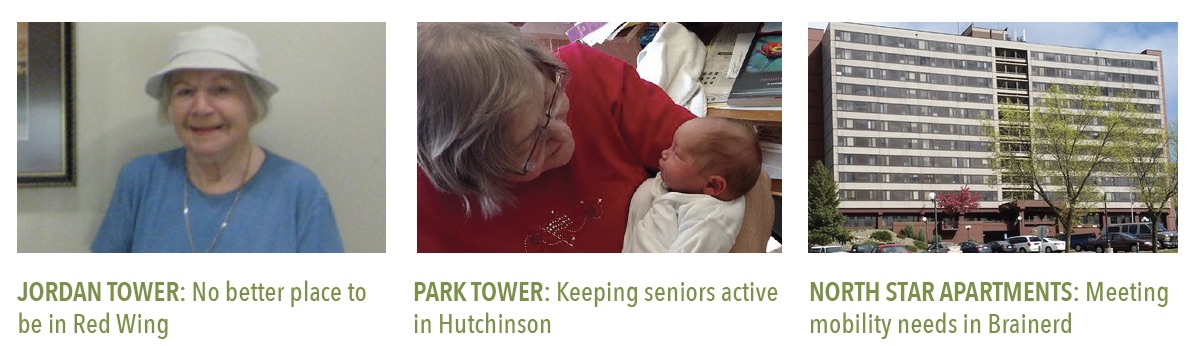
    Download the full report to read the stories of public housing residents such as Nada (left), LouAnn (center), and Dennis, a resident of North Star Apartments (right).

    POHP funds are funded by the sale of General Obligation (GO) bonds. MHP’s report underscores that we need continued investment in bonds for housing to ensure the 36,500 Minnesotans who live in public housing, in communities from Greenbush to Worthington, Ely to Austin, have a safe and healthy place to call home. MHP and our Homes for All MN coalition partners have joined together to advocate for $30 million in GO bonds during the 2018 State Legislative Session (S.F. 2939 | H.F. 3125) — an investment that would have a major return for communities statewide.

    * Data around public housing in Minneapolis is separated from the rest of the state due to Minneapolis having the only Moving to Work program in the state. Data from this program is collected and entered to HUD via a different form than other PHA’s tenant data. The Resident Characteristics Report, from which this data is derived, does not include tenant information submitted through Moving to Work.


  • How does Minnesota Stack Up? Newly Released Data on Evictions

    In 2017, MHP and Alliance Housing hosted Matthew Desmond, Pulitzer Prize-winning author of Evicted: Poverty and Profit in the American City, in Minneapolis. In his presentation and panel discussion, Desmond revealed the impact of this often overlooked housing crisis on families and communities. This month, Desmond and his team of researchers released an unprecedented tool and data resource, the Eviction Lab.

    Nationally, 898,479 evictions took place in 2016, with a rate of 2.34 evictions occurring per 100 renter households. Eviction rates are currently highest in the Southeast of the US, ranking highest in the states of South Carolina (8.87%), Virginia (5.12%), Delaware (5.1%), Georgia (4.17%), North Carolina (4.61%). Minnesota ranks 44th for national eviction rate.

    According to the Evictions Lab data, 10 evictions took place every day in Minnesota in 2016 — representing an eviction rate of .59 per 100 renter homes. From 2000 to 2016, evictions peaked in 2004 (11,272) and 2007 (10,686), and have fallen dramatically in recent years to 3,377 in 2016. And not all eviction filings lead to households being forced to vacate their homes; in 2016, approximately 25% of filings saw actual evictions a rate that has fallen from 56% in 2007.


    In Minnesota, Anoka County has the highest filing rate (3.77 of all households) of the 87 counties, with an actual eviction rate at .64, or 156 evictions in the year of 2016. At the opposite side of the spectrum are Kittson and Lake of the Woods counties, who saw 0 evictions filed or occuring in 2016. Not surprisingly, Hennepin and Ramsey, who have large renting populations, top the list for number of total evictions, at 1,373 for Hennepin in 2016 and 489 in Ramsey.

    Compared to Wisconsin, Minnesota has a much lower number and rate of evictions. Wisconsin is estimated to have 41 evictions per day, at a rate of nearly 2%.Though the two states are similar in the number and demographics of residents, the number of eviction filings in Wisconsin is double Minnesota’s. Minnesota’s eviction rate has fallen 60% since 2000, whereas Wisconsin’s has fallen only by 10%.

    Top Ten Cities by Number of Evictions in Minnesota, 2016

      City County Population Poverty Rate Percent White Number of Evictions
    1 Minneapolis Hennepin 399950 15% 60% 759
    2 St. Paul Ramsey 295043 17% 54% 368
    3 Brooklyn Park Hennepin 78195 9% 48% 146
    4 Duluth St. Louis 86178 12% 89% 95
    5 Moorhead Clay 40935 9% 88% 83
    6 Rochester Olmsted 110275 6% 78% 75
    7 Bloomington Hennepin 85826 5% 75% 63
    8 Burnsville Dakota 61255 8% 72% 60
    9 Brooklyn Center Hennepin 30684 17% 42% 58
    10 St. Cloud Stearns 66298 14% 82% 57


    Top Ten Cities by Eviction Rate in 2016, for Cities with Populations Greater than 5,000


    City

    County Population Poverty Rate Percent White Eviction Rate
    1 Lake Elmo Washington 8199 4% 96% 3%
    2 East Bethel Anoka 11625 3% 98% 3%
    3 Brooklyn Park Hennepin 78195 9% 48% 2%
    4 Oak Grove Anoka 8215 2% 89% 2%
    5 Brooklyn Center Hennepin 30684 17% 42% 1%
    6 Big Lake Sherburne 10285 7% 87% 1%
    7 Moorhead Clay 40935 9% 88% 1%
    8 Zimmerman Sherburne 5280 7% 98% 1%
    9 Ramsey Anoka 24846 2% 90% 1%
    10 Wyoming Chisago 7755 0% 93% 1%


     Top Ten Counties by Eviction Rate

      County Population Poverty Rate Percent White Eviction Rate
    1 Kanabec County 16003 11% 95% 2%
    2 Mille Lacs County 25809 9% 90% 1%
    3 Clay County 60879 7% 90% 1%
    4 Mahnomen County 5496 19% 48% 1%
    5 Sherburne County 90401 6% 92% 1%
    6 Cass County 28519 13% 84% 1%
    7 Le Sueur County 27707 5% 92% 1%
    8 Norman County 6692 8% 90% 1%
    9 Beltrami County 45434 13% 73% 1%
    10 Mower County 39227 9% 82% 1%


    Stay tuned for the Eviction Lab’s soon-to-be released “Top Evictors”.

  • CALL NOW: Critical moment for #HousingTaxCredit

    The House Taxes Committee has released its proposed omnibus tax bill. It does not include the Housing Tax Credits for Contribution Fund (H.F. 4072 S. Anderson). 

    Lawmakers need to hear your voice NOW. There is still time to amend the bill in the House Taxes Committee tomorrow, 4/24, and the House Ways and Means Committee on Wednesday, 4/25. By contacting key legislators and voicing your support, you can play a critical role in ensuring that this simple, effective tool makes it across the finish line.

    PLEASE CALL the Committee Chairs, Rep. Greg Davids (R-28B) and Rep. Jim Knoblach (R-14B), to voice your support and ask them to include the Housing Tax Credits for Contribution Fund in the omnibus taxes bill.

    Contact:

    Script:

    “Please support the inclusion of the MN Housing Tax Credits for Contribution Fund — HF 4072 authored by Rep. Sara Anderson — in the tax omnibus bill. This program is proven and effective, leveraging $5 from private and federal resources for every dollar invested by the state. This tool encourages business and individuals to invest in housing — and will create thousands of housing units.” 

    PLEASE TWEET your thanks to Rep. Sarah Anderson (R-44A), Chief Author. of H.F. 4072, to thank her for her leadership in advancing this needed tool.  

    Thanks, @Rep_SAnderson, for your leadership in advancing the #HousingTaxCredit (HF 4072), a proven tool needed in communities across MN!

    Questions? Contact Libby Murphy, MHP Deputy Policy Director, at 612-716-9703 or [email protected]. 


    Be Part of the Change: Advocate at the Capitol!

    As we enter the final weeks of session, we need your help to build momentum for affordable housing legislation, including for our Tax Credits for Contribution Fund (H.F. 4072 | S.F. 3301)! Help us ensure legislators prioritize affordable housing in the omnibus bills and the bonding bill. At this point in session, legislative schedules change minute-to-minute. Look to the MHP homepage, Twitter, and Facebook on Fridays to learn when you can accompany the MHP policy team to the Capitol on the following Monday. If you are available to advocate during the specified time period(s), contact Libby Murphy’s cellphone at 612-716-9703 to arrange to meet her at the Capitol Rotunda. Your voice DOES make a difference! 

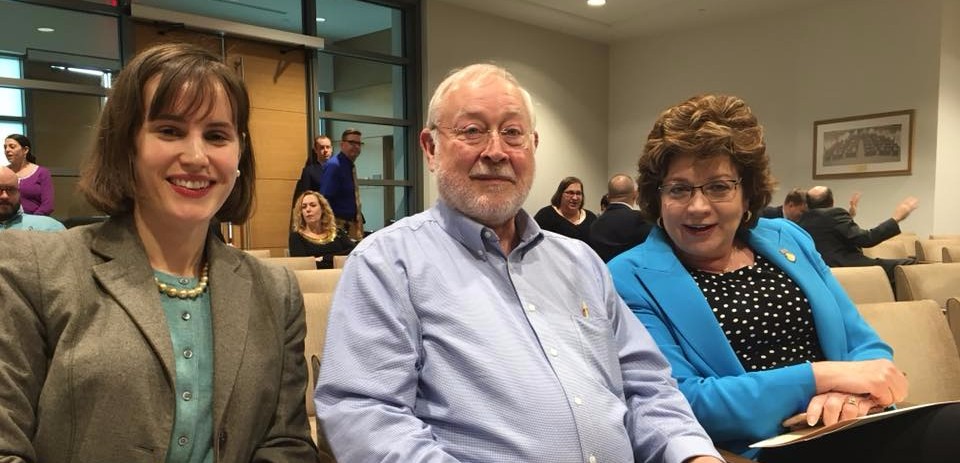
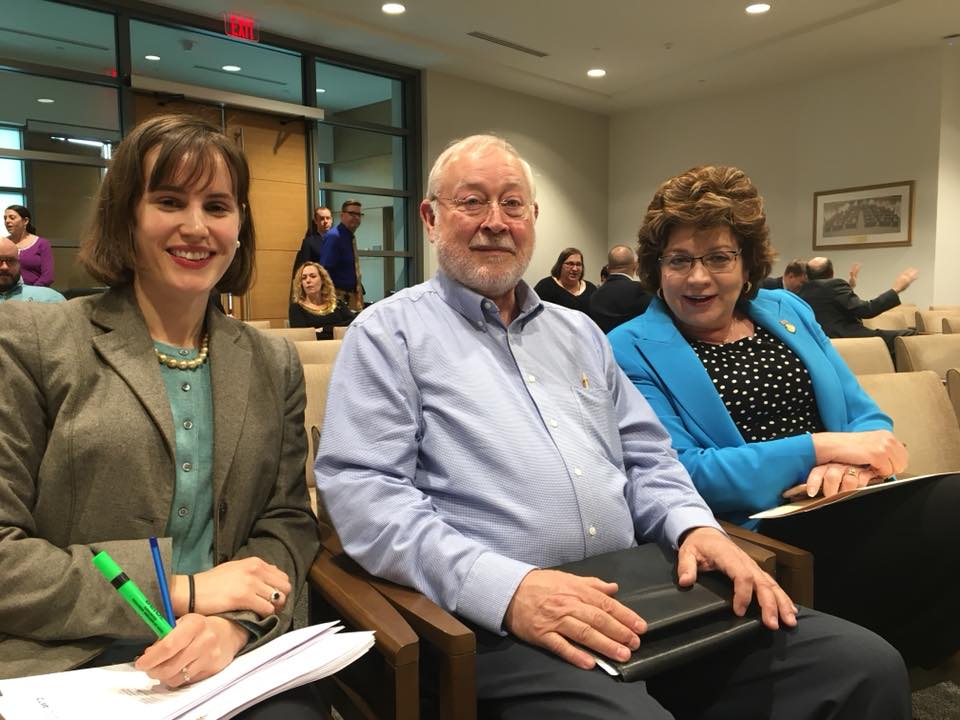
    Photo from left: Libby Murphy, MHP Deputy Policy Director, with Joe Wheeler from SEMMCHRA and Sen. Carla Nelson (R-26) at a hearing for the MN Tax Credit Contribution Fund 

  • #Bonds4Housing story: “I have a great family in this building.”

    Wanda Harris married in 1960. Two years later, her husband died of a heart attack, and Wanda became the sole caretaker of three children. Her neighbor, former Minnesota Senate President Florian Chmielewski, asked how he could help.

    Suddenly, Wanda was employed by the Chmielewski Funtime Band. For the next 12 years, Wanda mailed records and lined up gigs for the polka band. She also happened to be interested in politics, so sometimes she’d ride along with Florean to the Minnesota Capitol.

    Photo: Wanda (left) poses with Deb Schaff, Director of the Cloquet/Carlton HRA and Alice a resident of Woodland Pines, a nearby public housing complex.

    Never afraid of hard work, Wanda did all she could to provide for her children, but many of the jobs she held didn’t offer benefits, making it difficult to save for retirement. After working with the Chmielewski Funtime Band, Wanda worked as a part-time cook at a bootcamp in Willow River. Then, as kitchen coordinator for the prison in Moose Lake, Wanda forged relationships with inmates as they worked together to prepare meals.

    More than a decade ago, Wanda moved from Willow River, where she raised her family, to Cloquet to be a grandmother to her son’s three children. She found an affordable place to call home at Aspen Arms, a 76-unit public housing complex. She’s deeply engaged in the community, serving on the HRA board, heading up the resident council, writing the building’s newspaper, and organizing events for residents. “The residents here consider Aspen Arms family,” Wanda says.

    Wanda’s passionate about ensuring people have an affordable place to call home. She recently worked with the Cloquet HRA to secure funding for an affordable housing complex adjacent to Aspen Arms, the White Pine apartments. Wanda’s seen affordable housing, including public housing, change lives.

    “My heart lies with the homeless and people needing a place to live,” Wanda explains. “Public housing provides that. We just moved a homeless veteran into this building, and it’s the first home he’s had in years. My heart just wants to explode with things like that.”

    Almost 20 percent of Aspen Arms residents are veterans. More than half of residents, including Wanda, are seniors, and more than half have a physical disability or mental illness. Most residents live on a fixed income.

    According to Debra Schaff, director of the Cloquet/Carlton HRA, Aspen Arms is an in-demand community resource, with more than 65 people on the waiting list for an apartment. But with plummeting federal funding for capital needs, it’s becoming more and more challenging for Schaff and her staff to maintain Aspen Arms. According to Schaff, in her 12 years at the HRA, federal capital funding has dropped by at least 50 percent.To help cover that gap, Cloquet/Carlton HRA applied for PHOP funds from Minnesota Housing in 2014 to replace boilers, lighting, fire alarms, elevator mechanicals, and electrical branch panels.

    Schaff says PHOP dollars are a critical resource to maintain public housing assets in communities across the state. “PHOP dollars are important, but they’re going to become even more significant, and the impact of not having them is going to become much greater,” she says.

    Wanda says her home at Aspen Arms “means everything” to her. She wants to see more affordable housing in Minnesota.

    “If I talked to a legislator, I would tell them how important it is to help everybody — especially those who may not be able to help themselves, and people like me at my age who seek independent living,” she says.

    Wanda is grateful for the Aspen Arms staff, and her neighbors, whom she considers family. “We’re really lucky to have the staff that we do. I wouldn’t change anything in my life. I have a great family in this building, lots of friends. All has been a plus living at Aspen Arms.”

  • CALL NOW for affordable housing tax credit!

    Lawmakers at the state capitol are writing legislation RIGHT NOW that will have a huge impact on statewide investments in affordable housing. We have just HOURS to influence critical tax bills — and your voice matters!

    As we speak, the tax committees are writing their omnibus bills and there’s a narrow window of time to influence the House and Senate. As they juggle competing priorities with limited resources, lawmakers need to hear your support for the Minnesota Housing Tax Credit Contribution Fund (H.F. 4072 S. Anderson | S.F. 3301 Nelson).

    Please take just a few minutes to call the Governor and legislative leaders below, especially Chairs Davids and Chamberlain, who will play a pivotal role ensuring the tax credit is included in the omnibus bills. Use the scripts below when you call and leave a voicemail, if necessary. 

    SCRIPTS

    Lawmakers

    “Please support the inclusion of the MN Housing Tax Credit Contribution Fund — HF 4072 authored by Rep. Sara Anderson and SF 3301 authored by Sen. Nelson — in the tax omnibus bill. This program is proven and effective, leveraging $5 from private and federal resources for every dollar invested by the state. This tool encourages business and individuals to invest in housing — and will create thousands of housing units.” 

    Governor

    “Please tell Senate and House leadership to include the MN Housing Tax Credit Contribution Fund — HF 4072 authored by Rep. Sara Anderson and SF 3301 authored by Sen. Nelson — in the tax omnibus bill. This program is proven and effective, leveraging $5 from private and federal resources for every dollar invested by the state. This tool encourages business and individuals to invest in housing — and will create thousands of housing units.” 

    CONTACTS

    Tax Committee Chairs

    Governor’s office

    • 651-201-3400 

    House & Senate Leaders

    Chief Authors

    Questions? Contact Libby Murphy, MHP Deputy Policy Director, at 612.716.9703 or [email protected]. 

  • Minnesota Housing Tax Credit Contribution Fund: MHP champions innovative new tool to spur private investment in housing

    Since its inception in 2011, North Dakota’s Housing Incentive Fund (HIF) has leveraged roughly $5 for every $1 invested, creating more than 2,500 units across the state. A proven tool to incentivize private investment and promote community and economic development, MHP is advancing a bill (H.F. 4072 | S.F. 3301) at the Minnesota Legislature to create the Minnesota Housing Tax Credit Contribution Fund, modeled after North Dakota’s HIF.

    The Minnesota Housing Tax Credit Contribution Fund will encourage local businesses and neighbors to invest in their community by creating housing opportunities. The program is capitalized by contributions from taxpayers that have state income, corporate, or insurance premium tax liabilities. In exchange for contributions to affordable housing, participating taxpayers receive credit against their state income tax liability equal to their contribution to a specific development or the general loan pool. The program relies on taxpayer support to provide low-cost financing to developers of affordable housing.

    Advance the tax credit by signing our letter of support

    Download the one-page overview

    “This model is needed in Greater Minnesota,” says Skip Duchesneau, President of D.W. Jones, which develops affordable housing in 25 different communities across Central and Northern Minnesota. “We need straightforward, effective tools – like the Minnesota Tax Credit Contribution Fund – that allow local businesses to partner with developers to meet pressing local needs for affordable, workforce, and senior housing. The Tax Credit Contribution Fund would be an efficient state investment that leverages private, state, and federal resources to positively impact communities across the state.”

    A proven model, simple and effective

    Photo from left: Libby Murphy, MHP Deputy Policy Director, with Joe Wheeler, ‎Executive Director of the Southeastern MN Multi-County HRA, and Sen. Carla Nelson (R-26), chief author of the bipartisan bill H.F. 4072 | S.F. 3301. 

    Commonwealth Development Vice President Erin Anderson works in Minnesota and North Dakota to create affordable housing, and has utilized North Dakota’s Housing Incentive Fund to build 60 units in two communities, providing affordable housing for working families and seniors. “It was a simple process with a major impact,” Anderson says. “The Housing Incentive Fund attracted essential investments by local financial institutions who saw the need for additional housing and wanted to invest in the Housing Incentive Fund to fill funding gaps and advance needed projects. Minnesota would absolutely benefit from this proven, flexible tool.”

    Greg Handberg, Senior Vice President at Minneapolis-based developer Artspace, utilized the North Dakota Housing Incentive Fund to create 34 units of affordable housing in Minot, ND. “The Housing Incentive Fund was a simple, effective tool to create a partnership and attract local investment from a private organization in exchange for a tax credit. The contributor got to say that they helped make affordable housing happen in their community, and we were able to close financing gaps to advance the project and get the job done.” Becky Carlson St. Clair, Director of Property Development at Artspace, says, “It was a win-win-win scenario – for the developer, the investor, and the community. A program like this in Minnesota could have a significant impact.”

    Advance the tax credit by signing our letter of support

    Download the one-page overview

    Benefits

    FLEXIBILITY: One of the primary benefits of this type of program is that it will allow for greater flexibility in funding different types of projects that serve different needs. Because this is a Minnesota tool, it is more flexible than the existing set of federal resources that fund new development and preservation. Minnesota Housing Finance Agency will still prioritize the types of projects to be awarded during each annual application process. The state could use this tool in conjunction with other programs or award by itself to provide gap financing.

    SIMPLICITY: The credit does not require syndication, therefore, every dollar invested stays in Minnesota and goes directly to the project.

    EASY TO PARTICIPATE: Any taxpayer with state income, corporate, or insurance premium tax liabilities would be eligible to contribute and receive a credit. Those without state tax liability, can still contribute to a development. A contribution does not give the contributor ownership interest in the housing project. The contributor only receives the tax credits in exchange for their contribution. This makes it easier for businesses in need of housing to participate.

    LEVERAGE: The program makes housing projects feasible by leveraging other private, state and federal resources.

    GOOD FOR GREATER MN: The program will work better for Greater Minnesota than existing federal credits or other proposed state credits. Existing federal tax credit programs can be difficult to utilize outside of metropolitan communities.

    BOOSTS LOCAL BUSINESSES:

    » Banks can receive CRA credit; a huge advantage for projects in Greater Minnesota. Banks support similar programs because this model allows them to donate to projects in areas where they would not purchase federal tax credits.

    » A contribution to a project is potentially eligible for a federal tax deduction in addition to a state tax credit. Similar contributions have been treated as charitable donations.

    » Businesses can use the tax credit to help build the affordable workforce housing needed throughout Minnesota.

    » Investments in local housing projects will pay for themselves by building the economy and creating jobs.

    Advance the tax credit by signing our letter of support

    Download the one-page overview

    How it works

    1. Eligible applicants apply to the state housing agency for funds. Successful applicants are issued a conditional commitment of funds during which time the applicants solicit contributions. If a project does not solicit the full amount of funds, the state can allocate funds from the general pool.
    2. The funds are provided by the state agency to each project in the form of subordinate forgivable or bona fide soft loans, if requested by the developer for tax purposes. The forgivable loans require no periodic payments and are forgiven in their entirety if the project satisfies the ongoing rent/income restriction requirements.
    3. Contributors receive a dollar-for-dollar certificated state tax credit to be claimed in the same year as the contribution against their state tax liability. If the amount of the credit exceeds the contributing taxpayer’s tax liability for the taxable year, the excess may be carried forward to each of the ten succeeding taxable years.
    4. Contributions are made on a project-specific basis or on a general pool basis to be used to fund projects statewide. If a single project receives contributions in excess of its awarded amount, the state housing agency allocates the contribution to another project.

    Advance the tax credit by signing our letter of support

    Download the one-page overview

    For more information, contact Libby Murphy, MHP Deputy Policy Director [email protected], 651-925-5556.