• Work with us! MHP seeks Director of Finance and Human Resources

    Minnesota Housing Partnership is seeking an experienced Director of Finance and Human Resources who is looking for an opportunity to lead and develop an organization’s finance, business planning and budgeting, and human resources and administration. This is a varied, exciting role that requires a strategic thinker and an exceptional leader. This position is an active and participative member of the leadership team and reports to the Executive Director.

    PRIMARY RESPONSIBILITIES

    • Maintain and oversee the day-to-day financial and accounting operations of the organization, ensuring that appropriate systems are in place to maintain effective internal controls for the organization.
    • Maintain an internal reporting system and account structure that ensures proper disclosure and accountability for all financial activities.
    • Oversee cash flow management through the use of projections of cash receipts and cash disbursements, maintaining adequate cash balances to meet financial obligations.
    • Assure appropriate resources for program spending needs, and monitoring, expenditures to ensure compliance with MHP’s fiscal policies and Board-approved budget.
    • Oversee appropriate financial due diligence on federal and state contracts.
    • Serve as staff liaison to the Audit/Finance Committee and the Investment Advisory Committee of the Board of Directors.
    • Provide accurate and timely information to committee members and participate actively in meetings.
    • Oversee the preparation for the annual audit and tax return.
    • Prepare the financial section of the annual report.
    • Hire and supervise Office and Finance Associate and Grants and Contracts Officer.
    • Ensure payroll reports and tax filings are prepared and filed on a timely basis.
    • Work with the Executive Director to establish appropriate annual, midterm, and long- term financial objectives and plans that meet the needs of MHP.
    • Develop various financial forecasts, modeling and long-term planning activities. Update these annually.
    • Support the Directors in the annual planning and completing their budgets. 
    • Demonstrated human resources experience, including knowledge of employment law (EEO, FLSA, DOL, DHR)

    PERSONAL ATTRIBUTES

    • High degree of energy, integrity, and creativity as well as the intellectual, organizational, and personal qualities necessary to earn respect and cooperation from all stakeholders.
    • A commitment to diversity, equity, and inclusion related to persons of all racial, cultural, religious, gender, and sexual orientation backgrounds.
    • A deep commitment and passion to MHP’s mission and work.
    • Superb communications skills, both oral and written.
    • Creative, with the ability to think “out of the box”.
    • Approachable and a good listener.
    • An authentic leader who serves as a role model for moral and fair behavior, with a transparent approach earning esteem and confidence from employees.
    • A leader who coaches effectively and is seen as a mentor who supports employee growth. Employees are nurtured toward achieving their highest levels of performance.

    EDUCATION

    • Minimum bachelor’s degree in business, finance, or other appropriate discipline.
    • CPA or master’s preferred.
    • Eight or more years of relevant financial, administrative, and HR experience.


    ORGANIZATIONAL OVERVIEW

    Minnesota Housing Partnership (MHP) began in 1987, as an informal coalition organizing community groups and nonprofit developers to play an active role in affordable housing. The initial work of MHP focused on informing housing groups of policy and program developments occurring at the state and federal levels. MHP also was a catalyst for increased state funding focused on addressing the housing needs of low-income people. In addition, MHP helped create the state’s first programs to build the capacity of nonprofit housing providers.

    In 1994 MHP became a major provider of technical assistance and financial support to increase the capacity of housing development groups. Today MHP administers a predevelopment loan program and provides training and operating grants to nonprofit developers. MHP’s demonstrated capacity to deliver housing programs has led to its serving as a funding intermediary for several government agency programs.

    Minnesota Housing Partnership’s Mission is to convene, guide, and support a diversity of partners working to improve conditions of home and community. Building on decades of experience, we strengthen development capacity and promote policies that expand opportunity, especially for people at the lowest income levels.

    Over the years, MHP has developed an effective lobbying arm and advocacy network. MHP has earned the respect of affordable housing supporters throughout the state as well as government and legislative leaders. MHP continues to support housing for all Minnesotans through capacity building, advocacy, and loans and grants. The organization has a budget of $3M and a staff of 19.


    APPLICATION DETAILS

    • Please email resume and cover letter, with “Director of Finance and Human Resources” in the subject line, to Cheryl Jensen at [email protected] by 09/30/18 for first round consideration.

    Minnesota Housing Partnership is committed to social, racial, gender and economic justice. We strongly encourage persons of color, LGBT individuals, women, veterans and persons with disabilities to apply.


    FOR MORE INFORMATION, PLEASE CONTACT: 

    Cheryl Jensen, M.S., PCC, RLC

    Managing Partner

    612 -203-4662
    [email protected]


  • Join MHP for Opportunity Zones 101: First Steps for Local Communities and Investors

    How can Opportunity Zones be a useful investment tool for your community? Please join Minnesota Housing Partnership for an Opportunity Zones 101 conference call!

    Opportunity Zones 101:  First Steps for Local Communities and Investors

    Wednesday, August 22, 10-11 am

    Conference call: (800) 220-9875; code: 24167074

    *Please click here to register!*

    We are excited to feature:

    • Mayor Emily Larson, City of Duluth
    • Amy McCulloch, Deputy Director, Twin Cities LISC and Pam Kramer, Executive Director of Duluth LISC
    • Ryan Baumtrog, Assistant Commissioner of Minnesota Housing.

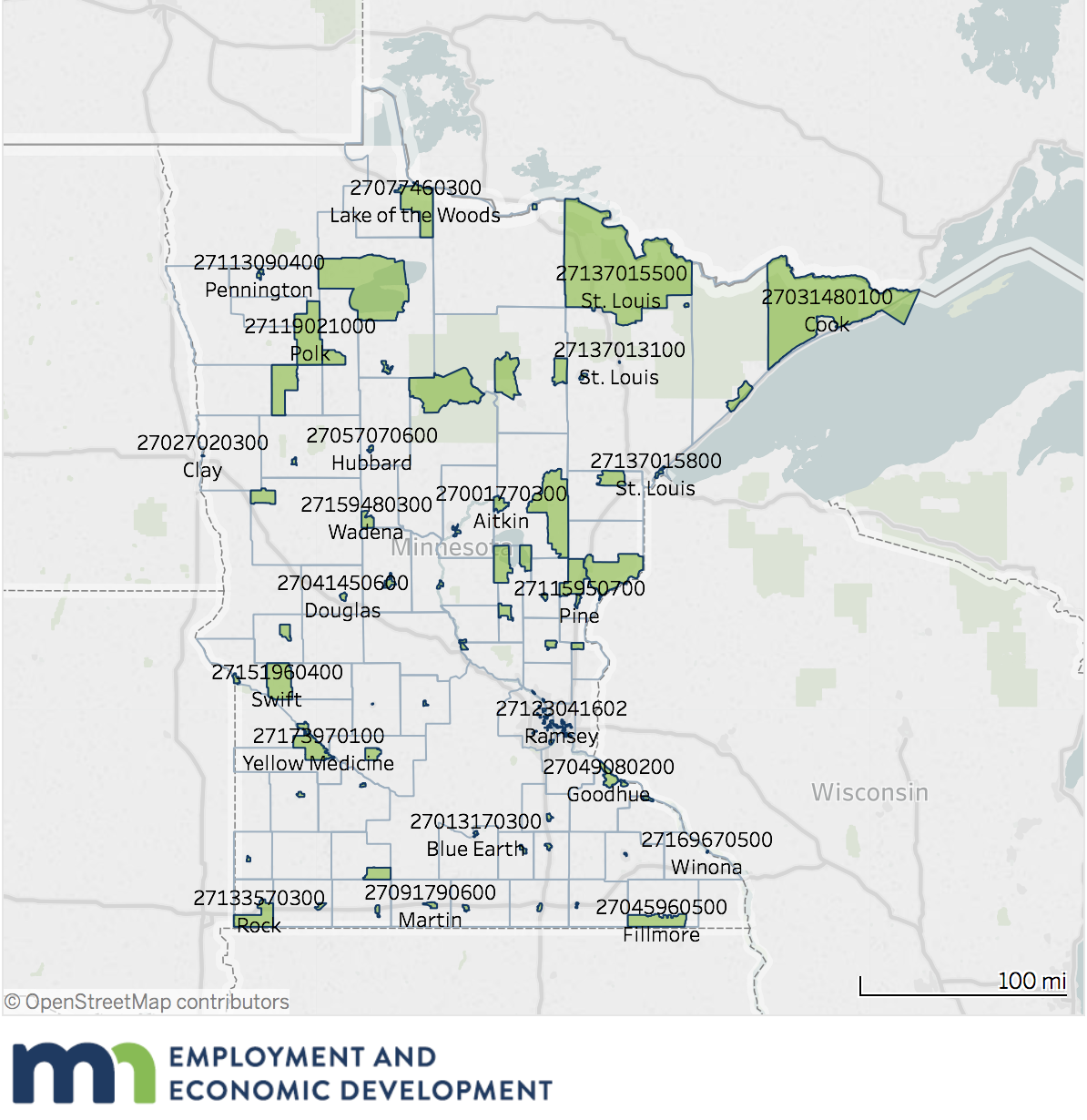
    Opportunity Zones are a new community development program established by Congress in the Tax Cut and Jobs Act of 2017 to encourage long-term investments in low-income and urban communities nationwide. Governor Dayton nominated 128 census tracts for designation; which were then certified as qualified Opportunity Zones on May 18, 2018, by the U.S. Department of Treasury.  You can view the Minnesota Opportunity Zone census tracts (pictured right) here.  Enterprise Community Partners has a tool for locating designated Opportunity Zones throughout the United States.

    Over the coming months, the federal government will release additional FAQs, revenue procedures, and perhaps an interim or proposed rule.

    On our call, we’ll discuss what local communities, as well as development and lending partners, should be considering in advance of more explicit federal and state guidance. We’ll also cover how to better understand the potential of Opportunity Zones, explore investment funds, develop project pipelines, and establish community values for potential projects.

    Your questions will be helpful to our conversation! This conference call will be facilitated by Elizabeth Glidden, Director of Strategic Initiatives and Policy for Minnesota Housing Partnership. Please direct questions to Elizabeth at [email protected] or (612) 396-2288.

    Check out the material below to dig into background on Opportunity Zones! 

  • Join our Team: MHP Seeks Office and Finance Associate

    Minnesota Housing Partnership (MHP) seeks a personable, extroverted Office and Finance Associate to help with daily administrative operations.This is an exciting opportunity for a multi-tasking professional with interest and experience in the following areas: bookkeeping, IT, office management, human resources support, and executive and Board of Directors support.

    The successful applicant will have a positive attitude, a desire to work as efficiently as possible, excellent client-facing communication skills and a reputation for going above and beyond. We’re looking for someone who thrives with little or no supervision and who can manage multiple tasks without becoming overwhelmed. 

    Job Description/Responsibilities

    • Bookkeeping Responsibilities: Responsible for full charge bookkeeping, including the following tasks: post bills to QuickBooks, draft payment vouchers, print checks, make deposits, maintain financial files and other general bookkeeping tasks 
    • IT Responsibilities: Manage IT helpdesk, field general IT requests, coordinate with IT consultant for special IT projects, manage office 365, assist with IT device management and MHP’s web-based platforms
    • Office Management Responsibilities: Carry out general office management duties, including monitoring and ordering office supplies, assisting clients, maintaining timesheet software and coordinating equipment maintenance
    • HR Support Responsibilities: Assist with new staff orientation, staff exit needs and event coordination/planning
    • Executive and Board of Directors Support Responsibilities: Support executive team and Board of Directors with communications, events and special projects

    Requirements/Qualifications

    • Excellent interpersonal, organizational, written and oral communications skills
    • Strong computer skills with emphasis on MS Office Systems (Office 365) and SharePoint
    • Proven bookkeeping skills (QuickBooks preferred) and/or good math aptitude
    • Experience in office management and IT systems
    • Ability to prioritize multiple tasks and projects from multiple people, and ability to communicate competing priorities to supervisor effectively
    • Flexibility in adapting to short deadlines and a fast paced environment
    • Highly motivated, professional presence and commitment to MHP mission and values
    • Knowledge of affordable housing and/or advocacy issues preferred

    Education/Training 

    • Associates Degree or Bachelor’s Degree preferred
    • Minimum Education: High School diploma or GED with 3 years or more relevant on-the-job experience

    Physical Demands

    • Involves sitting/standing for extended periods of time, in order to work at a computer screen
    • Lifting up to 40 pounds for occasional filing, event and meeting management
    • Finger and hand dexterity
    • Vision, including close vision, ability to adjust or focus
    • Hearing, speaking

    Work Environment 

    • Office environment, noise level – quiet
    • Good air quality and lighting
    • Occasional travel

    Pay/Benefits

    This position offers an excellent pay and benefits package.

    Application Details

    Please email your resume and cover letter, with “Office and Finance Associate” in the subject line, to [email protected]. Position open until filled.

    Minnesota Housing Partnership is committed to social, racial, gender and economic justice. We strongly encourage persons of color, LGBT individuals, women, veterans and persons with disabilities to apply.

    This position will remain open until filled, with applications being reviewed as received.

  • Join our Team: MHP Seeks a Community Development Officer

    Minnesota Housing Partnership is searching for a Community Development Officer to provide support in planning, coordinating, and delivering capacity building and technical assistance in affordable housing, economic development and/or community development to state and local government, tribal communities, housing developers and publicly funded entities.

    The ideal candidate will be a detail-oriented professional with a passion for partnering directly with clients to solve problems and implement strategies and solutions. We’re looking for an efficient project manager with the ability to successfully facilitate complex groups and processes. Candidates must be willing to travel within the state and nationally.

    Job Description/Responsibilities 

    • Assist in the implementation of work plans. Provide direct/remote technical assistance to beneficiaries/recipients, including government, non-profit organizations, and tribal entities throughout the State of Minnesota and nationally
    • Assist in creating and analyzing project development budgets and pro-formas, applying federal and state regulatory requirements to further beneficiary’s/recipient’s project goals
    • Provide Housing Institute team support focused on defining team goals, understanding local needs, and assisting in the successful implementation of a community development project
    • Support Community Development Managers in the research, development and delivery of technical assistance and consulting services that increase capacity and organizational efficiency of governments, non-profits, tribal communities and other public agencies
    • Market Community Development Department programs. Maintain contact with housing agencies and local governments. Support outreach for Community Development Department engagements

    Requirements/Qualifications 

    • Minimum three years of experience in community development, economic development or housing development
    • Experience with funding applications such as LIHTC, FHLB, MN Deed Small Cities or other private and/or public grants and loans
    • Knowledge of HUD HOME, CDBG and SNAPS programs and/or USDA and other federal community development programs
    • Demonstrated ability to effectively advocate on MHP’s behalf with stakeholders
    • Strong communication and writing skills; must be highly organized and detail-oriented
    • Ability to travel as needed, including overnight stays
    • Highly motivated, professional presence and commitment to MHP mission and values
    • Bachelor Degree and/or equivalent experience in relevant field preferred

    Physical Demands 

    • Involves sitting/standing for extended periods of time, in order to work at a computer screen
    • Lifting up to 20 pounds for occasional event and meeting management
    • Finger and hand dexterity
    • Vision, including close vision, ability to adjust or focus
    • Hearing, speaking

    Work Environment 

    • Office environment, noise level – quiet
    • Good air quality and lighting

    Pay/Benefits

    The salary range for this position is $55-65K/annually. MHP also offers a robust benefits package.

    Application Details

    Please email resume and cover letter, with “Community Development Officer” in the subject line, to [email protected] by 08/24/18 for first round consideration.

    Minnesota Housing Partnership is committed to social, racial, gender and economic justice. We strongly encourage persons of color, LGBT individuals, women, veterans and persons with disabilities to apply.


    This position will remain open until filled, with applications being reviewed as received.

  • Join our Team: MHP Seeks Grants and Contracts Officer

    Minnesota Housing Partnership (MHP) is searching for a Grants and Contracts Officer to join our finance department. The primary responsibility for this role is maintaining grant records that comply with federal rules and generally accepted accounting practices. This position requires excellent attention to detail to monitor and track grant budgets and prepare monthly and quarterly billing reports as required by federal, state, and philanthropic funders. This position is also responsible for procurement, the development and maintenance of contract administration policies and procedures across the organization, and oversight of all contract and subcontract documents.

    We’re looking for someone who is adept at learning and following grant management rules and who understands current federal guidelines such as OMB circulars. The ideal candidate must have advanced-level skills in Microsoft Excel.

    Job Description/Responsibilities

    • Oversee grant-related reimbursements and payables. Enter info into accounting system.
    • Assist in year-end closing, single audit preparation and indirect cost rate proposals.
    • Manage all contract and sub-award compliance requirements, identifying and evaluating risks to minimize exposure. Ensure compliance from inception to closeout.
    • Disseminate award summaries and provide regular follow-up to monitor compliance, including coordinating kick-off meetings on new grant awards.
    • Work directly with staff on the procurement of all commodities and services.
    • Conduct internal compliance audits related to contractual matters. Maintain internal controls for tracking contracts with contractor/sub-recipient follow up as necessary.
    • Maintain timesheet software. Maintain and update employee information; set up new grants, work plans, and tasks; update budgets and staff assignments as requested by management; act as backup timesheet and expense sheet approver.
    • Help generate budgets, budget amendments, and budget narratives for reimbursable grants, monitor and track expenditures, and update staff with pertinent budget concerns.

    Requirements/Qualifications

    • Bachelor’s degree in related field preferred, with three years’ experience. Associate’s Degree combined with five years’ experience may substitute for Bachelor’s Degree.
    • Knowledgeable in federal or state grant management systems.
    • Demonstrated experience with procurement and contract management.
    • Advanced proficiency in Excel, with a working knowledge of timesheet and data management software.
    • Strong attention to detail and analytical thinking/problem solving.
    • Excellent organizational skills and ability to balance multiple deadlines.
    • Ability to self-audit, checking for accuracy, identifying errors and reconciling discrepancies.
    • Professional interpersonal skills with colleagues, partners, clients and vendors.

    Physical Demands

    • Involves sitting/standing for extended periods of time, in order to work at a computer screen
    • Lifting up to 40 pounds for occasional filing and event and meeting management
    • Finger and hand dexterity
    • Vision, including close vision, ability to adjust or focus
    • Hearing, speaking

    Work Environment

    • Office environment, noise level – quiet
    • Good air quality and lighting

    Pay/Benefits

    The salary range for this position is $55-65K/annually. MHP also offers a robust benefits package.

    Application Details

    Please email resume and cover letter, with “Grants and Contracts Officer” in the subject line, to:
    [email protected] by 09/14/18 for first round consideration.

    Minnesota Housing Partnership is committed to social, racial, gender and economic justice. We strongly encourage persons of color, LGBT individuals, women, veterans and persons with disabilities to apply.


    This position will remain open until filled.

  • Join Our Team: MHP Seeks Community Development Officer

    Minnesota Housing Partnership’s national technical assistance and capacity-building program strengthens the ability of organizations to build and preserve housing and community assets. From innovative community planning practices to knowledge of complex federal housing programs, our financial and technical expertise benefits state and local organizations.
    As we continue to grow our team and reach, we are seeking a Community Development Officer responsible for providing support in planning, coordinating, and delivering capacity building and technical assistance in affordable housing, economic development and/or community development to state and local government, tribal communities, housing developers and publicly funded entities.

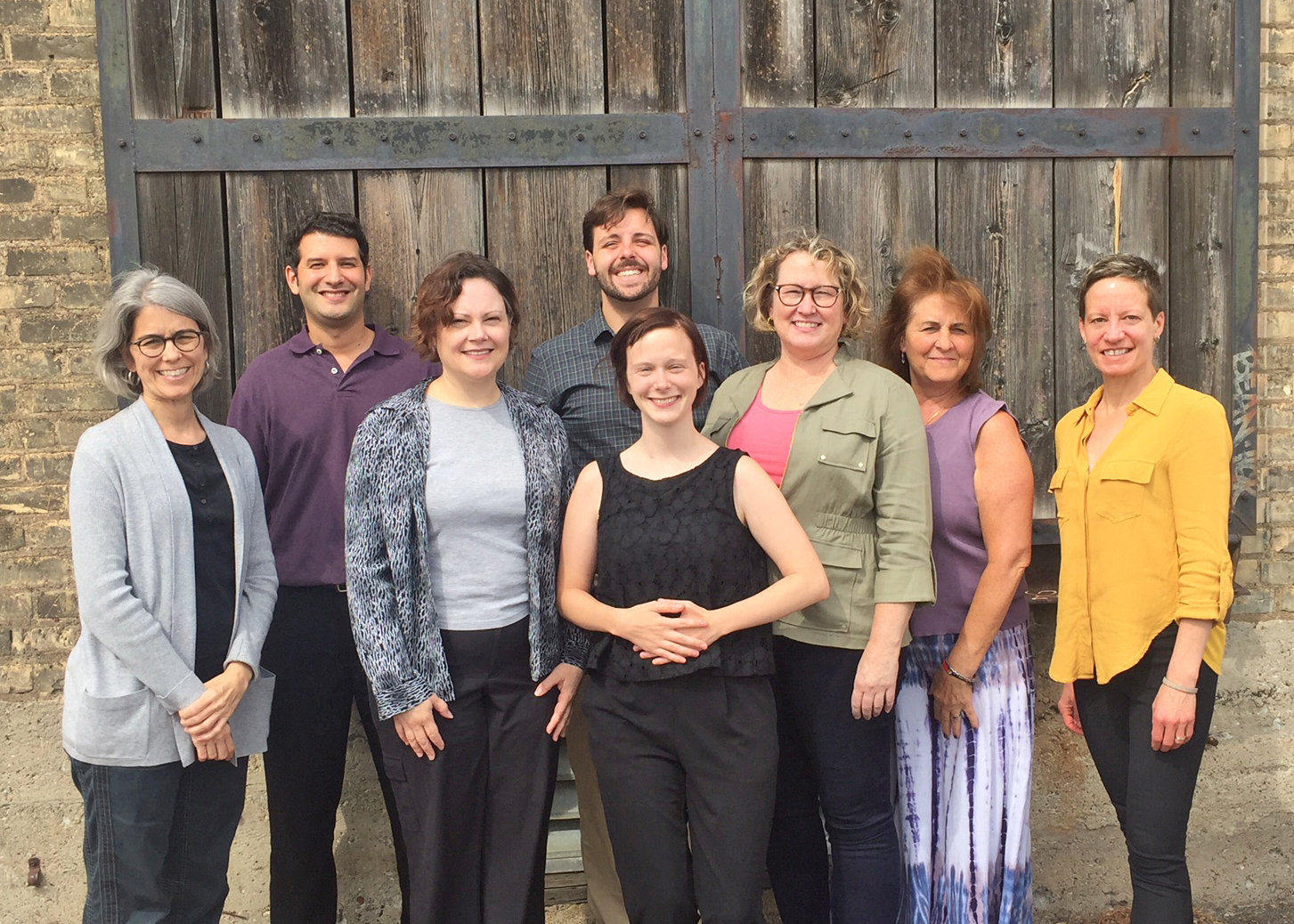
    Photo: MHP’s Community Development team

    This position reports to the Community Development Director. It is exempt, salaried, full-time, $55,000 – $65,000 DOQ, with a full benefit package, and flexible work schedule, including ability to work remotely.  

    Responsibilities 

    • Assist in the implementation of work plans including providing direct/remote technical assistance to beneficiaries/recipients; which include government, non-profit organizations, and tribal entities throughout the State of Minnesota and nationally;
    • Assist in creating and analyzing project development budgets and pro-formas, applying federal and state regulatory requirements to further beneficiary’s/recipient’s project goals;
    • Provide Housing Institute team support focused on defining team goals, understanding local needs, and assisting in the successful implementation of a community development project;
    • Support Community Development Managers in the research, the development and delivering of technical assistance and consulting services that increase capacity and organizational efficiency of governments, non-profits, tribal communities and other public agencies;
    • Market Community Development Department programs and maintain contact with housing agencies and local governments. Support outreach for Community Development Department engagements;
    • Perform other relevant tasks that may be assigned by the Community Development Director.

    Qualifications

    • Minimum three years of experience in community development, economic development or housing development.
    • Experience with funding applications such as LIHTC, FHLB, MN Deed Small Cities or other private and/or public grants and loans.
    • Knowledge of: HUD HOME, CDBG and SNAPS programs and/or USDA and other federal community development programs. 
    • Demonstrated ability to effectively advocate on MHP’s behalf with stakeholders.
    • Strong communication and writing skills; must be highly organized and detail oriented.
    • Ability to travel as needed for state and national TA assignments which include overnight stays.
    • Bachelor Degree and/or equivalent experience in relevant field preferred.  

    Physical Demands

    • Involves sitting/standing for extended periods of time, in order to work at a computer screen
    • Lifting up to 20 pounds for occasional event and meeting management
    • Finger and hand dexterity
    • Vision, including close vision, ability to adjust or focus
    • Hearing, Speaking
    • Ability to travel throughout Minnesota and the nation with occasional overnight stays

    Work Environment

    • Office environment, noise level – quiet
    • Good air quality and lighting

    To Apply

    Send a cover letter and resume to [email protected]. Position is open until filled with first round of applications being reviewed August 3rd.

  • Community First: Homes 4 Families and CalVet create community for veterans

    “Overall, California is home to more veterans than any other state in the country,” explains Mark Walbert of the California Department of Veterans Affairs. “We get up to 400 inquiries per month from vets looking to buy a home.”  

    Walbert administers CalVet’s Residential Enriched Neighborhoods (REN) program, which utilizes the Enriched neighborhoods model. Developed over 12 years by Homes 4 Families and licensed by CalVet, the Enriched Neighborhoods model builds wealth, stability, and thriving communities for low-income veterans and their families through affordable homeownership and wrap-around services. 

    {source}

    <iframe width=”560″ height=”315″ src=”https://www.youtube.com/embed/D60fR-9IbbQ” frameborder=”0″ allow=”autoplay; encrypted-media” allowfullscreen></iframe>

    {/source}

    Hear from Stacey Chiang, Grant Writer & Corporate Development Associate at Homes 4 Families, and her colleagues about how the Enriched Neighborhood model builds community for veterans and their families.

    “CalVet is a great partner, and they’re national leaders in community responsiveness,” explains Stacey Chiang, Grant Writer & Corporate Development Associate at Homes 4 Families. “They saw the rising numbers of homeless veterans and the rising housing costs in California and quickly took action.” 

    Established in 2014, the first CalVet REN and Homes 4 Families development filled immediately with 12 homes selling for $266,000 in a market where the average four-bedroom sells for $330,000.  

    Homes 4 Families continues to partner with government entities like CalVet, nonprofits, and corporations to provide training and oversight to implement the model in California communities. In total, there are 184 Veteran Enriched Neighborhood homes under construction, completed, or in development in California. 

    Homes 4 Families centers community from the start of each project by creating an asset map, which provides information about the veterans living in a community – from demographics to capacity for homeownership – and a community’s existing resources including markets, schools, and potential partnerships.  

    Veterans work with volunteers to help construct their homes. “It unites the veterans, their families, foundations, and students to work together, and it also helps veterans integrate into their new communities,” Chiang says. 

    Homes 4 Families designs homes with veterans in mind. For example, to avoid potential triggers for a veteran with Post-Traumatic Stress Disorder, homes include LED lighting rather than fluorescent lighting, which buzzes and flickers. 

    “It’s really important to us that the homes we build are safe, accommodating, and comfortable for the veterans,” Chiang explains. 

    To support veterans in building community, stability, and wealth, the program provides services specifically targeted to veterans and their families – from credit counseling and budgeting, to support for Post-Traumatic Stress Disorder.  

    “This approach has been vetted and tested, and it works,” Walbert says. “These programs are proven to be helpful to vets who have specific issues.”  

    CalVet REN is a standout example of leveraging partnerships to serve the unique needs of a specific community – veterans. And Homes 4 Families is a clear leader in creating projects that put the wellbeing of veterans at the forefront. 

    Community First, a HUD-sponsored guidebook created by Minnesota Housing Partnership, helps housing program designers create their own standout initiatives by 1) highlighting examples of successful programs – like CalVet REN – from across the U.S., and 2) providing guideposts in key areas including understanding your target market, identifying barriers to homeownership, and leveraging partnerships. The key takeaway: center community needs and input throughout the program design and implementation process.  

    CalVet REN has a major impact on veterans and their families. “People are incredibly happy and pleased,” Walbert says. “Many participating veterans, especially those who are disabled, never imagined they’d have a house. These neighborhoods are a combination of young and old; some just out of the service, some Vietnam vets who are getting disability who never thought they could afford a home in Southern California.”  

    Access the Community First guidebook and download the one-pager.

    Join the conversation on Twitter: #CommunityFirstTool

  • Market Watch Report Underscores Dramatic Gap in Affordable Housing in Saint Paul

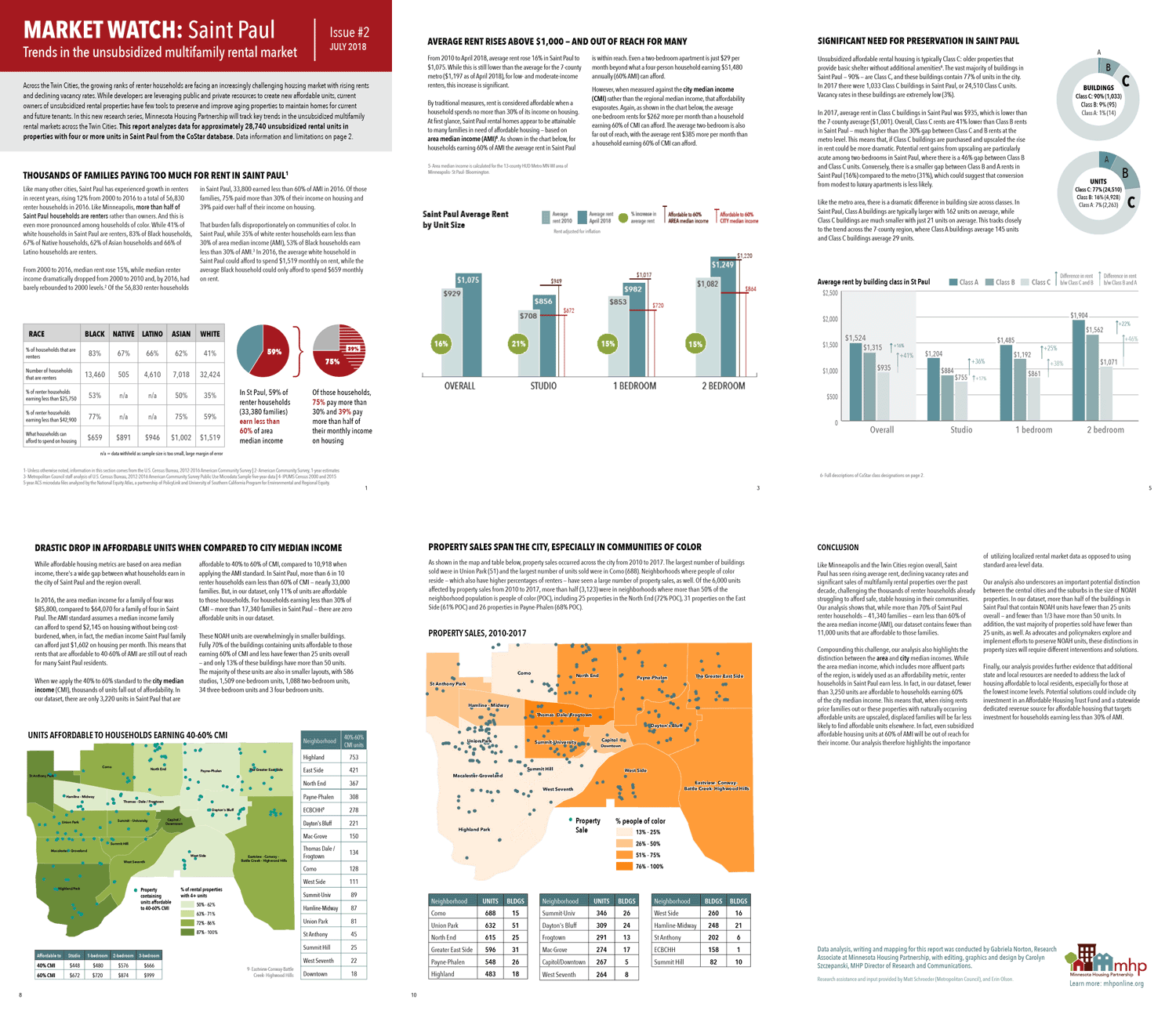
    Across the Twin Cities, the growing ranks of renter households are facing an increasingly challenging housing market with rising rents and declining vacancy rates. While developers are leveraging public and private resources to create new affordable units, current owners of unsubsidized rental properties have few tools to preserve and improve aging properties to maintain homes for current and future tenants. 

    Building on our 2016 “Sold Out” report, Minnesota Housing Partnership launched a new research series tracking key trends in the unsubsidized multifamily rental markets across the Twin Cities.

    This second report, published in July 2018, analyzes data for approximately 28,740 unsubsidized rental units in properties with four or more units in Saint Paul from the CoStar database. 

    Read more and download the full report.

  • Community First: Detroit’s Live Midtown program leveraged partnerships to attract employees

    As Detroit emerged from bankruptcy and the Great Recession, locals sought an effective strategy to attract and retain employees of local businesses in the Midtown area, a thriving center for arts, education, and medicine. With rental, homebuyer, and homeowner incentives for employees of three major partner institutions – including Wayne State University, Detroit Medical Center, and Henry Ford Health System – Live Midtown was the anchor strategy among local efforts to revitalize the Midtown area and to attract and retain employees.  
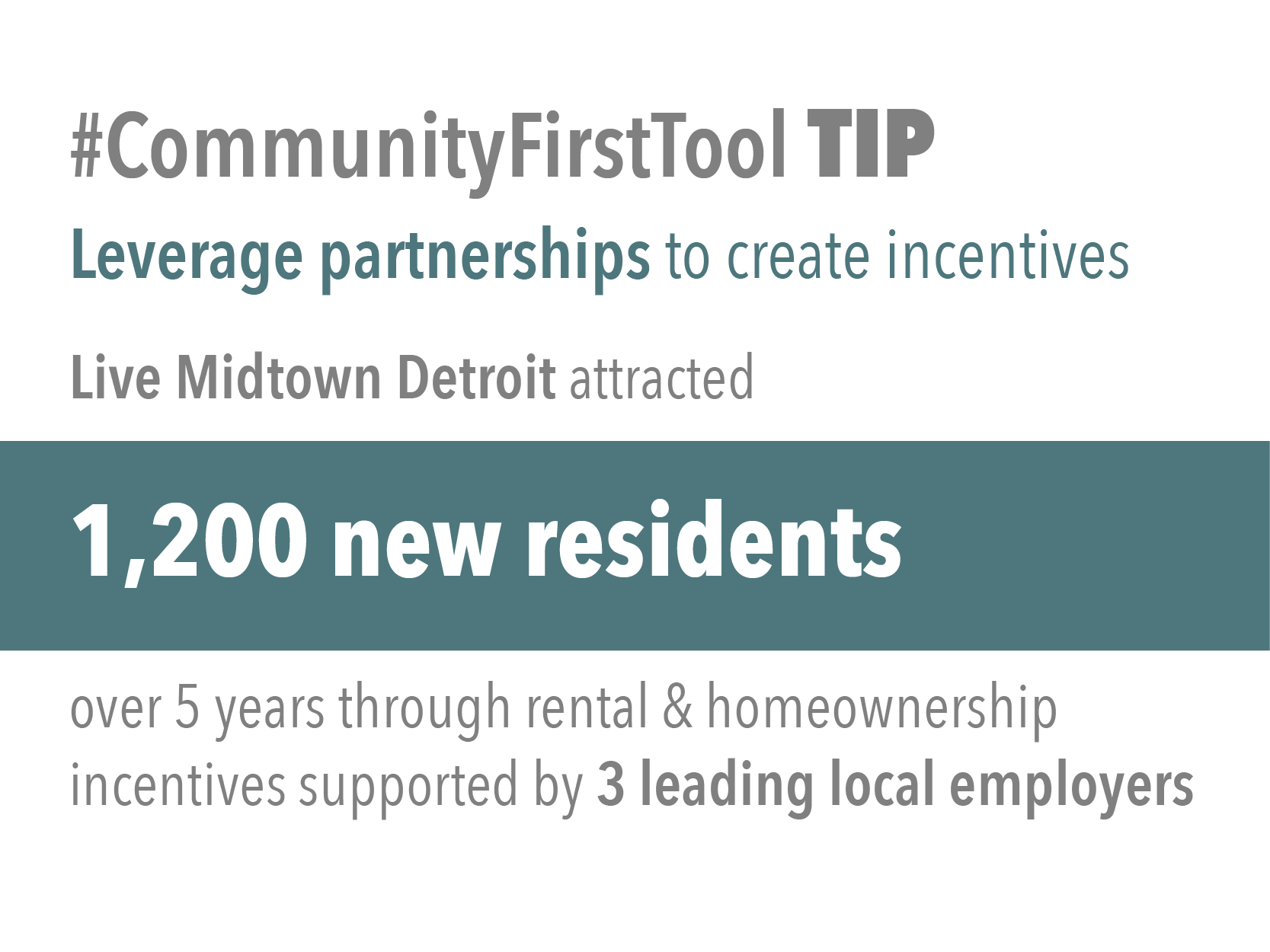
    Photo: Historic home in Midtown via Live Midtown

    Through subsidies for new residents, $2,500 in rental assistance, $20,000 five-year forgivable loans for down payment assistance, and $5,000 grants for exterior improvement, Live Midtown played a major role in meeting those goals. 

    “From 2013 to 2015, Midtown Detroit had recorded its first increase in population in a decade, and this program is responsible for a portion of that,” explains Christopher Hughes, Data Manager for Midtown Detroit, Inc., the entity that administered the program. “We had 791 participants, new to the Midtown area. If you account for household size, that’s a little bit over 1,200 new residents from this program alone over a five-year period. That’s pretty substantial.” 

    Hughes says Live Midtown’s success stemmed from a strong, mutually-beneficial partnership with local employers, each of whom contributed $1 million annually over five years. “The program engaged leading local institutions and leveraged their influence to promote the revitalization of the community,” he explained. Local foundations and the Michigan State Housing Development Authority also provided support for the program. 

    Programs like Live Midtown demonstrate the power of private partnerships, especially in creating effective solutions for employee housing. Live Midtown is one of the many standout programs highlighted in “Community First,” a HUD-sponsored guidebook created by Minnesota Housing Partnership to aid homebuyer / homeowner program designers in achieving their goal of creating stable, high-quality, mixed-income neighborhoods. Synthesizing information collected from more than 300 homebuyer / homeowner programs nationwide, the guidebook helps program designers:  

    • understand the homebuyer market; 
    • identify and addressing existing barriers; and
    • establish appropriate homeownership programmatic approaches, in their marketplace, to attract and support buyers to invest in properties in targeted neighborhoods. 

    The key takeaway for program designers: Understand your community – your clients. Then, locate other organizations for partnership and collaboration, building critical mass. If program designers fail to engage their target market by collaborating with partners to leverage resources and community knowledge, the program may be selling a product that targeted customers aren’t willing to buy. 

    After Live Midtown concluded, it became apparent that the myriad revitalization efforts and subsequent growth in Midtown had created negative consequences for some residents, including rising rents. Midtown Detroit, Inc., in partnership with local foundations, launched Stay Midtown, to provide rental assistance to existing working-class residents at risk of displacement.

    Access the Community First guidebook and download the one-pager.

    Join the conversation on Twitter: #CommunityFirstTool

  • Housing Discrimination Revealed: History of Race & Real Estate in Minneapolis Bus Tour

    Many residents of Minneapolis believe that their city has never had any kind of formal segregation. Part of the “Racism, Rent and Real Estate: Fair Housing Reframed” series, a unique bus tour made visible the structural racism that has undergirded the city’s urban landscape, and illuminated the community solidarity that developed among African Americans in the face of this white hostility.

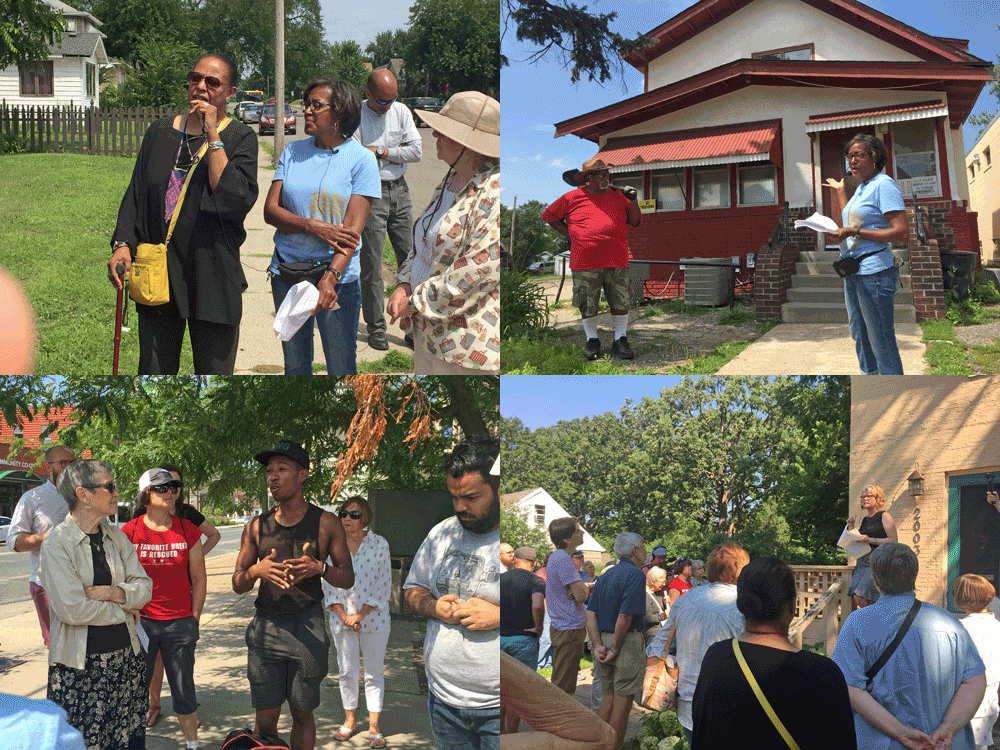
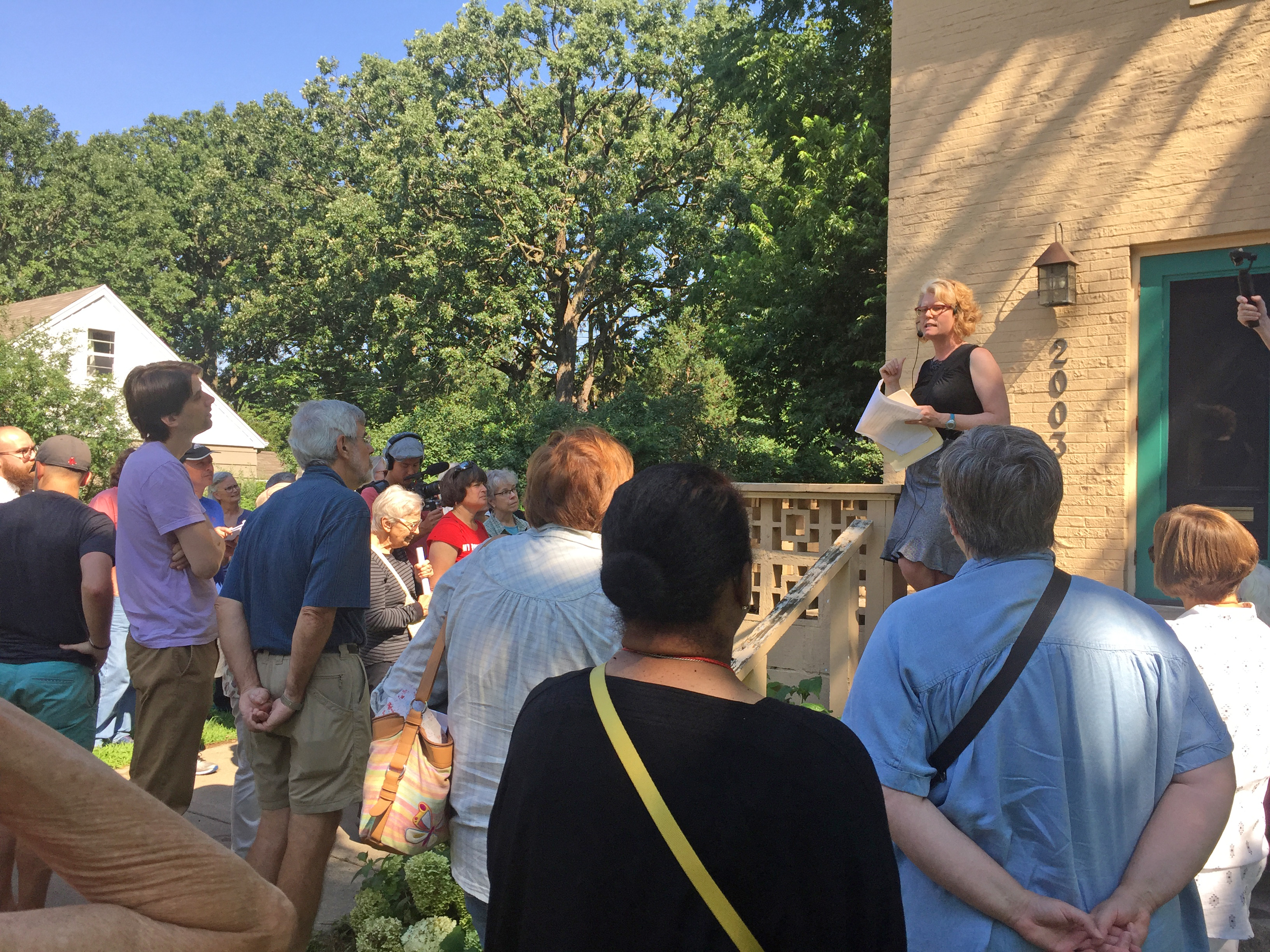
    Co-hosted by Preserve Minneapolis and Mapping Prejudice, “Housing Discrimination Revealed: The History of Race & Real Estate in Minneapolis Bus Tour” drew on the expertise of Kirsten Delegard and Penny Peterson from Mapping Prejudice and Tina Burnside, a local attorney, writer and historian. Filled to capacity, nearly 50 people attended the two-hour tour that traveled from Prospect Park to the Central Neighborhood, exploring the impacts of racial covenants and the history of community resilience.

    The tour started at the site of a conflict that made the headlines of local newspaper in 1909 as a “race war in Prospect Park.” The home of Amy and Madison Jackson was visited by a white mob, who’s spokesman declared: “The white residents of this district do not want members of your race domiciled in our midst, if there is any way which men of judgment, prudence and determination can adopt to prevent it.”

    At a time when only 2,700 Black people lived in Minneapolis, the African American family was the first to purchase a home in Prospect Park and, according to their eldest daughter Marvel, the neighbors across the street “started screaming” when her family moved in and “the Prospect Park Association got together and they decided they did not want a black family in that community.”

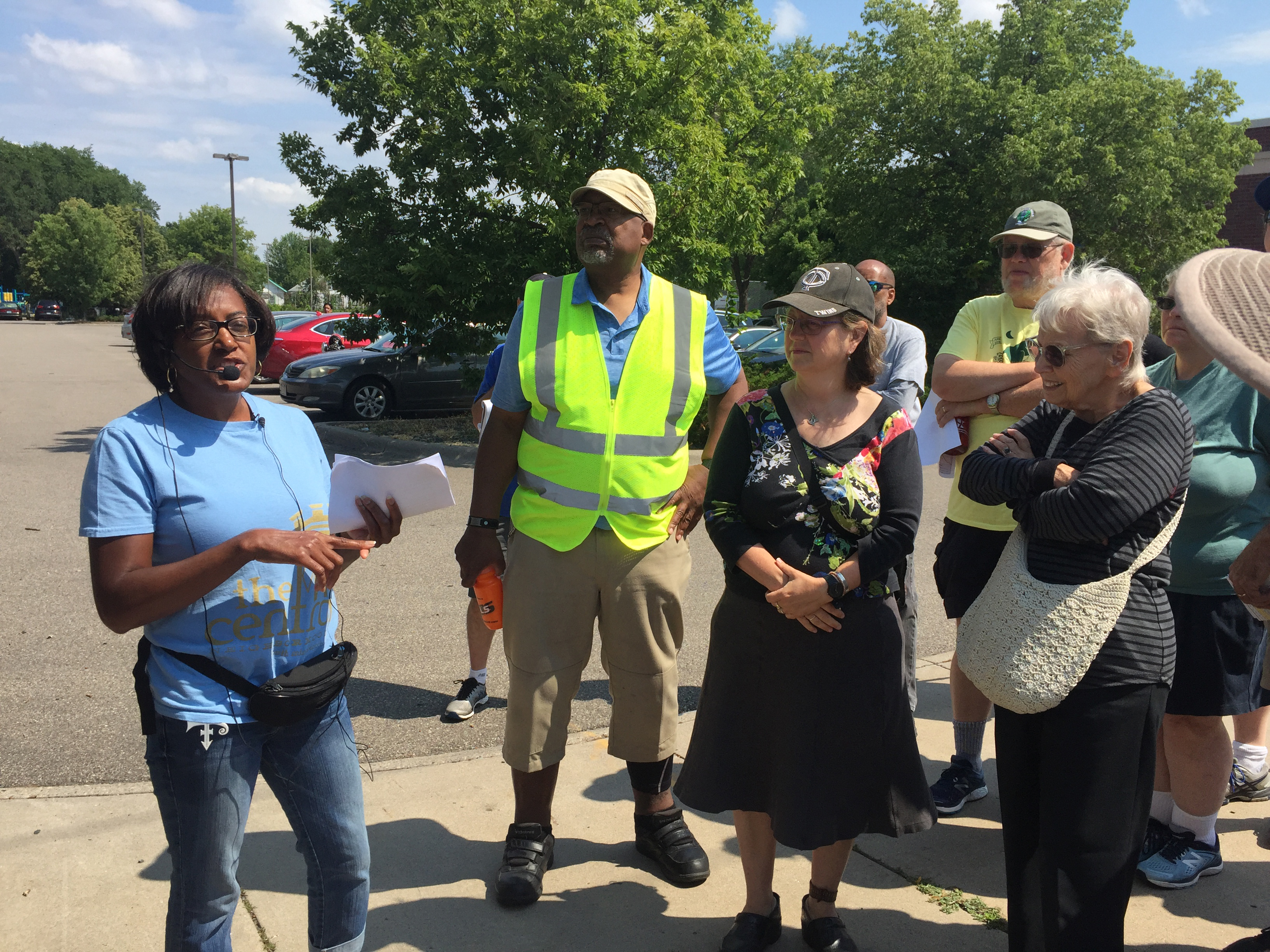
    Kirsten Delegard sharing the story of the Jackson family in Prospect Park

    While the family created a play space that was beloved by the neighborhood children, the white hostility to the Black homeowners never dissipated. While Marvel Jackson excelled in school and would go on to become a trailblazing journalist and the chair of the Angela Davis Defense Fund, that hostility compelled her to take her exceptional talents elsewhere. “As soon as I could, I got out of Minneapolis,” she recounted. After the Jacksons sold their house, when Madison died in 1927, Prospect Park remained all white until 1960.

    Those homogeneous neighborhoods were very much by design. “Before redlining and before the real estate industry codified racism in its code of ethics, trail blazing real estate developers were already thinking about how to segregate American cities — their weapon of choice was the racial covenant,” Delegard explained.

    Racial covenants are simply several lines of text in property deeds that served a powerful purpose: to make it illegal for people who are not white to live on that piece of land. The first racial covenant in Minneapolis came just a few months after the clash at the Jackson house. Placed on a home purchased by a Swedish baker on 36th Avenue South, it stipulated that the “premises shall not at any time be conveyed, mortgaged or leased to any person or persons of Chinese, Japanese, Moorish, Turkish, Negro, Mongolian or African blood or descent.” Those covenants — 13,000 of which have been uncovered by Mapping Prejudice thus far — became a central organizing principle not only for Minneapolis, but for all American cities during that pivotal moment in history.

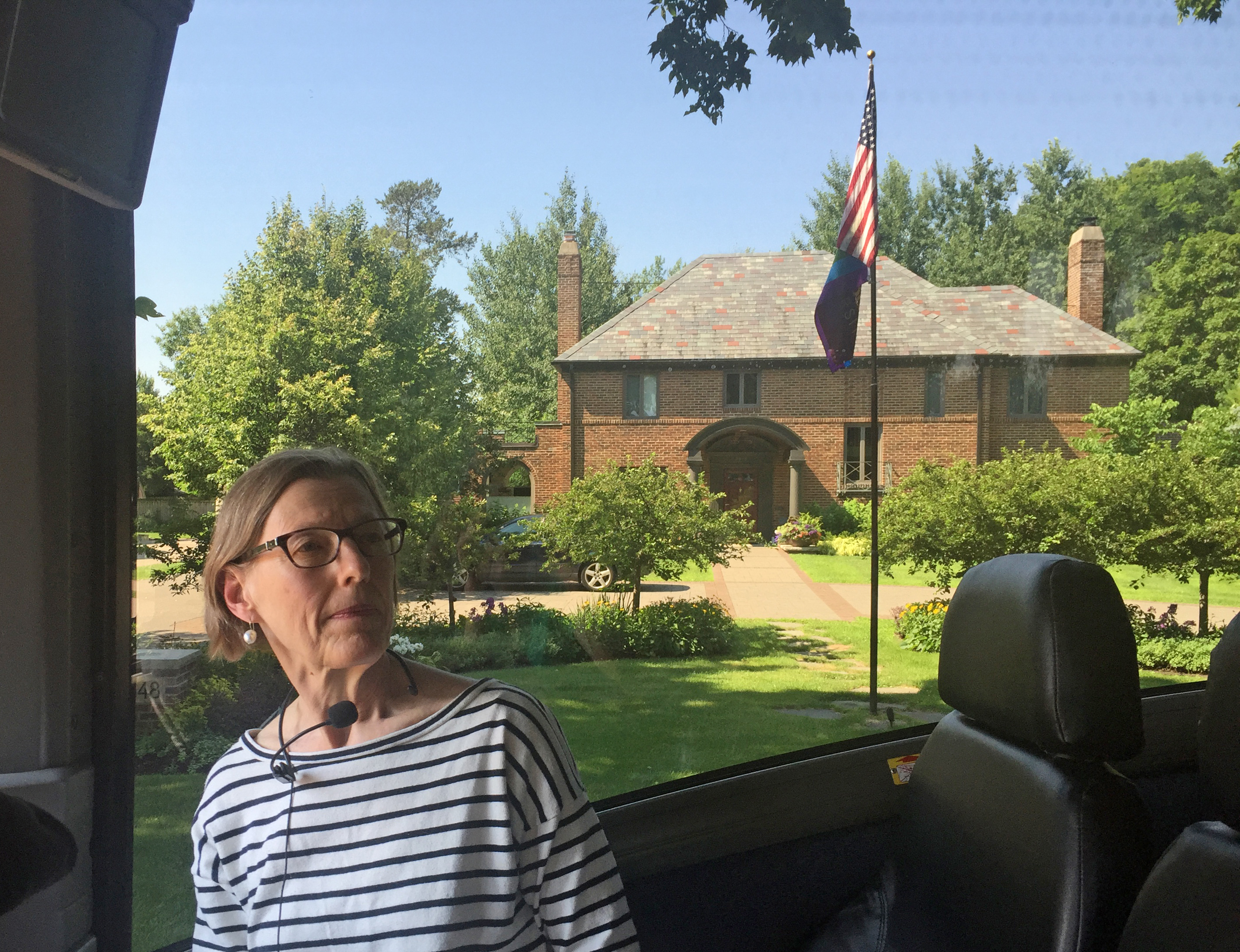
    Penny Peterson and a house that included a racial covenant on Edmund Boulevard

    As the bus drove along Edmund Boulevard, Penny Peterson of Mapping Prejudice, explained that while not the first person to apply a restrictive covenant to his property, the street’s namesake, Edmund Walton, was one of the first real estate developers to bring the tool to scale. By 1905, Walton had acquired 347 acres in the area between Lake and 38th Street South and the river bank. At first Walton and his partners added the same racial language to their properties somewhat haphazardly, but by 1914 virtually all their Seven Oaks properties were racially covenanted, Peterson explained. Other real estate developers followed Walton’s lead, and within 10 years of the first restrictive covenant, they became accepted — and profitable. This was especially true of neighborhoods adjacent to the city’s growing park system, where covenants kept these leafy, attractive neighborhoods off limits to people of color.

    “When racial covenants were introduced to Minneapolis, the city wasn’t particularly segregated,” Delegard said. “They shunted African Americans out of white neighborhoods and into a couple of small areas in the city. And these bad deeds normalized the idea of racial segregation. They made it seem natural for people to want to live with ‘their own kind.’”

    As the tour continue along 38th Street from the river, tour guide Cara Letofsky pointed out the visible impacts of these now-outlawed drivers of racial segregation in housing on the city’s landscape. Traveling from the lush neighborhoods along the river west, the tour passed Snelling Avenue, one of the red-lined areas of mixed housing and industrial uses. “We didn’t want this tour to just talk about the depth of discrimination in our community,” Letofsky noted. “We also wanted to highlight how African Americans, even in the face of this discrimination, built communities of resistance.” Snelling Avenue, running just south of Lake Street to 38th Street, was one of the few areas in Minneapolis where African Americans could live and thus saw a high rate of Black homeownership. Families also lived here to be in close proximity to the railyards at Hiawatha and Lake, which provided employment opportunities to the community.

    Mapping Prejudice: History of Race & Real Estate in Minneapolis Bus Tour from Ryan Stopera on Vimeo.

    The forces of segregation were also the major catalyst for the Central neighborhood becoming a hub of the Black community and commerce. Guiding the group along 4th Avenue South, historian Tina Burnside pointed out the many anchors of Black business and spiritual life, in the neighborhood where many African Americans purchased homes in the early and mid-20th Century, when much of the city was off limits because of racial covenants. She told the group about the restaurants and beauty shops that lined the vibrant streets and the community institutions like the Nacirema social club and the Minnesota Spokesman-Recorder newspaper.

    Coventry Cowens shared the history of her family in the neighborhood, explaining that her parents bought a home in Central because, despite their education and income, they were locked out of other areas of the city. For years, they owned a local grocery store that was an anchor of the community. But just outside the boundaries of Central, white hostility targeted families like Edith and Arthur Lee, a Black family who bought a home at 46th and Columbus in 1931 wasn’t entirely absent.

    “They were first greeted by the neighborhood association nicely with an offer to buy back their home for more than they paid for it,” Burnside recounted. “But when Mr. Lee said no, they moved on to more violent tactics, to the point that there were mobs of more than 1,000 white people who would gather outside of their house and try to torment them to move from the neighborhood. They would riot in front of the house, throw rocks at the house, call them racial slurs, and throw garbage on their lawn. This went on night after night just because he wanted to purchase a home for himself and his family.”

    Tina Burnside sharing history of the Central Neighborhood

    Even for tour participants with some knowledge of Minneapolis’ racist past, the tour was illuminating.

    “I learned that the structural racism that controlled Minneapolis real estate started much earlier in history and that the federal government was more complicit than I was previously aware,” participant Bill Dooley reflected. “I also learned that while not desirable, the construction of I-35 through South Minneapolis was not nearly as destructive to the African American community as I-94 was to the African American community in St. Paul-Rondo. What stood out to me was this mapping project with bus tours would be an excellent opportunity to educate Minneapolis citizens regarding the basis for the racial disparities in home ownership in Minneapolis.”

    “The tour far exceeded my expectations,” Noel Gordon, Jr., said. “I love that the event was co-faciltiated by a multi-racial group of women leaders from our community, and that the facilitators were gracious enough to allow impromptu contributions from the audience. The best part for me was learning about the trailblazing Marvel Jackson!”

    See photos from the tour here.

    Thank you to our series sponsors: City of Minneapolis, University of Minnesota Imagine Fund, Hennepin County, Aeon, CommonBond Communities, Family Housing Fund and Wellington Management.