• Community First: Baltimore’s Vacants to Value turns vacant properties into “assets to the community”

    “How do you bolster neighborhoods by shifting vacant properties into assets to the community?” For Alice Kennedy, Deputy Commissioner for the Department of Housing and Community Development in Baltimore, Maryland, that’s the driving question behind the City’s Vacants to Value program.

    Launched in 2010, Vacants to Value incentivizes redevelopment of abandoned properties by providing applicants with $10,000 toward closing costs and downpayment assistance for the purchase of a formerly vacant home, and allows buyers to build home renovation loans into their mortgage. To qualify for the incentive, the house must have been subject to a Vacant Building Notice for a year or more prior to its rehabilitation for a sale to a home buyer.  

    Kennedy says the program strengthens communities by building on existing neighborhood assets. “We’re looking at continuing to highlight neighborhoods that often go overlooked,” Kennedy explains. “These areas are affordable with strong roots that are attractive to homebuyers. It’s important to highlight the amenities that currently exist in those neighborhoods.” 

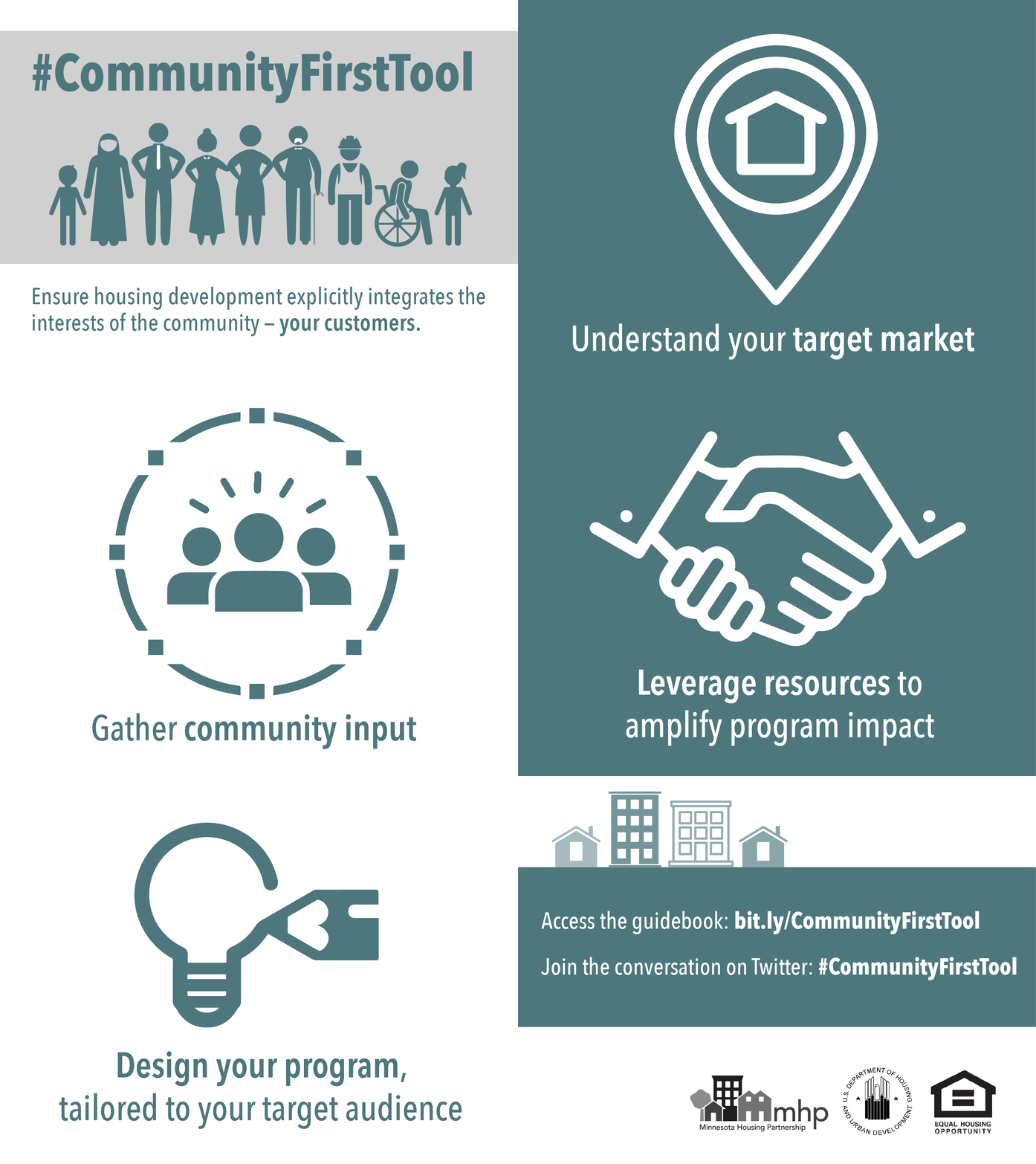
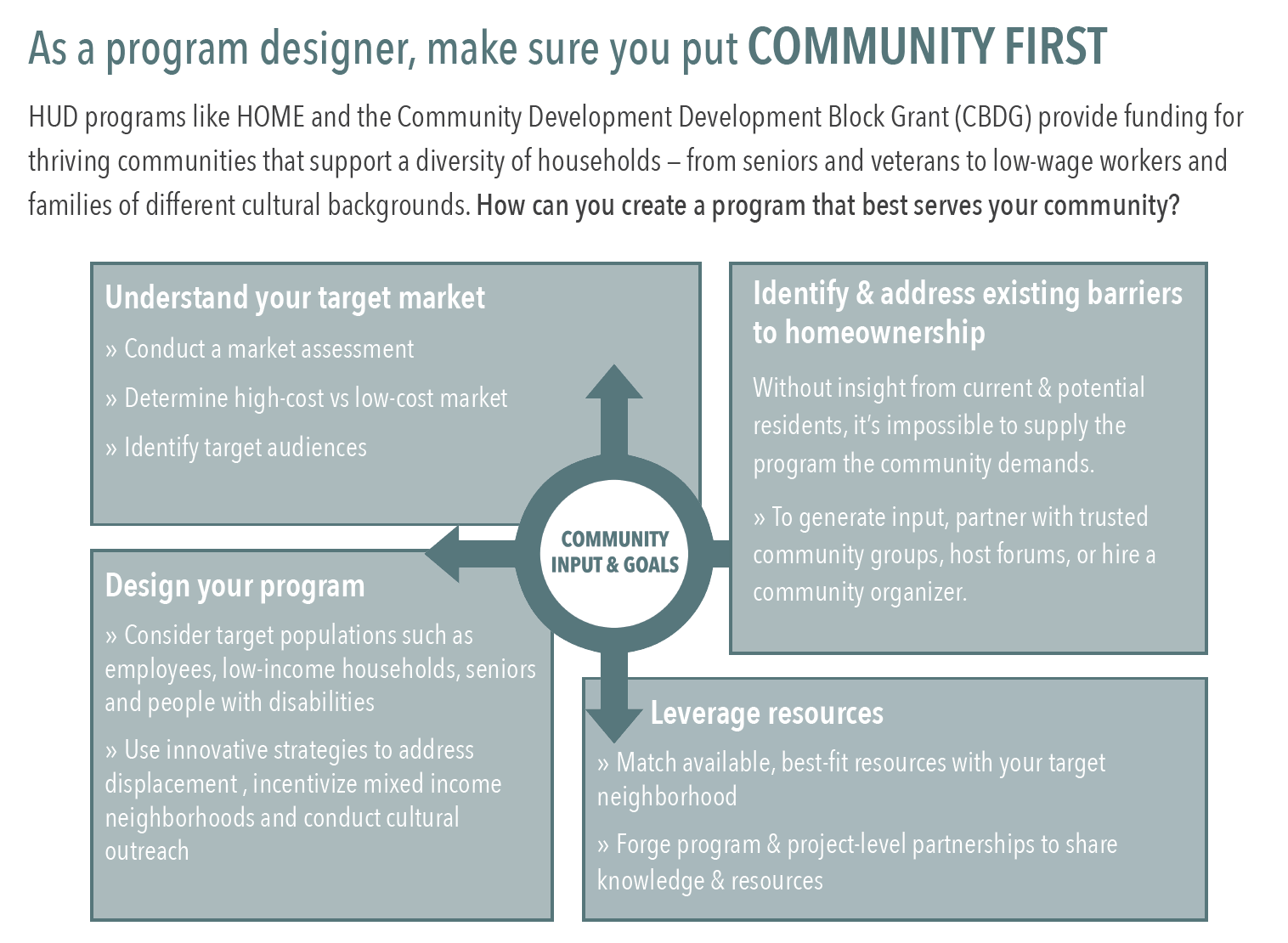
    Homebuyer and homeowner program designers – like Kennedy and her team at the City of Baltimore – recognize that homeownership is a key tool to create stable, high-quality, and mixed-income neighborhoods. “Community First,” a HUD-sponsored guidebook created by Minnesota Housing Partnership (MHP), synthesizes takeaways from leading programs across the United States to help program designers: 

    • understand their homebuyer market – their customers;
    • identify and address existing barriers to homeownership; and
    • establish appropriate programmatic approaches to attract and support buyers to invest in properties in targeted neighborhoods. 

    To create this guidebook, MHP and Econometrica researched more than 300 homebuyer / homeowner programs nationwide. Vacants to Value, one standout program, targets local demand for affordable homeownership in a low-cost market. In a low-cost market, the fair market value of homes is affected by other less desirable market factors – including vacant properties or land. 

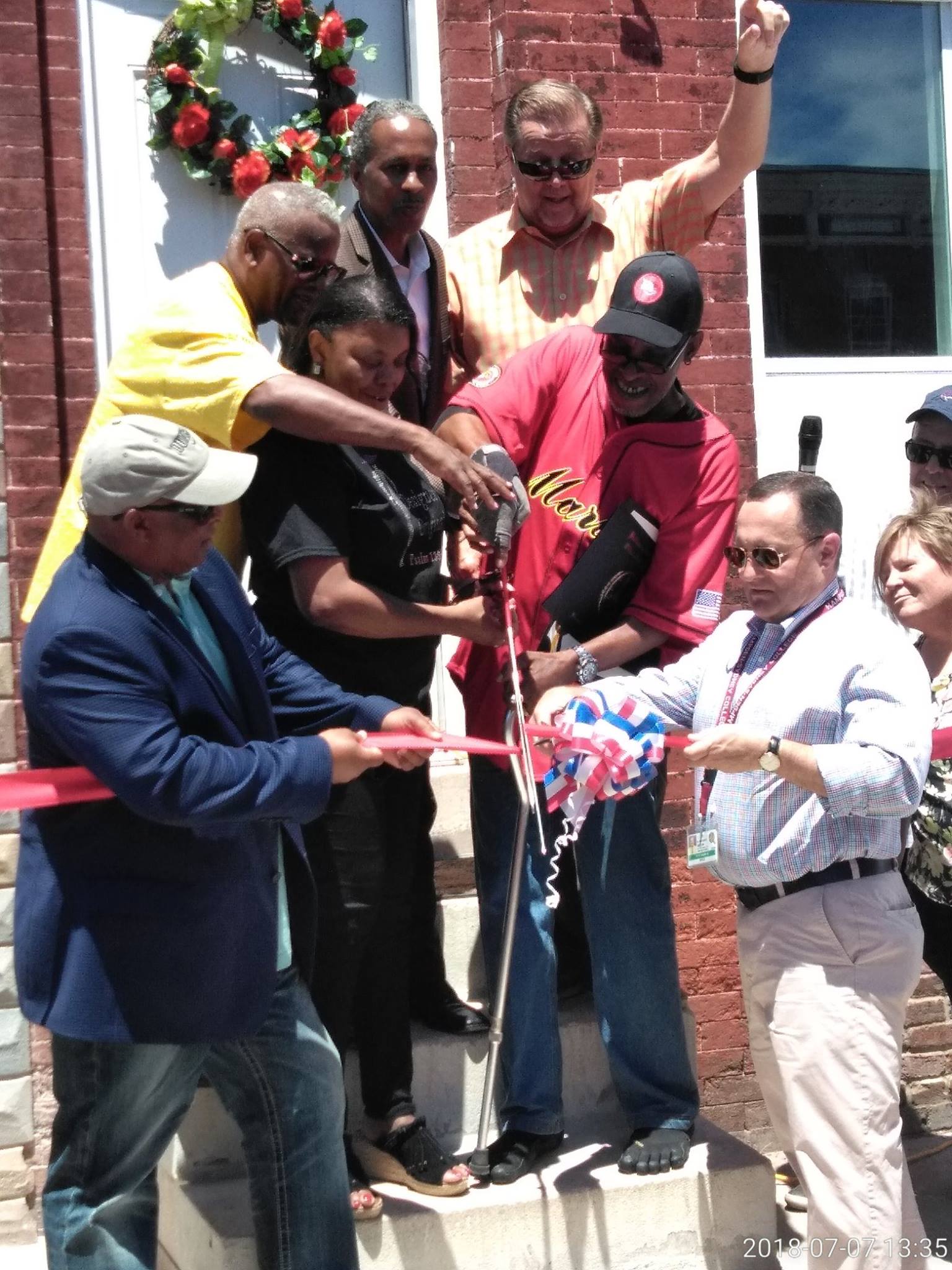
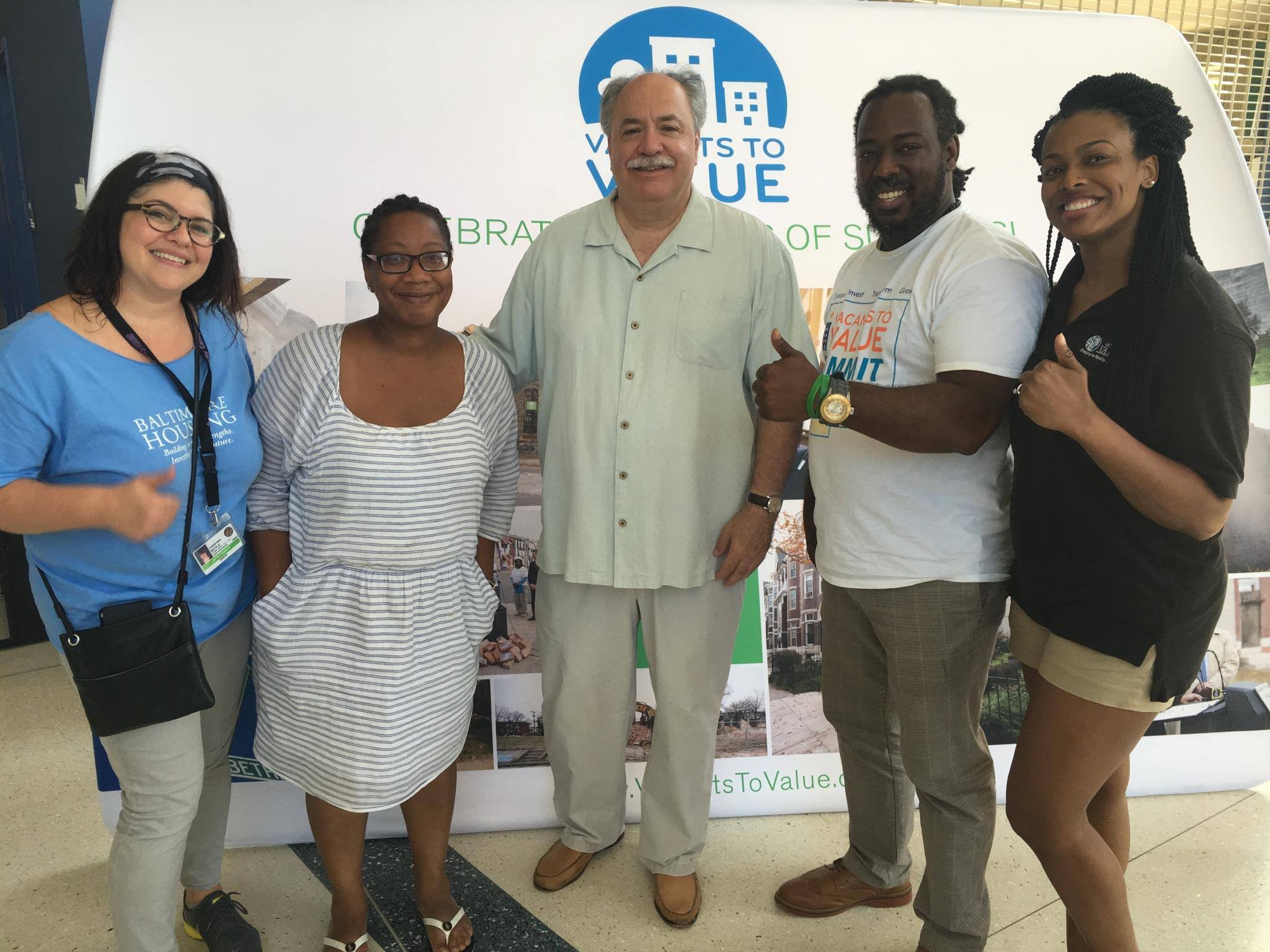
    Photos from the Vacants to Value Facebook page

    Building a program based on market type is just one of the considerations Community First prompts program designers to consider. Housing needs, target audiences, and soliciting robust community from the start – are other key markers of a successful program.  

    By understanding the dynamics of a target market – and what clients want – program designers can create a holistic approach that creates access to opportunity, empowers economic mobility, and reinvests in communities. 

    Access the Community First guidebook and download the one-pager.

    Join the conversation on Twitter: #CommunityFirstTool

  • Community First: Key lessons for housing development and revitalization

    From focus groups to surveys, to internet analytics and trend research, companies worldwide spend billions on engaging with customers to understand exactly what they want. They don’t want to design a product that their target market wouldn’t – or couldn’t – buy. Neither should designers of homebuyer and homeowner programs.  

    Too often, though, programs zero in on housing development goals without explicitly integrating the needs of the community. Failing to connect with the community these programs seek to serve – the customers – can result in completed projects sitting empty for longer than anticipated or a failure to use resources impactfully. 

    Community First, a HUD-sponsored guidebook created by Minnesota Housing Partnership with funding from the Department of Housing and Urban Development, helps you avoid those pitfalls by outlining key considerations in homebuyer / homeowner program design including: 

    • understanding your homebuyer market (your customers); 
    • identifying and addressing existing barriers to homeownership within your target market; and 
    • establishing appropriate programmatic approaches to attract and support buyers to invest in properties in targeted neighborhoods. 

    To create this resource, Minnesota Housing Partnership and Econometrica reviewed more than 300 homebuyer / homeowner programs across the United States. In addition to outlining general principles and best practices, the guidebook includes standout program examples that showcase innovative ideas organizations can apply as they look for creative approaches to put community first. 

    The key takeaway: Successful programs center community needs from the start.

    Access the Community First guidebook and download the one-pager.

    Here are the top four lessons from Community First: 

    1) Understand your target market. 

    Getting a handle on the housing market in a community or target area is central to creating a successful program and creating effective marketing strategies to get the word out about your work. Gather broad demographic data, information on existing programs, and homeownership gaps and barriers through a housing study, and determine whether you’re working in a low-cost or high-cost market. 

    Once you have a broad picture of your target market, consider targeting specific audiences. First, engage with existing residents to craft solutions that serve both present and potential residents. Existing residents should play a central role in creating new programs, and they should be the first to learn of new opportunities and resources. Other potential target audiences include cultural communities, seniors and those with disabilities, and the local workforce.

    2) Gather community input. 

    Community input is more than a task on a checklist; it’s the cornerstone of successful community development. Without meaningful insight from current and potential residents, it is impossible to supply the type of projects and programs the community demands. Too often, program designers seek community input with a program already in mind. Successful organizations begin with the insights of the community, establishing an understanding of community history, resources, and building trust and accountability. 

    Generate community input by partnering with trusted community groups; going to the places where the community lives, works, or worships; hiring a community organizer to maintain relationships with community members; providing translations and understanding that some communities are better engaged face-to-face rather than through written notices; convening focus groups; sending email blasts; and utilizing social media. 

    You’ll need to genuinely engage with perceptions that housing systems aren’t inclusive or responsive; and that residents have historically been excluded from decision making and program design. Ensure that you understand the community’s long- and short-term goals, lessons learned from past programs, and potential resources and partners.  Gathering community input is essential not only for creating successful programs – it’s key to ensuring healthy long-term relationships in the neighborhoods in which you work.

    3) Leverage resources to amplify program impact.  

    Whenever possible, use the dollars you’ve got to attract additional resources. In addition, ask yourself the following questions to make sure your program has the greatest impact: 

    — Which program types are most cost-effective given the housing market conditions? Prioritize these based on community needs and the resources available to address them. 

    — Which neighborhoods are the best fit for the available resources among identified target areas? Consider neighborhoods that could best benefit from a focused approach, and neighborhoods where the scale of housing needs can be addressed with CPD funds plus other available resources. 

    — Which demographic group will be served by the project – and what outreach is necessary to engage that group? 

    Community partners – not just funding partners – are resources, too. Forge program and project level partnerships to share knowledge and resources and spark innovation. 

    4) Design your program, tailored to your target audience. 

    Community First spotlights trailblazing programs nationwide, responsive and effective in meeting the needs of their target audiences. From preventing displacement, attracting employees, and providing specialized services for seniors and disabled populations, to building wealth among low-income households and conducting cultural outreach, these standout examples provide replicable models from which you can begin to innovate. 

    Join the conversation on Twitter: #CommunityFirstTool

  • West Birch Estates to provide affordable homes to Princeton area families

    West Birch Estates shows the power of partnerships in making affordable housing happen. From community advocates like Victoria Hallin and city leaders like Jolene Foss, to affordable housing sector leaders like Central Minnesota Housing Partnership and Blumentals/ Architecture, Inc. — every voice is essential.

    Victoria Hallin has been a leader in her community of Princeton, Minnesota for years. She’s served on the City Council for 14 years, been mayor for four, acted as EDA commissioner for 12 years, and she just started serving on the city planning commission.

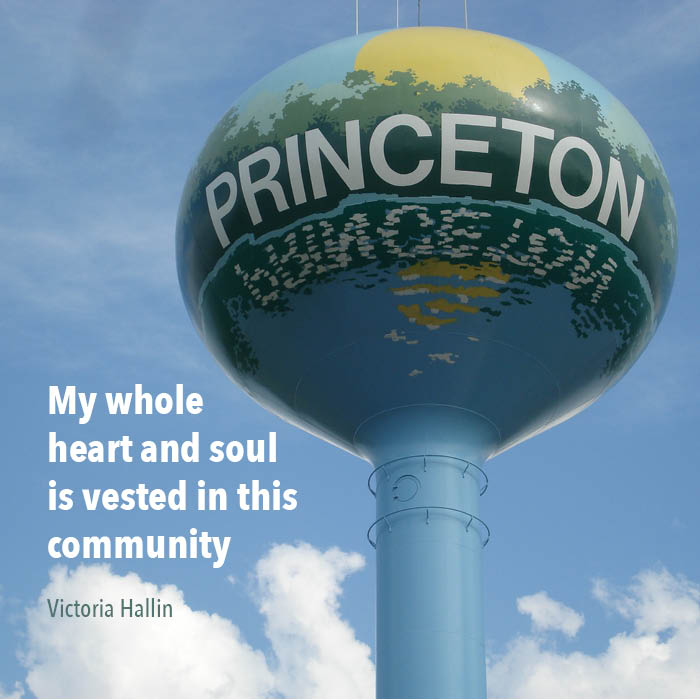
    “My whole heart and soul is vested in this community,” Hallin said.

    But 17 years ago, Hallin had more pressing matters to deal with than building a better Princeton. Her first and only priority was to find a home for herself and her four sons. Hallin had decided to leave her husband, and over the next few months, her life changed drastically.

    After Hallin moved out for a summer — a block away from her sons — she discovered that her husband had failed to pay lot rent for their mobile home. He and the boys were evicted. Because Hallin’s name was also on the lot lease, she was barred from renting for a year.

    Suddenly, Hallin and her boys were homeless. And finding an apartment they could afford — let alone one that would accommodate four boys — was a major challenge due to Princeton’s shortage of affordable rentals and affordable rentals suitable for families.

    “It’s very hard to rent anywhere with four boys,” Hallin said. “I was getting the door slammed on me left and right. Like, they’re going to destroy the place. Or the units aren’t big enough for four.”

    So, for six and a half months, Hallin searched desperately for a home for herself and her sons. For several months, they stayed with Hallin’s friend — who had a husband and son — in a two-room mobile home. Five boys crammed into one bedroom while Hallin’s friend and her husband slept in the other. Hallin slept on the couch with a blanket.

    Homelessness put a major strain on Hallin and her boys.

    “There was a lot less time that I could spend with my boys because of having to work or work extra,” Hallin said. “Transportation was an issue for all of us. It was very time consuming, and it took a lot more time out of our schedule as a family unit. We didn’t have family time. We couldn’t have family dinners.”

    One day while driving through Princeton, Hallin saw a woman doing yard work outside of an apartment complex. She decided to stop and ask the woman if any units were available for rent.

    “She goes, ‘Oh my gosh, I manage these apartments, but I also manage West Birch Townhomes (pictured right), and I think we may have an opening for you,” Hallin recounted.

    “I almost had a heart attack,” she continued. “We looked at the unit, and I signed the papers, and we moved in in February. My children had a home. It was a blessing.”

    Hallin’s sons, who were 7, 9, 11, and 15 years old at the time, were deeply appreciative of the space, and flourished in a place they could finally call their own — a 3-bedroom unit with outdoor play area and access to onsite laundry.

    “Their respect level was tenfold when we moved into that unit,” Hallin said. “If they spilled Kool-Aid on the carpet they were freaking out. They were very appreciative and very respectful of the roof over their heads and their own bedroom and their own toys.”

    As the stress of homelessness began to fade, Hallin saw her boys transform.

    “Moving into West Birch gave them academic success, it enhanced them emotionally, and it built a stronger bond between the family because we could spend more time together,” Hallin explained. “They excelled, and I could see a big difference.”

    Each evening, at the Family Pathways Teen Center where Hallin works, she mentors, feeds, and encourages 30 to 60 teens — some of whom she’s known since her days working in early childhood education. These teens deal with a range of stressors — including homelessness. Her own experience with homelessness, and the impact it had on herself and her sons, motivated her to work for more affordable housing in the Princeton community.

    “The Princeton community is like everybody knows your name. You know, like the Cheers atmosphere,” Hallin explained. “And we’re concerned. There are a lot of homeless youth here. I’ve worked with 35 myself. My passion over the years has just gotten stronger and stronger.”

    Over a decade ago, fellow community members urged Hallin to run for City Council. She ran and won — four times. Since then, Hallin has been a vocal advocate for affordable housing in Princeton. For the past few years, she has thrown her support behind a project recommended for funding this October by Minnesota Housing.

    The project supports the acquisition and redevelopment of all 24 of the existing West Birch Townhomes and the construction of a 16-unit apartment building nearby, affordable to households earning approximately $26,150 to $45,480 per year. Project developer Central Minnesota Housing Partnership (CMHP) commissioned Blumentals/ Architecture, Inc. to design and oversee construction of the complex, which will accommodate a range of family sizes with 1-, 2-, 3-, and 4-bedroom units and provide community spaces including a new playground. Blumentals/ Architecture will provide big-ticket energy conservation upgrades to the existing Townhomes — from new exterior windows to central cooling.

    Together, the existing Townhomes and the new 16-unit apartment building will be known as West Birch Estates.

    Hallin is overjoyed that more Princeton families will have access to the same opportunities she and her boys could access once they moved into a home they could afford.

    “I fought for West Birch because it saved my life to live there,” Hallin explained. “It’s a stepping stone for many people, and it was like a second set of eyes when I was raising my kids because it was just me and the four boys. It’s a nice ambiance there, and the managers are friendly and kind.”

    For years, Hallin and project partners including CMHP, Blumentals/ Architecture, and the City of Princeton worked hard to make West Birch Estates happen.

    Deanna Hemmesch is Executive Director of CMHP, a nonprofit affordable housing development organization that serves 16 Central Minnesota counties. She’s been envisioning a project like West Birch Estates since 2010, when the City of Princeton sought CMHP’s help in redeveloping a parcel of land adjacent to West Birch Townhomes.

    “For the whole time we’d been looking at [the property], we’d always had a waiting list at our West Birch Townhomes,” Deanna explained. “So the idea was, because we have a waiting list, and we can show a documented need, this would be the perfect opportunity to add to what we already have.”

    Around 2010, when CMHP and project partners submitted submitted their first (unsuccessful) application to Minnesota Housing for tax credits and other funding, there were 60-70 people on the waiting list for West Birch Townhomes. In 2016, when they applied a second time, there were 40 people on the list. Hemmesch explained that demand for the units hadn’t diminished — families on the list had simply lost hope that they’d secure a home at West Birch Townhomes, and began looking elsewhere.

    Since Jolene Foss became Community Development Director at the City of Princeton in 2014, she has pushed to make West Birch Estates a reality. The City of Princeton had committed to demolish existing substandard housing and replace it with affordable housing at numerous separate sites — including the property adjacent to West Birch Townhomes — when they received Neighborhood Stabilization Program (NSP) dollars in 2007 from the U.S. Department of Housing and Urban Development through Minnesota Housing.

    While the City managed to clear this particular site of the old property — Arcadian Homes, a twelve-unit development that had gone into foreclosure — the City and CMHP struggled to secure the tax credits essential to building affordable housing there. Overall, the City and CMHP submitted three applications to Minnesota Housing before the project was finally recommended for funding this October. The City and CMHP will receive over $3.5 million in investment from Minnesota Housing and over $1.2 million in 4 percent tax credit equity to rehabilitate West Birch Townhomes and to construct West Birch Estates.
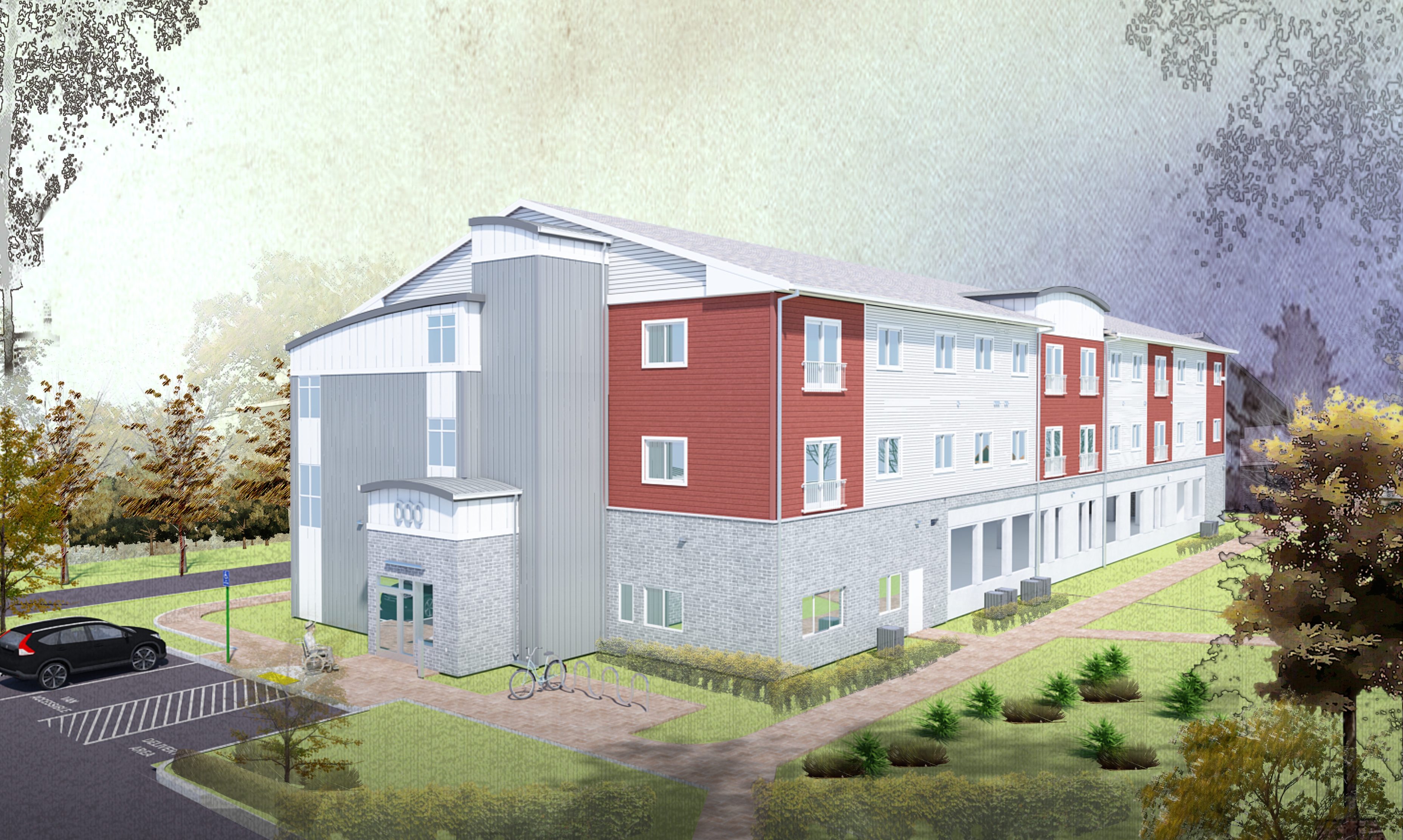
    Right: Architectural rendering by Blumentals/ Architecture, Inc. of the 16-unit apartment complex to be added to the West Birch Estates site

    Cherre’ Palenius, Community Development Manager at Minnesota Housing Partnership, provided technical assistance throughout the project, and encouraged Foss and Hemmesch to keep at it — even when the project seemed impossible.

    Palenius worked with Foss and her colleagues at the City of Princeton to envision how they could fulfill their NSP commitment and leverage local resources to make the West Birch project successful.

    “She gave me an absolutely wonderful background and education on what the NSP program was and what it meant to the City of Princeton and the criteria we had to meet,” Foss said. “She assisted in drafting the Request for Proposals for an affordable developer for the site. She attended meetings with Minnesota Housing, Central Minnesota Housing Partnership, and she met with us when we had our financial advisor here to create an affordable housing Tax Increment Financing district. She was instrumental in providing technical assistance.”

    According to Hemmesch, local contributions are key to getting projects like West Birch off the ground.

    “Local units of government have to step up and say, ‘We need this, and we know that the impact is such that we are willing to provide tax increment financing, we’re willing to waive fees,’ and things along those lines. They really have to give up something. Then, cities need to work with developers to identify employers who might be willing to assist in any way. It can be challenging to get local contributions and generate commitment to a project that’s only an idea at the time.”

    Foss said the City combined several approaches to make the project work and secure the local funding necessary to leverage Minnesota Housing dollars.

    “We basically gave everything we could possibly give to offset the total development cost to make it easier for Central Minnesota Housing Partnership to make the numbers work to apply for the tax credit,” Foss explained. “We gave on every inch that we could as far as waiving fees, reducing fees, and setting up a tax increment financing district. It’s close to a million dollars in local investment going toward this project.”

    The third time Hemmesch and Foss submitted an application, Palenius encouraged them to advocate for the project with lawmakers at the state level.

    “Cherre’ said, ‘You know what, you need to have people advocate on your behalf, and legislators are the best way to do that,” Hemmesch said.

    Foss and Hemmesch worked with Palenius to put the project on their lawmakers’ radars by sending letters and forging connections with legislators and their staff.

    For Hallin, advocating for the project with elected officials was personal.

    “These people know me,” Hallin said. “I lobby at the capitol every year. I’ve been hanging out with elected officials [at the state and local level] for the last 14 years, and I don’t even know if they know that one of their own would not have survived without West Birch Townhomes.”

    Though the development process can be a long — and challenging — road, Foss maintains that the reward is worth the work.

    “I would hope communities would not get discouraged through the process because it can be lengthy and in some ways cumbersome,” Foss said. “Persistence and perseverance have paid off for us, and the winners will be the individuals who will have safe and affordable housing.”

    Foss urges other communities to start addressing affordable housing needs as soon as possible.

    “I think that prioritizing the needs of underserved people is very important to communities, and we’re going to see an increased need for affordable housing, especially our aging population,” Foss said. “It should be on every community’s radar as far as how to establish affordable housing. It took the City of Princeton many years to get to this point, so the sooner communities can start focusing on getting it on their radar, the better chance they are going to have at finding partners who can work with them on affordable housing.

    When Foss received a voicemail from Hemmesch informing her that the project had finally been recommended for funding, she could hardly contain her joy.

    “I may have done a little happy dance,” Foss said.

    Like Foss, Hallin was also ecstatic to hear the project was finally moving forward. She knew firsthand the impact West Birch Estates could have on the families that would eventually call it home.

    “When I invite people to my home, I’m proud to live there,” Hallin said. “I’m proud to open up my door. It’s not the biggest place, but this is my home. So I was very excited and overjoyed. Seriously, I almost started crying. Because I know what it’s been to me, and how it saved me.”

    According to Hemmesch, CMHP hopes residents can move into West Birch Estates in Spring 2019.
  • MHP welcomes Kelly Zelenka as new Community Development Director

    MHP is excited to announce Kelly Zelenka as its new Director of Community Development. Working with MHP’s team of nationally recognized experts, Zelenka will shape, manage and lead MHP’s work in rural and Native communities in Minnesota and across the United States.
    After building an impressive career in Seattle, Zelenka is returning to her deep roots in rural Minnesota, where she was born and raised. Having worked in both urban and rural communities, Zelenka brings more than 25 years of experience in the housing and services sector, with a demonstrated track record of increasing the amount and availability of housing and service resources by:

    • conducting and managing technical assistance, training and capacity building initiatives with organizations and communities,
    • and leading systems-change efforts and grantmaking initiatives that test emerging best practices

    Most recently, Zelenka managed the operations, budget and 65 staff in the Seattle Housing Authority‘s Housing Choice Voucher program, which serves more than 10,000 households annually. Before that she directed several programs at Building Changes — a previously HUD-funded technical assistance provider working to bring together government, philanthropic and nonprofits to address family and youth homelessness in Washington state.

    “The majority of my career I’ve worked in low-income and special needs housing,” Zelenka said. “I would frequently hear how innovative Minnesota was in housing, homelessness, healthcare and quality of living. Being a Minnesota native, this always made me proud, and now adds to my excitement to be returning. I feel especially honored to join such a talented team at MHP working on issues of home and community which are critical for all of us, not just in Minnesota but throughout the country.”

    “Joining MHP as it deploys a $2 million HUD grant to its Strengthening Rural Communities program, Zelenka’s dedication to housing and community development, her strategic leadership, and her strong program, budget and personnel management skills will be an invaluable asset,” said Anne Mavity, MHP Executive Director. “The common denominator throughout her career is her commitment to supporting individuals, organizations and communities to capitalize on their strengths and reach their goals. Her skill set will ensure that communities working with MHP will continue to receive high quality technical assistance that produces outcomes that are improving the lives of people in rural and Native communities nationwide.” 

    Learn more about MHP’s capacity building work here.

  • Mapping Neighborhood History: Reclaiming and Reframing Fair Housing

    For Greg McMoore, 4th Avenue in South Minneapolis is more than a line on a map; it’s a thread in his family’s history.
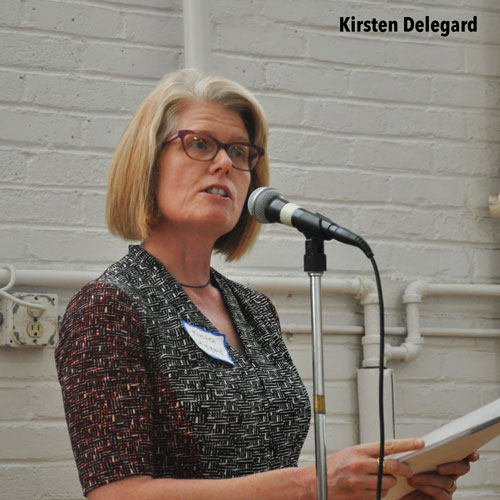
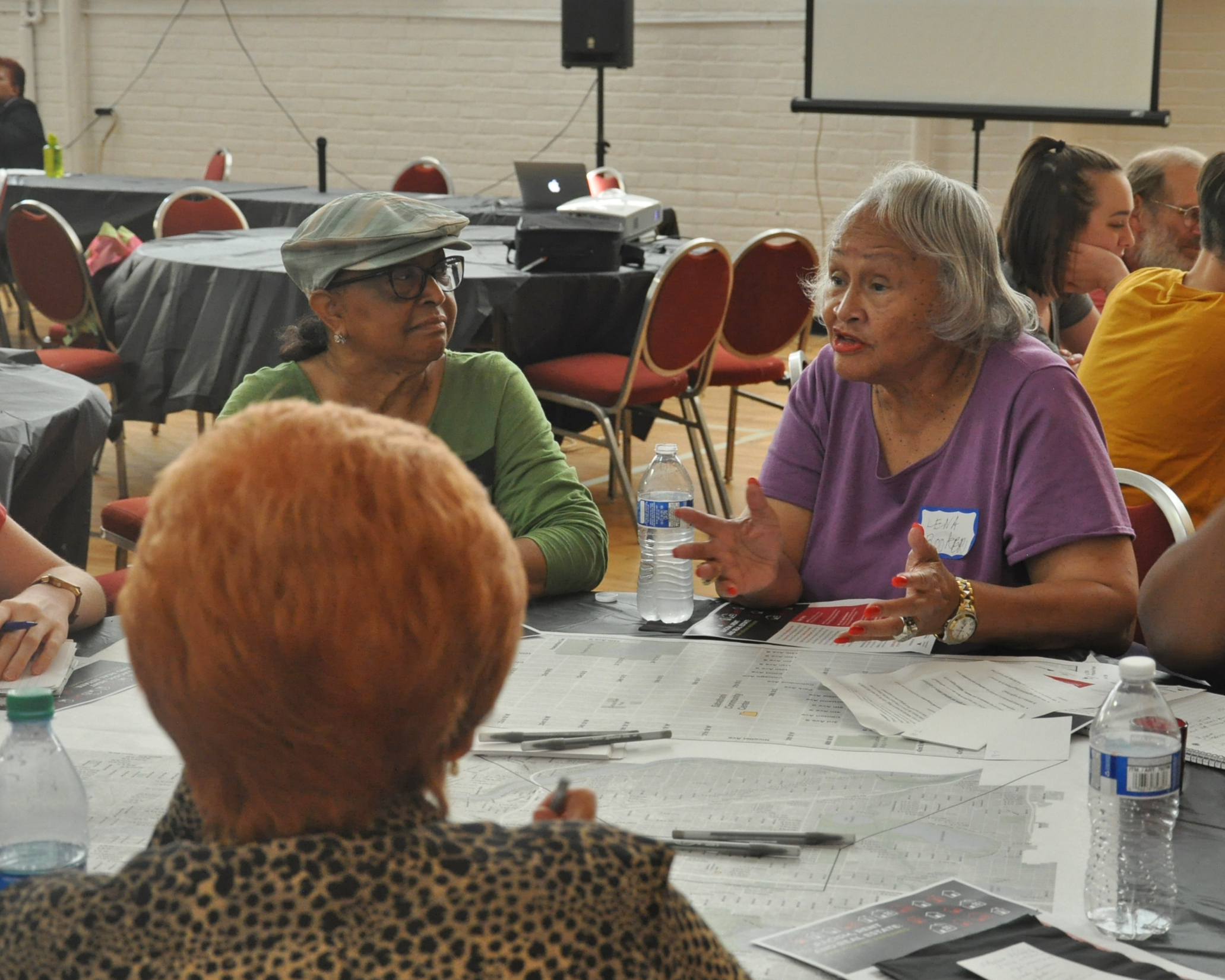
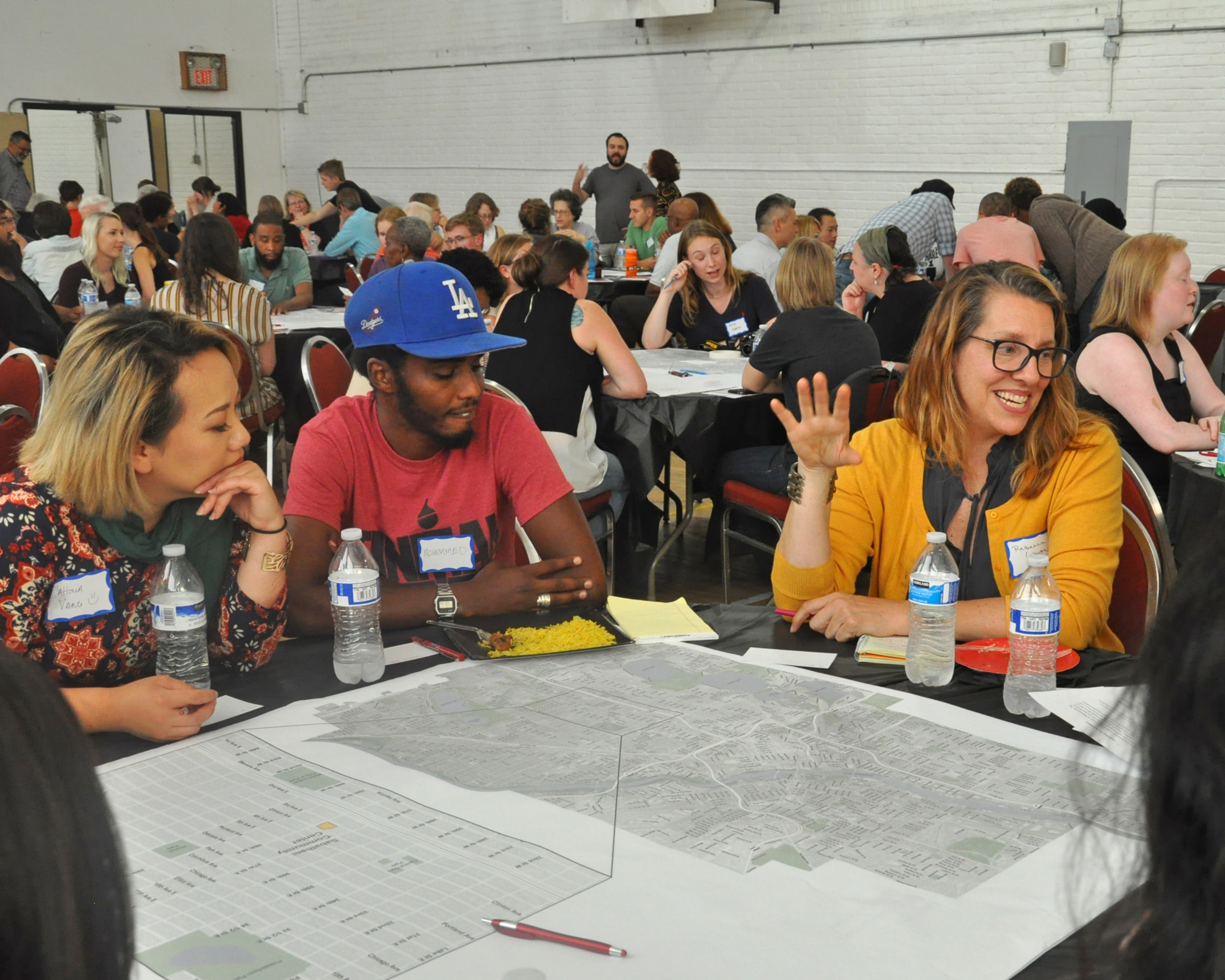
    Last week, McMoore was among nearly 200 participants who launched the “Racism, Rent and Real Estate: Fair Housing Reframed” series with a unique event focused on adding a tapestry of personal memories to a unique mapping project that connects past racist policies to current challenges around housing equity.  

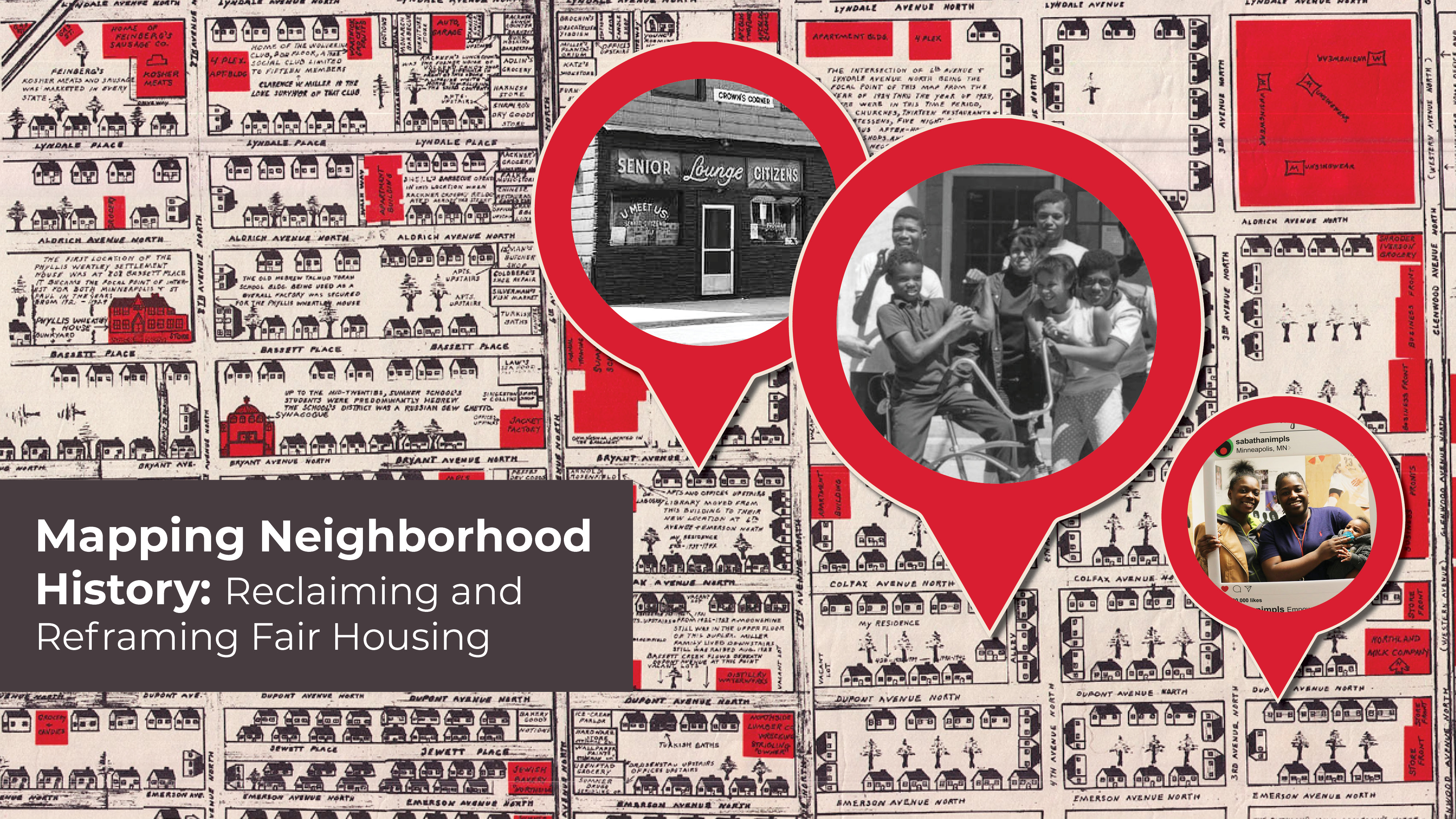
    Co-hosted by Sabathani Community Center and Mapping Prejudice, “Mapping Neighborhood History: Reclaiming & Reframing Fair Housing” acknowledged that the way our neighborhoods look and feel today are a product of our shared history; one shaped by racist policies that barred households of color from homeownership and wealth accumulation for many years. It invited residents to learn more about the history and impetus of fair housing laws, and share knowledge about the history of their family and neighborhood.

    After introductions from Cindy Booker, Sabathani’s Executive Director, and Andrea Jenkins, Minneapolis Councilmember for the 8th Ward, Kirsten Delegard set the stage for the night’s activity by explaining the work of Mapping Prejudice. “We’re making a new kind of map,” she explained. “This map will make structural racism visible. It will serve as a window on the histories of racism and white privilege that have been willfully forgotten by many people in Minneapolis.”

    “But these histories have never been forgotten by those connected to Sabathani Community Center,” she continued. “We are documenting what many of you already know. First, that racist housing practices pushed people who were not white into certain neighborhoods. This includes the old Southside where we are tonight. And second, these same practices made it very difficult for people of color to buy homes and pass them to the next generation. Our goal is to connect this history to our contemporary challenges with housing, the wealth gap, with racial disparities.”
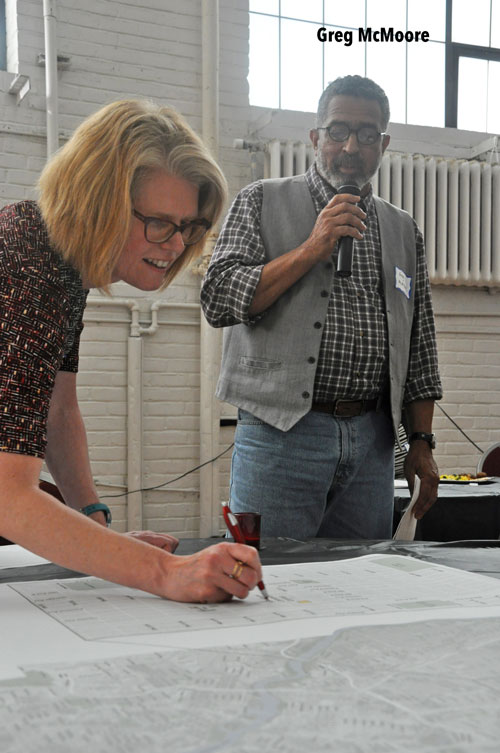
    The leaders at Sabathani Community Center, Delegard emphasized, recognize that communities need history. “That’s why they have been building the community history room on the second floor here,” she said. “It’s why they have been working to document the stories of the people who have made up the Sabathani community.” And it’s why they partnered with Mapping Prejudice to surface community knowledge that can overlay personal history and stories of community resilience on the scars of racial covenants and redlining.

    To model the activity, Delegard invited up Greg McMoore, a lifelong resident of south Minneapolis with family roots in Minnesota dating back to the 1890s. After graduating from Macalester College, McMoore’s professional highlights included The Village Foundation, a Washington D.C., non- profit whose mission was to “Repair the Breach” between African-American men and boys; the Wilder Foundation’s St. Croix Camps, a residential therapeutic center for adjudicated youth; and the Amicus program, whose work is dedicated to the transition of incarcerated individuals from within the Minnesota prison system back to society.

    With Delegard annotating a large map, McMoore explained that his family’s history had deep roots all along 4th Avenue, from Lake to 46th streets. “For my generation, that was the place to be,” he reflected.
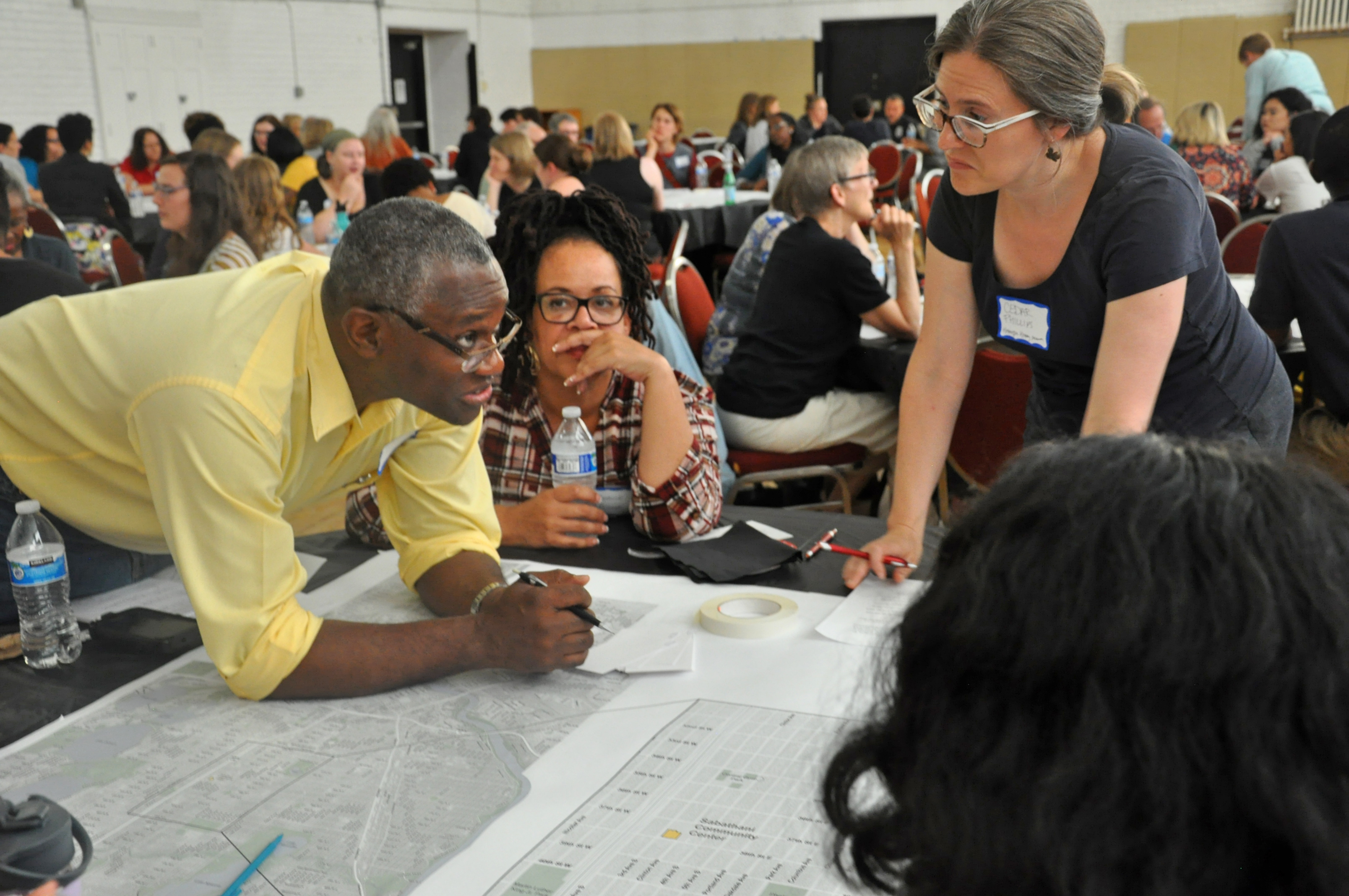
    “The first stop would be Central High School, which was the backbone of the community,” he said. “Our families were centered there. We all went to school there.” Even Prince graduated from Central High School. When the school was shuttered in 1982, “it was devastating.”

    Beyond education, the black economy was strong on 4th Avenue, as well. “We had our own business community on 38th and 4th, where there were record stores, barber shops, shoe stores, grocery stores, laundromats and the Minnesota Spokesman-Recorder office [African American newspaper],” he added. “On the weekends, that’s where we’d all commune. If you went a little bit further, there was the social club called the Nacirema. I know some of the older folks know about the Nacirema, because I see the big smiles on your faces.”

    Of course, the spiritual life of the community revolved around the church. “Another strong piece of this neighborhood was the church,” McMoore continued. “My church is the St Peter’s AME [African Methodist Episcopal] Church at 41st and 4th, which has been in the community since 1885, I believe. Very socially and politically active church. And our church is located in an area that’s a historical site: the Tilsenbilt Homes.”

    In the history of fair housing, the Tilsenbilt Homes were of special significance. According to the City of Minneapolis: “In 1953, following the success of several early integrated housing projects in other parts of the country, the FHA and the Minneapolis Urban League met with several African American realtors in an attempt to encourage a pilot interracial home-building project in Minneapolis. Realtor Archie Givens committed himself to the project, identifying a location for the project, recruiting builder Edward Tilsen, and helping to secure financing. Givens identified a collection of scattered lots owned by Mike Kelley, former owner of the Minneapolis Millers. At the time, East 42nd Street was generally the southern boundary of the large black community centered on the intersection of 4th Avenue South and East 38th Street. While the area located north of East 42nd Street had one of the highest black populations in the city, the area to the south, where many of the lots were located, was nearly all white. Tilsenbilt Homes, constructed a total of 52 homes as part of the project, approximately 90% of which were sold to African American or mixed-race buyers.”

    That’s not to say that racist policies and disinvestment haven’t had a devastating impact on the community, McMoore noted. In the late 1980s when McMoore was living and working in Washington, D.C. he perked up when he heard mention of his hometown on the local news. “They said there’s this street in Minneapolis called 4th Avenue that’s now known as crack avenue,” he recalled. “Once the school went, a lot of the families left the neighborhood and Central neighborhood went on a downward spiral. But I think one of the wonderful things about this neighborhood is that resilience. This is a resilient place to live.”

    And McMoore isn’t going anywhere. “This is my home,” he said. “I live in the home my aunt purchased in the 1940s on 4th Avenue and I suspect I’ll die in that home. I have a lot of fond memories. I love the south side and we’re here to stay.”

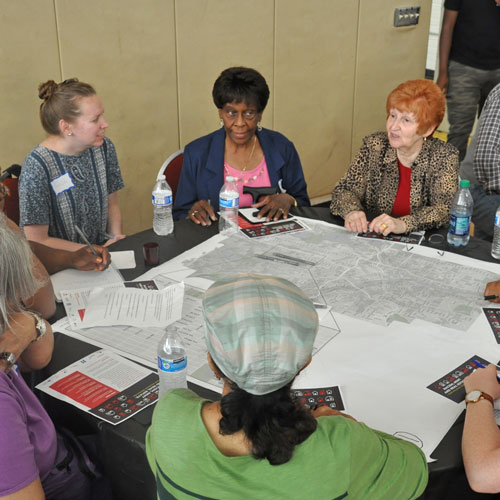
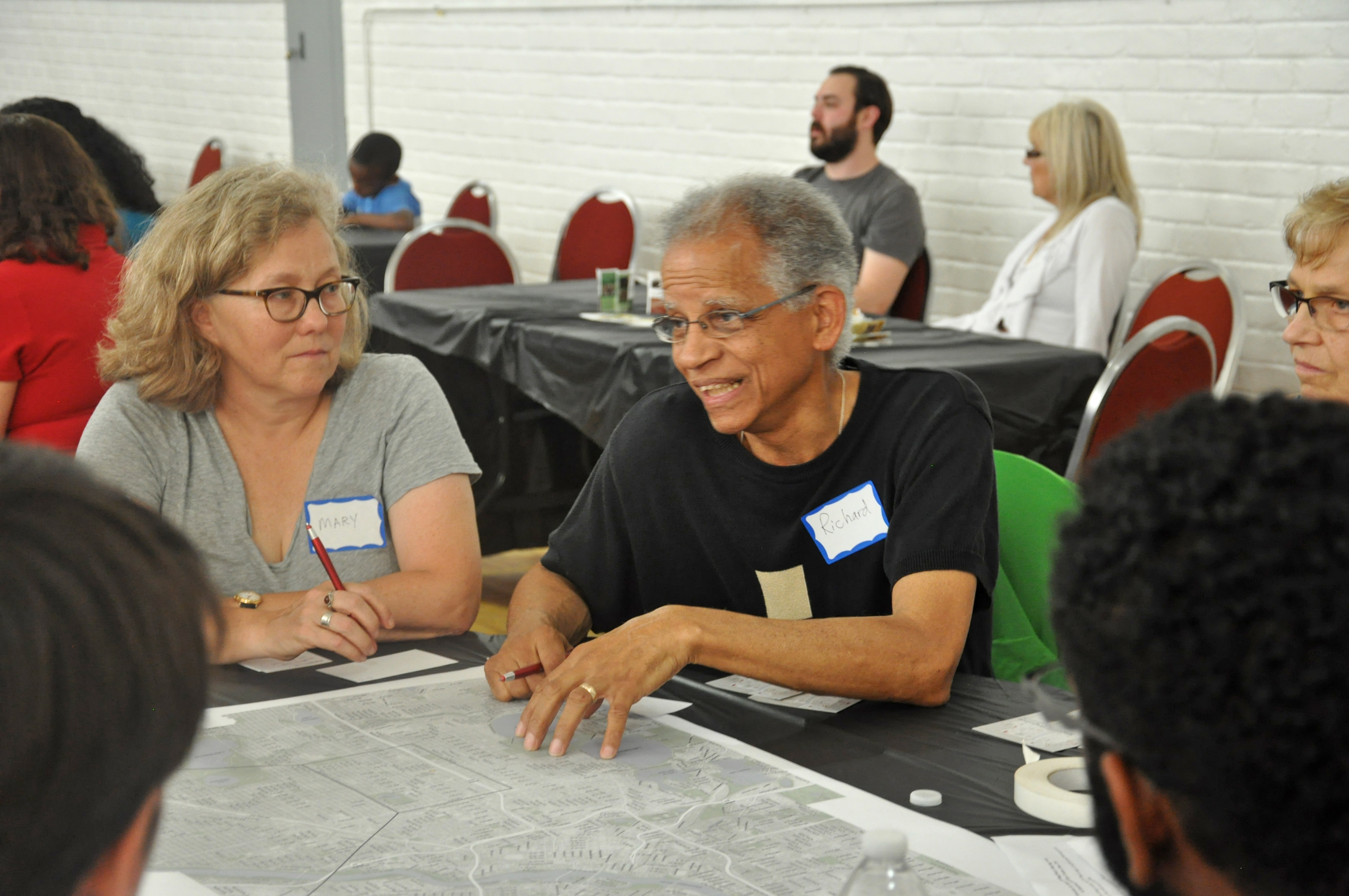
    Following McMoore’s lead, participants poured over large maps and spent more than an hour sharing their personal and family histories in the Central neighborhood and across the city. As conversation filled the gymnasium, facilitators captured memories on notecards and taped them to the margins of the newly enlivened maps.

    See more photos from the event here — and stay tuned for updates on the results of the memory mapping project, which will be housed at Sabathani Community Center.

    Read a story about the event and the series from the Minnesota Spokesman-Recorder: How racist was your neighborhood?

    Learn more and sign up for updates on the “Racism, Rent and Real Estate: Fair Housing Reframed” series here.

  • Racism, Rent and Real Estate: Fair Housing Reframed

    In 1968, Minnesota Senator Walter Mondale authored the Fair Housing Act, landmark legislation designed to reverse decades of residential discrimination and segregation. The goal was to usher in a new era of housing equity and racial justice, including in Hennepin County communities. Fifty years later, this vision remains unrealized.  
    Through an 8-event series with more than a dozen community organizations as co-hosts, “Racism, Rent and Real Estate: Fair Housing Reframed” will reckon with our dark history of covenants, redlining and structural racism; and convene cross-sector, community-centered conversations to chart a course for housing equity in Hennepin County communities moving forward.

    For residents, community leaders and policy makers, housing access and affordability has become a central and urgent issue in cities across Hennepin County. As these diverse stakeholders come together to envision solutions that provide safe, dignified housing for all, Fair Housing Reframed will use the history and current organizing in Hennepin County communities to explore the racial segregation in housing that led to the Fair Housing Act, identify how racialized barriers to housing still manifest today, and create the community and political will to make change.  

    “Over the past two years, Mapping Prejudice has unearthed the racial restrictions buried in Hennepin County property deeds, building a map that shows the structural racism that undergirds the landscape of Minneapolis and its suburbs,” says Kirsten Delegard, Director of the Mapping Prejudice Project, a lead coordinator of the event series. “We are living with the legacies of these discriminatory deeds and it’s time for us to grapple with this history. This series provides an opportunity to work collectively to connect the past to the present.”

    The series will launch on June 21 at Sabathani Community Center with the “Mapping Neighborhood History: Reclaiming and Reframing Fair Housing” event, which will educate participants about the history of racial covenants and bank redlining and invite residents to share their stories and family histories to create new maps highlighting the historical and current assets in their neighborhoods. Galvanizing the community conversation, speakers will include 8th Ward Minneapolis City Councilmember and Council Vice President Andrea Jenkins; lifelong neighborhood resident and community leader, Greg McMoore; and Kirsten Delegard, Director of Mapping Prejudice.

    “It’s an honor to host the kick-off of this event series,” says Cindy Booker, Executive Director of Sabathani Community Center. “The topic aligns with Sabathani’s mission and our community. Sharing the accomplishments and challenges of community life provides motivation and commitment to unite and provide opportunities for all.”

    From June through October, the series will include events on redlining, predatory lending and housing discrimination at the Minneapolis Urban League and Urban Research and Outreach Engagement Center (UROC) in North Minneapolis, an exhibit and speaking engagements at the Hennepin History Museum, a bus tour through South Minneapolis and the Central Neighborhood, and screenings of the “Sold Out” documentary at Hennepin County libraries. The series will conclude with a panel discussion, including policymakers and community organizers, addressing the question: “Where do we go from here?”

    “Housing issues are often discussed only from a spatial and infrastructural perspective,” says Nelima Sitati-Munene, Executive Director of African Career and Resources, Inc. “Through this series, we hope to center the narrative on the people whose lives have been upended to underscore that housing is a human issue. We aim to uncover the often overlooked public and private systemic actions — or inactions — both intentional and and unintentional that have led to these disparities. By uncovering these truths, we can articulate a call to action for long-term equitable and sustainable solutions that can right these wrongs.”

    “The 50th Anniversary of the Fair Housing Act gives us an opportunity to look back at this history of racial segregation in housing in our own community, and use that history to better understand current disparities,” adds Cara Letofsky, Principal at Mill City Consulting, a co-convener of the series. “The fight for Fair Housing is far from over and the urgency is no less pronounced than it was 50 years ago. Through this series, we will engage a wide range of stakeholders and community members to understand our shared history, listen to directly impacted communities and create the political will to make changes moving forward.”

    The “Racism, Rent and Real Estate: Fair Housing Reframed” event series is being convened by Mill City Consulting, Minnesota Housing Partnership and Mapping Prejudice, which is based at the Borchert Map Library at the University of Minnesota. More than a dozen community organizations are serving as co-hosts. The series is generously sponsored by the City of Minneapolis, Hennepin County, the University of Minnesota Imagine Fund, Aeon, CommonBond Communities, Family Housing Fund, and Wellington Management.

    Click here to sign up for email updates on the series!

    Join the conversation on social media at facebook.com/fairhousingreframed and on Twitter using the hashtag #HousingEquityHC.  

  • MN Housing Board Update: Legislative session recap, 2020 QAP, Habitat for Humanity Revolving Credit Agreement and more

    At its May meeting, the Minnesota Housing Finance Agency board discussed amendments to the Affordable Housing Plan (AHP) for home mortgage and downpayment and closing cost loan programs; comments on and final recommended changes to the 2020 Qualified Allocation Plan (QAP); a revolving credit agreement with Habitat for Humanity; a waiver for Minnehaha Townhomes in Minneapolis; and a state legislative session recap.  
    Opening Remarks

    In her opening remarks, Commissioner Mary Tingerthal shared excitement around the progress of the Governor’s Task Force on Housing, which has taken a wealth of input from work groups and regional forums and is starting to form recommendations that will be finalized, prioritized and published in a report at the end of July. Tingerthal expressed confidence that the task force will result in a significant body of work.

    Tingerthal also noted that the Agency had been busy gearing up for annual request for proposals and winding down the final days of the state legislative session. While she bookmarked a more robust review of the session later in the meeting, she called the board’s attention to a provision in the bonding bill that could “impose significant restrictions on this board’s authority to allocate tax credits according to the Qualified Allocation Plan.” She emphasized that the Agency is reviewing what impacts, if any, it will have on the tax credit program, and would come back to the board with more information.

    Amendments to Affordable Housing Plan (AHP) for Home Mortgage and Downpayment and Closing Cost Loan Programs

    Due to strong production, staff requested board approval for additional funding for the Home Mortgage Programs under the 2018 Affordable Housing Plan (AHP) and additional funding for the downpayment and closing cost loan programs.

    The home mortgage programs, which include Start Up and Step Up, provide home financing to first-time, repeat, and refinance borrowers. Production in 2017 was record-breaking with $670 million in net commitments, and 2018 year-to-date production levels for these programs are 39% higher than in 2017. Subsequently, the demand for downpayment and closing cost loans has also increased. To preserve Pool 3 resources, the Board approved program changes in February to modestly shift borrowers from the Deferred Payment Loan (DPL) to the Monthly Payment Loan (MPL). In the short time since implementing these program changes, some DPL production has successfully shifted to MPL, reducing the projected need for additional scarce DPL resources without impacting service to households of color or Hispanic ethnicity.

    Board member Terri Thao asked what number of families are estimated to be served by this program. Staff responded that the original goal was 3,700 families, but now the Agency projects it will serve approximately 4,500 families. The board approved additional funding. 

    Waiver for Minnehaha Townhomes

    Agency staff recommended a waiver to the predictive cost threshold established by the Predictive Cost Model for the Minnehaha Townhomes project. Agency staff emphasized that this project presents a rare opportunity to create new public housing units in Minneapolis that will come with commitments to capital and operating subsidies from the federal government. The property will provide a long-term source of affordable housing for families experiencing homeless and will pay no more than 30% of household income in rent. These will be deeply affordable units that are integrated into a neighborhood that is considered an opportunity area, which aligns with Minnesota Housing’s mission to help fund projects in under-invested areas. In order to facilitate this much-needed development, MPHA is taking no developer fee and Minneapolis wrote down the cost of the land to $1. Some of the additional costs are attributed to unexpected costs related to unique soil conditions and extra exterior finishing costs required by the city to conform to their planning review process. The board approved the waiver.

    Comments and Changes to the 2020 Qualified Allocation Plan (QAP)

    In January, the Agency brought a set of recommended changes to be included in the 2020 Qualified Allocation Plan (QAP) to the board, and subsequently released those proposed changes for public comment. While no members of the general public attended the public hearing, written comments were submitted from 15 organizations. Those comments were reviewed by Agency staff and leadership, and resulting changes, including those to the Self-scoring Worksheets, are outlined below.

    Most notably, the Agency received a number of comments requesting better differentiation for the review process specific to HTCs applied for under a Competitive Funding Round (including 9% HTCs and dual applications that include projects with a 4% HTC structure), and 4% HTC Only projects that receive an allocation of tax-exempt, private activity volume cap from MMB. Minnesota Housing agrees that having distinct Self-scoring Worksheets for the Consolidated RFP (9% HTCs and dual applications) and 4% HTC Only applications will improve streamlining and administration of the HTC program. 

    Changes recommended as a result of public comments include the following:

    • Create a distinct Self-scoring Worksheet for applicants with projects that have been allocated tax-exempt, volume-limited bonding authority from MMB who seek 4% HTC Only credits from Minnesota Housing.
    • For 4% HTC Only applications:
      • Eliminate the strategic priority threshold for 4% HTC Only applications
      • Add points under Serves Lowest Income Tenants for providing 25 percent of restricted unit rents affordable to households with incomes at the county 50% HUD MTSP income limits
      • Eliminate the Risk of Loss threshold requirements under the Preservation category for market conversion, critical physical needs or ownership capacity/program commitment. Projects will continue to be scored on the percent of federally assisted units or critical affordable units at risk of loss.
      • Increase the number of points for the Community Development Initiative from three to five.

    Additional changes included:

    • Clarifying in the Self-scoring Worksheets that the People with Disabilities provision regarding permanent physical disabilities is not limited to individuals with a mobility impairment.
    • Articulating that rental assistance programs with alternative rent structures where the program goal aligns with the needs of low-income populations, such as the Moving to Work program and Housing Support, meet the intent of satisfying the rental assistance criterion. The Self-scoring Worksheets have been updated to reflect this change.
    • Adding “tribal corporate entities” to the entities eligible for MBE/WBE in the Self-scoring Worksheets.
    • Agreeing that park dedication fees should be excluded from intermediary costs for purposes of scoring criterion. While this fee is eligible for exclusion from the intermediary cost calculation, Minnesota Housing encourages applicants to consider requests for waivers or reductions in various fees, including intermediary fees, as a cost containment effort. Any reductions or waivers of such are eligible for points under the Other Contributions scoring category.

    All written comments are included on pages 215-263 of the board packet and all changes proposed in those comments (including those that were not recommended or approved by the Agency) are included on pages 40-56.

    Also of note: The federal government’s 2018 budget bill included the establishment of income averaging as a potential election for tax credit developments. This change has wide-ranging implications for the tax credit program and gives rise to significant administrative complexities. Minnesota Housing is actively assessing the implications of this change, including meeting with stakeholders and reaching out to state housing finance agencies around the country. The 2020 QAP is being released prior to the inclusion of income averaging in order to provide sufficient notice to developers and stakeholders of any other changes to the program. Once the Agency determines how best to incorporate income averaging into the state’s tax credit program, it is anticipated that the staff will propose an amendment to the 2020 QAP.

    Habitat for Humanity Revolving Credit Agreement

    At the September 2016 Board meeting, the Board gave concept approval to a potential $10 million Agency investment in the Twin Cities Habitat for Humanity (TCHFH) “Home Loan Impact Fund 2020,” which was structured to provide a leveraged source of financing that combined private, non-profit, public and donated funds to accelerate TCHFH’s ability to provide highly subsidized single-family mortgage loans to lower income families for home purchases.

    In early 2017, TCHFH announced that they had reached an historic agreement with Bremer Bank to provide significant financial support over the next four years to more than double the number of local families that could partner with TCFHF on affordable homeownership. Because of that commitment the multi-participant structured fund was no longer contemplated. After many discussions over many months Agency staff proposed — and the board approved — entering into a $25 million revolving credit agreement with TCHFH. The term of the commitment is proposed to be 10 years. As a revolving facility, TCHFH will be able to draw on the credit line as needed to finance its working capital needs, and also repay, in whole or in part, prior draws, enabling TCHFH to manage its cash requirements effectively.

    At least for the near-term, it is not expected that the entire $25 million will be outstanding at any one time. However, having the long-term commitment for availability of these short-term funds enables TCHFH to explore options with other potential lenders to further build out a reliable and sustainable operating model into the future. While the proposed credit facility will be unsecured, TCHFH will agree to make, and maintain, certain financial and organization covenants as well as certain representations and warranties.

    Legislative Session Recap

    Legislative Director Katie Topinka shared that, despite some policy language that the Agency is still sorting through, the passage of the bonding bill was a major victory in the state legislative session. The bill includes $80 million in Housing Infrastructure Bonds and $10 million in General Obligation bonds for public housing. Topinka emphasized that the statewide reach and the ability to get projects moving quickly gained the support of lawmakers to make another significant investment in housing with the bonding bill. In addition, the bill includes two changes to the eligible uses for Housing Infrastructure Bonds: affordable housing for seniors aged 55 years and older (which was supported by the Agency and included in the Governor’s bonding proposal) and infrastructure in manufactured home parks (which was not included in the Governor’s proposal but was a priority for housing advocates). Topinka also noted that $30 million in bonds will be for permanent supportive housing for people with behavioral health needs.

    Ryan Baumtrog, Assistant Commissioner Policy and Community Development, added that two of the Agency’s priorities in the supplemental budget were not included: an additional $4 million for the Homework Starts with Home and changes to the manufactured housing trust fund. While they were not included in the House, Senate or conference bills, Baumtrog noted that the Agency and advocates had good conversations with lawmakers about these issues. Baumtrog also shared that some of the policy changes that the Agency opposed or remained neutral were included in the supplemental budget that was passed but subsequently vetoed by the Governor, namely changes to tax exempt bond allocation through the Department of Management and Budget that would eliminate the resources or set aside for homeownership.

    Given the Agency and advocates’ focus on bonding, though, Baumtrog emphasized that top priority of the session was achieved.

    The full board packet can be found here and the next meeting of the board will be June 21. 

  • MHP recognizes 2018 Legislative Leaders and Outstanding Advocates

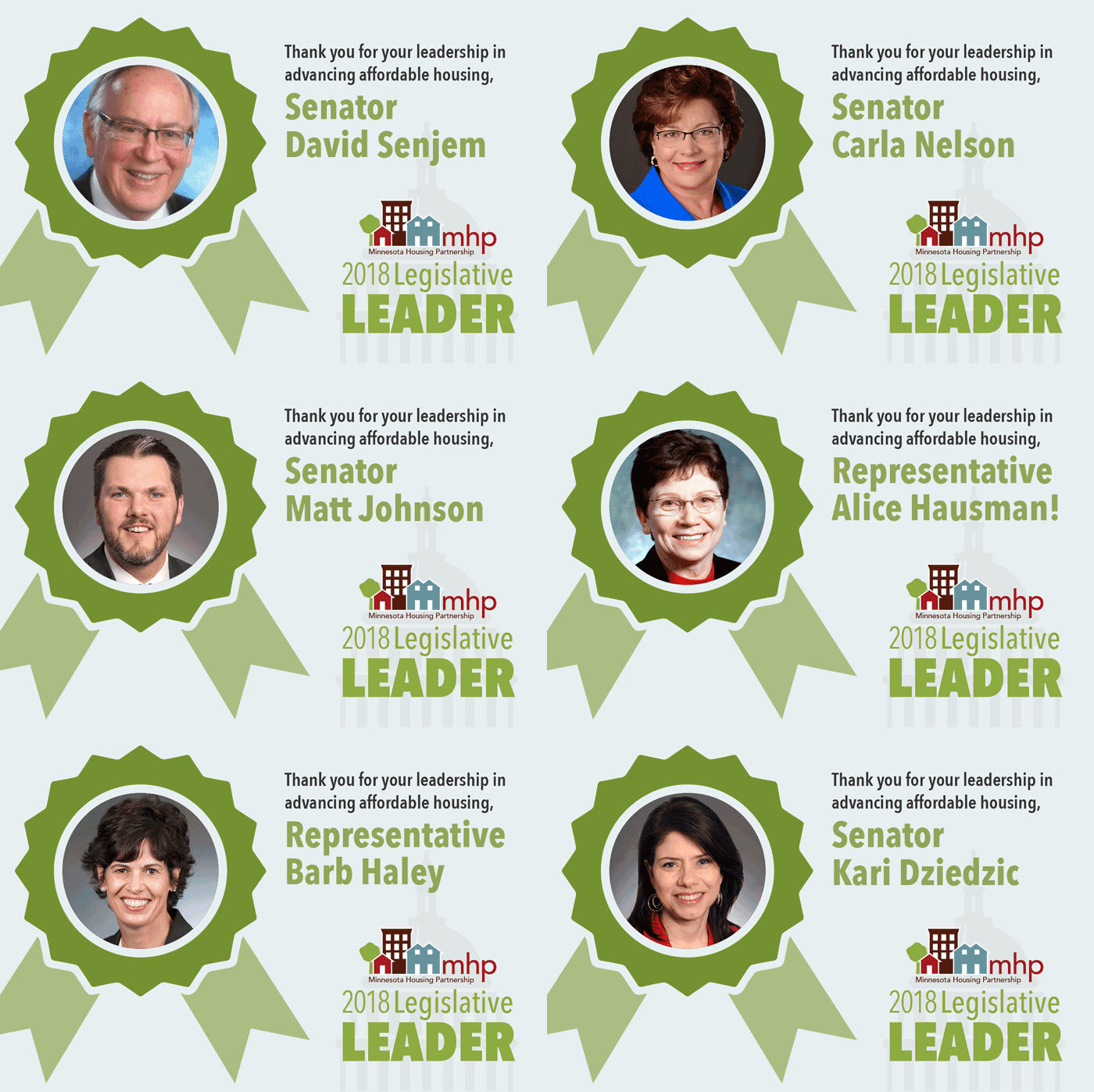
    To recognize exceptional dedication to the advancement of affordable housing — and MHP’s key legislative goals — at the State Capitol in 2018, we’re proud to announce the inaugural recipients of MHP’s Legislative Leader and Outstanding Advocate awards.

    Lawmakers receiving the 2018 Legislative Leader award played a central role in building support for key MHP initiatives from the Homes for All MN bonding request to the MHP’s MN Tax Credit Contribution Fund. Their demonstrated support of affordable housing, and their deep resolve to make a difference for Minnesotans of all incomes, makes these lawmakers stand out at the Capitol.

    MHP’s 2018 Outstanding Advocates made exceptional efforts to engage with lawmakers, sharing personal and professional experience to further MHP’s policy agenda and secure more resources for affordable housing. These Advocates went above and beyond in 2018 by submitting testimony, meeting with legislators, and building support for affordable housing initiatives among colleagues and community members.

    The dedication of these advocates and leaders led to historic successes at the Capitol this session, including $90 million in bonds for housing and the formation of a broad support coalition for the MN Tax Credit Contribution Fund, which has positive prospects for next legislative session. We’re so grateful to these leaders and advocates for their incredible work!

    MHP Executive Director Anne Mavity will make a formal presentation of awards on June 14 at the quarterly breakfast convening of MHP’s Investors Council, a cross-sector network of affordable housing sector leaders who participate in MHP’s work. We’re expecting more than 150 leaders at this event — “Filling the Financing Gaps to Make Affordable Housing Pencil Out.”


    2018 LEGISLATIVE LEADERS

    Senator Kari Dziedzic (DFL-60)

    By voicing strong support for affordable housing legislation, and by providing key insight on strategy and coalition building, Senator Dziedzic went above and beyond this session to advance the policy agendas of MHP and Homes for All MN.

    Representative Barb Haley (R-21A)

    By chief authoring enabling legislation for Local Housing Trust Funds (LHTFs) and by sharing the innovative efforts of LHTF pioneers in her own district, Representative Haley played a central role in bringing this flexible, locally-controlled tool to Minnesota communities of all sizes.

    Representative Alice Hausman (DFL-66A)

    For years, Representative Hausman has been a stalwart champion of Homes for All MN, mobilizing colleagues and constituents to support affordable housing. As Chief Author of the Homes for All MN bonding proposal for several years in a row, Representative Hausman has played an integral role in securing historic investments in affordable housing, including $90 million in 2018 and $100 million in 2014.

    Senator Mark Johnson (R-1)

    As a co-author of legislation to create the MN Tax Credit Contribution Fund, Senator Johnson played a central role in advancing this needed tool for affordable housing development. Senator Johnson provided crucial insight on strategy, and worked diligently to build support around the proposal, lobbying colleagues through the final days of session.

    Senator Carla Nelson (R-26)

    As Chief Author of legislation to create the MN Tax Credit Contribution Fund, Senator Nelson displayed impressive leadership, working tirelessly to drive the proposal forward, secure hearings and promote the bill among colleagues. Her leadership built momentum and a broad, bipartisan coalition of support.

    Senator Dave Senjem (R-25)

    As Chief Author of the Homes for All MN bonding proposal, Senator Senjem played central role in securing a major, needed investment of $90 million in affordable housing and an additional $30 million to support people with mental health challenges. Senator Senjem has been a key advocate for MHP’s policy proposals, including the Local Housing Trust Fund bill and the MN Tax Credit Contribution Fund.


    2018 OUTSTANDING ADVOCATES

    ERIN ANDERSON

    Commonwealth Development Corporation

    STEVE BORCHARDT

    Rochester Area Foundation

    SKIP DUCHESNEAU

    D.W. Jones Management

    RICK GOODEMANN

    Southwest Minnesota Housing Partnership

    RANDAL HEMMERLIN

    Red Wing HRA

    RYAN LUNDERBY

    Dominium

    TOM O’NEIL

    Dougherty Mortgage

    DEIDRE SCHMIDT

    CommonBond Communities

    JOE WHEELER

    South Eastern Minnesota Multi-County HRA


    ADVOCATE WITH MHP! Join these outstanding leaders at the State Capitol next session by contacting Deputy Policy Director Libby Murphy at [email protected].

    .


  • Work with us: MHP seeks contract project manager to support campaign to increase funding for affordable housing

    MHP is seeking a contract project manager to help support a campaign for more funding for affordable housing. Candidates should have experience managing multi-stakeholder coalitions and processes, as well as experience in fundraising and working with businesses and community organizations. Ideal candidate will possess significant skills in coordinating and facilitating decision-making for large, diverse coalitions; ability to relate to diverse individuals. 

    Duties:

    • Coordinate all aspects of a public education and legislative campaign, including fundraising, communications/media, grassroots, field work, coalition outreach and maintenance, and internal campaign administration.
    • Help drafting and implementing a campaign plan.
    • Actively participate in development and implementation of campaign fundraising plan.
    • Serve as point of contact for local, regional, statewide and national media outlets seeking information regarding the campaign.
    • Attend all coalition meetings and subcommittee meetings as needed, and provide regular, comprehensive updates on activities.
    • Respond to inquiries from coalition partners and elected officials regarding the campaign.
    • Oversee management of web site; new media; list and database development, management and usage.

    Qualifications:

    • Previous experience managing campaigns or coalitions preferred
    • Demonstrated success at meeting fundraising targets
    • Previous experience working with local, regional, state and national media outlets, including print, radio, television, new media, blogging community.
    • Knowledge of laws and regulations relating to campaign finance and campaign operations in Minnesota.
    • Excellent communication skills (both written and oral) and ability to facilitate meetings with diverse participation.
    • Previous grassroots experience, and experience with voter identification, micro targeting, data usage and management is helpful.

    This is a contract position with oversight by MHP Director of Strategic Initiatives and Policy; This position may also coordinate with other contractors supporting a campaign for more funding for affordable housing. Approximate hours of 10-20 per week and potential need for increased time in the future. Position is to start immediately for anticipated 6 month duration; opportunity to continue for up to 1 year.

    To apply: email resume and cover letter with hourly rate proposal to [email protected]

    Questions? Contact Elizabeth Glidden, Director of Strategic Initiatives and Policy, MHP, at [email protected]

  • 2018 Legislative Session Recap: Advocates celebrate a historic bonding win

    The 2018 state legislative session has ended, and while it’s now quiet at the Capitol, housing advocates across Minnesota are celebrating a historic investment in the housing continuum.

    Signed by Governor Dayton this week, the bonding bill includes $90 million for affordable housing and an additional $30 million for mental health crisis centers secured by Homes for All MN coalition partners.

    With last year’s $77 million investment, over the 2017-2018 biennium, the Minnesota legislature has invested $197 million in bonds to preserve and build affordable housing and to provide homeownership opportunities, signaling a growing recognition among lawmakers that housing bonds are key to addressing the growing need for affordable housing across the state.

    Photo: Homes for All MN advocates pose at the Capitol on the final day of the 2018 session. From left: Kari Johnson, MCCD; Fatima Moore, Minnesota Coalition for the Homeless; Libby Murphy, MHP; Erin Hanafin Berg, Preservation Alliance of MN; Elizabeth Glidden, MHP; Pam Johnson, TC Habitat

    Our sincere thanks to housing advocates across the state who played an integral role in lifting up the need for investments in affordable housing and educating legislators on the impact of affordable housing on health, education, economic growth, and more. Read on for more updates from the Capitol!

    Bonding breakdown

    Signed by Governor Dayton on Wednesday, the bonding bill includes $90 million for affordable housing and an additional $30 million for mental health crisis centers secured by Homes for All MN coalition partners. The bill also authorizes manufactured housing and senior housing as new eligible uses for Housing Infrastructure Bonds.  

    Here’s a breakdown:  

    Housing Infrastructure Bonds (HIB):

    • $50M – Non-restricted
    • $30M – Restricted to Permanent Supportive Housing (for individuals with behavioral health needs)

    General Obligation Bonds (GO):  

    • $10M – Public housing investments
    • $30M – Mental Health Crisis Centers (emergency shelter for individuals with behavioral health needs)
      • $28.1M –  Mental Health Crisis Centers Grant Program
      • $1.9M – Scott County Crisis Center

    Tax Exempt Bond update

    Policy language impacting the allocation of 4% credits to projects receiving tax exempt bonds (TEBs) was inserted into the bonding bill minutes before the close of session. The language essentially removes Minnesota Housing Finance Agency’s (MHFA) authority to set criteria for issuing 4% tax credits to projects that have received TEBs from a non-MHFA source beyond what federal law requires. MHP continues to review potential impacts of the policy language inserted into the bonding bill, since it does not include changes that reprioritize the issuance of TEBs. MHP is disappointed that the inserted policy language did not include the five consensus agreements agreed upon last fall by the TEB Steering Committee. These agreements were included in a separate bill vetoed by the Governor last week.  

    Tax Credit Contribution Fund within reach next session

    Supported by more than 50 organizations, the MN Housing Tax Credit for Contribution Fund garnered statewide, bipartisan support in the 2018 legislative session, building a broad coalition that included a variety of organizations – from nonprofits to chambers of commerce. While legislators did not include the Tax Credit for Contribution Fund in the omnibus tax bill, which included almost no new policy this session, MHP remains optimistic about the Tax Credit’s prospects for next session. Lawmakers have already committed to helping MHP advance the tax credit by working with us throughout the summer and fall. Help us continue to build support for this needed, proven tool by signing on to a support letter and sharing it with your networks!

    A tough year for supplemental appropriations

    With only a modest surplus, this was a tough year for supplemental appropriations. Governor Dayton vetoed the finance bill passed by the legislature earlier this month, which included no new investments in housing. The vetoed bill included the five consensus agreements of the Tax Exempt Bond steering committee, supported by MHP and Homes for All MN.   

    What’s next?

    In countdown to the 2019 session, MHP will continue to engage with lawmakers to advance our key policy initiatives including the MN Tax Credit Contribution Fund and a state match for contributions to Local Housing Trust Funds. MHP will also engage with candidates for public office and stakeholders statewide to grow support for a dedicated source of revenue for affordable housing in Minnesota.

    Follow us on Twitter for more updates and to stay engaged!