• Opportunity Zones 101: First steps for local communities

    How can Opportunity Zones be a useful investment tool for your community? On August 22, MHP delved into that question on a conference call with more than 100 registrants, moderated by Elizabeth Glidden, MHP Director of Strategic Initiatives & Policy with special guests Mayor Emily Larson, City of Duluth; Amy McCulloch, Deputy Director, Twin Cities LISC; Pam Kramer, Executive Director, Duluth LISC; and Ryan Baumtrog, Assistant Commissioner of Minnesota Housing.

    Speakers explored what local communities, as well as development and lending partners, should be considering in advance of more explicit federal and state guidance. They also discussed how to better understand the potential of Opportunity Zones, explore investment funds, develop project pipelines, and establish community values for potential projects. Below, find a recording of the call, additional resources, and responses to questions submitted around the call.

    {source}

    <iframe width=”560″ height=”315″ src=”https://www.youtube.com/embed/gHHf0xdS6FU” frameborder=”0″ allow=”autoplay; encrypted-media” allowfullscreen></iframe>

    {/source}

    Opportunity Zones are a new community development program established by Congress in the Tax Cut and Jobs Act of 2017 to encourage long-term investments in low-income and urban communities nationwide. Governor Dayton nominated 128 census tracts for designation; which were then certified as qualified Opportunity Zones on May 18, 2018, by the U.S. Department of Treasury. Over the coming months, the federal government will release additional FAQs, revenue procedures, and perhaps an interim or proposed rule.

    Resources: Dig into Opportunity Zones! 

    Other background:

    Responses: Questions submitted around the call

    What is the website mentioned by by Ryan Baumtrog at the beginning of the program?

    Where is a readable (with clear boundaries) map of the Twin Cities Opportunity Zones to be found? (Unable to make use of the “helpful mapping tool” from Novogradac).

    Has there yet been any guidance from Treasury or IRS on the use of this tool? Is it realistic to think that anything can be done with it in 2018?

    What is NMSC?

    Participants also expressed a great deal of interest in how to engage with potential investors in Opportunity Zones, and we hope to engage more on this topic in the future!

  • Reframing Fair Housing: 10 Key Concepts to Catalyze Real Progress

    Fifty years since the passage of the federal Fair Housing Act, deep and growing housing inequities remain a persistent and urgent challenge in our communities. Over the course of several months, the “Racism, Rent and Real Estate” event series explored the history of racial discrimination and segregation in housing in Minneapolis and Hennepin County. In the final event, we pivoted to the future: How do we not only recognize but reverse the legacy of systemic racial discrimination and reframe solutions that both repair harm and meet community-identified needs? 

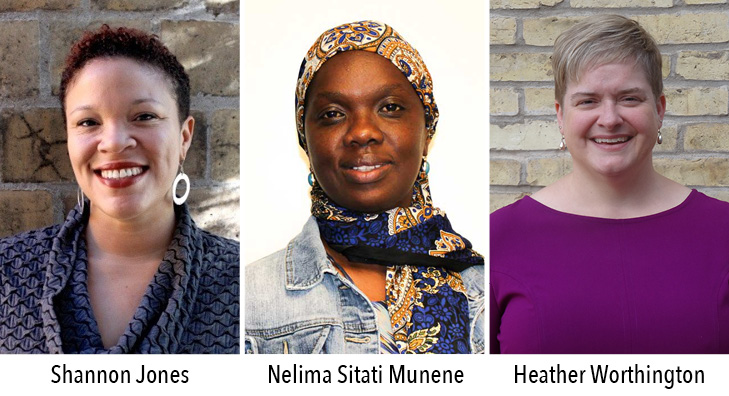
    Moderated by C Terrance Anderson, Director of Community-Based Research Programs at Center for Urban & Regional Affairs, the conversation shared insights from Nelima Sitati Munene, Executive Director of African Career, Education and Resource, Inc. (ACER); Shannon Jones, Executive Director at Hope Community Inc; and Heather Worthington, Director of Long Range Planning for the City of Minneapolis. Here are our top 10 take-aways from the wide ranging discussion. Watch a video of the full panel here.

    Building wealth is still deeply tied to homeownership — and white families have no difficulty accessing that resource.

    “For white people, fair housing is a concept that we very much take from granted,” Heather Worthington, Director of Long Range Planning at the City of Minneapolis, started. “My family was always able to secure a loan and buy property and my ancestors did the same for probably a couple hundred years. So my concept is different than that of many Americans, particularly people of color and especially for low-income people. So I think our idea of fair housing needs to change in this country. We need to think differently about how we redress, how we fix those systems that created disparities that are still deep and deepening in this community… Context is important in thinking about how you achieved your homeownership or how you utilized your privilege to buy a home or nicer home. On a personal level, I bought my house 20 years ago, and it has tripled in value. So my investment has realized incredible gain, and I didn’t have to do much in that time but have the access. So homeownership is a huge part of wealth building and we need to think more expansively about how we redress those disparities in our community.”

    For people of color, the choices are untenable — sacrifice community or sacrifice wealth.

    “Currently if you’re a person of color and choose to live in a community that is majority people of color, you’re not able to build that same wealth,” Shannon Jones, Executive Director of Hope Community, explained. “I choose to stay in North Minneapolis, and in choosing that, I’m choosing to not build as much wealth because my home won’t appreciate in value like it would in a white neighborhood. I could pick up and move to other part of city and my home would triple in value, so my home is not fair housing because, based on the land where it sits and the neighbors that I have, I don’t have the same opportunity to build the wealth that I would if I were living in a white neighborhood. And if I lived in that white neighborhood and the pattern started changing and it tipped with too many people of color the value I would have gained in that house I would lose. Fair housing would even that playing field.”

    Places aren’t discriminated against, people are. So integration isn’t the solution. Neither is deconcentrating poverty.  

    “A big part of the solution that’s been pushed for a long time is integration: Let’s just integrate people of color and make sure people of color can live in white neighborhoods,” Nelima Sitati Munene, Executive Director of ACER, said. “But that narrative means that, as a person of color, the only way I can have success or access to decent housing is to live in close proximity to white people. We talk about places being discriminated against, but it’s people who are discriminated against. We know statistically that the moment an area has more than 30% people of color, you see white flight begin to occur and both public and private disinvestment… We also talk about concentration of poverty and think if we just deconcentrate the poverty, everything will be fine. We talk about scattering us around instead of saying, ‘How do we really lift people out of poverty?’ These narratives completely absolve the system of responsibility in really addressing the cause of the problem. Let’s be clear: this is a racial justice issue. Let’s solve for the real issue, which is racial discrimination.”

    The myth of meritocracy is pervasive and the market will never provide solutions.

    “One of the narratives is that people don’t have housing because they’re not working hard enough,” Jones said. “That’s really individualistic, and takes the burden off the system that created the problem in the first place. So we’re solving for the wrong thing… And then there’s the notion that we just need to build enough housing and we’ll have this trickle down economics and after a while we’ll have these old and raggedy properties that no one wants and we can move poor people into those homes. But it takes 50 years for those properties to lose their value and in the meantime we still have homeless people. When they’re talking about building up more density it’s usually [housing for households earning] 60% AMI or higher. But 30% of renters in Minneapolis live at 30% AMI or below, so we’re not building the housing we need; we’re really making sure people who already have wealth and access have better housing.”

    “Housing is a fundamental human right, but right now housing is a market product, even though the market has proved over and over again that it’s not capable of repairing itself,” Sitati Munene said. “Right now there’s a very disturbing trend within the nonprofits and cities about coming up with market solutions. The market is incapable of providing fair housing to everybody and we need to abandon that market solution idea.”

    Anti-displacement policies are imperative, before public investments push people out.

    “We have transit challenges in this community that are significant enough that they’re blocking people from obtaining good paying jobs,” Worthington said. “This issue of disconnection between housing and transportation is a major issue facing this community… We know that the C and D [bus] lines will be transformative for North Minneapolis. But, where the train or [bus rapid transit] goes, so goes economic development dollars and private investment. So we need to be thinking about an anti-displacement policy… It shouldn’t be that we don’t invest in those areas so we don’t create gentrification, because then we won’t create any opportunity either. We need to figure out how to navigate that space.”

    Current reinvestment strategies priorities those with resources, rather than people and place.

    “When a community has been disinvested in, everything has been disinvested; the roads, schools, infrastructure, jobs, all of those things,” Jones explained. “And then we wait for a developer to be interested in it and give them tax breaks and dollars to develop because now we’ll have worthy businesses and nice houses. What if we invested in people and in place? What if we invested in the small business owners and work on those infrastructure challenges and educate our young people so they could grow and see themselves in those jobs that they don’t see themselves in now? Currently we’re always subsidizing and giving money to people that already have the money. We’re giving them Opportunity Zone incentives and LIHTC and tax breaks. The system is perpetuating itself, so the people who already have the power and the money continue to have the power and the money. So we have to change the way the system is designed.”

    Many renters can pay a mortgage — we need more tools for homeownership.

    “In Brooklyn Park right now we have low-income folks paying more in rent than homeowners are paying for mortgages,” Sitati Munene said. “We work with people who have been living in an apartment building for 10 years, paying $1,500 to $1,800 per month. They have the ability to pay a mortgage, but we’re not having that conversation. Why don’t we have tools to enable folks paying $1,800 for rent, when right next door a homeowner is paying $1,300 in a mortgage and is continuing to build equity in their homes?”

    “The current conversation in Minneapolis really tends to focus on single family homeownership or low-income rental, which implies a wealthy person deserves a single family home while lower income people of color deserve a rental product,” Worthington added. “We’re not focused on lower cost single family homes or other products, like condos, co-ops or townhomes. Those are missing middle products that urban areas are not developing, and subsidies are needed to regain that ground.”

    Policymakers and advocates need to reorient the focus from projects to people.

    “Increasingly the question we’re asking ourselves in local government is not what are we doing but who are we doing this for?” Worthington explained. “That’s the essential lens we need to be looking through… Stable, clean, well-cared for quality housing is a basic human right and until we make that shift in thinking, it’s going to be difficult to have this conversation. The narrative is going to persist around who’s worthy — and that’s a false narrative.”

    “We usually talk about affordable housing, but I like to talk about strategies that make housing affordable, whether that means lifting people out of poverty so they can afford whatever housing they would like, or investing in strategies allowing for multigenerational living, so families can live together and afford that housing,” Sitati-Munene emphasized. “I’m invested in ideas about how to make housing affordable and accessible instead of just talking about affordable housing.”

    Reparations are essential to shifting an entrenched and ongoing injustice.

    “The only word I wrote down was reparations,” Jones said. “Reparations for the past housing discrimination and what we’re still dealing with to this day. In this county, people of color have been extracted from and cut out from being able to build wealth, while another class of people — white people — have been able to build on that. I don’t know what it looks like and we are confined in our thinking… We have to be bold. We have to be brave. We have to push on this in all of the places we work and especially the places we worship… Small incremental changes will mean our grandkids and great grandkids will still be having this conversation. We need to create a system that is equitable.”

    White people must be accountable

    “It’s incumbent on every single white person to stand up and say this is not okay with me, this has to stop and be very intentional about how I spend my money, where I live, who I elect to public office,” Worthington said. “As a consumer and a citizen we have to think about equity in our daily life and take it on as an issue. Ultimately, we’re the ones who built and perpetuate these racist structures and we need to dismantle them. We’ve said to our friends of color the last 60 years, this is your work, because you’re the beneficiary of it. But the shame and fear that it’s created for us is not sustainable. It’s a cancer eating away at us in this community and we have to get at it. We have to challenge the progressive dissonance in this community. You cannot have yard sign that says ‘Black Lives Matter’ and live next door to someone with a sign that says ‘Don’t bulldoze my home.’ That doesn’t work.”

    “We have to name the real issue,” Sitati Munene said. “The real issue is not about affordable housing. Housing is really embedded in historical racism that we still encounter. We need to be solving for racism that’s structurally embedded in our community.”  

    Watch a video of the full panel here.

  • Join our team! MHP seeks Economic Development Manager

    We are searching for an Economic Development Manager to lead capacity-building work plans, facilitate Housing and Native Institute teams, and coordinate the work of other staff and sub-recipients in order to advance economic, community, and affordable housing development for rural and Native Communities.

    Minnesota Housing Partnership (MHP) convenes, guides, and supports a diversity of partners working to improve conditions of home and community. Building on decades of experience, we strengthen development capacity and promote policies that expand opportunity, especially for people at the lowest income levels. This is an exciting, dynamic time to join our team! We have new funding and are developing a new strategic plan that will provide the vision for strengthening and expanding our work.

    The ideal candidate will be a skilled, highly motivated professional with strong economic development expertise. Candidates must be passionate about working with rural and Native organizations, along with the ability to build and maintain relationships with various constituents, including government and tribal leaders, advocates, researchers, developers, city/state/local officials, and a variety of other partners.

     Candidates must be willing to travel within the state and nationally.

    Job Description/Responsibilities

    • Lead and implement assignments in the areas of economic development, community development and affordable housing development, providing capacity building and technical assistance to Native and non-Native communities, governments, and non-profit organizations throughout the State of Minnesota and nationally.
    • Assist in the development of programs and projects with communities, including creating and analyzing project development budgets and pro-formas and applying federal and state regulatory requirements.
    • Advance program knowledge of various grants, programs, and regulatory guidance: USDA, HUD, CDBG, ICDBG, CoC, MHFA, EDA, BIA and OMB circulars.
    • Research and analyze budget, tax, and other policies that affect rural and Native communities.
    • Strategize and collaborate closely with other capacity building staff on assignments, including budgets, timelines, recipient needs, contractor deployment, compliance requirements, and outcomes.
    • Develop and implement scopes of work, work plans and budgets; oversee consultant contracts and implementation of work.
    • Provide Native Community Development Institute (NCDI) and Housing Institute team support focused on defining team goals, understanding local needs, and assisting in the successful implementation of economic and community development projects.
    • Coordinate with Communications/Research and Policy departments to identify collaboration opportunities and support marketing and outreach efforts.
    • Conduct research and analysis, devise options/solutions, and effectively communicate (orally and in writing) to diverse public audiences.

    Requirements/Qualifications

    • Three to five years’ experience (5+ preferred) with Native and rural communities, application of Federal program requirements and regulations, implementation of economic and community development programs, and project management.
    • Bachelor’s degree in economic development, community development or planning, public administration or housing. Master’s degree preferred. Focus on Native American or rural communities a plus.
    • Certifications from federal (HUD, USDA) and state programs a plus.
    • Knowledge of applicable laws, regulations, policies, procedures, current literature, trends and developments in economic/community development and planning with a focus on under-served, rural and Native communities.
    • Strong project management skills – planning, coordinating, monitoring, tracking and leading internal teams and external contractors on multiple, simultaneous projects; related contract and budget management skills.
    • Research, analysis, interpretation, and presentation of data.
    • Flexibility in adapting to short deadlines and a fast paced environment.
    • Public speaking, interpersonal, written and oral communication skills.
    • Very strong computer skills, including Word, Excel, and Databases.

    Physical Demands

    • Involves sitting/standing for extended periods of time.
    • Lifting up to 40 pounds for occasional event and meeting management.
    • Vision, hearing, speaking, and ability to operate standard office equipment.
    • The employee is occasionally exposed to wet and/or humid conditions or airborne particles.
    • The noise level in the work environment is usually quiet in the office and variable in the field.

    Pay/Benefits

    Salary depends on qualifications. MHP offers a robust benefits package and flexible work schedule, including the ability to work remotely.

    Application Details

    Please email resume and cover letter, with “Economic Development Manager” in the subject line, to:
    [email protected] by 10/12/18 for first round consideration.


    MHP is an Equal Opportunity Employer. We are committed to social, racial, gender and economic justice. We strongly encourage persons of color, LGBT individuals, women, veterans and persons with disabilities to apply.


    This position will remain open until filled.

  • MHP and partners unite to unlock Minnesota’s potential through Keys to Prosperity campaign

    Minnesota’s potential is endless. That’s Minnesota Housing Partnership is uniting with partners in a campaign to unlock our potential through sustainable, predictable investments in housing. We’re excited to share our efforts with you, and hope you will join us in advancing this work!

    Campaign updates

    • Our campaign for dedicated revenue for housing, now called Keys to Prosperity, is about to launch a video highlighting housing stories from around our state.
    • We have used a candidate housing questionnaire to raise the profile of housing issues this election season, with close to 60 responses to date.
    • We have hired housing canvassers to identify “housing voters” in competitive house districts and to engage these residents in ongoing housing advocacy opportunities.
    • Post-election, our goal is to build a more formal campaign structure and to grow our coalition committed to increasing Minnesota’s investment in housing.

    Policy development updates

    • We met with several groups in summer and fall, in Greater Minnesota and metro locations, to develop a framework for prioritizing new funding. We heard consistent support for these principles to guide policy:
      • Serve the greatest needs;
      • Be flexible to local needs and community-based solutions;
      • Ensure funds are sustainable and predictable;
      • Policies must be outcome-driven and maximize value.
    • We also heard consistent support for these priorities for new funding: 
      • Serve the housing needs of low- to very low-income households, including with rental assistance;
      • Reduce racial disparities; and 
      • Balance funding focused on the lowest income households with serving the full continuum of housing needs.
    • A variety of sources to support significant new investment in housing are being reviewed, including sales tax, mortgage interest deduction modification, and dedicating a percent of future budget surplus to housing. 
    • MHP has introduced dedicated revenue for housing through the policy adoption process for the Homes for All coalition. We have also re-introduced a tax credit for housing, a policy to secure dedicated funding for housing that gained momentum in the 2018 legislative session, through Homes for All’s process. The Homes for All coalition will review these and other proposals to finalize its legislative agenda for 2019/20.

    With questions, or to get involved, contact Elizabeth Glidden, MHP Director of Strategic Initiatives & Policy at [email protected] or 651.925.5548. 

  • Critical Conversation on Racism, Rent and Real Estate

    The landscape of housing isn’t happenstance. It’s the product of racist policies and white supremacy. As articulated by local historians and community leaders, the nation-leading inequities in homeownership in the Twin Cities are the product of intentional harms — that require targeted reparations and policy solutions to directly address a legacy of racial exclusion that lives with us all today.

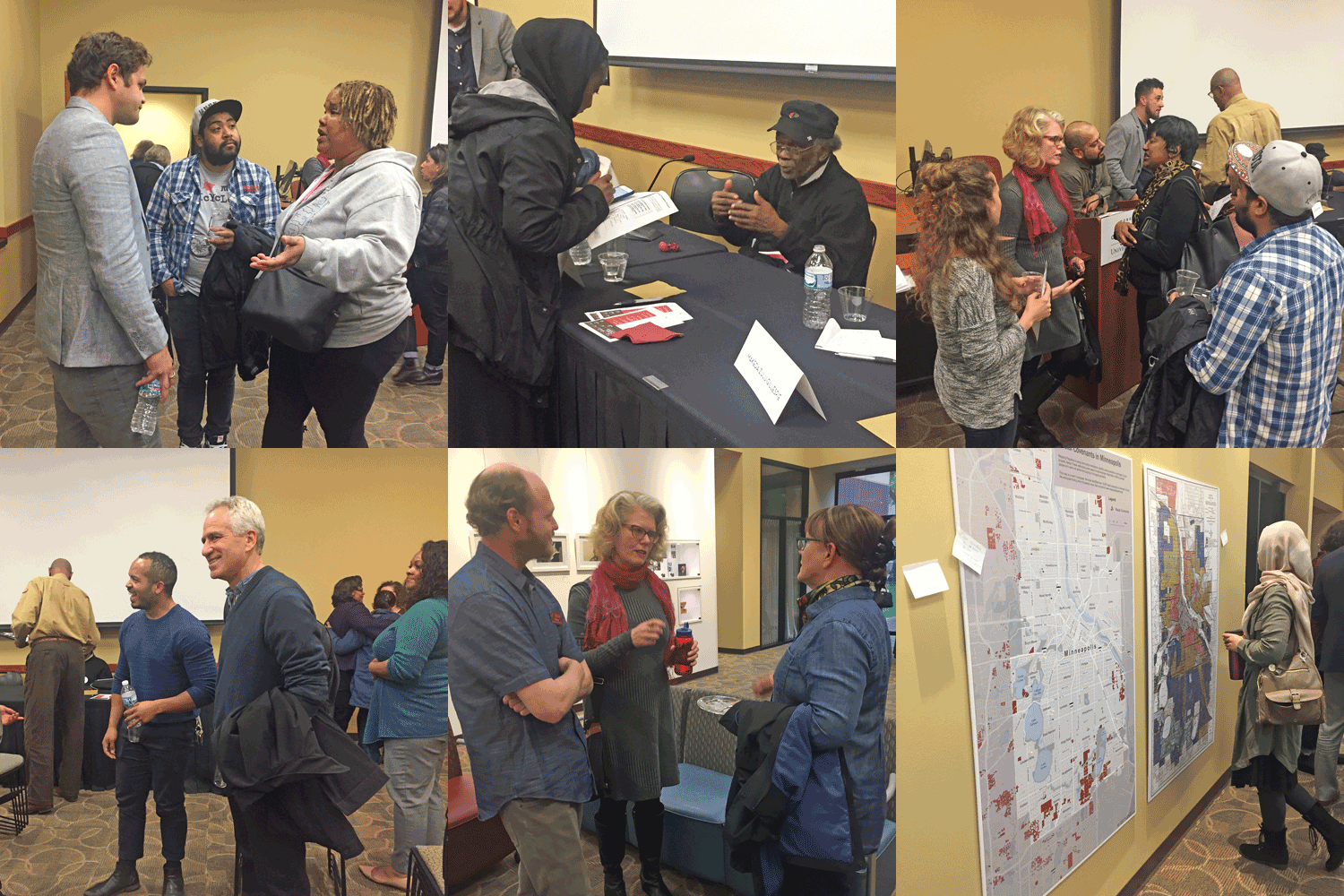
    Part of the “Racism, Rent and Real Estate: Fair Housing Reframed” event series, the University of Minnesota Urban Research and Outreach-Engagement Center (UROC) hosted a discussion centered on new research revealing what communities of color have known for decades — that structural barriers and legalized discrimination barred many people of color from buying property and building wealth for most of the last century.

    Grounded in a presentation from the Mapping Prejudice project and facilitated by Neeraj Mehta of the McKnight Foundation, the conversation featured insight from community members and Owen Duckworth, Director of Organizing and Policy at The Alliance; Mahmoud El-Kati, writer, lecturer, and commentator; Jeremiah Ellison, Minneapolis City Council member for Ward 5; and Makeda Zulu-Gillespie, UROC’s Director of Community Outreach.

    Seeding the discussion, Kevin Ehrman-Solberg, co-founder of the Mapping Prejudice project, identified the early 20th Century as a pivotal moment in urban planning that embedded racial inequities in housing and wealth creation. “Racism and racist ideologies were used and deployed in new ways,” he explained during his presentation. “It’s a process geographers have called the racialization of space: the idea that the quality of an area, the financial stability of an area, the value of an area are linked with the racial category of the residents. It was a new brand, a new way to deploy white supremacy that was embraced by all white people, and there was an explosion of new tools and mechanisms enforcing segregation.”

    Racial covenants were among the most widely wielded and deeply impactful tools, appearing first in Minneapolis in 1910 and becoming commonplace by the 1930s. Just a few lines of text in a warranty deed, these covenants made it illegal for anyone who wasn’t white to own or occupy a piece of land. “A lot of it had to do with the emerging real estate industry that used racism to sell land,” he said. “And it wasn’t just existing neighborhoods; new development was reserved exclusively for the use of white people. Before roads were extended, before houses were built or utility lines laid, the first thing developers were doing was racially restricting the land so these new neighborhoods would have to be white. It was illegal to live there if you’re black.”
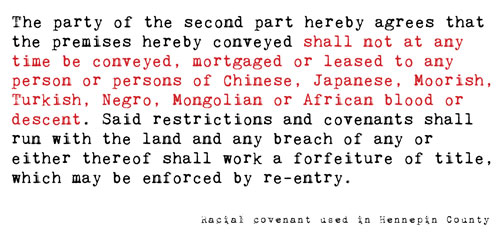
    “That led to not just the segregation of space but the segregation of wealth,” Ehrman-Solberg continued. “In large sections of the city it was illegal to live there if you were black, and then other sections of the city were redlined so you couldn’t get a loan. When folks did surmount those barriers and pay for a home they were often met with white violence… All of these barriers were working together to promote white homeownership and deny that ability to African Americans. While it’s been illegal now for 50 years, we’re still very very much living with the effects of these policies… White neighborhoods are the wealthiest parts of the city today. For families who could buy in down by Lake Nokomis in 1950, which at the time was affordable, the property values have skyrocketed. Black families were not able to capture those long-term financial gains.”

    In addition to being locked out of building equity through homeownership, Black communities were actively obliterated by the intentional siting of freeways that preferenced the movement of white people over the continuity of neighborhoods of color. “There’s nothing natural or preordained about these segregative patterns and differentiation in wealth,” Ehrman-Solberg emphasized. “It was deliberately built and constructed.”

    And yet, racial covenants are widely unknown, even — or perhaps, especially — to the countless white homeowners who benefited. The goal of Mapping Prejudice is to both engage that public in reckoning with this history and map every racial covenant in Minneapolis, which would be the first for any city in the nation.

    Turning from presentation to conversation, Neeraj Mehta, Director of Learning at the McKnight Foundation, opened the floor to the audience. Reacting to the troubling but close-to-home content, community members amplified the intentional harm to people of color, the attempted erasure of Native American from this land years before racial covenants, and the fact that, even today, new housing developments in Black communities are being marketed to white residents migrating from other parts of the city or the suburbs.

    For Kirsten Delegard, co-founder of the Mapping Prejudice project, the goal of the effort isn’t academic. “Our team always says we’re making a case for reparations,” she said. “That’s why we’re doing this work. By saying this was intentional, that there was nothing accidental about it, we hope we’re providing evidence for redress and also a road map for political mobilization… Before we move forward and summon the political will needed to make these changes, people have to reckon with a new collective understanding of our past. I spend a lot of time doing presentations for white audiences around town… and a lot of people aren’t there yet.”
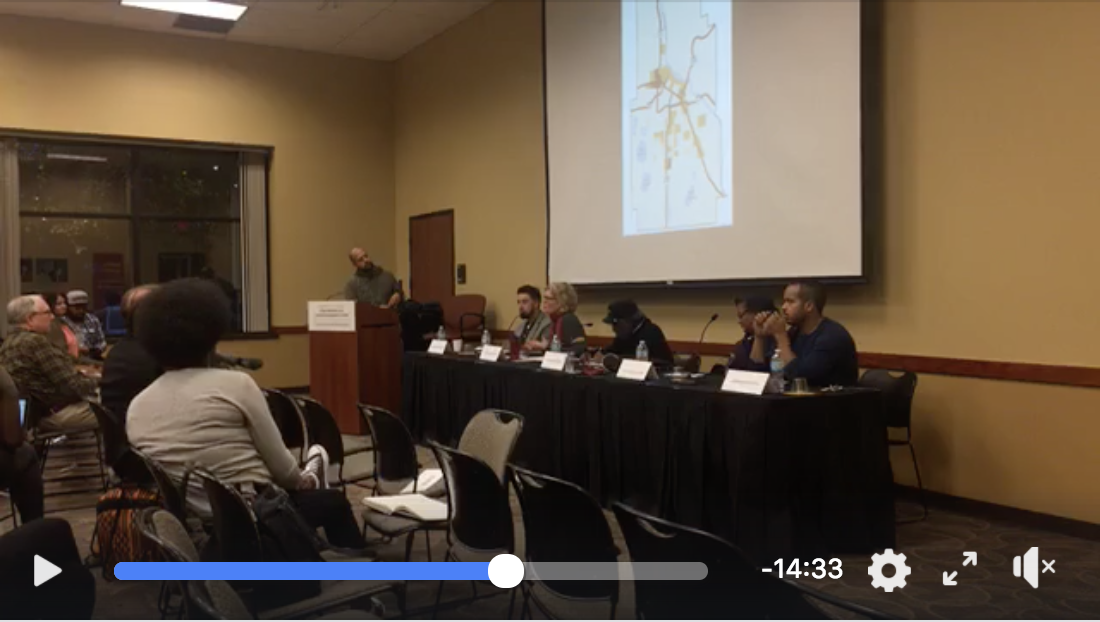
    Recording, Part 1

    Delving deeper into Delegard’s comments, Elder Mahmoud El-Kati emphasized the need to accurately diagnose the issue. “There’s a Chinese proverb that half of the solution to any problem is having the correct definition of the problem,” he said. “We don’t have the correct definition of the problem in America. The problem in America and most of the western world is the doctrine and ideology of white supremacy. That’s the common denominator where everything comes from… Race is a relatively new idea in the human family. It hasn’t been around that long. These are modern categories that all have to do with power.”

    Connecting to the history of housing, Mehta posed a question for the panel: So what does this version of white supremacy mean for where we are today?

    For Makeda Zulu-Gillespie, UROC’s Director of Community Outreach, obscuring structural racism and white supremacy undermines community integrity. “One of the symptoms of this is that many black children and families believe it’s their fault that they don’t understand money or something is wrong with them that they can’t build wealth,” she said. “That’s a painful symptom. When we talk about why Plymouth Avenue looks the way it does some people say, ‘Well, we don’t know how to take care of anything…’ But it is not our fault and there is a system working against us.”

    Jeremiah Ellison, Minneapolis City Councilmember for Ward 5, agreed that understanding the past is a precursor for meaningful discussion about solutions. “Knowing the history really can help drive the solutions because we can more accurately understand who we’re delivering solutions for,” he said. “It’s the job of elected officials to be champions and fight for resources for their ward, and when I have conversations with people about what could improve the neighborhood, and I say a term like reparations, a lot of black folks have this gut reaction that we don’t want a hand-out… So it’s important to know the history in driving toward this reparations-minded way to govern. Because it’s not a government hand-out. It’s what we deserve given the groundwork that’s been laid for us.”

    “A lot of folks myself included grew up with this internalized bootstrap theory,” he added. “Even if we know it’s wrong, we have this notion that I gotta do it myself, I gotta earn it. But, no. Your family should be able to give you an inheritance, you should be able to have that but you don’t because of this history. Black folks have not had that control over land, haven’t had access to that legacy or inheritance or site control.”

    Owen Duckworth, Director of Community Organizing at The Alliance, underscored how today’s challenges are fortified by those historic barriers. “When you generationally restrict access to certain parts of the city, when you don’t allow for building and passing of wealth from families of color, this is why we see the inequities in homeownership and who’s a renter and who’s a homeowner in our region,” he said. “It plays out in the current conversations of gentrification and displacement pressures. Some of that is a knowledge and understanding of who owns the land and property in the places we see as communities of color. There’s an understanding, either implicit or explicit, that the people living in those communities don’t have the deeds on those homes or on the land. A lot of fair housing conversations and fair housing law acknowledge and attempt to address segregation or deliver integration but there’s no frame on displacement. I remember a couple of years ago reading a line said ‘American apartheid is built on both perpetual segregation and perpetual displacement.’ And that a piece of the conversation we need to begin to talk about in terms of who’s being impacted by gentrification pressures and increasing interest in who’s living in the core cities.”

    “I think that’s connected to all the maps that we saw and who’s been given access to homeownership, which neighborhoods have been redlines and that cycle continues. We have to see these current issues of gentrification and displacement the same way we look back historically at racial covenants and redlined and be horrified at them, and I think we have to respond with the same degree of urgency and outrage right now as communities are being displaced.”
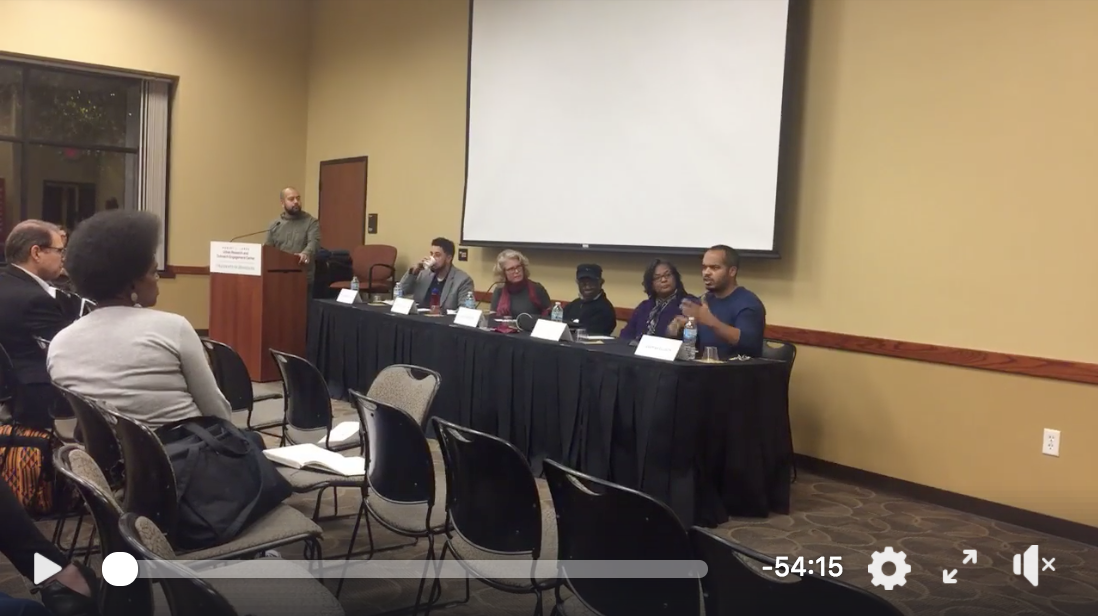
    Recording, Part 2

    Moving to the audience, that urgency and outrage were clear. A local organizer lifted up the determination and drive necessary from the community to push policymakers to make good on their progressive values, while several attendees expressed the disillusionment among their millennial peers, who are facing the barriers of racist policies and deeply ingrained white supremacy — and are ready to take action, both inside and outside the system.

    For Duckworth, addressing those barriers starts with shifting power. “Power inequities are the basis for the inequities we see in all the other aspects of our society,” he said. “Sometimes I’m in spaces where people are showing maps and showing statistics and come back to what do we do now? What are the policies we can pursue, engagement strategies and set of investments? All of those are the right questions, but I think there’s also the question of who’s at the table? Who has power in the process? Who’s able to set, say, a party platform? For instance, black women are the most consistent voting base of the Democratic party but how many places in the process of setting the agenda, even at a local level, are black women actively given space to engage in forming that agenda? At the core of all this, we have to acknowledge, is power inequity and white supremacy, which is vested in and institutionalized in all our collective logic.”

    So when it comes to addressing the policies or investments that create even short-term change, projects like Mapping Prejudice reframe the context of the conversation. “When you show people maps like these or talk about the history and intentionality of structural racism you go from a conversation with policymakers of ‘Yeah, I think we can allocate a small chunk of resources to meet basic needs around shelter and housing,’ and you begin to talk about this [housing] is something that’s been massively invested in by government. To me, we have to get to a point of talking about solutions that get back to that point. It’s not going to be market-based solutions. It’s not going to be just building luxury apartments at high density that’s going to deliver affordable housing for our communities. The market has never worked for a lot of us and, in fact, folks who have gotten stable housing haven’t gotten it because of market forces but intentional government investment. So at many different scales we need to be building toward those narratives to create those possibilities and then doing the organizing work and engagement work to demand the city, county, state and federal government massively invest in housing and wealth building resources targeted to communities of color… All of this is working to shift power because, if we have different power arrangements, we’ll get a starkly different set of outcomes in our communities.”

    Shifting that power will require engagement and action from white people, members of the audience emphasized. One community leader asked that presentations, like Mapping Prejudice, be shared in predominantly black neighborhoods. “This is information that has impacted us and we wonder why,” she said. “It was intentional and purposeful and it was put upon us.”

    Another audience member addressed white people directly. “Now that you’ve seen this, how does it make you feel,” she asked. “What are you going to tell your friends? Just like our friends are black, your friends are white. You have to talk to them, and tell them it’s time for us to heal. We can’t keep having this racial divide.”

    In his closing thoughts, Mehta urged attendees to investigate their role in addressing this legacy of racial exclusion. “There is a cost to repairing a history of robbery spanning generations and the cost is different for all of us,” he said. “Some of us need to give up money. Some of us need to give up land or believing myths and lies and false narratives. But it costs something. We can’t assume we can repair this history with sympathy or empathy. Part of what the data does is shows us this is intentional. It’s on purpose… As you leave, think about what’s the cost to you — and what’s the cost to us as a society.”

    Watch a full recording of the conversation on Facebook — and learn more about the Racism, Rent and Real Estate series here.

  • Minnesota’s East Central communities are growing — and so is their need for affordable housing

    Leaders ‘ECHO’ the need for affordable housing
    Located between Duluth and the Twin Cities — and within two hours of 80% of Minnesota’s population — it’s no surprise that the East Central region is one of the fastest growing in the state.

    But in 2015, a regional housing study made clear what some local leaders and community members already sensed — the region’s lack of affordable housing development loomed as a major threat to the region’s growth.

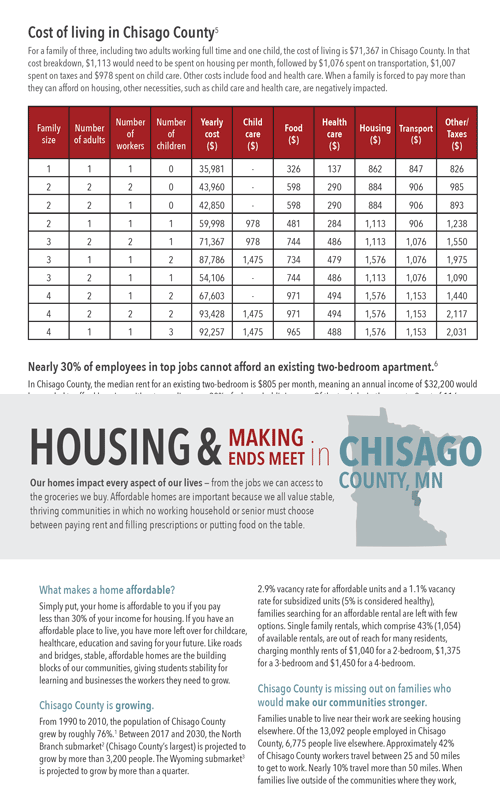
    Photo: Cost of living data from MN DEED and a summary of key takeaways from a Chisago County housing study completed this summer

    During Round 4 of MHP’s Housing Institute, housing leaders in the region banded together to address the yawning gap between affordable homes and the people who need them — teachers, bus drivers, cashiers, kids, grandparents and more. They named themselves the East Central Housing Organization (ECHO) and began convening monthly meetings with city, county and housing development staff to strategize around the region’s housing needs and jumpstart development.

    “ECHO exists to notify city and county leaders that housing is an issue,” explains Cherre’ Palenius, MHP Community Development Manager and a key adviser to ECHO. “When we first started, nobody was talking about housing. Now, everybody is.”

    ECHO includes representatives from Central MN Housing Partnership, Lakes and Pines Community Action Council, Mora HRA, Mille Lacs Corporate Ventures, East Central Regional Development Commission, Seven County Senior Federation, and A Place for You. ECHO took a proactive approach to the lack of affordable housing, arming themselves with data to attract developers and secure the public or private funds needed to get projects off the ground.

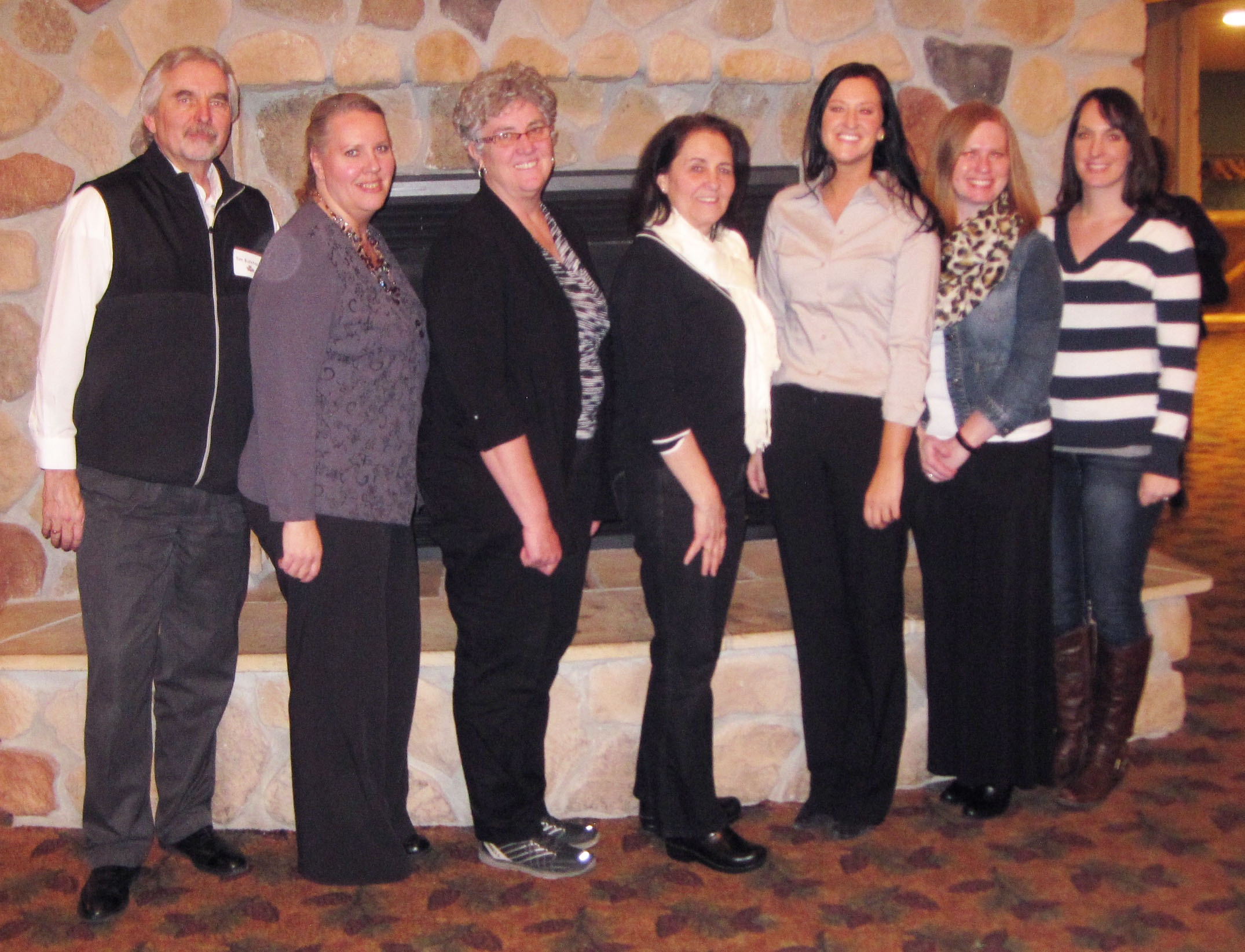
    Photo: This MHP Housing Institute team evolved into the East Central Housing Organization (ECHO), bringing developers and community leaders together to tackle affordable housing needs in Minnesota’s East Central region. From left: Tim Burkhardt (Seven County Senior Federation), Rose Dunn (Mora HRA), Mary Kay Sloan (A Place For You), Cherre Palenius (MHP), Jennifer Russell (East Central Regional Development Commission), Deanna Hemmesch (Central MN Housing Partnership), and Lezlie Sauter (Lakes & Pines).

    Their efforts are working. In the past two years alone, the region has seen several major affordable developments receive funding or break ground: Mysa House, a senior complex in Mora; West Birch Estates in Princeton; Lady Luck Estates in Hinckley; White Pine apartments in Cloquet; and several Habitat for Humanity homes.

    Chisago County — a growing community tackling growing gaps

    Despite these impressive strides forward; however, more investment is needed to move the needle on the region’s growing need for affordable housing.

    Located just 45 miles north of the Twin Cities, East Central’s Chisago County has a gap between wages and rent that’s among the worst in the state, according to MHP’s 2018 Out of Reach report. Residents earning the average hourly wage ($8.46) would have to hold down about two-and-a-half full-time jobs to afford market-rate rent for a two-bedroom apartment.

    To tackle that problem, Chisago County has been arming itself with data, completing a county-wide housing study this summer. A more than 200-page document, the study drills into local demographics and trends, putting numbers behind the robust need for housing for workers, senior housing, and more.

    Community members are well aware that the 200-page study is just the first step.

    “They don’t want the study just to sit on a shelf,” said Palenius. “Community leaders want to work with one another to create strategies to tackle pressing needs identified in the study.”

    County leaders hired a community planner, Landform, to work with cities to examine current land use and zoning laws. Their goal is to understand how to overcome a city’s unique barriers to development and identify potential sites for affordable housing. At several workshops this summer and fall community leaders convened to provide input, set goals, and strategize.

    “We want to create a toolbox for each community,” Palenius said. “If a developer comes to Wyoming, for example, they will already have sites identified and priorities around what they want built.”

    Chisago County is doing all it can to pave the way for the development of housing affordable to working families and seniors — and create the community infrastructure it needs to continue to grow. In addition to that critical work; however, as the Minnesota Task Force on Housing recommends, significant, ongoing investment by the state is key to making real progress on this issue impacting Minnesota communities of all sizes.

    Check out a one-pager on housing in Chisago County here!

  • Sold Out panel: There are many faces of homelessness and housing instability

    Sold Out panel: There are many faces of homelessness and housing instability

    It’s not only damaging financially but damaging to your soul, to your spirit, to your self esteem, to your mental and physical health. There were so many lasting impressions and damage that there’s no way money could make you whole again. – Maria Johnson, former Crossroads resident
    One night in 2015, Maria Johnson had a note slipped under her door telling her she had 30 days to find a new place to live. The Crossroads at Penn had been sold and the new owner had plans to “upscale” the property — and ultimately upend the lives of hundreds of residents, like Johnson.

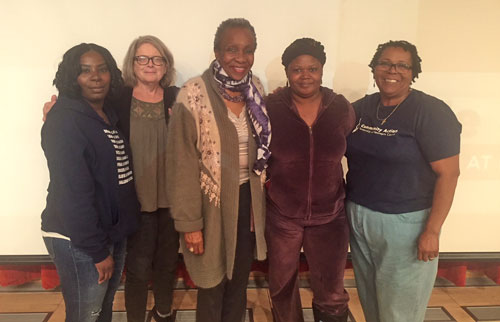
    On September 22, as part of the “Racism, Rent and Real Estate: Fair Housing Reframed” event series, Johnson shared her experiences on an all-tenant panel following a screening of the film “Sold Out: Affordable Housing at Risk.” The 2017 documentary produced by Twin Cities PBS centers the story of the Crossroads as an illustration of the loss of affordable rental homes throughout the region. Johnson was joined by Linda Soderstrom, a fellow former Crossroads tenant, as well as tenant experts Jewelean Jackson and December Wesley and Pat Longs, Community Programs Navigator at Community Action Partnership of Hennepin County (pictured, from left to right).

    A clear theme emerged: Homelessness and housing instability have many faces.

    In sharing her story, Johnson emphasized that affordable housing is an issue, not just for those in poverty, but those of modest incomes, as well.

    “I’m in college and I support my mom so that location [at the Crossroads] was extremely important because it was on a bus line, it was convenient to everything and it was affordable,” Johnson told the audience. “I had money set aside in a savings account, but when this happened it was depleted and I ended up losing my job. I had to relocate to a different apartment complex that cost more money but I didn’t make as much money and I couldn’t get any assistance because I made just enough money to miss that. That’s what I stress when it comes to affordable housing. We definitely need to look at the impact on the poor but those of us who make just above what’s considered poor, housing is unaffordable, as well. I’ve had to move three times in past four years and the most recent place had infestation of flies. The crisis is real — and not just for those with no money but for those who are just above that line, because there’s no assistance for us.”

    Linda Soderstrom, a tenant leader and former resident of the Crossroads, further challenged preconceived notions about those who struggle with affordable housing.

    “I like to break people’s stereotypes,” she said. “I’m reliant on the Section 8 voucher for the rest of my life but I cared for 30 daycare and 30 foster care kids for Hennepin County when I owned my own home at one time, and they were all prenatally exposed to drugs and alcohol. One of them stayed and he’s 30 now and doing quite well. But no one is a typical Section 8 recipient. No one. We’re all individuals. We all want the things in life that everyone else does.”

    But, as Soderstrom pointed out, the incoming owner of the Crossroads didn’t see tenants as individuals. In fact, the court case challenging the displacement of the Crossroads residents surfaced troubling sentiments on the part of the new landlord. Not only did Jim Soderberg label the Crossroads tenants “undesirable,” but the judge in the case referenced a previous instance in which Soderberg promised city officials that he would “get rid of the Jerry Springer watchers and bring in the Caribou crowd.”

    “They have words for all this,” Soderstrom said. “Reposition, upscale, give it a facelift. Well, you can’t reposition a population. Those are people.”

    And, even a record financial settlement in their fair housing claim, couldn’t reverse the harm to hundreds of families, like Johnson.

    “The amount that was given did very little to repair the damage that was done,” Johnson said. “It was not only damaging financially but damaging to your soul, to your spirit, to your self esteem, to your mental and physical health. There were so many lasting impressions and damage that there’s no way the money could make you whole again.”


    While the circumstance was different than the Crossroads, December Wesley also lost her home because of a property sale. A professional in the medical field, Wesley was a caretaker when a new employer bought the building where she worked — and lived. That new owner not only laid off the employees but told them they couldn’t rent at the property, either. At the time, she had two teenage children, a cat, and a van that had to hold all their possessions.

    “It’s very expensive being homeless,” Wesley shared. “People think being homeless you’re a bum, but that’s not the case. I was a working mother, and the kids were going to school and they were clean. But it’s very expensive being homeless. You have to pay for gas to move around to different places, and still do the things you would do in your apartment or house… I also learned that when you’re homeless, your support comes from other homeless people. It doesn’t come from agencies, as you would think it would.”

    Jewelean Jackson, a tenant expert who has experienced foreclosure, eviction and homelessness, emphasized that housing instability doesn’t conform to the widespread perceptions, either.

    “I always tell people eviction is not the Sheriff coming and kicking your door in, or going to housing court or someone coming and leaving all your things on the sidewalk,” Jackson shared. “None of that happened to me. But at the same time I was evicted because I no longer have my home or an address and I think it’s important for people to know that it isn’t any less stressful. For me it came on the heels of the mortgage foreclosure. I lived at the shelter but my daughter couldn’t fathom being in a shelter. She was in high school then, so she just chose to hop from couch to couch with family and friends… I’ve tried to keep her life as normal as possible. To the point where, last month she competed and represented Minnesota in the Miss Black USA pageant.”

    “Part of my struggle is that if I was a drug addict, if my child had a baby stroller attached to her hip, if I was threatening all of you in this room, or all kinds of other things against society, people would be knocking on my door to help. Part of that is because that’s what they expect us to be. Homelessness does not have one face but society has created that one face and, if you deviate, you’re out there by yourself.”

    “When people talk about homelessness and eviction and going through foreclosure it’s always, ‘Those people need to pull themselves up by their bootstraps,’ but if the boots aren’t there in the first place what can you do?” she added later in the conversation. “I hope what you take from the viewing [of Sold Out] is to share in your circles that it’s not one face. It’s not one situation. And it’s not all of those people. Everyone in this room has known a person or two or three in that situation, if not currently. We need systems change because this continues to happen and the high powered lobbyists and folks are continuing to perpetuate that which supports them. Often, when we choose to fight and organize and mobilize because we don’t have the resources, we get beat down. But the Crossroads is a good example of when you fight back you can get the result that you want.”

    Soderstrom agreed. “The Crossroads was not saved but, a year later, the same owner was trolling to buy Seasons Park [apartment complex] and through all kinds of cooperation, including the new mayor and superintendent of schools, we all got together and a nonprofit buyer made counter offer after counter offer until the seller did call off the dogs. So it’s been saved now for affordability.”

    But Pat Longs, Community Programs Navigator at Community Action Partnership of Hennepin County, emphasized the seeming lack of urgency among policymakers and advocates to address the dramatic lack of affordable housing. “There are different people in this documentary who say this is what we need to do,” she said. “And we constantly go to these conferences [about housing and homelessness] and they have big ideas. But nothing is being taken care of. We get tired of talking about these ideas. We need some action.”

    And input and engagement from directly impacted communities is critical, Johnson said.

    “I would encourage everybody to get involved,” she said. “I know we discussed the upper echelon making decisions regarding us without us. You can’t discuss us without giving us a seat at the table. So we highly encourage people to force them to involve you. Let them know they have no idea what our conditions are. There’s not one face of this crisis.”

    Learn more about the affordable housing crisis and watch Sold Out here. 

  • Groundbreaking exhibit explores racism and housing in Minneapolis

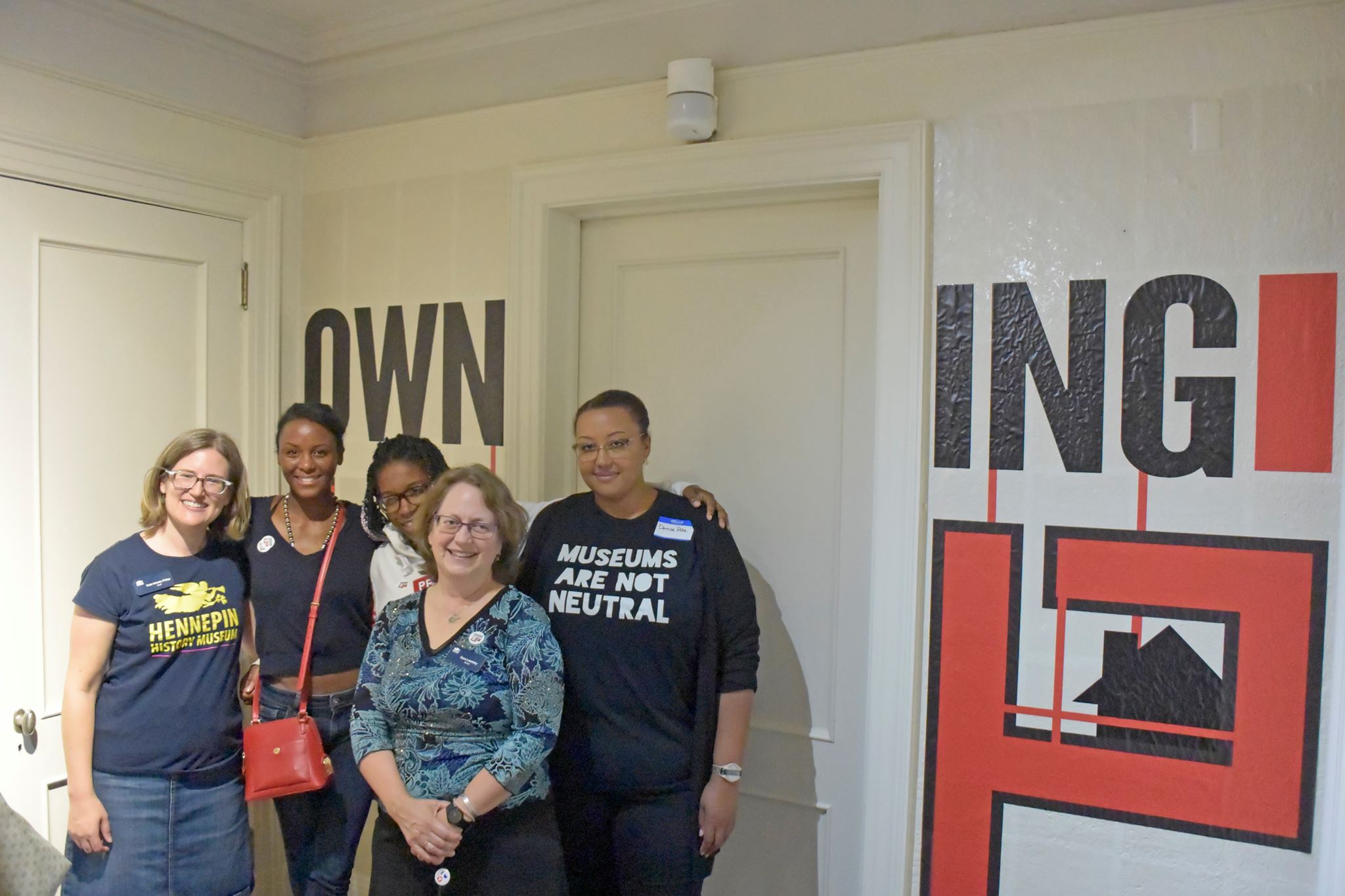
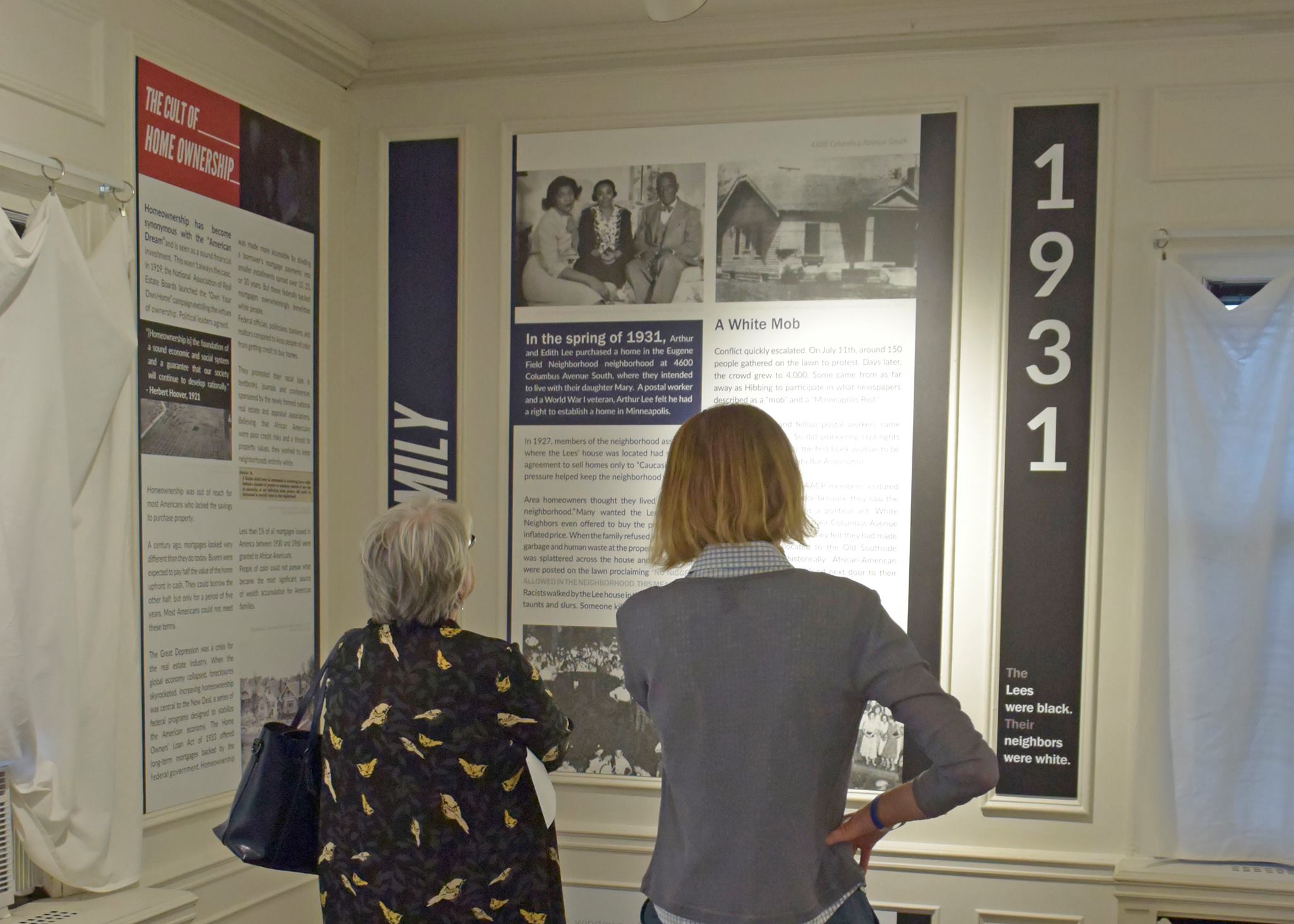
    Display cases can’t contain the dark history — and lasting impacts — explored by “Owning Up: Racism and Housing in Minneapolis.” Red lines guide viewers through the stories of three black families as they search for home and community in white-dominated neighborhoods. The groundbreaking exhibit, now on display at the Hennepin History Museum, highlights the devastating and persistent consequences of redlining, racial covenants, and white violence in Minneapolis.
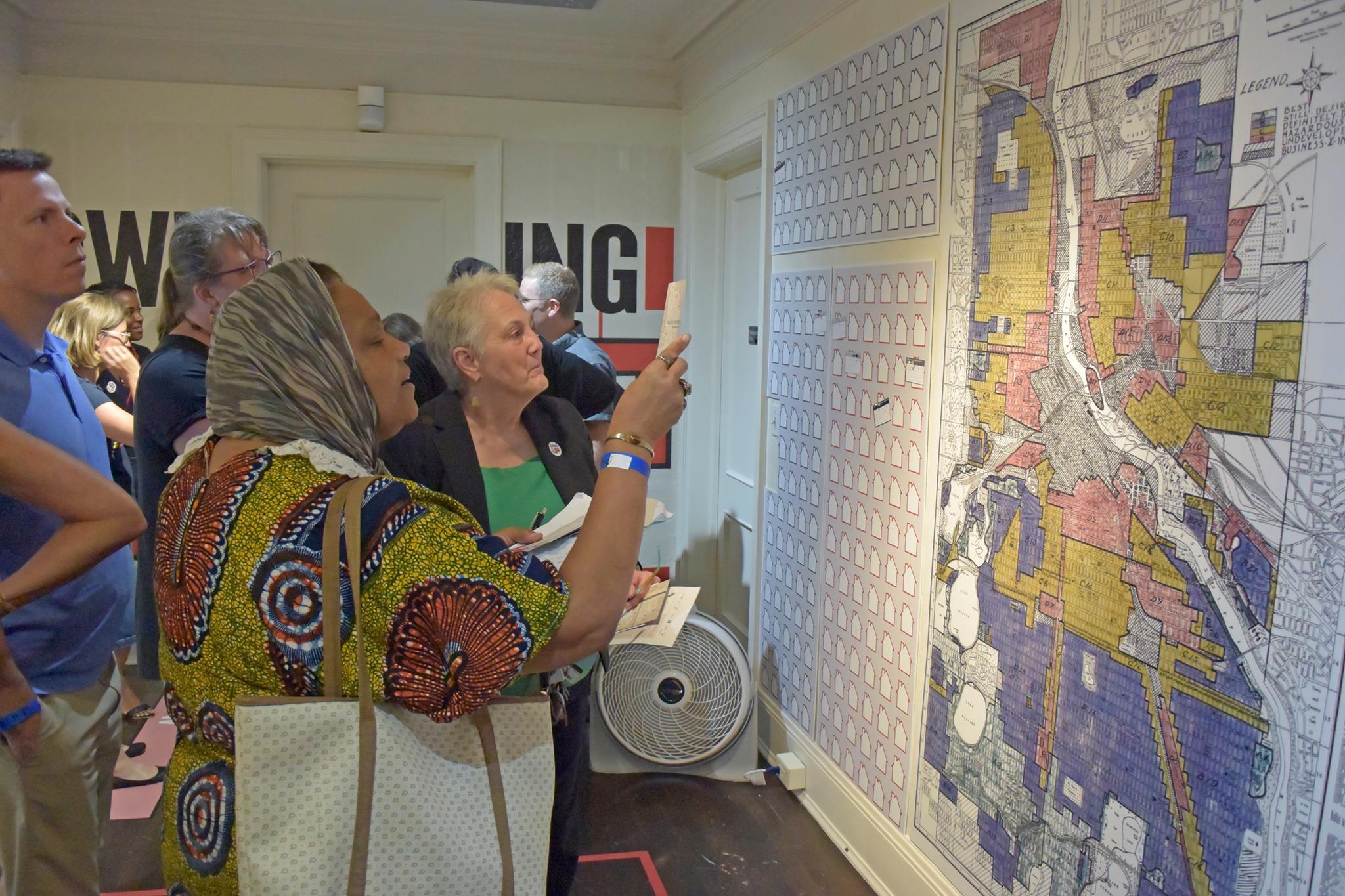
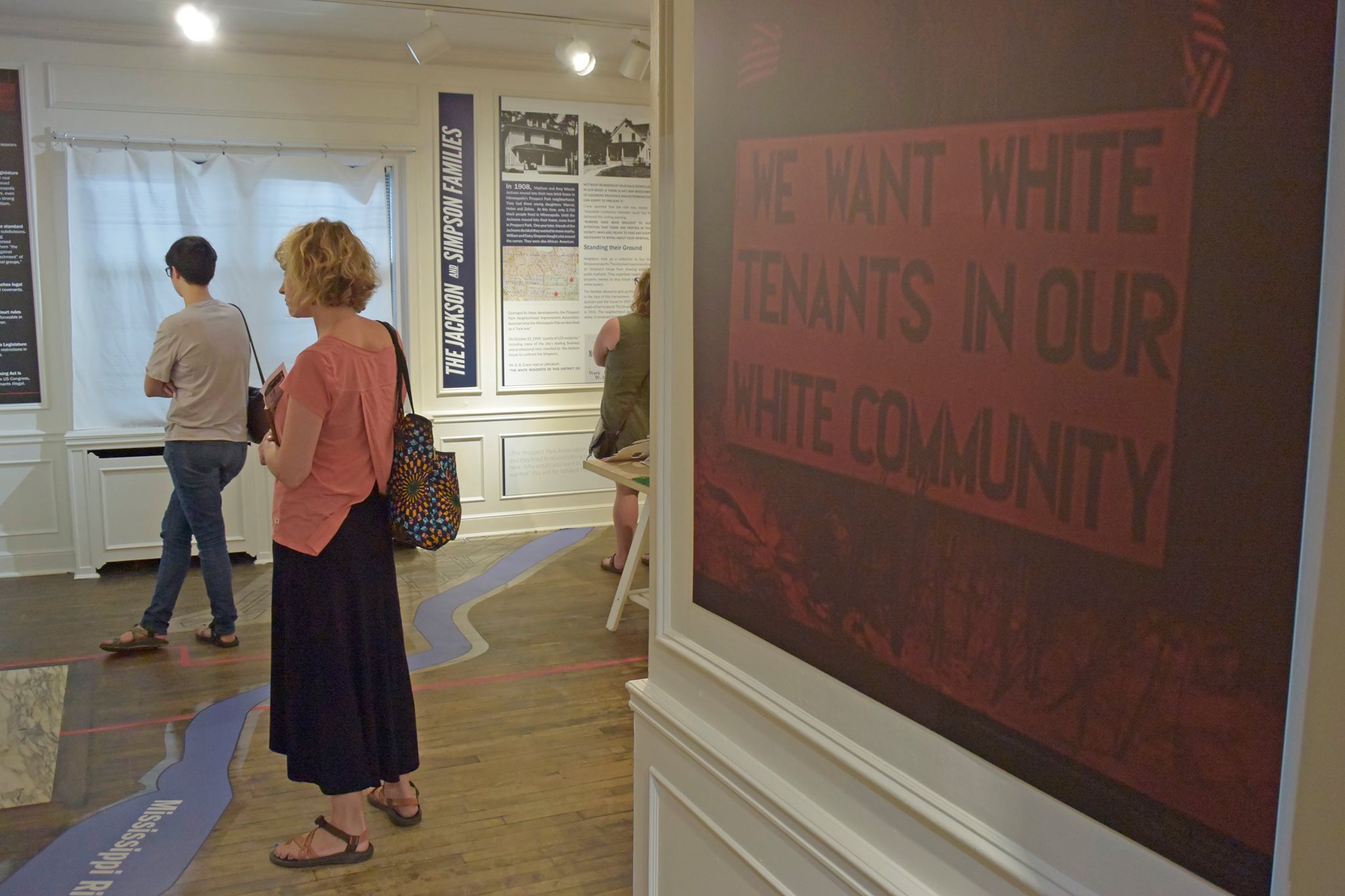
    Photo: Viewers experience the exhibit on opening night.

    “Why are there racial disparities in Minneapolis?” asked curator Denise Pike in her remarks on August 23, the exhibit’s opening night attended by more than 100 people, “Perhaps it’s because we haven’t come to terms with our history.”

    Pike, a student of University of Minnesota’s Heritage Studies and Public History degree program contends that “public history and museums should be place for social justice work.” In Minneapolis, where homeownership among black households is among the lowest rates in the nation and where stark disparities persist between white and black households, there’s a considerable amount of work to be done.

    Photo: Maps and interactive message boards show past and present impact of racist housing policies.

    “It’s a relevant exhibit,” said Cedar Imboden Phillips, Hennepin History Museum’s Executive Director, because it explores actions with impacts still all too visible today. She prompted audience members to consider, “What stories will our children and grandchildren be telling?”

    By challenging the common vision of Minneapolis as a progressive haven and “model metropolis” the exhibit prompts audiences to take another look around their neighborhoods. “Take stock of who’s there and who’s missing and reflect upon why we have neighbors missing,” Pike said. “If we don’t acknowledge that, we’re doing a disservice to our neighbors.”

    Photo: Red lines and rivers guide viewers through the exhibit.

    “This is the raw base of what was really going on in Minneapolis,” said Lena Booker, who attended the opening event August 23, and herself encountered discrimination while searching for a home with her husband in the 1960s. “If you were an African American viewing this exhibit, you were not surprised.”

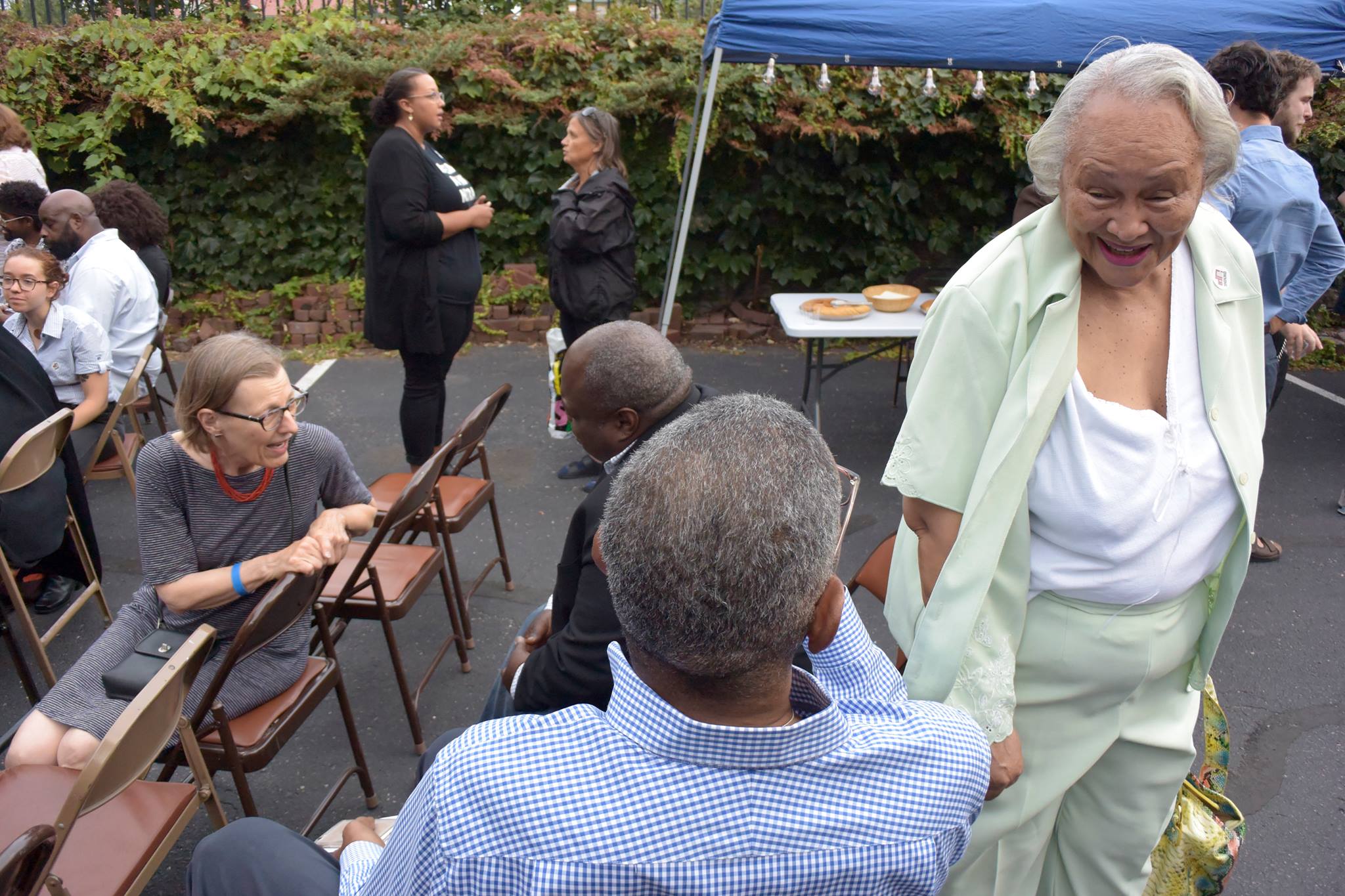
    Photo: Booker (right) at the “Owning up” opening reception on August 23.

    “Fifty years after its passage, the dream of the Fair Housing Act is still unrealized in Minneapolis,” said Cara Letofsky, Hennepin History Museum board member and coordinating consultant to the Racism, Rent and Real Estate: Fair Housing Reframed series, of which the museum’s exhibit is a part, “We have to contend with our history.”

    Pike and fellow Heritage Studies and Public History student Kacie Lucchini Butcher created “Owning Up,” Pike’s first-ever exhibit, which runs August 23 through January 20, 2019 at the Hennepin History Museum. Design work for the exhibit created by Augsburg University’s graphic design program Design & Agency. Learn more here.

    From left: Cedar Imboden Phillips, Hennepin County History Museum; Indra Ramassamy and Keeyonna Fox, design team members and members of Augsburg University’s graphic design program Design & Agency; Cara Letofsky, Hennepin County History Museum board member; Denise Pike, exhibit curator


  • Work with us! MHP seeks housing canvassers (temporary, part-time position)

    Minnesota Housing Partnership is seeking part-time (15-20 hours per week) housing canvassers, starting immediately until November 9, 2018. Under limited supervision, housing canvasser will conduct door to door and over the phone canvassing efforts in assigned house districts throughout the Twin Cities Region to identify and activate Minnesotans who prioritize housing investment. 

    DUTIES: 

    • Travel to assigned geographic territory.
    • Engage community members through door-to-door canvassing and/or one-to-one phone calls about housing policy. 
    • Obtain signatures from Minnesotans signifying their support of MHP’s housing campaign. 
    • Achieve, on average, 250 signatures per assigned district. 
    • Compile stories from Minnesotans on how housing has impacted their life. 
    • Help identify Minnesotans who are willing to contact legislators and communicate their demand for investment in housing. 
    • May be responsible for driving a team of canvassers. 
    • Perform other duties and responsibilities as assigned.

    QUALIFICATIONS:

    • Adhere to assigned talking points and deliver in an authentic and personable manner. 
    • Partner with other canvassers to accomplish objectives.
    • Incite enthusiasm and influence, motivate and persuade others to achieve desired outcomes
    • Verbally communicate in a professional and effective manner
    • Work independently as well as collaboratively within a team environment.
    • Handle stressful situations and provide a high level of customer service in a calm and professional manner. 

    COMPENSATION:  $15-$18 per hour DOQ, or as negotiated, plus agreed upon expenses. Position starts immediately and terminates November 9, 2018.

    REPORTING: This is a temporary position with oversight by the MHP Director of Strategic Initiatives and Policy and direct reporting to the Campaign Strategist for the Keys 2 Prosperity Housing Campaign. 

    TO APPLY: E-mail letter of interest and resume to [email protected]; applications accepted now through September 14, or until positions filled.

    QUESTIONS?  Contact Elizabeth Glidden, Director of Strategic Initiatives and Policy, MHP, at [email protected].

  • MHP submits comment to HUD urging robust enforcement of fair housing rule

    On August 20, MHP submitted a comment urging the U.S. Department of Housing and Urban Development (HUD) to continue robust enforcement of the disparate impact rule, an important mechanism to ensure the Fair Housing Act, which protects people of color, low-income people, disabled people and others from discriminatory housing practices, is fully enforced.  

    The disparate impact rule explains that housing practices that have a discriminatory effect are prohibited under the Fair Housing Act, even if there may not be evidence of discriminatory intent.  The rule clarified a longstanding policy in fair housing enforcement, as HUD, the Department of Justice, and all circuit courts to consider the issues have determined that the Fair Housing Act prohibits policies and practices that have discriminatory effect. 

    In June, HUD announced it would consider changing the disparate impact rule, implemented by HUD in 2013, based on a 2015 U.S. Supreme Court decision, Texas Department of Housing and Community Affairs v. Inclusive Communities.  Read more from the National Low Income Housing Coalition.

    MHP’s participation as community engagement facilitator for the 2014 Twin Cities Regional Analysis of Impediments, summarized in this report on fair housing community engagement, reaffirmed through data and community stories that many facially neutral policies and practices have had a negative impact on families of color and other protected groups. Minnesota has some of the worst race-based housing disparities in the United States, particularly in homeownership. For that reason and more, MHP recommends that HUD continue to use all available tools, including the fair housing rule, to ensure the full and fair enforcement of the Fair Housing Act.

    MHP also signed on in support of these comments submitted by the National Fair Housing Alliance.