• MHP honors outgoing board members and welcomes new members

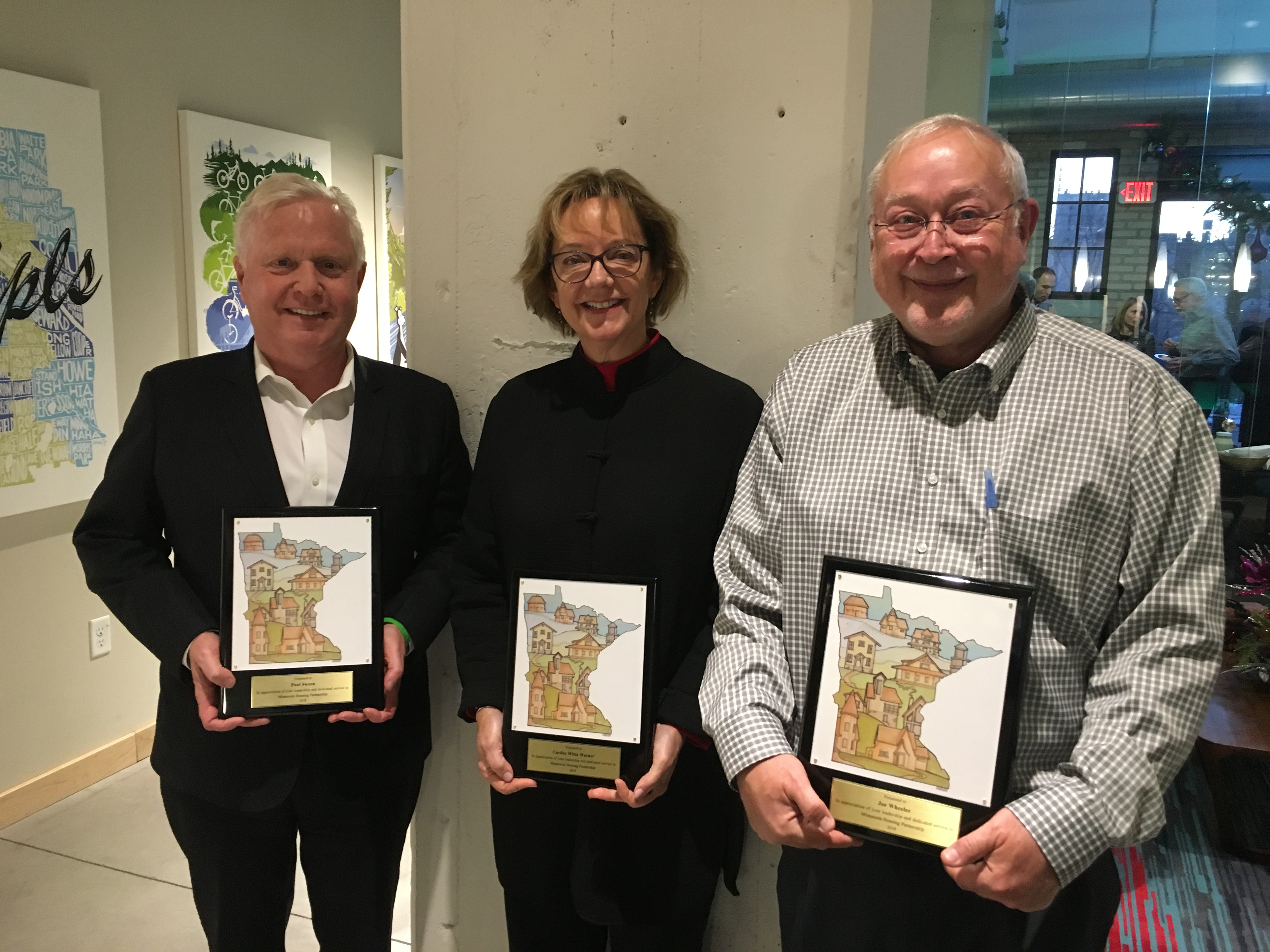
    Heading into 2019, MHP said farewell to three board members and welcomed four. Outgoing board members include Paul Sween, Dominium; Carliee Witta Warner, Neighborworks America; and Joe Wheeler, Southeastern Minnesota Multi-County Housing and Redevelopment Authority (SEMMCHRA). New board members include Andrea Brennan, City of Minneapolis; Harry Melander, Minnesota Building and Construction Trades Council; Buffy Beranek, SEMMCHRA; and Mark Moorhouse, Dominium.

    Photo: (From left) Outgoing board members Paul Sween, Carilee Witta Warner, and Joe Wheeler

    Outgoing board members’ service to MHP — and their deep commitment to affordable housing — will have ripple effects beyond the organization and their term of service.

    “We’re grateful to Paul, Carilee, and Joe for their many years of dedicated leadership on MHP’s board, and I feel privileged to have had the opportunity to learn from each of them,” MHP Executive Director Anne Mavity said. “These leaders have committed their careers to advancing affordable housing and community development. Their insights and expertise will have lasting impact on MHP and communities in Minnesota and beyond.”

    Sween, outgoing Board Chair, served on the MHP board for nine years. “I’m honored to have had the opportunity to serve with MHP,” Sween said. “MHP staff is engaged, talented, and committed, and they have done excellent work to build capacity and spread the message that affordable housing is key to the success of our communities. That work has had an impact. More and more, local units of government are stepping up and recognizing the importance of investing in affordable housing.”

    Looking ahead, new board members will play a key role in challenging MHP to meet the ambitious goals of the recently-adopted 2019-2021 Strategic Plan. “I can’t wait to dig in together to continue to grow MHP’s impact,” Mavity said. “I’m excited to welcome Buffy, Andrea, Harry, and Mark to the MHP board. Their deep experience and expertise will power us forward as we work hard to achieve our goals.”

    Three of MHP’s four new board members (from left) Andrea Brennan, Harry Melander, and Mark Moorhouse

    Buffy Beranek

    New board member Buffy Beranek is the recently-appointed Executive Director at SEMMCHRA, providing planning, direction, and legislative input. For the past 13 years, she has served as Deputy and Finance Director at SEMMCHRA. Previously, she successfully led and managed daily operations of a $600 million contract portfolio at Mayo Clinic, one of the nation’s premier healthcare organizations.

    During Beranek’s career and personal experiences she has fought for access and funding for basic social needs – health, education and now housing. Her focus and purpose for serving on boards is to bring new ideas forward, work collaboratively across the State of Minnesota and fight to reduce unnecessary regulations while promoting locally-driven housing initiatives.

    Andrea Brennan

    New board member Andrea Brennan serves as Housing Policy & Development Director for the City of Minneapolis where she works to improve access to quality, affordable housing through policy and by financing and redeveloping single and multifamily residential real estate. “I’m excited to join a board with broad experience and representation from public and private sectors, across the state and along the housing continuum,” Brennan said.

    Previously, Brennan served as the Director of Community and Economic Development for the Dakota County Community Development Agency and Deputy Executive Director for the Washington County Housing and Redevelopment Authority. She has a Master’s Degree in Public Affairs from the University of Minnesota, and serves as a board member of the Family Housing Fund and the Land Bank Twin Cities, Inc. Brennan is also a member of the Executive Committee of Heading Home Hennepin.

    Harry Melander

    New board member Harry Melander has 25 years of experience representing unions in the construction industry. Since 2009, Melander has served as president of the Minnesota State Building & Construction Trades Council, and he is employed by Dougherty Funding, LLC, a financer and lender for commercial real estate. Melander has also served an 8 year term as a Metropolitan Council Member appointed by Governor Dayton; the Metropolitan Council has a significant role in regional housing policy and planning

    Melander is committed to advancing affordable housing in Minnesota. “Housing should not be a privilege but a right for all Minnesotans,” Melander said. “I’m excited to be a part of an organization that supports this belief and will move it forward during the 2019 legislative session.”

    Mark Moorhouse

    As Partner and Senior Vice President of Dominium, new board member Mark Moorhouse is responsible for the day-to-day business operations for the growing group of nearly 70 professionals in the Development and Acquisitions department who focus on affordable housing.

    “I am excited to join the MHP Board,” Moorhouse said. “I look forward to offering my expertise in the affordable real estate industry and will continue to do my part in advocating for improving conditions of home and community.”

    Moorhouse has extensive experience with various federal, state and local housing programs. Since joining Dominium in 1996, he has worked on several significant portfolio acquisitions, new project developments, and the acquisition of existing apartment projects. He has played an integral role in helping the company grow from managing 6,400 units in 1996 to more than 26,000 units in 23 states today.
     

  • Four communities celebrate $1.6 million in FHLB awards

    In late 2018, four communities in three states celebrated funding awards from Federal Home Loan Bank of Des Moines (FHLB) Affordable Housing Program (AHP) totaling more than $1.6 million in critical funds to construct, rehabilitate, or acquire affordable housing.
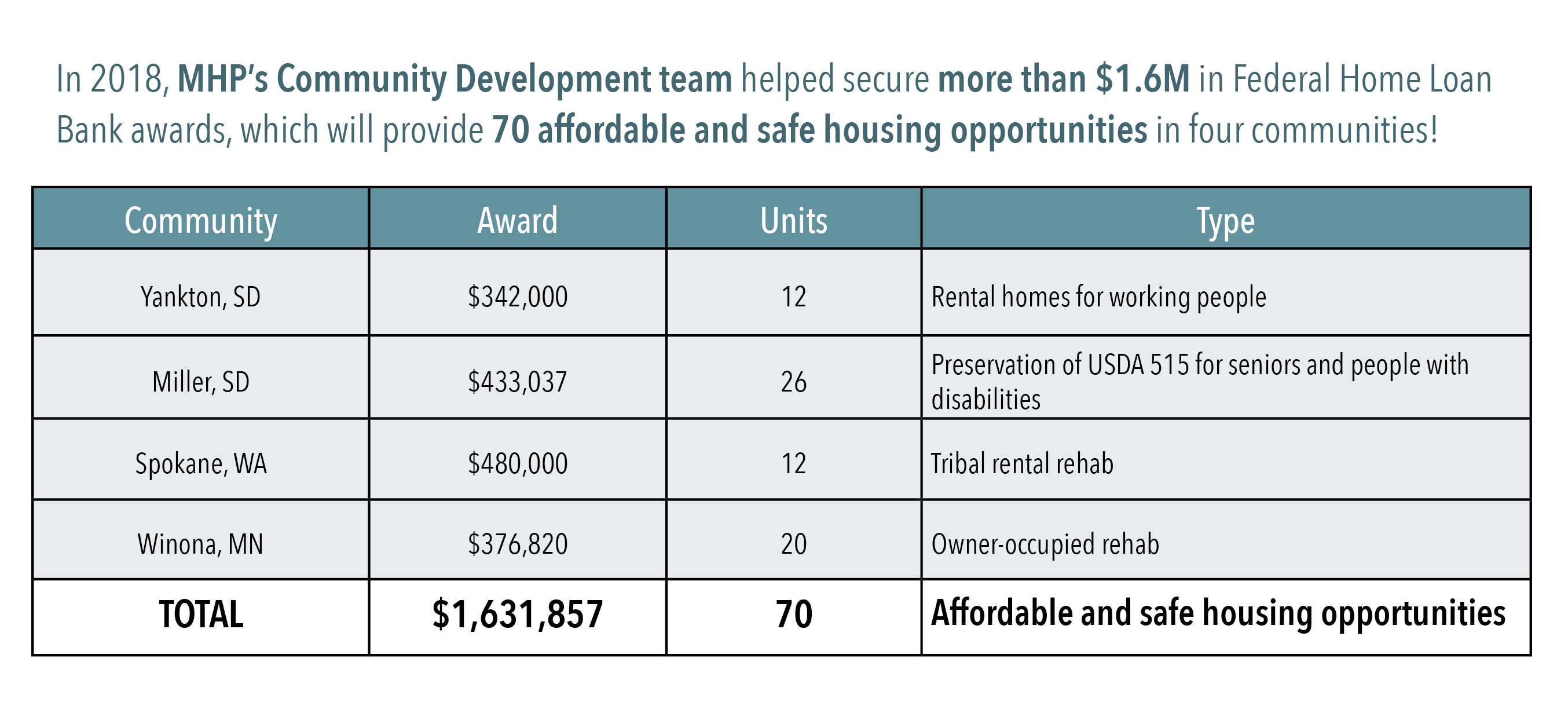
    MHP’s Community Development Team helped make these awards happen, supporting community members in Yankton, South Dakota; Miller, South Dakota; Spokane, Washington; and Winona, Minnesota as they worked to submit competitive applications. The funding secured will provide 70 affordable and safe rental homes for working people, preserve affordable rental homes for seniors, and rehabilitate tribal rental homes and owner occupied homes.

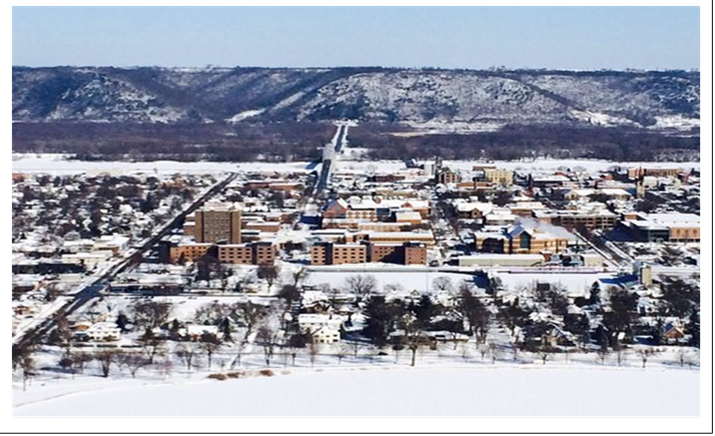
    In Winona (pictured right), FHLB funds will support the Ability Home Rehabilitation Program. Community Development Specialist Nick Larson said the program will “empower Winona homeowners to make the necessary repairs and investments to remain in their homes and age in place, while protecting their home values for future generations.”

    Merchants Bank partnered with the City of Winona and MHP to submit a successful application.

    Learn how you can receive technical assistance from MHP’s Community Development team! 

    Miller Plaza, located in Miller South Dakota, is a United States Department of Agriculture Rural Development Section 515 property that provides 26 affordable homes to seniors and people with disabilities. FHLB funds will help preserve the property by addressing priority health and safety items, including an elevator upgrade.

    Jerry Peterka, President at Quoin Financial Bank, led the application process for FHLB funding to renovate Miller Plaza. “These funds are key to ensuring that community members can continue to access quality, affordable homes at Miller Plaza,” Peterka said.

    In 2018, FHLB Des Moines awarded more than $52 million through AHP, facilitating the creation or preservation of more than 3,800 units of affordable housing.

  • Work with us! MHP seeks Membership and Development Officer

    We are searching for a Membership and Development Officer to lead donor outreach, recruitment, and stewardship to increase the financial resources and stakeholder engagement for MHP’s key programs.

    The Membership and Development Officer is part of MHP’s fund development team. The primary focus of this position is the Investors Council, which represents industry leaders in affordable housing and community development. Key responsibilities include cultivating industry organizations as institutional donors, leading event planning, and working with MHP leaders to grow Investors Council membership. This position will also assist with cultivating new partnerships, engagement, and fundraising opportunities.

    Minnesota Housing Partnership (MHP) convenes, guides, and supports a diversity of partners working to improve conditions of home and community. Building on decades of experience, we strengthen development capacity and promote policies that expand opportunity, especially for people at the lowest income levels.

    The ideal candidate will have a can-do attitude and a positive approach to problem-solving. We’re looking for an enthusiastic self-starter to work collaboratively with staff, board leaders, and community members.

    Job Description/Responsibilities

    • Ensure that MHP reaches funding and membership goals.
    • Identify and steward new donor, stakeholder, and partner relationships that advance MHP’s mission, focused on MHP’s Investors Council membership.
    • Work with MHP staff to create and implement Investors Council membership recruitment and renewal campaigns.
    • Lead the planning, coordination, logistics, marketing, registration, speaker arrangements, etc. for all Investors Council events (approximately 4 per year).
    • Maintain contact record (CRM) database to track and build relationships with Investors Council members and other stakeholders (MHP uses local CRM provider theDatabank).
    • Engage, staff, and lead the work of MHP board committees to increase Investors Council membership and leverage additional fundraising opportunities.
    • Cultivate, steward and increase new and current member/stakeholder engagement with MHP programs, including policy programs and external events.
    • Work with MHP staff to identify opportunities to increase financial resources, external visibility and stakeholder engagement in their programs.
    • Promote MHP as an organization and promote Investors Council membership and engagement at relevant events.
    • Assist in the creation of communications materials, content and promotion.

    Requirements/Qualifications

    • Bachelor’s degree in marketing, business, communications or related field or equivalent professional experience.
    • Minimum two years of demonstrated success in donor development and fundraising.
    • Minimum two years in promoting membership and/or resource development.
    • Experience working collaboratively with multiple staff and key organizational stakeholders.
    • Professional interpersonal skills. Excellent written and oral communication skills.
    • Efficient multi-tasker with the ability to adapt to short deadlines and a fast-paced environment.
    • Self-starter with enthusiasm for networking and relationship building.
    • Experience building partnerships and collaborations with private sector, public sector, and nonprofit partners, preferably in housing and community development.
    • Commitment to values of collaboration and equity.
    • Proficient in basic office computer software systems (e.g. Word, Excel, PowerPoint, Office 365 and SharePoint, Google Docs, CRM databases – theDataBank).

    Reporting Relationships

    Reports to – Director of Fund Development

    Direct reports – none

    Pay/Benefits

    The salary range for this position is $55-65K/annually. MHP offers a robust benefits package and flexible work schedule, including the ability to occasionally work remotely.

    Application Details

    Please email resume and cover letter, with “Membership and Development Officer” in the subject line, to [email protected].

    Minnesota Housing Partnership is committed to social, racial, gender and economic justice. We strongly encourage persons of color, LGBT individuals, women, veterans and persons with disabilities to apply.

  • Join our team! MHP seeks Part-Time IT/Helpdesk Support Professional

    We are searching for a Part-Time IT/Helpdesk Support Professional to assist end users with first-level incident analysis and resolution and accurate logging of the incident in the ticket management system. This position will track the incident until it is satisfactorily resolved and provide follow-up contact to the reporting end user.

    The ideal candidate will be a good listener and problem solver with a positive attitude. We are looking for someone who is upbeat and enthusiastic, with a strong work ethic. The IT/Helpdesk Professional works 16-20 hours per week with a flexible schedule.

    Minnesota Housing Partnership (MHP) convenes, guides, and supports a diversity of partners working to improve conditions of home and community. Building on decades of experience, we strengthen development capacity and promote policies that expand opportunity, especially for people at the lowest income levels.

    Job Description/Responsibilities

    • Helps to answer, evaluate, and prioritize incoming telephone, voicemail, email, and in-person requests for assistance from users experiencing problems with hardware, software, networking, and other computer-related technologies.
    • Provides first-level incident determination using documented procedures as an incident determination tool, soliciting assistance/training as needed from third party consulting IT specialist.
    • Provides first level support for all LAN based PC’s and Macs on both the operating system and the applications levels.
    • Helps troubleshoot and support end user and device network connectivity, including but not limited to cabling, routing, switching, wireless, and VPN.
    • Monitors and updates incidents logged in the ticket management system.
    • Maintains relationships with internal and external IT customers, measuring client satisfaction and recommending appropriate steps to enhance IT customer satisfaction.
    • Assists in writing and/or revising user training manuals, procedures, knowledgebase articles, self-support articles and tech tips.
    • Assists with project tasks as assigned.

    Requirements/Qualifications

    • Associate’s or Bachelor’s degree in IT or a related field or working toward degree. Current students preferred.
    • Must have excellent communication skills and be a proactive problem solver.
    • Must be able to multi-task and prioritize situations in a calm and professional manner.
    • Previous experience in the following a plus:
      • VMware
      • Windows Server administration,
      • Office 365 administration,
      • Microsoft Office Products,
      • Windows and Mac operating systems

    Pay

    The wage for this position is $20/hour.

    Application Details

    Please email resume and cover letter, with “IT/Helpdesk Support Professional” in the subject line, to [email protected].

    Minnesota Housing Partnership is committed to social, racial, gender and economic justice. We strongly encourage persons of color, LGBT individuals, women, veterans and persons with disabilities to apply.

  • Join our team! MHP seeks Director of Communications

    We are searching for a Director of Communications to identify, create and implement communications strategies that promote the organization’s priorities on affordable housing and community development.

    Affordable housing can be complicated. The job of the Director of Communications is to make it simple, accessible, and compelling. We are looking for a creative Director of Communications who has data visualization and design skills, energy, good-humor, and a passionate commitment to grow MHP’s reputation and value to the affordable housing policy community in Minnesota and beyond.

    Minnesota Housing Partnership (MHP) convenes, guides, and supports a diversity of partners working to improve conditions of home and community. Building on decades of experience, we strengthen development capacity and promote policies that expand opportunity, especially for people at the lowest income levels.

    Job Description/Responsibilities

    Communications Responsibilities:

    • Ensure information about MHP and its programs, as well as related research, is communicated to audiences in Minnesota and beyond in a timely, accurate, and compelling manner.
    • Create strategy for and oversee all communications work, including online, print, social, and traditional media. Create other communications collateral for the organization’s efforts in policy, capacity building, and MHP as a whole.
    • Maintain and grow MHP’s reputation as the premier information source on affordable housing in Minnesota. Develop and implement organizational communications plan with assistance from other staff and consultants as needed.
    • Ensure quality and up-to-date information on MHP’s website, social media, and other online communications. Utilize a variety of media formats – digital, print, social media, mass-communications, etc.
    • Coordinate and edit MHP Connect and Capitol Connect blogs, enews, earned media, and press releases.
    • Create and implement media strategies, including development of key media relationships. Drive earned media and press releases. Manage media inquiries, conduct interviews with media reporters or arrange for interviews of others including prepping staff or board as needed.
    • Create engaging and aesthetically compelling design of reports, publications, and other collateral materials as needed.

    Research Responsibilities:

    • Create strategy for and oversee research. Ensure it is presented in accessible, usable, and compelling ways to reach a wide variety of users.
    • Drive strategy for MHP’s research agenda, to support policy and advocacy priorities and to supplement work of MHP’s community development department.
    • Maintain up-to-date knowledge of housing data and trends for Minnesota and translate that knowledge into usable data points for presentations and reference.
    • Maintain and develop knowledge of basic research methods. Provide constructive critical and analytical feedback to inform and guide the work of the Research Officer at key phases in the research process including report development, writing, and review.
    • Based on MHP research, create regular research and data reports (as needed) for MHP including County Profiles, Legislative District Profiles, and the State of the State’s housing.
    • Analyze new data releases (Out of Reach, American Community Survey, etc.) and create associated reports.

    Strategic leadership:

    • Provide strategic direction and support for the organization as a key member of MHP’s senior leadership team. Support a collaborative leadership approach to guiding, managing and holding MHP accountable to outcomes and impact.
    • Cultivate relationships and pursue partnerships with subject matter experts in affordable housing and community development that inform and strengthen MHP communications and research and provide new and diverse perspectives.

    Requirements/Qualifications

    • Bachelor’s degree in communications, journalism, writing or related field or equivalent professional experience.
    • Minimum seven years of demonstrated success in communications, media, and/or research fields.
    • Experience in nonprofit operations/management and/or community development. Knowledge of policy environment and political considerations.
    • Experience with supervising and motivating talented staff to support and drive organization goals and outcomes.
    • Ability to tell a compelling story to diverse audiences, from tenants to bankers to legislators.
    • Must be a gifted writer, with a strong set of analytical skills.
    • Strategic leader who is able to build authentic relationships across diverse stakeholders.
    • Data visualization skills are essential; must be able to gather, analyze, and present accurate and compelling data.
    • Graphic design expertise including proficiency in utilizing Adobe InDesign and Adobe Illustrator.
    • Strong collaboration skills and the desire to be a part of a diverse team.
    • Commitment to race equity, and accountability to organizational and programmatic outcomes.
    • Must display diplomacy, professionalism, tact, and commitment to MHP mission and values.
    • Efficient multi-tasker with flexibility in adapting to short deadlines and a fast-paced environment.

    Reporting Relationships

    Reports to – Executive Director

    Direct reports – 1) Communications Officer and 2) Research Officer. This position also supervises interns as appropriate.

    Pay/Benefits

    The salary range for this position is $60-75K/annually. MHP offers a robust benefits package and flexible work schedule, including the ability to occasionally work remotely.

    Application Details

    Please email resume and cover letter, with “Director of Communications” in the subject line, to [email protected].

    Minnesota Housing Partnership is committed to social, racial, gender and economic justice. We strongly encourage persons of color, LGBT individuals, women, veterans and persons with disabilities to apply.

  • More than a home: Where we live impacts childcare and our independence as we age

    A place to raise the neighborhood

    When Shirley owned a home in Baxter with Harlen, her husband of 61 years, it was more than a place for the couple to share a life together. For 17 years, Shirley provided daycare out of her home. Gramma’s Daycare — named by one of Shirley’s charges — was a key asset to the neighborhood and the community. She was a talented daycare provider with fair prices — and her services were in high demand.

    “Women who had used my daycare used to plan their pregnancies around my openings so they could bring their children there,” Shirley said. “I had a lower rate because these were all young kids who were just starting out, and I just felt that I should help them a little bit. I made friends for life with all of them.”

    The home Shirley and Harlen made together created a safe, safe, happy place for neighborhood kids to grow up and find success as adults. “All the practice we did printing — they called it playing school — I got four teachers, a pharmacist, and an engineer out of my daycare!” she said.

    Photo: Shirley and Harlan in 1998 on their 47th anniversary trip to Hawaii. They were married 61 years.

    A place to stay independent

    Harlen — known as ‘Grandpa’ to the daycare kids — worked on the railroad for 34 years. When he got sick, it became difficult for Shirley and Harlen to maintain their home. They bought a mobile home in Cross Lake, thinking the small yard of a mobile home would be more manageable, but after six and a half years, they’d had enough. It was time to downsize.

    “It’s hard to find places for people who are handicapped,” Shirley said. “We had to give up a beautiful apartment across from [Central Lakes] college because Harlen couldn’t get up the stairs. Anything that’s made for seniors should be laid out like my apartment.”

    Harlen passed away several years ago. For almost five years now, Shirley has lived at Grand Oaks Court Townhomes in Baxter. She’s got good neighbors and a place to show off her green thumb.

    “I’ve enjoyed living here, Shirley said. “The neighbors aren’t so nosy, and the layout is ideal for privacy. Your living and dining area is the back of the apartment toward the patio, and I can have my plants in the summertime.”

    Shirley’s affordable home at Grand Oaks Court Townhomes in Baxter is more than just a roof over her head.

    “It gives me money left over so I can go in my car and take care of myself,” Shirley explained. “I don’t have to have anybody driving me to the doctor or taking me to the library or the grocery store. It makes me very independent, which I like. I’ve always been that way.”

    Managed by Central Minnesota Housing Partnership, there are 24 two- and three-bedroom townhomes at Grand Oaks Court. Two-bedrooms rent at $680 per month and three-bedrooms at $775. The property accepts Section 8 vouchers and provides four units designated for people experiencing long-term homelessness.

    The community is ideal for Shirley. Grand Oaks Court is centrally located, with walking trails, a Cub Foods, Kohls, Fleet Farm, and Menards nearby. “I like the idea that it’s so close to everything,” Shirley said. “If you want to go over to the college and go to a play, that’s not far away. I like the location of this apartment better than any other place I’ve lived since I’ve been married.”

    Shirley is proud of her home. “When I moved in here, I felt like I should take care of this home as if it was my own. I have a fellow come in here every two years, and he shampoos my carpets. I appreciate being able to live here.”

    Shirley sees the connection between a stable, affordable home and her community, and feels it’s important to invest to make that happen. “We need affordable, ground floor housing,” she said. Shirley wants to see more homes that offer easy access to transportation and are designed to ensure people can age in place.

  • “More than a place to live”: White Oak Estates to give Baxter residents opportunities to succeed

    Chief of Police Jim Exsted has served with the Baxter Police Department for over two decades. He’s spent below-zero nights at 24-hour restaurants or gas stations, waiting with community members experiencing homelessness who simply need a warm place to sit until Community Services opens in the morning.
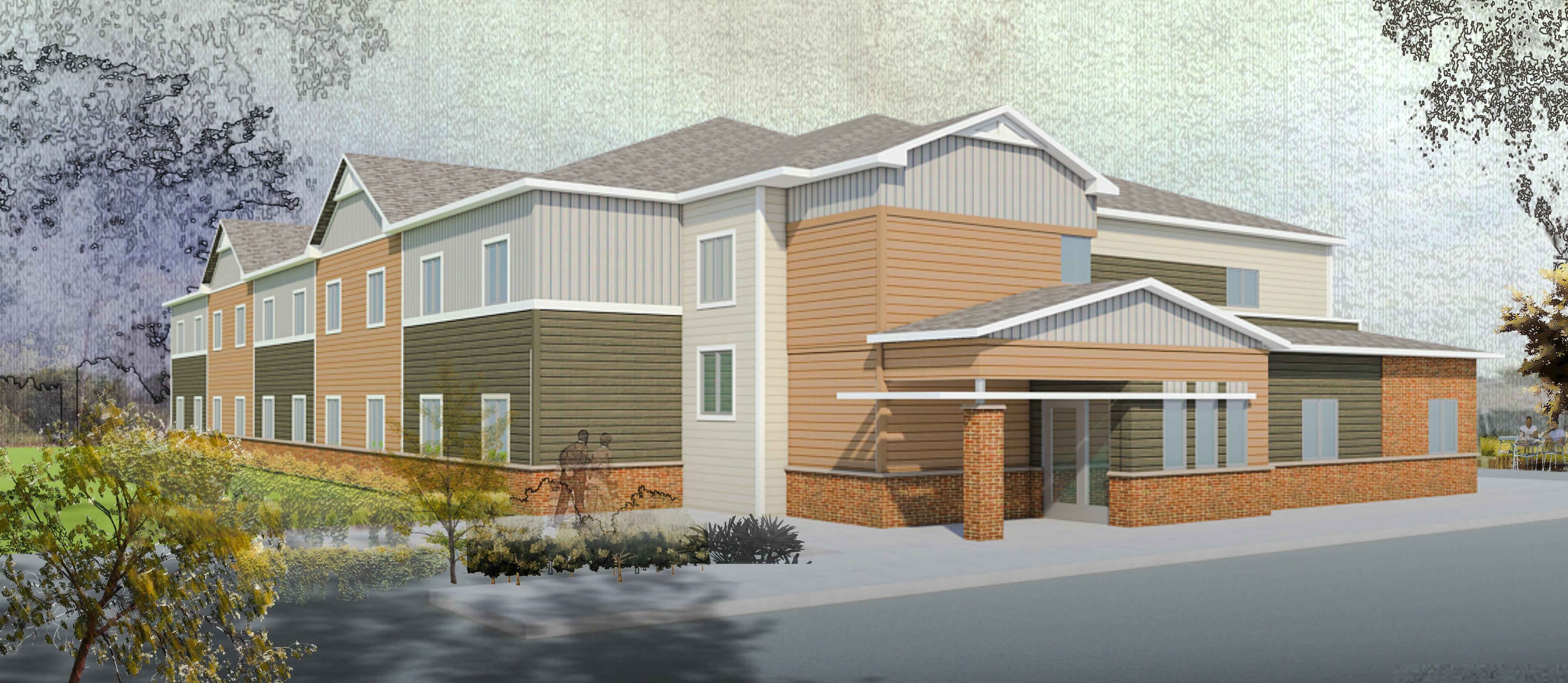
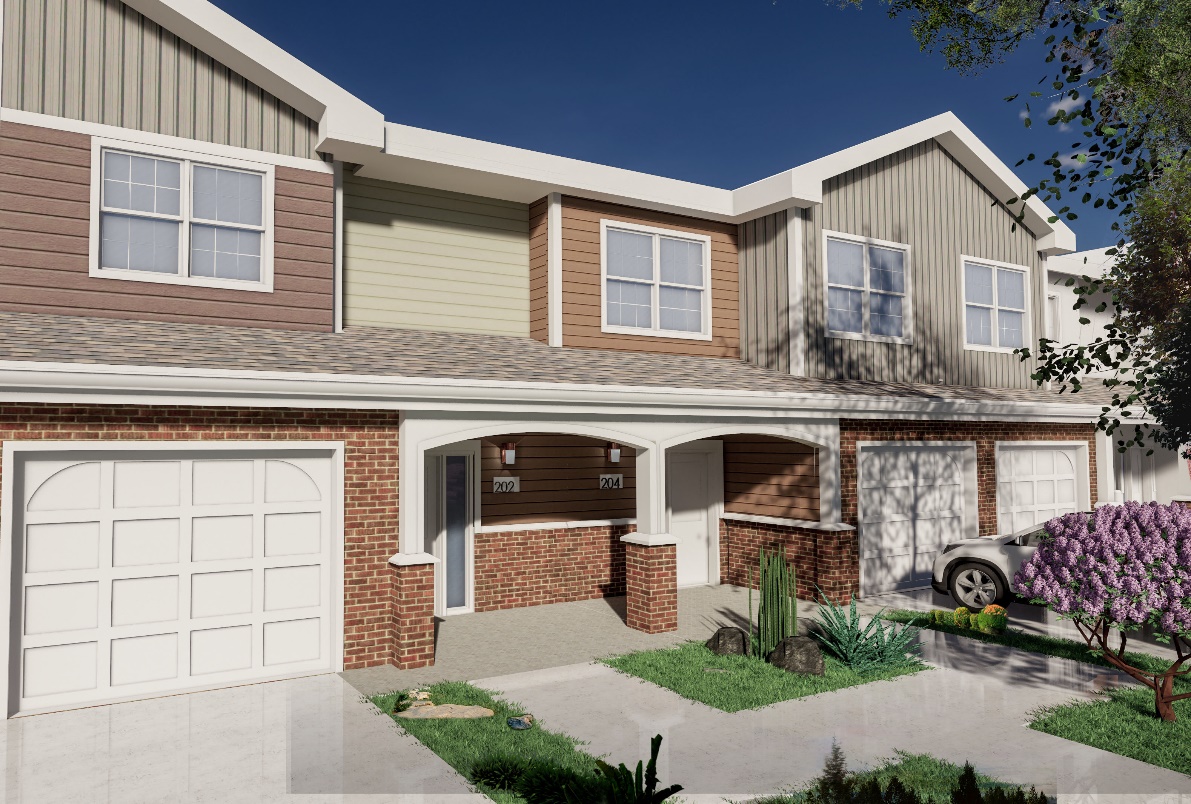
    Right: Rendering of White Oak Estates townhomes by Blumentals/Architecture, Inc.

    “A lot of times these individuals will be tapped out of their free housing options — whether it’s through Salvation Army or Lutheran Social Service,” Exsted explained. “When you get to the end of those options, there really isn’t anything more to do.”

    Because options for an affordable home are slim in Exsted’s region — especially those offering services to support people with a mental illness or chemical dependency — there’s no guarantee that that person will be able to find help when the sun comes up.

    “I know there’ve been times when they sit in the lobby at community services all day,” Exsted said. “It’s tough, and at some point, a lot of people get sick of waiting and get up and walk out.”

    Fortunately, with the leadership of the Region V+ Adult Mental Health Initiative — which includes county leaders from Todd, Wadena, Cass, Morrison, Aikin, and Crow Wing Counties — Baxter, Minnesota is taking a major step to prevent and address homelessness in the region with a new project financed this fall by Minnesota Housing.

    Developed and managed by Central Minnesota Housing Partnership (CMHP), White Oak Estates will include twenty, one-bedroom rental homes in a two-story apartment building with a 24-hour front desk and mental health and chemical dependency services provided by Nystrom & Associates. Adjacent to the building will sit twenty, two-story townhomes that will help meet a pressing local need for homes affordable to working people who earn approximately $31,200 to $43,300 annually.

    “We’re going to create an environment where individuals can hopefully live and prosper,” Exsted says. “It’s more than just a place to live. It’s a place to live and get services that you need.”

    To Exsted and his colleagues, providing stable housing is a strategy to prevent homelessness and costs to the community down the line. “A short-term housing solution doesn’t necessarily work,” Exsted explained. “We want to think long-term. If we can create stable housing and create a conduit to get people to services quicker, hopefully that will keep law enforcement out of the picture.”

    Motivated to achieve a common vision

    Deanna Hemmesch, Executive Director of CMHP, said that the leadership and vision of the Region V+ Adult Mental Health Initiative was instrumental in moving White Oak Estates forward — and quickly. It can take several years before a project successfully applies for financing from Minnesota Housing. Hemmesch says the commitment of community leaders meant the Baxter project was ready to submit an application in just three months.

    Inspired by the Beacon Hill Project in Itasca County, Region V+ approached Hemmesch to help make their vision for a supportive housing complex with adjacent affordable townhomes a reality. “I think the Key Aspect was having the Region V+ Adult Mental Health Initiative on board right from the start, and having them help identify what was needed and where it should go,” Hemmesch explained. “That was definitely instrumental in making the project successful and identifying potential partners within the community.”

    Rendering of White Oak Estates apartments, which will include support services, by Blumentals/Architecture, Inc.

    Digging into the need

    The Region V+ Initiative enlisted Larissa Rippley of Rippley Richard Real Estate Development Services to examine the region’s need for supportive housing. “As we were going through the process it became evident that there was a huge need in that area — not only for supportive housing but for affordable housing in general,” Rippley said. Even if an individual had access to a program to help with rent — like a Housing Choice Voucher or Housing Support through the Department of Human Services, “they could look for housing in the community, but there was no housing to be had,” Rippley explained.

    Rippley, who has worked in the affordable housing field for 25 years, said the private market doesn’t always produce the affordable homes community members need — making public investment critical in some communities. “There are certain areas of the state — and I think Brainerd and Baxter are really good examples — where affordable housing is not going to naturally occur. These are vacation property areas, where people are starting to take things offline and put them on Airbnb and other platforms. When the housing market gets tight, there needs to be help.”

    Nathan Bertram, Adult Services Supervisor for Crow Wing County’s Adult Mental Health, Substance Abuse, and Adult Protection Teams, said that Region V+ reached out to Rippley after a local board and lodge for people with mental illness and chemical dependency closed its doors. “We were asking, how are we going to fill the void of the beds we once had for people?” Bertram explained.

    Bertram emphasizes that there’s a need for affordable homes in the region period — not just homes with connected services. However, in a tight housing market, people with a mental illness or chemical dependency face even fewer choices. For example, sometimes people exiting treatment must live in a facility with more care than they require, sacrificing their independence. Bertram and his colleagues wanted to create a supported home environment that would facilitate self-determination.

    “My counterparts — from Rochester to my community to Duluth to the metro area — everyone’s talking about a housing vacancy issue,” Bertram explained. “If an individual has poor rental history — whether that’s due to substance abuse, a criminal record, or a mental health diagnosis — they’re struggling to find a home. Projects like ours in Baxter are greatly needed. People need to have the opportunity to get on the feet, and sometimes they need a more supportive environment to do that. Once they’re standing, they’re able to transition into something that may be more appealing to them.”

    Investments in people pay off

    Exsted wants state legislators to keep a close eye on projects like the Baxter development to see how public investment pays off in the long run.

    “I think it’s extremely important that legislators watch projects like this as we move forward, so they can be aware of how helpful they are to communities,” Exsted said. “Yes, they are a significant expense up front. But I think if you dove deep into the numbers, you could draw out the successes gained through these projects and show the savings. If individuals aren’t receiving services now, and you track that same individual for the next ten years, they’re going to be unhealthy. But when you create an environment for people to succeed, then they can contribute to your local community.”

  • Minnesota Housing moves forward with income averaging

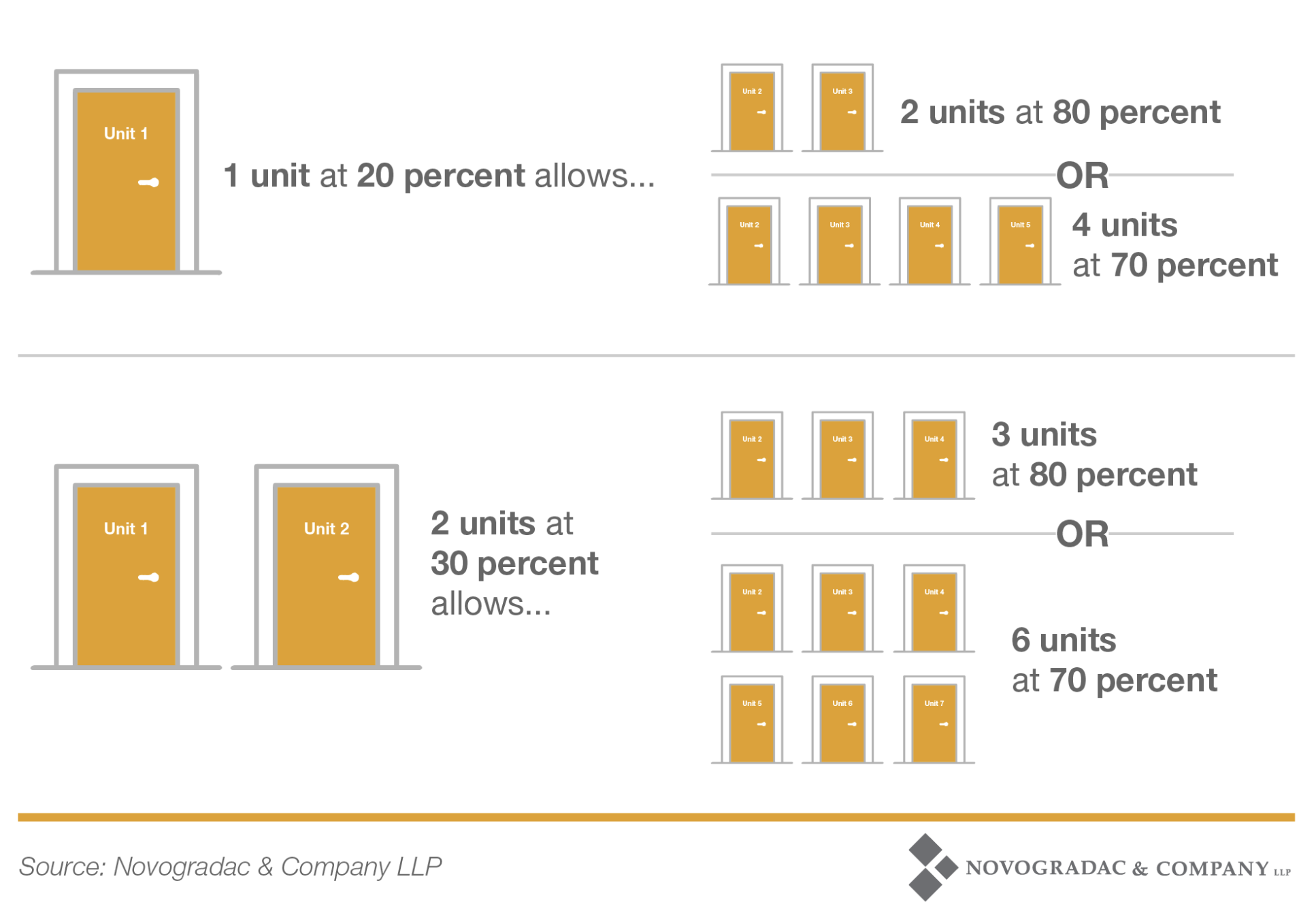
    In January 2019, Minnesota Housing will move forward with an income averaging option in the Housing Tax Credit (HTC) program. Income averaging allows Low Income Housing Tax Credit (LIHTC) owners to elect to serve households with incomes of up to 80% of area median income (AMI) and have these household qualify as LIHTC units, so long as the average income/rent limit in the project remains at 60% or less of AMI. 

    Depending on project details, income averaging will be available for tax credit developments. Income averaging will also be incorporated into the 2019 Round 2 HTC process and the 2019/2020 HTC Request for Proposal (RFP) process.  

    Novogradac graphic visualizing income averaging

    Owners who elect income averaging must also commit to at least 40% of the units in the project have an average income level of no more than 60% of AMI and the rents for these units must be equal to 30% of the qualifying income level. 

    Minnesota Housing will issue guidance around eligibility, process, and the information you will need to submit to take advantage of income averaging. Sign up for Minnesota Housing’s eNews to ensure you receive that update. 

    For more resources on income averaging, including answers to frequently asked questions, check out information from the National Council of State Housing Agencies as well as Novogradac and the National Housing Law Project.

  • New report: Market rate affordable housing is varied. We need varied solutions to preserve it.

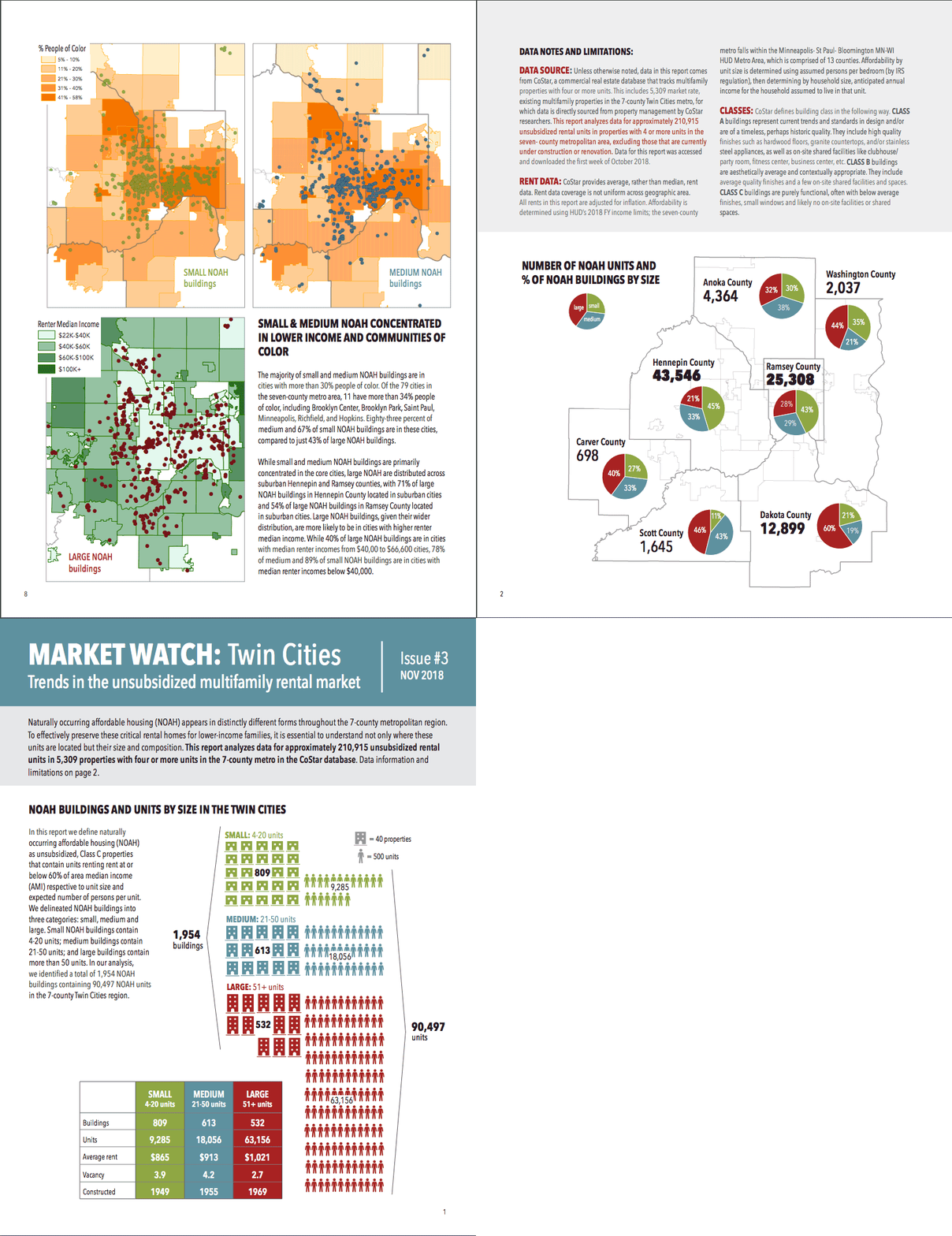
    The sale of Crossroads at Penn in Richfield impacted 700 households, capturing the attention of policymakers and the public, and motivating communities to find solutions to preserve naturally occurring affordable housing (NOAH). However, a new report by Minnesota Housing Partnership reveals that the geography and make-up of NOAH properties is not uniform. Sales of large buildings like Crossroads have a major impact. And as policymakers develop solutions, it’s important they’re aware that smaller properties comprise a significant portion of NOAH in the Twin Cities region – and that different properties impact different populations.

    Across the Twin Cities, the growing ranks of renter households are facing an increasingly challenging housing market with rising rents and declining vacancy rates. While developers are leveraging public and private resources to create new affordable units, current owners of unsubsidized rental properties have few tools to preserve and improve aging properties to maintain homes for current and future tenants. 

    In March of 2018, Minnesota Housing Partnership launched a new research series tracking key trends in the unsubsidized multifamily rental markets across the 7-County Metro. “Market Watch: Twin Cities,” published in November 2018, analyzes data from 210,915 unsubsidized rental units in properties with four or more units in the 7-county metro from the CoStar database. 

    Download the full report.

    Key findings include:

    • Preserving NOAH impacts communities of color. While 43% of White renter households are cost burdened, 57% and 62% of Native and Black renters are forced to pay more than they can afford for housing. Families served by NOAH are particularly impacted by cost burden.
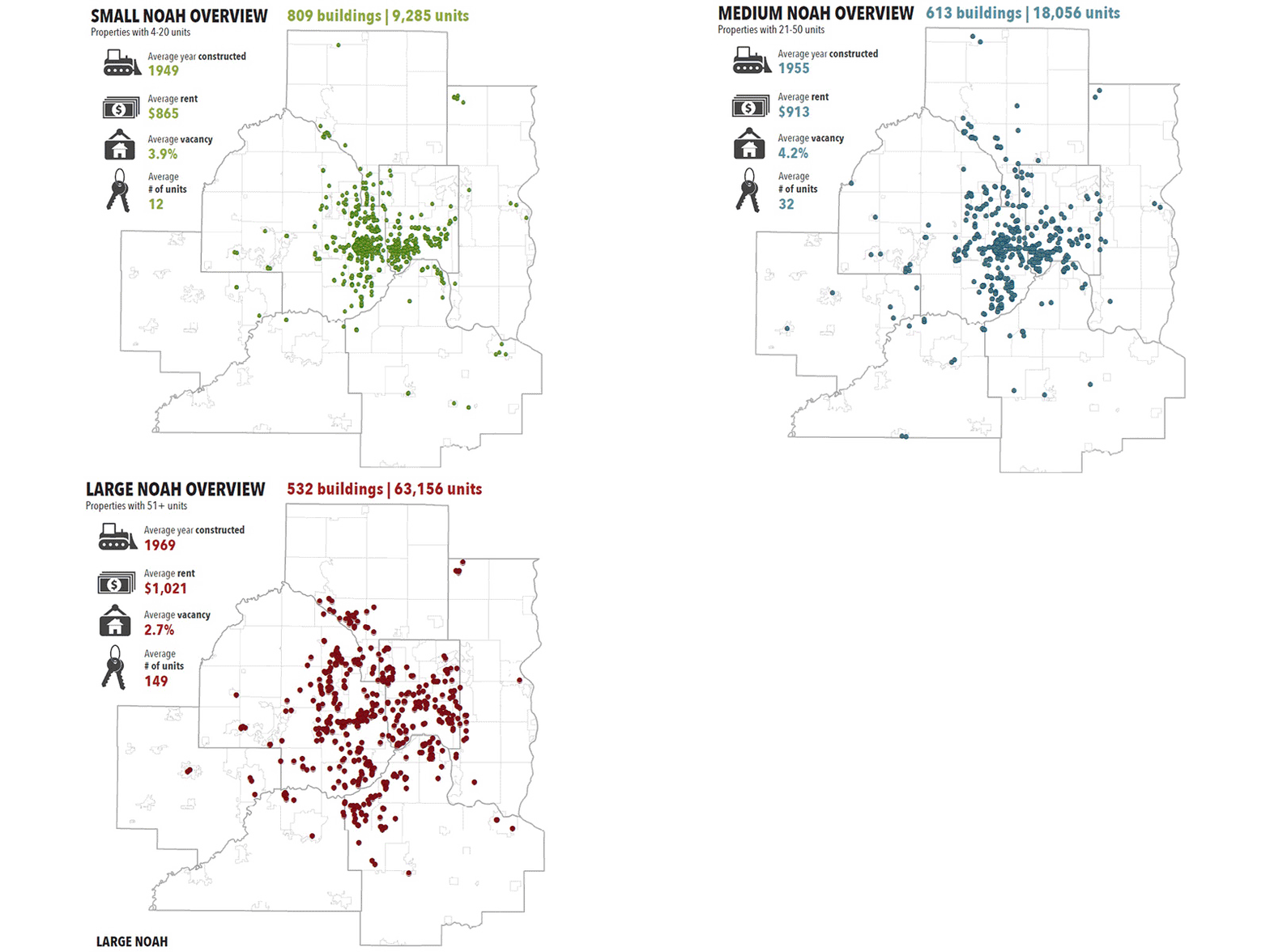
    • Small NOAH buildings are concentrated in Minneapolis and St. Paul with 91% of properties located in Hennepin and Ramsey counties. For Hennepin and Ramsey, small NOAH comprises a sizable portion of all NOAH buildings at 45% and 43%, respectively.
    • Medium NOAH buildings are prevalent in the core cities and the first ring suburbs. Anoka and Scott counties see the largest percentage of their NOAH properties in medium buildings at 38% and 43%, respectively.
    • Large NOAH buildings are more widely distributed with more concentration in the suburbs. While large NOAH comprise the smallest percentage of NOAH properties in Hennepin and Ramsey counties they make up 60% of NOAH buildings in Dakota County and nearly half (46%) in Scott County.
    • Small and Medium NOAH buildings are concentrated in lower income and communities of color. The majority of small and medium NOAH buildings are in cities with more than 30% people of color. Of the 79 cities in the seven-county metro area, 11 have more than 34% people of color, including Brooklyn Center, Brooklyn Park, Saint Paul, Minneapolis, Richfield, and Hopkins.
    • Property transactions are most prevalent in smaller properties. Of the total 1,576 sales transactions in Class C properties, 74% were small buildings, with just 10% occurring in large buildings with more than 50 units. Not surprisingly, however, of the total 44,305 units impacted by property sales in Class C buildings, 58% of units were sold in large buildings, followed by 25% (11,115) in small buildings.


    Download the full report.

    Data analysis, writing and mapping for this report was conducted by Gabriela Norton, Research Officer at Minnesota Housing Partnership, with editing and design by Carolyn Szczepanski, MHP Director of Research and Communications.

    Questions about data? Contact Gabriela Norton at gabriela.norton(at)mhponline.org or 651-925-5557.

    Media inquiries? Contact Anne Mavity at anne.mavity(at)mhponline.org or 651-925-5547.

  • Investors Council recap: As Minnesota’s economy grows, so does our need for homes for working people

    Businesses need people. People need homes. For many Minnesota communities, this simple reality is now a front-and-center economic issue, impacting families and employers alike.

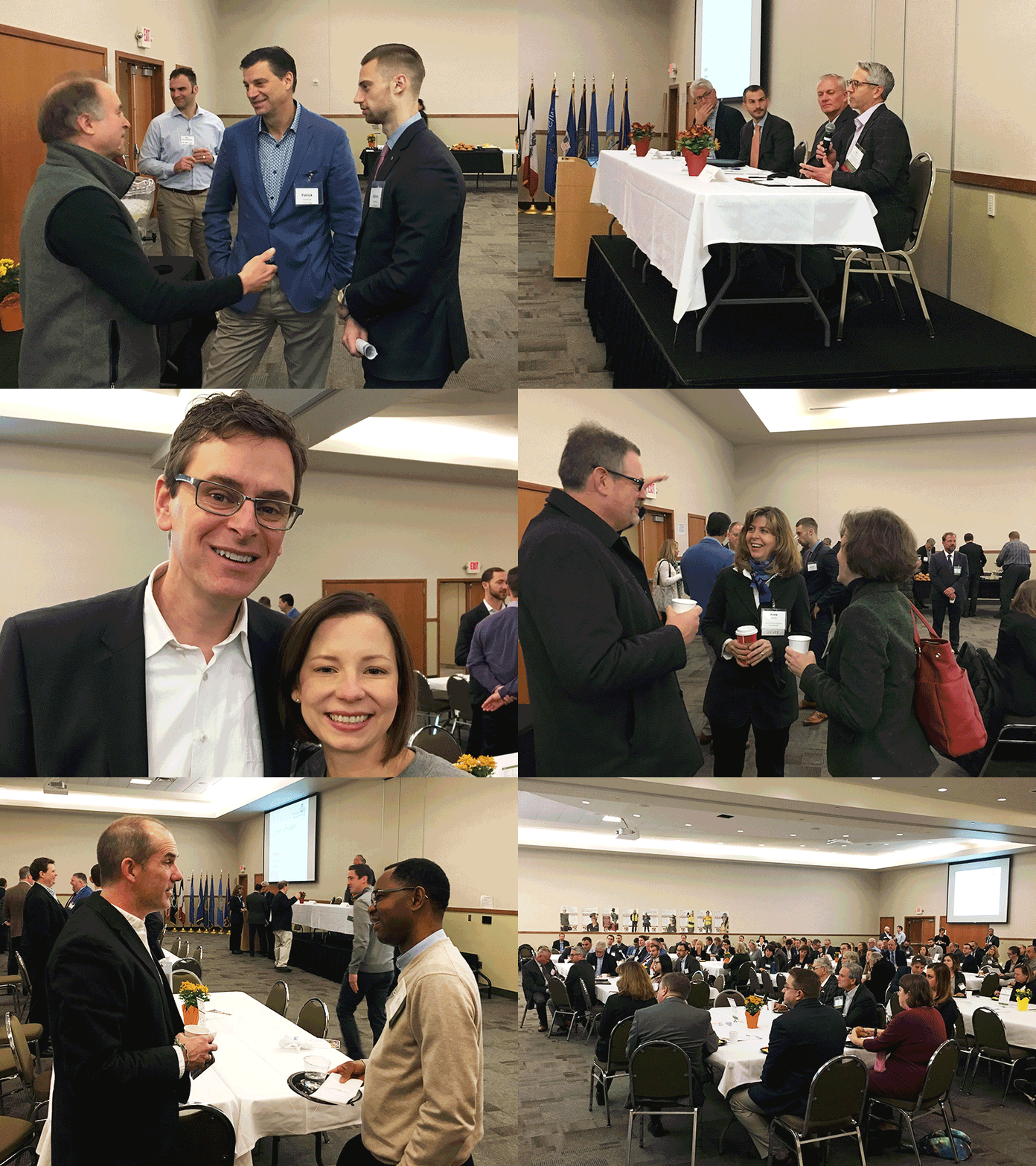
    On November 16, more than 100 affordable housing sector leaders gathered at Carpenters Hall to discuss the gap between Minnesota’s growing workforce and our supply of affordable homes. Panelists included Lee Schafer, business columnist for the Star Tribune (moderator); Skip Duchesneau, President of Greater Minnesota development company D.W. Jones; Jonathan Weinhagen, President & CEO of the Minneapolis Regional Chamber of Commerce; and Mark Borseth, Public Works Director at the City of Thief River Falls.

    According to Weinhagen, many Twin Cities region business leaders have shifted from taking housing for granted, to seeing housing as a key ingredient to their success. “With a 100,000 worker shortfall, we’re in crisis mode,” Weinhagen said, “For the first time, we’re pivoting as a business community to think about housing as an economic competitiveness issue and a workforce issue.”

    However, to take advantage of this shift in a complex housing sector, education and clear solutions are necessary. “I think I know about two percent of your acronyms [in the affordable housing sector],” Weinhagen joked. “When I talk to business leaders about actually investing, their faces go blank. We haven’t spent a lot of time educating our business leaders about how this process works. That said, I think there’s absolutely an opportunity and the appetite to begin this investment.”

    Duchesneau pointed to MHP’s legislation to create a Tax Credit Contribution Fund in Minnesota as one clear, straightforward solution. The legislation provides that when businesses or individuals contribute to a specific development or general loan pool, they receive credit against their state tax liability equal to their contribution.

    “Employers and community members don’t want to get involved with in the complexity of a tax credit deal,” Duchesneau said. “The simplicity of the Tax Credit Contribution Fund — that’s a no brainer. It’s an exciting, new opportunity for employers who have been sidelined, as they have been working to create great jobs, to get involved.”

    In Thief River Falls, a community of 9,000 people in Northwest Minnesota, employers Arctic Cat and DigiKey Electronics have created thousands of jobs — DigiKey alone has 4,100 employees, 3,500 of which call Thief River Falls home. Borseth explained that matching up existing resources for affordable housing with employees’ starting wages makes development challenging.

    “Some DigiKey employees are making just about $70,000 annually starting salary, so we’ve had to get a little bit creative on how we get housing started,” said Borseth. He said education and long-range planning are key to making housing development work.

    Weinhagen agreed, adding that educating local lawmakers and business owners is essential. “I’ve seen countless projects fall to a city council that didn’t want to have development in their community despite the need,” he said. “The business community hasn’t shown up in the way they should. Their are some new opportunities, however. Opportunity Zones are a place folks can make new investments that can be leveraged to build housing in our communities.”

    Panelists agreed that there’s a growing consensus — and urgency — around Minnesota’s shortage of homes affordable to working people.

    “Opportunity and affordability are diverging,” said Schafer. When he conducted interviews for a 7-column series on affordable housing, “nobody really questioned that the affordability of housing is an economic opportunity issue,” he said. “The idea of affordable housing near where you work is really important as our economy continues to grow. And it’s really important to our employers.”

    Want to be part of these engaging conversations? Join the Investors Council today!

    See more photos of the event on Facebook.