• Session Scoop: Omnibus bills: What’s in and what’s out?

    We’re now past the second legislative deadline at the Capitol, meaning that bills that advanced in the House, for example, must also have advanced in the Senate (or vice versa). (There are some exceptions to this rule.) 

    Omnibus bills (one large bill made up of many smaller bills) are coming together fast in House and Senate Committees. For example, this week, the House Housing Finance and Policy Division passed out of committee their housing policy omnibus bill (HF 2542). This article from Session Daily provides an overview of the bill, which emphasizes renter protections.

    The House is green lighting bills perceived as less controversial for floor votes, such as HF 495 (Noor), which seeks to even the playing field between landlords and tenants and make leases clearer. The bill is set to be heard on the House floor on Monday, April 1. 

    A recent MinnPost article highlights several affordable housing investments and tools under debate at the Capitol right now, including a significant bonding request by Governor Walz and the affordable #HousingTaxCredit (HF 1156 / SF 404), both supported by Homes for All MN. In the article, #HousingTaxCredit Senate Chief Author Carla Nelson (R-Rochester) says, “This is an all-hands-on-deck moment, and I believe that getting the private sector involved rather than just the government sector is what we need.” House Chief Author Rep. Brad Tabke (DFL-Shakopee) says, “It is, humbly, an awesome bill.” Thanks to these authors for moving the bill ahead!

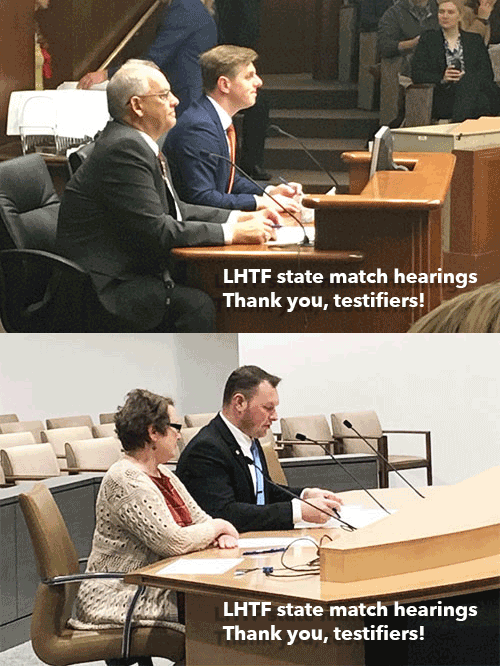
    Testifiers Barbara Dolan (MHP Community Development Manager) and Randal Hemmerlin (Red Wing HRA Executive Director) made a strong case for a state match for Local Housing Trust Funds (HF 1402 / SF 1961) in hearings in the House and Senate this week. Thank you to Chief Authors Sen. Andrew Lang (R-17, Olivia) and Rep. Michael Howard (DFL-50A, Bloomington/Richfield) for championing this measure to ensure the state is a partner in creating needed affordable homes! (Photos above)

    Upcoming Hearings 

    On Wednesday, April 3 at 8:30am in Capitol Rm 15 the Senate Taxes Committee will hear SF 942 (Senjem), a bill that advances workforce and affordable homeownership. 
    Sign up to advocate with MHP.

    Follow us on Twitter to stay in-the-loop!

  • Wilder study reveals more and more Minnesotans have no place to call home

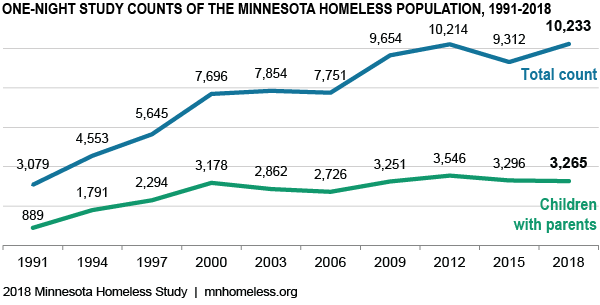
    On Wednesday, Wilder Research released initial results of their 2018 Minnesota Homeless Study. Distressingly, from 2015 to 2018, the number of people experiencing homelessness in Minnesota has risen 10 percent. There are now approximately 10,233 people experiencing homelessness in our communities statewide, exceeding peak numbers recorded in 2012. Because these numbers are derived from a single-night count, it’s not possible to record every person in the state experiencing homelessness. That means that the numbers in Wilder’s report are only minimum estimates. 
    “Minnesota’s lack of affordable housing has ripple effects that impact every single one of us,” said MHP Executive Director Anne Mavity. “For thousands of Minnesotans, the effects are particularly devastating. Families, seniors, and individuals who are experiencing homelessness are bearing the brunt of our collective failure to adequately invest in affordable homes for all. We need all levels of government and private sector partners to step up and say, ‘Homelessness is not acceptable. Not in Minnesota. Not anywhere.’” 

    Homelessness impacts communities statewide and manifests differently from community to community. From 2015 to 2018, homelessness increased by nine percent in the 7-county Twin Cities metro and by 13 percent in Greater Minnesota. More than a quarter of people experiencing homelessness are not staying in a formal shelter – an increase of 62 percent from 2015. These individuals, families, and seniors reported staying in an encampment or on public transportation, doubling up, or hopping from couch to couch. That means homelessness is sometimes apparent. Other times, it’s invisible. 

    “The Hiawatha encampment that grew to more than 300 community members last fall drew national attention,” Mavity said. “Local organizations, officials, and neighbors responded swiftly, connecting people with resources and housing. So we know that we have public will to take action, and there is important work yet to do to. We’ll be a stronger Minnesota when we make the investments in housing that are necessary to prevent homelessness from happening in the first place.” 

    Wilder Research conducts their one-day statewide study every three years. In addition to the point-in-time count, the study includes interviews with people who meet a federal definition of homelessness. Future reports will analyze data collected through counts and interviews to provide deeper insight on homelessness among youth, Veterans, older adults, and more. In addition, a separate report will feature findings from interviews conducted in partnership with six of Minnesota’s Native American tribes. 

  • Session Scoop: House hearing housing bills at a furious pace. In the Senate, not so much.

    Sometimes things slow down after a major deadline. Not this session. Now that the March 15 deadline has passed, the House continues to hear housing bills at a furious pace. In the Senate, however, few have been heard.

    Photo: Advocates and legislators at recent meetings on affordable housing. See below for more!

    On Thursday March 21, the Senate Taxes Committee heard testimony on the Affordable #HousingTaxCredit (HF 1156 | SF 404). Sen. Mark Johnson (R-East Grand Forks), a bill co-author and one of its most key supporters, attended the hearing to show his support. Thank you to our testifiers Steve Borchardt (Rochester Area Foundation) and Julie Wischnack (Community Development Director, City of Minnetonka)!

    Upcoming Hearings 

    On March 27, the House Housing Finance and Policy Division will hear several important bills including a state match for local housing trust funds (HF 1402) and the Homes for All package bill that includes Homes for All-endorsed appropriations requests for Minnesota Housing (HF 1151). Please show your support for these critical investments at 8 am on Wednesday, March 27, Room 200 of the State Office Building. Thanks to Rep. Howard and Rep. Hausman, respectively, for carrying these bills!

    Bills and hearings updates 

    The Senate Taxes Committee heard SF 2571, which would modify the Class 4d property tax rate with the purpose of ensuring economic viability of 4d properties. MHP supports this bill.

    The Property Taxes Division heard HF 2349, which would increase the state’s renter’s credit, which has not seen changes since 2015 despite climbing rents. The Department of Revenue estimates that the changes would affect 320,000 current filers, increasing their refund by an average of about $40, and would reward about 49,000 newly eligible filers with a refund averaging $430. Read more from Session Daily.

    The House Commerce Committee approved HF 1571, intended to help protect Minnesota’s roughly 1,000 manufactured home parks, a critical source of affordable housing. Manufactured homes represent the largest source of affordable home ownership in the state. Read more from Session Daily.

    On March 20 the Housing Finance and Policy Division heard several bills:

    • HF 964: Housing supports for persons with mental illnesses
    • HF 1007: Lead safe homes grant program
    • HF 1506: Voicemail services for homeless and low-income populations
    • HF 2542: Minnesota Bond Allocation Act modified

    MHP’s executive director Anne Mavity testified in support of HF 2542, which amends Minnesota bond statute, in line with the agreement of the tax-exempt bond steering committee, to develop more rental housing.

    Bill introductions 

    • HF 2336: Appropriation for nonprofit capacity building grants
    • HF 2495: Legislative Commission on Housing Affordability
    • HF 2526: Housing mediation eviction prevention program.
    • HF 2563: Pilot program providing grants for housing infrastructure
    • HF 2593: Right to counsel in certain public housing eviction actions
    • HF 2601: Workforce and affordable homeownership development program

    GET ENGAGED

    Thank you!

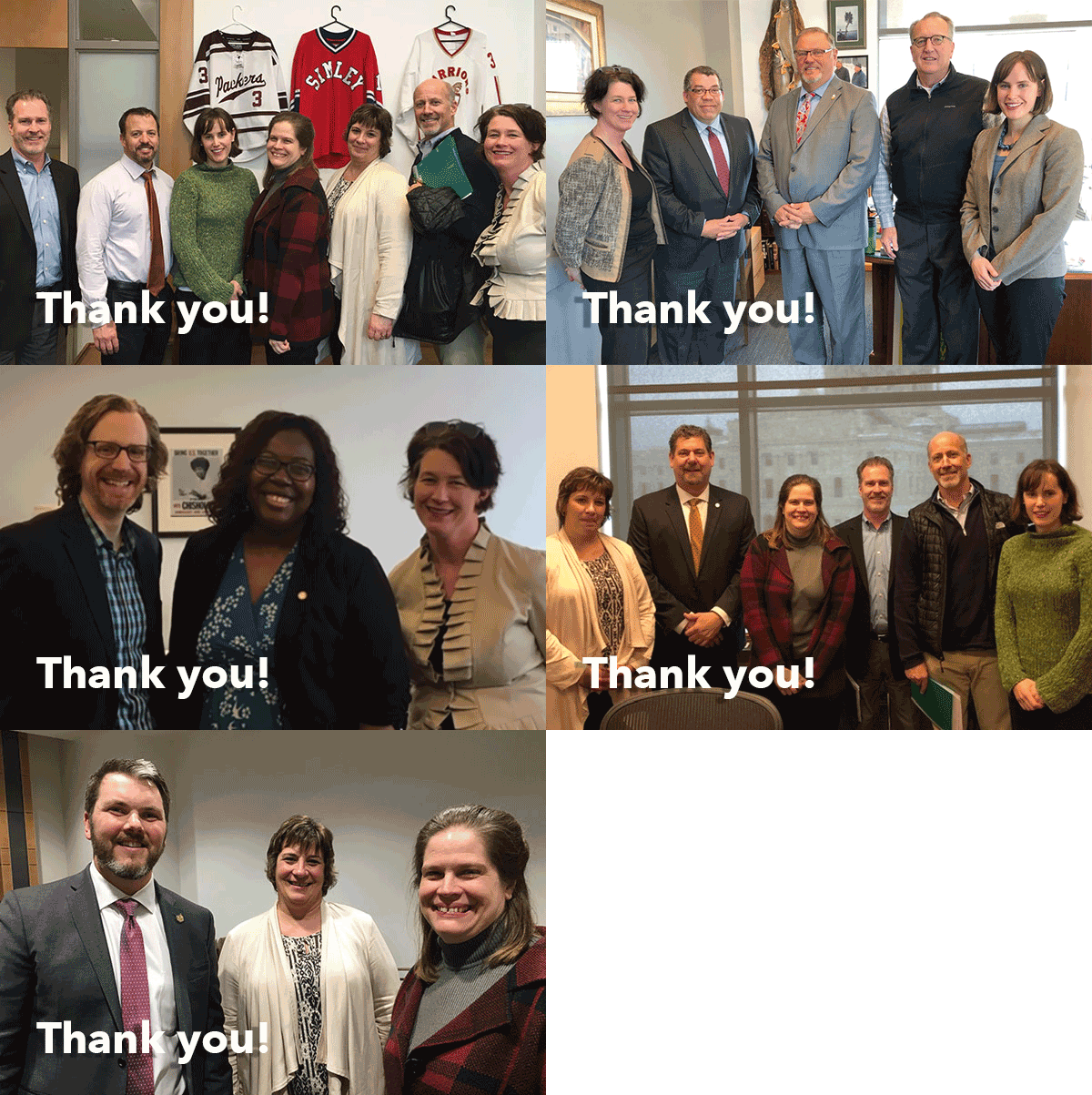
    Photo: Thank you to legislators Rep. Ruth Richardson (DFL-52B) and Senators Matt Klein (DFL-52), Mark Johnson (R-1), Tom Bakk (DFL-3) and John Jasinski (R-24) and to advocates Tom O’ Neil (Dougherty Mortgage), Theresa Nesbitt (Metro Plains), Jennifer Melton (Volunteers of America), Ken Isaacson (Twin Cities Housing Development Corporation), Harry Melander (MN Building Trades), Paul Williams (PPL) and Chris Palkowitsch (BKV Group) for productive conversations at the Capitol! Sign up to advocate with MHP.

  • Join us in welcoming new staff!

    MHP is excited to welcome three new staff members! Our new Director of Communications and Research is Andy Birkey, an award-winning journalist and experienced communications professional formerly with the Minnesota AIDS Project (now JustUs Health). Tyrone Grandstrand and Cole St. Arnold joined our Community Development Team in January, bringing a wealth of knowledge around community development, planning, leadership, and more.

    “We’re so pleased Andy, Tyrone, and Cole are part of our team,” said Executive Director Anne Mavity. “Their energy and passion for this work is infectious. They bring deep expertise and exciting ideas that I know will propel MHP forward and make us a stronger, more effective organization.”

    From left: Tyrone, Andy, and Cole

    Andy Birkey is a communications professional with 15 years of experience in both investigative journalism and organizational communications, all in the nonprofit sector. His data-driven investigative reporting has won local and national awards for accuracy and impact. Andy drives MHP’s communications and research efforts to ensure communities have the information they need to improve the quality and affordability of housing. Outside MHP, Andy enjoys traveling with his husband, checking out Minnesota’s new breweries, and contributing data to citizen science projects around the state.

    “MHP has an incredible track record of expertise and advocacy around affordable housing,” Birkey said. “I’m excited to be in a position to communicate that legacy as well as ensure communities have the information and data they need to develop and maintain quality affordable housing.”

    In his previous roles as a city council member in Grand Forks, North Dakota and a city planner in Fargo, Tyrone Grandstrand worked to positively impact people’s lives. Tyrone helped found the North Dakota’s first and third Community Land Trusts. He has a Master’s degree in public policy focused on policy analysis, housing development, real estate finance, data visualization, and community development from the Milano School of Management, Policy, and Environment at The New School.

    As Community Development Manager at MHP, Tyrone provides direct technical assistance and capacity building to local communities to ensure they can meet their community development and housing development goals. “Communities know that in the wealthiest nation in the world, working families shouldn’t have to struggle,” Grandstrand said. “I am excited to be part of a team helping communities stand together and realize their own power to accomplish any goal.”

    Raised in Albuquerque, New Mexico, Cole St. Arnold wishes there was an easier way for green chile to be available in Minnesota. He has previously worked in the nonprofit sector in Colorado and Arizona, fostering opportunities for higher education and community development. Cole is an enrolled member of the Jicarilla Apache Nation and is also a relation of the Keweenaw Bay Indian Community of Lake Superior Chippewa. He’s a proud University of Colorado at Boulder alum and also holds an MPA from the Arizona State University Watts College of Public Service and Community Solutions. He currently serves on the boards for the Young Nonprofit Professionals Network National and Bii Gii Wiin Community Development Loan Fund. In his free time, Cole, his wife Cate, and their corgi, Dr. Finndiana Bones, enjoy the great outdoors of Minnesota.

    Cole also serves as a Community Development Manager. At MHP, he works alongside rural communities and Native nations working to develop shared solutions for community development and affordable housing. “When we put our minds together and work for future generations, great things are possible for our communities,” Cole said.

  • MN Housing Tax Credit to leverage private dollars for urgent shortage of affordable homes

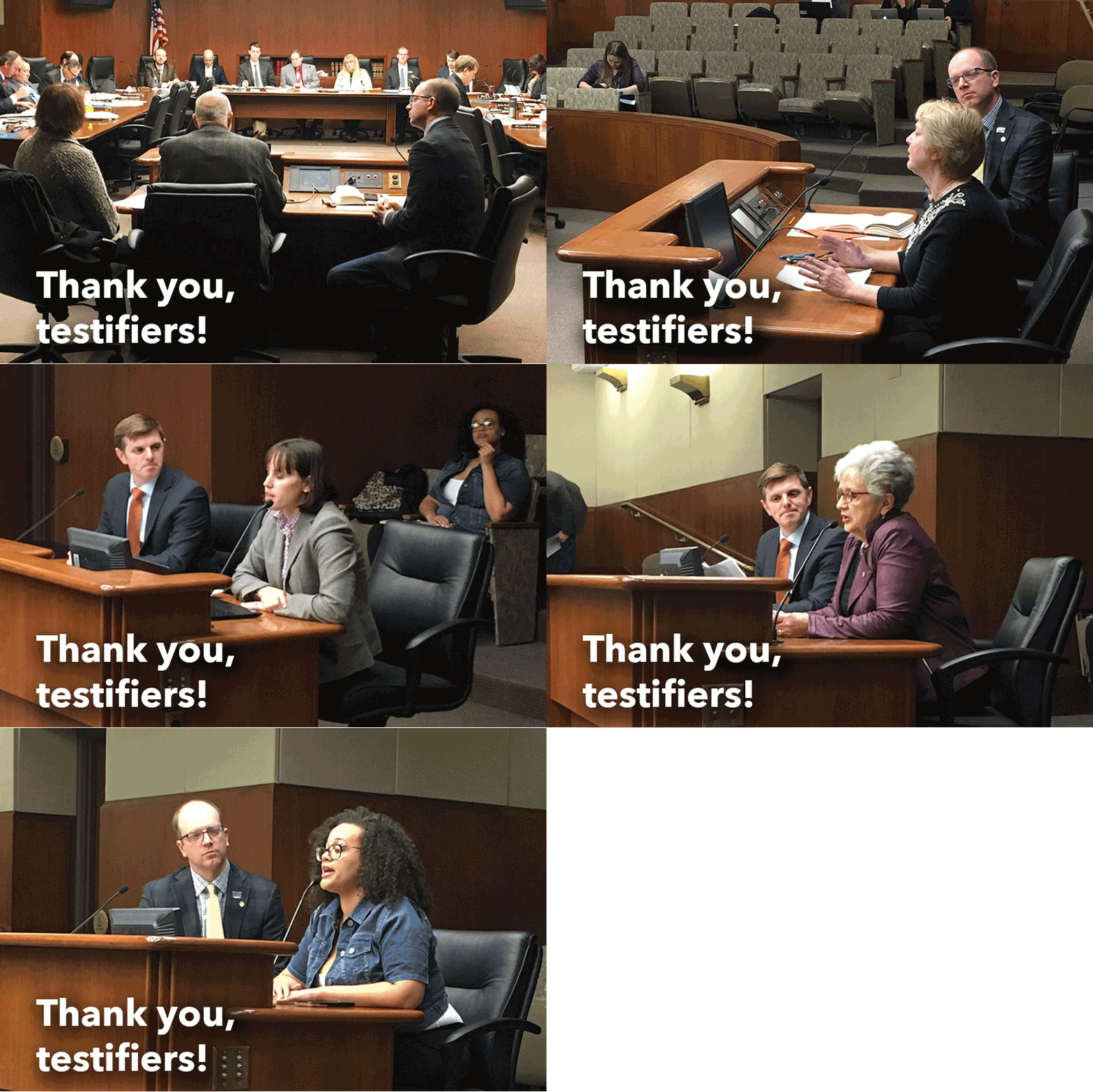
    The MN #HousingTaxCredit (HF 1156) was heard in the House Taxes Committee this week. We’re so grateful to our testifiers (pictured right and quoted below) for making a strong case for the bill, endorsed by more than 70 organizations statewide! Read on for a press release on the legislation.
    Like many Minnesota communities, there are few places affordable to people filling essential jobs in Savage – from teachers and childcare providers, to grocery store workers and more. 

    “To be successful, we need more affordable housing,” Savage Mayor Janet Williams said. “We need another tool in our toolbox.” 

    Statewide, there’s a growing consensus that affordable housing is essential to economic growth, addressing racial disparities, and ensuring families can make ends meet. Minnesotans are ready for solutions. That’s why Rep. Brad Tabke (DFL-55A) has authored House File 1156 establishing the Minnesota Housing Tax Credit. The measure would provide a tax credit to community members or businesses who contribute to affordable housing development. 

    “There’s a growing, cross-sector consensus that our communities need affordable homes to prosper, and we are not meeting these needs,” Rep. Tabke said. “Without a significant investment leveraging private market participation, Minnesota will continue to lose more affordable homes than it creates.”

    The Housing Tax Credit is modeled after a successful program in North Dakota, which leveraged $5 for every $1 invested. Statewide, 69 organizations have endorsed the Housing Tax Credit, including Homes for All MN, a coalition of more than 230 members. 

    “This legislation is about neighbors helping neighbors create affordable homes in their community,” Rep. Tabke said. 

     Small business owner Marie Rivers is struggling to retain employees at her clog factory in Chisago City. “People simply can’t find an affordable place to live,” Rivers said. “My employees move to the Twin Cities and ultimately quit because the commute just isn’t feasible. We need solutions now.” 

     As construction costs and interest rates rise, affordable housing development becomes nearly impossible without additional public investment. “We need more state investment to pair with local and private funds,” said Sarah Larson, an experienced housing developer with Landon Group. “Otherwise, we can’t expect different results.” 

     Danielle Swift, a policy advocate with Metropolitan Interfaith Council on Affordable Housing and an anti-displacement organizer with the Frogtown Neighborhood in St. Paul, points out that affordable housing impacts every aspect of our lives – and that without it, we can’t address other pressing issues impacting Minnesota communities. 

     “We need to invest in affordable housing,” Swift said. “It’s really just the right thing to do.”

  • Session Scoop: Picking up the pace post-Governor’s budget

    Week 7 of the legislative session is complete, and the pace of the legislature is picking up. The Governor’s budget was released February 19, identifying the Governor’s priorities and starting the debate among lawmakers as to what priorities will make it to the finish line. 

    With the first legislative session deadline for hearing bills fast approaching on March 15, committees in the House and Senate are picking up the pace for hearing bills that will be laid over for consideration. This coming week, a slew of housing bills will be heard in Senate and House committees. Bills to increase the Challenge fund, Homework Starts with Home, homeownership opportunities, and more will be heard, with details below. 

    Come and show your support! The Tax Credit Contribution Fund for Affordable Housing (HF 1156) will be heard in the House Taxes Committee on Wednesday, February 27 at 8am in Rm 5 of the State Office Building. Email Elizabeth at elizabeth.glidden [at] mhponline.org if you can attend. 

    Please join us at the Capitol and let lawmakers know you support affordable homes for Minnesota families!

    How did housing fare in the Governor’s budget? 

    Governor Walz’s $133.6 million investment in affordable housing through the 2020-21 biennial budget – the most of any governor in state history – signals that affordable housing is more prominent than ever before. However, after years of state investments that don’t keep pace with the need, more is needed to close the gap. 

    While Governor Walz proposed critical spending increases for several Minnesota Housing programs including Homework Starts with Home and the Challenge Program, his budget includes none of the Homes for All-requested increases to key Department of Human Services (DHS) programs that prevent homelessness (except for an important $2 million increase for a database that tracks homelessness data). Programs that did not receive crucial budget increases include the Emergency Services Program, Long-term Homeless Supportive Services, the Homeless Youth Act and more.  

    Read more from Session Daily for a summary of the Governor’s proposed housing investments. Check out a detailed side-by-side comparison of Homes for All agenda items and Governor Walz’s proposed budget. Read the Homes for All coalition response to Governor Walz’s budget. 

    Good news: State match for Local Housing Trust Funds gaining momentum! 

    We’re excited to announce that a measure to create a state match for Local Housing Trust Funds (HF 1402) was introduced in the House this week. Thanks to Chief Author Rep. Mike Howard (DFL-Richfield/Bloomington) for advancing this important tool! Next, the bill will head to the Committee on Ways and Means. Another positive sign: Governor Walz included a one-time $2 million appropriation for a state match for Local Housing Trust Funds in his budget. Stay tuned! 

    BILLS TO WATCH 

    • Reps Hornstein, Jurgens and Her introduced: HF 1574, preventing housing displacement, requiring rental housing projects financed at least in part by the Housing Finance Agency to be affordable for at least 30 years. Referred to the Committee on Ways and Means. 
    • Reps Hassan, Her, Gomez, Moran and Davnie introduced: HF 1511, relating to expungement for eviction case court files and more. Referred to the Housing Finance and Policy Division. 
    • Reps Howard, Kunesh-Podein, Sauke and Theis introduced: HF 1571, modifying the procedures for closing or modifying the use of manufactured home parks and more. Referred to the Housing Finance and Policy Division. 
    • Senators Draheim, Dziedzic, Frentz, Goggin, and Weber introduced: SF 1577, appropriating money to the Housing Finance Agency for housing programs. Referred to the Committee on Agriculture, Rural Development, and Housing Policy. SF 1577 is the package bill for MHFA appropriations championed by the Homes for All coalition! Thank you Sen. Draheim (R-Madison Lake) and co-authors! 
    • Senators Goggin, Frentz, Lang, Johnson, and Draheim introduced: SF 1611, Appropriating money for housing supports for persons with a mental illness. Referred to the Committee on Agriculture, Rural Development, and Housing Policy. This another bill championed by Homes for All, funding the Bridges program and the landlord mitigation fund. 
    • Senators Draheim, Dziedzic, Johnson, Frentz, and Koran introduced: SF 1326, Appropriating money to the Minnesota Housing Finance Agency for the challenge grant program. Referred to the Committee on Agriculture, Rural Development, and Housing Finance. This is a standalone bill for the Challenge Program Increase. SF1577 is the package bill. 

    HOUSING-RELATED HEARINGS 

    Past hearings

    • On Tuesday, February 29, the House Education Finance Division held an educational hearing on the Homework Starts with Home initiative. Watch a recording of the hearing. 

    Upcoming hearings

    • Be part of the action on Tuesday, February 26 at 3pm in Rm 1150 of the MN Senate Building when the Senate Agriculture, Rural Development, and Housing Policy Committee hears testimony on SF 942 (workforce and affordable homeownership and development), SF 239 and SF 469 (manufactured homes), and SF 1214 (Minnesota Housing appropriation).  
    • Join the House Housing Finance and Policy Division on Wednesday, February 27, 2019 at 8am in Rm 200 of the State Office Building for presentations on workforce and affordable homeownership (HF 884), the Challenge Program (HF 859), and manufactured housing (HF 896). 
    • Come and show your support! The Tax Credit Contribution Fund for Affordable Housing (HF 1156) will be heard in the House Taxes Committee on Wednesday, February 27 at 8am in Rm 5 of the State Office Building. Email Elizabeth if you can attend! 

    GET ENGAGED

    Get the inside scoop from MHP’s policy team with our Legislative Update Calls, which take place every other Friday at 10 a.m. Register for our next call on March 8 at 10 am! 

    Sign up to advocate with MHP! Join us at the Capitol on Wednesdays, or a time that works for you. Legislators need to hear from their constituents about why affordable housing matters.  

    Homeless Day on the Hill is fewer than three weeks away!

    Minnesota Housing Partnership is proud to help sponsor Homeless Day on the Hill, a critical opportunity to show lawmakers our strong support for affordable homes and the #Homes4AllMN legislative agenda. Register today for an opportunity to receive advocacy training, lobby your lawmaker, and be inspired by dedicated community members and advocates.  

  • Contact legislative leadership to ensure they prioritize housing in committee budgets!

    We’re excited to see that Governor Walz’s budget highlights housing as a critical issue facing Minnesota. He’s giving Minnesota’s housing crisis the increased attention it demands. But we know that we must do more to meet the housing needs of students, families, employers, and communities across Minnesota. 
    Join the Homes for All coalition in reaching out to legislative leadership, Senate Majority Leader Paul Gazelka (R-Nisswa) and Speaker of the House Melissa Hortman (DFL-Brooklyn Park), to urge them to invest in services that prevent and address homelessness and set budget targets that prioritize housing in committees considering taxes, housing, and health & human services.

    Contact information:

    Script:

    Hi my name is [your name] and I live in [your county or city]. I am calling as a member of Homes for All.

    Earlier this week Governor Walz released his budget, and while it gives attention to the statewide housing crisis, additional investments along the housing continuum are still urgently needed. Specifically, investments in services and supports for the Department of Human Services that are critical to stabilizing families, children and adults at risk of homelessness.

    Please ensure we have strong budget targets that prioritize investments for affordable housing in taxes, housing, and health & human services so that Minnesotans in crisis situations have the options and services necessary to stay safe.  

    We need support from House and Senate leadership to ensure all Minnesotans have safe and affordable housing options.

    Thank you!

    Please let Matt know when you’ve made your call/sent your email: [email protected] 

  • Session Scoop: Bills to watch, new deadlines, and more

    The sixth week of the legislative session was a flurry of activity, as bills were finalized and introduced in order to meet the March 15 deadline for hearing bills in committee. 

    The Homes for All Coalition package bills have been introduced, including the bill with appropriations requests for programs overseen by Minnesota Housing. MHP has introduced bills for the Tax Credit Contribution Fund for Affordable Housing and the state match for Local Housing Trust Funds. 

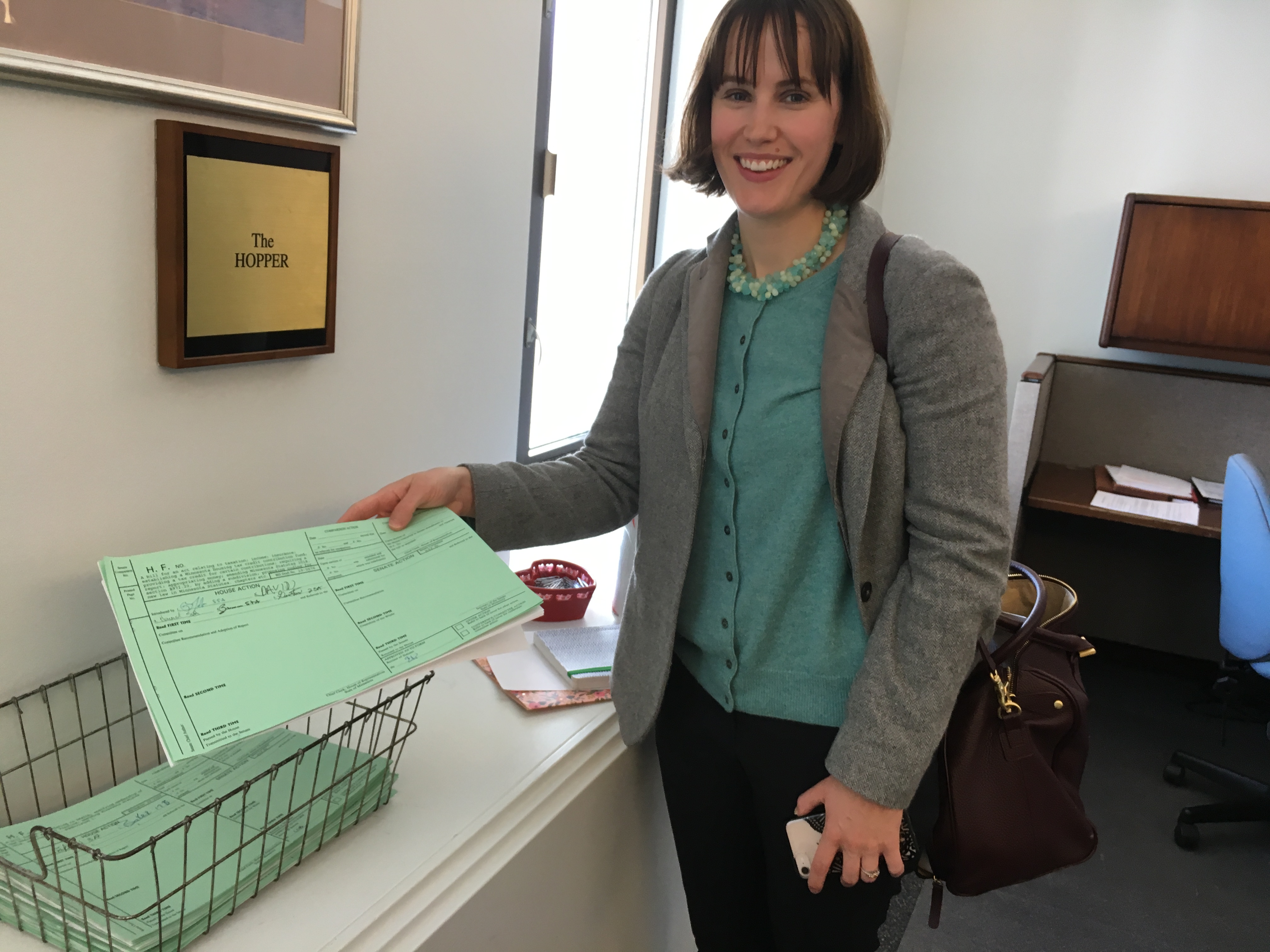
    Right: MHP Deputy Policy Director Libby Murphy drops the House Tax Credit Contribution Fund bill into the Hopper

    All eyes are on the Governor’s office, as Governor Walz will release his budget no later than February 19. 

    Anticipation is also building for the February forecast for state revenues – and it looks like it will not be as positive as reported in December.  The January report from Minnesota Management and Budget states that for fiscal year 2019, year to date receipts are now $12.805 billion, $374 million (2.8 percent) less than forecasted. The forecast will impact the Governor’s budget and budget targets set for committees in the House and Senate.

    Tax Credit Contribution Fund for Affordable Housing introduced in the House 

    A House bill, HF1156, has been introduced for the Tax Credit Contribution Fund for Affordable Housing! Our next step is to request a hearing on the bill.  

    Thank you to Chief Author Representative Brad Tabke (Shakopee, 55A), and co-authors Davids; Howard; Bierman; Gunther; Wolgamott; Christensen; Carlson, L.; Theis; Haley; Pierson; Brand; Xiong, T.; Sauke; Dettmer and Gomez. 

    Representative Tabke is a former Mayor of Shakopee, with a keen understanding of housing development from his work experience as a consultant on community development projects and as mayor of a growing city attractive to major employers. 

    BILLS TO WATCH 

    SF1214/HF1151 includes all Homes for All endorsed requests for appropriations to MHFA, including the state match for Local Housing Trust Funds, an increase to the Challenge Program, and support for Homework Starts with Home, a program providing rental subsidies to students and their families to prevent housing instability. Senator Weber and Representative Hausman are respective chief authors. 

    SF1294/HF1208 would establish a Legislative Commission on Housing Affordability and propose coding for new law in Minnesota Statutes, chapter 3. Senator Draheim and Representative Andrea Carlson are respective chief authors. 

    HF494/SF82 would implement residential landlord notice requirements for intention to quit or a rent increase specified. 

    HF495/SF125 would amend residential lease requirements. 

    HOUSING-RELATED HEARINGS 

    Be part of the action on February 20 at 8 am in Room 200 of the State Office Building for a hearing of the Housing Finance and Policy Division. The committee will hear a presentation on Governor’s Budget Proposal, HF 494 (Dehn), which provides a time period for notice to quit or pay rent, and HF 495 (Noor), which amends residential lease requirements. 

    LEGISLATIVE DEADLINES 

    Last week, we reported the 2019 committee deadlines. Lawmakers, staff, and advocates are working furiously to meet the first deadline on March 15. 

    In addition, in an attempt to avoid the annual end-of-session scramble, Governor Tim Walz, House Speaker Melissa Hortman, and Senate Majority Leader Paul Gazelka have agreed, in a signed letter, to additional objectives: 

    • The House and Senate will pass all major finance bills off their respective floors and leadership will appoint conference committees by May 1st. 
    • The Governor, Senate Majority Leader, and Speaker of the House will provide fiscal targets to the chairs of conference committees on major finance bills by May 6th. 
    • Conference committee chairs shall provide completed conference committee reports to the house of origin by May 13th. 
  • Congress reaches FY19 spending deal

    Just days before the February 15 deadline, Congress has reached a final deal to fund the federal government for the remainder of FY19. Reports indicate President Trump will sign the bill.  

    Highlights include: 

    • $1.5 billion in new resources in FY19 for key HUD programs including tenant-based rental assistance, project-based rental assistance, and homeless assistance grants. 
    • Sufficient funding to renew contracts with properties that provide affordable housing to seniors (Section 202) and people with disabilities (Section 811). 
    • $100 million in competitive grants to Native American communities to spur affordable housing construction and preservation. 

    Read more from NLIHC. 

    Thank you for contacting your members of Congress and asking for a spending bill that fully funds critical housing programs. Your advocacy is important!

  • New report examines Economic Development and Housing Challenge Program

    On February 8, the Office of the Legislative Auditor (OLA) released a report on the Economic Development and Housing Challenge (EDHC) Program, administered by Minnesota Housing (MHFA). 

    EDHC provides grant or loan funding for affordable rental housing developments that support economic development activities. Funds provide support for acquisition, rehabilitation, or new construction of permanent rental housing, with a minimum of four units. The Legislature appropriated an average of $9.3 million in base funding to the program each year between fiscal years 2012 and 2019.

    The Legislative Auditor found that the agency has generally done a good job of administering the program. It included these recommendations: 

    • The Legislature should review EDHC program statutes to determine whether the program’s broad purpose and flexibility accurately reflect legislative priorities. 
    • MHFA should increase its efforts to work with stakeholders to streamline its application processes for EDHC funds. 
    • MHFA should review EDHC rules to determine whether they are clear and contribute to an efficient and effective award process. 

    In a response from Minnesota Housing to the report, Commissioner Jennifer Ho wrote that she appreciated OLA’s “insights and recommendations to improve the program.” She noted that Minnesota needs more affordable housing and that “demand exceeds funding” for the Challenge program. As MHP has noted previously, the Challenge Program is highly oversubscribed, with approximately three to four applicants for every successful award of funds. 

    Read the OLA report.