MHP’s travels recently included Florida, to reconnect with a beneficiary of our technical assistance work, Chipola Area Habitat (CAH). CAH seeks to develop a 9-acre site known as the “Cook Property” for affordable housing, and we worked with them to select an architectural firm to help create a master plan for the site. Fitzgerald Collaborativeout of Tallahassee, a certified Minority Business Enterprise (MBE), was chosen.
While in Marianna, we facilitated a community engagement meeting in the City’s historic Black neighborhood, which has historically faced a lack of investment. More than 20 residents attended alongside representatives from Chipola College, City Commissioner and CAH Board member Travis Ephriam, and State Representative Shane Abbott. During the neighborhood planning presentation, MHP introduced the centuries-old, now-social justice saying “Nothing about us, without us, is for us,” to underscore the need for authentic engagement that is community-driven.
MHP’s community technical assistance model is built around self-determination and locally-identified needs, and our experience informs us that the participation and prioritization of communities impacted by racial and economic disparities is critical to successful community development work.
The lively meeting resulted in the start of a neighborhood revitalization plan for the West End, and identifying community members to participate on a steering committee for the master planning at the Cook Property, as there are many connections between these two parts of the city.
With the steering committee organized and the architectural firm selected, MHP will now assist CAH in the next steps of the master planning process, including completing necessary predevelopment studies for the site. The creation of a new advisory committee made up of Habitat homeowners is also in the works. We look forward to our continued work in Marianna, and to see the fruits of the community’s efforts in new affordable housing!
Does your region or community need help adding affordable housing to your area?
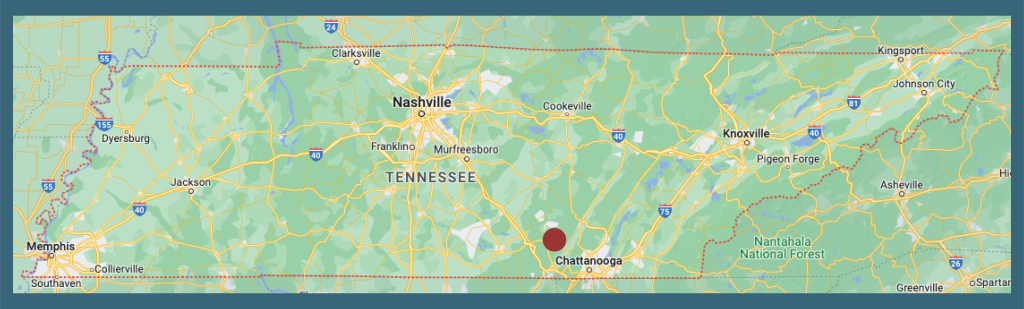
Mountain T.O.P. (Tennessee Outreach Project) is a faith-based nonprofit that offers several programs to “meet the physical, spiritual, social, and emotional needs of all the people [they] encounter” including a food shelf and home repair. They are based in Grundy County, which has a poverty rate of 19.1%. They were interested in starting a new construction program for single family homes that could offer replacement homes for very low-income families.
Shortly after MHP began working with Mountain T.O.P., their longtime Executive Director retired, leaving their Program Director in the interim position. Despite the challenges of the loss of the position, the team was able to accomplish several goals including conducting a Housing Needs Assessment for which a housing advisory group was established and still meets today! MHP also helped to draft a business plan for a single family development program using value gap funding from the Tennessee Housing Development Agency and Federal Home Loan Bank’s AHP funds. Included in that document was a template for construction budgets and a list of general contractors building in the area. Finally, the team identified development opportunities with regional partners, such as South East Tennessee Development (SETD), Better Fi, a local CDFI. In April 2022, Mountain T.O.P. held a Housing Summit for the first time, with more than 25 organizations present, including Tennessee Housing.
Does your region or community need help adding affordable housing to your area?
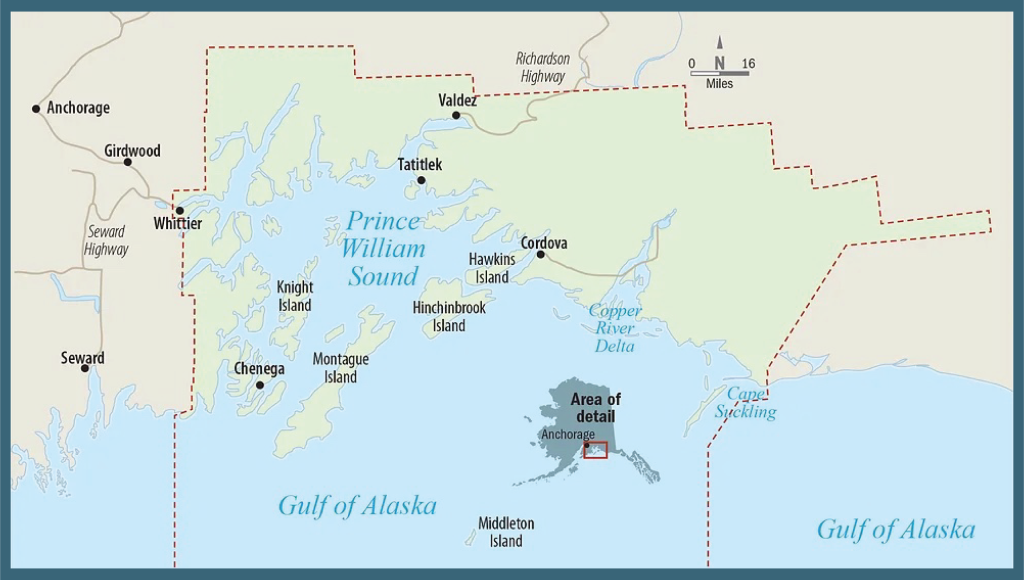
MHP’s Community Development team and the Prince William Sound Economic Development District (PWSEDD) have recently began the process of collaborating with McKinley Research Group—an Alaska-based research firm—to conduct a regional housing needs assessment for the Prince William Sound region. The district includes cities of Cordova, Valdez, and Whittier, and Native Villages of Eyak and Tatitlek. There is a severe shortage of housing in all of the communities of the region, given the specific challenges around topography and accessibility, cost of construction and materials, and lack of developers and contractors. MHP is providing financial support to help offset the cost of the initial Housing Needs Assessment.
“Each community within the Sound truly has their own unique topographic and economic challenges that make housing development and affordability so critical and also even more difficult.” says Erika Brown, Community Development Manager at MHP and project lead “I am excited to be working with each community to identify the best way to engage and involve their residents throughout this process and come up with strategies to address their housing needs that are as unique as each of the communities themselves.”
Once completed, MHP staff will assist regional partners in development of a housing action plan (HAP), with specific strategies to address housing development needs in each community. MHP will provide remote and in-person technical assistance for this planning by creating engagement tools and supporting outreach strategies such as community surveys, stakeholder interviews, and public town halls hosted during the summer of 2023.
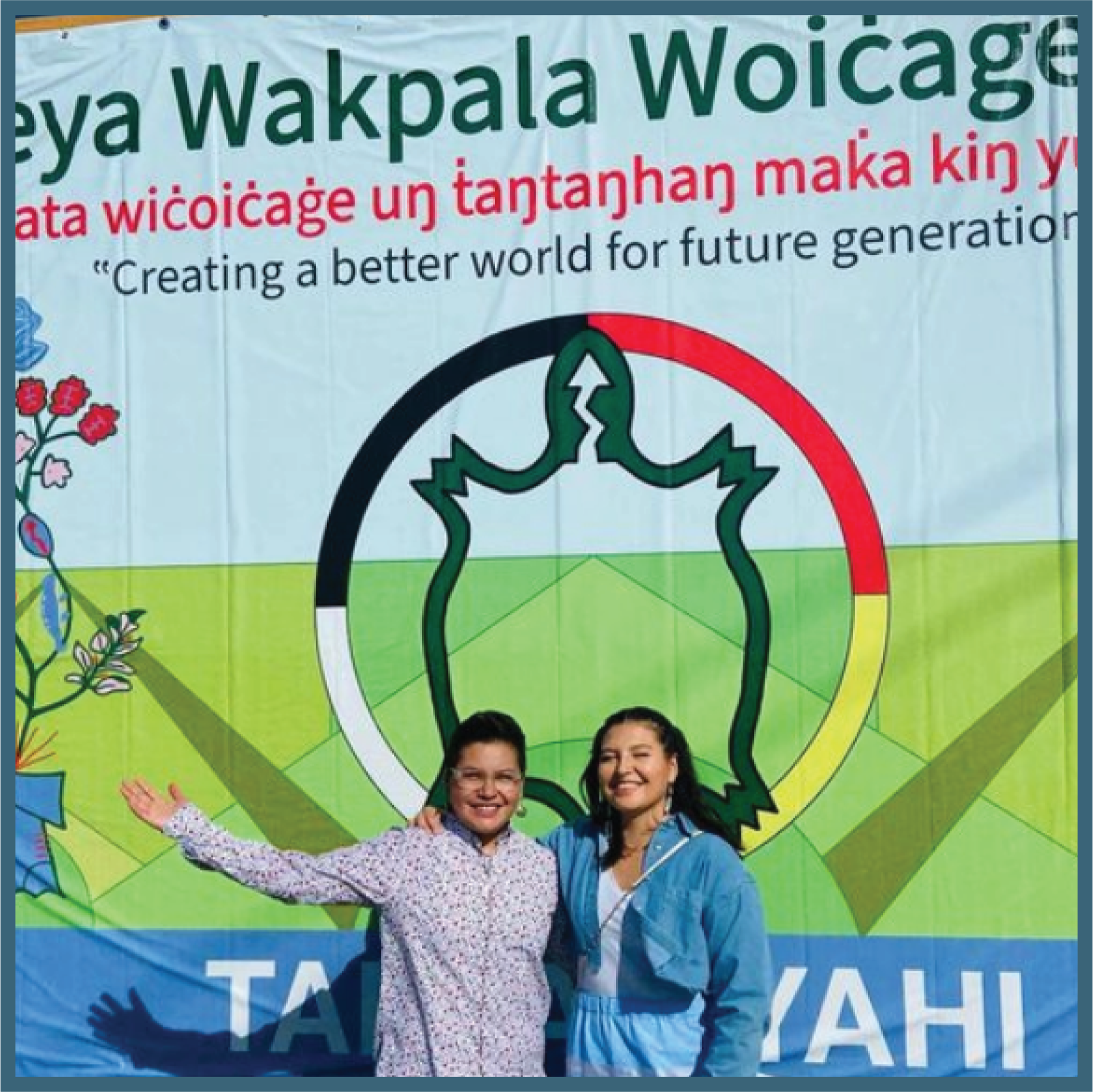
Keya Wakpala Woiċaġeyapi will be a living community that nourishes the Siċaŋġu spirit and way of life. Affordable and accessible quality-built homes, centered around a community garden and a multi-use gathering space, with places for people to shop and work and for children to play together, Keya Wakpala is a pathway for the Siċaŋġu Lak̇ota Oyate “to reclaim who they are” near Mission, South Dakota.
From its very beginning, Keya Wakpala has been shaped and guided by community voices speaking what they need and want, including dedicated space for food and agriculture, livelihood, and recreation. The homes will be culturally-relevant, adaptable to all family sizes and generations, with room for future growth. This 600-acre site will eventually incorporate athletic facilities, sports fields, a network of walking, biking and hiking trails, small business incubators, retail, restaurants, as well as many other businesses and amenities.
Recently, a new billboard was unveiled to help promote the project! MHP, a technical assistance provider for the project, was thrilled to have the opportunity to use grant funds to commission two talented Siċaŋġu artists Cas and Sonni, as well as a Lakota graphic design professional to bring the project to life!
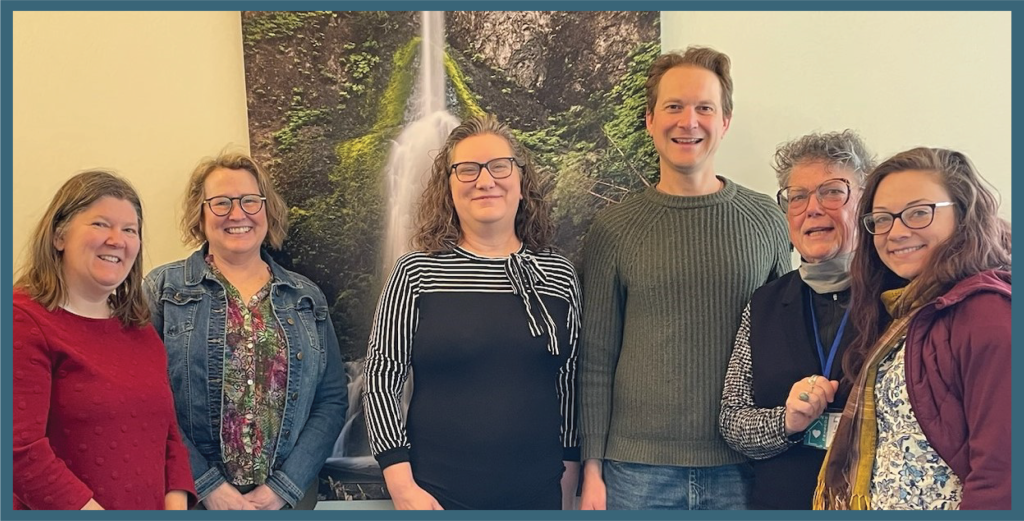
Olympic Peninsula Extended Needs Housing (OPEN Housing) spent a snowy 1.5 days in Port Angeles, WA with MHP staff members Barbara Dolan, Devon Pohlman, and Courtney Overby on a site visit to complete a needs assessment; exchanging stories, touring properties, and diving into discussions on priorities for the organization. OPEN was formally incorporated in 2019 and currently offers 14 units for rent at two properties in Sequim and Port Angeles. With a mission to “provide sustainable, secure, affordable housing for people with developmental disabilities and low-income others in a shared and integrated community so all can thrive,” OPEN Housing develops low-income housing for adults with disabilities (and other low-income neuro-typical adults) who are willing and able to live and thrive in a shared housing community.
In the US, nearly 75% of adults experiencing intellectual or developmental disabilities live in their family’s home. On the Olympic Peninsula, that number is closer to 99%. Imagine being an adult who wants to live independently, develop social skills, and learn what it means to contribute to their community with nowhere they can afford to go. Out of every four Americans, one experiences an intellectual or developmental disability. housing adults with disabilities shapes the collective future of all of us.
OPEN Housing applied for technical assistance (TA) through MHP’s online application. MHP technical and financial assistance is tailored to help build the capacity of local housing drivers and promote local housing solutions that address gaps in existing services. A needs assessment site visit is the first step for the MHP team and project partners to meet in person, view properties or sites, and build the foundation for a 24-36 month-long working relationship. MHP assesses whether an organization has the capacity and readiness and aligns with its mission in order to be successful when utilizing MHP programs and funding sources. This time together provides MHP staff with the opportunity to connect with individuals, entities, and partners involved in collaboratively crafting a living work plan. Creating affordable housing and building strong communities is complex work!
From left to right: Devon Pohlman (MHP), Barbara Dolan (MHP), Kimberly Ortloff (OPEN Board President), Lindsey Schromen-Wawrin (Port Angeles City Council) Liza Searles (Executive Director), Courtney Overby (MHP)
As part of the OPEN Housing needs assessment, MHP staff worked closely with the team to identify and prioritize organizational challenges. The project team met and heard from local Port Angeles council member Lindsey Schromen-Wawrin about the approach and systemic barriers to housing that the community-at-large faces. MHP staff also heard directly from Dorine Hunter, a former board of directors’ officer, about the significance of the acronym OPEN as a name that supporters would recognize, and about the extensive network of the mothers of those experiencing disabilities, who founded and sustain the organization’s operations and administrative success. Hearing the stories firsthand, in community, forges meaning and structure, and sets the tone for the rest of the technical assistance engagement.
The assessment revealed that OPEN’s communal single-family home model is well-positioned for organizational sustainability and the future development of new housing for IDD adults. MHP’s work plan with OPEN Housing will include board of director recruitment and training and reviewing existing and creating new policies and procedures. OPEN Housing is excited about an update to the website and a rebranding effort in addition to hiring, staff development, and strategic organizational planning.
MHP’s Community Development team delivers the resources and knowledge needed to create and preserve housing and community assets. We collaborate directly with communities, regions, and organizations across the country to achieve their housing and community development goals. From innovative community planning practices to knowledge of complex federal grants and programs, our expertise helps to create effective — and lasting — collaboration among community leaders.
Does your community need knowledge in housing, community, and/or organizational development? Looking for collaborations and partnerships to bring affordable housing to your community? To learn more, contact Devon Pohlman, Director of Community Development at devon.pohlman [at] mhponline.org.
It all began with a Google search. In 2020, with the global pandemic raging, Cheri Tinker felt overwhelmed in her position as Executive Director of the North Olympic Regional Veterans Housing Network (NORVHN), an organization she founded. While NORVHN was experiencing growth, it was all set up on one person’s shoulders. Like many nonprofits, NORVHN evolved from the passion of one individual – in this case, Cheri’s passion was helping homeless vets in her community. But never having run a organization like this before, she built it the only way she knew how. NORVHN’s foundation wasn’t solid, making their important work unsustainable. Cheri turned to an internet search, and stumbled upon MHP. That, she says, was “transformative.”
Once houseless veterans served by Sarge’s Place.
NORVHN works with homeless Veterans of Clallam and Jefferson Counties on the Olympic Penninsula of Washington State, providing emergency shelter and permanent housing for Veterans in Washington State. This includes a 7-unit permanent supportive project built using modular housing, the first of its kind in the State of Washington. They also have a 2-story apartment building in Forks (Sarge’s Place), a second-hand store, a farm, a 4-plex in Port Angeles, and more. At the time Cheri contacted MHP, they had the projects and momentum, what they needed was the structure and support to make it sustainable.
When COVID struck, and NORVHN’s access to grants dried up, they applied for technical assistance with MHP with the goal of making them “whole.” MHP’s work came via the uber capable hands of Deputy Community Development Director Barbara Dolan. Barbara helped Cheri on all of the aspects of an organization that are hidden from the public–the unsexy yet critical work like sound practices, procedures, policies, manuals. She helped streamline their bookkeeping processes, transforming their audits and how grantors viewed their finances. They worked on restructuring the board of directors from elderly Vietnam Vets who didn’t have the capacity to support Cheri’s work, to a highly functioning board who could make important connections in the community. They did strategic planning, succession planning, and built an incredible structure for the organization. As Cheri gushes, “MHP saved our agency—you made it vibrant and healthy again!”
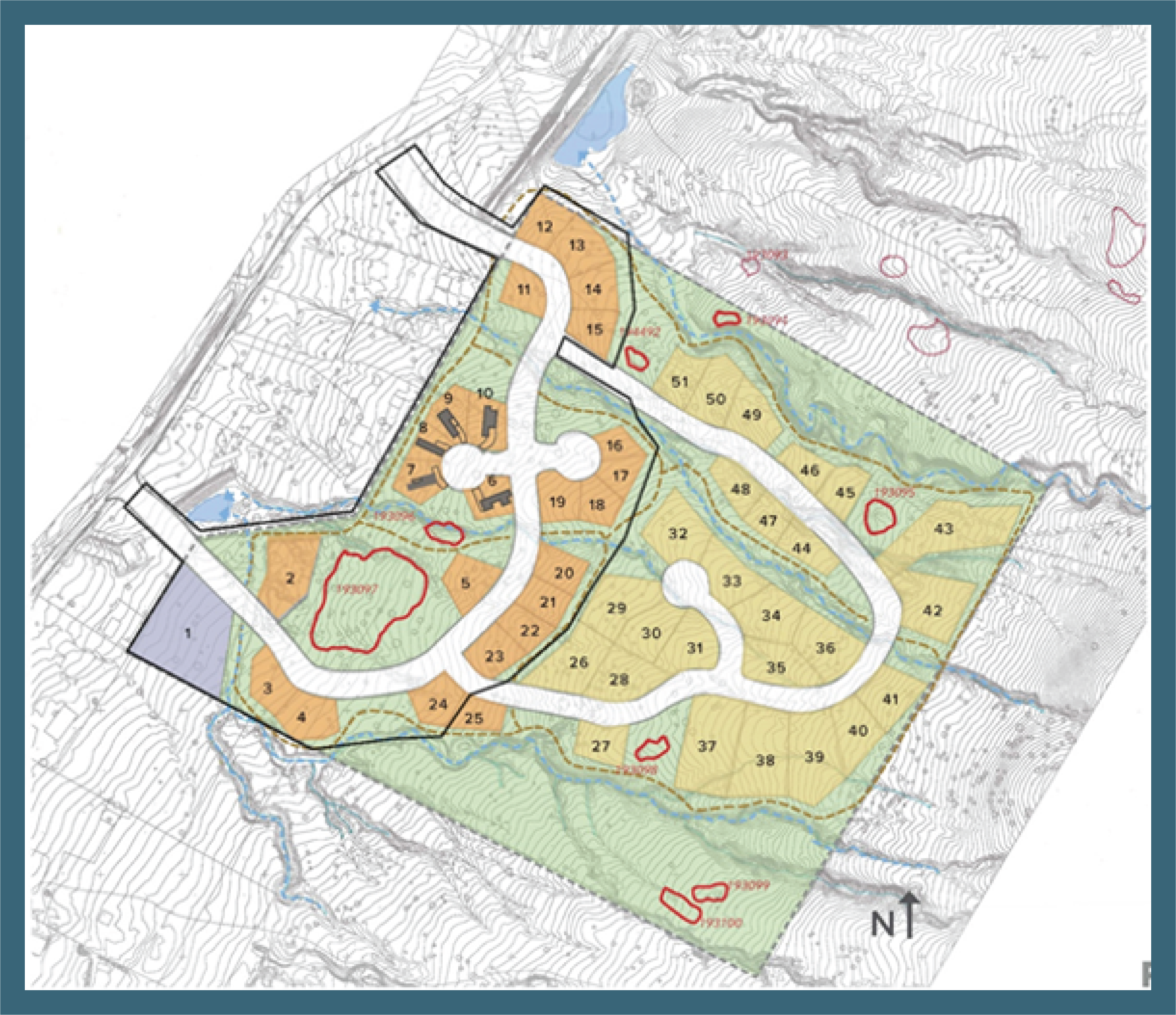
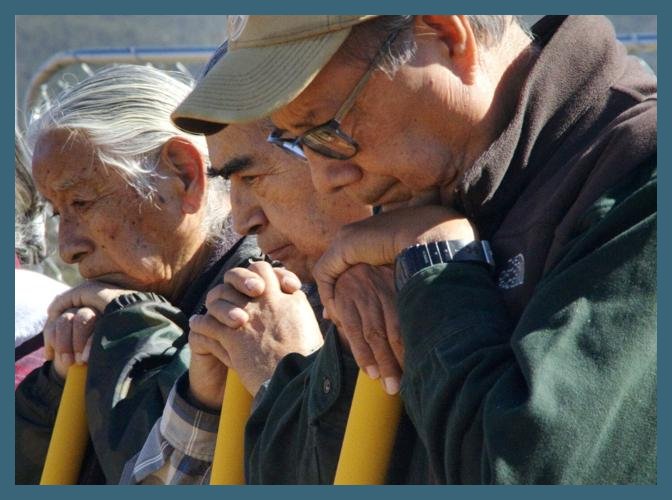
For the past three years, MHP’s Community Development team has been working with the Taos Pueblo Housing Authority to provide technical assistance on multiple fronts, including supporting their mission and helping to create a guide for staff in maintaining compliance. Another collaborative project is the funding and design of a 50+ unit new single-family housing development! Along with Heroda Bikax^e Consulting LLC, MHP brought in Ferguson Pyatt Architects to complete revisions to a site plan for the Spider Rock development needed to accommodate recently discovered cultural artifacts. We’ve provided guidance on potential funding resources, layering and leveraging resources for infrastructure and vertical construction, and assisted in submitting multiple state and federal grants. These units will be the first houses built by the Taos Pueblo Housing Authority in over 30 years. Infrastructure groundbreaking took place on October 28th, with the first units slated to be built in the summer of 2023.
3 Former Taos Pueblo Governors listen to a prayer by a Tribal elder during groundbreaking ceremonies: Gilbert Suazo Sr, Richard Aspenwind, Nelson Cordova. Rick Romancito for the Taos News
Over the upcoming months, MHP will continue to work with the Spider Rock development team to submit more funding requests, assist the TPHA Executive Director in creating a strategy for selecting new homeowners to serve the needs and priorities of the Pueblo while maintaining financial stability, participate in a design charrette and community education event, and set the stage for the next phase of the development of 26 units non-NAHASDA homes (The Native American Housing Assistance and Self Determination Act of 1996). More on the long history of this project was featured in the Taos News.
Barbara Dolan, Deputy Director of Community Development says, “It’s been a privilege to be working with the many devoted staff and leaders from Taos! A lot of hard work, time, and money from a truly committed team is making this project a reality!” It’s one more example of how MHP is working nationwide to live into its mission.
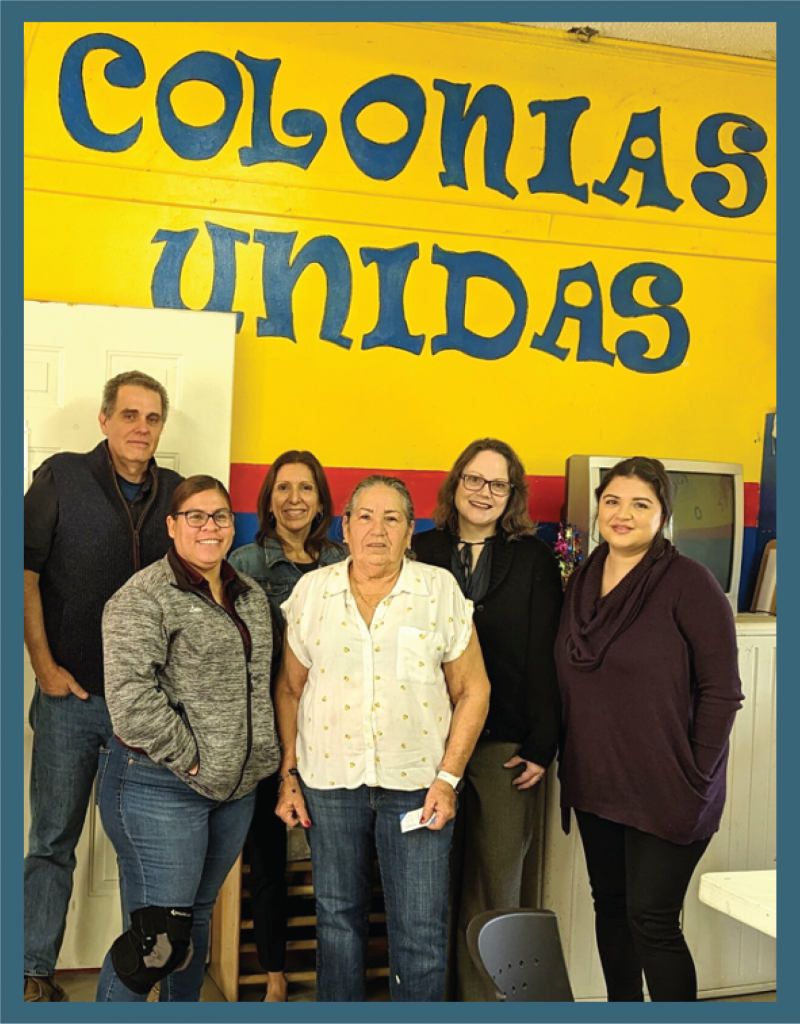
In December, MHP staff traveled to two rural communities along the Rio Grande River in Texas. Together with staff members from come dream. come build, MHP’s Community Development Team met with local stakeholders including the staff from the Starr County Self Help Center and Colonias Unidas in Los Lomas to learn about the needs in their communities.
Staff from Cdcb, Self Help Center, MHP, and Colonias Unidas gather in Los Lomas, TX
Of the more than 200 Colonias communities in Starr County, MHP worked to zero in on a few as a starting point, including Los Lomas and Rio Grande City. The team learned of 13 vacant lots that might be perfect for cdcb’s MiCasita homesand met with two of the owners.
While on site, the project team also checked out some multifamily rental properties that were on the market in Rio Grande City and Roma. It was a great start to this engagement, helping CDCB gain a footing in these two rural cities and adjacent colonias communities. MHP’s team is planning another trip there next spring.
Touching down on the runway of BRW airport in Utqiaġvik, Alaska (the community formerly known as Barrow), we could already tell from the views of ice floes in the Arctic Ocean and mossy tundra that we were in for a new experience. In late June 2021, Warren Kramer, Community Development Director, and Ella Mitchell, Community Development Officer, met with team members of Taġiuġmiullu Nunamiullu Housing Authority (TNHA), a beneficiary through the HUD Rural Capacity Building 2018 grant. After over nine months of working together virtually, the team was excited to meet in person for a week and see with their own eyes what it’s like to work on housing in Alaska’s North Slope Borough. Utqiaġvik is a community of 4,500+ people and is the northernmost city/town in the US, located north of the Arctic Circle.
Griffin Hagle, Executive Director of TNHA, graciously picked up MHP staff at the airport and brought us on a driving tour of Utqiaġvik, pointing out TNHA properties and unique building techniques, as well as local landmarks like the tribal college and hospital. A whole range of unique, cold climate construction materials and techniques are used in housing development when building on permafrost. Construction materials must all be transported by ocean barges to Utqiaġvik from Anchorage. They say the first $150,000 of housing development cost, per unit, is the transportation costs of the construction materials. A primary focus of the visit was to finish the strategic planning process we’d started months earlier, with TNHA staff and board members. TNHA is governed by Board members who represent the six native Alaskan villages TNHA serves. Since there are no roads connecting these six villages, the board members need to fly into Utqiaġvik to participate in board meetings and the strategic planning work. Dr. Pearl Brower, a longtime Utqiaġvik resident and former president of Iḷisaġvik College, facilitated these meetings, leading the group in team building activities and discussions about the future of TNHA. The final product was an approved Strategic Plan that will guide TNHA’s work for the next several years.
In between sessions, the group enjoyed pastries homemade by very talented TNHA staff, participated in a weekly group walk around town hosted by the Mayor’s office and even caught a glimpse of the annual whaling festival, Nalukataq. Utqiaġvik is a centuries old whaling village which is still a significant part of the community’s culture and economy. Some 32 teams of local whalers went out in pursuit of bowhead whales in 2021. 22 of those whaling teams successfully harvested a whale this year.
We were also able to tour a 29-unit apartment built in 1977 that TNHA is in the process of renovating with funding from HUD and other entities. Some other highlights of the trip included a delicious barbecue dinner hosted by Griffin and his wife Kelly, a tour of the NOAA Barrow Atmospheric Baseline Observatory where researchers around the world are tracking weather and climate change data, and a visit to the Iñupiat Heritage Center to learn more about local native history and culture.
While North Slope communities share many housing challenges with other rural and tribal communities in the United States, they also face unique challenges due to their extreme remoteness and unique physical environment. Sustainable housing solutions are a critical innovation need as these communities are directly impacted by the effects of climate change, including tundra subsidence and sea level rise. For example, all housing in the area is built on piers or stilts so that the heat from the building does not thaw the permafrost beneath the home. More recently, sled rails have been added to cap the stilts so that the structure can be moved if the coastline changes and the community must relocate. Energy efficiency measures such as improved insulations, new windows, and electric stoves are also critical improvements because utility costs can be astronomical in the North Slope’s deep winters and indoor air quality during these months can be a major issue. MHP’s successful trip to Utqiaġvik brought these issues to life as staff were able to see in person the real issues and challenges of working in this remote region, as well as the strengths and commitment of our beneficiary up there, TNHA. ~Ella Mitchell
Through its participation in MHP’s Housing Institute, Lanesboro partners are working to address the area’s severe lack of available housing and create solutions. Established in 2010, MHPs Housing Institute brings together housing leaders and stakeholders to share their experiences, learn best practices, and develop creative solutions to bring quality affordable housing to their communities.
MHP’s Seventh Round of the Housing Institute, which was launched during the COVID-19 pandemic, is the first entirely virtual institute. To ensure community teams from Preston, Lanesboro, Fairmont, Owatonna, and Lewiston Minnesota could participate and advance their community initiatives, MHP moved all institute networking, training exercises and development goals to an online platform. While an all-virtual environment has had challenges, each team has shared both continued commitment and a lot of needs around housing goals that the Housing Institute continued to support.
Individual teams, such as Lanesboro, are looking at potential projects, land availability and local funding sources to use in development. Resources provided through the Housing Institute have included a workshop on how best to build a consistent message to different audiences, convening a regional advisory committee comprised of state and rural housing funders as well as developers and local economic development practitioners, and a presentation on local government financial tools that can be used to increase affordable housing in rural communities.
The Lanesboro team, which includes; Desiree Borth-Ferrie, Jeff Brogle, Philip Dybing, Ben Gorman, Eliza Mitchell, Michele Peterson, Elliot Riggott, Matt Schultz, Wyatt Seablom and Cathy Enerson, have documented their efforts to date through photos and this blog post.
What is home? By Ben Gorman – Thursday, 20 May 2021
It’s a big question. Is home a building or a community? Is it found in the emotional landscape or the built environment? For some, the answer only arises from a complex interplay among emotional and practical considerations; for others, the answer is quite simple: “Home is where you hang your hat.” For too many, there is no answer, or the answer is unknown. Those of us fortunate enough to have a place we call home would do well to reflect on what constitutes our sense of home, what makes it real for us.
Members of the Lanesboro Burro Borough, brought together by the Minnesota Housing Partnership, may, individually, have different definitions of home, but we all agree that home is a vital part of our well-being and recognize that everyone should have a place to call home. We also agree that in Lanesboro we have a place which, for us, is worthy to call home, a place where we can thrive—and where we hope others can thrive as well: neighbors old and new that we hope to call friends.
Our collective love and respect for Lanesboro, and our interest in this community’s future, led us to engage the Minnesota Housing Partnership program and embark on the 18-month journey to identify and engage opportunities to improve our housing stock and help existing and prospective residents find places here to call home.
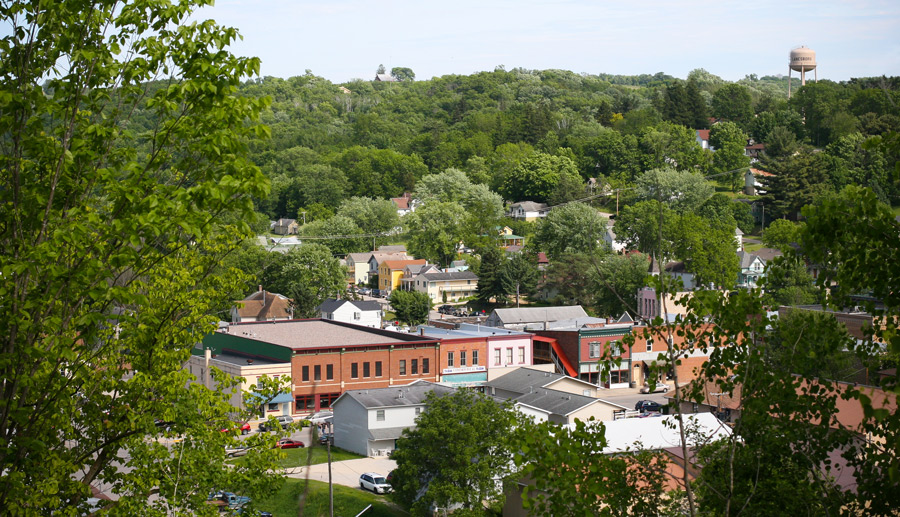
Lanesboro, Minnesota, in Fillmore County, as seen on the approach descending the hill on Route 8.
So far, it has been a journey of learning and growth and discovery—with a few surprises along the way, like all the best journeys have! Inventorying the positive aspects our little hometown was the easy part; we readily recognize the features and quirks that drew us here and keep us here—we even agree on most of them! But identifying the barriers and helping to create a shared vision of how to facilitate an expansion of high quality, affordable and equitable housing in Lanesboro took a little more creative thinking. Fortunately, with the help of experienced and creative minds like Cathy Enerson of Community and Economic Development Associates and Warren Kramer of Minnesota Housing Partnership—indeed, with the whole talented team at MHP in our corner—we are working on defining our challenges and setting goals to overcome them.
What we’ve learned in the process will help us to build a better Lanesboro community, not just—our primary goal—by adding suitable housing stock to our local market, but by understanding the needs and challenges we face as residents, as neighbors, as contributors to the local community. We all believe in our little ’boro—with its population of proud Burros!—and we want to see it thrive well into the future.
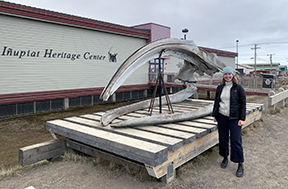 Touching down on the runway of BRW airport in Utqiaġvik, Alaska (the community formerly known as Barrow), we could already tell from the views of ice floes in the Arctic Ocean and mossy tundra that we were in for a new experience. In late June 2021, Warren Kramer, Community Development Director, and Ella Mitchell, Community Development Officer, met with team members of Taġiuġmiullu Nunamiullu Housing Authority (TNHA), a beneficiary through the HUD Rural Capacity Building 2018 grant. After over nine months of working together virtually, the team was excited to meet in person for a week and see with their own eyes what it’s like to work on housing in Alaska’s North Slope Borough. Utqiaġvik is a community of 4,500+ people and is the northernmost city/town in the US, located north of the Arctic Circle.
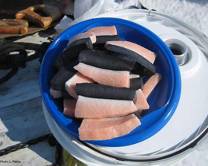 In between sessions, the group enjoyed pastries homemade by very talented TNHA staff, participated in a weekly group walk around town hosted by the Mayor’s office and even caught a glimpse of the annual whaling festival, Nalukataq. Utqiaġvik is a
 centuries old whaling village which is still a significant part of the community’s culture and economy. Some 32 teams of local whalers went out in pursuit of bowhead whales in 2021. 22 of those whaling teams successfully harvested a whale this year.