
• Mortgage Interest Reform: One Step Closer to Reality

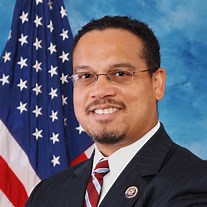
    Minnesota Rep. Keith Ellison recently introduced a bill to reform the Mortgage Interest Deduction to make it more equitable for middle and lower income homeowners and to use the billions saved from this reform to fund affordable housing programs.

    We recently reported on a poll that surveyed America’s attitudes toward the Mortgage Interest Deduction (MID).  The results showed that a majority supported the MID, but also support MID reform and using the savings from MID reform to fund affordable housing.  Rep. Keith Ellison’s new bill, the Common Sense Housing Investment Act of 2012, H.R. 6677, proposes just that.  Read below to find out more about this bill and how to show your support.

    More equitable tax benefits

    The poll shows that Americans support the MID, yet less than half of homeowners claim the MID on their tax returns.  To enable more moderate and lower income homeowners to take advantage of MID’s benefits, Rep. Ellison proposes replacing the MID with a flat 20% tax credit. This would allow 60 million homeowners owners to benefit, rather than the current 43 million homeowners.

    Billions in savings

    Rep. Ellison proposes lowering the cap on mortgage debt eligible for tax benefits from $1.1 million to $500,000.  This means, if passed, the government will reduce its subsidy for million dollar homes.  $27 billion annually will be saved by modifying the MID in the manner proposed by Rep. Keith Ellison.

    More affordable housing

    Rep. Ellison proposes using this expected $27 billion to fund affordable housing programs, including:

    • Putting 60% of dollars saved (about $15.4 billion) toward the National Affordable Housing Trust Fund (NHTF).  Once it is capitalized, NHTF will provide communities with funds to build, preserve, and rehabilitate rental homes that are affordable for extremely and very low income households.
    • Putting 30% of dollars saved (about $7.7 billion) toward Section 8 rental assistance, both project and tenant based.
    • Putting 10% of dollars saved (about $2.5 billion) toward Public Housing Capital Funds.
    • Raising the Low Income Housing Tax Credit (LIHTC) allocation from $2.10 per capita to $2.70 per capita (an increase of $1.38 billion a year).  LIHTC is an indirect federal subsidy that is used to develop affordable housing. 

    There is a shortage of nearly 7 million homes affordable to families in the bottom twenty percent of income.   In Minnesota, 1/2 of renters pay more than 30% of their income on housing.  This bill, if passed, will ensure affordable housing for more low income families. 

    How to get involved

    If your organization – or your local affiliates or partners – wish to be listed as supporters of the bill, please send an email listing your support and contact information to Mitch Dowd at [email protected].

    Contact Brandon Gil at [email protected] for more details regarding the bill or for information on how to get involved. 

  • Congress Deal Means Both Housing Victories and Woes

    While many were celebrating the coming of the New Year with friends and family, Congress was frantically trying to pass legislation to prevent the country from falling off the fiscal cliff.  During the early hours of New Years, the American Taxpayer Relief Act of 2012 was passed.  While considered an imperfect bill by both Democrats and Republicans alike, there are several housing and community development victories to celebrate.

    Sequestration

    The Budget Control Act of 2011 would have required across-the-board cuts, also known as sequestration, to both defense and non-defense discretionary funds for a period of 10 years.  This would have meant an 8.2% cut to affordable housing programs, including cuts in Minnesota of:

    • 2,587 vouchers for families
    • $6,025,280 in public housing
    • $2,268,442 in homeless assistance
    • $105,014 in Housing Opportunities for People with AIDS (HOPWA) Formula Grants
    • $3,849,970 in the Community Development Block Grant (CDBG) Program
    • $1,101,31 in the HOME program
    • $1,411,711 in Native American Housing Grants

    This victory is only temporary, however, as Congress merely delayed sequestration for several months.  Massive across-the-board spending cuts are scheduled for March 27, 2013, unless Congress comes up with a different plan.

    MHP is compiling stories to get to Congress.  If you would like to share how sequestration could affect you, your organization, or your community, please contact Brandon Gil at [email protected].

    Tax Credits

    Like sequestration, The American Taxpayer Relief Act is bittersweet with respect to housing and community development tax credits. 

    Low Income Housing Tax Credit

    The Low Income Housing Tax Credit (LIHTC) faced an uncertain future as an important financial level had, in effect, expired.  In 2008, Congress replaced LIHTC’s long-standing and complicated floating rate system for setting the value of tax credits with a temporary 9% fixed floor rate.  This encouraged the development of affordable housing by the private market.  The 9% fixed floor rate provision was set to expire for affordable development completed by 2013.  Unless public dollars could fill the resulting financing gaps, the development of affordable housing this year would have been stifled.  On January 1, 2013, Congress extended the fixed 9% rate for projects are awarded credits before January 1, 2014, regardless of time of construction.  

    This is also a temporary victory.  Affordable Rental Housing A.C.T.I.O.N., of which Minnesota Housing Partnership is a member, is advocating for permanently fixing this 9% rate. 

    Other Tax Credits

    Also passed were an extension of the New Markets Tax Credit program through December 31, 2013 and the extension of energy efficiency credits for new and existing homes through December 31, 2013.

    Lower FY13 Spending Cap

    As part of the deal, Congress lowered the FY13 discretionary spending cap by $2 billion from the 2012 amount.  This could greatly impact affordable housing programs, particularly the Housing Choice Voucher Program and the Public Housing Operating Fund.  The Housing Choice Voucher Program needs additional funding to account for inflation and the Public Housing Operating Fund already saw big spending cuts in FY12.  The lowered FY13 spending cap will likely mean less affordable housing options for families.

    New Year’s Day heralded short-lived victories for affordable housing programs.  Advocates have their work cut out for them this year to ensure that these programs do not disappear or lose substantial funding.


  • Rep. Paulsen Tours Apartment for Formerly Homeless Youth

    On February 22, U.S. Representative Erik Paulsen met with housing advocates, providers, and a formerly homeless young man to discuss an issue facing too many homeless students in Minnesota.  This troubling issue stems from an unintended consequence of a well intended rule in the Low Income Housing Tax Credit program. 

    The Low Income Housing Tax Credit (LIHTC), established in 1986, is responsible for most of the affordable rental housing produced nationwide, including some properties that house formerly homeless youth. To prevent LIHTC properties from being used as college dormitories, legislators enacted the “Student Rule,” which stipulates that full time students cannot live in a LIHTC low-income unit as head of the household. While this seemingly common sense rule was meant to prevent precious resources from being used for college dormitories, the Student Rule also prevents formerly homeless students living in LIHTC units from attending high school or college full time.

    reppaulsenvisitsaeonstbarnabasStudents therefore find themselves choosing between dropping to part time student status, and taking advantage of safe, affordable housing, or attending school full time but remaining homeless.  One such student, Jordan, a resident of Archdale Apartments, told Rep. Paulsen that he chose safe, affordable housing over full time status, even if that meant delaying his graduation by an entire year.

    Sara Armstrong-Nathan, the site manager for both St. Barnabas and Archdale, the two Aeon properties for formerly homeless youth, and Sue Pohl, the Site-based Housing Coordinator for YouthLink, told Rep. Paulsen that too many Aeon residents have to make the difficult decision between safe, affordable housing and full time school. “Telling residents that they have to make this choice is the most difficult part of my job,” said Armstrong-Nathan.

    Students who choose part time school over homelessness also face other obstacles, including educational programs and scholarships that do not accommodate part time enrollment.

    After the meeting, the property manager took Rep. Paulsen on a tour of St. Barnabas, the newer of the two Aeon properties for youth.  Rep. Paulsen was able to see its amenities and services, including a 24 hour front desk, a case management office, and a workout room. 

    Housing advocates, including MHP staff, have been working for years to try to fix this troubling issue. Despite support from across the political spectrum for making the changes necessary to the Student Rule, the legislation would need to be included for passage as part of a larger tax bill package. Since tax legislation nearly always creates a political battle in Congress, successful passage of this small, but important, change has eluded advocates for years.

    “Education provides a brighter future for these youth,” said Pohl. “Many of these students are the first in their families to have a chance of graduating from high school.”

    Rep. Paulsen is expected to introduce an amendment to create an exception in the Student Rule for homeless youth. This would ensure brighter futures for more homeless, and formerly homeless, youth across the country.

  • Sequestration Impacts Hit Home

    Sequestration, automatic across-the-board cuts to federal defense and non-defense discretionary spending, was meant to be a disincentive for political gridlock.  However, it apparently did not serve its intended purpose as federal lawmakers were not able to agree on a deficit reduction package by the March 1st deadline.

    Though advocates hoped Congress would craft an alternative deficit reduction package when it recently took up the 2013 budget bill, on March 21, 2013, Congress passed a 2013 budget bill that reaffirms sequestration. Needless to say, this is bad news for housing and the impacts of sequestration are already being felt in Minnesota. A federal and state summary follows, along with a call for advocates to make their voices heard in light of the devastating cuts.

    National Impacts

    HUD and USDA Rural Housing programs will both be cut by 5.1%.  Since there are only seven months left of the 2013 fiscal year; it actually amounts to a 9% cut until October 1, 2013.

    HUD estimates that nationwide 125,000 households will lose their Section 8 vouchers and become homeless; 100,000 people will lose homeless assistance and be back on the streets; and 7,300 households served by the Housing Opportunities for Persons with AIDS Program (HOPWA) will lose assistance and be at risk of homelessness. Public housing agencies, already experiencing a severe need for housing repairs and maintenance, will be forced to continue housing tenants in substandard, or even risky, conditions.

    Other affected programs include HOME, which will stifle development of new affordable rental and homeownership units and cause many to lose their jobs; and the Community Development Block Grant (CDGB), which will eliminate funding for many community development activities.

    Minnesota impacts

    Based on estimates provided by the Center of Budget and Policy Priorities, in Minnesota alone, $2,344,999 will be cut from CDBG; $671,532 will be cut from the HOME program; $895,894 will be cut from Native American Housing Grants; $3,685,610 will be cut from public housing; $1,395,964 will be cut in homeless assistance; $59,508 will be cut in HOPWA; and 1,584 households will lose their Section 8 vouchers.

    These estimates may not be far off, as local sequestration impacts are already being felt across Minnesota:

    • Duluth HRA anticipates a 6% reduction to their administration fee to run the Section 8 program; this means that they will be receiving about 69% of their cost to administer the program. They will have to use their local property tax levy to make up the difference.
    • St. Paul PHA says that they have stopped reissuing vouchers to families on the Section 8 waiting list. If a current voucher holder leaves the program, the PHA will retain the voucher to conserve cash. They still will issue vouchers to tenants moving out of rental housing where there are project based vouchers, as required by law.

    What does the 2013 budget bill mean for these HUD programs?

    In the final 2013 budget bill passed on March 21, funding for some important housing and homeless programs was increased above the 2012 level, including Homeless Assistance Grants, which received an additional $132 million and the Public Housing Operating Fund, which received an additional $300 million. This additional funding will somewhat alleviate the impacts of sequestration in the 2013 fiscal year for a couple of HUD programs.  The Public Housing Operating Fund, however, is still severely underfunded, even with the additional $300 million.

    What next

    Important housing and homeless programs will continually be cut indiscriminately each year until Congress can replace sequestration with an alternative deficit reduction package.  The House passed a 2014 budget resolution on March 21st that would have been even more devastating than sequestration, but it was squarely rejected by the Senate.  This means that there is still time to craft a fair 2014 budget resolution.

    Contact your Members of Congress today and ask them to cancel sequestration and support legislation that contains fair, targeted spending cuts and revenue increases. The message shared by housing advocates across the country should be: protect our housing and homeless programs; balancing our budget should not be done on the backs of the middle and low-income families in our nation.

    Be sure to share stories of people who will be affected, whether yourself or people you work with.

  • Homes for All gaining momentum at the Capitol

    The Homes for All bills to help stabilize families with affordable housing, prevent homelessness, and create housing that serves our state’s workforce continue to move forward, and support is growing. Over 70 organizations have now endorsed our coalition’s legislation requesting a $50 million increase in state funding split between Minnesota Housing and four DHS homelessness programs, along with a $50 million in housing bonds.  Between successful recent hearings and favorable budget “targets” being set, we are one step closer realizing our shared Homes for All goals.

    Minnesota Housing funding bills

    The Homes for All bills requesting a $25 million increase in base funding for Minnesota Housing programs including the Challenge Fund, Housing Trust Fund, and Family Homeless Prevention Assistance Fund and others, had favorable hearings in the House and Senate Highlights include:

    • Bill Ziegler, MHP Board member and CEO of Little Earth of United Tribes in Minneapolis, provided compelling testimony in the House Housing Finance and Policy Committee, along with representatives of Habitat for Humanity, Aeon and Corporation for Supportive Housing.
    • Jamie Thelen, MHP Board member and President of Sand Companies, shared his experience as a private developer using the Challenge Fund to build affordable housing during a March 20 hearing of the Senate Environment, Economic Development and Agriculture Finance Division.  Matt Soucek of Project for Pride in Living joined Liz Kuoppola, Executive Director of the MN Coalition for the Homeless and Co-Chair of Homes for All, in testifying on behalf of the Homes For All legislative agenda at the hearing.

    The next step for both bills (H.F. 1194 / S.F. 811) will be getting their budget proposals included in the larger “omnibus” package of funding bills of these House and Senate committees.

    DHS funding bills

    The Homes for All bill requesting a $25 million increase in base funding for four DHS programs that serve homeless Minnesotans (H.F. 937), was heard favorably to an overflow crowd of Homes for All supporters, in conjunction with Homeless Day on the Hill, at a hearing of the House Health and Human Services Finance Committee on March 7. The Senate bill, S.F. 797, awaits a hearing.

    Included in the Homes for All bill is an $8 million request for the Homeless Youth Act, which is also moving forward as a separate bill. The Homeless Youth Act (H.F. 698 / S.F. 565) provides street outreach, emergency shelter beds, drop-in centers, transitional living programs and supportive housing to unaccompanied youth ages 21 and younger. The HYA has passed through the Health and Human Services (HHS) Policy committees in the House and the Senate, as well as the House HHS Finance Committee. The bill still awaits a hearing in the Senate HHS Finance committee. All committee hearings have been before packed rooms, with youth providing moving testimony about support they have received to help them succeed.

    The Governor’s supplemental budget included an additional $5 million for Homeless youth, which is a big win!

    Budget Targets

    To help get these bills through the Legislature, Homes for All has focused efforts on ensuring that the committee budget “targets” are high enough to meet the coalition’s ask of $50 million in additional funding. The targets determine how much money each committee has to divvy up among the programs it is are responsible for.

    Legislative leadership has clearly heard our call for affordable housing, as both the House and Senate Committees that fund housing received increases above their base funding:

    • House: +$22 million for Housing Finance and Policy Committee
    • Senate: +$135 million for Environment, Economic Development and Agriculture Finance Committee

    Note that the Senate target differs from the House target in part because it funds more than just housing, as its name implies, while the House committee covers housing only.

    The news was less clear for homelessness services. Under a directive for cuts, the House and Senate Health and Human Services Finance Committees that fund homeless services both received a 1% cut in base funding. At the same time, we have no reason to believe that these cuts will affect the Homes for All ask, which amounts to only 0.2% of the entire Health and Human Services budget of $11.3 billion. Base funding cuts were:

    • House: -$150 million
    • Senate: -$153 million

    Kudos to all of the many supporters who have been reaching out to legislators! To get involved or learn what’s needed now, contact Julie Johnson: #651-925-5548 or Erica Schmiel: #651-925-5552.

  • Housing and Homeless Budgets Head to Conference Committees

    We are just three weeks away from the official end of legislative session, and nearly every day brings a new development at the Capitol. The 80 Homes for All organizational members and many more individual supporters have been lending their voices to ensure that thousands of low-income Minnesotans avoid homelessness and can access housing that is affordable and safe.  Key bills head to conference committees this week, where differences between House and Senate proposals will be ironed out. So it’s an essential time to be engaged.

    Homes for All is working on three pieces of legislation:

    1) investment in housing and homelessness programs through Minnesota Housing, 2) investment in four key programs that provide services and shelter for the homeless in the Department of Health and Human Services, and 3) bonding for housing. Odd years are supplemental bonding years, and this year the bonding bill will fall in line only after budget bills have been negotiated.  At this time, the budget items are in constant motion.

    Minnesota Housing (MHFA) budget

    In the budget shakeout, housing fared well in both the House and Senate, but the Senate proposal is stronger. The Senate bill funds Minnesota Housing at $106 million for FY 14-15, a $30 million increase in funding from FY 12-13. However, the Senate proposal as written is “one-time” money, which means that funding would drop back in our next round of budget negotiations in two years. For this reason, we want to:

    • Support the Senate proposal of $106 million for Minnesota Housing Funding
    • Include program increases as “base funding” for future budgets.

    For more on the specific programs, what they do, and the dollar amounts in the Senate bill for Minnesota Housing, see Table 1.

    This week, the House and Senate bills will be reconciled in conference committee. If you live or work in a district of one of the conferees, please contact him or her. Otherwise, contact your own legislators, and ask them to speak to the conferees:

    Sen. David Tomassoni    Rep. Tim Mahoney
    Sen. James Metzen   Rep. Joe Atkins
    Sen. Dan Sparks   Rep. Karen Clark
    Sen. Tom Saxhaug   Rep. Sheldon Johnson      
    Sen. Torrey Westrom   Rep. Bob Gunther

    Department of Human Services budget for four key homeless services

    Homes for All has been seeking $25 million in additional funding for four key homeless programs in the Department of Human Services within the Health and Human Services (HHS) budget.  The four programs (Long-Term Homeless Supportive Services, Transitional Housing, the Emergency Services Program, and the Homeless Youth Act) cover the continuum of homelessness services.

    The HHS budget has been constrained by lower-than-hoped for allocations in a tight budget year. While the House and Senate each found something for housing, neither chamber’s budget is adequate. The Senate bill includes $4 million for the Homeless Youth Act, and the House bill includes $8 million for homeless services, including $3 million for the Homeless Youth Act.

    At this point, Homes for All is urging the Senate Leadership (Sen. Bakk and Sen. Cohen) to find new money to increase the budget for these four homeless services programs to add a total of $11 million in new funding, since current proposals are far too low. Click here for the Homes for All HHS proposal for the conference committee in Table 2.

    The conferees include:

    Sen. Tony Lourey    Rep.Tom Huntley
    Sen. Kathy Sheran   Rep. Tina Liebling
    Sen. Jeff Hayden   Rep. Diane Loeffler          
    Sen. Melissa Franzen   Rep. Rena Moran
    Sen. Melissa Wiklund   Rep. Jim Abeler

    Please reach out to the conferees if you live or work in their districts, or contact your own legislators, and ask them to speak to the conferees.

    Time to act!

  • THUD funding shortfall bad news for housing

    In mid-April, the Obama administration released its 2014 budget. MHP reported that while the budget was focused solely on renewing, rather than creating, affordable housing, we were nonetheless pleased that the administration recognized the need, for the most part, to keep families in stable housing. Unfortunately, the House Committee on Appropriations recently took a very different route, one that could lead to severe housing shortages and homelessness across the country.

    On May 21, the House Committee on Appropriations reported out its funding for year 2014, which deeply cut the Transportation, Housing and Urban Development, and Related Agencies (THUD) Subcommittee funding allocation compared to 2013 levels. The THUD Subcommittee is responsible for funding HUD, which in turn funds several important housing programs.

    The 2014 THUD funding level is cut by 9% compared to the 2013 post-sequestration level, which was already significantly lower than that of previous years (there was a 24% cut in THUD funding between 2010 and 2013). 

    The House, in its 2014 concurrent budget resolution, set its top line discretionary spending at $967 billion, which is below the threshold of the Budget Control Act. This self-imposed lower cap means that there was less money to allocate to the numerous subcommittees responsible for funding federal agencies, including HUD.

    The Center on Budget and Policy Priorities reported in April that 140,000 low income families nationwide could be denied rental assistance in 2013 due to the effects of sequestration. This is in addition to other ongoing issues facing housing programs, including deteriorating public housing stock and cuts in homeless assistance.  The recently reported House 2014 THUD funding means that housing conditions will only continue to get worse and many more families will face homelessness unless a more balanced budget is agreed upon by lawmakers.

    The Senate Committee on Appropriations is expected to announce its 2014 funding allocations soon. It will use the Budget Control Act threshold of $1.058 trillion in discretionary spending. It is diverging from the House’s lower threshold under the assumption that sequestration will be canceled or replaced with alternative deficit reduction measures.

    This gap between the House and Senate funding levels would usually be reconciled by a Congressional conference committee, but it is believed that both chambers are going to move forward with appropriations due to a lack of agreement on how to proceed with diverging budget levels.

    There is still time for the Senate and House chambers to make a compromise that funds HUD at a level that mirrors the actual housing needs of families across the country.  Please stay tuned for important updates and action alerts to find out how you can get involved. In the meantime, MHP would like to hear stories from housing providers and renters.  Contact Brandon Gil at [email protected] / 952-270-1207 to share how recent budget cuts are affecting you or your clients.

  • Complete tax reform: peril and promise for housing

    In an ongoing effort to overhaul the tax code, Senate Finance Committee Chairman Max Baucus (D-MT) and Ranking Member Orrin Hatch (R-UT) made an announcement recently that the Senate would be taking a “blank state” approach to tax reform. They said that this means everything will be taken out of the tax code and individual provisions will be added back only if compelling arguments can be made for why it should survive the tax overhaul process.  Advocates, including MHP, are busy taking this opportunity to promote important housing policies, ranging from United for Homes‘ mission to fund the National Housing Trust Fund, to Affordable Rental Housing A.C.T.I.O.N.’s campaign to protect and strengthen the Low Income Housing Tax Credit.

    Tax overhaul is complicated, so the Senate Finance Committee leadership issued three guiding principles to help determine whether a provision should be re-added to the tax code:

         1. Whether the tax provision helps grow the economy
         2. Whether the tax provision makes the tax code fairer
         3. Whether the tax provision effectively promotes other important policy objectives

    Now it us up to housing advocates, providers, developers, and tenants to demonstrate how United for Homes’ and A.C.T.I.O.N.’s proposals serve these three principles.

    United for Homes’ proposal to reform the mortgage interest deduction

    This is a terrific opportunity for our Senators to submit the United for Homes proposal.  United for Homes, of which MHP is a member, is the campaign to fund the National Housing Trust Fund (NHTF). The NHTF, once funded, will expand, preserve, rehabilitate, and maintain the supply of rental housing affordable to America’s poorest families.

    The pru4hoposal advanced through the United for Homes campaign will create a much needed reform to better target the country’s biggest housing-related tax expenditure–the mortgage interest deduction. This proposal restructures the mortgage interest deduction into a tax credit and thereby serves more low income home-buyers.  As it currently stands, the mortgage interest deduction overwhelmingly benefits higher-income homeowners.  A tax credit will put money in the pockets of more lower income home purchasers.

    The proposal also creates a funding stream for the NHTF through the billions saved through converting the deduction to a tax credit.  Considering that the NHTF targets the lowest-income Americans, this is the best opportunity out there to make a major dent in homelessness.  Find out more about the NHTF, including who it benefits and how it will work in Minnesota, once funded. 

    A.C.T.I.O.N.’s campaign to preserve and strengthen the Low Income Housing Tax Credit

    A.C.T.I.O.N., of which MHP is a member, is focused on preserving the Low Income Housing Tax Credit (LIHTC). Advocacy is needed so that the most important program we currently have to create rental housing does not disappear.

    action logoLIHTC has been responsible for the creation of 42,735 affordable housing units in Minnesota since 1986. LIHTC encourages investment in the construction, rehabilitation, and preservation of affordable housing by providing tax credits over a 10-year period.  These tax credits are awarded to developers, who in turn “sell” them to investors in return for the funding needed for construction and rehabilitation of affordable housing.  This unique public-private relationship also supports job growth, which is good for the economy.  Preserving LIHTC is of utmost importance during this time of looming, drastic HUD budget cuts.
    This is also a great opportunity to strengthen LIHTC by permanently extending the 9% floor rate for new construction and substantial rehabilitation Housing Credits and the 4% rate for acquisition Housing Credits.  Permanently fixing these floor rates is good policy because it removes the uncertainty and financial complexity associated with the floating rate.  As it stands, the 9% fixed floor rate will expire at the end of the year and the 4% rate is now about 3% because of the “float.”

    What can you do?

    Senators Baucus and Hatch are soliciting comments from their fellow Senators until July 26th.  This means that Senators Franken and Klobuchar need to hear from you in the next week!

    Call the United States Capitol switchboard at 202-224-3121 and ask to speak with the offices of Senators Franken and Klobuchar. 

    You can also send letters to our Senators, asking them to adopt both the United for Homes proposal to fund the NHTF and A.C.T.I.O.N.’s proposal to protect and strengthen LIHTC.  United for Homes has provided a NHTF template letter, and A.C.T.I.O.N. has provided a LIHTC template letter.

    Do not hesitate to reach out to MHP for help in drafting a letter or coming up with talking points involving either LIHTC or United for Homes.  Contact MHP’s Brandon Gil at [email protected] ~ 651-925-5556.

    In the meantime, please familiarize yourself with United for Homes and endorse it if you haven’t done so already.

  • Shutdown + Sequestration Double Whammy

    Federal budget debates have dominated 2013, particularly since the sequestration cuts went into effect in March. The conversation was elevated to a new level with the federal government shutdown on October 1. How does the shutdown – due to stalled budget negotiations and politicking – affect housing, both nationally and in Minnesota? And what about organizations and people already impacted by sequestration?

    Many of the programs not receiving funds because of the shutdown have already been affected in the past year by sequestration cuts, programs including public housing, housing choice vouchers, homeless assistance, and Community Development Block Grants. The estimated cuts in Minnesota on housing and community development programs in 2013 due to sequestration total $9.1 million. Cash reserves at housing authorities, which otherwise could serve as a financial buffer during the shutdown, have already been used in many cases to offset the sequester. As President Obama said in his October 8 press conference on the shutdown, “We have already used many of our emergency powers… and now the clock is ticking.” The same is true for housing and other social support organizations in Minnesota and around the country.


    HUD Programs Limp Along, but USDA Rural Development Situation is Urgent

    Due to the shutdown, the U.S. Department of Housing and Urban Development (HUD) is now paying only 400 out of HUD’s 9,000 employees to address issues that may “result in a threat to safety of life and protection of property”, and that number is dwindling as the shutdown continues. These employees are attending to homeless assistance programs, the distribution of HUD block grants, and FHA insurance programs. Yet the shutdown is poised to impact housing related activities from stalling development and maintenance of affordable housing, putting housing assistance at risk, and delaying home buying.

    HUD’s largest rental assistance programs (tenant-based rental assistance, public housing, and project-based rental assistance) appear to have enough funding to continue normal operations through the end of the calendar year, according to the National Low Income Housing Coalition. HUD also says that it will continue to renew project-based contracts during the shutdown while funding is available, also through the calendar year.

    But the USDA Rural Development Program has very few staff remaining in rural housing program administration. This program was already short on funds earlier this year due to sequestration and other factors, and was counting on the October 1 budget replenishment to make annual budgets work. It does not appear that the USDA has a plan to, or is able to, address the lack of payments for rental housing property owners (payments for these properties had already been suspended due to sequestration funding shortfalls). We hope to have more details on this aspect of the crisis soon. MHP is in regular contact with partners at the National Low Income Housing Coalition in Washington, DC and will share details with you as we learn them.


    Share Your Stories with MHP and Your Congresspeople

    Let us know of any immediate or impending housing-related impacts of the shutdown on your organization or people who you work with.

    • Please comment directly within the blog below, or email MHP Policy Director ThaoMee Xiong at [email protected]. This will enable us to know what’s happening and be able to share it with our national partners and elected officials.
    • Contact your Senators and Congressperson daily during the shutdown and express your concern for Minnesotans who depend on federal benefits for stability in their lives. Look up your elected officials at http://mn.gov/portal/government/federal/congress/minnesota-delegation.jsp

    We will continue to keep you posted on the shutdown and opportunities to take action.

  • Ellison Featured In NYT Series on Affordable Housing Strategies

    New York City and Minneapolis are both electing new mayors next month, along with many other cities across the U.S.  How important is affordable housing to these candidates, and what programs do housing experts recommend that mayoral candidates consider?  The New York Times put a spotlight on these questions with the publication of “Housing That’s Not a Luxury“, a debate in its opkeith ellisoninion pages on October 17.

    Minnesota Representative Keith Ellison was one of the contributors, with an article focused on funding the National Housing Trust Fund. Seven other experts weighed in with articles as well, including housing officials, an economist, nonprofit directors, and a real estate professional. Click here to link to the full feature in the New York Times.

    MHP is leading the recruitment of endorsers who support funding the National Housing Trust Fund, through the United for Homes campaign. There has been a persistent climb in demand for affordable housing in Minnesota, coupled with a persistent decline in supply. Ellison described the dire situation in specific terms: 10,000 Minneapolis families are on the waiting list for affordable rental housing. Additionally, 64% of Minnesota’s extremely low income population pays more than half of their income for housing, putting them at risk of becoming homeless.

    Ellison proposes funding the National Housing Trust Fund to “provide communities with money to build, preserve, and rehabilitate rental homes that are affordable to families with incomes below about 30 percent of area median income – about $24,000 in Minneapolis”.  Demonstrating his leadership in this arena, Ellison introduced the Common Sense Housing Investment Act (H.R. 1213) this year, which would finance the National Housing Trust Fund, along with expanding the Low Income Housing Tax Credit, Section 8 vouchers and the Public Housing Capital Fund.

    The bill proposes replacing the current mortgage interest deduction with a 15 percent flat-rate tax credit on mortgage interest, and lowering the cap on the mortgage interest deduction from $1.1 million to $500,000. The savings generated would significantly expand the supply of affordable apartments though this simple, fair reform of the mortgage interest deduction.

    Many Minneapolis mayoral candidates have weighed in on affordable housing at two recent forums – at the Salvation Army’s Harbor Light Shelter forum on August 28 (recap here) and the Housing and Community Development forum on October 1 at Central Lutheran Church (recap here). Next week, MHP and Minneapolis Highrise Representative Council are co-sponsoring a mayoral forum focused on public housing, Thursday 10/24 from 10-12 pm at 314 Hennepin Avenue, Minneapolis (details here).  Eight mayoral candidates have confirmed. Please attend, and ask the candidates to endorse United for Homes and H.R. 1213 to expand resources for affordable housing!

    To learn more about United for Homes and H.R. 1213, and to endorse the campaign on behalf of your organization, click here.

    Contact MHP Federal Policy staff, Jen Shadowens, with comments or questions at 651-925-5556 or [email protected].
