• Governor selects affordable housing, finance expert to lead agency

    Mary Tingerthal will be speaking at MHP’s 2011 Housing Policy Showcase

    Friday, January 28th


    The Governor’s Press Release:

    Dayton Picks Mary Tingerthal to Head Minnesota Housing Finance Agency 

    January 21, 2011 

     
    St. Paul, MN – Governor Mark Dayton today selected Mary Tingerthal, President of Capital Markets Companies for the Housing Partnership Network, to lead the Minnesota Housing Finance Agency. Ms. Tingerthal has both public and private sector experience, and deep understanding of the issues surrounding affordable housing development, preservation, and finance. Among her accomplishments, she was instrumental in establishing the National Community Stabilization Trust – a nationwide company dedicated to helping local organizations put vacant and foreclosed properties back into productive reuse. 


    “Mary Tingerthal brings outstanding state and national expertise in housing finance and policies,” said Governor Dayton.  “Her leadership will propel the Minnesota Housing Finance Agency back into its traditional role as not only our state’s premier public housing finance institution, but also a national leader in helping lower- and middle-class families afford to buy homes and stay in them.”
     
    “I am thrilled to be chosen to lead this great agency,” said Tingerthal. “At a time when our housing markets are still reeling and our economy isn’t where we’d like it to be, it is more important than ever that we help meet the housing needs of Minnesotans. Governor Dayton and I are committed to helping hard-working Minnesotans, and an important front in this effort is to work with them to get good housing that is also affordable. I’m honored he chose me to assist him in this effort.”
     
    The Minnesota Housing Finance Agency is the State’s affordable housing bank, offering products and services to help Minnesotans buy, rent and fix up homes. The Agency supports the development and preservation of affordable rental housing by offering financing and other services. In the last five years it has administered $97 million dollars to address the foreclosure crisis. The Agency is known nationwide as a model of foreclosure prevention. Ms. Tingerthal replaces Acting Commissioner Patricia A. Hippe and her term runs till Jan 5, 2015.
     
    Ms. Tingerthal joined the Housing Partnership Network as President of the Capital Markets Companies in 2007. There, she coordinates the work of the Housing Partnership Fund, which provides acquisition and predevelopment financing; Housing Partnership Ventures, which serves as the Network’s investment vehicle; the Charter School Financing Partnership, a new conduit for charter school loans; and the Network’s Housing Counseling intermediary and Neighborhood Stabilization programs.  In 2008, she was instrumental in establishing the National Community Stabilization Trust.  Previously, Ms. Tingerthal held senior management positions with the National Equity Fund, GMAC Residential Funding, the Minnesota Housing Finance Agency, the City of Saint Paul, and, most recently, the Community Reinvestment Fund(CRF). Ms. Tingerthal holds a Master’s Degree in Business from Stanford Graduate School of Business, and a Bachelor of Arts Degree from the University of Minnesota.  She serves as the vice chair of the Consumer Advisory Council to the Federal Reserve Board and serves on the Boards of the National Housing Trust, the National Community Investment Fund and CommonBond Communities, and on the investment committee of the Calvert Foundation.

  • Minnesota Housing State Funding Cut by 5% in Governor’s Proposed Budget

    The budget news for housing is mixed in the wake of the Governor’s budget proposal released yesterday for the 2012-13 biennium. The proposed $77.19 million in state funds represents a 6% cut compared to actual funding for the 2010-11 period, and a 5% cut compared to proposed funding in budget recommendations made last year.

    Overall, the Minnesota Housing Finance Agency’s budget prioritizes funding for programs that serve the homeless and very vulnerable, programs that leverage non-state resources, and programs not served well by other sources. However, housing production and rehab take a big hit, even though these activities create jobs and leverage investment.


    Here’s the painful news:

    • The Challenge Fund (Economic Development and Housing Challenge) gets the deepest cuts in this proposed budget.  The Challenge Program is the state’s most flexible source of funding for affordable housing development or rehabilitation. A budget of $14.3 million is recommended, representing a 24% cut from the original forecasted budget and 3% cut from actual 2010-11 funding.  By comparison, funding for Challenge was nearly $38 million in 2008-9. Of note, $2 million originally slated for Challenge is shifted to the Housing Trust Fund in this budget.  Challenge fares worse than other programs, but according to the narrative accompanying the budget, the intention is to preserve enough funds to leverage federal tax credits and make progress on foreclosure recovery.
    • There are five additional reductions to Minnesota Housing programs in the proposed housing budget, as compared to proposals last biennium. These include the Homeownership Assistance Fund, PARIF (rental preservation), Housing Counseling (HECAT), and Capacity Building. (See MHP’s 1-page budget comparison table for details.)
    • The state’s budget document identifies service reductions as a result of these proposed budget reductions: 55 fewer rental housing will be rehabbed, 13 fewer first-time homebuyers will receive down payment and closing cost assistance, and 900 fewer households will receive counseling. Impact of the cuts to Challenge, PARIF, and Capacity Building are not described.

    And better news:

    • The effective Family Homeless Prevention (FHPAP) Program is funded at $14.9 million, the figure recommended (and funded) last biennium. This program supports county, regional, or local innovatons to prevent homelessness, shorten shelter stays, and to assist people in securing transitonal or permanent affordable housing. 
    • The Housing Trust Fund, part of the Minnesota Plan to End Long Term Homelessness, receives $19.1 million in funding in the Governor’s budget. This amounts to $2 million more than the budget recommended for 2012-13 at the end of last session due to a transfer of funds from the Challenge Fund, but $2 million less than the amount appropriated for 2010-11.

    If you want additional budget detail for the Minnesota Housing budget, this 1-page table is for you. 

    And don’t miss the Minnesota Coalition for the Homeless posting with information about homelessness programs.

    Stay tuned for more.

  • Register Today for the 2011 Minnesota NAHRO Day at the Capitol

    mnnahro banner

    Mark your calendars, Register Today for the 2011 Minnesota NAHRO Day at the Capitol: Legislative briefing, Lunch and Legislative visits.

    New Location, New Format, Don’t miss out!  Registration now open; click here for more information.

  • Searching for Better Solutions

    Today’s budget forecast brings bittersweet news, with the projected deficit coming in about $1 billion less than expected. However, a giant $5 billion dollar hole leaves us little to cheer about.  So where does this leave the housing budget?

    Capitol Connect’s recent posting described Governor Dayton’s budget proposal for Minnesota Housing Finance Agency, which takes a 5% hit compared to last year’s recommended budget. This budget holds harmless, with no budget cuts, programs needed to keep families in their homes, but includes substantial reduction in programs that preserve or expand the supply of affordable housing, such as the Challenge program. These cuts come at a time when the bottom has fallen out on residential construction work, and communities reliant on other funding sources for housing, such as the federal community block grant program, are facing large reductions.

    With Republican lawmakers discussing funding cuts four times larger than those proposed by Dayton, however, the Governor’s budget for Minnesota Housing is probably the best we’ll see this year.  This underscores the importance of finding other sources of capital funding for housing, especially for rehab and preservation work. The HousingJobs Campaign seeks to do just this, by investing in housing construction and rehab using non-appropriated funds. Each of the HousingJobs proposals would bring tangible benefits to workers, the economy, and residents far beyond the cost to the state.

    • State housing tax credits for affordable housing and historic preservation leverage private sector dollars for housing to help provide low- and moderate-income people access to housing that they can afford. This housing gives families a leg up to succeed, when nearly HALF of Minnesota renters can’t find places to rent that they can afford, according to HUD standards. This state housing tax credit authorizes Minnesota Housing to provide tax credits, which developers can leverage to raise investor capital to build much-needed rental and other housing. Employed workers earn needed income and also help replenish state coffers with their economic activity.
    • At least three types of bonding for housing can restore crumbling public housing units, create community land trusts, and/or address foreclosures and supportive housing for the homeless. Habitat for Humanity homes and rental housing that takes advantage of the successful federal housing tax credit program are examples of projects that can be developed with the help of bonding.
    • Capturing future increases in existing deed and mortgage revenues would also help build housing. In the current weak housing market, deed and mortgage tax revenues for the state are low.  As the market recovers, allocating any growth in deed and mortgage revenues for additional needed housing units would help provide a stable source of funding for housing into the future.

    Stay tuned for more about what we can do to make sure people have safe homes, jobs, and opportunity.

  • MN Coalition for the Homeless Day on the Hill – March 15!

    img_0761     img_0762

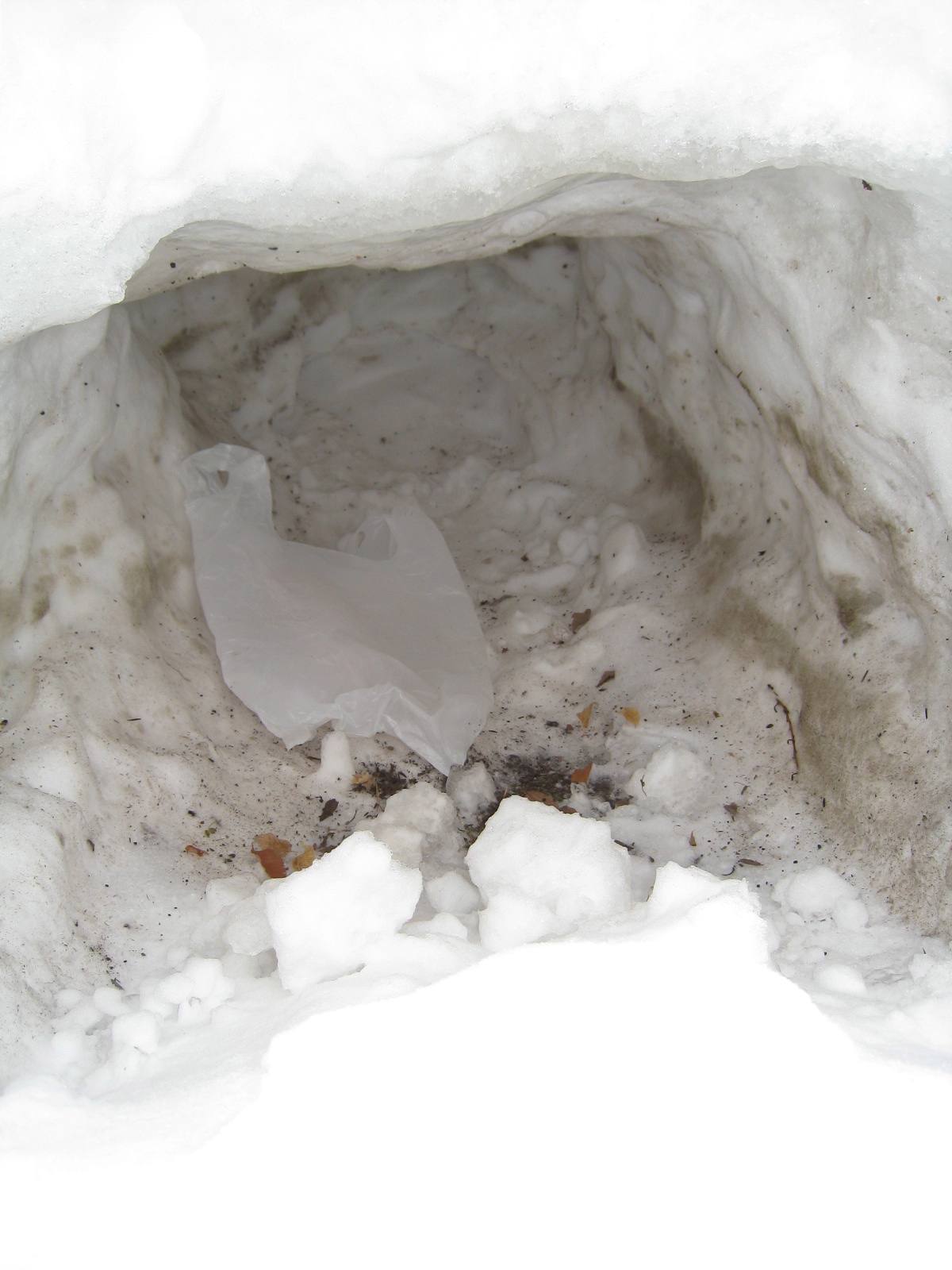
    Photos: This snow fort wasn’t built by neighborhood kids, but by a man with nowhere else to turn. In the parking lot of a church in Minneapolis, in the middle of a fierce Minnesota January, a man burrowed out a hole in a snowbank to sleep in.  

    Desperate times call for desperate measures.


    What Can You Do? Please take one day to tell legislators that 13,000 homeless each night is enough. 


    Let’s not make drastic budget cuts that put more children, more seniors, more veterans, more youth, more human beings on the streets. No more children huddled around exhaust vents to stay warm, no more students riding the city bus all night, no more families roaming the aisles of 24-hour stores, no more caves in city snowbanks, no more battered women hiding in ice houses, no more. 13,000 is already way too many.

    Minnesota Coalition for the Homeless Day on the Hill: 9 am to 2 pm, March 15, 2011, State Capitol, St Paul.

    To Register: Email your name, district # (if you know it), and address to [email protected].

    The Minnesota Coalition for the Homeless will schedule meetings with your legislators, help you find your way around the Capitol, provide talking points and handouts, and provided a legislative briefing to get you started. All you need to do is register today and bring your voice to the Capitol on March 15th.

  • Federal and State Cuts Threaten Community Action Programs

    Minnesota’s Community Action Programs (CAPs) provide important housing-related services such as energy assistance and weatherization to low-income families, among many other services, but both state and federal funding cuts threaten the vital services that these agencies provide.

    In 2010, Minnesota community action agencies served more than 616,000 people and nearly 222,000 poor or low-income families. Nearly 110,000 Minnesotans received housing related services through CAPs.

    State Woes
    Before the new budget forecast reduced the state’s budget deficit from $6 billion to $5 billion last week, Community Action Agencies had been slated for complete elimination of state funding in Dayton’s proposed budget. Fortunately, with the revised budget, Dayton reinstated the $7.8 million for the biennium in his proposal for the CAPs. This positive development notwithstanding, Republican proposals are likely to target the CAPs for state funding cuts.

    Federal Woes
    In February, the Obama Administration requested that funding for the Community Services Block Grant (CSBG), which funds Community Action, be cut in half compared to the FY 2010 level for regular funding. This $350 million federal reduction would result in a loss of $3.5 million to Minnesota. Meanwhile, House Republicans are also targeting the Community Services Block Grant for deep cuts.


    What does this all mean for Minnesota?

    The statewide network of 39 Community Action Agencies (CAAs) provide job training, energy assistance, weatherization, food shelves, Head Start, child care, emergency assistance and crisis nursery services to promote economic self-sufficiency to low-income families and individuals.

    • In 2010, Minnesota community action agencies served more than 616,000 people and nearly 222,000 poor or low-income families.
    • Community Action Agencies provide a range of housing-related services addressing needs from homelessness to home ownership including:  emergency homelessness assistance, transitional housing services, rental housing assistance, weatherization and audits, conservation services, energy related repairs, housing purchase grants and loans, home repair and rehabilitation services, administration of Small Cities Development Grants, Family Assets for Independence in Minnesota (FAIM), affordable housing development, and homeownership education.
    • In 2010, 107,437 Minnesotans received housing related services.
    • Without this funding thousands of low income households would not receive services and a complex array of local collaborations would be significantly disrupted–especially in Greater Minnesota.

    What can you do? 

    Please contact your federal and state representatives to encourage strong support of Community Action funding through the federal Community Services Block Grant (CSBG) or state Community Action Program grant.

    Contact the Minnesota Community Action Partnership to find out more about what CAPs do in Minnesota or to locate the CAP agency that serves your area.

  • An Advocate’s Success at the Capitol

    By Bill Reinke, Executive Director, Central Minnesota Housing Partnership

    I visited the capitol last week with Julie Johnson from Minnesota Housing Partnership to seek support from legislators for the state low-income housing tax credit proposal. I was pleasantly surprised by how responsive and knowledgeable of affordable housing the new members are. The conversations were definitely worthwhile; the legislators were all civil and friendly, if not always supportive of the issue at hand. They seemed willing to do what they could.

    Before the trip, Julie and I worked out a strategy on who to meet with. She stressed the idea of making a local district/constituent connection which gave me some focus and I thought additional credibility. I looked up all the Senators and Representatives in the counties where we work, using the state legislature’s web page, District Information.

    I went over district maps found on the web page and noted the housing Central Minnesota Housing Partnership has developed and is developing in their districts. There’s only so much time for visits in St. Paul, so I prioritized the members by whose districts have the most activity and relevant committee assignments.

    Some members we talked with by pulling them out of session. For others, I called their staff, and mentioned I would like to talk with them about affordable housing and the projects we worked on or are working on (with specific names and locations) in their district. If the members were in committee, some of the staff offered to take me to the committee to meet with them or to set up an appointment.

    During the meetings, I engaged members in conversation about our activity in their districts and explored what they wanted to know. The members seemed very interested in whether we were doing housing for the “elderly.” In most cases we were working on family projects, so I mentioned that seniors can live in those projects among the rest of the community, or talked about senior housing we had in their district. In one case the uncle of a member had donated a Rural Development property to us several years ago, which I didn’t realize until I mentioned the property to the member. In a couple of other cases, they already knew about a project we’re working on in their district.

    After discussing district projects, I talked about the state housing tax credit proposal. I pointed out that the environment for federal credits was competitive and a state program would allow for more projects, including ones we are working on or plan to work on in their district.

    I’m writing follow-up thank you letters with information about the specific projects and issues we talked about. I plan on including the MHP Legislative District Profiles on housing.

    As a result of Bill Reinke’s work, Senator Brown (16) cosponsored the state housing tax credit proposal. Thanks, Bill!

  • Your Voice Counts! Register for MN NAHRO Day at the Capitol, March 15

    Influence the Legislative Impact to Your Community, Services & Funding

    mnnahro banner

    Register for the 2011 Minnesota NAHRO Day at the Capitol.

    Join the Minnesota Chapter of the National Association of Housing and Redevelopment Officials (Minnesota NAHRO), and co-sponsors: League of Minnesota Cities, Metro Cities, EDAM, and Minnesota Housing Partnership, and get involved in the state legislative process.

    New Location, New Format, Don’t miss out! Click here to register.

  • House and Senate Propose Massive Cuts to Jobs and Economic Development

    {jcomments on}Late last week, the House and Senate Republicans released their proposed budget targets for each committee, and it is not pretty at all for housing funding. The damage to Jobs and Economic Development programs, which includes housing, is as follows.

    The Senate proposed a 41% cut from the last biennium (FY 10-11) for Jobs and Economic Growth, and in the House it was even worse, with a proposed 53% cut.

    Note that these figures do not specify how much should be cut from Minnesota Housing versus other programs, such as the Department of Employment and Economic Development, that get funding from the same committee. (Comparisons to the last biennium also exclude stimulus funds, which increased the amount in FY 10-11.)

    By contrast, the Governor proposed much more modest cuts to the Jobs and Economic Development programs overall, including about a 5% cut specified for Minnesota Housing, as compared to last biennium.

    So hold on to your hat, and GET READY to start making some noise about the importance of housing funding to you and your community. Whether you live in affordable housing, help develop housing, or are a concerned citizen, now is the time to think about why housing matters to you and to speak and write about it. Contact Julie at jjohnson(at)mhponline.org or 651-925-5548 if you’d like help making an appointment with your Senator or Representative, or support in writing a letter to the editor to your local paper.

  • Join MHP for a Mini “Day at the Capitol”

    Minnesota Housing Partnership is joining forces with other housing organizations to make sure a bonding bill that includes resources for affordable housing is a part of the final negotiations of the 2011 State Legislative Session. A bonding bill that includes housing will not only create jobs, but also create places people can afford to call home. 
     
    Why now? In the final weeks of session, a bonding bill will potentially take shape as a part of the final budget negotiations. Lawmakers need to hear from you how bonding for housing is a critical financing tool and a means for job creation.
     
    What can I do? Join us May 17th from 8:30 am until 12:00 pm for a mini “Day at the Capitol.” We will meet with lawmakers on key committees and advocate for a bonding bill that includes resources for housing.
     
    Our message? Bonding for housing generates jobs, preserves important community assets, is a great investment of state resources, and creates homes.
     
    How do I sign up? RSVP with your name and home address or state house district by email to [email protected]. More details to come and we hope to see you there.  You are an important voice for affordable housing and strong, viable communities. In these difficult times of seeming disproportionate budget cuts, your voice makes a difference.

    Cohosted by Metropolitan Consortium of Community Developers, Minnesota Community Land Trust Coalition, Minnesota Housing Partnership, MN NAHRO, Twin Cities Habitat for Humanity