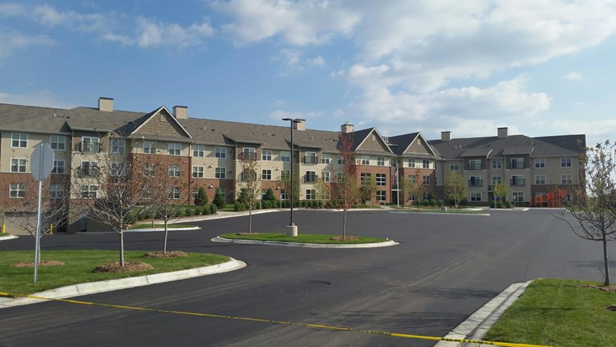
The record $162 million awarded for housing development last month by Minnesota Housing Finance Agency (MHFA) will touch thousands of Minnesota households, ensuring that housing is created and preserved for people who need a place to call home. As MHP reported in a recent post, for every dollar awarded there were almost two dollars’ worth of requests that were left unfunded.
Despite the historic nature of the award package, many households in need of housing that they can afford will not benefit from this round of funding. So it seems reasonable to ask: what might the award package have looked like if Congress found a way to fund the National Housing Trust Fund (NHTF)?
The National Low Income Housing Coalition (NLIHC) estimates that Minnesota would receive $77,500,000 for every $5 billion invested in the NHTF. The funds from this new, permanent affordable housing production program are meant to increase and preserve the supply of decent, safe affordable housing for extremely low- (ELI) and very low- (VLI) income households. Under the best case scenario, MHP estimates that Minnesota developers could have constructed and rehabbed an additional 836 multifamily units – without leveraging additional dollars.
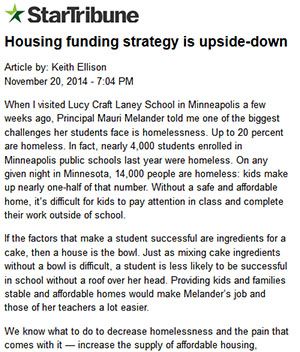
Unfortunately, the NHTF has remained unfunded since it was established by law in 2008. The law originally identified Fannie Mae and Freddie Mac as the sources of funding, but the entities were relieved of this obligation when they went under government conservatorship in 2008. Congress has yet to designate an alternate source of funding for the trust.
There are several ways that the NHTF could have been funded.
- Last year, Minnesota Congressman Keith Ellison introduced H.R. 1213, the Common Sense Housing Investment Act of 2013, as a solution to our nation’s housing crisis. H.R. 1213 proposes a reform to the mortgage interest deduction that would create almost $200 billion in government revenue over the next ten years, directing about $109 billion to the NHTF and $86 billion to other housing programs. If this bill passed, Minnesota would receive approximately $155 million annually from the NHTF.
- President Obama included $1 billion in funding for the NHTF his budget proposals for FY10, FY11, FY12, FY13 and FY14. However, Congress has yet to agree on a funding source. If Congress had found a way to generate $1 billion for the NHTF in FY14, Minnesota would have received $15.5 million.
- Had Fannie and Freddie been required to pay into the NHTF, the entities would have deposited an estimated $382 million into the trust fund by the end of 2012. MHFA could have awarded roughly $6 million more to developers and agencies across the state.
Any of these scenarios would have created or rehabbed additional housing, as the table below shows.
What funding the National Housing Trust Fund could produce in Minnesota in one year
Proposed Funding Source |
H.R. 1213 |
Fannie and Freddie |
President’s Budget |
Total Amount |
$155,000,000 | $5,921,000 | $15,500,000 |
Amount to be used for multifamily |
$124,000,000 | $4,736,800 | $12,400,000 |
Amount to be used for single-family |
$15,500,000 | $592,100 | $1,550,000 |
Amount to be used for administrative activities |
$15,500,000 | $592,000 | $1,550,000 |
New Multifamily construction (non LIHTC) |
322 units | 12 units | 32 units |
Multifamily rehab (non LIHTC) |
514 units | 20 units | 51 units |
Total Units Produced |
836 total | 32 units | 83 units |
|
* *According to National Housing Trust fund statute, 80% of funds must be used for the construction, preservation, rehabilitation and operation of multifamily units for ELI and VLI renters. Up to 10% of funds can be used for homeownership activities and administrative purposes, respectively. * *MHP calculations are based on average costs of multifamily new construction and rehab 2013 for projects funded by Minnesota Housing. Averages for multifamily new construction (without LIHTC/tax credit funding) are $202,842 in the Twin Cities metro and $183,501 in Greater MN. Multifamily rehab without LIHTC averages are $123,891 for the metro and $117,403 non-metro. Assumes 50% of housing in Greater MN. Numbers assume that tenants rents cover all operating costs. |
|||
If the Federal government could come together to fund the NHTF, Minnesota developers and agencies could have done even more to prevent and end homelessness, preserve housing stock and assist current and future homeowners. In addition to the money for the NHTF, H.R. 1213 would also direct money to the Low Income Housing Tax Credit (LIHTC) program, Section 8 and the Public Housing Capital Fund. Developers could rehab and build more affordable housing, public housing agencies could modernize properties, and more low-income families could receive scarce vouchers.
To learn more about funding the NHTF, contact Libby Murphy.
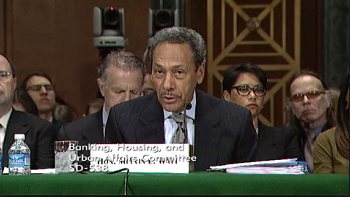 The announcement was a long-awaited victory for housing advocates across the country who labored for six years to secure NHTF funding after the fund was established. Immediately following Watt’s announcement, however, many legislators, especially Republicans in the House, were adamant in their disapproval of Director Watt’s decision. Several lawmakers vowed to take legislative action to revoke the decision.
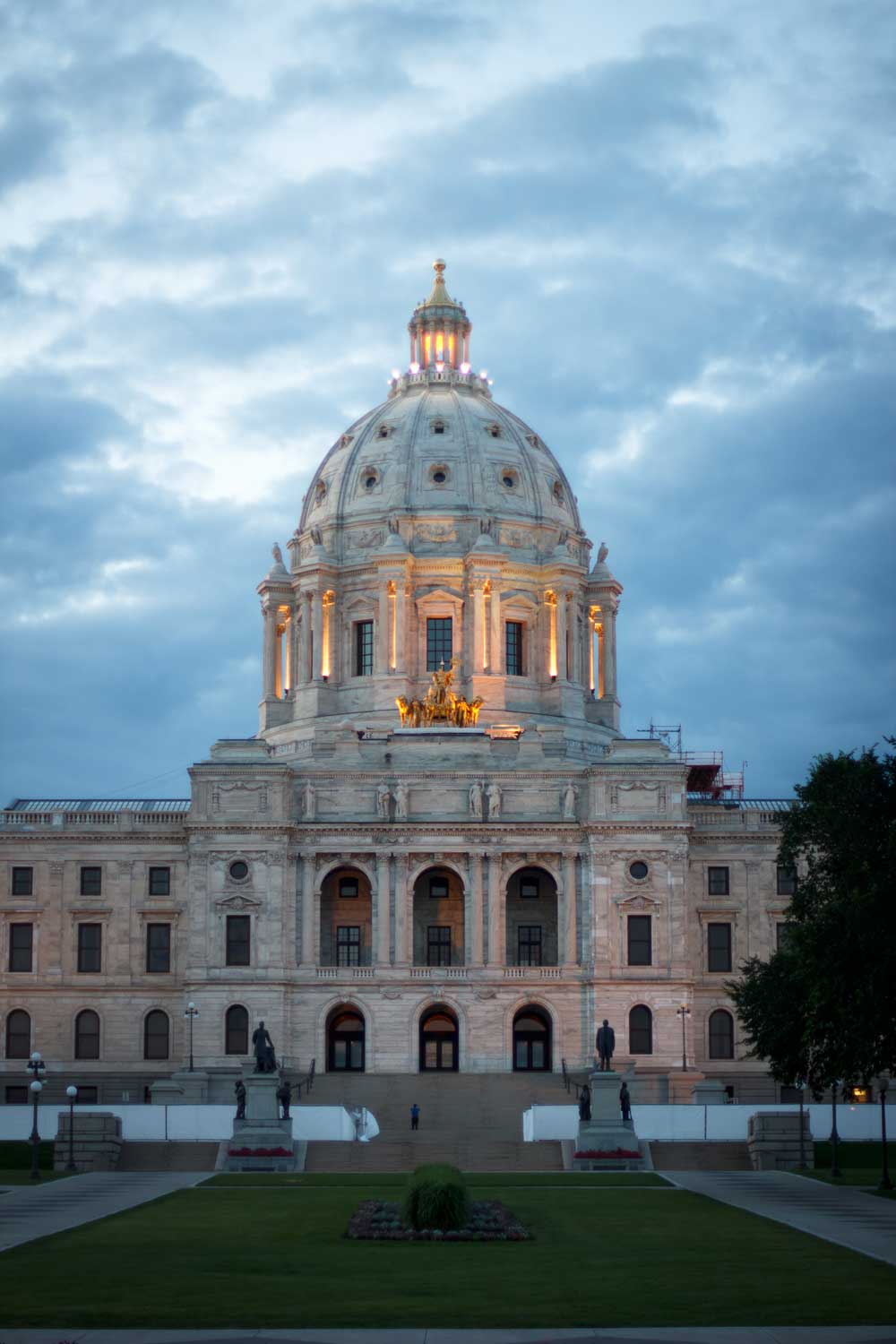 It’s been a busy legislative session at the state capitol, and MHP has been actively engaged. We have two main priorities this year: 1) the Homes for All proposal to increase funding for housing and services by $39 million for 2016-17 and 2) expanding workforce housing in Greater Minnesota in ways that are well-targeted, effective, and at a scale more consistent with the need. Read more about where things stand at the Capitol so far this session.

 The Senate Finance Committee, House Ways and Means Committee, Congressional and White House leadership are finalizing details on legislation that would extend dozens of expired tax provisions either temporarily or permanently before the December 11 deadline.
 Affirmatively Furthering Fair Housing | On July 8, HUD released the Final Rule on Affirmatively Furthering Fair Housing (AFFH). The rule provides recipients of HUD funding with guidelines and data to promote fair housing and ensure that everyone has the right to fair housing, regardless of their race, color, national origin, religion, sex, disability or familial status. According to HUD, the Final Rule “simplifies existing fair housing obligations and creates a streamlined Assessment of Fair Housing planning process.” Read more about HUD’s rule on AFFH and access a copy of the Final Rule
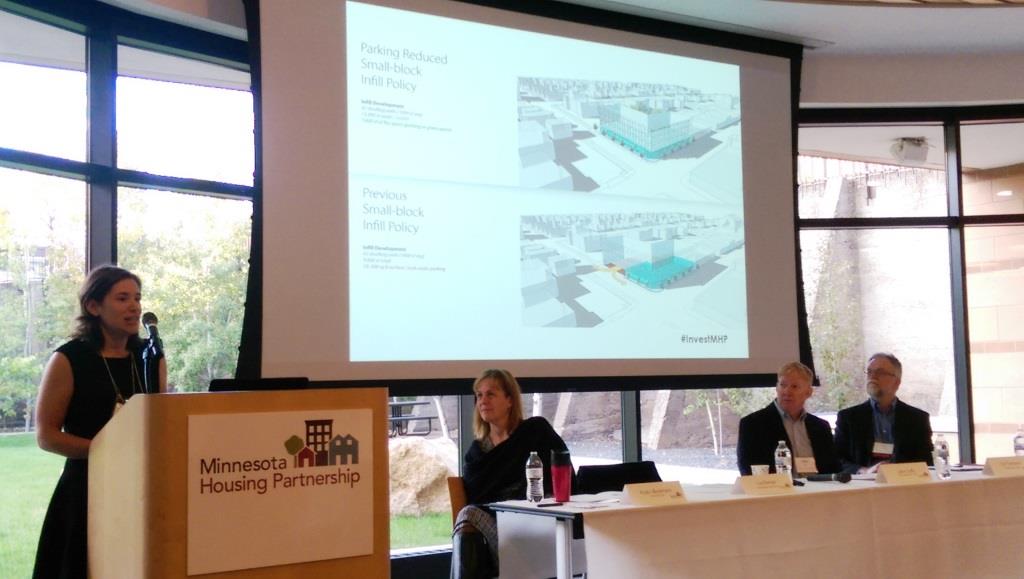 Advocates for affordable housing are well aware of the rising costs of multi-family housing development. City fees, parking requirements, utility hook ups and other expenses all contribute to driving up total development costs.