• Don’t Let Up Now: Advocate for Housing in the Infrastructure Bill

    Call to Action!

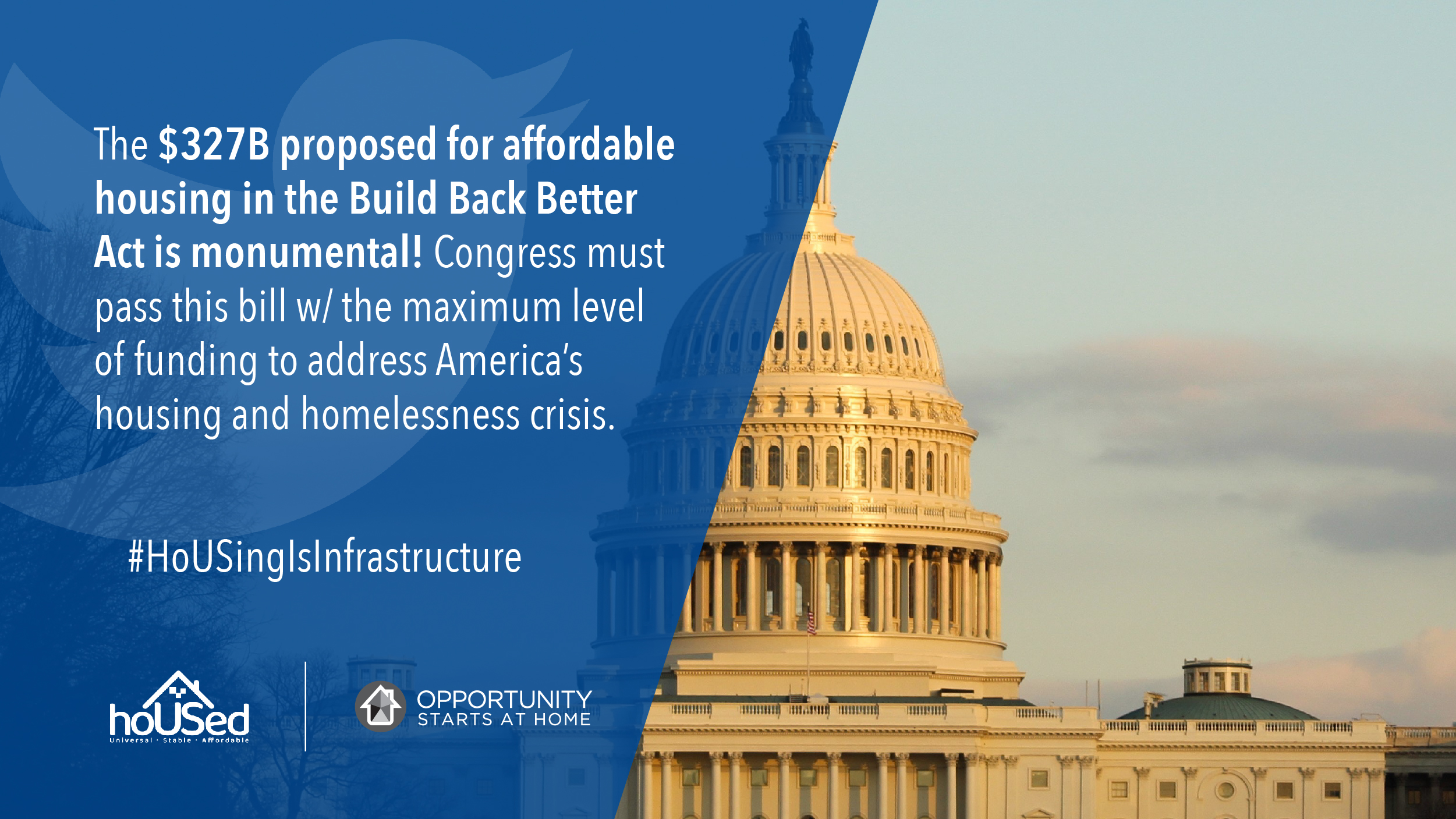
    House and Senate leaders are negotiating with moderate Democrats over the size of the “Build Back Better Act,” a $3.5 trillion comprehensive infrastructure and economic recovery package. It is critical that Congress use this once-in-a-generationopportunity to prioritize investing in decent, accessible, affordable housing for those with the greatest needs 

    What action can you take? Call your US Senators and Representatives! 


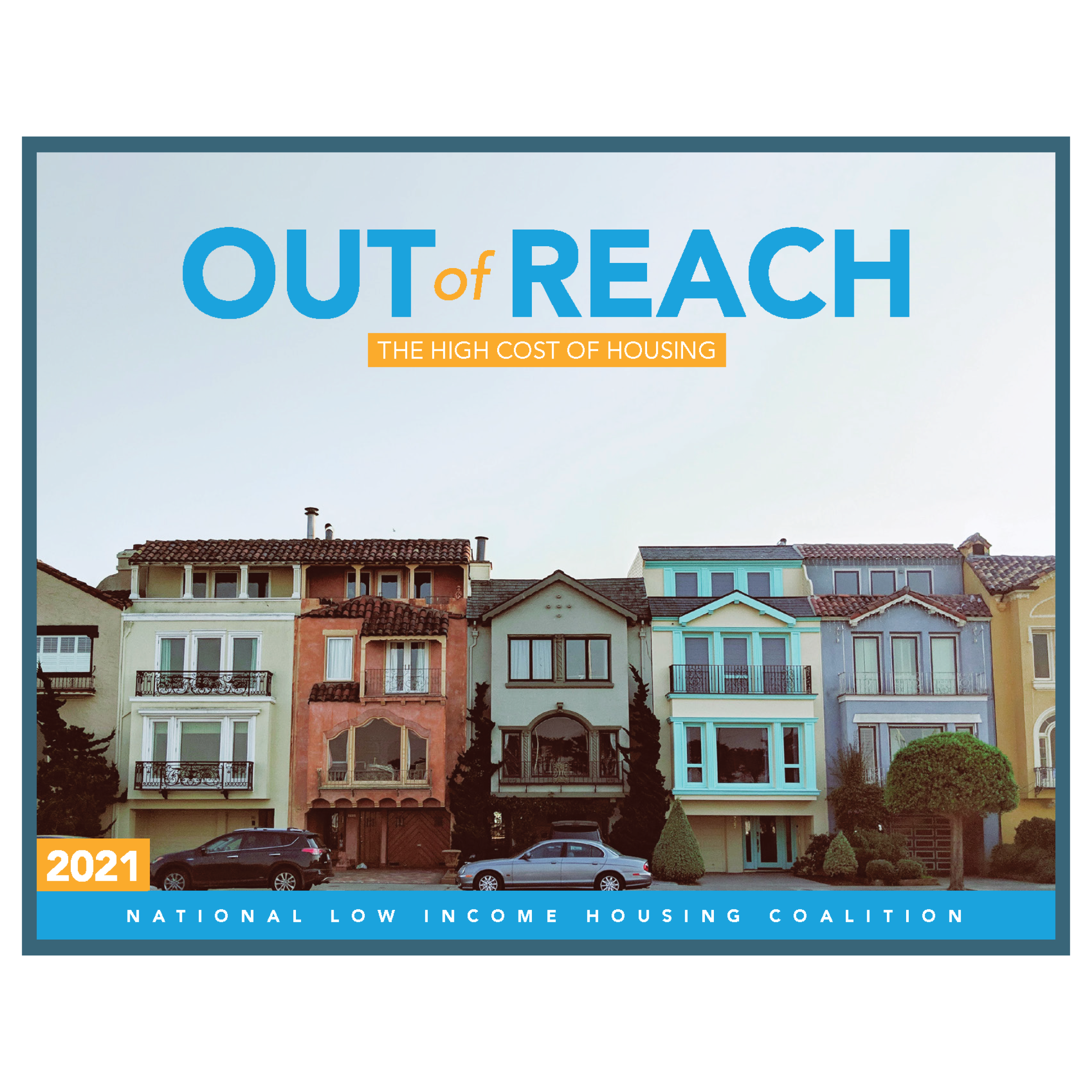
  • National Low Income Housing Coalition releases Out of Reach 2021

    National Low Income Housing Coalition releases Out of Reach 2021

    When families pay too much for rent, they’re forced to sacrifice to make ends meet — cutting back at the grocery store or delaying a trip to the doctor. Released last week, the National Low Income Housing Coalition’s Out of Reach 2021 report highlights state and county trends to reveal that households in every corner of Minnesota are spending thousands of dollars more than they can afford each year just to pay the rent for a modest apartment. Now more than ever, as evidenced by the rippling effects of the COVID-19 pandemic, housing security is central to overall health and well-being.

    The annual Out of Reach report by the National Low Income Housing Coalition provides rental affordability data for every state, metro area, and county in the US.

    Some Minnesota highlights from the 2021 report include:

    • The Fair Market Rent (FMR) for a two-bedroom apartment in Minnesota is $1,133. In order to afford this level of rent and utilities — without paying more than 30% of income on housing — a household must earn $3,775 monthly or $45,301 annually.
    • From 2020 to 2021, the amount a renter household needs to earn to afford a modest apartment (the state “housing wage”) increased by 6 percent.
    • The lowest income households — those earning 30 percent or less of area median income — can afford a modest one-bedroom apartment in only seventeen of Minnesota’s 87 counties.
    • Minnesota ranks #23 in the nation for the highest wages required to afford a modest two-bedroom apartment: The wage required to afford a modest two- bedroom apartment in Minnesota is the most expensive in the Midwest, including $3.89 higher than the Wisconsin housing wage, and $5.17 higher than North Dakota’s housing wage.  

    When rent is out of reach for those who are fully employed, our communities pay the price. We cannot afford to let housing costs continue to climb, while wages remain stagnant. Currently, nearly 30 percent of Minnesota residents — more than 620,700 households — live in a rental unit. 

    “HOUSING WAGE” — Wage necessary to afford a two-bedroom apartment

    • The housing wage represents what Minnesota workers need to earn to afford rent without paying more than 30 percent of their income on housing. In 2021, a Minnesotan would need to earn an annual income of $45,301 to afford a modest two-bedroom apartment. Yet, the median renter in Minnesota earns approximately $41,414 — or is short by $3,887 annually. With the housing wage at $21.78 per hour for a modest two-bedroom apartment and $17.40 for a modest one-bedroom apartment, rent is out of reach for workers in the majority of Minnesota counties. 
    • Compared to the state average of $21.78, the housing wage in non-metro areas is more than $7 less per hour at $14.59 for a two-bedroom apartment.
    • The highest housing wage in the state is located in the counties within the greater Minneapolis 5/ St. Paul metro area, at $25.15 per hour — or earning an annual salary of $52,320 — to afford a modest two-bedroom apartment.

    Rent affordable to median-income renter

    • For the median-income renter household in Minnesota, an affordable rent — one that does not exceed 30 percent of a household’s monthly income — is $1,035 per month.
    • Median-income renters in Washington County can afford the highest rent in the state at $1,297 per month. 
    • Median-income renters in Itasca County can only afford $595 per month, the lowest level in the state. 
    • In contrast to the $1,035 affordable to the median-income renter at the statewide level, the median-income renter household in non-metro Minnesota can afford far less — just $799 per month. 

    What lowest income Minnesotans can afford (30% AMI)

    • The lowest income households in Minnesota can afford just $704 per month in rent. Statewide, there is a $201 monthly gap between what a household at 30 percent of area median income earns and what would be required to pay for a modest one-bedroom apartment. Even efficiencies are out of reach; a household earning 30 percent of AMI would need to earn $936 more per year to afford a modest zero-bedroom apartment.
    • An individual earning 30 percent of area median income can afford a modest one-bedroom apartment in only seventeen of Minnesota’s 87 counties.
    • Rent for a one-bedroom apartment is too expensive for a household earning 30 percent of the area median income in all of the major metro areas in the state. The Minneapolis / St. Paul metro area contains the highest gap between fair market rent and what households earning under 30 percent of AMI can afford; these households would need to earn approximately $3,204 more per year to afford fair market rent. 

    Hours at minimum wage to afford 1 bedroom apartment

    • A minimum wage earner in Minnesota must work more than 43 hours a week in every county in the state to be able to afford rent for a one-bedroom apartment. Statewide, a one-bedroom apartment costs $381 more per month, or $4,572 annually, than a minimum wage earner can afford.
    • In non-metro areas, minimum wage workers must work 45 hours per week to afford a modest one-bedroom apartment, and 58 hours per week for a two-bedroom. 
    • Minimum wage workers in the Twin Cities metropolitan area must work 80 hours per week to afford a modest one-bedroom apartment and 100 hours per week for a two-bedroom — the highest number of hours for major metropolitan areas in the state. This represents an increase in an additional 5-7 hours per week needed from just last year.

    _____________________________________________________

    Out of Reach data is available for every county and metro area in the country. Click here to see how Minnesota counties compare with each other.

  • MHP announces 2021 Legislative Leaders!

    MHP is proud to recognize these champions with the 2021 Legislative Leader Award. These legislators stood out as housing champions, by advancing MHP’s policy initiatives and drawing attention to affordable housing as an issue of public importance, delivering persuasive arguments and taking action for impactful policies and investments. All of our awardees demonstrated a deep resolve to make a difference for Minnesotans. 

    MHP 2021 Legislative Leaders  

    Senator Carla Nelson (R-26, Rochester) 

    As Chief Author of the Affordable Housing Tax Credit, Sen. Carla Nelson played an integral role in establishing and investing in a historic, new program. The tax credit is the largest new investment to a development program in over a decade.  Sen. Nelson went above and beyond to build momentum and support among legislator colleagues. In committee she developed a thoughtful and persuasive argument for establishing a mechanism to support public-private partnerships to support housing development. Her leadership in the Legislature and her willingness to engage with MHP and MHP’s stakeholders displayed a desire to take action to solve affordable housing challenges. Sen. Nelson’s partnership with MHP over the last four years on the Affordable Housing Tax Credit was a long-term, consistent contribution to preserving and expanding resources that lead to safe, stable and affordable housing. 

    Representative Kaohly Vang Her (DFL-64A, St. Paul) 

    Throughout the 2021 Legislative Session Representative Kaohly Her supported bills and positions that were consistent with MHP’s policy agenda. As Chief Author of the Source of Income Protections bill she helped promote equity in housing policy solutions. She developed a thoughtful and persuasive argument to shape the public narrative around the importance of protecting prospective renter households from discrimination. In carrying this important piece of legislation, she exposed issues and educated legislator colleagues. Throughout session, Rep. Her worked closely with MHP and MHP’s partners to strategize and build momentum for affordable housing solutions. In the Housing, Judiciary, and Taxes Committees she consistently spoke up in support of resources and policies that lead to safe, stable and affordable housing. Representative Her also chief authored the base rate increase to Housing Supports, which was passed into law this year.  

    MHP 2021 Legislative Rising Star 

    Representative Esther Agbaje (DFL-59B, Minneapolis) 

    Representative Agbaje championed efforts to prevent displacement and preserve home by chief authoring legislation to fund the acquisition and rehabilitation of Naturally Occurring Affordable Housing (NOAH). Throughout session, Rep. Agbaje used her position on the Housing, Capital Investments, and Taxes Committees to advance policies and funding that support lowest-income households. Her public questions, comments, and testimony advanced housing issues and persuaded lawmakers colleagues. Rep. Agbaje was committed to working with community partners and advocates, including MHP.  

  • MHP Thanks Capitol Pathways Intern Hibo Ali

    MHP would like to thank our 2021 Capitol Pathways intern, Hibo Ali! Hibo was a great addition to our policy team during this legislative session. She attended committee hearings, connected with legislators, and contributed to MHP’s newsletter, all while providing research and analysis on source of income discrimination in Minnesota. 

    This is the second year that MHP has hosted a Capitol Pathways intern, a program of the Citizen’s League. Thank you, Hibo, for all of your hard work. We can’t wait to see what’s next for you! Read more about Hibo’s experience at MHP.

    Reflections by Hibo Ali, MHP’s Capitol Pathways intern for 2021:

    While interning with MHP this legislative session, I had the wonderful opportunity to get hands-on learning in the policy space. While housing has been a policy interest of mine for a while, I’m incredibly glad I was placed with MHP through the Capitol Pathways Program in order to better familiarize myself with housing in Minnesota. Prior to my internship, I wasn’t that familiar with the legislative process in Minnesota. Being able to attend meetings with lawmakers and community leaders has allowed me to gain knowledge about the policy world that I wouldn’t be able to get from my political science coursework.

    A few highlights of my internship experience include writing reports on MHP’s biweekly legislative calls for MHP Connect, attending and speaking at lobbying meetings, and conducting informational interviews. My most notable experience was researching and reporting my findings on source of income discrimination in Minnesota. This report in the form of a policy memorandum was the culmination of 3 months of research. Presenting my findings to the policy team during my last week here was a great way to end my internship experience.

    The opportunities I was given to develop my writing and speaking abilities through these various methods will undoubtedly help me in the future. This internship was an invaluable learning experience for me because it gave me a huge amount of independence as well as responsibility. I’m confident that my overall internship experience will help prepare me for the working world once I graduate. Thank you, MHP!

  • MHP hosts the Market Watch: Northland Region Webinar

    On Friday, June 25th MHP hosted a webinar on our latest edition of MHP’s research series, Market Watch: Northland Region. The report tracks key trends in the unsubsidized multifamily rental markets across the state. The seventh report of the series, Market Watch: Northland Region, analyzes data for 6,449 unsubsidized rental units in properties with four or more units in Minnesota’s Northland Region. 

    Date: Jun. 25, 2021
    Guests: 
    Gabriela Norton of MHP, Daryl Olson of the American Indian Community Housing Organization (AICHO), Pam Kramer of LISC Duluth and Isaac Meyer of KOOTASCA Community Action
    Summary: 
    The webinar featured an overview of Northland NOAH data and findings by report author Gabriela Norton, MHP’s Research Manager, and a community perspectives panel of housing advocates from the Northland/Arrowhead region featuring Daryl Olson of the American Indian Community Housing Organization (AICHO), Pam Kramer of LISC Duluth and Isaac Meyer of KOOTASCA Community Action. Learn more about the panelists.

    Presentation slides (PDF): here, Recording: here, Meeting chat (PDF): here

  • Still time to influence the MN tax bill! Take Action now!

    The tax bill is still being negotiated by State legislative leaders. Two of MHP’s top housing priorities are in play. But they need a strong show of support. Please email Tax Conference Committee Co-Chairs Paul Marquart (DFL, Dilworth) and Carla Nelson (Republican, Rochester).  

    What’s in play:  

    • 4d property tax relief for affordable housing providers  
    • The Housing Tax Credit for new development and preservation for single and multi-family homes. 

    Suggested language for your email or phone communications:  

    ###

    There is not enough affordable and workforce housing of any type, meaning not all Minnesotans have access to safe, stable, and affordable housing or opportunities to build wealth. The Housing Tax Credit provides flexibility: it can work in communities of all sizes and support a variety of housing development and preservation. The Housing Tax Credit promotes public-private partnerships: it is easy for individuals and business to support affordable and workforce housing. Please support the Housing Tax Credit.

    Housing providers need tax relief now. Modifications to the 4d tax classification will ensure that housing providers can support their residents by freeing up more funds to keep rents affordable and maintain safe and healthy homes. Please support modifying the 4d tax classification.  

    Thank you, 

    [your name; org (if applicable); address; contact 

    ### 

    Send your emails to:  

    If you have an additional moment, please also email Speaker Hortman and Majority Leader Gazelka: 

  • Community Partners in Lanesboro Work On Housing Solutions, with Help from MHP’s Housing Institute

    Community Partners in Lanesboro Work On Housing Solutions, with Help from MHP’s Housing Institute
    Through its participation in MHP’s Housing Institute, Lanesboro partners are working to address the area’s severe lack of available housing and create solutions. Established in 2010, MHPs Housing Institute brings together housing leaders and stakeholders to share their experiences, learn best practices, and develop creative solutions to bring quality affordable housing to their communities.
    MHP’s Seventh Round of the Housing Institute, which was launched during the COVID-19 pandemic, is the first entirely virtual institute. To ensure community teams from Preston, Lanesboro, Fairmont, Owatonna, and Lewiston Minnesota could participate and advance their community initiatives, MHP moved all institute networking, training exercises and development goals to an online platform. While an all-virtual environment has had challenges, each team has shared both continued commitment and a lot of needs around housing goals that the Housing Institute continued to support.
    Individual teams, such as Lanesboro, are looking at potential projects, land availability and local funding sources to use in development. Resources provided through the Housing Institute have included a workshop on how best to build a consistent message to different audiences, convening a regional advisory committee comprised of state and rural housing funders as well as developers and local economic development practitioners, and a presentation on local government financial tools that can be used to increase affordable housing in rural communities.
    The Lanesboro team, which includes; Desiree Borth-Ferrie, Jeff Brogle, Philip Dybing, Ben Gorman, Eliza Mitchell, Michele Peterson, Elliot Riggott, Matt Schultz, Wyatt Seablom and Cathy Enerson, have documented their efforts to date through photos and this blog post.

    What is home? By Ben Gorman – Thursday, 20 May 2021

    It’s a big question. Is home a building or a community? Is it found in the emotional landscape or the built environment? For some, the answer only arises from a complex interplay among emotional and practical considerations; for others, the answer is quite simple: “Home is where you hang your hat.” For too many, there is no answer, or the answer is unknown. Those of us fortunate enough to have a place we call home would do well to reflect on what constitutes our sense of home, what makes it real for us.

    Members of the Lanesboro Burro Borough, brought together by the Minnesota Housing Partnership, may, individually, have different definitions of home, but we all agree that home is a vital part of our well-being and recognize that everyone should have a place to call home. We also agree that in Lanesboro we have a place which, for us, is worthy to call home, a place where we can thrive—and where we hope others can thrive as well: neighbors old and new that we hope to call friends.

    Our collective love and respect for Lanesboro, and our interest in this community’s future, led us to engage the Minnesota Housing Partnership program and embark on the 18-month journey to identify and engage opportunities to improve our housing stock and help existing and prospective residents find places here to call home.

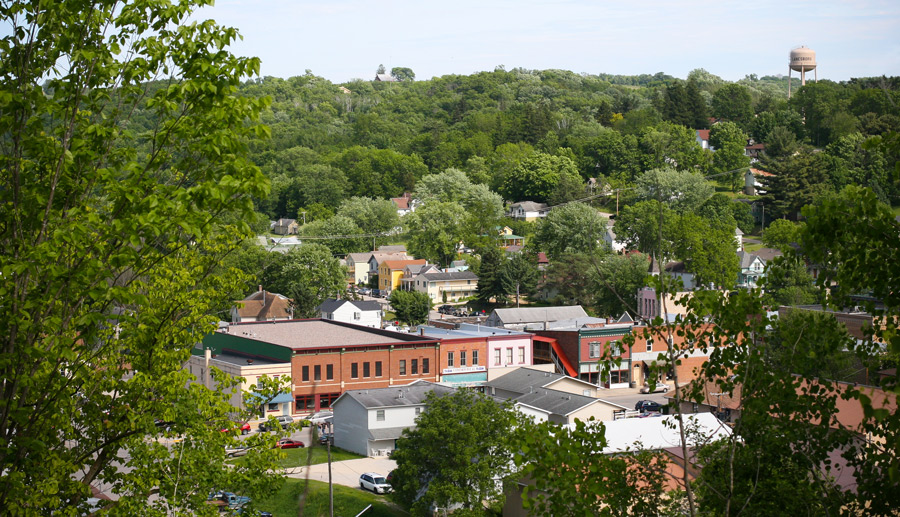
    Lanesboro, Minnesota, in Fillmore County, as seen on the approach descending the hill on Route 8.

    So far, it has been a journey of learning and growth and discovery—with a few surprises along the way, like all the best journeys have! Inventorying the positive aspects our little hometown was the easy part; we readily recognize the features and quirks that drew us here and keep us here—we even agree on most of them! But identifying the barriers and helping to create a shared vision of how to facilitate an expansion of high quality, affordable and equitable housing in Lanesboro took a little more creative thinking. Fortunately, with the help of experienced and creative minds like Cathy Enerson of Community and Economic Development Associates and Warren Kramer of Minnesota Housing Partnership—indeed, with the whole talented team at MHP in our corner—we are working on defining our challenges and setting goals to overcome them.

    What we’ve learned in the process will help us to build a better Lanesboro community, not just—our primary goal—by adding suitable housing stock to our local market, but by understanding the needs and challenges we face as residents, as neighbors, as contributors to the local community. We all believe in our little ’boro—with its population of proud Burros!—and we want to see it thrive well into the future.

  • MHP releases Market Watch: Northland Region

    MHP is pleased to share our recently released report, Market Watch: Northland Region. In this research report, MHP, in partnership with Greater Minnesota Housing Fund, tracks key trends in the unsubsidized multi-family rental markets of the Northland (Arrowhead) Region.

    Building on its 2016 “Sold Out” report, MHP launched a new research series, Market Watch, tracking key trends in the unsubsidized multifamily rental markets across the state. Market Watch: Northland Region, the seventh report of the series, analyzes data for 6,449 unsubsidized rental units in properties with four or more units in the Northland Region from the CoStar database.

    “The City of Duluth has made affordable housing a top priority for quite some time,” said Duluth Mayor Emily Larson. “The Northland Market Watch report provides an important and timely update regarding housing needs in Duluth and northern Minnesota. The City continues to find ways to create new affordable housing units and to seek innovation in housing development so that everyone has an affordable and safe place to call home.”

    Daryl Olson, Director of Programming at American Indian Community Housing Organization (AICHO), who contributed to the report, says, “There is a lack of affordable housing here, even before the housing crisis from the pandemic. There is not enough housing, much less affordable housing. We’ve had barriers to accessing housing that are now compounded, heightened by the pandemic.”

    “This is a well-researched and instructive report that documents that Duluth’s NOAH housing stock is largely older, has fewer units, is more affordable, and is in greater need of major repair, preservation or replacement than many of the NOAH properties throughout Minnesota,” according to Pam Kramer, Executive Director of LISC Duluth. She continues, “It also highlights the need to both upgrade and preserve affordability of NOAH units, as well as increase employment opportunities and income supports especially for cost-burdened renter households. MHP’s report will be a helpful resource as we pursue shared strategies and increased funding to preserve and  develop much needed quality, affordable housing. “

    Market Watch: Northland Region’s key findings include:

    • Though the Northland region spans seven counties, NOAH Properties are largely clustered in Duluth and parts of the Iron Range.
    • Vacancies have dropped in eight out of ten cities with the most NOAH, thus constricting supply of available affordable rental homes.
    • Multifamily, market rate homes in the Northland region are some of the oldest in the state, with over one third older than 100 years. Aging housing is more vulnerable to repair concerns and may need significant reinvestment to be maintained as healthy, safe homes.
    • Renter income is lower than the state average in every county in the Northland.
    • Market-rate new construction in the region has been consistently minimal in the past twenty years further compounding access to affordable housing.

    The full report can be accessed at mhponline.org/publications.

  • MHP Executive Director named to NLIHC board

    MHP Executive Director Anne Mavity has been named to the National Low Income Housing Coalition (NLIHC) Board of Directors. 

    “NLIHC is doing impactful and critically needed policy advocacy and research, and I’m honored to join the NLIHC Board,” Mavity said. “This is a critical time of opportunity, when the spotlight is on housing and how essential it is that everyone has a home to maintain health, educate their children, keep our elders safe. NLIHC is well-positioned to offer concrete solutions to address these long-standing challenges in ensuring everyone has a home.”

    Here’s NLIHC’s full press release on the new board member appointments:

    NLIHC Announces Four New Board Members: Staci Berger, Colleen Echohawk, Anne Mavity and Sharon Vogel

    WASHINGTON, DC– The National Low Income Coalition (NLIHC) announces the appointment of four new members to the NLIHC Board of Directors: Housing and Community Development Network of New Jersey President and CEO Staci Berger; Chief Seattle Club Executive Director Colleen Echohawk; Minnesota Housing Partnership Executive Director Anne Mavity; and Cheyenne River Housing Authority Executive Director Sharon Vogel.

    Staci Berger has served as president and CEO of Housing and Community Development Network of New Jersey, an NLIHC state partner, since 2013. Ms. Berger directs this statewide association of over 270 community-based organizations and individuals, created in 1989 to enhance the efforts of these groups to create affordable housing and revitalize their communities, and to improve the climate for community development in New Jersey. “The last year has presented incredible challenges for the community development sector and the people and communities we serve,” said Ms. Berger. “NLIHC has been an invaluable partner and ally in promoting policies that keep the most vulnerable individuals healthy and safe in a home they can afford all across the nation. NLIHC has been an incomparable resource and incredible partner in our efforts to make NJ a place everyone can afford to call home. It is an honor and privilege to serve on the NLIHC Board of Directors.”

    Colleen Echohawk is citizen of the Pawnee Nation and is the executive director of the Chief Seattle Club, a Native-led organization in Seattle providing services and housing to Indigenous people experiencing homeless. She is also the founder of the National Coalition to End Urban Indigenous Homelessness. Recognizing a lack of equity in housing design and development, and the profound impact it has on the well-being of people of color, Ms. Echohawk began advocating for equitable low-income housing development and indigenous-led design. “I’m honored to be serving as a board member for NLIHC,” said Ms. Echohawk. “I believe my experience serving the Indigenous community will be of great importance as we advocate for affordable, equitable housing for all communities.”  

    Anne Mavity joined the Minnesota Housing Partnership, an NLIHC state partner, as its executive director in 2017. Ms. Mavity has over thirty years of experience in advancing and creating affordable housing, capacity building and community development. She has worked on a congressional subcommittee on housing, provided technical assistance and underwriting at CSH creating permanent supportive housing policies and projects, and led affordable housing development and organizing for Beacon Interfaith Housing Collaborative. “NLIHC is doing impactful and critically needed policy advocacy and research, and I’m honored to join the NLIHC Board,” said Ms. Mavity. “This is a critical time of opportunity, when the spotlight is on housing and how essential it is that everyone has a home to maintain health, educate their children, keep our elders safe. NLIHC is well-positioned to offer concrete solutions to address these long-standing challenges in ensuring everyone has a home.”

    Sharon Vogel is the executive director of the Cheyenne River Housing Authority on the Cheyenne River Sioux Reservation.  Home to the Cheyenne River Sioux Tribe, the Reservation is located in north-central South Dakota. Mrs. Vogel has dedicated her professional career to working with and for tribal members, many of whom were and continue to be disenfranchised families. Beginning her career in tribal government services, she has worked for the last nineteen years in the Indian Housing field. Mrs. Vogel is a recognized leader in Indian Housing on the regional and national levels. “I am honored to serve on the NLIHC Board of Directors,” said Ms. Vogel. “I am looking forward to working with this amazing group of individuals who are committed to providing safe and affordable housing opportunities for families throughout this country. I have followed the work of the NLIHC for the past ten years and have been so impressed with their inclusive leadership. I appreciate their commitment to diversity and collaborative efforts to advance shared goals of our membership.”

    “I am so pleased to welcome Staci, Colleen, Ann, and Sharon to the NLIHC Board,” said NLIHC President and CEO Diane Yentel. “Each brings invaluable perspectives and years of leadership and experience advocating for affordable and decent homes for those with the lowest incomes. Their exceptional leadership builds on the outstanding expertise of those already serving on the NLIHC Board. I look forward to working with them and the rest of NLIHC’s Board leaders in continuing to advance socially just policies to ensure decent, safe, accessible, and affordable homes for those with the greatest needs.”
  • Omnibus bills come into shape: Here’s what’s in them for housing

    Omnibus, omnibus! With the third deadline looming April 9 for committees to act favorably on major appropriation and finance bills, many omnibus bills have passed out of committees this week, with more to come. An omnibus bill packages several smaller bills into one bill; it can include appropriations and policy items. Each committee will need to stay within the budget target that has been set by leadership. MHP session priorities remain in play, including funding for NOAH properties, 4d property tax enhancements, source of income protections, Local Housing Trust Fund state match, and more. See MHP’s list of policy priorities here.

    • House Housing Finance and Policy committee approved its bill on party lines on April 7, with appropriations increases totaling $30 million. An overview from Session Daily is here; a spreadsheet showing bill impacts is here. Some highlights include:
      • $6.5 million for the preservation and rehabilitation of inexpensive multiunit rental housing that does not receive federal subsidies (NOAH properties);
      • $3 million in grants for local housing trust funds, out of which local governments award grants for housing development, rental assistance and more;
      • Policy creating an opportunity to purchase for residents of manufactured home parks;
      • Eviction reform policy, including changes to the eviction expungement process.
      • Ensuring Tribes are eligible recipients of capacity building grants.
    • Senate Housing Finance and Policy has revealed its bill with plans for a vote on April 8. A spreadsheet for SF969 is here, and summary is here. Highlights include:
      • $3.2 million for the workforce homeownership program;
      • $1.5 million for manufactured home park infrastructure grants;
      • ($2.0 million) reduction to the Challenge program;
      • Inclusion of an evictions moratorium phaseout.
    • House Taxes: The House Taxes Committee will likely see a vote on Thursday April 8. An overview of the bill’s highlights is here. Housing specific provisions include:
      • appropriates $15 million annually from the proceeds of the mortgage registry and deed taxes to the commissioner of the Minnesota Housing Finance Agency for transfer into the workforce and affordable homeownership development account;
      • a new homelessness prevention fund would provide $25 million in annual aid to counties beginning in fiscal year 2023;
      • requires the commissioner of revenue, in consultation with Minnesota Housing, to produce a report on class 4d property and on local 4d affordable housing programs, including an analysis of the impact of reducing the classification rate of the first-tier of 4d property to 0.25 percent, by January 15, 2022;
      • Provides special tax increment financing authority to the cities of Fridley, Minnetonka, Richfield, and St Louis Park for affordable housing purposes; for Minnetonka, Richfield, and St Louis Park authority includes the transfer of some portion of increment generated from districts to each city’s affordable housing trust fund;
      • Increases to the renter’s credit, including increase to the maximum credit and increasing the income cap to $64,300 (by $3,000).
    • House Judiciary, Finance and Civil law: The House Judiciary Committee approved its omnibus bill which included source of income protections, protecting renters from discrimination based on paying the rent with rental assistance.