• National Partnership Spotlight: Creating a Path Forward for New Homes in Marianna, Florida

    This spring, MHP returned to Marianna, Florida to support Chipola Habitat for Humanity as it moves from vision to implementation on a new 9-acre housing development.

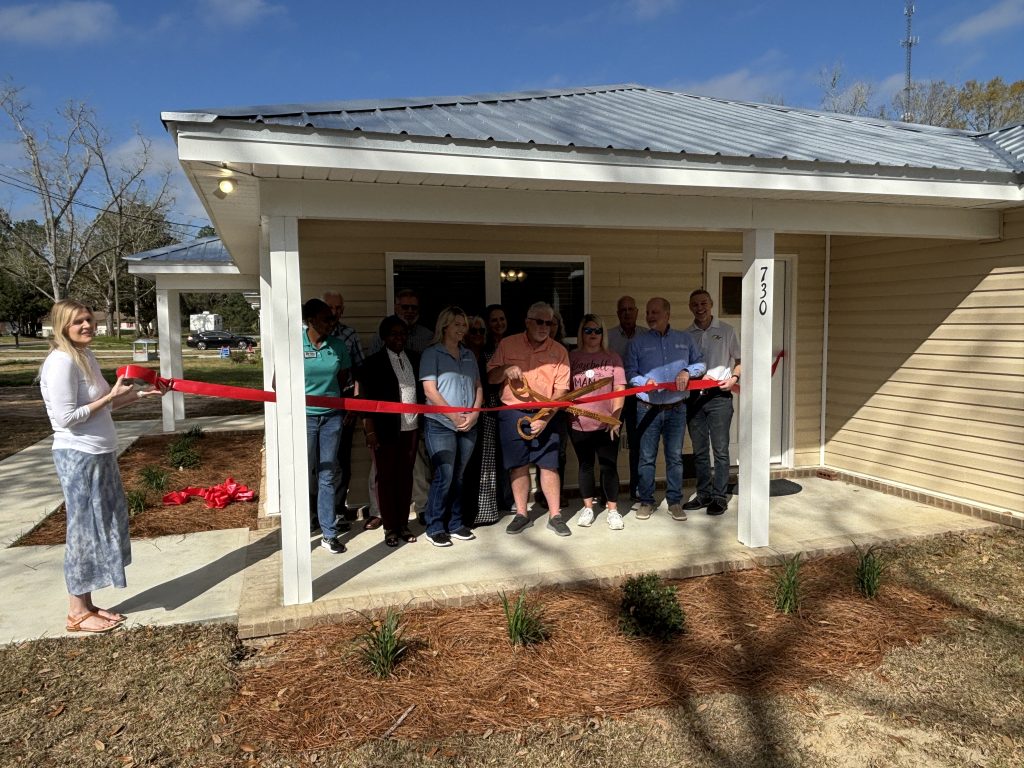
    Ribbon-cutting at a habitat for humanity house

    Through this Rural Capacity Building engagement, MHP worked alongside local leaders, including the city manager, county administrator, potential development partners, and a local engineering firm, to help build the partnerships and coordination needed to move the project forward. MHP also facilitated a board training and led a discussion about the development process, helping the organization prepare for the next phase of work.

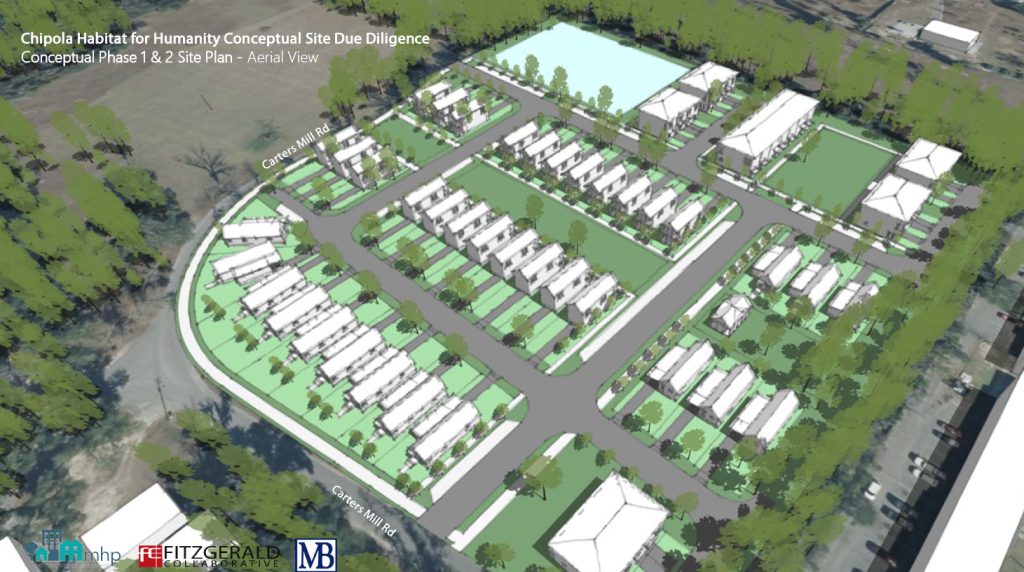
    Earlier in the project, MHP supported a master planning process led by a Black-owned architecture firm in Tallahassee. The resulting plan envisions 59 new homes with a mix of price points, incomes, ownership opportunities, and rental homes.

    Just as importantly, local leaders see the development as an opportunity to strengthen connections across the community, creating a bridge between neighboring Black and white neighborhoods in Marianna.

    By the end of the visit, Chipola Habitat for Humanity had more than a plan on paper. The organization left with stronger local partnerships, a clearer path through the development process, and the tools needed to move this vision toward reality.

    As one local leader reflected, “The engine runs based on partnership.” Another shared:

    “It’s always a privilege to work with a partner like MHP. Because of your work across the country, there are people and resources we know now that we never would have connected with otherwise.”

    Chipola Area Habitat for Humanity site rendering
  • National Partnership Spotlight: Expanding Aging-in-Place Repairs in North Carolina

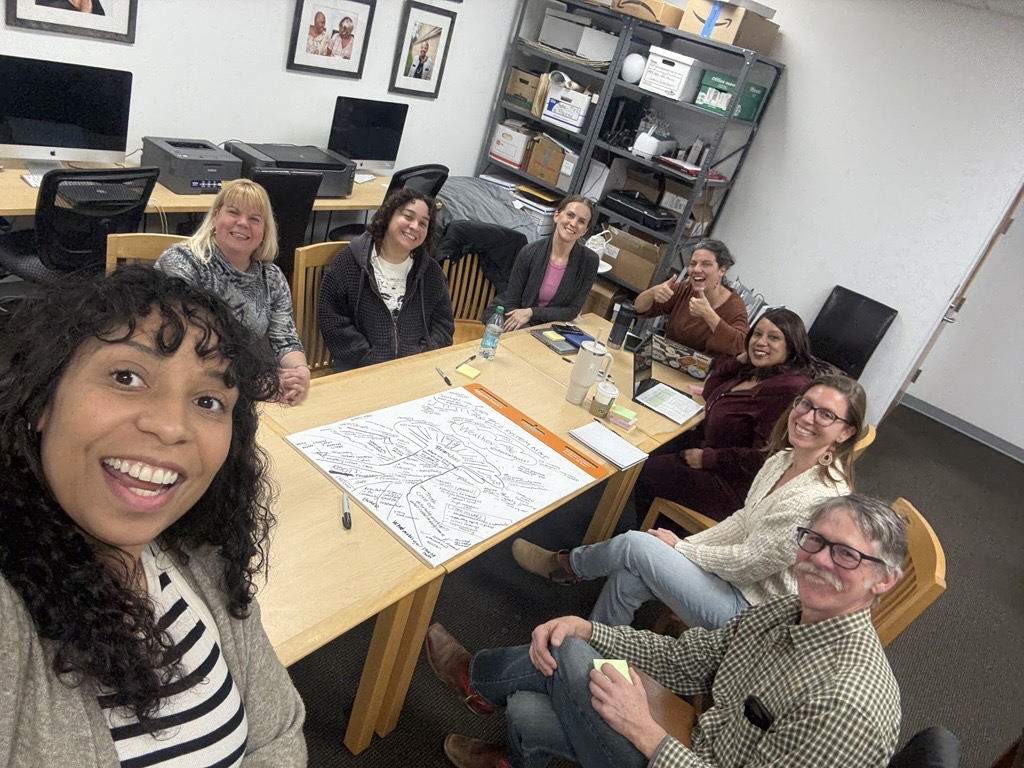
    Coworkers in an office with one coworker holding phone in a selfie style

    For many older adults, staying in the home they already have is the key to stability, health, and independence. But small repair needs can become major barriers — especially in rural communities where repair services and resources are harder to access.

    MHP is working alongside Hope Renovations, a North Carolina nonprofit that helps older adults remain safely in their homes through critical repairs and accessibility improvements. Their aging-in-place work focuses on low-cost, high-impact repairs that make homes safer while preserving existing housing that remains affordable to the community.

    Through MHP’s support, Hope Renovations is strengthening its program capacity and expanding its reach into surrounding rural areas, allowing the organization to serve more homeowners and complete more repair projects. This work helps prevent displacement, protects existing housing, and ensures that older adults can continue living in the communities they call home.

    Hope Renovations also pairs repair projects with hands-on construction training that expands opportunities in the skilled trades for people who have been underrepresented in the field. This model both increases the organization’s repair capacity and helps build the workforce needed to support housing stability in the future.

    By combining housing preservation, workforce development, and expanded geographic reach, this partnership is helping more households stay safe in their homes while strengthening communities across the region.

  • The Edge Groundbreaking Event, Thief River Falls

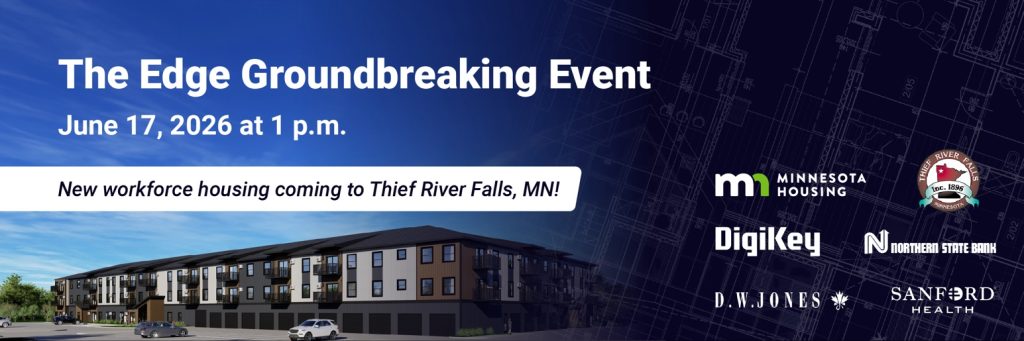
    The Edge Groundbreaking Ceremony June 17

    WHAT: The Edge groundbreaking ceremony and brief remarks, light refreshments provided

    WHO: D.W. Jones, DigiKey, Sanford, Minnesota Housing, City of Thief River Falls, Northern State Bank, Minnesota State Housing Commissioner Jennifer Ho, Representative John Burkel, other elected officials, invited media and other guests, including Leah Hall, Director of Community Development, MHP

    WHEN: Wednesday, June 17
    1:00 p.m. (Ceremony at Sanford/Edge Construction Site)
    2:00 p.m. (Refreshments at DigiKey)
    2:30 p.m. (Optional tour of DigiKey) 

    WHERE: Ceremony- 1926 Sanford Pkwy, Thief River Falls, MN 56701 

    Refreshments and Tour– DigiKey Headquarters 601 Barzen Ave S, Thief River Falls, MN 56701

    About The Edge:

    The Edge is a new 65‑unit, market‑rate workforce housing development coming to Thief River Falls. The project will offer a thoughtfully designed mix of studio, one‑bedroom, and two‑bedroom apartments developed by D.W. Jones. The project is supported by a $3.5 million contribution from DigiKey through the State Housing Tax Credit Contribution Program, along with tax increment financing through the City of Thief River Falls, helping address critical housing needs in the community.

  • Event Panel: Rising to the Challenge – Preservation Solutions for Homes We Can Afford Featuring Priya Jayachandran

    Event Panel: Rising to the Challenge – Preservation Solutions for Homes We Can Afford Featuring Priya Jayachandran

    March 3, 8:00 am | Wilder Foundation

    Join us for a timely discussion on housing preservation strategies that protect communities and meet the moment, featuring Priya Jayachandran, CEO of the National Housing Trust. She will be joined by Minnesota housing leaders with expertise in nonprofit development, culturally specific housing, and affordable housing investment to explore preservation strategies and what it takes to meet this moment locally:

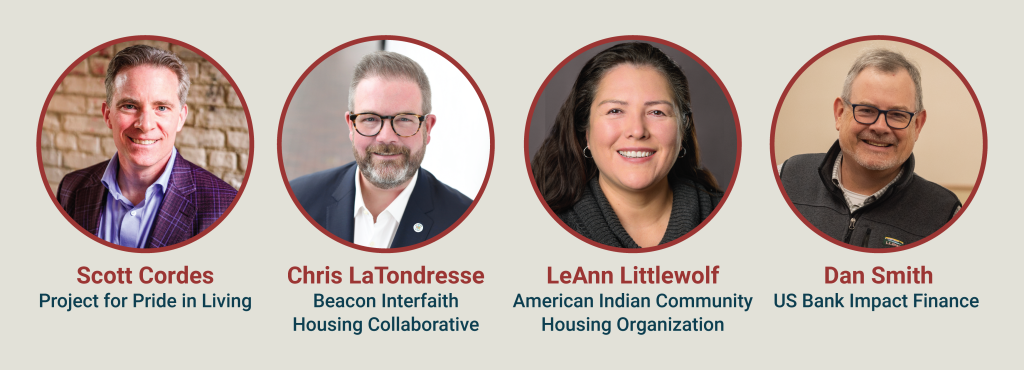
    • Scott Cordes, Chief Operating Officer, Project for Pride in Living 
    • Chris LaTondresse, President & CEO, Beacon Interfaith Housing Collaborative 
    • LeAnn Littlewolf, Executive Director, American Indian Community Housing Organization 
    • Dan Smith, Senior Vice President, US Bank Impact Finance 
    Headshots of four people speaking at a panel. Scott Cordes, Chris LaTondresse, LeAnne Littlewolf, and Dan Smith

    Priya Jayachandran: With 25 years of experience as a lender, developer, regulator, and advocate, Priya brings a rare, systems-level perspective to housing solutions. Her leadership includes serving as a senior policy advisor in the Department of Housing and Urban Development’s Office of Multifamily Housing under President Obama, and since 2018, she has led the National Housing Trust, one of the nation’s leading voices for affordable housing preservation.

  • Lower Brule Sioux Nation: Building a Roadmap for the Future

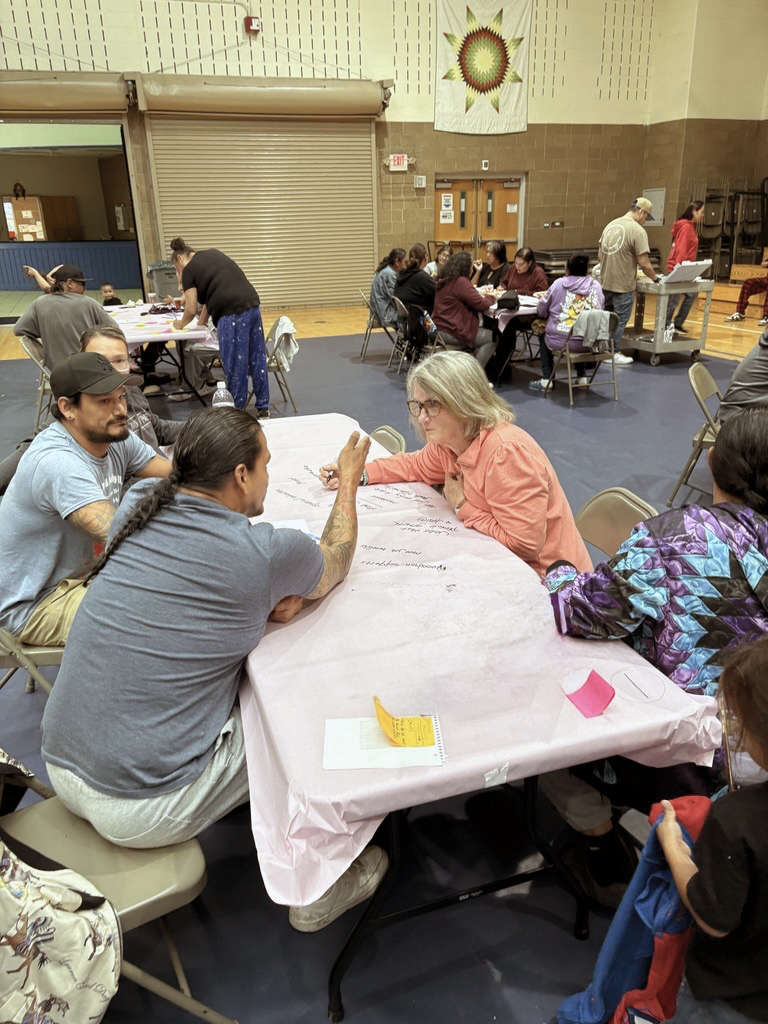
    MHP staff are currently providing technical assistance to the Lower Brule Sioux Nation in South Dakota. The MHP team is working collaboratively with the Nation’s Council and staff members to work toward: housing preservation and creation, infrastructure improvement, strengthening local economic systems, and increasing access to mental health services. In partnership with Lowe Brule Sioux, MHP staff are currently designing a master plan that will act as a road map to guide the team and the community as they work towards accomplishing short and long-team goals. In September, the team led a series of engagement activities aspart of the community-led master planning process, facilitating four focus groups, as well as one large community-wide event. The focus groups reached a diverse set of voices—youth, elders, benefit recipients, and tribal staff. The team also facilitated a large community event; 117 adults attended, many were families that also brought their children to participate. So far the team is well on its way to completing this foundational community planning step that will shape a 15-year master plan for the Tribe. The feedback MHP received so far has been overwhelmingly positive, and staff are excited to build on this momentum as the team synthesizes the data collected and continues moving the vision forward!

  • MHP’s 2025 Impact

    MHP’s 2025 Impact

    In FY2025, MHP partnered with organizations, housing professionals, local governments, and advocates to advance policies, investments, and projects across Minnesota and beyond. These efforts build on years of collaboration, authentic partnerships, and earned trust across the housing continuum. Our research remains a core reference for housing advocates and media statewide.

    This year brought dramatic changes at the federal level, particularly in housing policy and funding. While the full impact on Minnesota programs and MHP’s federal contracts is still unfolding, our ability to respond quickly and provide timely information has been another example of MHP’s leadership in the housing ecosystem.

    MHP once again received a clean audit, demonstrating strong stewardship, and is on track to finish FY2025 with an operating surplus, ensuring a strong start to FY2026. Our small but mighty staff—dedicated, skilled, and passionate—remain the driving force behind our success.

    Our community development work continues to thrive, as shown by growing requests for our expertise and partnership on federal funding applications. And our commitment to racial equity, grounded in research and strengthened by ongoing learning, continues to guide our collaborations and accountability as we work toward becoming a truly anti-racist organization.

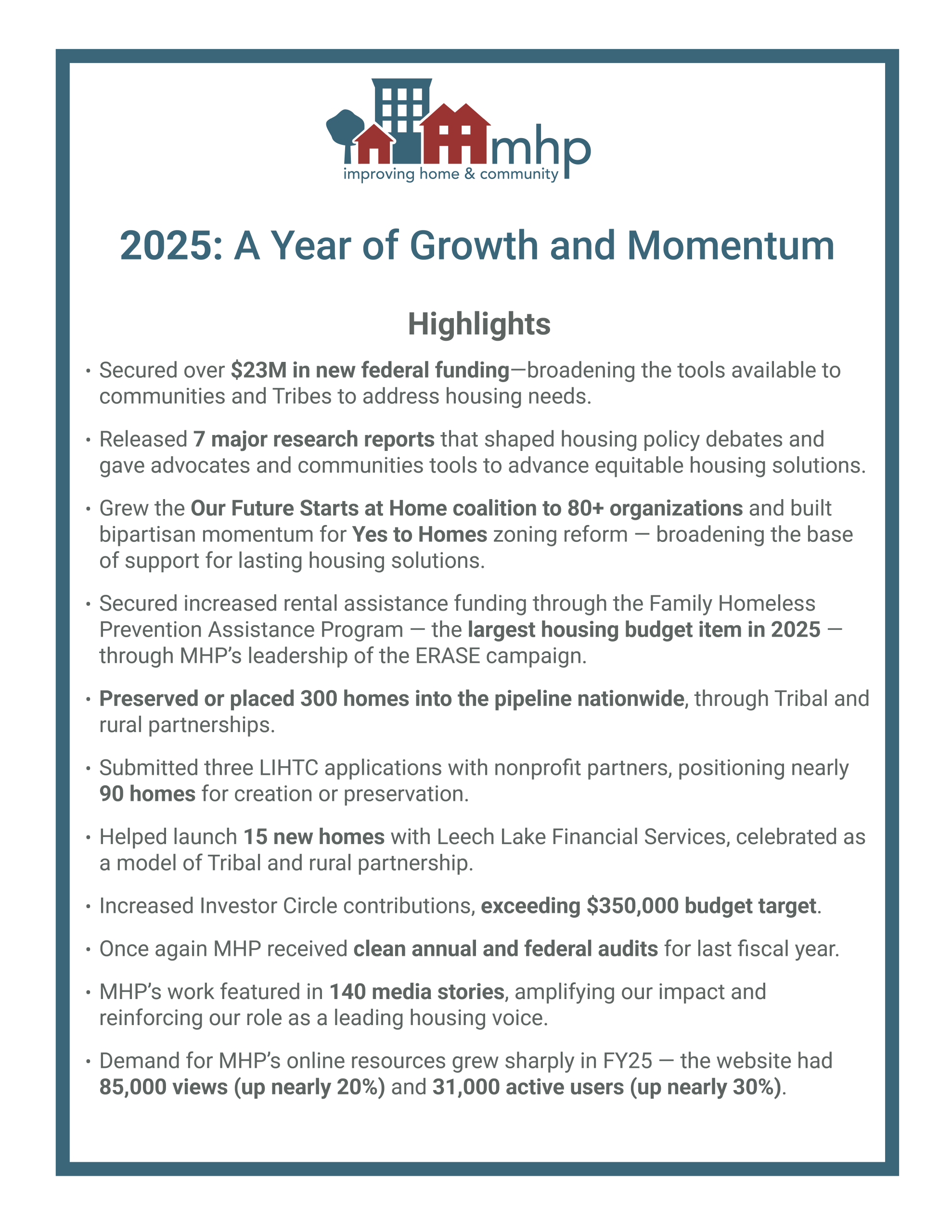
    Highlights from FY2025 

    Secured over $23M in new federal funding, including the largest grant in MHP’s history — broadening the tools available to communities and Tribes to address housing needs. 

    Released seven major research reports that shaped housing policy debates and gave advocates and communities the tools to advance equitable housing solutions. 

    Grew the Our Future Starts at Home coalition to 80+ organizations and built bipartisan momentum for Yes to Homes zoning reform — broadening the base of support for lasting housing solutions.  

    Secured increased rental assistance funding through the Family Homeless Prevention Assistance Program — the largest housing budget item in 2025 — through MHP’s leadership of the ERASE campaign. 

    Preserved or placed 300 homes into the pipeline nationwide, including Tribal and rural partnerships that restored housing for elders and launched neighborhood revitalization. 

    Submitted three LIHTC applications with nonprofit partners, positioning nearly 90 homes for creation or preservation.

    Helped launch 15 new homes with Leech Lake Financial Services, celebrated as a model of Tribal and rural partnership. 

    Increased year-over-year Investor Circle contributions, exceeding $350,000 budget target, and secured new foundation partnerships. 

    Once again MHP received clean annual and federal audits for the prior fiscal year, reinforcing strong financial stewardship we aim to continue for this coming year. MHP also ended FY2025 with more than $1M in funds. 

    MHP’s work featured in 140 media stories, amplifying our impact and reinforcing our role as a leading housing voice.

    Demand for MHP’s online resources grew sharply in FY25 — the website had 85,000 views (up nearly 20%) and 31,000 active users (up nearly 30%).

  • MHP’s 2025 Legislative Leader Awards

    MHP’s 2025 Legislative Leader Awards

    MHP is proud to present its 2025 Legislative Leader Awards to housing champions. These lawmakers have promoted homes we can afford as an issue of public importance, advanced impactful policies and housing investments, and championed MHP’s policy initiatives. All of MHP’s awardees have demonstrated a deep resolve to make a difference for Minnesotans.

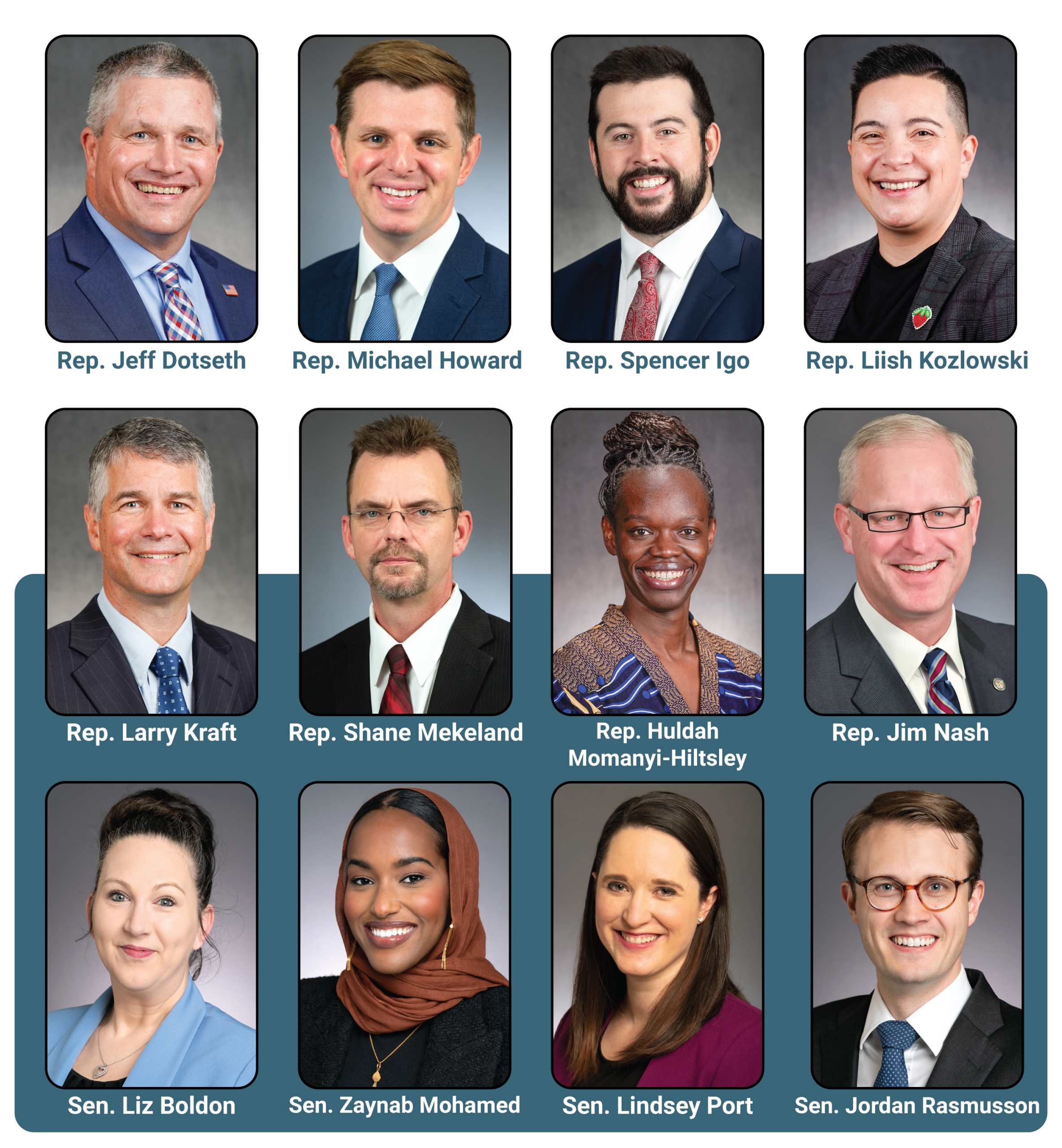
    2025 Awardees:

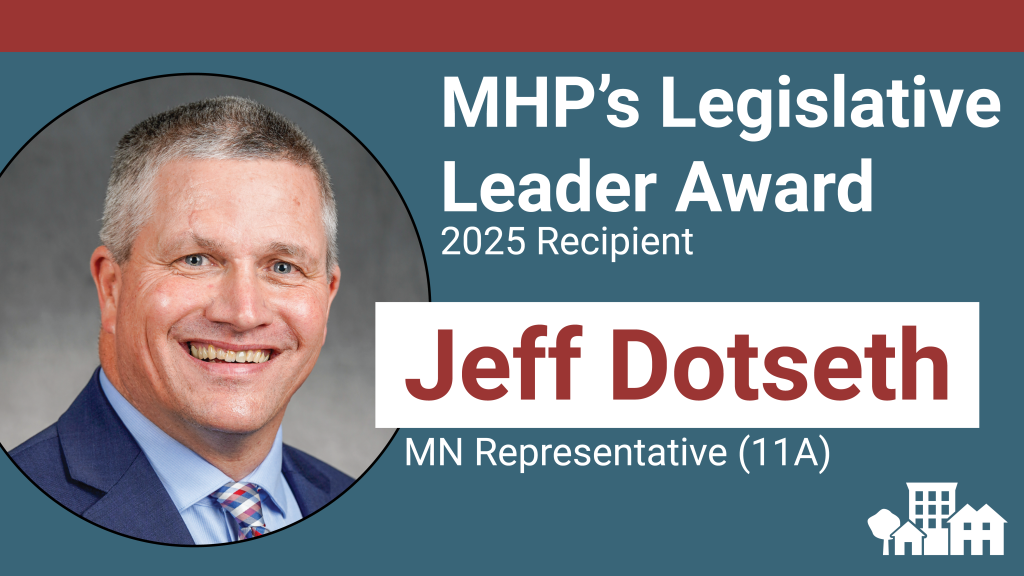
    Rep. Dotseth, as co-vice chair of the Housing Finance and Policy Committee, was accessible to advocates and enthusiastically worked to advance meaningful solutions. As author of multiple housing bills, including the State Housing Tax Credit and land use and zoning reform, Rep. Dotseth was a key influencer in his caucus, and in the housing committee, for effective solutions and stable homes. 


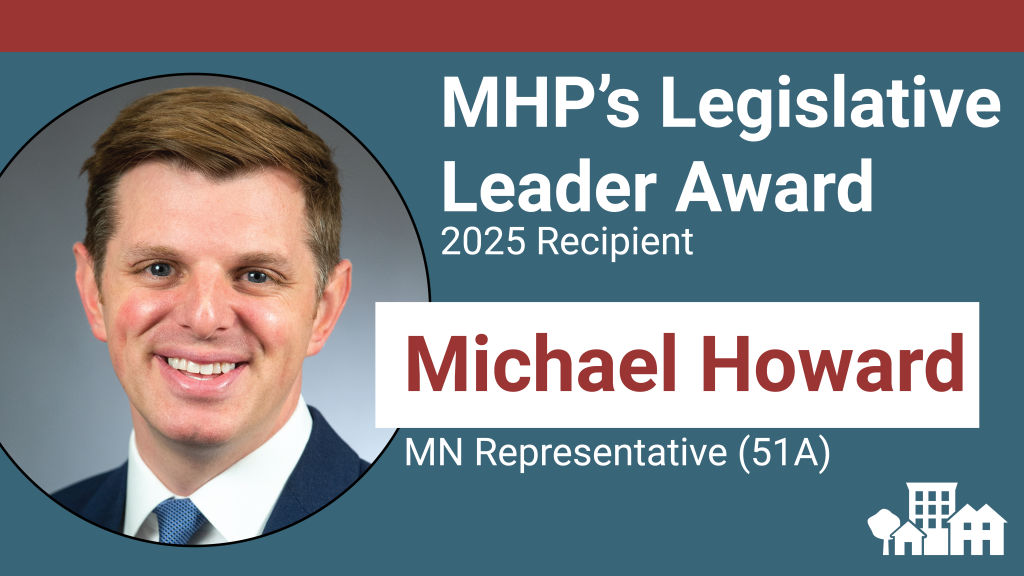
    Rep. Howard has consistently acted to advance affordable housing investment and policy, and secure sustained support for housing as a top issue in the House of Representatives. As co-chair of the housing committee, he worked cooperatively to ensure bipartisan support for a robust housing target, lead bipartisan efforts to advance land use and zoning reform bills, and continued as chief author of the bill for dedicated revenue for home through a constitutional amendment.  


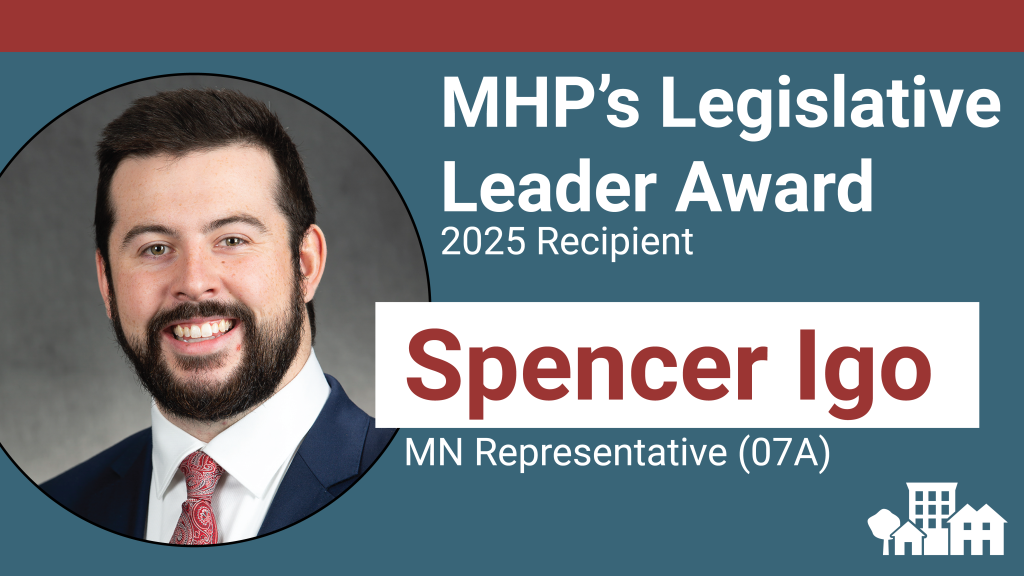
    As the co-chair of the Housing Finance and Policy Committee, Rep. Igo exhibited an inexhaustible desire to learn about statewide needs for affordable homes, and advance policies and funding for solutions. He was a present, engaging, and accessible leader—attending forums, rallies, and conversations where he elevated housing as a top issue for Minnesotans. He fought for a robust target for the housing committee, helped advance land use and zoning reform bills, and ensured that the housing omnibus bill addressed highest priority needs for housing, including for rural communities. 


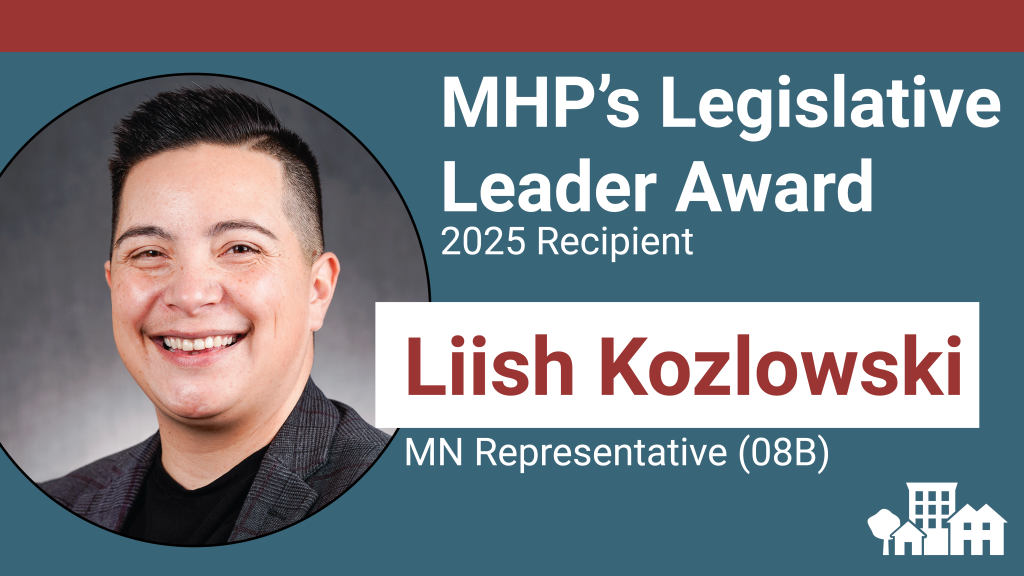
    As Vice Chair of the Housing Finance and Policy committee, Rep Kozlowski has been a consistent champion for homes we can afford, advancing both policy and investment with significant effort. They have helped to shape the public narrative around housing by sharing personal stories and mentoring housing advocates, ensuring committee discussion is grounded in the personal experiences of Minnesota people and families. They have advanced and led on land use and zoning reform bills, helping to identify strategies and influence caucus support for structural change. 


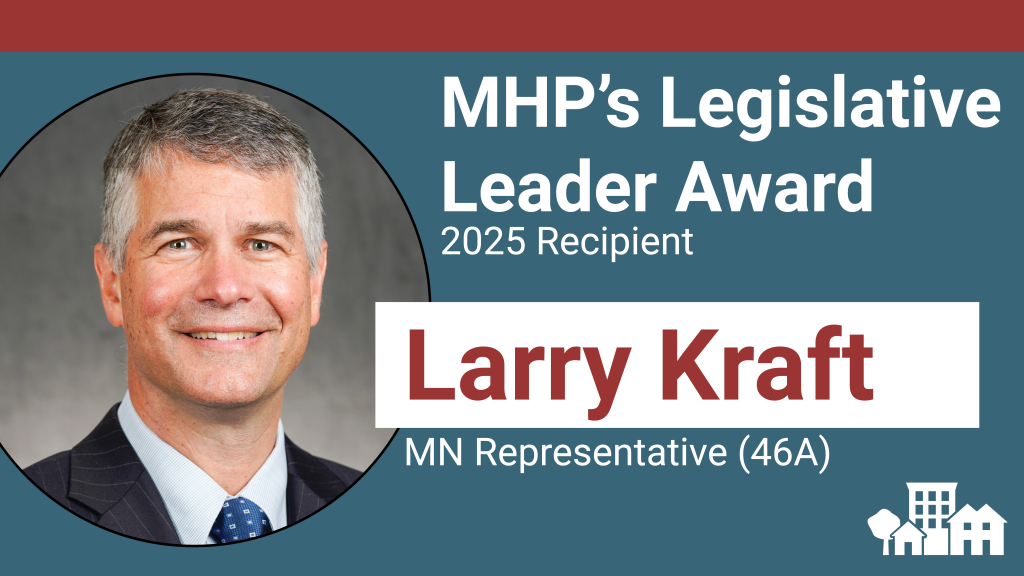
    Rep. Kraft has provided critical leadership by convening bipartisan conversations and engaging diverse stakeholders, including MHP, as a champion for land use and zoning reform. He has worked tirelessly to build backing within his caucus, make a persuasive case for change, and advance substantial policy reforms to support homes Minnesotans can afford. 


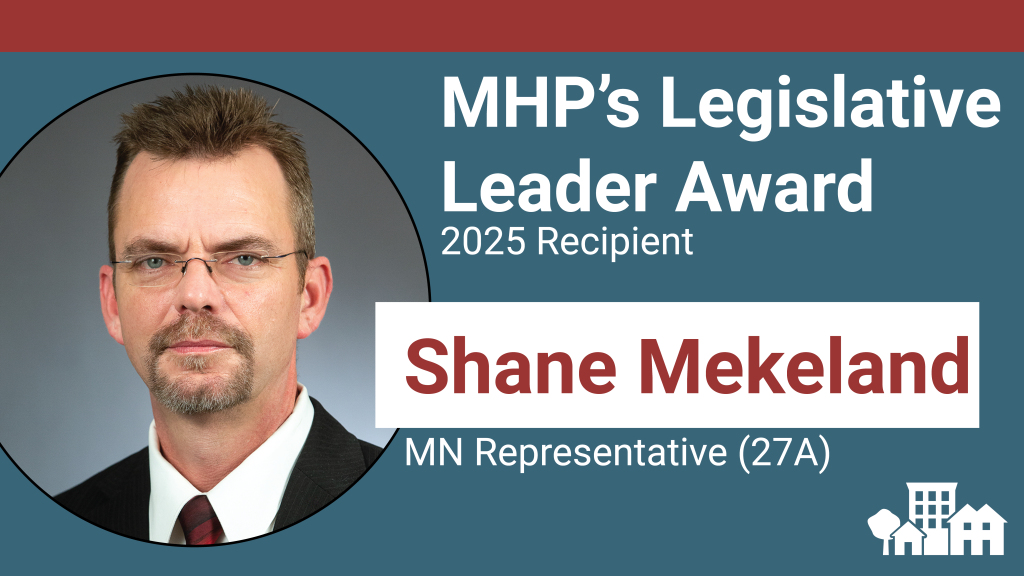
    Rep. Mekeland promoted significant policy reform to support homes we can afford, including authoring a bill to advance regulatory reform for land use and zoning. He was accessible and engaged with MHP, lifted up the importance of homes for Minnesota families, and underscored housing as a top policy priority within his caucus. 


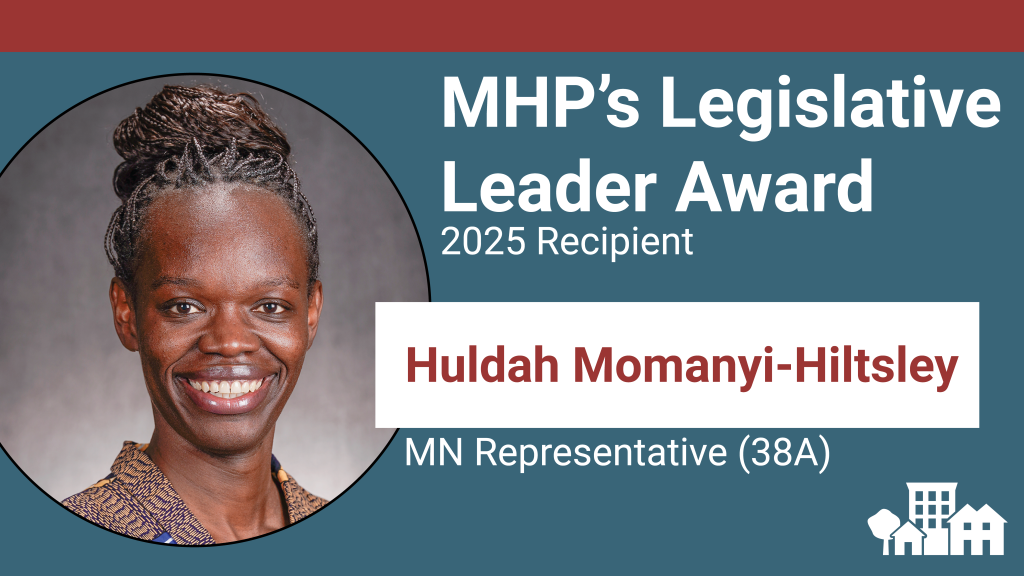
    Rep. Huldah Momanyi-Hiltsley advanced a vision for homes that all Minnesotans can afford, with enthusiasm and strategic effort. As chief author of a bill to increase emergency rental assistance, she fought tirelessly to prioritize support for renters and deeply affordable homes. Accessible to housing advocates and persuasive with her colleagues and leadership, she strove to establish bipartisan partnerships in support of home. 


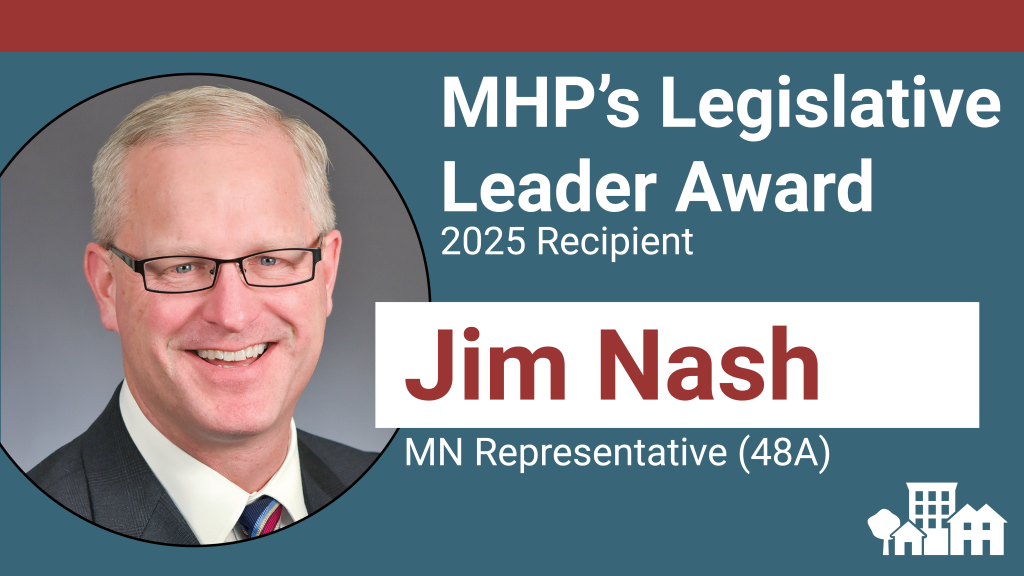
    Rep. Nash has continued, year after year, to advance the case for homes we can afford in Minnesota. As a key leader of efforts to reform land use and zoning in Minnesota, Rep Nash has provided strategic insights to advance meaningful policy change for home and worked to build the case for affordable homes and homeownership within his caucus. 


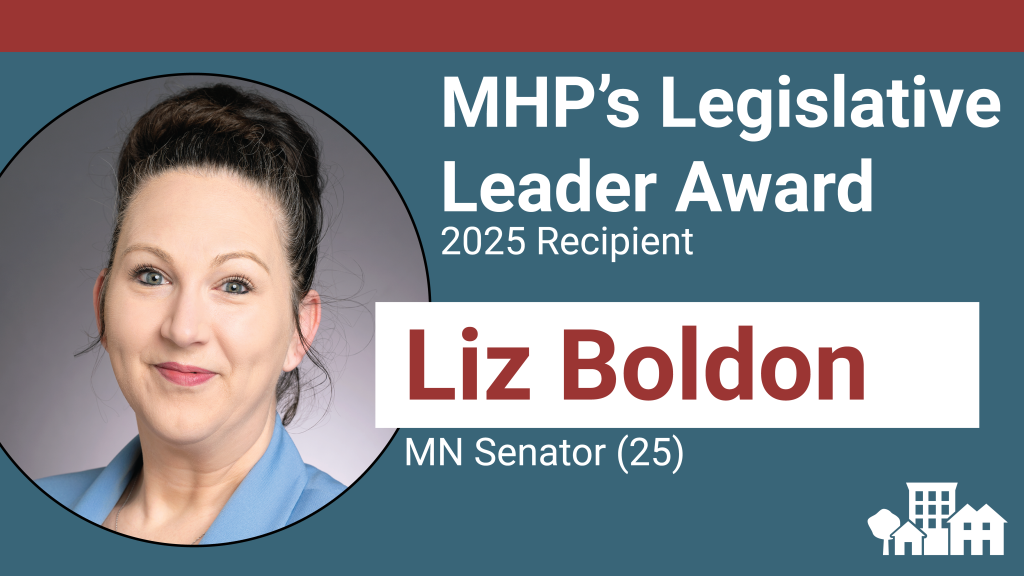
    Sen. Boldon has been an engaged and influential housing leader, an important voice within her caucus, and a champion for Greater Minnesota housing solutions. She authored many housing bills and built support within her caucus, including for supportive housing, housing development, and emergency rental assistance. She has consistently championed structural change, including dedicated revenue for housing, as a necessary solution. 


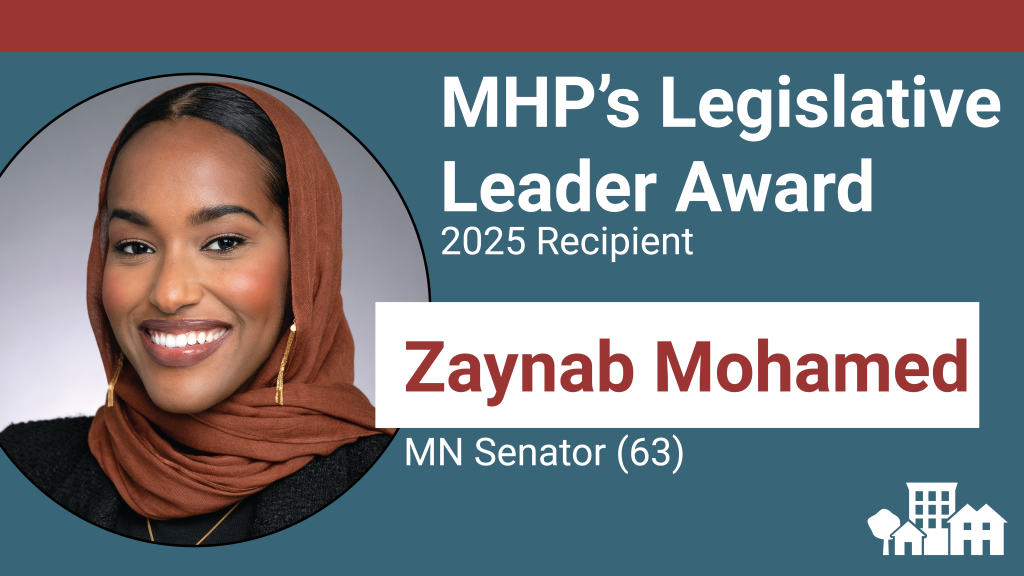
    Sen. Mohamed has tenaciously advocated year after year for structural reforms that strengthen investments and policies supporting Minnesotans’ access to stable homes. As chief author of the constitutional amendment for housing, a supporter of innovations like adaptive reuse, and a leader ensuring grassroots partners have the resources to serve families needing stability effectively, she has been one of the legislature’s most consistent champions for making home a top priority. 


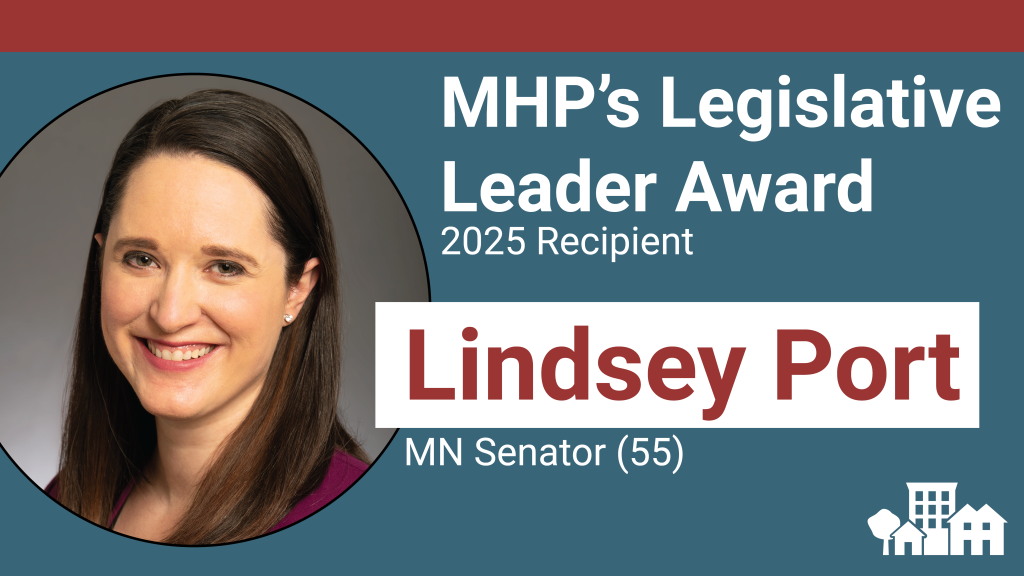
    As the Senate’s housing chair, Sen. Port continued to champion affordable homes, including fighting for a housing budget target, providing leadership on advancing multiple land use and zoning reform bills, and holding a hearing on the constitutional amendment for housing – helping to build support for dedicated revenue for affordable homes.  


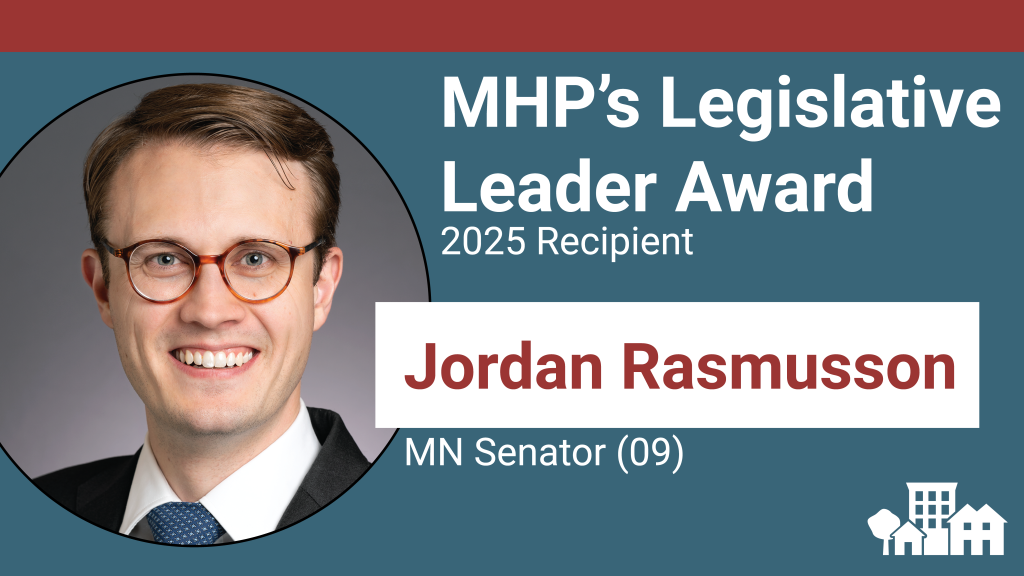
    Sen. Rasmusson supported significant housing solutions through regulatory reform, working with his colleagues to advance the Minnesota Starter Home Act. He led meaningful conversations around policies that lead to safe and stable homes. His willingness to engage with MHP and its stakeholders reflected his commitment to addressing housing challenges. 

  • New Resource: Federal Housing Advocacy Toolkit

    New Resource: Federal Housing Advocacy Toolkit

    Congress is drafting the FY26 federal budget, which includes funding for vital housing programs that prevent homelessness and keep families safe at home. Many essential programs are facing cuts, including public housing and rental assistance. The U.S. House has already advanced a bill that makes deep and dangerous cuts to housing programs. Full overview of the federal budget proposals can be found here.

    This toolkit was created to make it easier for advocates across the state to speak up for strong federal investments in housing. Inside, you’ll find everything you need to take action—including key talking points, contact information for your members of Congress, sample social media posts, and more. By using a shared message and speaking out together, we can show lawmakers that funding housing is a priority in every community.

    • Messaging & Talking Points 
    • Calls to Action 
    • Congressional Contact Info 
    • Content Library (Social Media, LTEs, etc.) 
    • Storytelling & Messaging Amplification 
    • Events & Engagement 
    • Policy & Data Resources
  • President Trump Releases “Skinny Budget”

    President Trump Releases “Skinny Budget”

    The President’s “skinny budget”: has been released and, as anticipated, makes deep cuts to non-defense discretionary spending by $163 billion, representing a cut of 22.6% from FY25 budget levels. The President’s budget makes devastating cuts to HUD and housing programs in other agencies. A list of spending cuts and other spending proposals, including to HUD, are here. The President’s full budget proposal will be released in the coming weeks.

    President Trump’s budget proposal includes a 44 percent reduction to HUD’s housing programs. The proposal calls for eliminating vital programs, such as the HOME Investment Partnership program (HOME), Community Development Block Grant program (CDBG), Low Income Home Energy Assistance Program (LIHEAP), Fair Housing programs, the Neighborhood Reinvestment Corporation (NeighborWorks America) and the United States Interagency Council on Homelessness (USICH). It also includes significant cuts for homelessness prevention, Native American programs, resilience and utility efficiency, and rural development programs, and the Community Development Financial Institutions Fund (CDFI Fund).


    Rental Assistance

    The President’s budget proposal would slash rental assistance by more than 40%, or $26.72 billion, and combine all remaining funds and block grant them into one program, State Rental Assistance Block Grants. It would be up to states to continue to provide housing assistance to the millions of people who rely on it. The programs eliminated and replace with the block grant would include Housing Choice Vouchers (HCVs), Public Housing, Project-Based Rental Assistance (PBRA), Section 202 Housing for the Elderly, and Section 811 Housing for Persons with Disabilities. In addition, the President’s budget would impose a two-year time limit on receiving rental assistance for “able-bodied adults.”


    Supportive Housing

    The President’s proposal would eliminate the Continuum of Care Program and Housing Opportunities for Persons with AIDS (HOPWA) and move them into the Emergency Solutions Grant Program, with a cut of $532 million. The ESG program cannot be used for long term housing, but rather only funds short-term shelters and housing limited to two years. See NYTimes coverage – impacts to supportive housing


    USDA Rural Housing Programs

    President’s preliminary budget would eliminate U.S. Department of Agriculture single-family housing direct loans (section 502), self-help housing grants, and rural housing vouchers, arguing these programs “are duplicative, too small to have macro-economic impact, costly to deliver, in limited demand, available through the private sector, or conceived as temporary.“


    House Reconciliation Bill and Tax Provisions

    The House of Representatives is expected to review all or portions of the reconciliation bill during the week of May 12. Republican goals for a reconciliation bill, which can avoid the Senate’s 60-vote filibuster threshold, including extending tax cuts, expanding border security and defense, and cutting federal spending. The Ways and Means, Energy and Commerce, and Agriculture Committees are responsible for determining key provisions of the bill, including tax cuts and extensions, cuts to Medicaid and healthcare assistance, and cuts to food assistance. 

    While housing assistance has not been identified as a potential target for cuts, cuts to anti-poverty programs such as Medicaid and the Supplemental Nutrition Assistance Program (SNAP), both named as targets for potentially large cuts, would negatively impact economic stability and housing stability for families and people with low incomes.

    House Tax Bill Expands Tax Credit

    The House Ways and Means Committee, on May 12, released legislative text for the House tax reconciliation bill, which includes an expansion of the Low-Income Housing Tax Credit (Housing Credit), and expanding the Opportunity Zone tax credit. The bill would:

    • Increase the Housing Credit volume cap for 9 percent properties by 12.5 percent from 2026-29;
    • Lower the bond financing threshold to 25 percent for 4 percent Housing Credit properties placed in service after December 31, 2025; and
    • Provide a basis boost of up to 30 percent for properties located in rural and Native American areas.

    Take Action:

    The House Ways and Means Committee, on May 12, released legislative text for the House tax reconciliation bill, which includes an expansion of the Low-Income Housing Tax Credit (Housing Credit), and expanding the Opportunity Zone tax credit. The bill would:

    • Use NLIHC’s toolkits and resources to take action on FY26 funding to urge Congress to pass a FY26 spending bill with increased funding for HUD’s affordable housing programs. You can use NLIHC’s Take Action page to look up your member offices or call/send an email directly.
    • Minnesota NAHRO has shared a one-pager of the impacts of HUD funding in Minnesota, here, You can use the NAHRO Action Alert to contact your Member of Congress about the devastating impact of the President’s proposed FY26 budget on rental assistance and public housing.