• Adaptive Reuse in International Falls could see first multifamily development in a generation

    Adaptive Reuse in International Falls could see first multifamily development in a generation

    Housing is hard to find right now in the Borderland, but the reuse of the Alexander-Baker building in International Falls will provide 30 units of affordable housing in the community, and preserve a building with rich history. 

    “The evidence was there — almost 40 years’ worth. Unless our community made it happen, we knew no one else would do it for us and we knew our community couldn’t suffer through another 6 years with a zero percent vacancy rate,” said Isaac Meyer of KOOTASCA Community Action referencing the Census Bureau’s American Community Survey. “Plain and simple: this project will provide housing for our community, our neighbors, and our families, and it will be here and be affordable for the long-term.”

    International Falls and the surrounding communities haven’t seen new rental housing development in a generation — almost 40 years. And that’s a huge problem for the area’s potential new workers. 

    People have been turning down jobs. In fact, the International Falls Journal has recounted several stories of workers considering a move to the area, but they couldn’t find a home. 

    Even if folks can find a place to live, they’re still feeling the pinch because few renting options mean higher rents. Currently, 51 percent of renters in Koochiching County, and 42 percent of renters in Itasca County are experiencing cost burden, according to Minnesota Housing Partnership’s State of the State’s Housing report. Cost burden means people sacrifice food, medicine, and education in order to make the rent.

    New housing will help bring rents down, and provide more options for housing. 

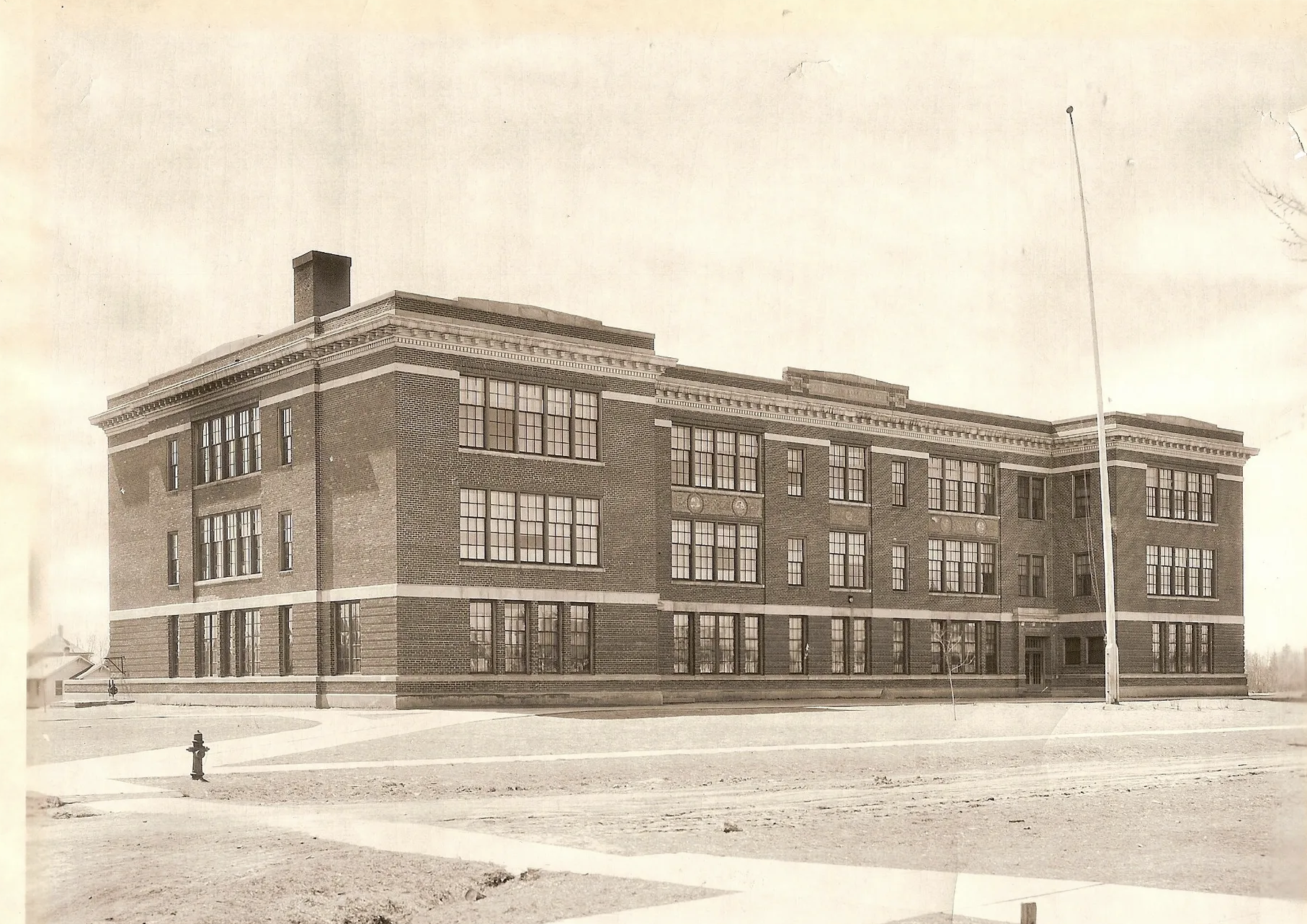
    The historic Alexander Baker building was a former school and has remained a landmark in International Falls for more than 100 years. The 30 affordable housing units will be created from the old classrooms.

    KOOTASCA Community Action and Community Housing Development Corporation, with assistance from Minnesota Housing Partnership, have submitted an application to the Minnesota Housing Finance Authority to secure funding to complete the project. The decision on that funding will be announced later this year. 

    “We’re hopeful that MHFA will approve the project,” said Ward Merrill, Executive Director of Citizens for Backus/AB. “Especially given the huge level of support we have received from the community.”

    For more information about the Alexander-Baker reuse project, visit backusab.org. Learn more about MHP’s Strengthening Rural Communities program here. 

  • MHP releases Local Housing Trust Fund Manual for Minnesota

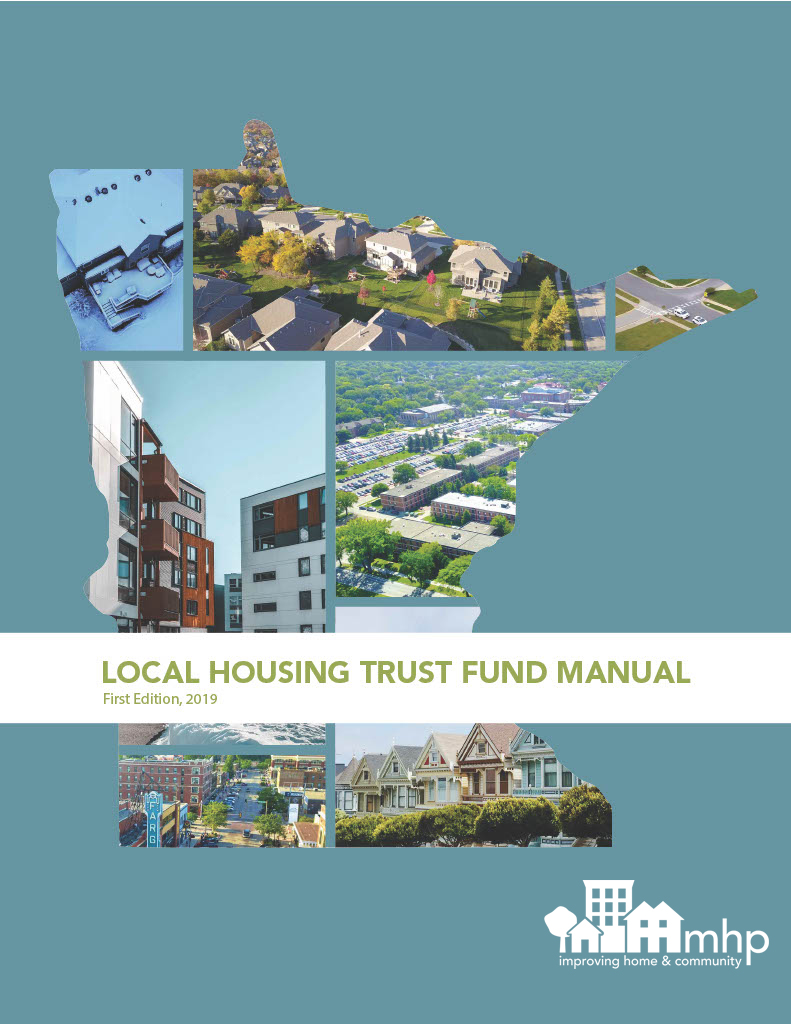
    St. Paul, MN (July 30, 2019) — Today, Minnesota Housing Partnership is announcing the release of its Local Housing Trust Fund Manual for Minnesota. Local Housing Trust Funds are established by a local government by dedicating local public revenue for housing. With 80 pages of references, case studies and explainers, the Local Housing Trust Fund Manual for Minnesota provides an in-depth discussion of key decisions local communities will make to establish a Local Housing Trust Fund (LHTF) — from creating priorities to choosing revenue sources.

    When it comes to housing, Goodhue County Commissioner Brad Anderson‘s view is, “Not doing anything is not an option.” That’s why he and other local leaders established a housing trust fund in Goodhue County as a resource to creatively address evolving local needs. Minnesota Housing Partnership released this manual to help other Minnesota communities do the same.

    “Local communities aren’t going to let Minnesota’s affordable housing shortage hold them back any longer,” said Anne Mavity, Executive Director. “They’re ready to innovate and take action. By creating a Local Housing Trust Fund, communities can implement programs that meet their unique needs and leverage the resources they need to thrive.”

    A consistent, flexible resource, housing trust funds can pool public and private investments. On average nationwide, city trust funds leverage an additional $6 in public and private funding for every dollar invested. Minneapolis’ trust fund, established in 2003, leverages $9 for every dollar invested. 

    Red Wing has already helped six families become homeowners by providing zero-interest homebuyer assistance loans through their trust fund — and they’re poised to help seven more. Established in 2015, Red Wing invests $100,000 annually into their fund. Through Tax Increment Financing, the city will soon invest up to an additional $100,000 annually for 25 years.

    St. Paul established a trust fund last year, with a one-time $10 million investment and annual $2 million investments totalling over $71 million. “We are committed to ensuring all of our residents can participate in our city’s prosperity,” said Saint Paul Mayor Melvin Carter.  “Our Affordable Housing Trust Fund advances this vision by supporting safe, secure, and affordable housing solutions in every neighborhood.”

    To Commissioner Anderson, Goodhue County’s housing trust fund signals that leaders and community members are taking action to help the county realize its potential to thrive. “Our investments say to businesses, individuals, and families, ‘This is the place you should be,’” Anderson said.

    MHP’s Local Housing Trust Fund Manual for Minnesota is a resource that communities of any size can use. It takes lessons learned by cities and counties and combines them with in-depth discussions of current best practices. For more information or to download the Local Housing Trust Fund Manual for Minnesota, visit https://mhp.sdho.dev/local-housing-trust-fund-manual-for-minnesota/.

  • Teams consider what’s next as Housing Institute 6 wraps up

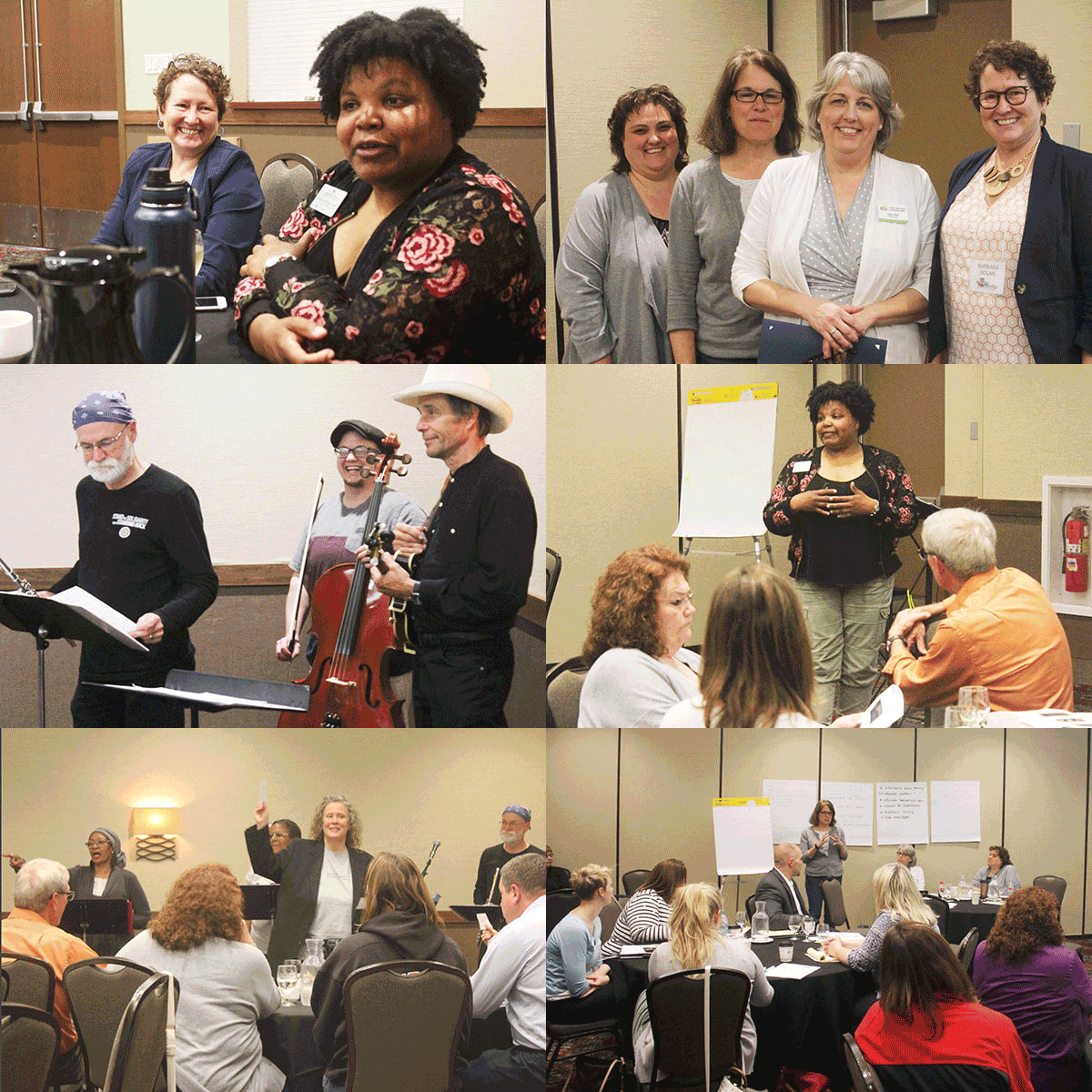
    For 18 months as part of MHP’s Housing Institute, teams of local leaders from three Minnesota regions have been working hard to advance a housing-related project to positively impact their communities. The 2018-19 Institute culminated in a final workshop in Willmar, Minnesota on May 14 and 15. 

    Through workshops that provide peer-to-peer learning, presentations from leading experts, and custom support from MHP’s technical assistance team, the Housing Institute provides a platform for rural communities to tackle some of their most pressing housing needs. 

    For example, during this round of the Housing Institute, the MNH3 team (New Ulm, Gaylord, Gibbon, and Winthrop) completed a regional housing website and a silly advertisement to promote it. Gaylord and New Ulm also created plans to support a flurry of new housing development. 

    “We’re so proud of these teams for their continued engagement and dedication,” said Community Development Deputy Director Sarah Bellefuil. “They’ve learned new skills that will impact their communities well beyond the projects they tackled during the Institute.”

    During the final workshop, the teams heard a presentation from Victoria McWane-Creek of the Minnesota State Community and Technical College on building respectful communities. MHP’s Barbara Dolan presented on a case study of a senior housing project. Elizabeth Glidden and Casey Lauderdale of MHP presented on local housing trust funds. Participants also viewed a performance by Zamya Theater entitled “A Prairie Homeless Companion,” which shines a light on homelessness in rural communities. 

    On day two of the workshop, the teams pitched their projects to potential funders and considered what’s next. 

    To learn more about the Housing Institute, contact Harlan Buckalew at harlan.buckalew [at] mhponline.org.

  • Housing Institute model proves collaboration creates progress

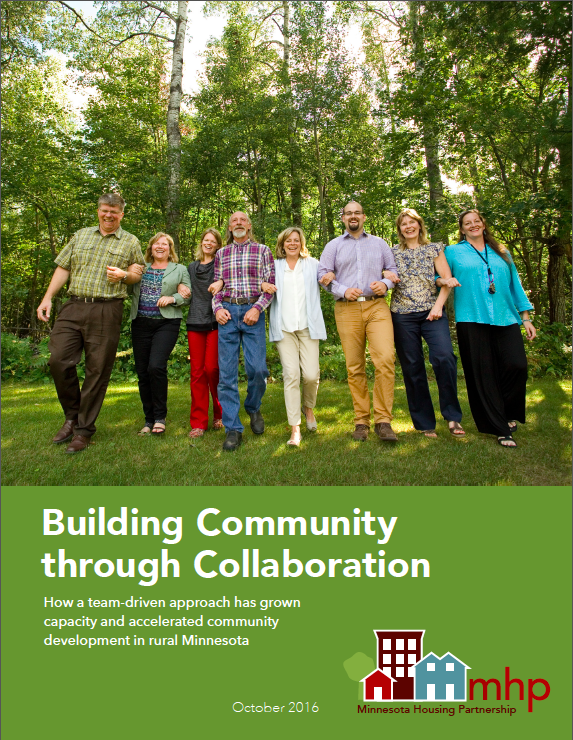
    This month, MHP celebrated the six year anniversary of the Housing Institute with our partners at Greater Minnesota Housing Fund — and rural housing leaders from across the state. To mark the milestone, we examined the evolution, successes and impact of this transformative program in a new white paper: “Building Community Through Collaboration.” Click here to download the full paper; keep reading for an excerpt on the impetus and structure of the Institute. 

    In many regions of rural Minnesota, there’s a significant gap between the supply of affordable housing and the number of people who need it. In 2010, the Minnesota Housing Partnership, with key support from the Greater Minnesota Housing Fund (GMHF), created a new program to close that gap through collaboration and capacity building.

    In just six years, the Housing Institute has proven a team-driven model can make all the difference in turning aspiration into action, and visions for community development into reality.

    When the Housing Institute was launched in 2010, Minnesota was in the throes of the economic crisis. Like so many other states, it was hit with a wave of foreclosures and bankruptcies among developers. But that blow compounded challenges rural communities had faced for many years.

    Rural areas already struggled with limited funding for rehabilitation of existing housing or the construction of new housing. Applying for state and federal funding, which includes complicated processes and regulations, was difficult for the small number of public servants who juggled many responsibilities. And, adding urgency to equation, many units of affordable housing built in the 1980s using federal funds were quickly reaching the end of their mortgage terms, opening the door to convert affordable units to market rate.

    In response to these pressing factors, the Housing Institute was created to bring together housing leaders and stakeholders to share their experiences, learn best practices, and develop creative solutions to bring quality affordable housing to their communities.
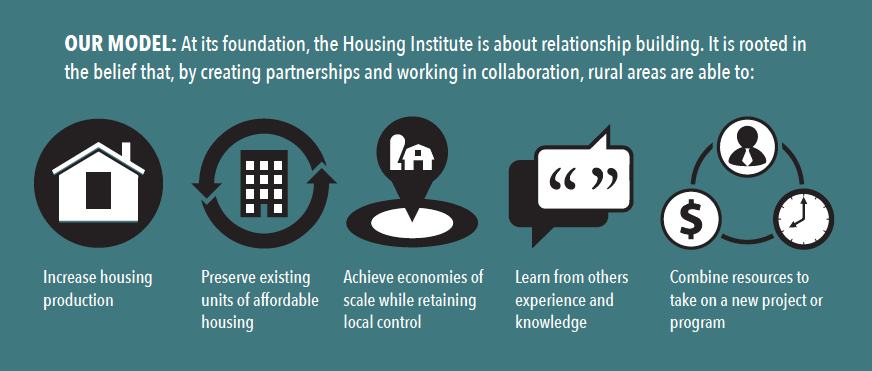
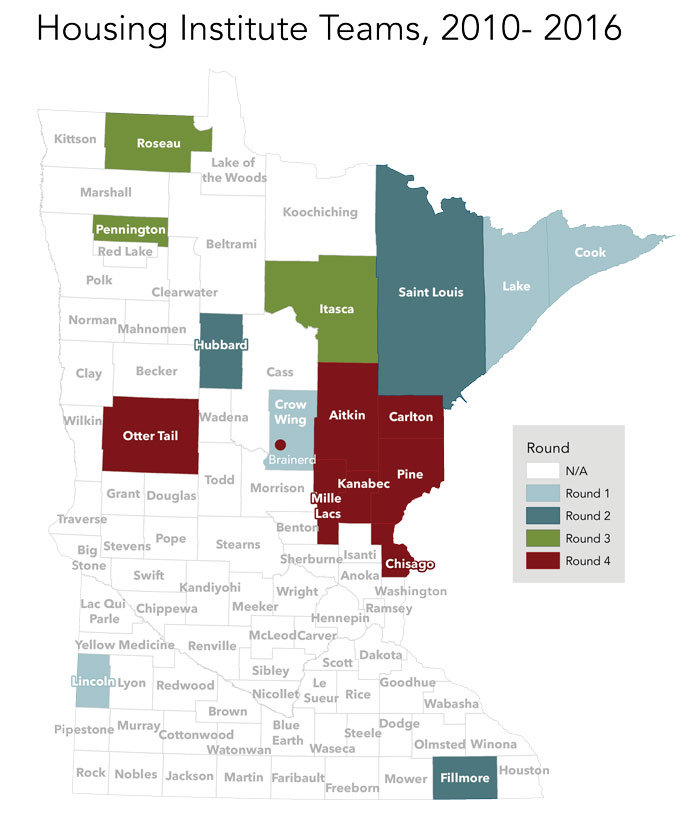
    Like the model itself, the Institute is a collaboration. MHP has taken on the lead role in convening, guiding and providing technical assistance to the Institute participants, while GMHF provides critical funding and planning support that is central to the Institute’s success. With additional funding support from the U.S. Department of Agriculture’s Rural Capacity Development Initiative, the Housing Institute has evolved as an in-depth 18-month program including training, peer-to-peer learning, and a focus on local housing-related needs. As of March 2016, the Institute had convened four rounds, with a total of 13 teams comprising 82 total team members representing 68 entities.
    A team-based approach

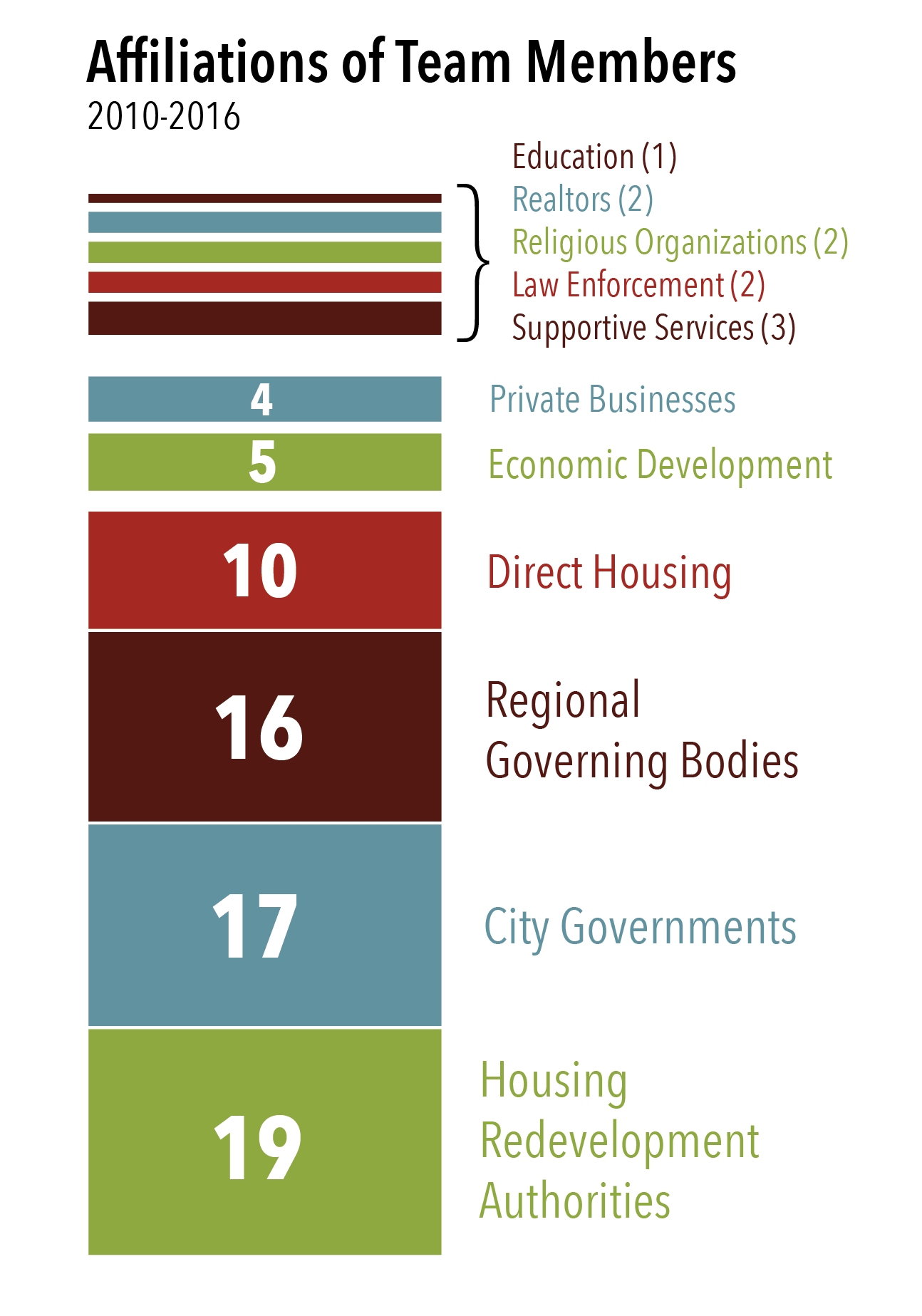
    Moving beyond individual leadership, the Institute relies on a group model that capitalizes on local expertise and resources. Participants form teams comprised of several entities in a region, often including city, county, Housing and Redevelopment Authority and Economic Development Authority staff. As the convener, MHP doesn’t prescribe the make-up of the team. Each Institute supports three or four teams with five to seven individual members each.

    Enhancing local and regional collaboration has been a clear need articulated by the vast majority of Housing Institute participants. “Never before has there been a collaborative effort by multiple agencies to address housing in Cloquet,” the Cloquet/Carlton team explained in their 2014 application. “Potential or strengthened collaboration and partnerships [are necessary to] increase affordable housing options for Cloquet and Carlton County residents.”

    Ultimately, the team included representatives from the HRA, Carlton County Public Health and Human Services, the City of Cloquet, the Cloquet Police Department, One Roof Housing and the Salvation Army.

    Working together toward a specific goal

    During the Institute application process, MHP prompted teams to start thinking about possible projects or programs to pursue. The application asks for three ideas, including a proposed goal or objective, the target population to be served, funding availability and how the program or project fulfills a community need.
    In the most recent Institutes, teams have worked together during the first in-person gathering to prioritize ideas and, by the second meeting, reach consensus on what project to pursue. Team goals have varied from the creation of a regional services website to the building of a permanent supportive housing development — and the Institute embraces that variety with customized curriculum. Based on the teams’ goals, MHP staff tailor the Institute content to the needs of participants, with common topics including:

    • Project financing
    • Preservation of rural rental housing
    • Community engagement
    • Updates on state and federal policy
    • Navigating HUD’s Section 3 and Fair Housing and Equity Assessment
    • Communications and messaging

    Sharing knowledge and building relationships

    Because of the focus on collaboration, the Institute includes in-person workshops that provide an opportunity for teams to learn from expert presenters on key topics, and meet with each other and other teams in the region. To facilitate that collaboration, initial homework emphasizes team building and roles, including exercises that build understanding of the members’ backgrounds and organizations’ priorities. 

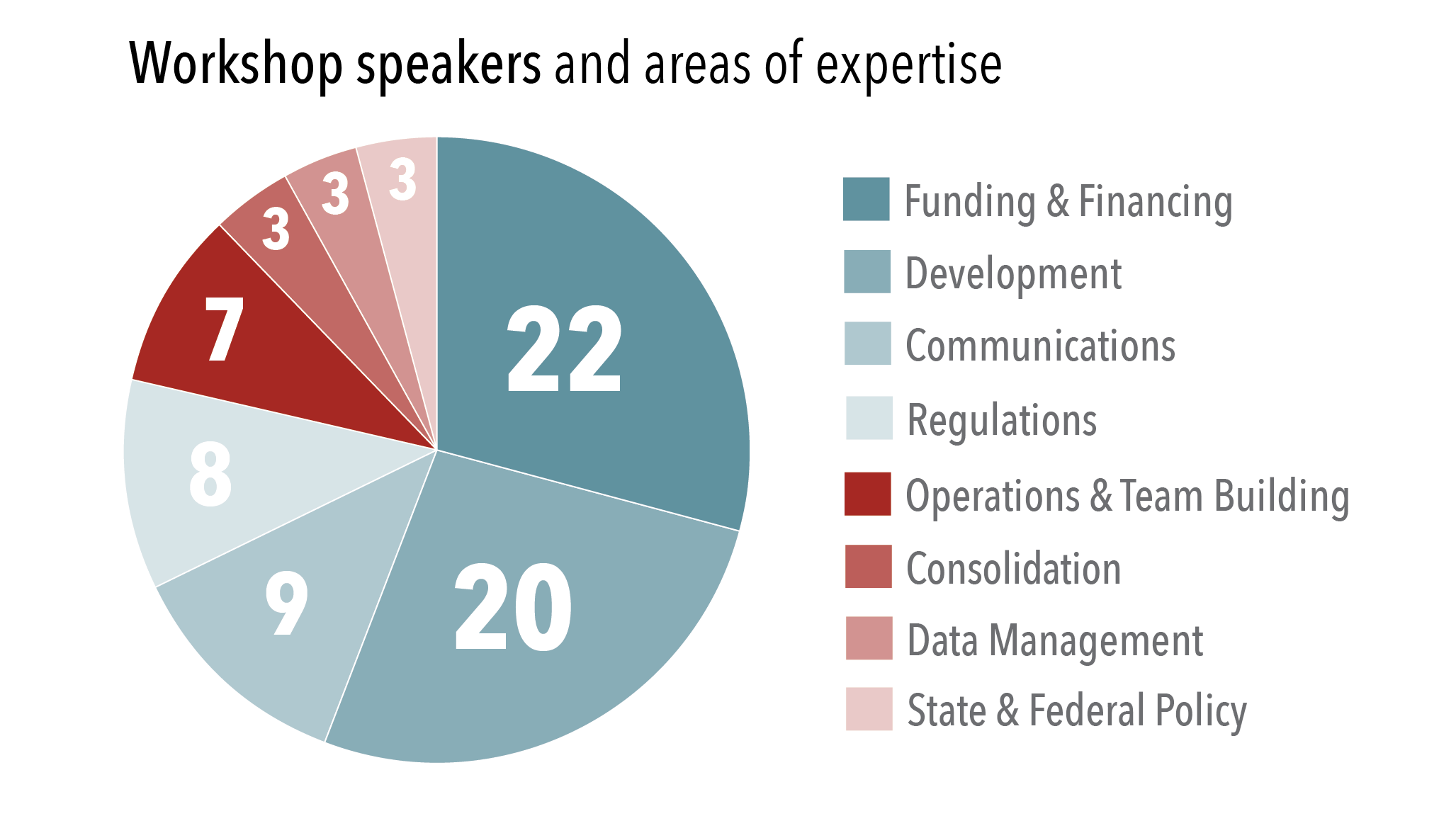
    Since 2010, the Institute has hosted more than 65 individual speakers with expertise in various aspects of housing and community development. Common themes across rounds have included data acquisition and application, communication strategies, and an array of conversations about funding. And it’s not just the Institute participants that benefit: The knowledge and relationships built positively impact other players in the housing field.
    “As a housing developer, Sand Companies has been able to connect with communities and regions in need of housing,” said Jamie Thelen, President and CEO of Sand Companies. “It gives us an opportunity to learn about challenges in many areas of our state and, at the same time, share some of our successes in housing. The Institute is a great collaboration that gives all attendees new ideas.”

    According to Minnesota Housing Commissioner, Mary Tingerthal, the Institute benefits funders, as well. “The Institute can bring people together in a community to solve their toughest housing issues — and then connect them to the resources they need to get the job done,” she said. “We see better, more competitive applications to Minnesota Housing for scarce resources from communities that participate.”

    Overcoming obstacles

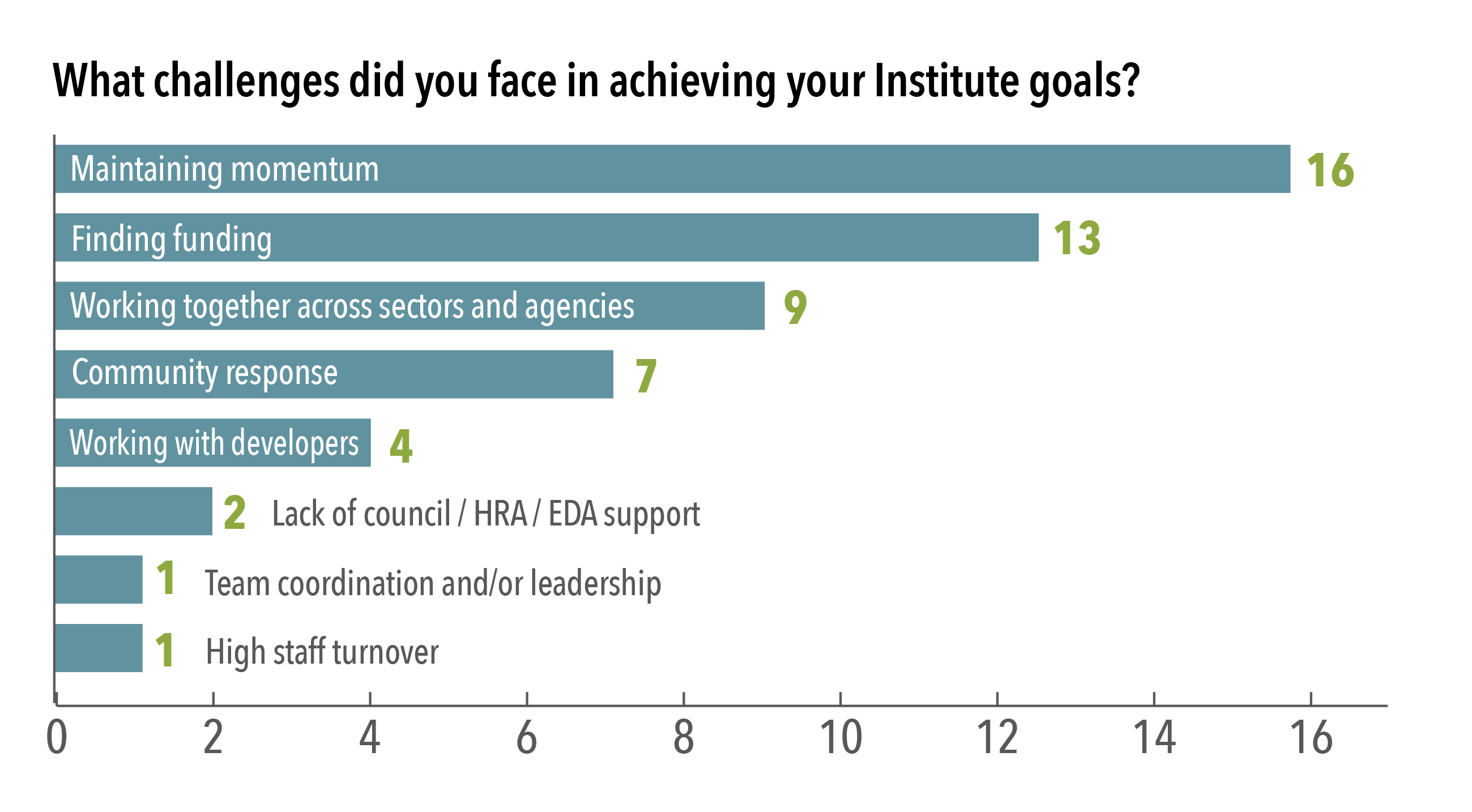
    Creating housing and community development is complex work. Even with the Institute’s targeted skill building, the teams still face significant obstacles. A 2016 survey of Housing Institute participants found that the most cited challenges were finding funding, maintaining momentum and working together across sectors and agencies. But survey respondents also noted that the Institute was crucial in helping them address those difficulties.
     

    “While applying for senior housing development funding has been an incredible amount of work, the resources and support network from the Institute have helped us to work through the process,” said Rose Dunn, the Executive Director of the Mora Housing and Redevelopment Authority.  “We’ve partnered with an excellent developer, have an incredible amount of community support, as well as support from the HRA board, city and county EDAs, city council and other Institute team members.”

    Team members often knew of other individuals in their region working in housing, but prior to the Institute, didn’t work together directly. The Institute changed that, uniting staff from different organizations to work on a shared project. Sometimes team members didn’t get along because of opposing agendas, were unwilling to work with someone else on a team, or didn’t put in the required time for a project. But, even when the partnerships faltered, the Institute compelled regional stakeholders to explore how they could work together.

    The Institute also provided teams with an opportunity to tackle a project that they may not have had the staff capacity or knowledge to achieve on their own — and dedicated time and space away from work to focus on that particular goal.

    A housing development project takes time, funding, planning and commitment from many groups. After their completion of the Institute, many teams continued to meet to see their project through. Even teams that disbanded still expressed the benefits of working with others in their region —and many members reported that the Institute resulted in additional housing development activities based on the knowledge and relationships gained through the Institute.

    Stay tuned for a summary of team successes — and click here to download the full paper!
  • New grant funds for three states boost rural development

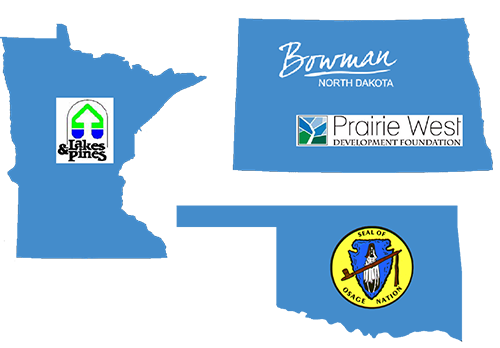
    Rural Capacity Building Grant award locationsAs the result of a recent federal grant, MHP staff are preparing for work in three rural US communities: Osage County, Oklahoma, the Lakes & Pines Region of E. Central Minnesota, and Bowman and Golden Valley counties in North Dakota. All three communities, which have undertaken extensive planning and strategizing, are poised to implement a wide variety of development projects under the grant.
    “The grant will enable the communities to translate their plans into action and implement strategies that yield actual development and housing on the ground.” -Rosemary Fagrelius, Community Development Director at MHP

    The work to be completed in northeastern Oklahoma will be in collaboration with The Pawhuska Indian Village, which plans to develop more energy-efficient and culturally relevant housing and create greater food sovereignty through community-supported agriculture.

    The Lakes & Pines community, which was one of the Minnesota’s hardest hit regions in the recession, is planning to create more rental housing and to implement a single-family home improvement rehab program.

    In light of rapid growth since the oil boom of the mid-2000s, Bowman and Golden Valley counties want to diversify the local economy outside the oil and gas industries to ensure the economic stability of the region. Local agencies plan to increase access to affordable homeownership, for the benefit of residents and the region.

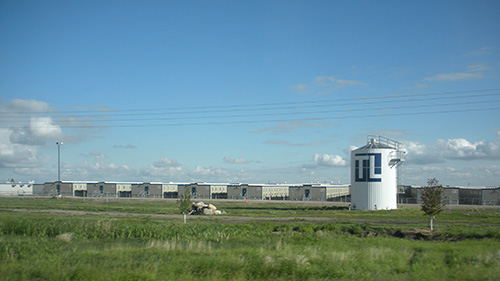
    ND Crew Camp Housing.
    “Crew camp” housing scatters the northwestern North Dakota landscape as a temporary solution to population swells since the oil boom. Photo taken by Capacity Building Manager, Bill Vanderwall.

    MHP has a history working with each of the recipient communities, which will help kick-start these new activities. MHP staff have worked with a number of agencies in Lakes & Pines through MHP’s Housing Institute, and in North Dakota through work with the groundbreaking Vision West initiative. Work with the Osage Nation builds on MHP’s longstanding partnerships within the American Indian community, most notably with members of the Pine Ridge and Rosebud reservations. MHP staff look forward to the work ahead and the opportunity to continue supporting the growth and success of rural communities nationwide.

  • Housing Institute teams gather to “date” developers and court opportunity

    Teams from MHP’s Greater MN regional community development training program, the Housing Institute, met early this month in Baxter, MN for their third gathering since their kick-off meeting last January. The meeting gave teams the chance to update each other on their projects’ progress, discuss federal policy with staff from Minnesota congressional offices, and “speed date” with local developers interested in helping projects move forward.

    “Meeting with potential developers was definitely a highlight of the meeting. It helped educate team members about what a developer might be looking for if they were interested in our project.” – Debra Shaff, Executive Director of the Cloquet/Carlton HRA

    With the teams now half of the way through the Institute training, the convening addressed more specific aspects of project development—how to leverage state resources like tax credits and other local sources, how to court and choose the right developer, and how to generate creative solutions to common problems.

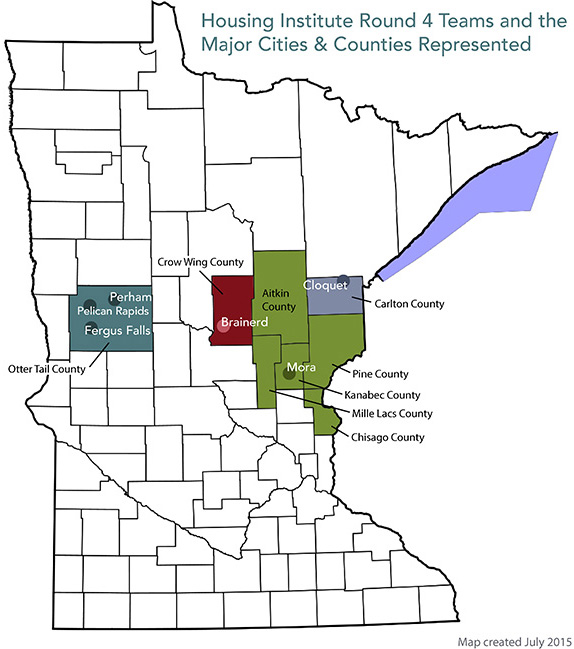
    Each color corresponds to a Housing Institute team and the cities/counties they represent.

    The four current teams from Brainerd, Cloquet, East Central, and West Central have projects that represent a diverse range of development needs. Projects range from senior, workforce, and supportive housing development, downtown rehab, to the creation of a web-based housing resource directory.

    After unexpected costs arose, the Grand Rapids team had to get creative with financing certain aspects of the supportive housing project. One of the solutions they came up with was to purchase the project’s kitchen cabinetry and other furnishings from MINNCOR, a company that builds high-quality, low-cost furniture while providing employment for people in prison. Contracting with MINNCOR has allowed the team to keep costs within range while maintaining quality.

    One of the highlights of the gathering was hearing from a team of Institute alumni from Grand Rapids who discussed the progress of their supportive housing project, Beacon Hill. Construction of the project began this spring. Members of the team reflected on their experience in the Institute and shared some of the key things they’ve learned throughout the development process.

    “The synposis provided by Grand Rapids was invaluable – the commitment, the dedication and trust they had in one another was incredible. Their efforts and energy will benefit their community for years.” – Debra Shaff

    Teams will continue to meet individually over the coming months and will gather for the final, large-group convening in October to discuss project funding and financing in more depth.

    A special thanks to the event speakers:

    Emily Northey, Preservation Alliance
    Skip Duchesneau, DW Jones Management Inc.
    Jamie Thelen, Sand Companies, Inc. 
    Tom Whiteside, Field Representative for Congressman Nolan. See a photo and brief caption of the event on Nolan’s blog.

    The Housing Institute is a program of MHP and Greater Minnesota Housing Fund. The Institute is designed to foster regional collaboration and build the capacity of rural communities to meet local housing and community development needs. Read more about the Housing Institute here.

  • The people behind development – an Itasca County housing team makes Beacon Hill a reality

    When reporting on affordable housing development, traditional media outlets often miss the opportunity to report the “story behind the story”— the narrative of the people who make development possible. MHP’s Impact Spotlight looks beyond the likely narrative of “units created” and “statistics show” to the stories of collaboration that make affordable housing happen.

    MHP’s newest Impact Spotlight, released this week, features a team in Grand Rapids, Minn. and the collaborative inspiration behind Beacon Hill, a supportive housing development set to break ground in spring 2015. This development will fill a large regional gap in meeting the needs of those barred from traditional housing due to criminal records, substance abuse histories, or struggles with mental health issues.

    The team, composed of representatives from five local agencies, faced many challenges along the way: how to balance individual and shared visions for the project, how to court and partner with developers, and how to navigate a complicated process of funding. With the support of training through the Housing Institute and the backing of key partners, the team was able to make the dream of Beacon Hill a reality.

    For many on the team, Beacon Hill represents one of the most rewarding projects of their careers and one of the most effective collaborations of their professional experience.

    “The Itasca County Institute Team has been the best example of a true collaborative that I have experienced in my career. The commitment, the respect, and dedication has been a remarkable experience,” said Lorna Mix, Community Support Program Director at Northland Counseling Center.

    Read the Spotlight to learn more about the team’s journey and to find out how they hope to inspire others with their story.

  • MHP Launches 2013 Housing Institute: Facilitates Regional Collaborations & Builds Capacity of Greater MN Communities

    The Minnesota Housing Partnership recently launched our 2013-2014 Housing Institute for Greater Minnesota. The Housing Institute fosters regional collaborations and builds the capacity of communities to meet housing needs in rural Minnesota.  This year’s Housing Institute includes teams from Itasca County, Thief River Falls, and Roseau County.  Each team will work on a housing project/program over the next twelve months.

    The Housing Institute is an opportunity for housing leaders to come together to share their experiences, learn best practices in housing and community development, and develop creative solutions to bring quality affordable housing to their community.  Quarterly training sessions and one-on-one technical assistance helps teams strengthen their skills to make their project a reality. The Housing Institute for Greater Minnesota is a project of the Minnesota Housing Partnership and Greater Minnesota Housing Fund.

    Meet the 2013-2014 Housing Institute Teams

     Roseau County Team

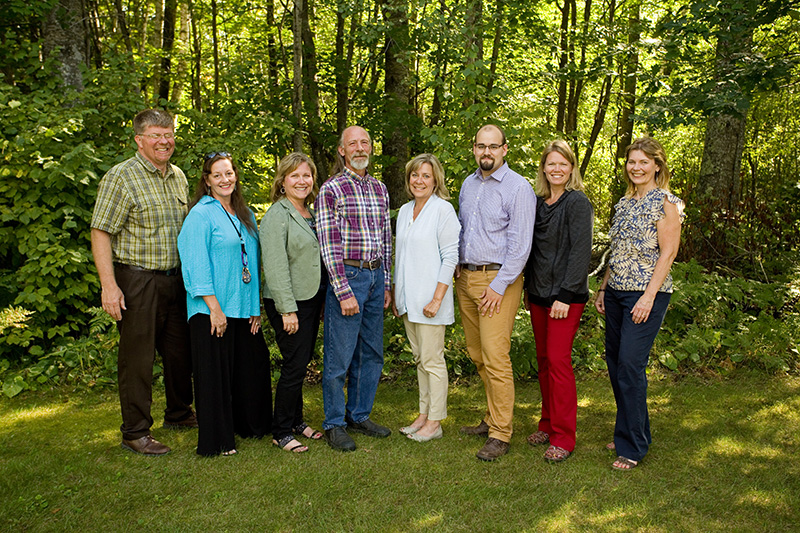
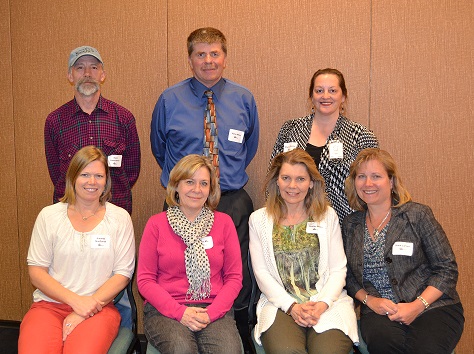
    Roseau Co HI Team


    Economic growth in Roseau County has caused a shortage of housing, making it difficult for businesses to recruit employees to the area.  In 2012, a local housing study identified the need for additional homeownership and rental housing opportunities within the region.  The team hopes to develop a mix of housing options; ensuring workers at every pay level have access to affordable homes.

    Team Members Include:

    • Todd Peterson, City of Roseau
    • Pam Monsrud, City of Badger
    • Jack Swanson, Roseau County Commissioner
    • Anita Locken, City of Greenbush
    • Glenda Phillipe, Roseau County Commissioner
    • Jeff Fagerstrom, Northwest Minnesota Housing Cooperative
    • Lee Meier, Northwest Multi-County HRA

    Thief River Falls Team

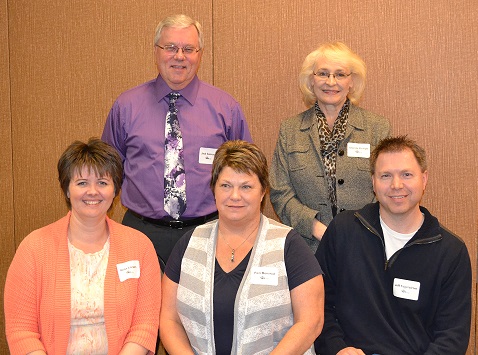
    Thief River Falls HI Team


    Like in Roseau, economic growth in Thief River Falls has caused a shortage of housing, making it difficult for businesses to recruit employees to the area. In 2011, a local housing study identified the need for additional homeownership and rental housing opportunities in Thief River Falls.  The team hopes to develop the skills to support housing development in Thief River Falls and implement a communication strategy that will engage the community in the process.

    Team Members Include:

    • Michael Moore, City of Thief River Falls
    • Dale Hahn, Thief River Falls City Council
    • Maryel Anderson, Anderson Realty
    • Kermit Genereux, Genereux Realty
    • Leroy Flickinger, LV Contracting
    • Steve Crittenden, Northland Community & Technical College
    • Catherine Johnson, Inter-County Community Council
    • Jeff Fagerstrom, Northwest Minnesota Housing Cooperative (Alternate)

    Itasca County Team

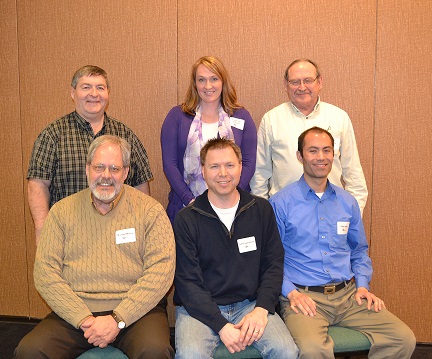
    Itasca Co HI Team


    There is a growing need for affordable housing Itasca County. The changing demographics in the region and the rise of homelessness have caused a shortage of affordable housing options.   In addition, much of the current housing stock is in need of repairs.   The Itasca County team hopes to collaborate on a project that will help homeless individuals and families access stable housing. Audrey Moen, Housing Manager at Northland Counseling Center and Itasca County Team member noted “We hope that by collaborating we will be able to develop permanent, supportive housing, creating an environment that fosters safe, affordable housing that is well integrated in the community.”

    Team Members Include:

    • Diane Larson, Itasca County HRA
    • Amanda MacDonnell, Itasca County HRA
    • Lorna Mix, Northland Counseling Center
    • Audrey Moen, Northland Counseling Center
    • Dana Herschbach, Kootasca Community Action
    • Victor Moen, Minnesota Department of Corrections
    • Jason Anderson, Minnesota Department of Corrections (Alternate)
    • Sherry  Shadley, Grace House
    • Ami Bolster, Grace House (Alternate)