• President Trump Releases “Skinny Budget”

    President Trump Releases “Skinny Budget”

    The President’s “skinny budget”: has been released and, as anticipated, makes deep cuts to non-defense discretionary spending by $163 billion, representing a cut of 22.6% from FY25 budget levels. The President’s budget makes devastating cuts to HUD and housing programs in other agencies. A list of spending cuts and other spending proposals, including to HUD, are here. The President’s full budget proposal will be released in the coming weeks.

    President Trump’s budget proposal includes a 44 percent reduction to HUD’s housing programs. The proposal calls for eliminating vital programs, such as the HOME Investment Partnership program (HOME), Community Development Block Grant program (CDBG), Low Income Home Energy Assistance Program (LIHEAP), Fair Housing programs, the Neighborhood Reinvestment Corporation (NeighborWorks America) and the United States Interagency Council on Homelessness (USICH). It also includes significant cuts for homelessness prevention, Native American programs, resilience and utility efficiency, and rural development programs, and the Community Development Financial Institutions Fund (CDFI Fund).


    Rental Assistance

    The President’s budget proposal would slash rental assistance by more than 40%, or $26.72 billion, and combine all remaining funds and block grant them into one program, State Rental Assistance Block Grants. It would be up to states to continue to provide housing assistance to the millions of people who rely on it. The programs eliminated and replace with the block grant would include Housing Choice Vouchers (HCVs), Public Housing, Project-Based Rental Assistance (PBRA), Section 202 Housing for the Elderly, and Section 811 Housing for Persons with Disabilities. In addition, the President’s budget would impose a two-year time limit on receiving rental assistance for “able-bodied adults.”


    Supportive Housing

    The President’s proposal would eliminate the Continuum of Care Program and Housing Opportunities for Persons with AIDS (HOPWA) and move them into the Emergency Solutions Grant Program, with a cut of $532 million. The ESG program cannot be used for long term housing, but rather only funds short-term shelters and housing limited to two years. See NYTimes coverage – impacts to supportive housing


    USDA Rural Housing Programs

    President’s preliminary budget would eliminate U.S. Department of Agriculture single-family housing direct loans (section 502), self-help housing grants, and rural housing vouchers, arguing these programs “are duplicative, too small to have macro-economic impact, costly to deliver, in limited demand, available through the private sector, or conceived as temporary.“


    House Reconciliation Bill and Tax Provisions

    The House of Representatives is expected to review all or portions of the reconciliation bill during the week of May 12. Republican goals for a reconciliation bill, which can avoid the Senate’s 60-vote filibuster threshold, including extending tax cuts, expanding border security and defense, and cutting federal spending. The Ways and Means, Energy and Commerce, and Agriculture Committees are responsible for determining key provisions of the bill, including tax cuts and extensions, cuts to Medicaid and healthcare assistance, and cuts to food assistance. 

    While housing assistance has not been identified as a potential target for cuts, cuts to anti-poverty programs such as Medicaid and the Supplemental Nutrition Assistance Program (SNAP), both named as targets for potentially large cuts, would negatively impact economic stability and housing stability for families and people with low incomes.

    House Tax Bill Expands Tax Credit

    The House Ways and Means Committee, on May 12, released legislative text for the House tax reconciliation bill, which includes an expansion of the Low-Income Housing Tax Credit (Housing Credit), and expanding the Opportunity Zone tax credit. The bill would:

    • Increase the Housing Credit volume cap for 9 percent properties by 12.5 percent from 2026-29;
    • Lower the bond financing threshold to 25 percent for 4 percent Housing Credit properties placed in service after December 31, 2025; and
    • Provide a basis boost of up to 30 percent for properties located in rural and Native American areas.

    Take Action:

    The House Ways and Means Committee, on May 12, released legislative text for the House tax reconciliation bill, which includes an expansion of the Low-Income Housing Tax Credit (Housing Credit), and expanding the Opportunity Zone tax credit. The bill would:

    • Use NLIHC’s toolkits and resources to take action on FY26 funding to urge Congress to pass a FY26 spending bill with increased funding for HUD’s affordable housing programs. You can use NLIHC’s Take Action page to look up your member offices or call/send an email directly.
    • Minnesota NAHRO has shared a one-pager of the impacts of HUD funding in Minnesota, here, You can use the NAHRO Action Alert to contact your Member of Congress about the devastating impact of the President’s proposed FY26 budget on rental assistance and public housing.

  • 2025 Mid-Session Legislative Update

    2025 Mid-Session Legislative Update

    Friday, April 25 · 4 – 5pm

    Please join us for a virtual event to hear from partners and elected officials about the status of various proposals at the MN Legislature.

  • Emerging Developer Initiative (EDI) for Minnesota

    Dedicated to the professional support of new housing developers from rural communities and Native Nations

    MHP’s Emerging Developer Initiative (EDI), a state and privately-funded Initiative, was created to support the emergence and professional development of new housing developers from rural communities throughout Minnesota. The EDI is dedicated to the success of entrepreneurs in the housing development industry, through education, mentorship, peer to peer learning and more.

    This free training series increases the knowledge and skills of new, emerging housing developers in rural areas. The curriculum is open to ALL who are interested in learning about housing development at all
    experience levels.

    MHP is bringing the Emerging Developer Initiative to Southwest MN this summer! Join us for a 6 month training track followed by 6 months of hands-on learning alongside a developer! Together, we can help increase local housing supply and support individual and community wealth building!

    To learn more, contact our Community Development Team:
    CDinfo [at] mhponline.org

    The 2025 – 2026 EDI is generously supported by:

    CenterPoint Energy Foundation logo
    Minnesota Housing logo
    Southwest Initiative Foundation logo
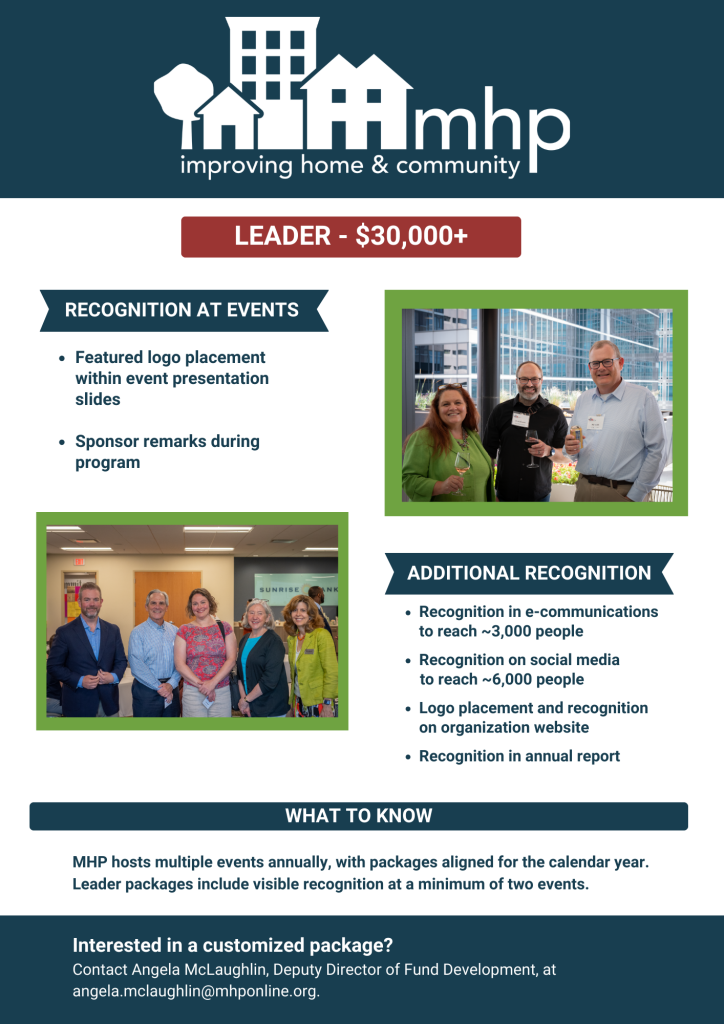
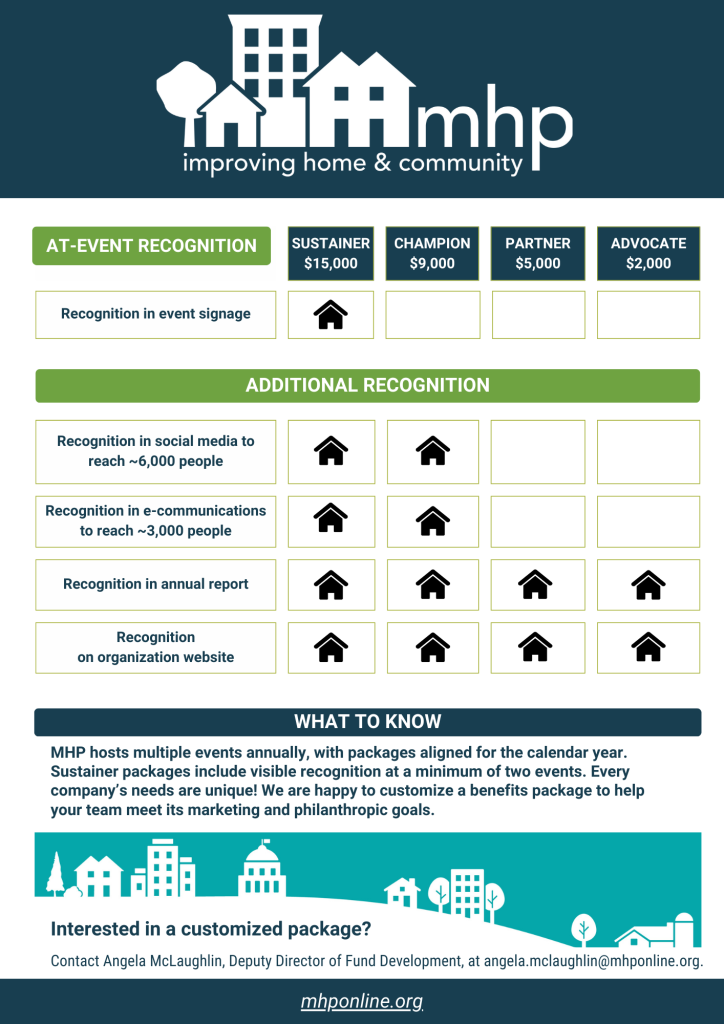
  • MHP Investors Circle

    MHP Investors Circle contributors engage housing champions in a professional network and support the mission of MHP.

    MHP works collaboratively, convening broad, diverse networks and building local, statewide, and national partnerships. Our events play a critical hand in driving policy conversations in the affordable housing industry. Stay connected year-round through one-year commitments.

    Five Investors Circle packages are available — we are happy to customize a benefits package to help your team meet its marketing and philanthropic goals.

    Stay involved. Be part of the conversations. 

    Contact Angela McLaughlin, Deputy Director of Fund Development, with questions at [email protected]. 

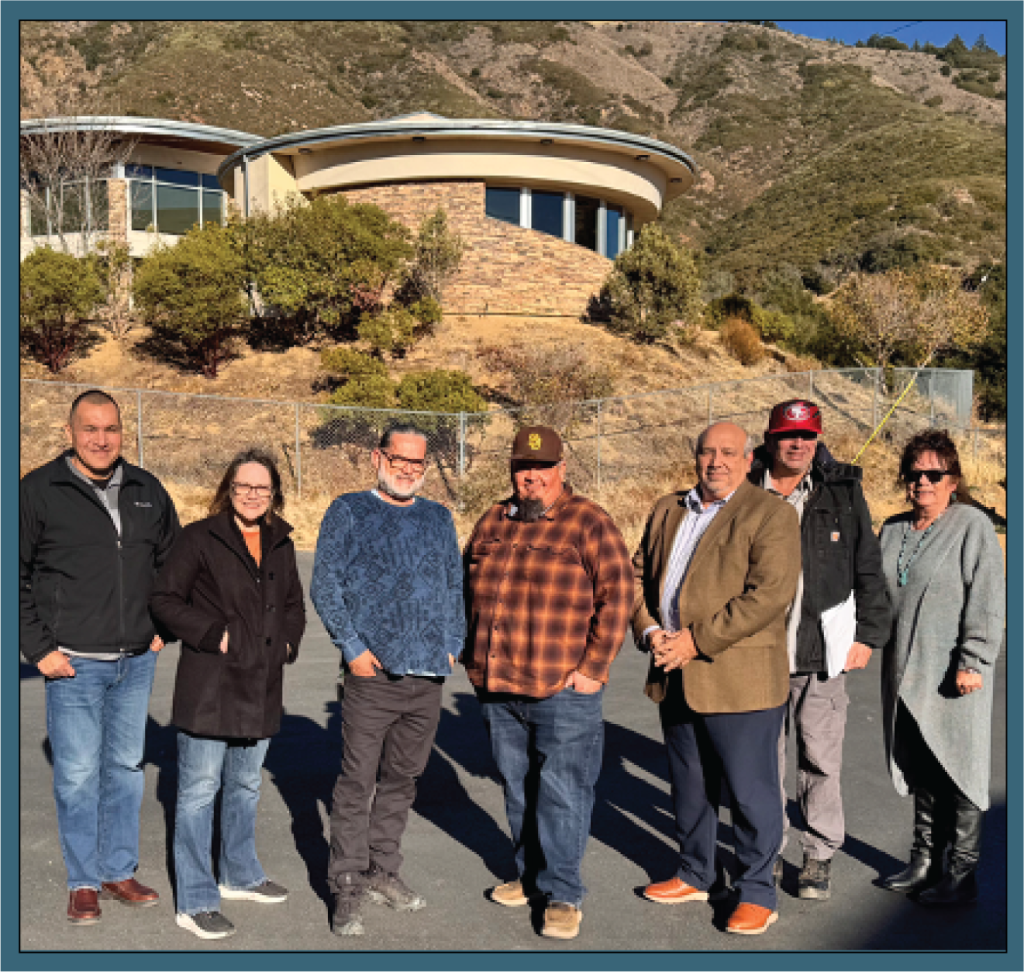
  • A Look Into the Iipay Nation of Santa Ysabel 

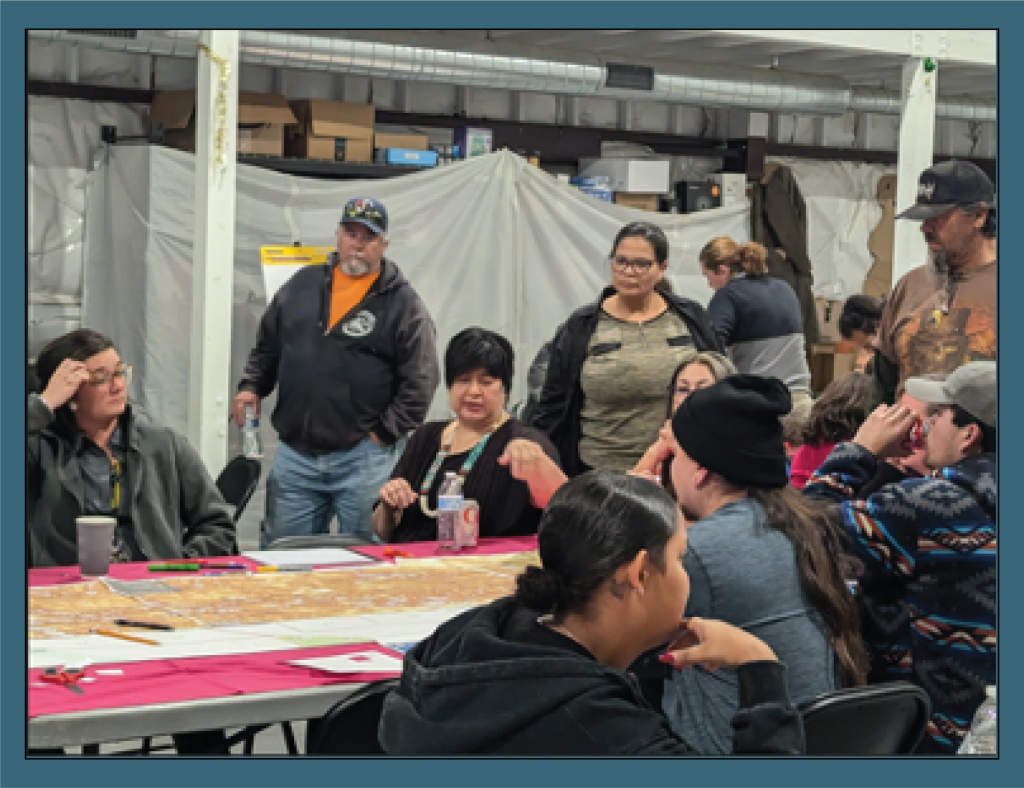
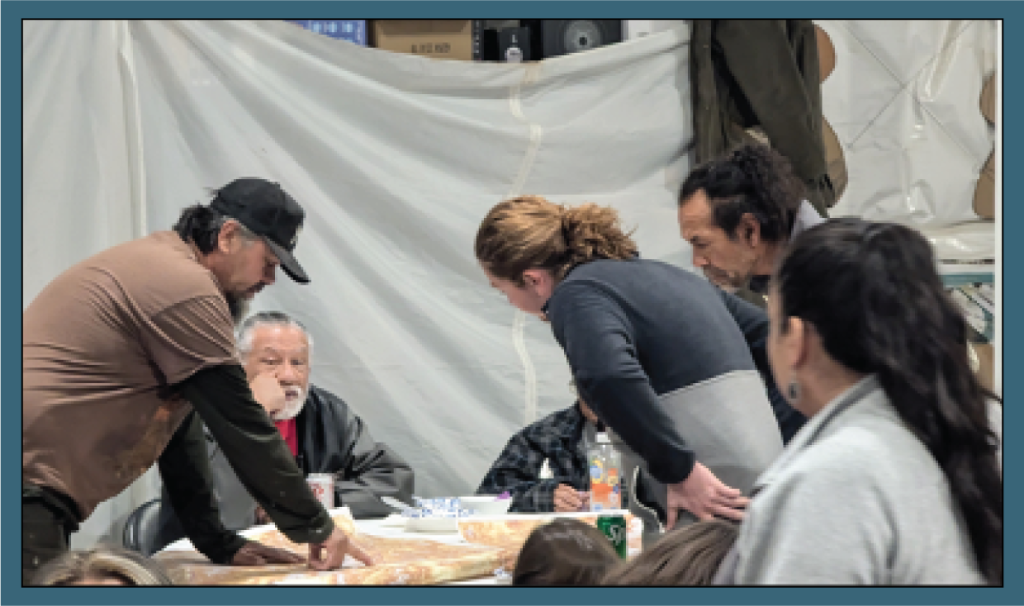
    In March 2024, MHP began working with the Iipay Nation of Santa Ysabel (INSY), part of the Kumeyaay people who have lived in present-day San Diego and Imperial Counties for over 12,000 years. The Iipay Nation of Santa Ysabel Reservation was founded in 1893 and is located in northeastern San Diego County near Santa Ysabel and Julian. 

    The Santa Ysabel Indian Reservation spans elevations from 3,200 to 5,700 feet and covers a total land area of 15,546 acres (23.4 square miles). However, only 810 acres—less than 6%—are developed. The limited development is primarily due to the rugged and steep terrain, which poses challenges for construction. Additionally, water is not readily available on the reservation. Community members often must pump and transport water from community wells. 

    The Tribal enrollment totals just over 1,000 individuals, with approximately 211 people residing on the reservation across about 152 households. This remote area lacks a significant economy, leading to considerable economic challenges for the community. The per capita income is $26,407, while the median income stands at $45,000, representing a decrease of 66% compared to the national average. Additionally, around 80% of households are economically disadvantaged, often facing obstacles due to unreliable technology and transportation. 

    The housing stock on the reservation is mainly composed of manufactured homes due to terrain limitations. The Housing Department, managed by one employee under the tribal administrator and council, oversees about 115 units with under $135,000 in federal assistance from the Indian Housing Block Grant. Many homes need repairs or replacement due to limited maintenance funds.  

    Despite these challenges, INSY staff are motivated partners with capacity-building efforts. They sought technical assistance from MHP in the areas of Organizational Development, Housing Development, and Physical Planning. MHP and the INSY worked with a contractor to conduct a Physical Conditions Needs Assessment for 50 of the managed units of its existing housing and assisted the tribe with the PRICE grant application, which is aimed at preserving and revitalizing manufactured housing. Leveraging these two items creates a significantly positive impact for tribal members living in the tribe’s housing. 

    Currently, the INSY and MHP staff are collaborating to bring training for the Tribal Council and senior staff to clarify their roles and responsibilities in January. The purpose of this training is to define the duties, powers, and limitations associated with each position, promoting effective governance and decision-making. This training and guidance aim to establish a strong foundation for governance, ensuring the well-being and prosperity of their tribal community.  

  • 2025 Legislative Preview Event

    2025 Legislative Preview Event

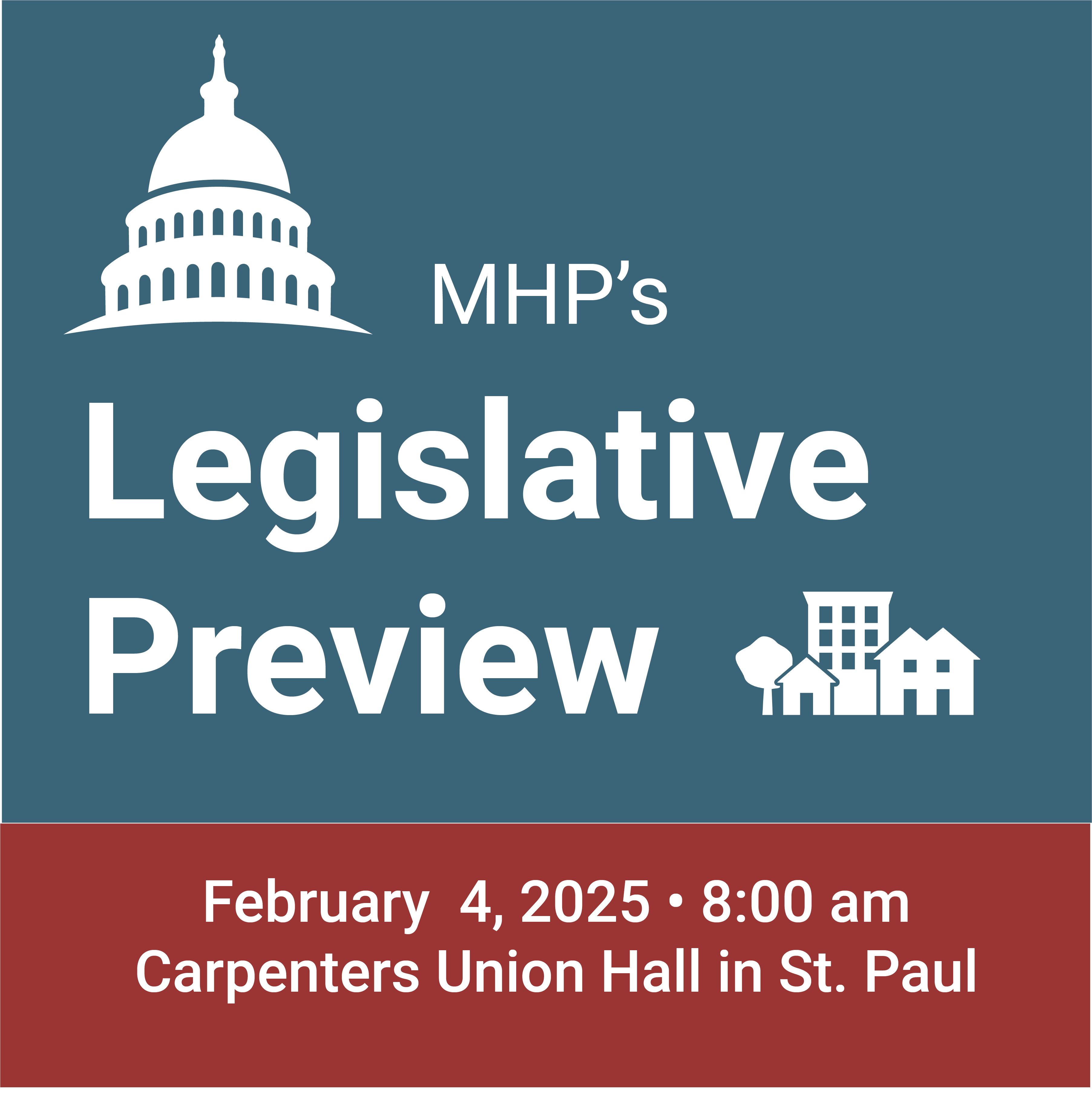
    Join MHP, housing colleagues, and legislators on February 4th at Carpenters Union Hall in St. Paul!

  • MHP Responds to Governor Walz’s Budget Announcement: Housing is the Foundation of a Strong Minnesota

    MHP Responds to Governor Walz’s Budget Announcement: Housing is the Foundation of a Strong Minnesota

    Minnesota Housing Partnership (MHP) is disappointed in Governor Walz’s proposed budget for FY2025. While no cuts to housing were proposed, Minnesota needs serious and robust long-term solutions to provide the housing our state needs to thrive. Inflationary pressures and chronically underfunded resources for housing mean that existing budgets are not keeping up with the stress of the housing needs of hard working Minnesota families and businesses.

    MHP Executive Director Anne Mavity responded with a call for action:

    “Housing is central to Minnesota’s prosperity. Having no cuts to the housing budget avoids further harm, but in the face of rising housing costs, growing demand, and the urgent need for solutions, flat funding isn’t enough. We need bold, forward-thinking policies and investments to meet the scale of the challenge.”

    Mavity continued:

    “Housing is a bipartisan issue that benefits every Minnesotan. Smart investments in housing strengthen businesses, support local economies, and prevent costly interventions later. By creating homes for workers near job opportunities, we help businesses grow and communities thrive. The future of Minnesota depends on our ability to invest in the resources that allow everyone to live, work, and contribute to our shared prosperity.”

    Looking ahead, MHP urges state leaders to address stabilizing and preserving the housing we have and pursue zoning reforms and land use policies that unlock opportunity to create more homes more cost efficiently. In addition, capital investments, including Housing Infrastructure Bonds (HIBs) will be a critical tool for ensuring new homes can be created to keep up with population and job growth. As legislative discussions begin, we are looking forward to bipartisan collaboration to ensure that Minnesota remains a leader in housing solutions that benefit all.

  • Minnesota’s 2025 Legislative Session Begins in Earnest

    Minnesota’s 2025 Legislative Session Begins in Earnest

    The 2025 Minnesota Legislative Session commenced today. Lawmakers are tasked with passing a balanced budget before June 1. Lawmakers must adjourn on May 19. But the Governor can summon them back for a special session if they don’t finish their work by the May adjournment deadline. Legislators face escalating political tensions in the House of Representatives and a very different budget forecast than two years ago.

    Things to watch:

    • In December, Minnesota Department of Management and Budget released the November Forecast. The forecast predicts a $616 million surplus at the end of FY26-27 (7/1/2025-6/30/2027). This forecast is $1.1billion less than previous estimates. The reduced surplus prediction is largely due to higher actual spending in health and human services and education. The forecast also projects a $5.1 billion budget deficit by FY28.
    • Going into session, the Senate is tied at 33-33.A special election in Minneapolis will break the tie later this month. Senate leaders reached a power sharing agreement over the weekend. Republican andDemocrats will share presiding officer posts and committee chair position. TheSenate named Senators Bobby Joe Champion (DFL) and Senator Jeremy Miller (R) as co-presidents of the Senate. Both parties will evenly split representation on committees. Lawmakers will likely undo the power sharing deal when one party holds a 34-seat majority.
    • First, the House was set to convene with a 67-67ntie. Leaders negotiated a power sharing deal like the temporary deal in theSenate. When a district judge ruled that Curtis Johnson (DFL) did not live in the district he was elected to represent, Republicans announced Representative Demuth would be the Speaker of the House for the two-year biennium. Republicans also announced their intention to prevent Representative Brad Tabke (DFL) from taking his seat in the House. To prevent this, Democrats boycotted the first day of session to prevent the body from establishing a quorum, which is needed to elect a speaker.  All this has led to a constitutional crisis as Republicans and Democrats don’t agree on how a quorum is reached. Today, Secretary of State Steve Simon, who presides over the first day of session, declared that quorum was not reached and adjourned session. Republicans ruled that quorum was present and proceeded to elect Representative Lisa Demuth to be House speaker. Democrats will challenge theRepublicans actions in the Minnesota Supreme Court. You can read more about it with MPR News.

    What this means for housing?

    • Committee budget targets will be much smaller than they were in 2023.
    • In the House, House Republicans will immediately get to work convening committee hearings and introducing bills. House Democrats will file a lawsuit and continue boycotting session until the courts rule on the matter.
    • In the Senate, Senator Port (DFL) and SenatorLucero (R) will co-chair the Housing Committee until a member is elected in theMinneapolis special election.
  • Looking for FREE Community Development Services? Apply now!

    Is your community facing a lack of affordable housing? Do you work for an organization that could benefit from enhanced local knowledge, training, and strategic partnerships? MHP is excited to open its application for FREE technical assistance for housing and community development! View MHP’s Request for Technical Assistance (RFTA) Application here.

    MHP’s renowned Strengthening Rural Communities Program (funded through an eighth-consecutive Rural Capacity Building award from HUD), delivers technical and financial assistance to rural entities and Native Nations across the country, increasing their capacity to meet current and future housing needs—at no cost to RFTA awardees. By increasing local capacity, we position beneficiaries of the assistance to achieve their unique vision and sustain housing and community development successes long after MHP’s work is complete.  

    MHP has the expertise to assist with a variety of issues, including housing development, housing program development, organizational development, funding and resource development, and community engagement and outreach. Since 2014, MHP staff provided direct assistance to over 132 beneficiaries through customized and individual workplans; including assistance with 54 community development projects. The result: 577 affordable units are in the development process, with 33 new units completed, and 632 housing units have been rehabbed/preserved.. The assistance also contributed to the success of 41 businesses (including 8 new ones) and boosted their local economies.  Read about the impact of this technical assistance in just a few communities here:

    Priority is given to organizations currently engaged in housing development as a part of their mission or actively working to build their housing development capacity. MHP also works with such entities as rural housing development organizations (RHDOs), local units of government and political subdivisions, tribal governments and tribal corporate entities, and CHDOs and CDCs. Statewide or state-affiliated entities are not eligible.  

    Applications are being accepted on a rolling basis. Click here to access the application directly. MHP will follow up within forty-five days to schedule a collaborative review of your application. MHP is an equal opportunity assistance provider and markets its technical assistance program to communities historically facing housing disparities. More information paper copies of all materials are available upon request.  

    We want to work with you! Please reach out with any questions:

    Via Phone: 651-925-5545 

    Via Email: [email protected] 

    Via Fax: 651.649.1725 

  • MHP Concludes Work with Santo Domingo Tribal Housing Authority

    As of December 1, 2024, MHP staff has begun the closeout process for their partnership with the Santo Domingo Tribal Authority (SDTHA). The Santo Domingo Pueblo, known as Khe-wa to its residents, is located between Albuquerque and Santa Fe, along the Rio Grande. Recognized for its rich traditions, many community members still speak Keresan, along with English and some Spanish. With over 5,000 enrolled members, the Pueblo has a variety of departments providing services to its residents. 

    The SDTHA, established in 1995, focuses on affordable housing development for the community. They aim to provide safe, sustainable, and culturally appropriate housing that supports traditional family values and self-sufficiency. SDTHA has implemented a master plan that integrates affordable housing with economic development and infrastructure improvements. 

    After facing significant organizational challenges, including management issues and financial shortfalls identified in a 2019 HUD-ONAP monitoring review, along with the impacts of the COVID-19 pandemic, MHP assisted the SDTHA with overhauling its staff and operations. MHP improved the SDTHA’s internal capacity and secured funding for new housing development projects. This support included the creation and updating of internal policies, resolving its monitoring findings with HUD-SWONAP (Southwest Office of Native American Programs), strategic organizational planning, and a Housing Needs Assessment. 

    Additionally, MHP assisted the SDTHA with grant writing for the Competitive Indian Housing Block Grant (IHBG) using resources from MHP’s Strengthening Rural Communities Grant (SRCG). Although the application scored well, it resulted in a tie with several other applicants and did not receive funding. Fortunately, due to the strong score of the application and overall improvements, the SDTHA is now well-positioned to apply for both the IHBG and the Indian Community Development Block Grant (ICDBG). This will allow them to continue planning for projects that had been on hold due to monitoring issues.