• 2026 County Profiles

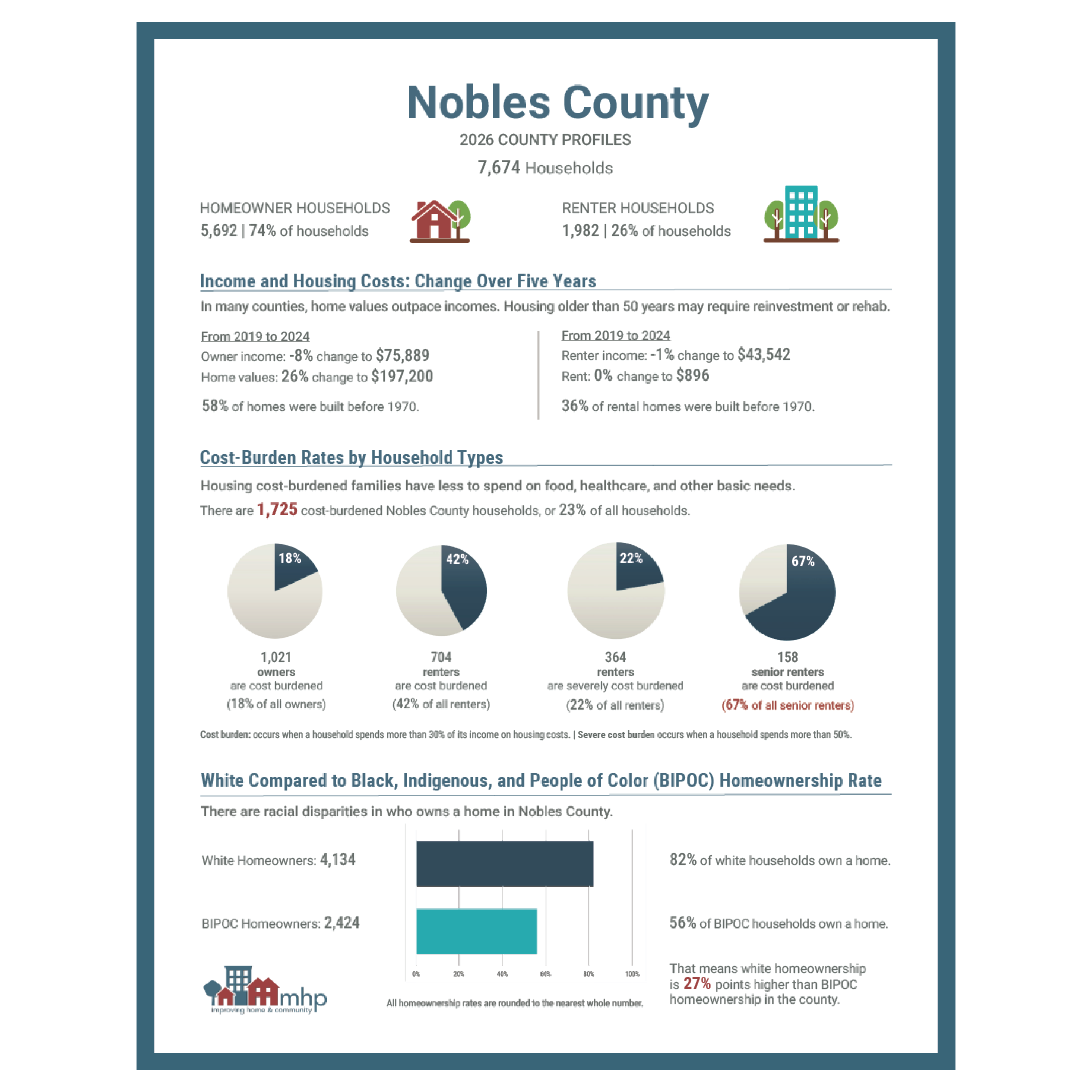
    2026 County Profiles

    MHP Research Highlights Housing Costs, Homeownership Gaps, and Rental Shortages in All 87 Counties

    A stable home is the foundation for strong communities, economic opportunity, and a thriving Minnesota. Yet new research from MHP finds that people in every corner of the state are increasingly struggling to find a home they can afford.

    MHP’s County Profiles report is one of the organization’s most widely used research tools. Updated every two years, the profiles examine housing conditions in all 87 Minnesota counties, providing local data on housing costs, renter and homeowner cost burden, homeownership disparities, the wages needed to afford housing, and the shortage of homes affordable and available to renters with extremely low incomes.

    Key Findings from the 2026 County Profiles

    • Every county in Minnesota has too few homes that are affordable and available to renters with extremely low income.* In 79% of counties, the shortage exceeds 100 homes; in nearly one-third of counties (32%), it exceeds 500 homes. 
    • Home values rose faster than homeowner incomes from 2023 to 2024. Home values increased in every county in Minnesota this year, while homeowner incomes increased in only 65% of counties.  
    • At least one in four renters are cost burdened— paying more than they can afford for housing—in every county in the state. In 20 counties, more than half of renters are burdened. 
    • Senior renters face especially high housing costs. In every county, at least 30% of senior renter households are cost burdened, and in 78% of counties, more than half are cost burdened.
    • White, non-Hispanic households have high homeownership rates across Minnesota, ranging from 65% to 89%. Yet large disparities remain: in Minnesota’s most populous counties,** homeownership rates for Black, Indigenous, and other households of color ranges from 42% to 74%. 

    *Extremely low-income indicates people are those earning less than $33,000 a year. Because higher-income households often occupy homes affordable to lower-income renters, the shortage of affordable and available homes for extremely low-income renters can exceed the state’s overall housing shortfall.
    **Counties with over 100,000 households.

    “The data in these profiles tell a remarkably consistent story across Minnesota’s 87 counties,” said Gabriela Norton, Director of Research at MHP. “In every county, renters with extremely low incomes face a shortage of homes that are affordable and available to them, and in every county, at least one in four renters is cost burdened. We also see that older adults and households of color are more likely to face barriers to stable housing and homeownership. By making these trends visible at the local level, we hope these profiles can help communities and policymakers better understand the challenges they face and identify solutions that can make a difference.”

    “A stable home is the foundation for opportunity and strong communities. These profiles show that communities across Minnesota are facing a common challenge: housing costs are rising and there are too few homes people can afford. The good news is that communities across Minnesota are already showing us what is working in their communities when we invest in more homes and more housing choices.” said Anne Mavity, Executive Director of MHP.

    The County Profiles are intended to help local leaders, advocates, policymakers, and community members better understand housing conditions in their communities and support local conversations about solutions.

    Links to Profiles by County


    • Cost burden and homeownership: U.S. Census Bureau, American Community Survey (ACS), 2024 5-year estimates.
    • ELI renters and affordable homes: U.S. Department of Housing and Urban Development (HUD), ACS 5-year Comprehensive Housing Affordability Strategy (CHAS) county estimates, 2025 release based on 2018-2022 data 
    • In-demand jobs: Minnesota Department of Employment and Economic Development (MN DEED), Occupations in Demand, 2025
    https://mhp.sdho.dev/2023-county-profiles
    https://mhp.sdho.dev/2021-county-profiles
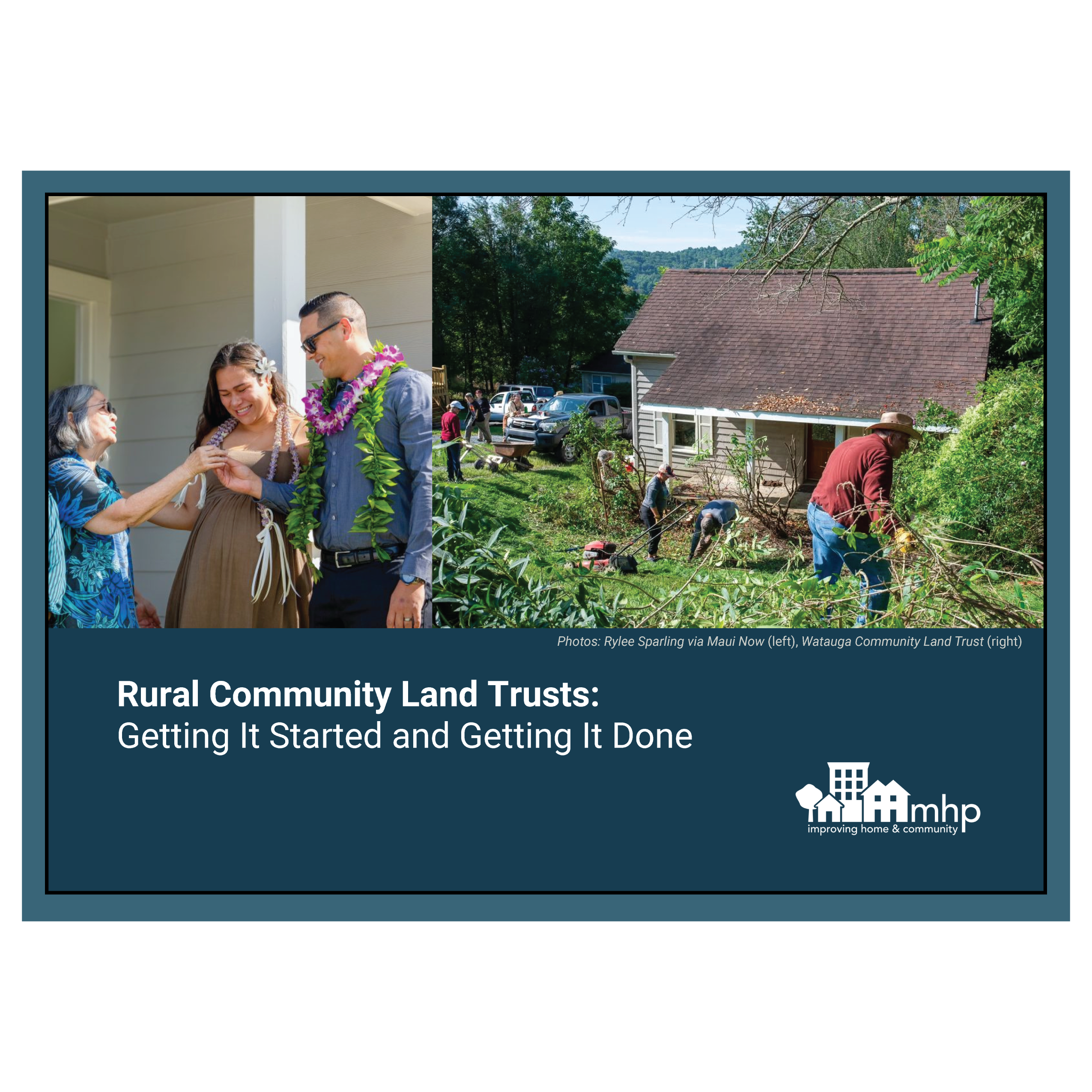
  • Rural Community Land Trusts: Getting it Started and Getting it Done

    Rural Community Land Trusts: Getting it Started and Getting it Done

    Community Land Trusts (CLTs) have become an increasingly important tool for preserving affordable homeownership and ensuring stable, high-quality housing opportunities across the United States. While more and more CLTs are being created nationwide, rural communities continue to face distinct challenges, including limited housing and funding opportunities.

    This publication highlights the work of real CLTs who are strengthening housing solutions across rural America. Through conversations with ten rural organizations, we explore how these communities established their CLTs, navigated obstacles, and developed creative strategies to sustain and grow their impact. Their experiences reveal both the challenges and successes of running the CLT model in rural settings, offering valuable insights for leaders, policymakers, and community members alike. By learning from the experiences of these organizations, we can better understand the opportunities, barriers, and creative solutions shaping the future of affordable homeownership in rural communities. We hope these organizations inspire you as much as they did us. 

  • Relational Strategic Planning Toolkit

    Relational Strategic Planning Toolkit

    Strategic plans help nonprofits and community organizations set direction and align around shared priorities. But too often, once the retreat ends and the binder is printed, the plan sits on a shelf.

    MHP’s Relational Strategic Planning Toolkit — offers an approach that builds on tried and tested planning models while strengthening the relationships, clarity, and coordination needed to turn ideas into action. The publication provides practical tools to help ensure the readers next strategic plan becomes a living guide, not just a finished document gathering dust.

  • From Data to Decisions: A Practical Guide to Community-Driven Housing Needs Assessments

    From Data to Decisions: A Practical Guide to Community-Driven Housing Needs Assessments

    Every community is stronger when people have a stable, accessible place to call home. Housing is the foundation for good jobs, strong schools, thriving local businesses, and healthy families. When people can afford to stay rooted in their communities, everyone benefits.  

    This publication is MHP’s practical guidance for understanding local housing conditions in a way that builds internal capacity and supports community-driven decision-making. This guide was developed to help address that gap. 

    This guide reflects commonly used practices in housing and community development planning, drawing from federal and state housing guidance, practitioner experience, and Minnesota Housing Partnership’s (MHP) technical assistance work with communities across diverse geographies. Rather than reproducing any single methodology or template, the guide synthesizes widely accepted concepts and adapts them into a modular, practitioner-focused framework designed to support local decision-making, capacity-building, and practical application. 

    Download the guide and accompanying tools:

  • Housing Trends & Takeaways: A Multiyear Look at Minnesota

    Housing Trends & Takeaways: A Multiyear Look at Minnesota

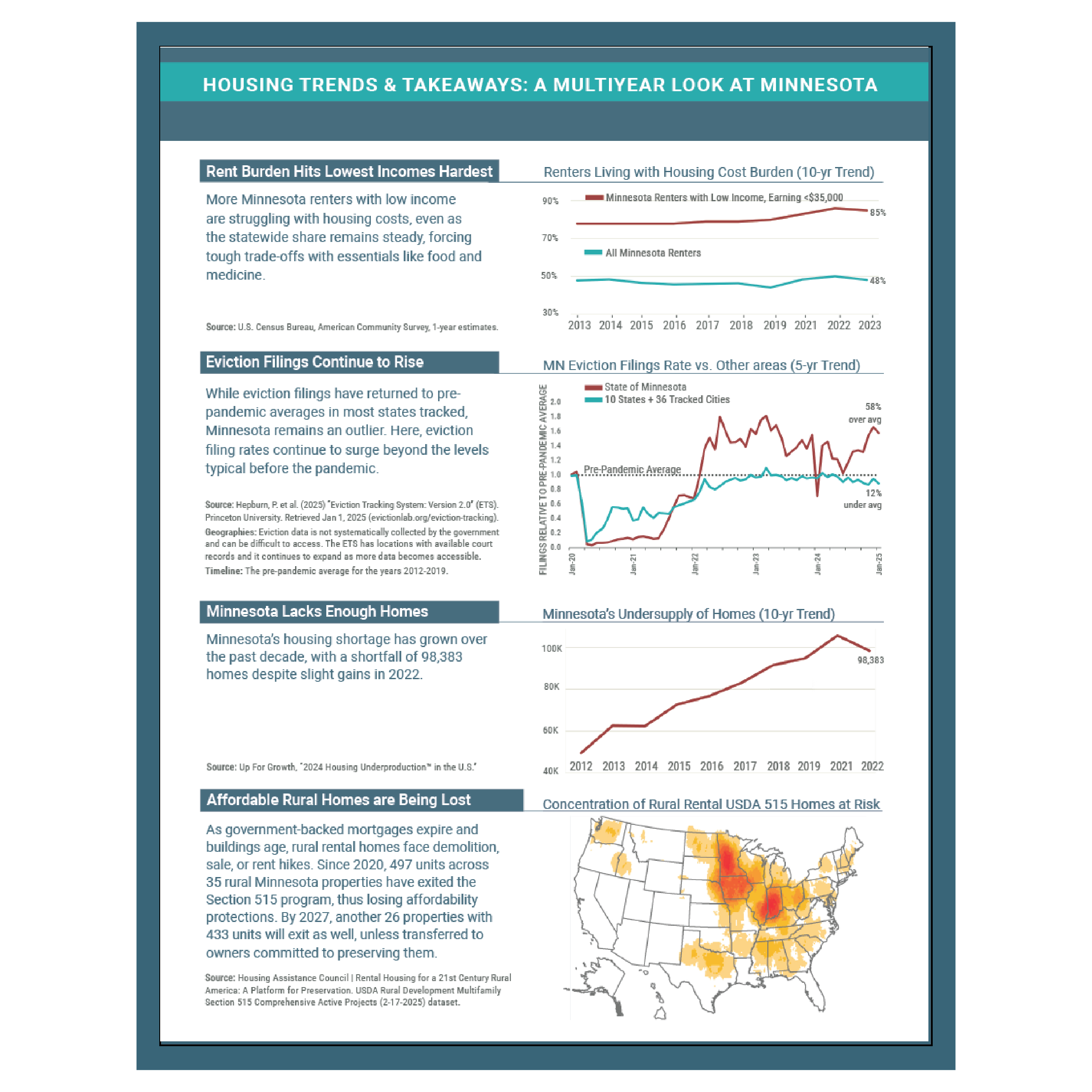
    Housing is more than just a place to live—it’s the foundation for thriving communities. Yet, MHP’s latest report: Housing Trends & Takeaways: A Multiyear Look at Minnesota report shows that too many Minnesotans are struggling to find a home they can afford. As eviction filings rise, homeownership remains out of reach for many, and rural communities risk losing critical rental housing, the need for action has never been greater.


    Key findings include:

    • More low-income renters are struggling with housing costs.
    • Eviction filings in Minnesota remain above pre-pandemic levels.
    • The state faces a shortfall of nearly 100,000 homes, despite recent gains.
    • Rural rental homes are losing affordability protections at an alarming rate, and thousands face demolition, sale or rent hikes.
    • Homeownership disparities persist.
    • Homeowners insurance costs are among the highest in the U.S., with premiums soaring 39% since 2017.

    Yet, the story of housing in Minnesota isn’t just about the challenges—it’s about our collective ability to create solutions. As MHP’s Executive Director, Anne Mavity, reminds us:

    “The solutions to our housing challenges are within reach. By working together, we can ensure that everyone—no matter their income or background—has a safe, stable, and affordable place to call home.”

  • 2023 Report: The USDA Section 515 Program and the Challenge of Preserving Affordable Housing in Greater Minnesota

    2023 Report: The USDA Section 515 Program and the Challenge of Preserving Affordable Housing in Greater Minnesota

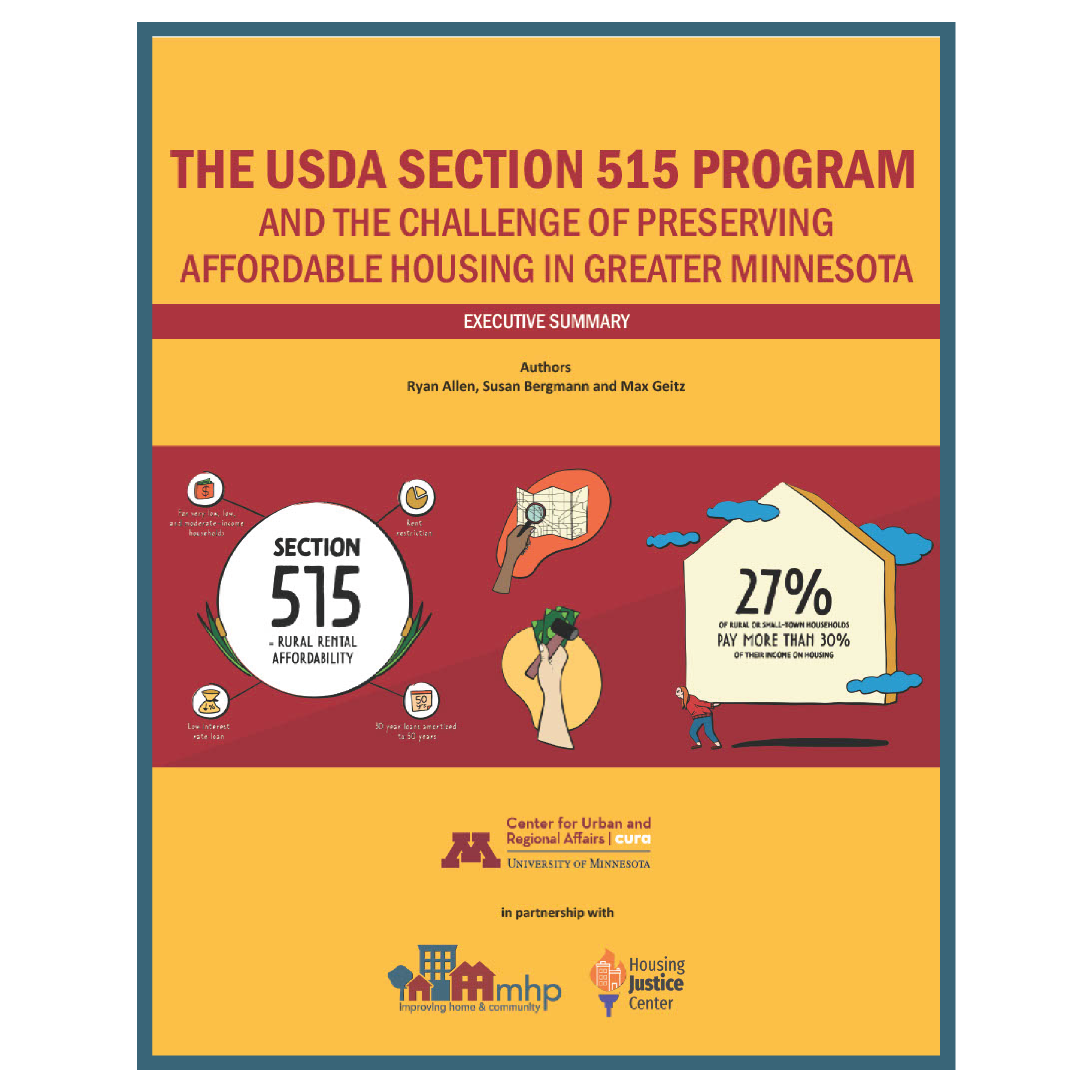
    This research effort was a multi-year collaboration between the Center for Urban and Regional Affairs (CURA), Housing Justice Center, and Minnesota Housing Partnership (MHP). The CURA-funded research was lead by Ryan Allen with support by CURA Community-Based Research. For MHP, this 2023 report illustrates the intersection and cross-collaboration between the organization’s three program areas: our research, policy, and community development departments. 

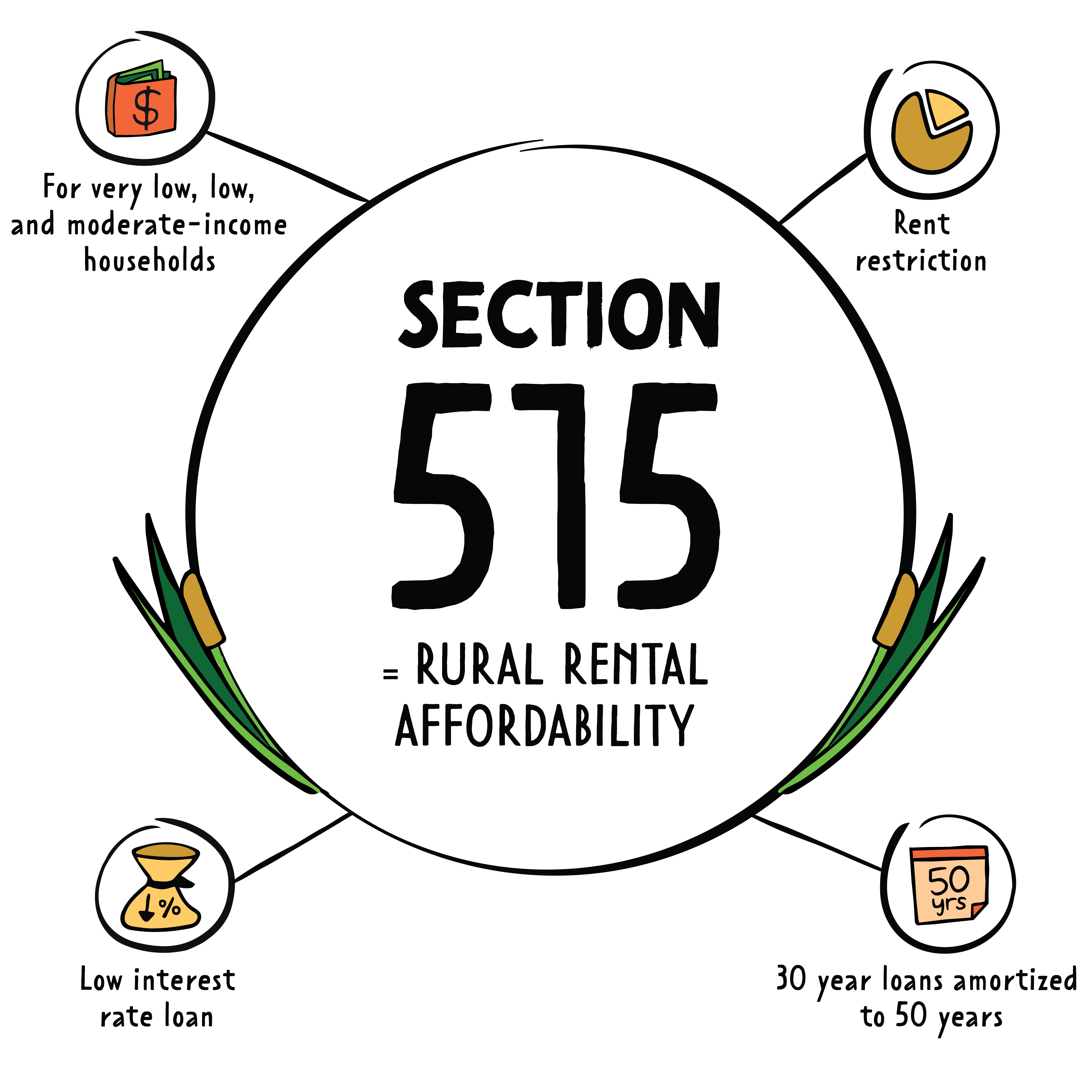
    Section 515 = Rural Rental Affordability; For very low, low, and moderate-income households; includes rent restriction; comes with low interest rate loan; and 30 year loans are amortized to 50 years
    Report Graphics by Kia Lee (Graphic Designer), USDA 515 Report, Center for Urban and Regional Affairs 2023

    Go to the USDA Section 515 Report

    “From MHP’s community development work in rural communities, we know many rural residents need deeply affordable rental housing, and USDA 515 rental housing are often the only affordable options in many communities. Preserving these USDA 515 properties is critical both for their rental assistance and to update these aging properties, before it is too late.”

    Jill Henricksen, Community Development Manager, MHP
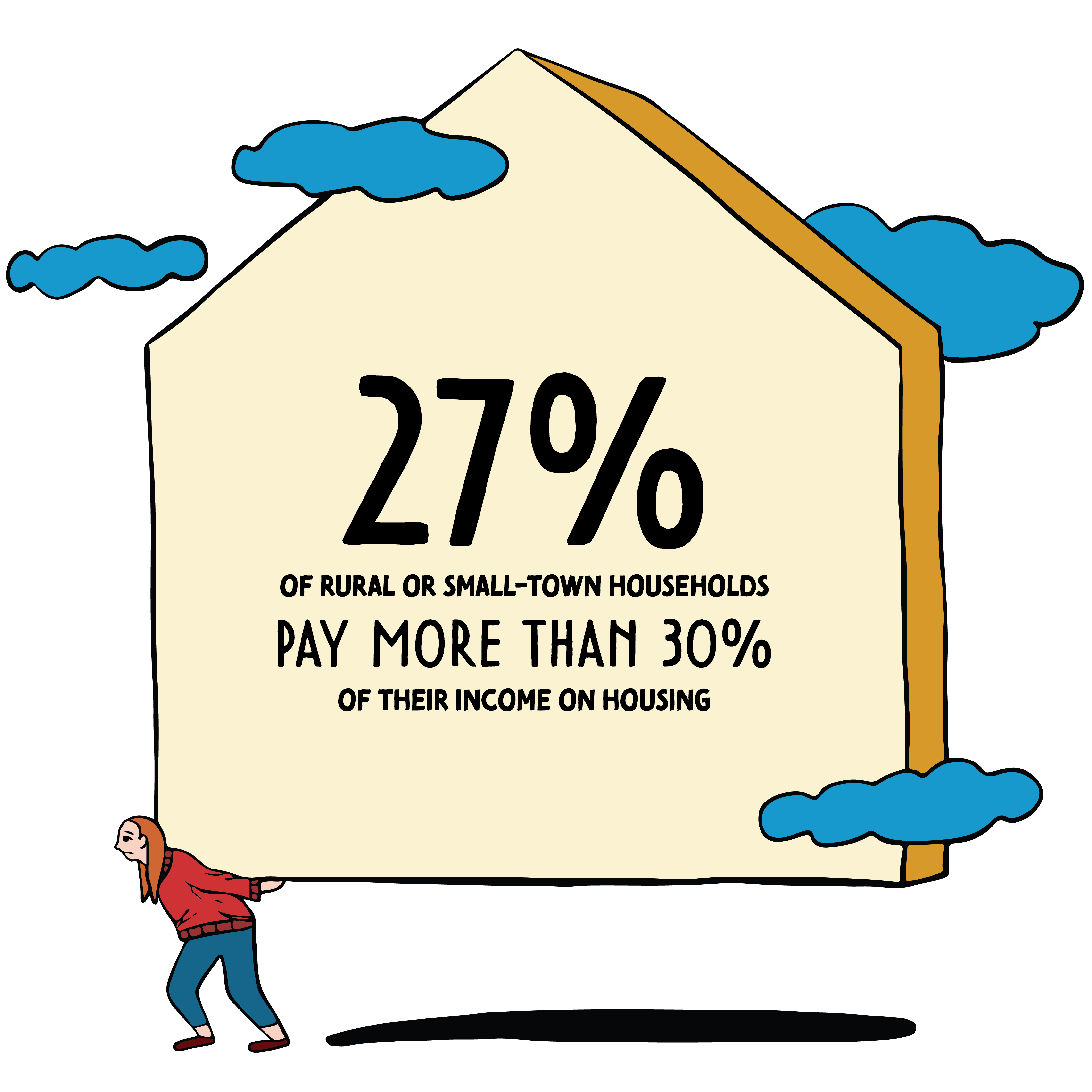
    27% of rural or small-town households pay more than 30% of their income on housing.

    Like urban areas in the U.S., rural areas currently face a housing affordability crisis. Approximately 6.9 million (27%) of rural or small-town households are considered “cost-burdened” (paying more than 30% of their monthly income on housing costs). Since 1949, USDA’s Section 515 program has been an effective strategy for creating affordable rents in rural areas of the U.S. The program provides low interest loans for building multifamily rental housing, restricting the amount of rent that can be charged to tenants. Section 515 rental housing is frequently coupled with Section 521 Rental Assistance, ensuring these homes are affordable to rural residents with extremely low incomes.

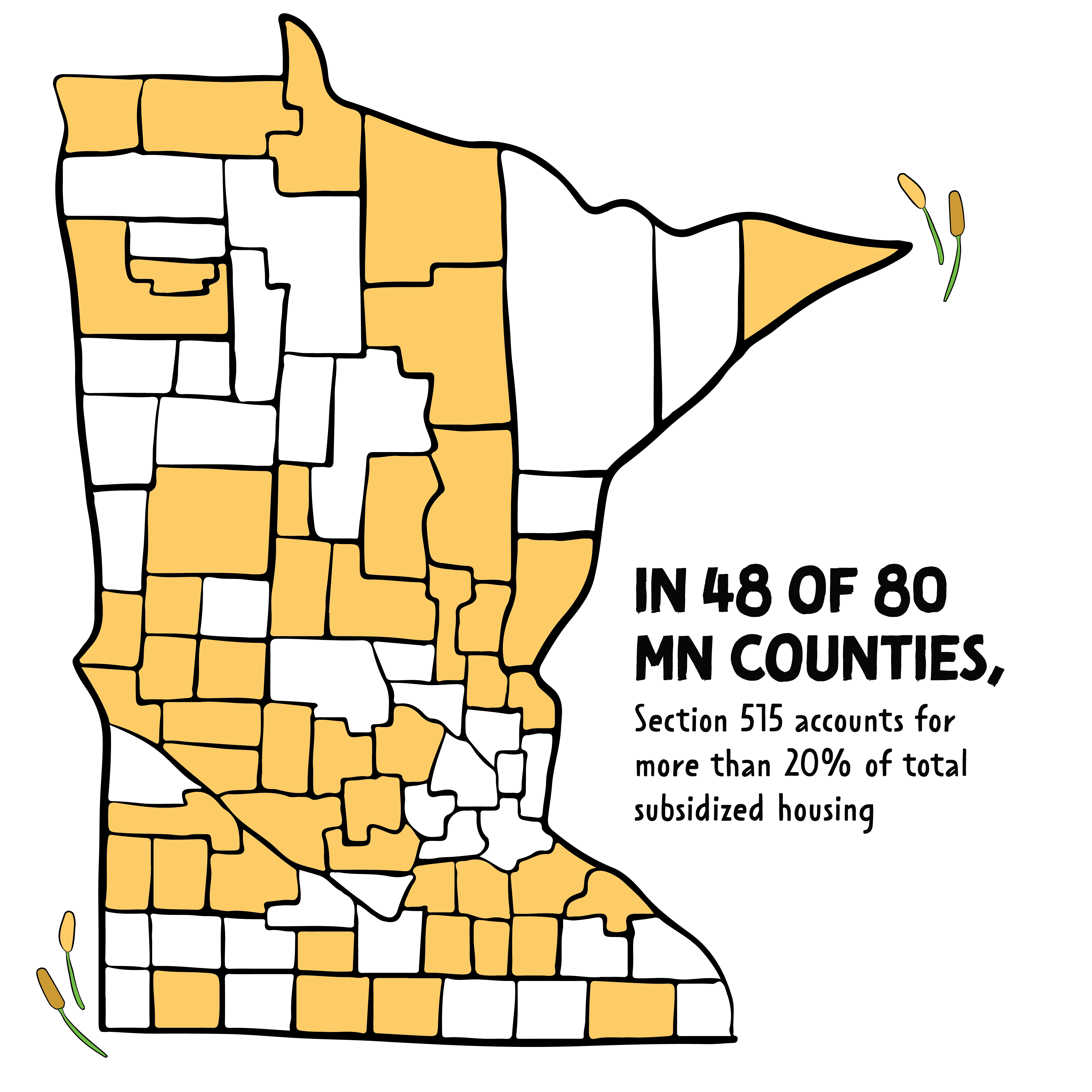
    In 48 of 80 MN Counties, Section 515 accounts for more than 20% of total subsidized housing.

    In 2020, Section 515 properties accounted for almost 19% of the nearly 50,000 subsidized units located in greater MN. They also accounted for more than 20% of subsidized housing in the majority of MN counties.

    Section 515 properties are required to maintain affordability restrictions for the life of the loan (50 years), but properties lose affordability when their mortgages mature. In MN, the peak of mortgage maturations will occur in 2030. As properties in the Section 515 program mature out of the program in the next 10 to 30 years, the Midwest stands to lose thousands of affordable rural rental homes. With no clear contingency plan for maintaining affordability in these properties, many of the properties may exit the program, reducing the number of affordable housing units in rural areas where the stock of affordable housing is already scarce. 

    The report provides a background to the Section 515 program, insights from Section 515 stakeholders, and a set of recommendations for policymakers to ensure the program’s viability in the coming years.

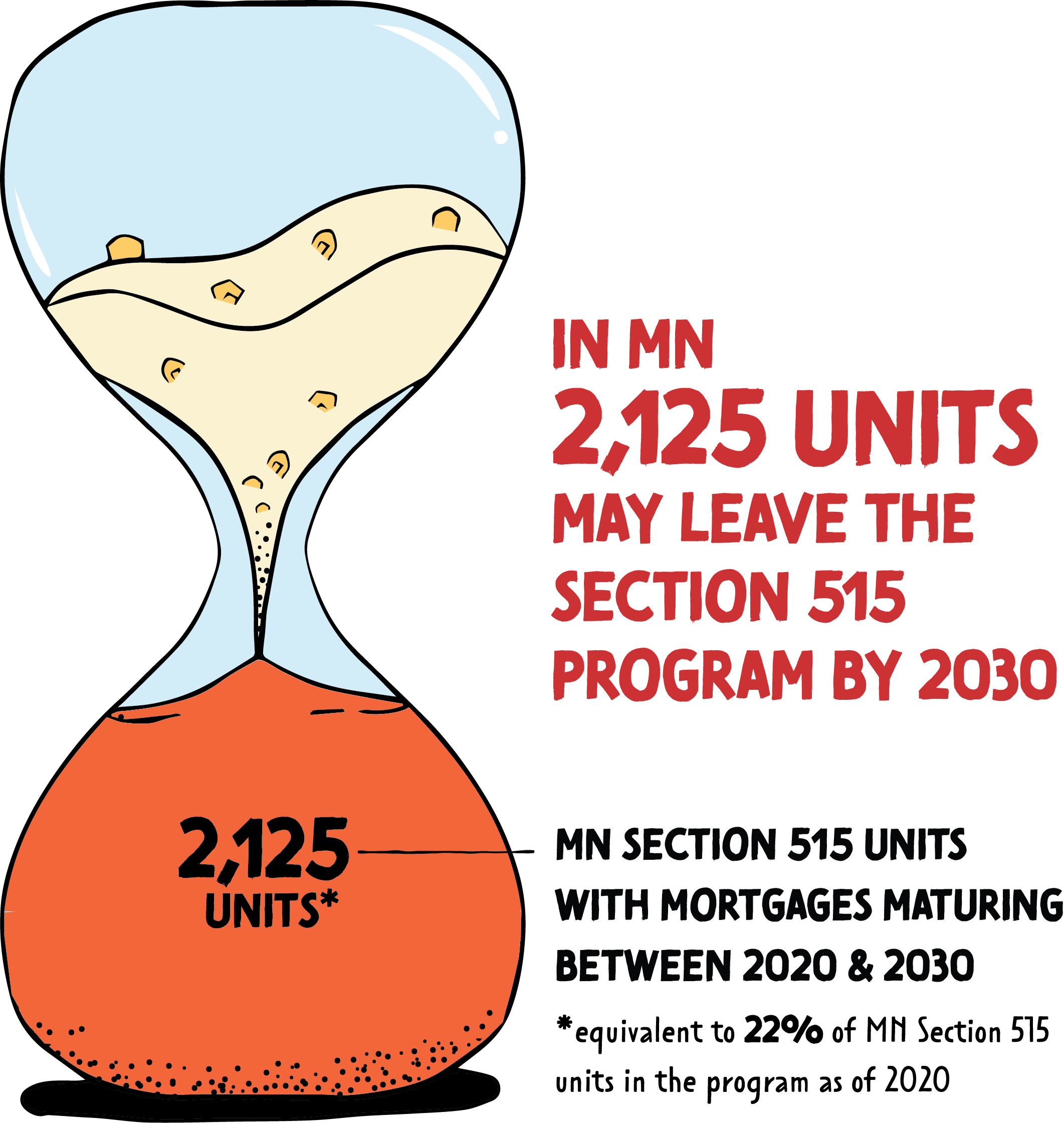
    In MN, 2,125 units may leave the section 515 program by 2030 - or 22% of MN Section 515 units as of 2020

    “People perceive that access to affordable housing is only a problem in urban areas, but in reality the scarcity of affordable housing is reaching a crisis point in rural areas as well. As we show in this research, in many cases Section 515 makes up a substantial proportion of the subsidized housing. In some rural communities, it is the only supply of subsidized housing. Ensuring the continued vitality of rural communities will likely mean creating a plan for how to keep these housing units affordable.”

    Dr. Ryan Allen, Report Author, Director, the Urban and Regional Planning program, and associate dean for research at the Humphrey School of Public Affairs

    Major Findings Include:

    • The Midwest will see large proportions of its Section 515 properties mature out of the program earlier than the U.S. overall. The peak of mortgage maturations for Section 515 properties in the Midwest will occur in 2030, about 10 years before the peak in mortgage maturations occurs for Section 515 properties in the U.S. In Minnesota, we estimate that 2,125 Section 515 units will mature and potentially leave the program by 2030.
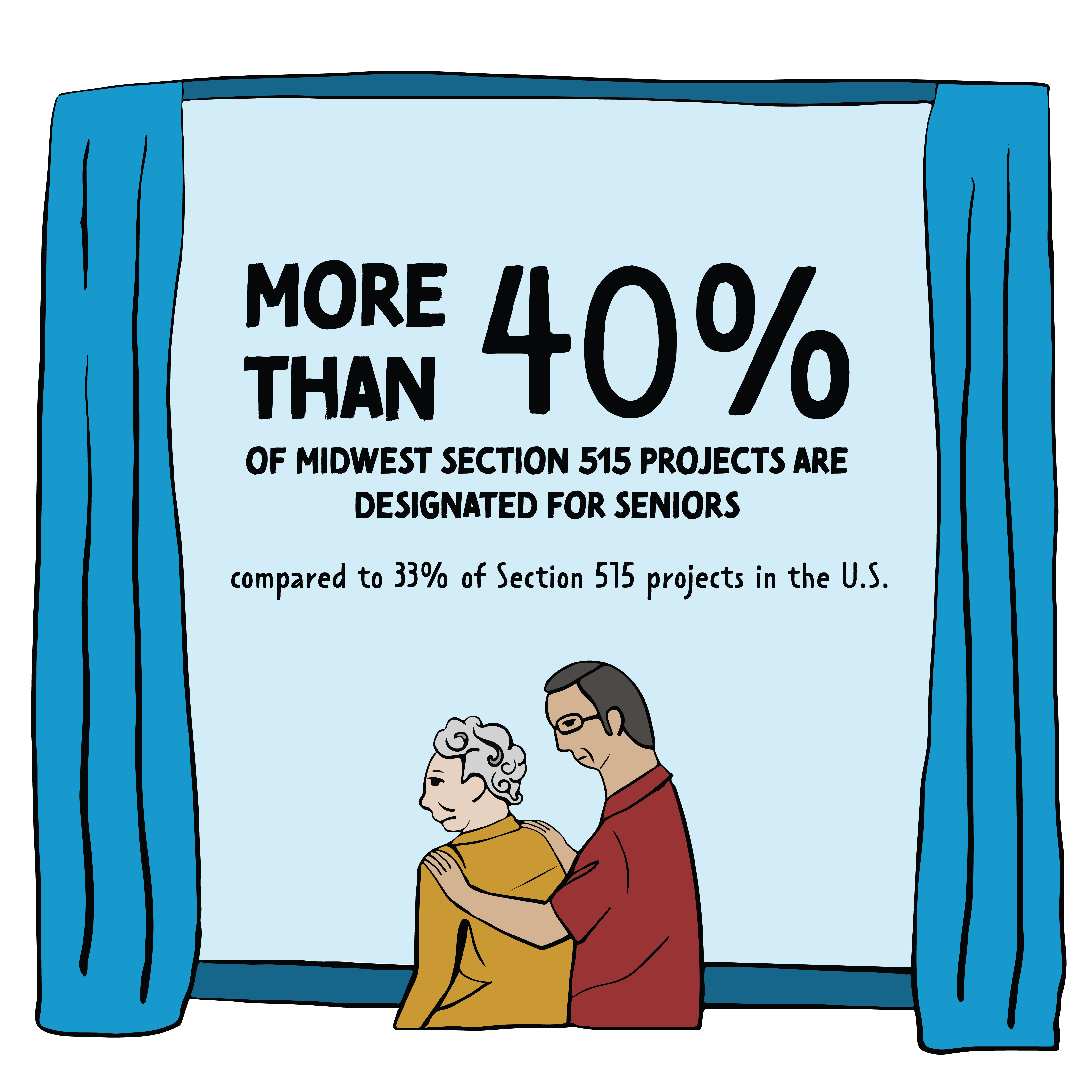
    More than 40% of Midwest Section 515 Projects are designated for seniors, compared to 33% of Section 515 projects in the US.
    • The unique characteristics of Section 515 properties in the Midwest suggest that some policy responses may need to be tailored to fit the unique needs of the program there.
      • The average size of a Section 515 property is smaller in the Midwest than in the U.S. This smaller scale suggests that owners may have less capacity to absorb costs related to capital maintenance and complex real estate transactions compared to owners of larger properties.
      • Midwest Section 515 properties are more likely to be used by seniors than in other states. Thus, some of rural Minnesota’s most vulnerable households are at risk of substantial rent increases and potential dislocation.
      • Nearly 40% of Midwest Section 515 properties are owned by nonprofit organizations, about double the proportion of in the U.S. Nonprofit organizations active in rural areas are often small and less able to manage large amounts of financial risk or complicated tasks associated with raising capital and navigating government programs.
    • Changes in the housing market in many rural counties and in the Section 515 program itself have made it less attractive to private owners and investors. On the other hand, mission-driven owners have maintained a strong interest in the 515 program as one of the few affordable housing resources available to rural communities.

    This is a solvable problem, and now is the time to act.

    Report recommendations include:

    • Create unique funding support for small scale Section 515 properties, including supporting needed capital maintenance.
    •  Streamline the property transfer process, from owners who want to exit the program to buyers willing to maintain long-term affordability, by making it easier, faster and less risky for preservation buyers to acquire Section 515 properties, especially for small sized properties.
    • Prioritize preservation of properties based on locations in hot and cold housing markets and those with looming mortgage maturations.

    “For far too long, the USDA 515 program has been the most important housing resources for rural communities that nobody is talking about. Now these critical sources of safe, stable, and affordable housing are at risk of disappearing forever. As this report shows, the time for action is now if we want to prevent displacement of low income renters and to save these irreplaceable resources in rural communities. The good news is that there are practical solutions to ensure that rural Minnesota communities can remain great places for people to call home.”

    Margaret Kaplan, Executive Director, Housing Justice Center

    Materials:

    Executive Summary

    Story Map – with interactive maps showing impacts over time by county

    Full Report, Qualitative Analysis

    Full Report, Quantitative Analysis

    Report Maps

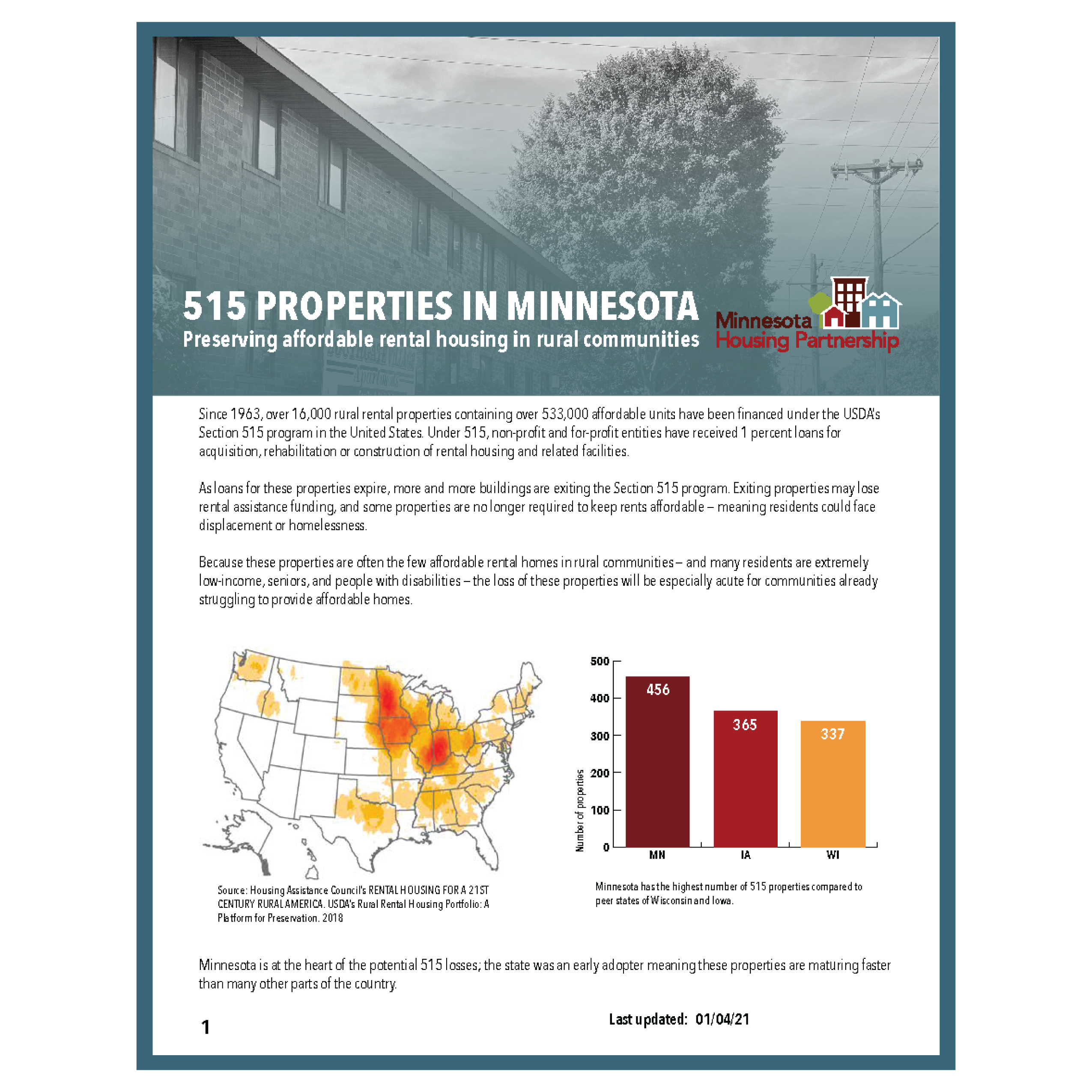
  • 515 Properties: Preserving affordable rental housing in rural communities

    515 Properties: Preserving affordable rental housing in rural communities

    This report describes important affordable rural rental properties across Minnesota and the people who live there. These are rental units that have been financed under the USDA’s Section 515 program. As federal investments in the 515 program have been insufficient and declining for many years, many 515 properties are in declining condition. Part of the effort to save these properties is to quantify and describe these properties and who lives in them. MHP, in collaboration with the University of Minnesota’s Center for Urban and Regional Affairs, analyzed the most recently available data. A more full summary of the report is found here. (January 2021)