Everyone deserves a safe, stable place to call home. But a new national report released today highlights a persistent challenge for Minnesota: there are still far too few homes affordable to the state’s lowest-income renters. The National Low Income Housing Coalition’s annual The Gap report shows that while housing shortages affect communities across the country, the impacts are most severe for households with the lowest incomes.
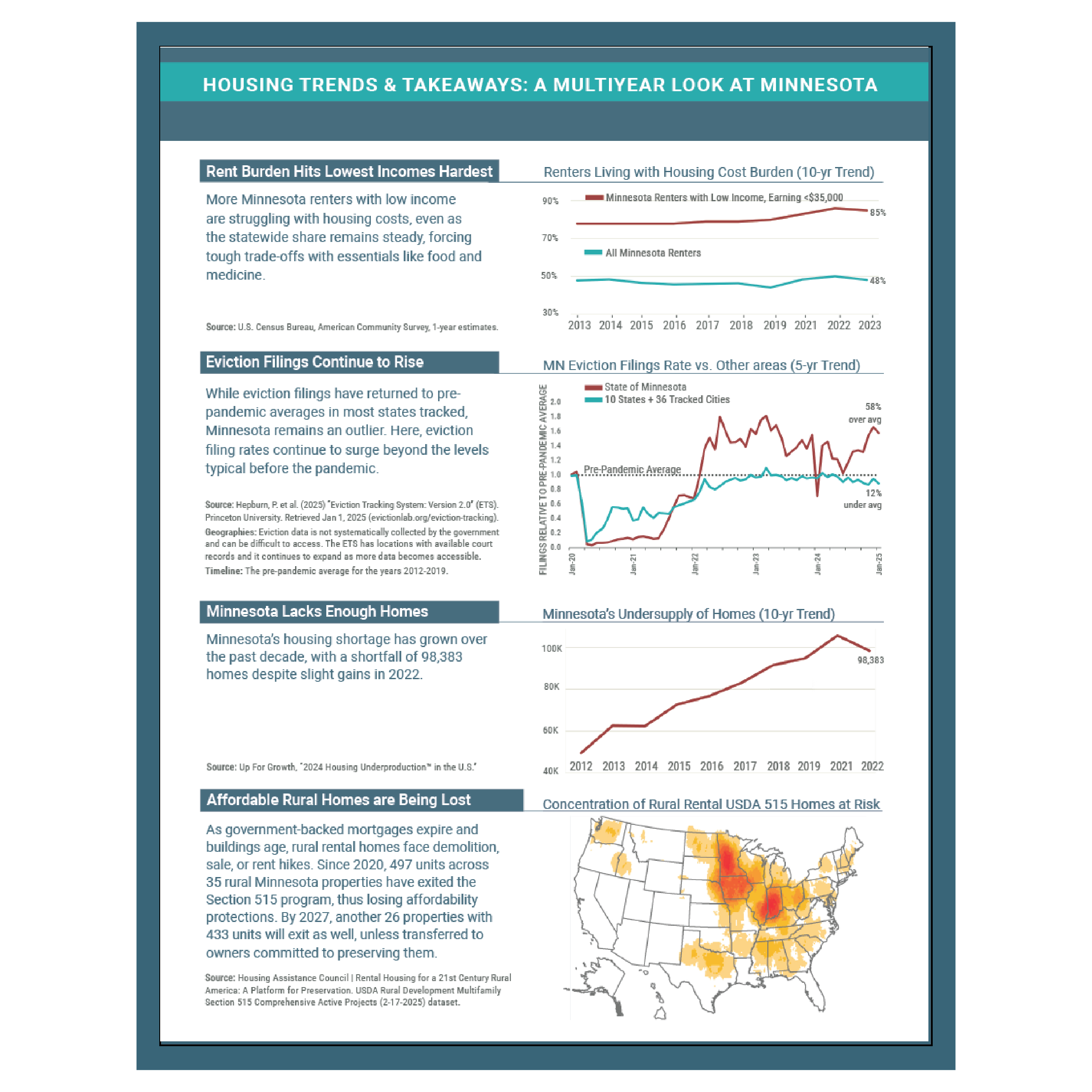
In Minnesota, there are only 41 affordable and available homes for every 100 extremely low-income renters, leaving a shortage of approximately 97,500 homes.
Key Findings for Minnesota include:
- 166,500 extremely low-income renter households live in Minnesota, an increase of 700 households since last year.
- Minnesota still needs 97,500 additional homes affordable to extremely low-income renters, though the shortage has declined by 3,700 homes compared to last year.
- Minnesota has 41 affordable and available homes per 100 extremely low-income renters, compared to 35 per 100 nationwide.
- 83% of extremely low-income renter households are cost-burdened, spending more than 30% of their income on housing.
- 70% are severely cost-burdened, spending more than half of their income on rent and utilities.
When housing costs consume such a large share of income, households are often forced to sacrifice other basic needs like food, medicine, and healthcare.
Extremely low-income renters include seniors living on fixed incomes, people with disabilities, caregivers, and workers in low-wage jobs — Minnesotans who are essential to strong communities and local economies.
“The Gap report makes clear that households with the lowest incomes face the greatest barriers to stable housing in Minnesota,” said Anne Mavity, Executive Director of MHP. “When there simply aren’t enough homes affordable to them, families are forced to stretch beyond what they can afford or compete for a shrinking number of options.”
National context
Nationwide, the report finds a shortage of 7.2 million affordable and available rental homes for 11 million extremely low-income renter households, with just 35 affordable and available homes for every 100 renters in this income group.
No state has enough homes affordable to meet the needs of its lowest-income renters.
Addressing the shortage
Addressing this shortage will require sustained investment in deeply affordable homes, stronger housing stability programs that prevent homelessness, and policies that make it easier for communities across Minnesota to create and preserve housing opportunities.
View the Minnesota Profile here.